Trekking in Shangri-la: Songzanlin Monastery

In late July of 2010, a colleague and friend of mine attended and spoke at an academic conference at Yunnan University in Kunming. Since we were in a wonderful and scenic part of China, we decided to take some time after the conference to do some trekking. We both have interest in Tibet and the border regions of Tibet where about half of all Tibetans live. Yunnan Province in China’s southwest has three Tibetan Autonomous counties. One of my former students had traveled to the Shangri-la region in upper northwestern Yunnan and the region seemed really interesting with a high Tibetan population. My friend had also visited the city in the 90’s.

In 2001, in order to attract tourists, the city of Zhongdian 中甸 zhōngdiàn was renamed Shangri-la 香各里拉 xiānggēlǐlā. The name Shangri-la came to the west from the novel written by James Hilton about a mysterious Himalayan utopia isolated from the world. Several places in the Himalayas have been thought to be this place described in his novel, but only China was brazen enough to actually name a town Shangri-la.

In the old days, (in the 90’s and previously) Zhongdian was a dusty, almost one street town, where it was not uncommon to literally see Kham Tibetan “cowboys” ride into town on their horses. The old town consisted of narrow winding alleys through a large cluster of old wooden frame buildings.  After 2001, that all changed as the Chinese spent millions of yuan “improving” the city. These improvements included completely rebuilding the old city gearing it toward the tourist industry, widening streets, building luxury hotels, restaurants, an airport, and so on.

After our conference, we flew to Shangri-la from Kunming. We had arranged to stay at a small guest house (Kevin’s Trekking Inn) where my former student had stayed. It was also recommended in the Lonely Planet guidebook. The place was run by a Han Chinese guy and staffed with a couple Tibetans. It was a bit of a mixed bag. The rooms were okay, but the water was unreliable, meaning we only had water for a short time each day, and what we did have was pretty weak and very cold. They claimed that their well was low on water, but we suspected there was some politics going on, that and the fact that the guesthouse was on a hillside where it was probably more difficult to get water.

Songzanlin Monastery

Our first objective was to visit the large Songzanlin Monastery 松赞林寺 sōngzànlín sì outside of town. We took a local bus that ran the length of one of the main roads in town up to the monastery. The bus was full of Tibetans. It made a mandatory stop at a new building where we were forced to get off and buy a ticket to the monastery (all part of the tourist plan). From there we boarded another bus that took us up to the monastery. The monastery itself was originally built in 1679, and is the largest and most famous Buddhist monastery in the Kham region of Tibet. It is also known as the little Potala Palace because of its traditional architecture. It sits on the side of a mountain at 10,827 feet. The whole complex consists of the temple, two lamaseries, and a large jumble of small wooden living quarters clinging to the hillside. My friend had visited this monastery in the early 90’s and reported that the monks were very friendly and showed him all around. We were looking forward to this kind of reception but were disappointed that even though we spoke Chinese, we received a pretty chilly reception. They did not seem to be interested in talking to us. I suppose at this point they were tired of all the tourists traipsing around their monastery.
Yak butter candles
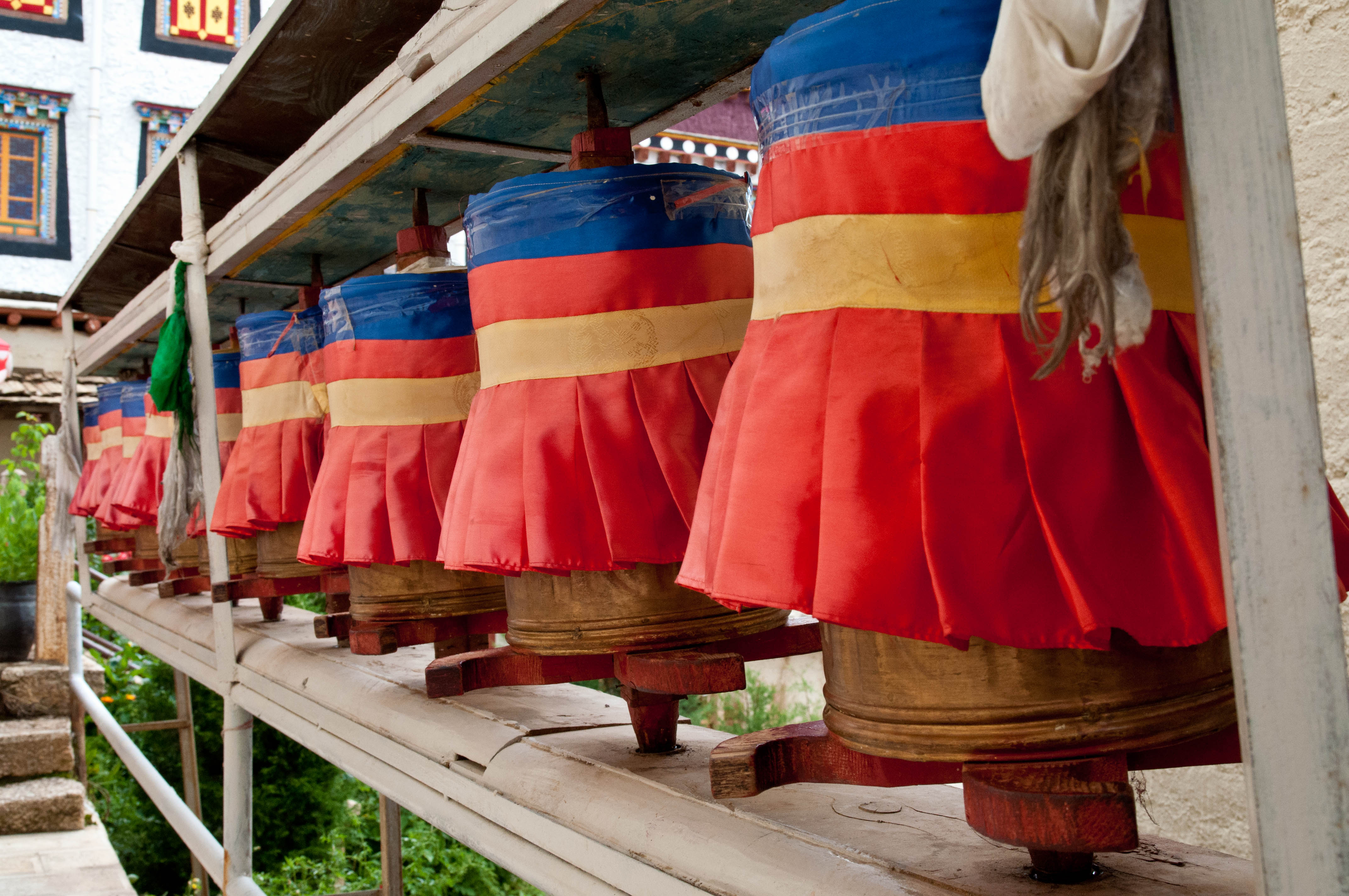
Prayer wheels

We spent several hours wandering around the complex of temples and houses. All the structures were made of wood and a maze of narrow alleys cut through the dwellings.
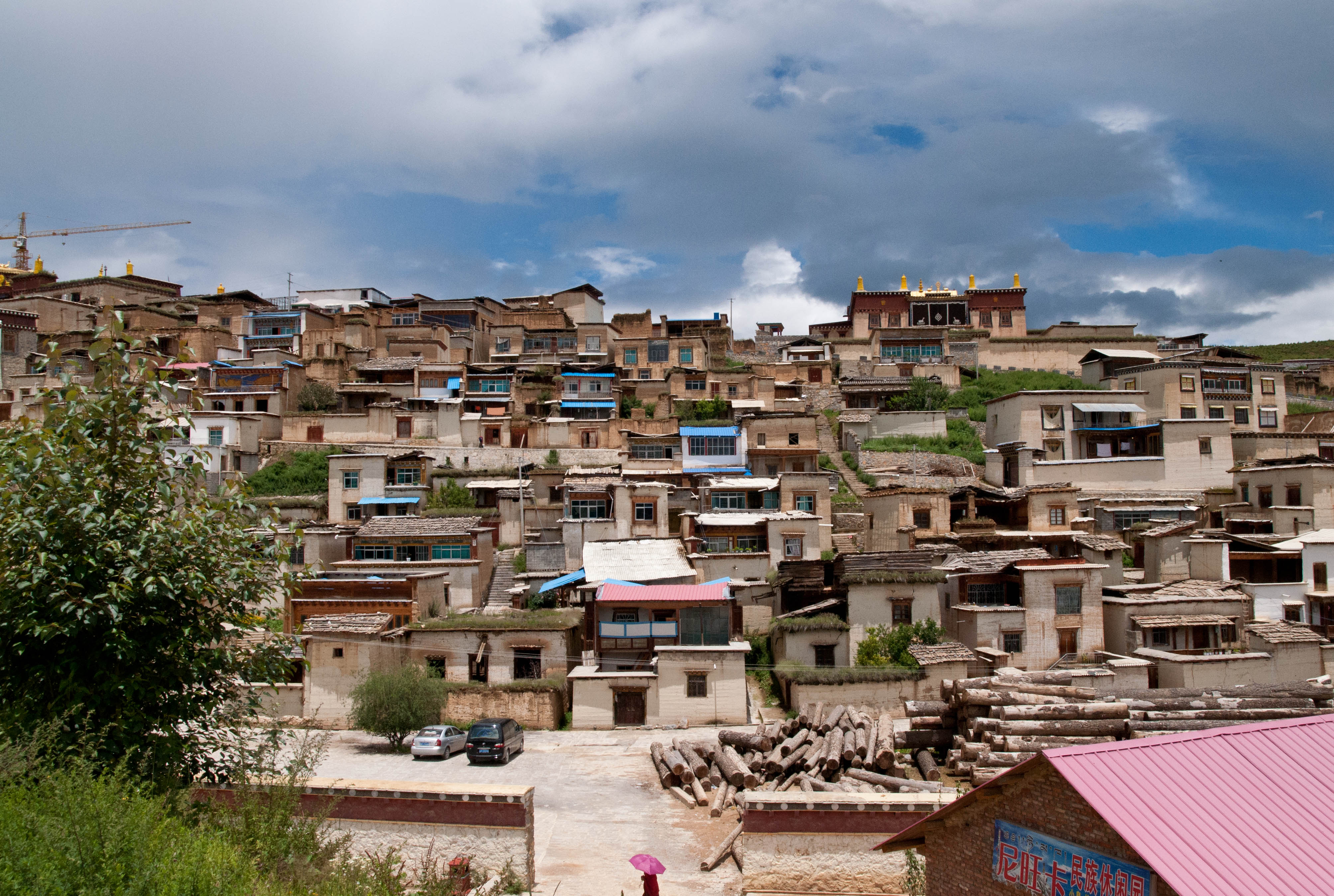
Houses around the monastery
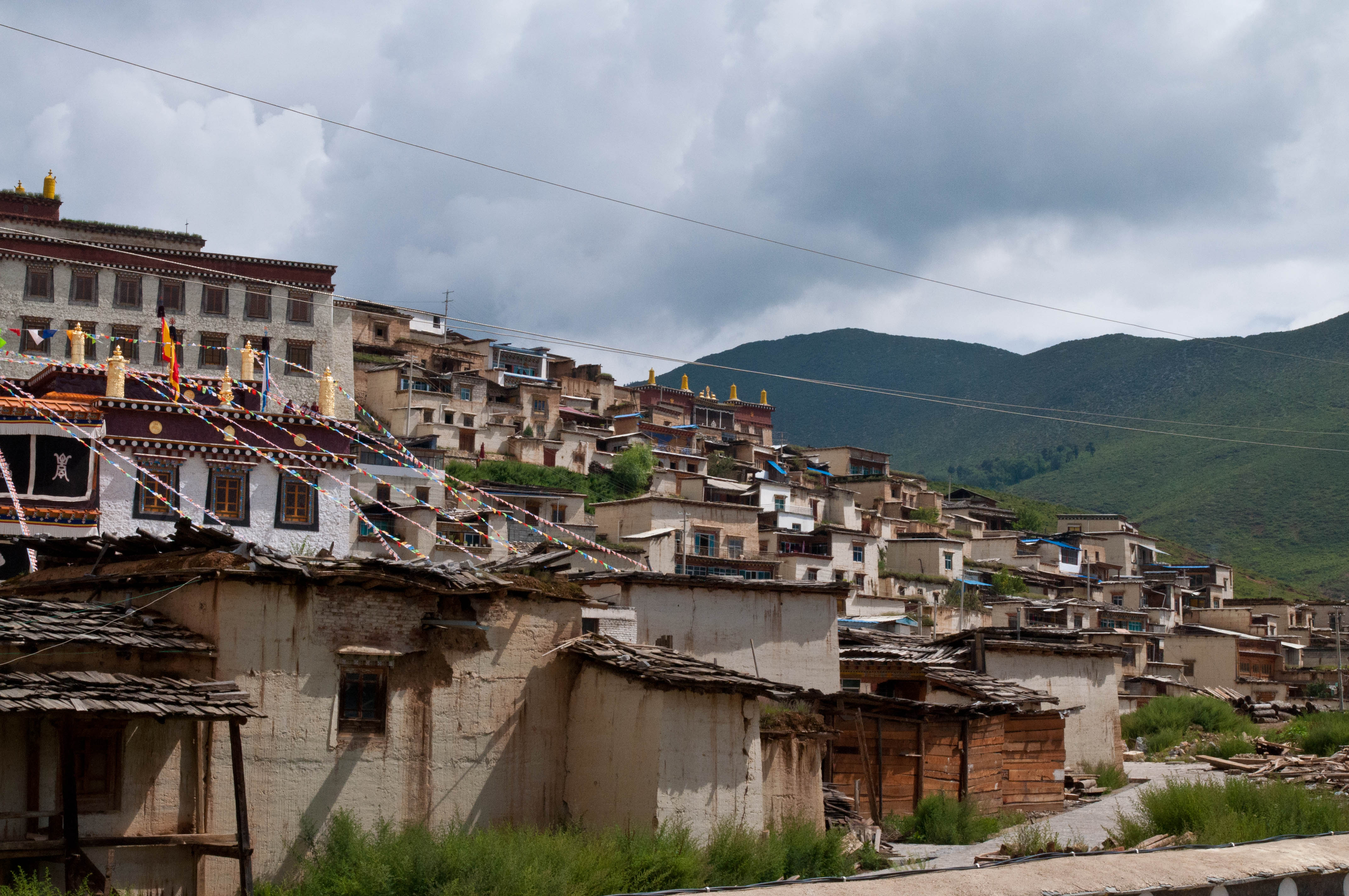
Houses adjacent to the monastery
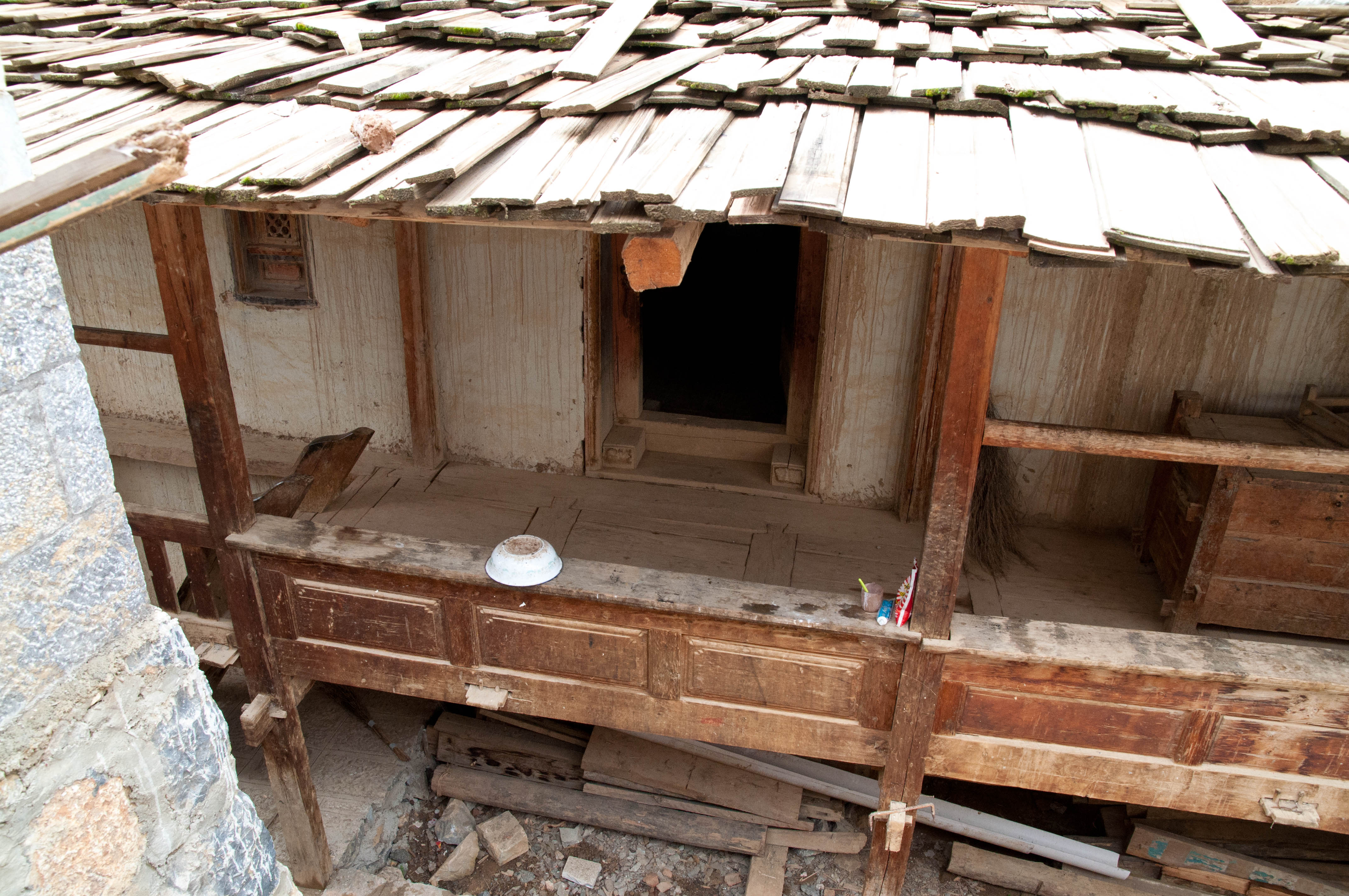
House facing the monastery

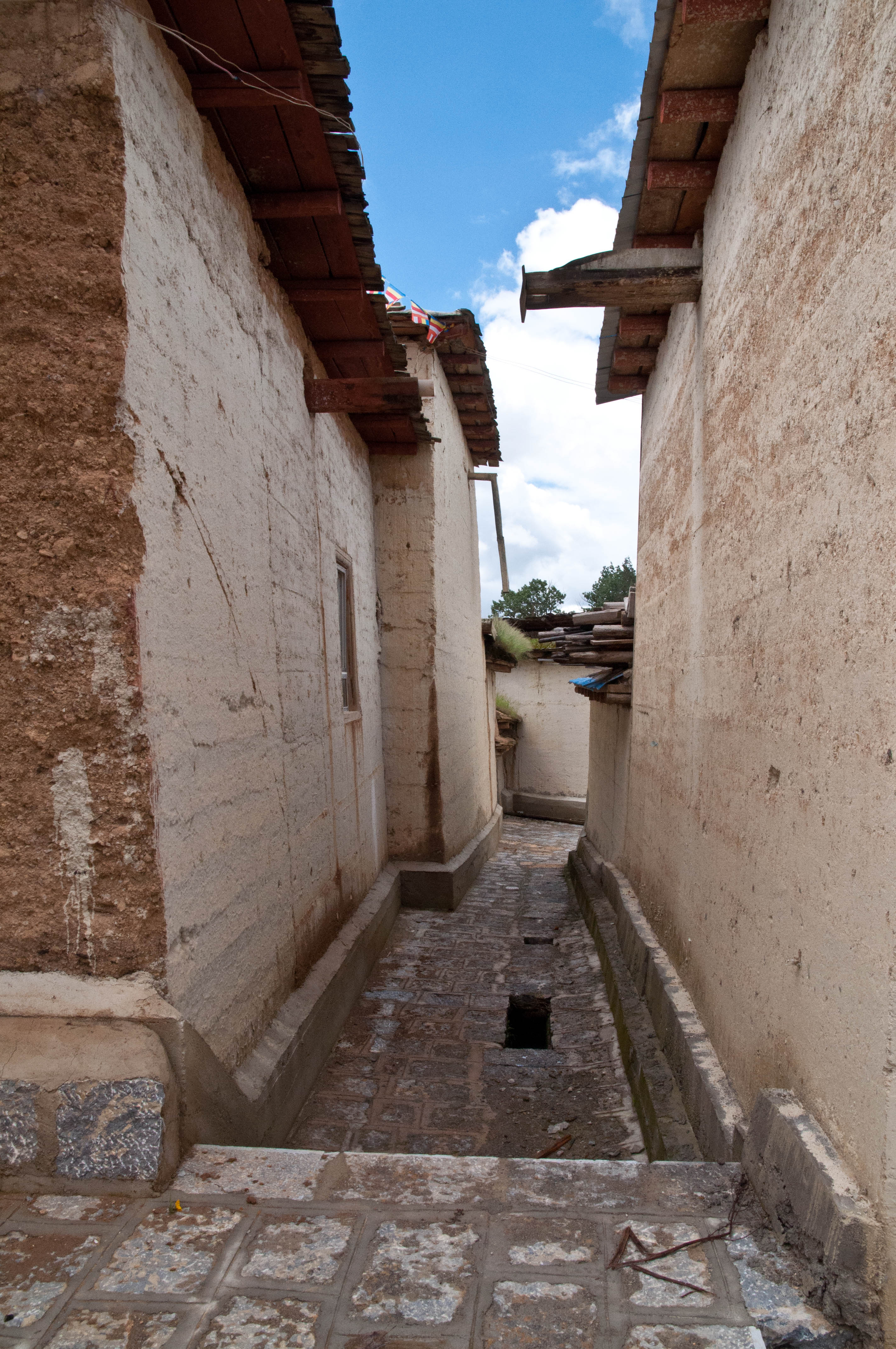
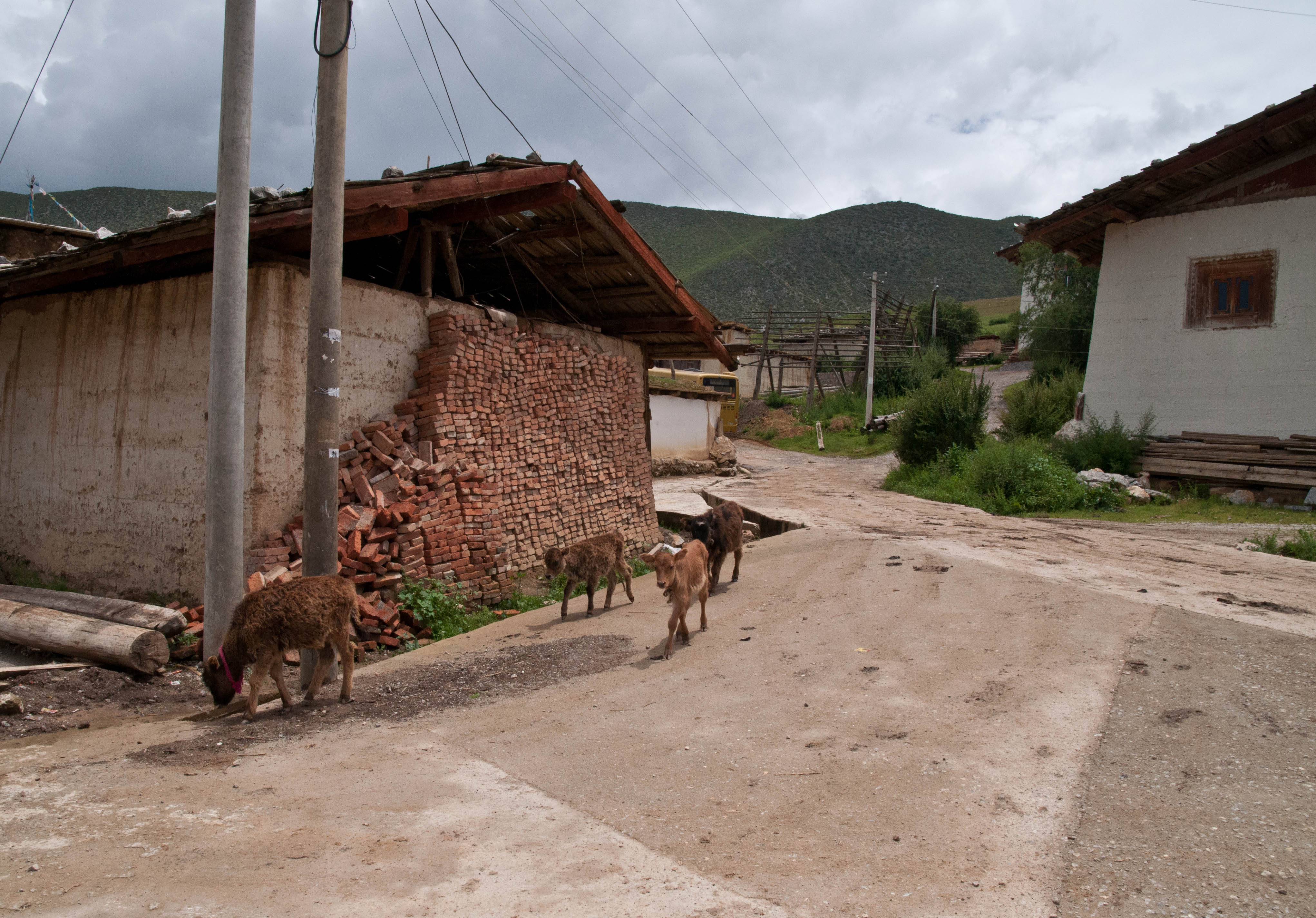
Behind the monastery were many more houses, many of which seemed to be made of rammed earth and wood.
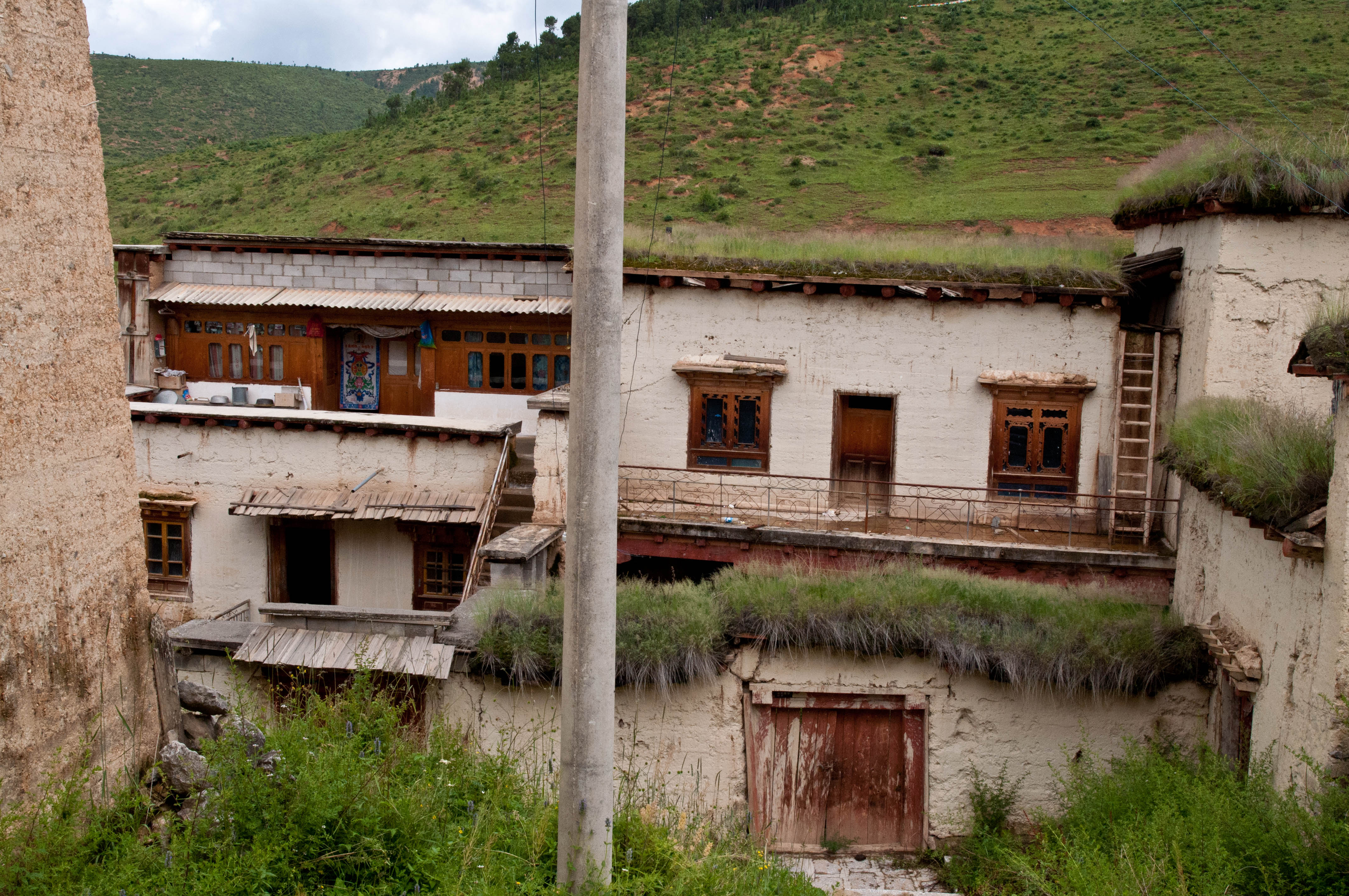
Houses behind the monastery

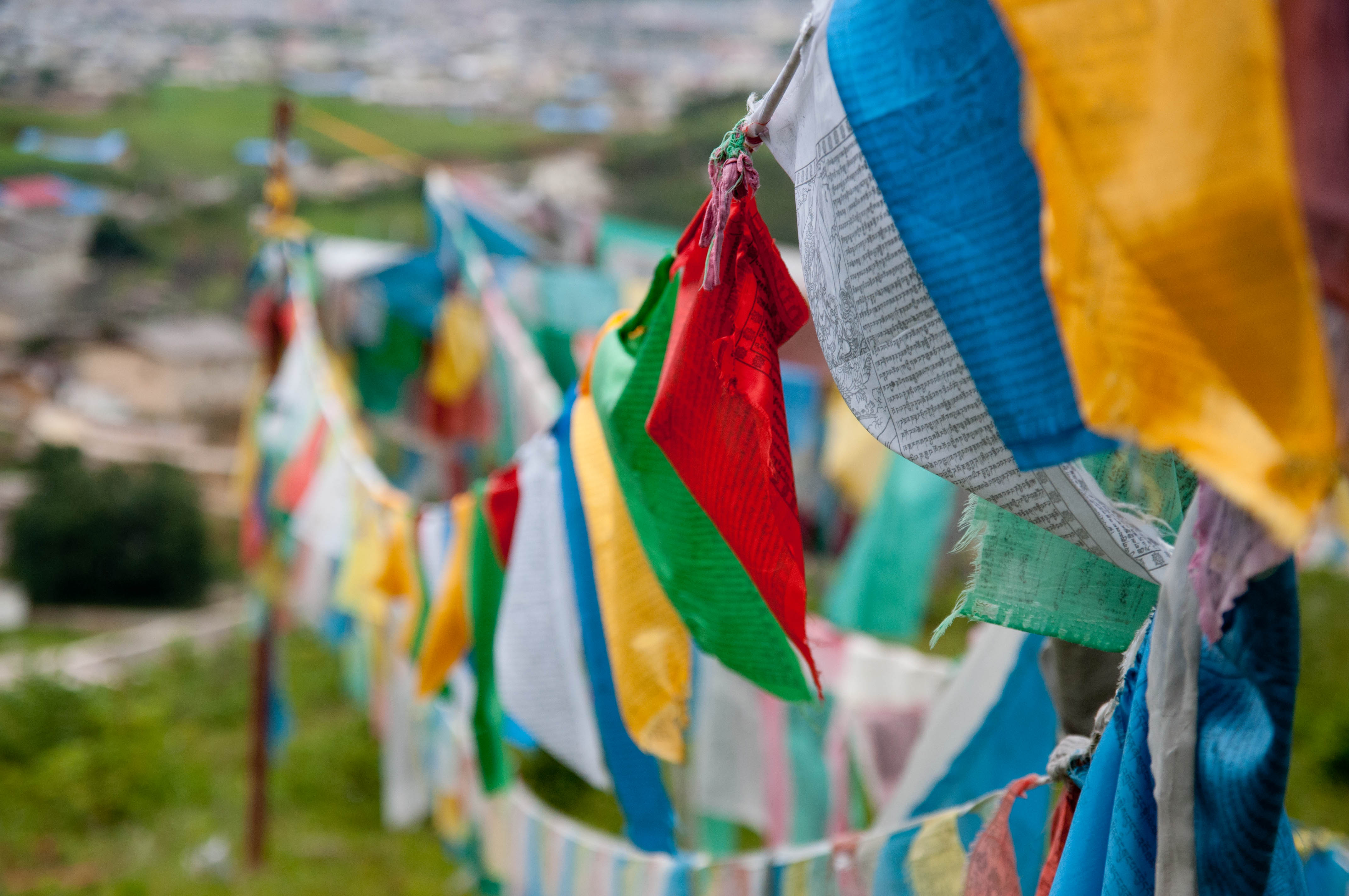
We walked through this small village and climbed to the top of the hill behind the monastery. There were the customary prayer flags as well as beautiful views of the valley.
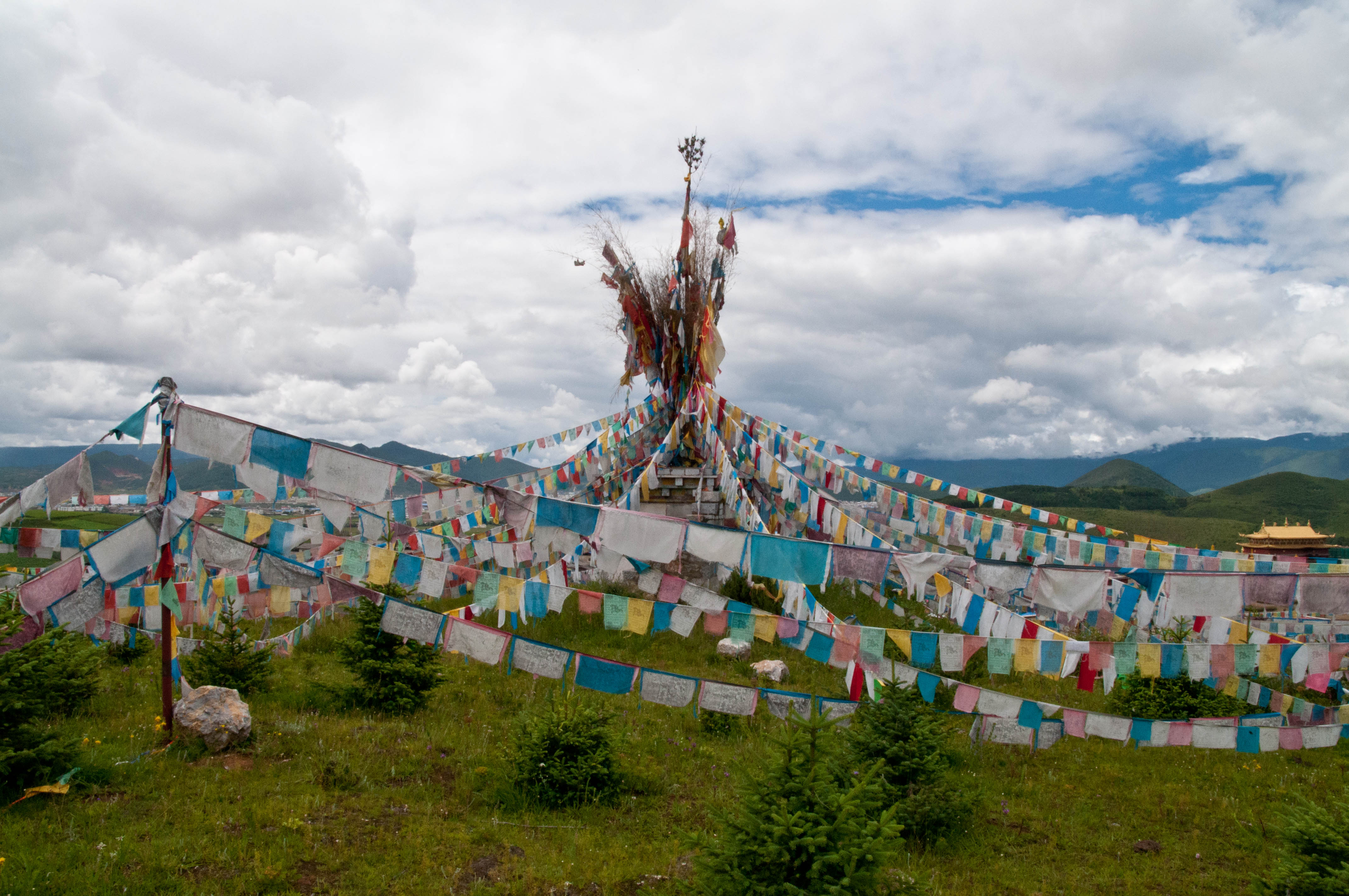
Tibetan Buddhist prayer flags are inscribed with prayers and mantras and are said to bring good luck. The wind carries these prayers across the countryside. For more information on prayer flags see, http://www.prayerflags.com. From the top of this hill there were nice views of distant Shangri-la, as well as distant mountain ranges, and surrounding farm and grazing land.

Shangri-la in the distance

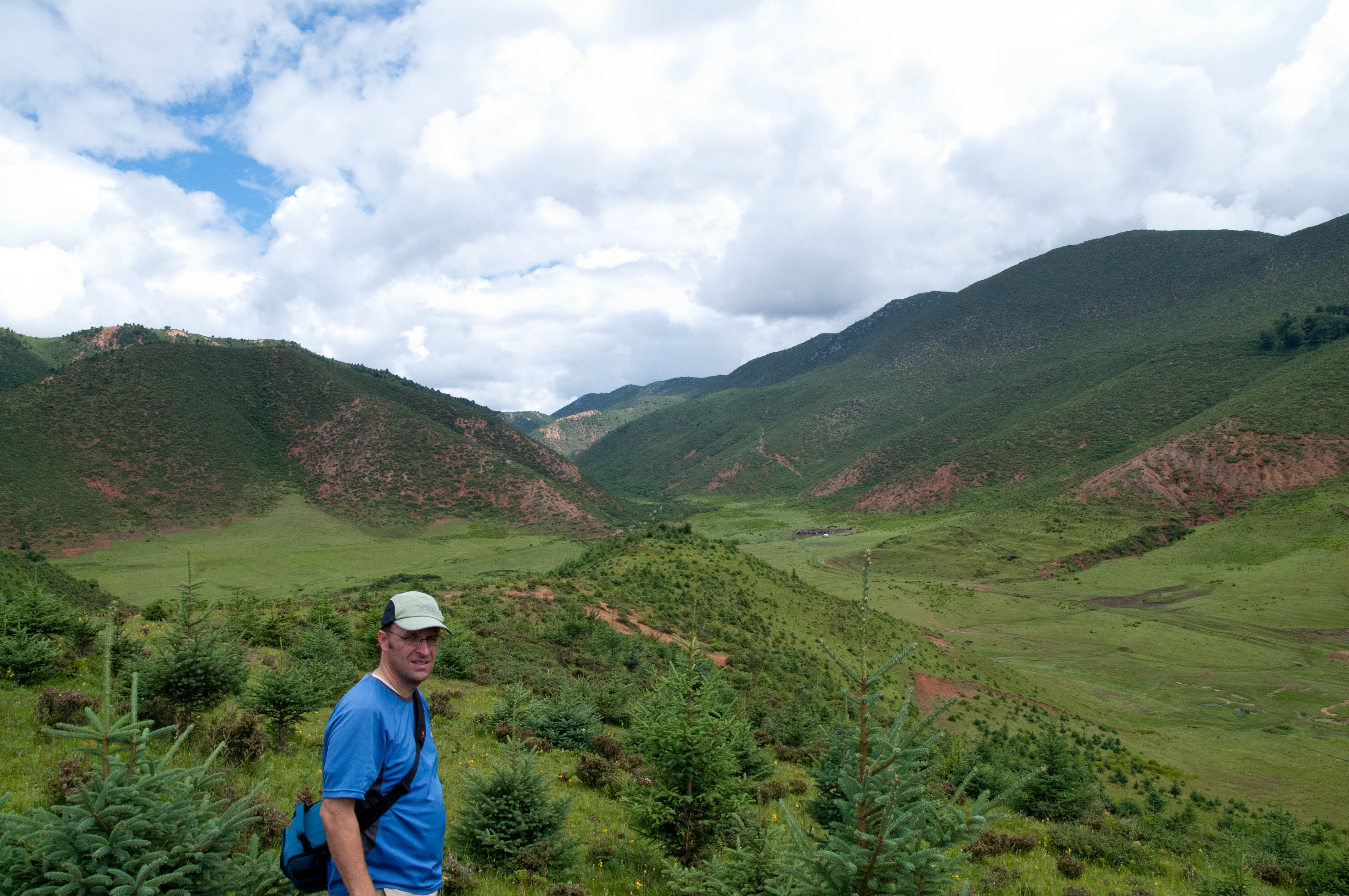
We hiked off the back of the hill down into another valley with a few traditional Tibetan houses.

Traditional Tibetan houses

Racks for drying the barley crop

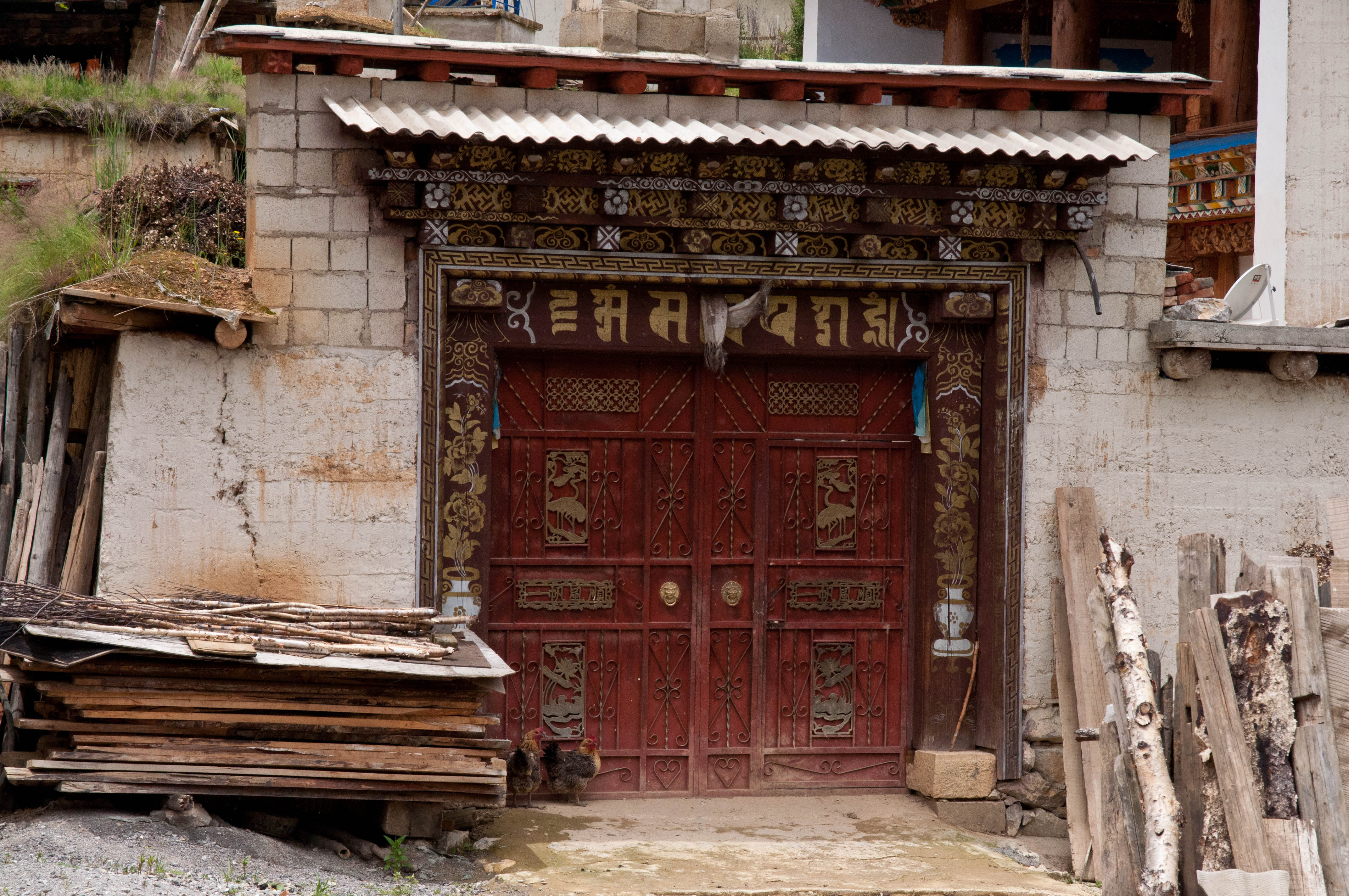
At the end of this valley was another small village full of traditional wooden framed Tibetan houses. These houses consist of a gate that leads into a courtyard. The houses are three stories with animals, (pigs, chickens, cows), on the ground floor, living quarters on the second floor and storage on the third floor. These houses were pretty nice. We would later stay in a much more rustic Tibetan house.
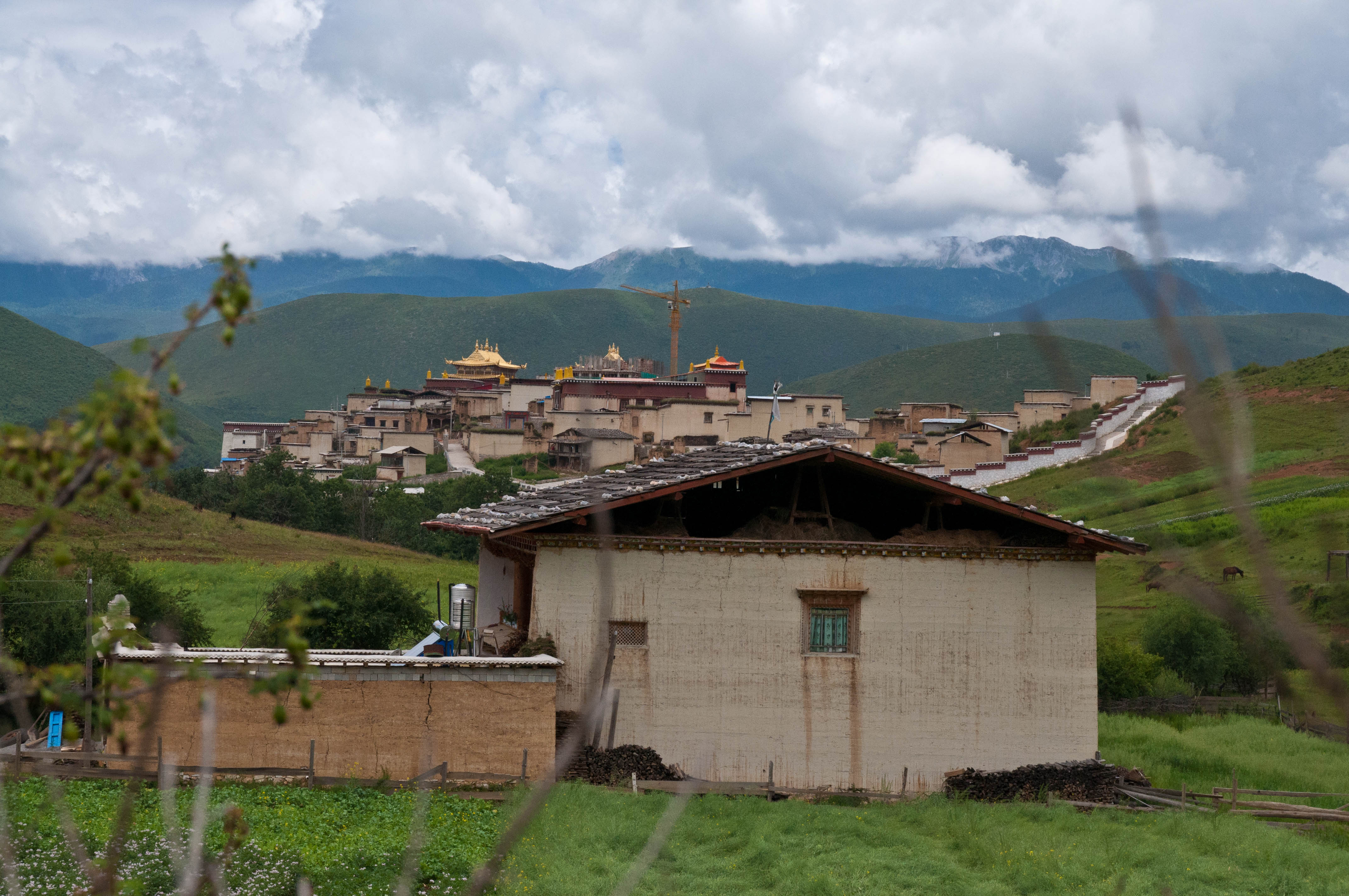
Songzanlin Monastery from a nearby village
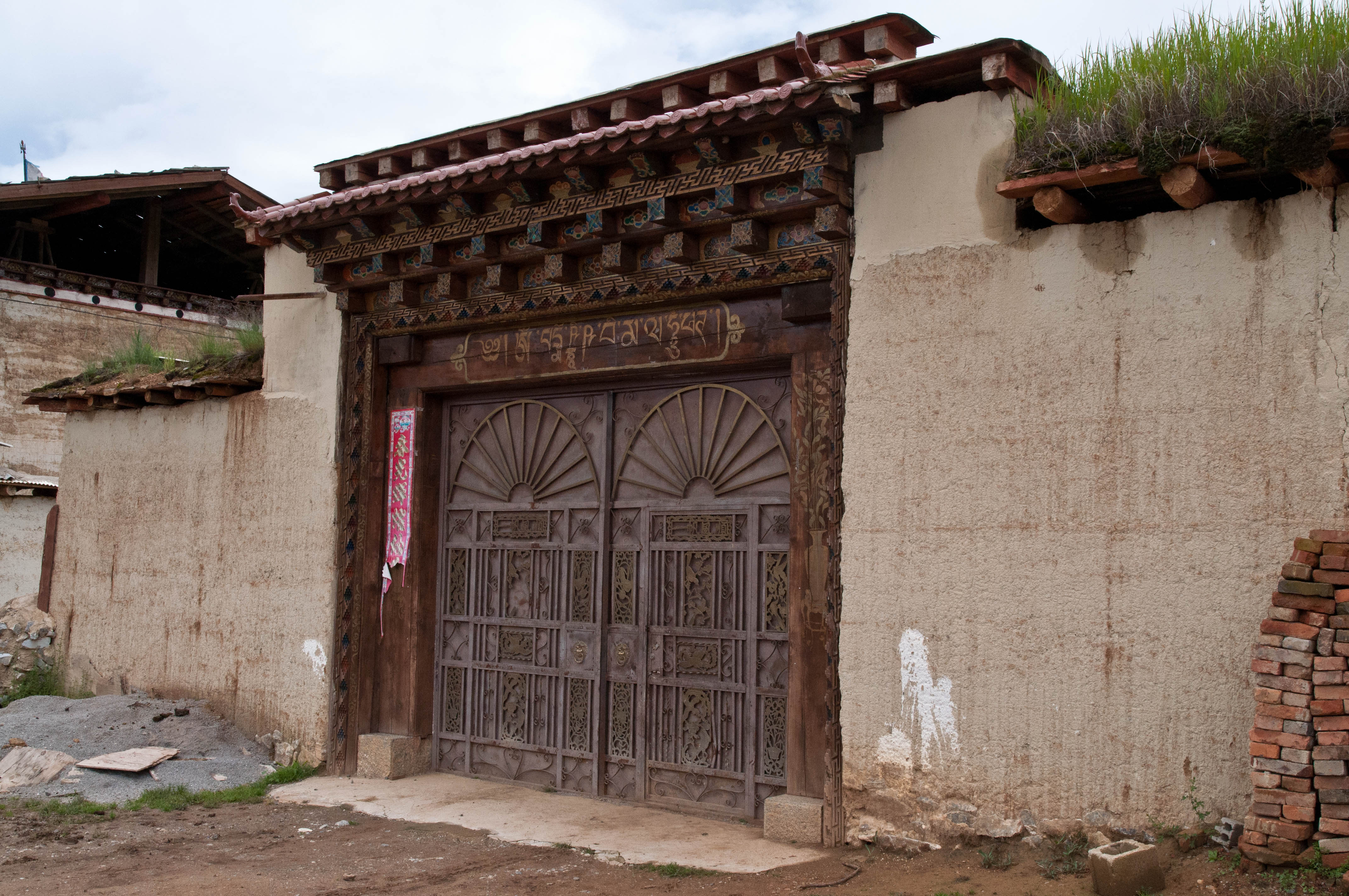
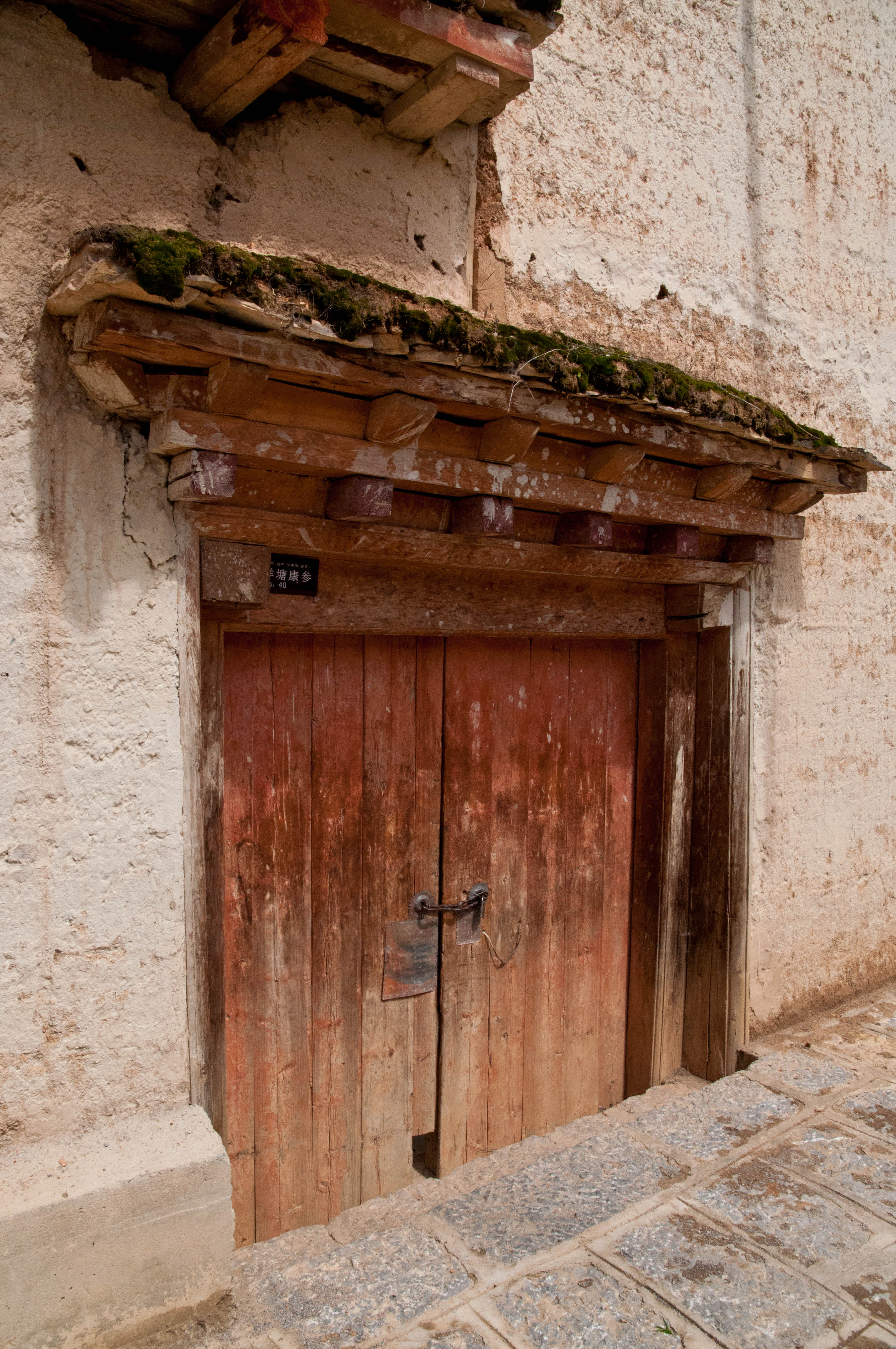
Typical gate at a traditional Tibetan house
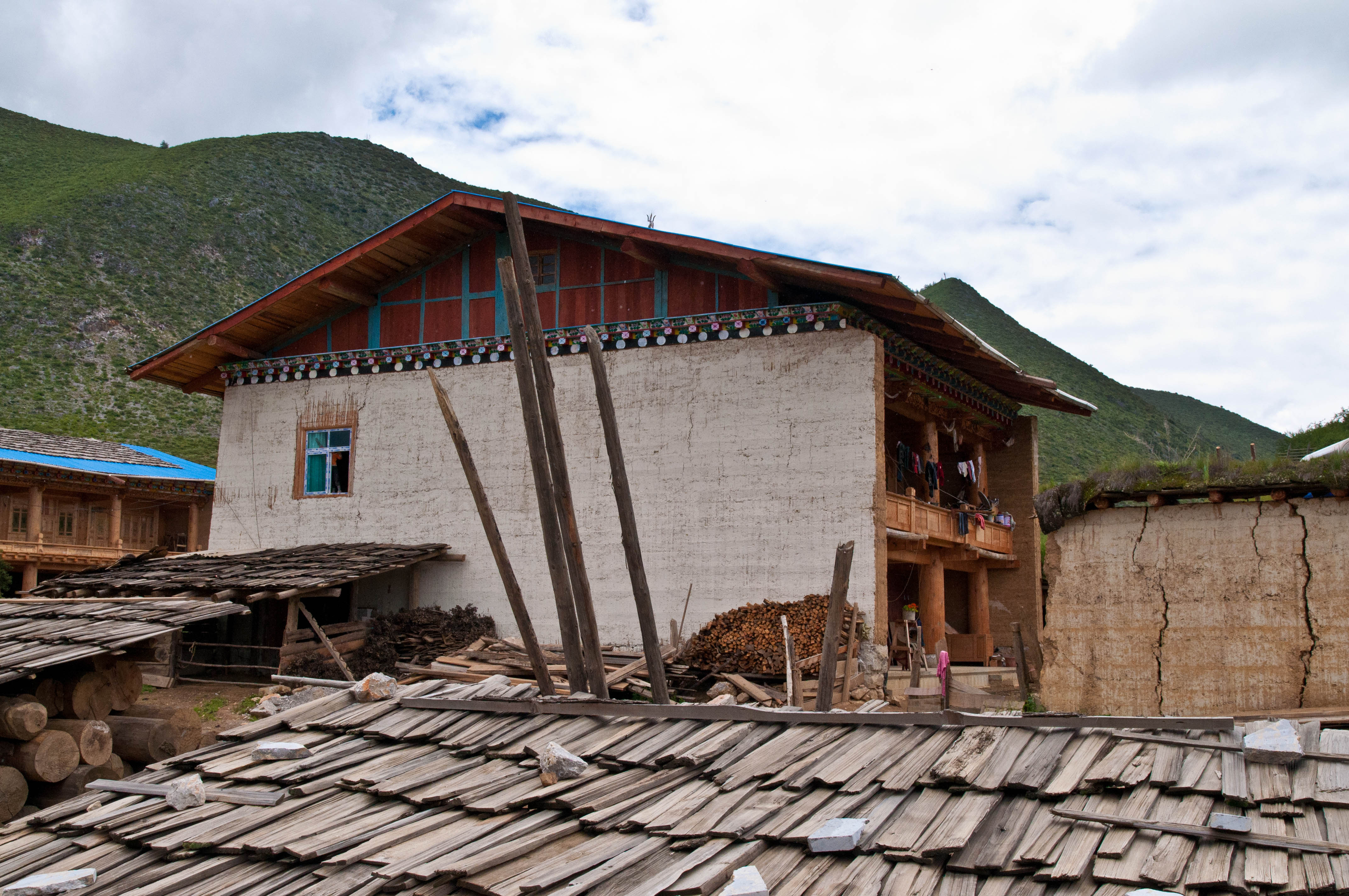
Traditional Tibetan house
After walking around for most of the day, we were really feeling the altitude and were tired, thirsty and hungry. We found a nearby restaurant and had a pretty basic (i.e. not very good) meal. But it was nice to sit and rest a bit before we took a bus back to Shangri-la.
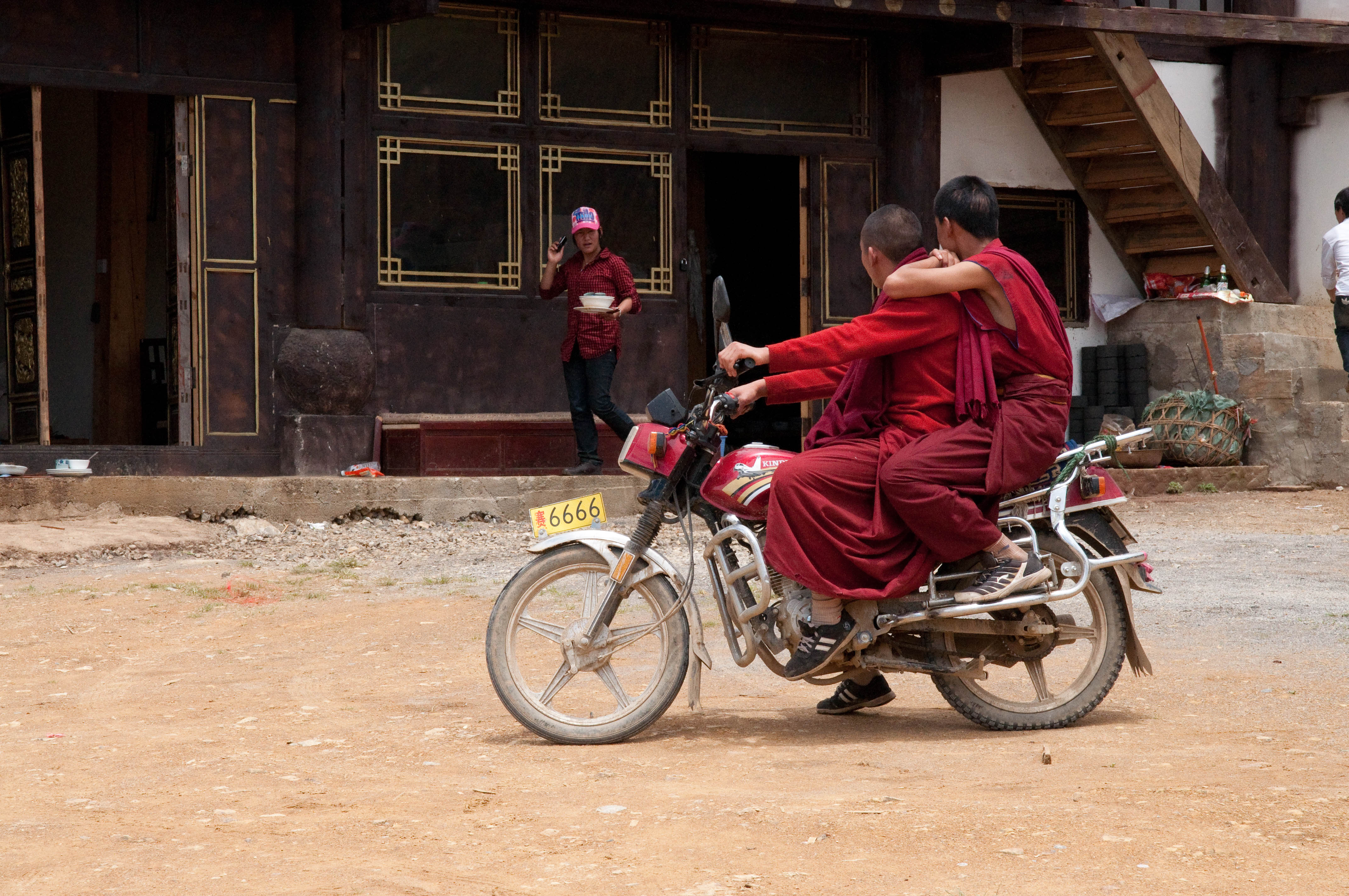
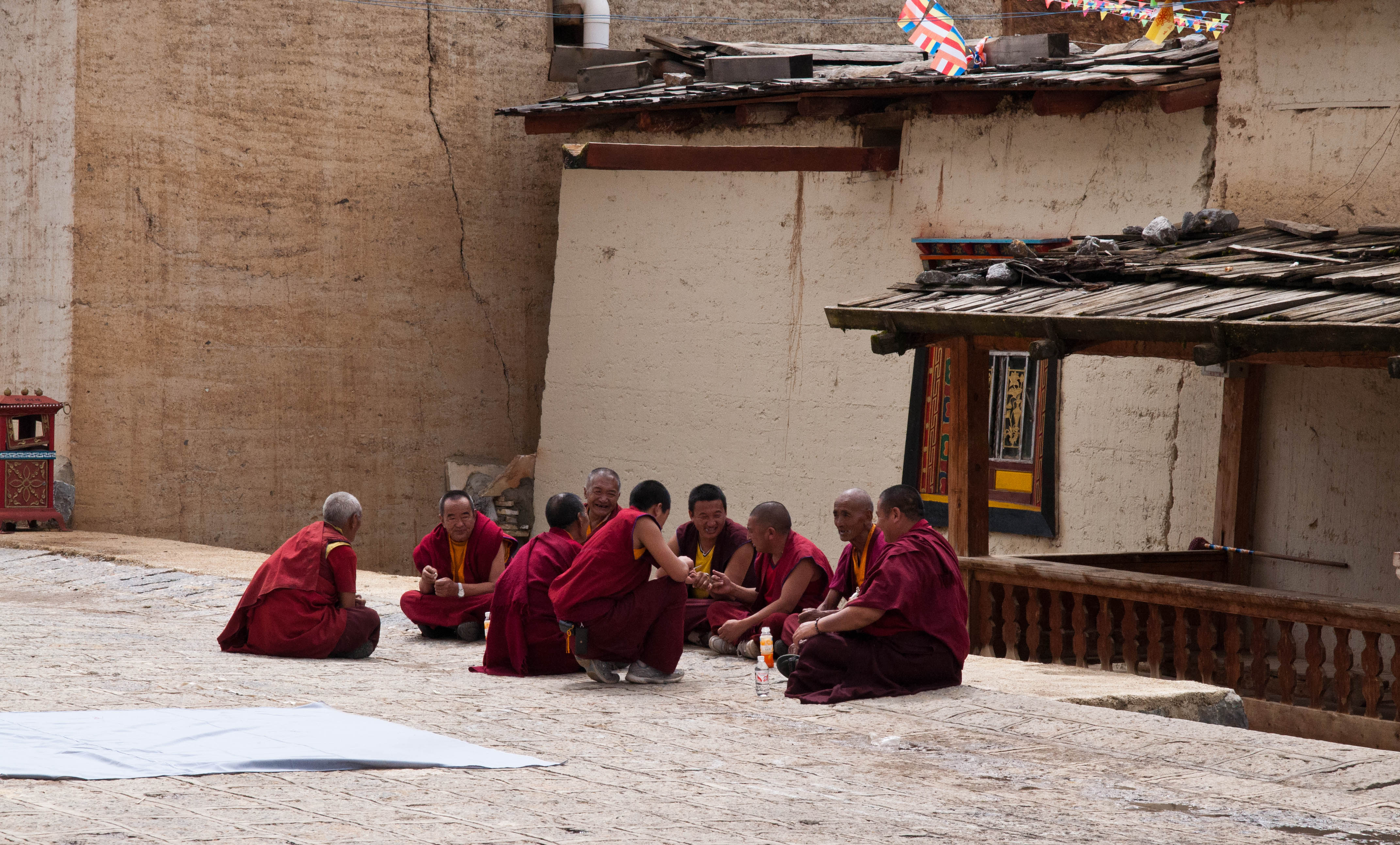
Monks in front of the small restaurant

Feeling the altitude

Tibetan girls in the restaurant

I do not recommend that you go poking around in restaurant kitchens in China as they can be pretty unsanitary. But I couldn’t resist a peak into the kitchen of this place. After all it was right next to where we were sitting. They certainly weren’t trying to hide anything.

TO BE CONTINUED
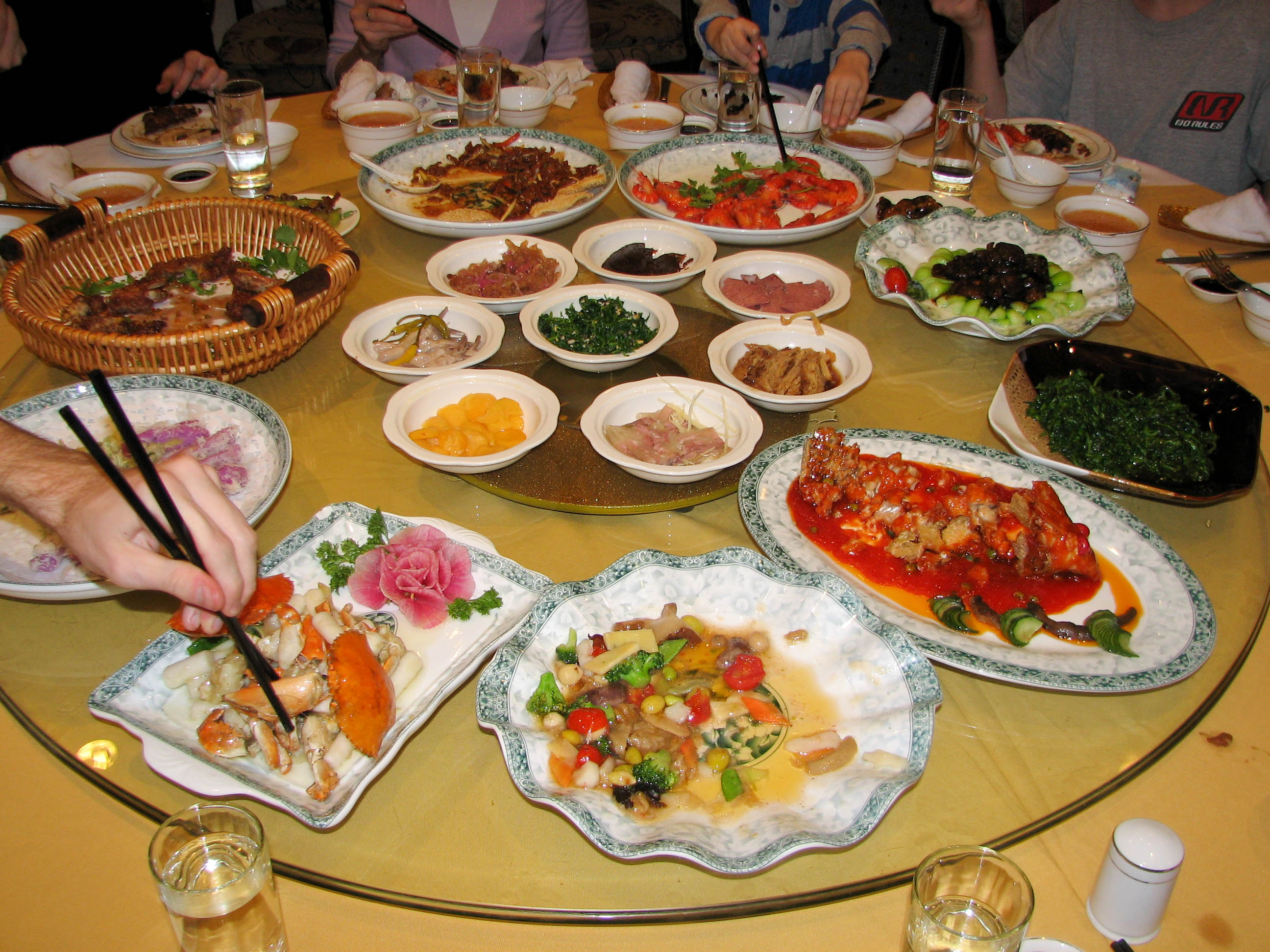
你吃饭了吗?“Have you eaten yet?”

To say that Chinese life revolves around food and eating is not an overstatement. Food is at the core of literally every Chinese holiday and a multitude of everyday activities. In fact, a very common greeting in Chinese is 你吃饭了吗? nǐ chīfàn le ma? “Have you eaten yet?”  It is an expression of well-being, or concern for the other individual. This seems pretty logical coming from a country that has endured centuries of on and off famine.

Food is so important in Chinese culture that the language is full of food and eating terminology. In fact, a search in the wenlin electronic dictionary for the word 吃 chī “to eat” found literally pages and pages of words and expressions that incorporate this word. A similar result was found with the word 食 shí also meaning “to eat” in many Chinese dialects, such as Cantonese. A sampling of the these terms include:

吃苦 chīkǔ eat-bitterness = bear hardship

吃力 chīlì eat-strength =  strenuous effort

吃醋 chīcù eat-vinegar = to be jealous

吃亏 chīkuī eat-loss = suffer a lose; come to grief

吃惊 chījīng eat-surprise = to be startled or shocked

A couple other food related expressions that are commonly used in everyday speech include:

铁饭碗 tiěfànwǎn       iron rice bowl = to have a secure job

炒鱿鱼 chǎo yóuyú    fry squid = to be fired, as in“他炒了我的鱿鱼” tā chǎo le wǒde yóuyú “He fired me” literally, “He fried my squid.”

吃不了兜着走 chībuliǎo dōuzhe zǒu

carry away leftovers from a meal = to get into serious trouble; for example if I said, 你吃不了兜着走 nǐ chībuliǎo dōuzhe zǒu  means that you are in serious trouble. Obviously the meaning in this expression is metaphorical.

China truly is one of the great ancient cuisines, along with France and Greece. It is a cuisine that has survived and evolved for thousands of years. What most Americans do not realize is that Chinese cuisine varies dramatically across the country. In other words, there is not just one kind of Chinese food, but rather many kinds of Chinese food, that use different ingredients, different methods of preparation, and different methods of cooking. There are also popular dishes that you can find all over China.

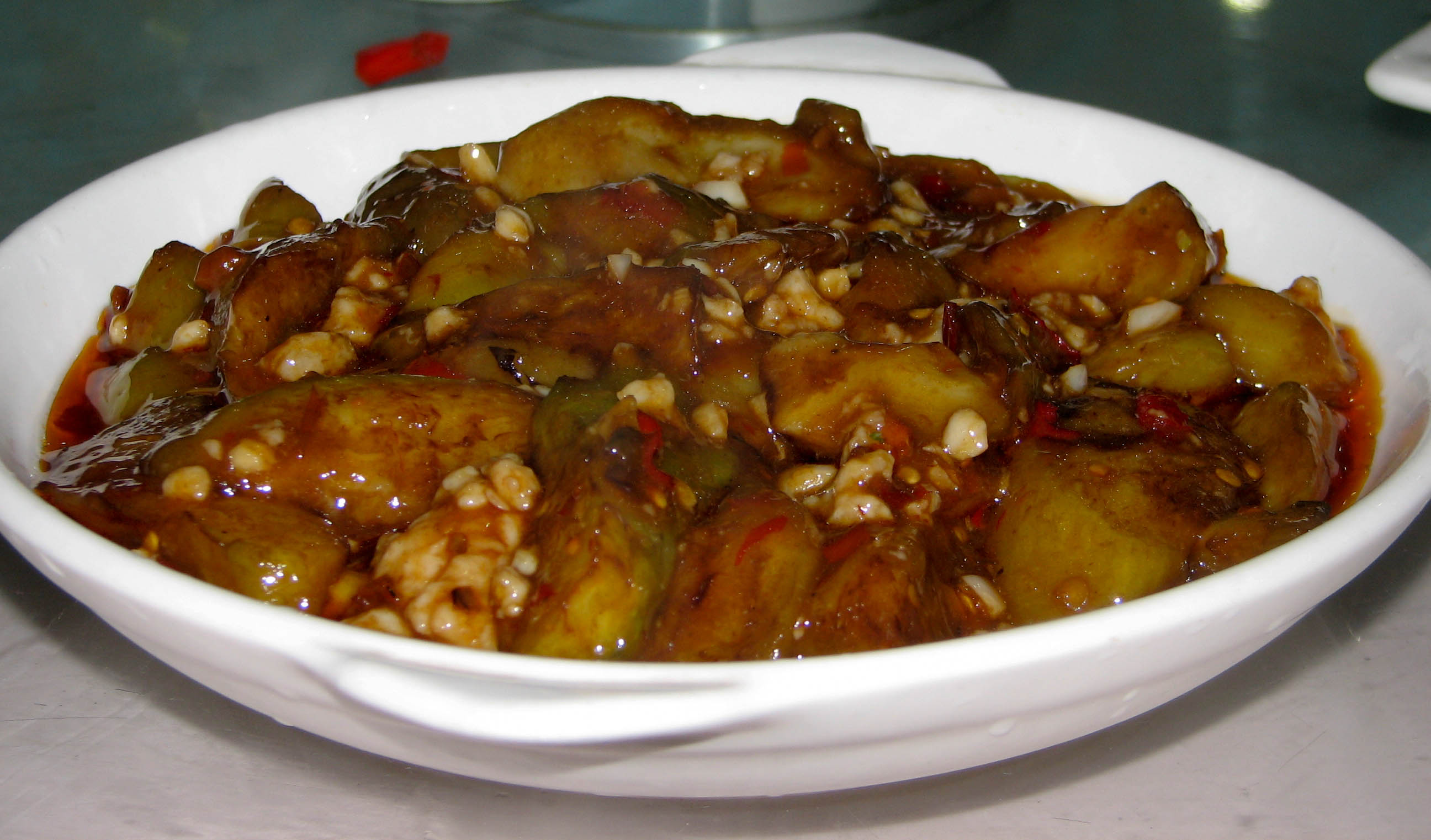
Below are a few photographs of some dishes I like to eat when I travel to China. In a later post I’ll discuss some of the different kinds of Chinese food.

鱼香茄子 yǔxiāng qiézi; fish flavored eggplant

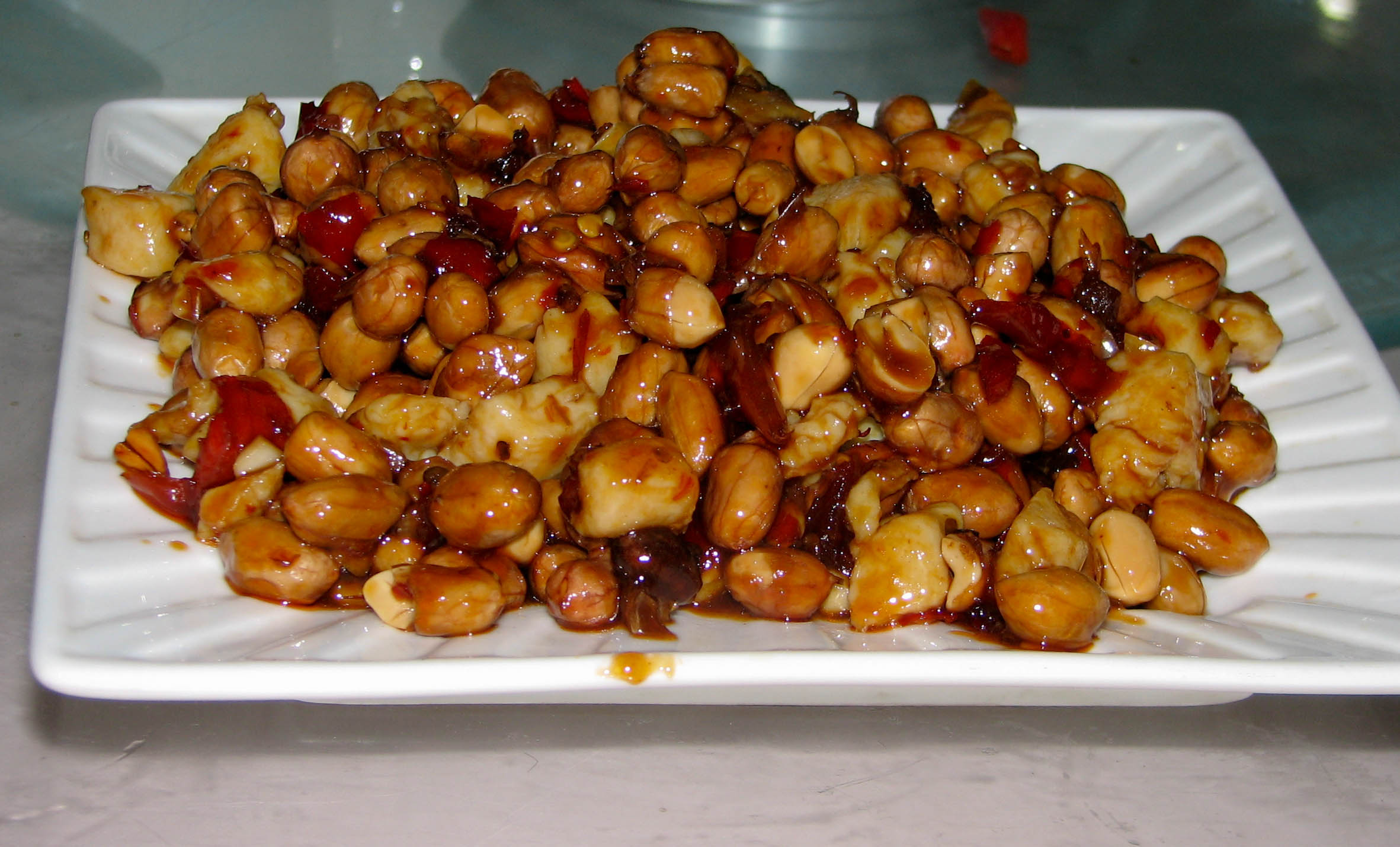
宫宝鸡丁gōngbǎo jīdīng; Kung Pao Chicken

番茄炒鸡蛋 fānqié chǎo jīdàn; scrambled eggs with tomatoes

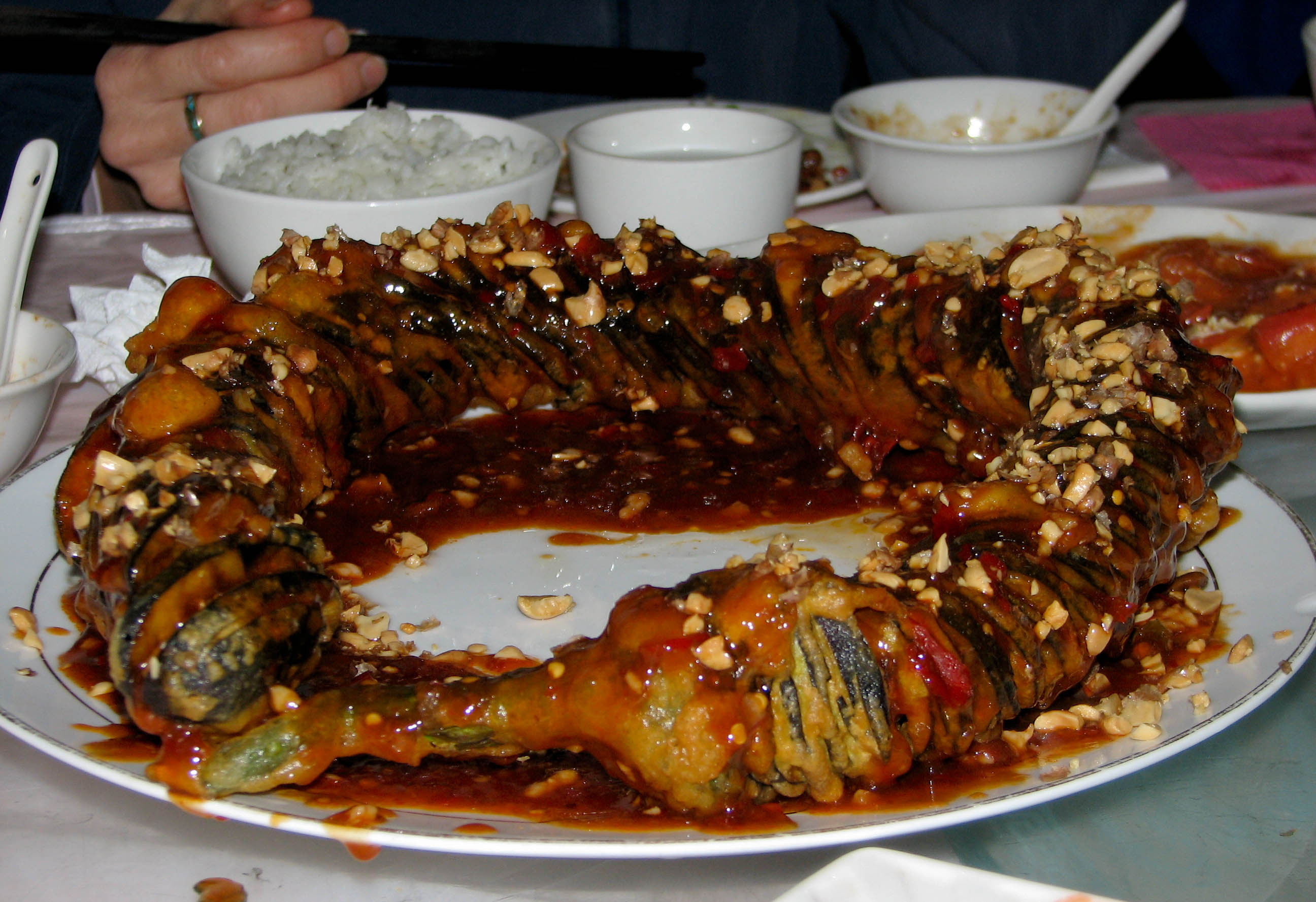
I don’t know the origin of the eggplant dish below, but I have only found it at one very small restaurant in Nanjing. It is truly delicious—spicy, sweet, and crunchy.

蟠龙茄子 pánlóng qíezi; coiled dragon eggplant

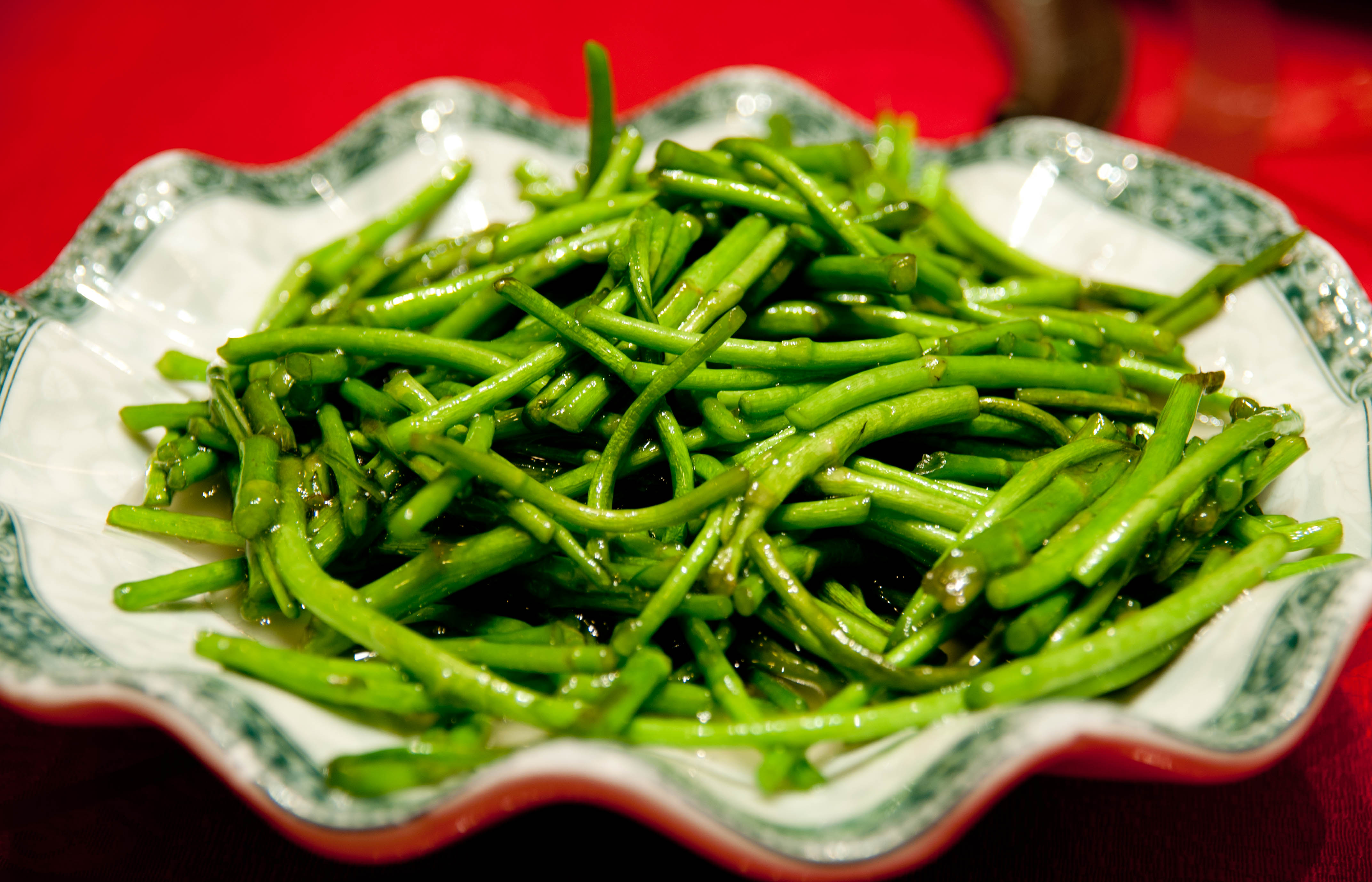
四季豆 sìjìdòu; green beans

南京盐水鸭 nánjīng yánshuǐyā; Nanjing salted duck

穆斯林羊排 mùsīlín yángpái; Muslim lamb ribs

烤鸭 kǎoyā; roast duck

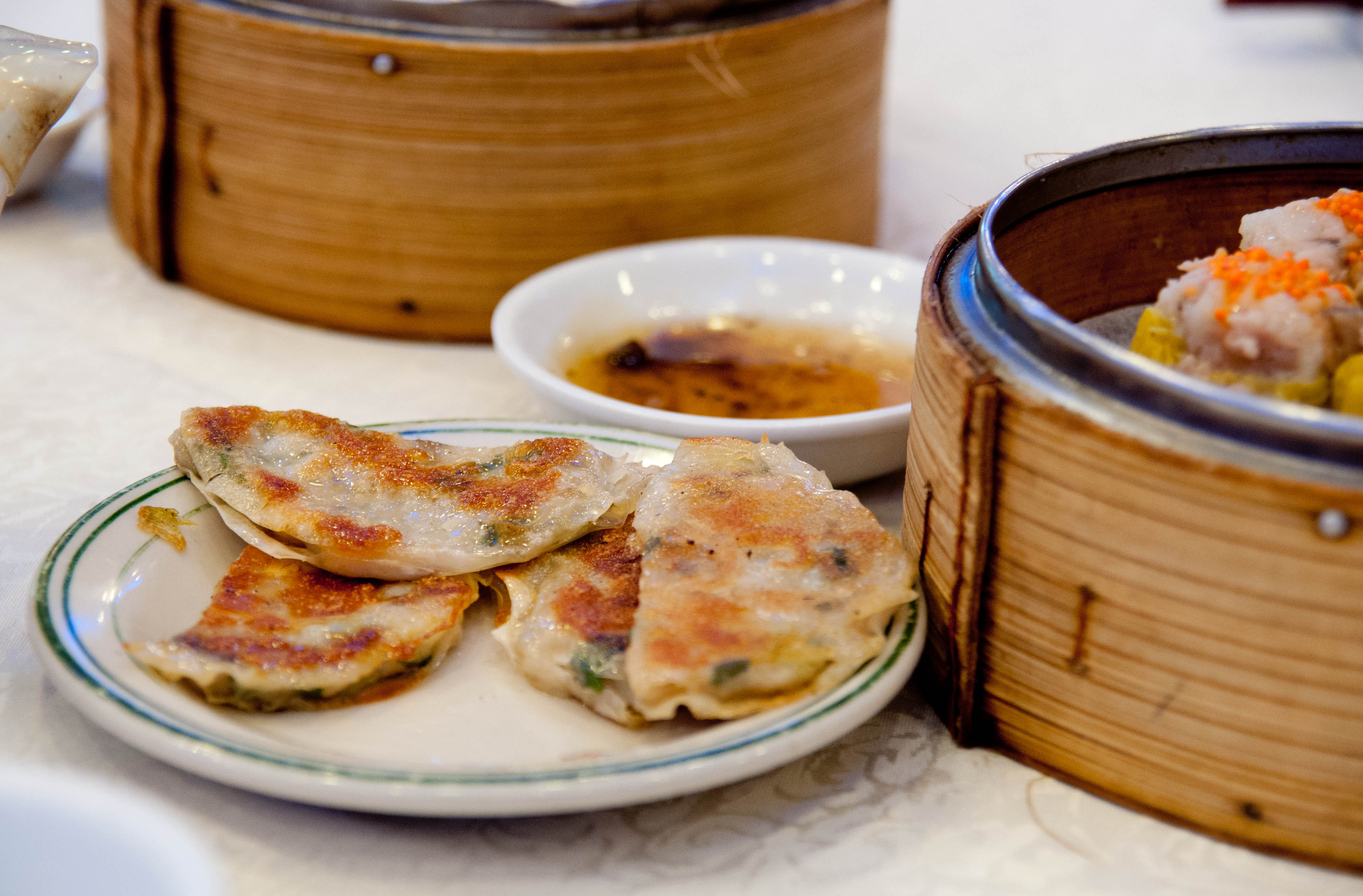
And finally some dimsum dishes from Hong Kong.

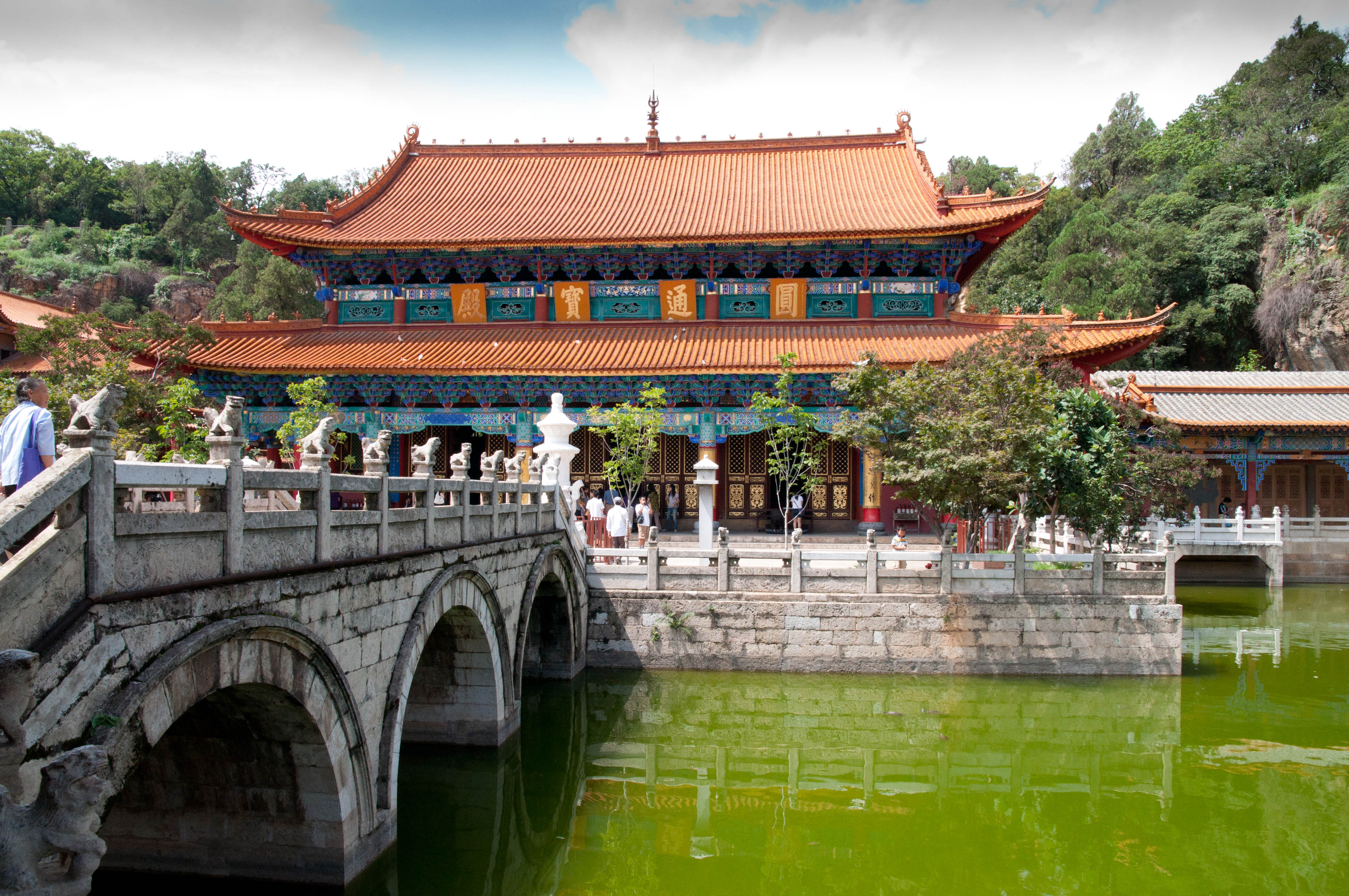
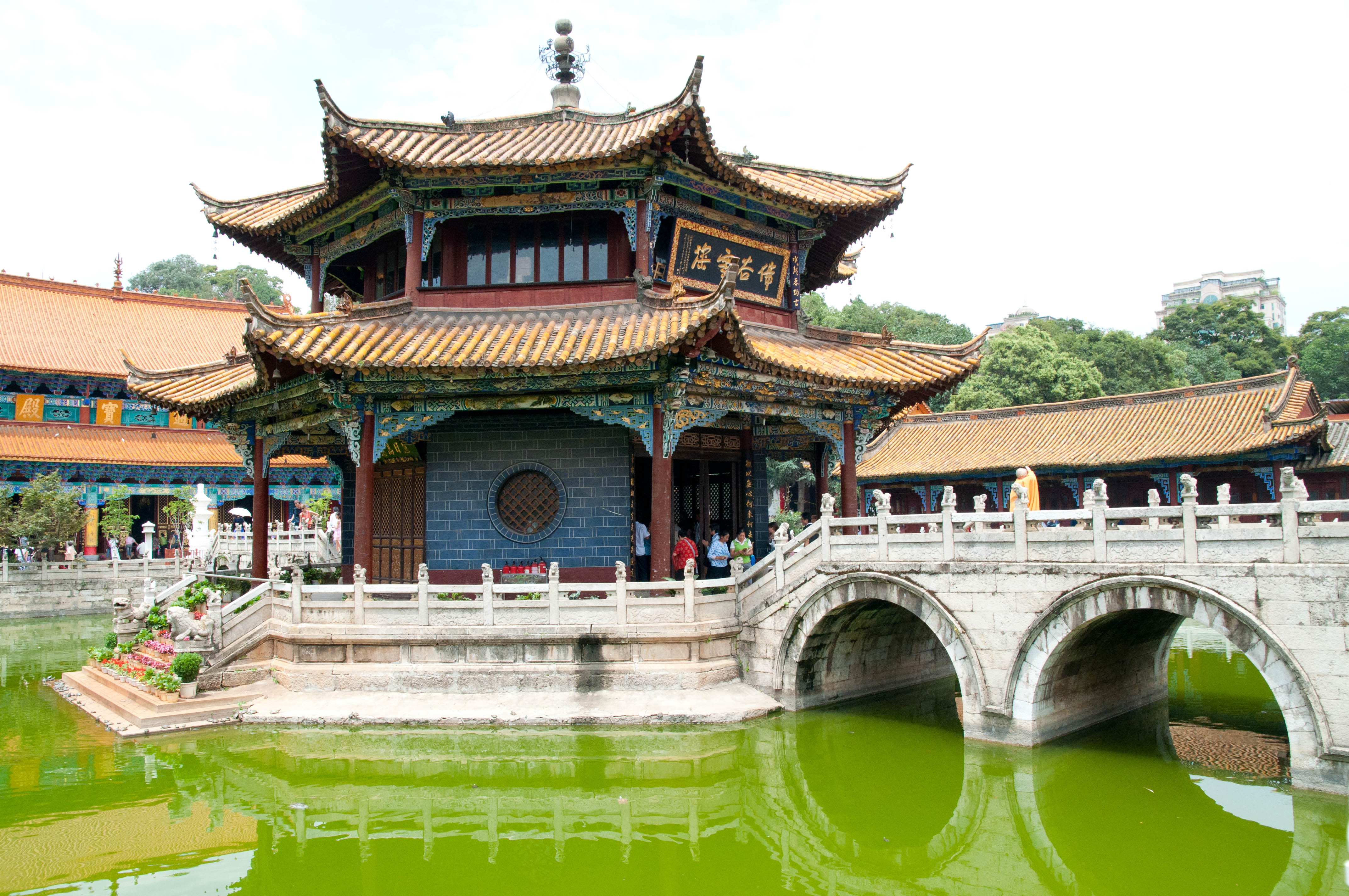
Yuantong Temple 圆通寺 Kunming

A couple years ago a friend and I were in Kunming for an academic conference and decided to visit the famous Yuantong Temple. It was originally built in the late eighth century, but like all old structures in China, it has been rebuilt many times. It is a working temple with quite a few resident monks. It is the most important Buddhist temple in Yunnan Province. Pilgrims come from all over the area to pay their respects.

At the temple there are classes on Buddhist scriptures as well as many oridinary citizens praying. We observed several gatherings of people in the various pavilions singing, chanting, and praying together.

I really enjoy visiting Buddhist temples in China. Usually they are are very peaceful and a welcome break from the frenetic pace of large Chinese cities. I like talking to Buddhist monks about their background, why they decided to become a monk, their daily activities, and so on. I’ve had some very interesting conversations over the years. I remember at a monastery in Xi’an once chatting with a middle-aged monk. We were strolling through a quiet back courtyard with no one else around. Out of the blue he pulled out a handful of kettle corn from somewhere inside his saffron robes and offered it to me. My first thought was, “where did that come from?” I graciously accepted his simple gesture.

Another time at the Lingyin Temple and monastery in Hangzhou I struck up a conversation with another monk. After chatting for awhile he offered to show me around. After a brief tour of the main hall, he ushered me into his office. I was surprised to find a computer, fax machine, and other modern electronics. He offered me a cup of tea and we sat on burnished wood chairs as he explained why Buddhism is important to him.

Below are a few pictures from the Yuantong Temple in Kunming.

I’m not sure why the water is so green, but that is how it really looked. And it was full of fish and turtles.

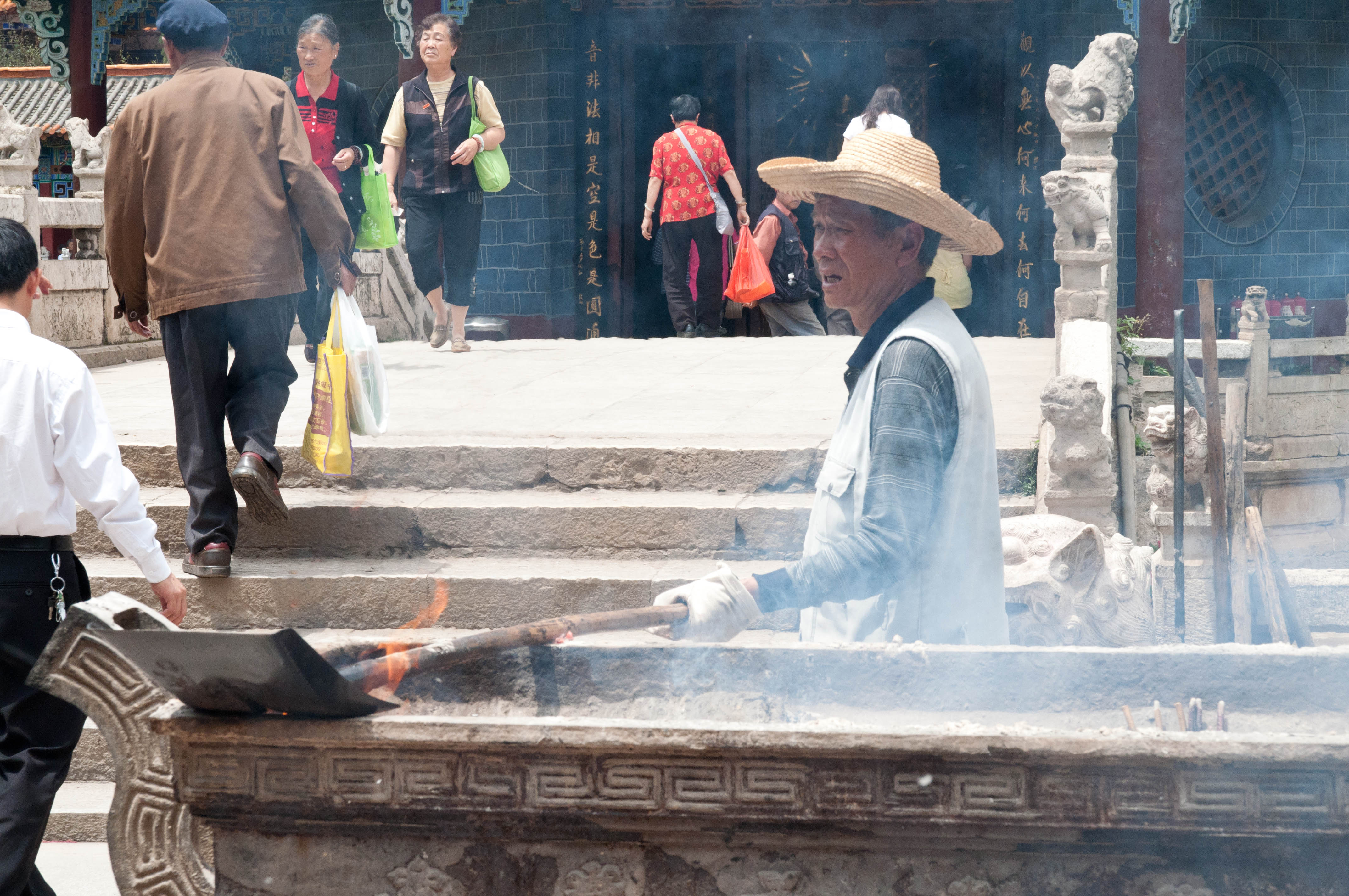
Tending the incense and wax fire

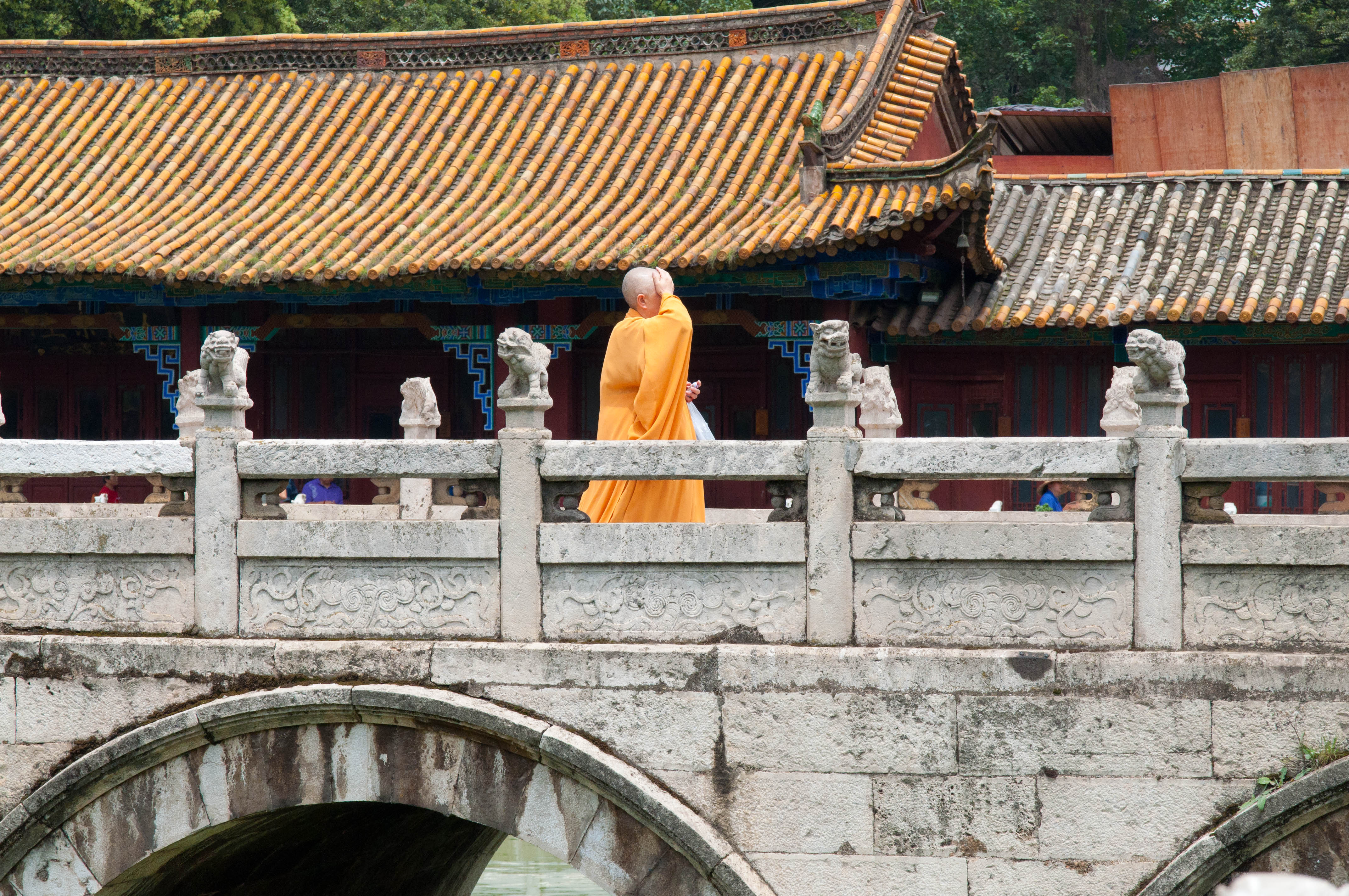
One of the many resident monks

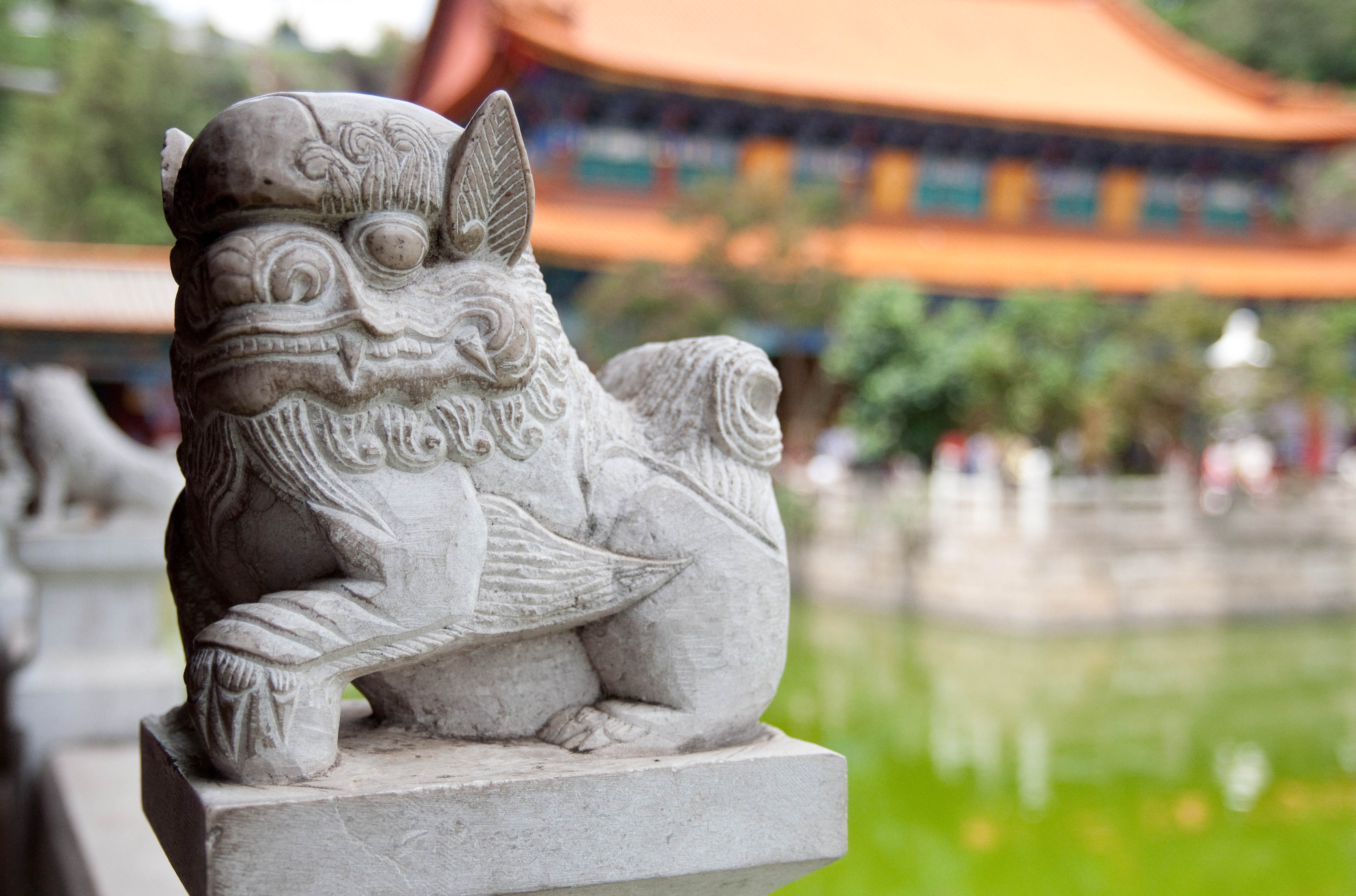
Detail of stone lion carving

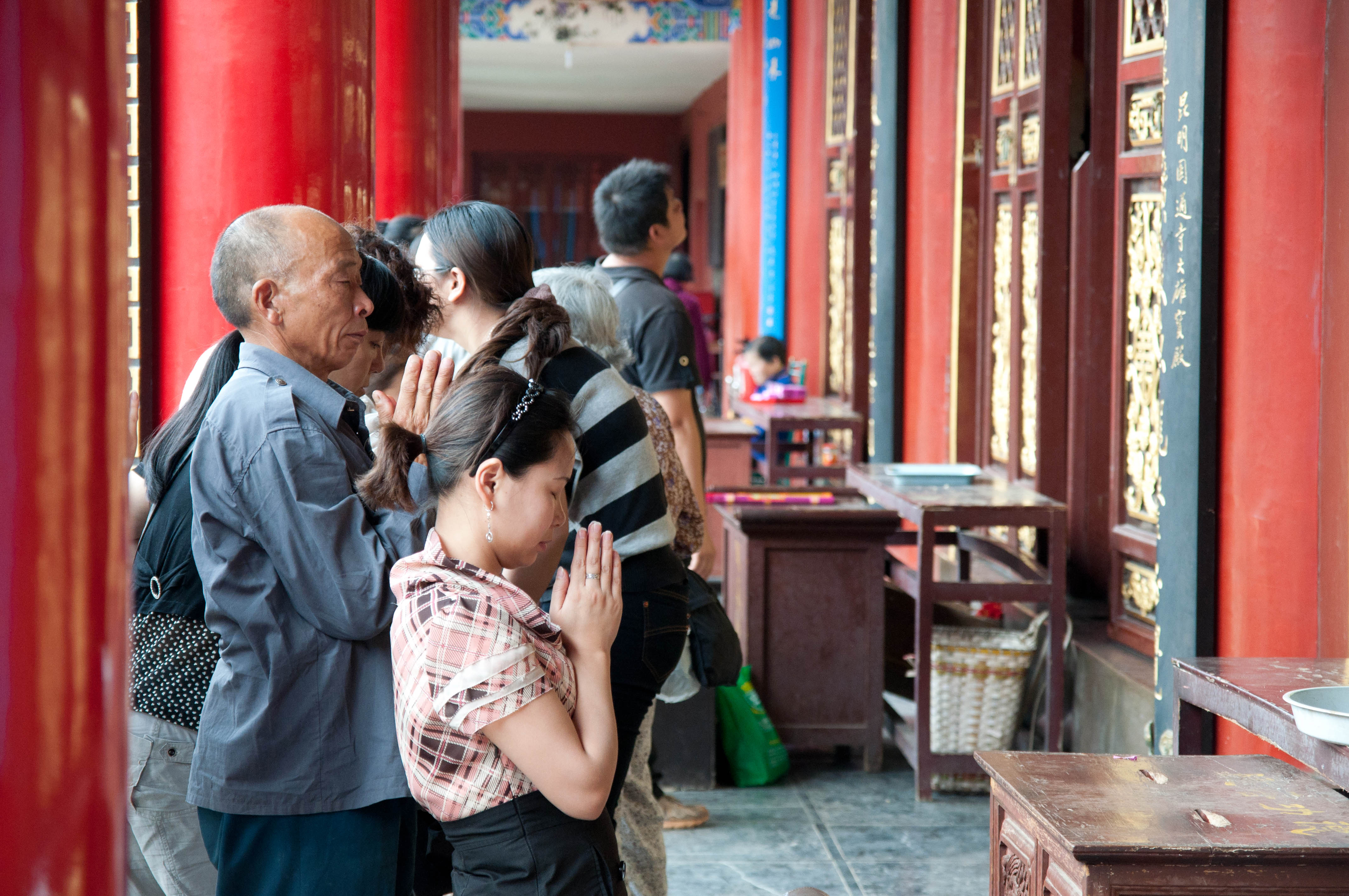
Worshippers

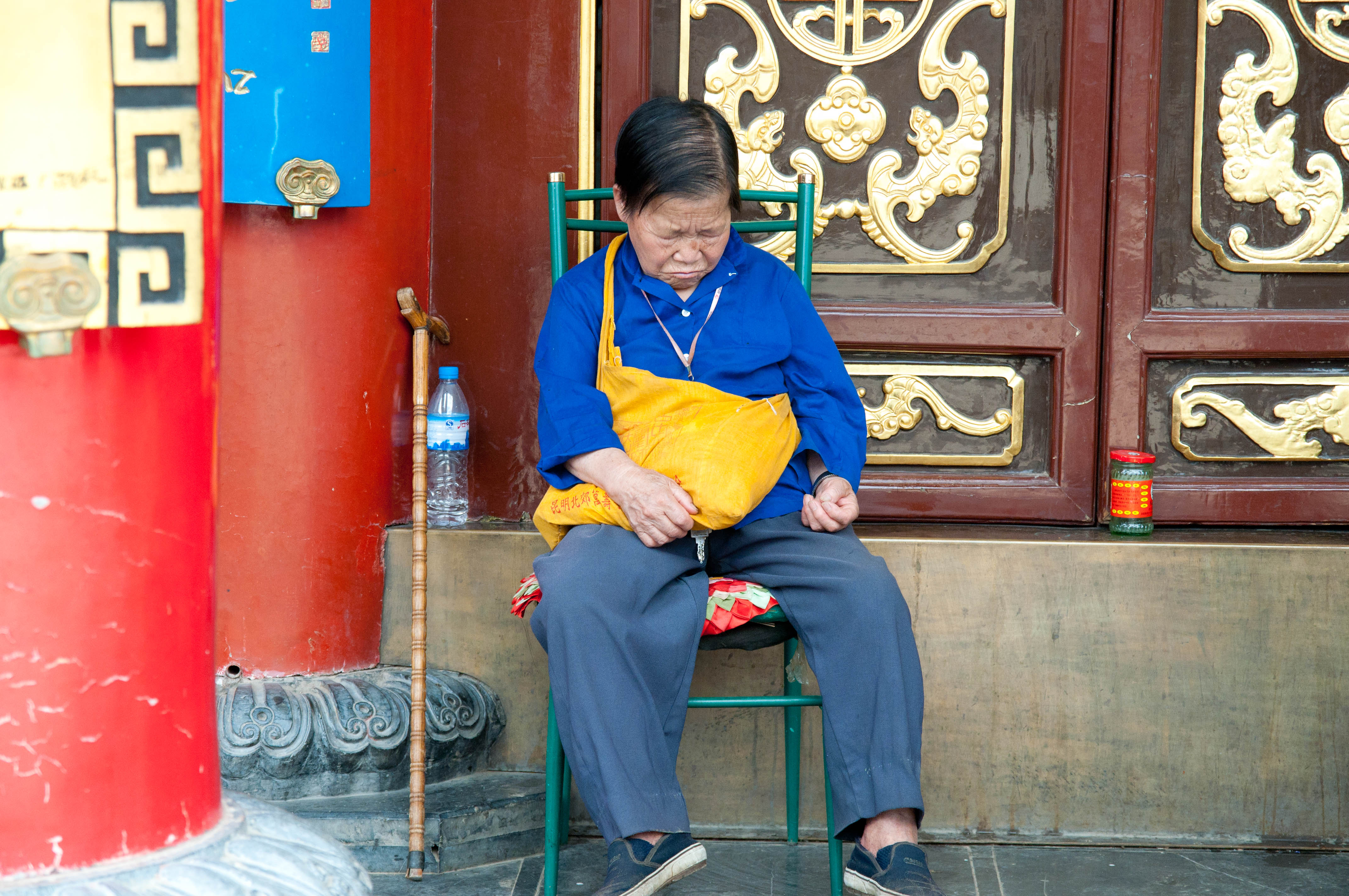
A sleepy little lady

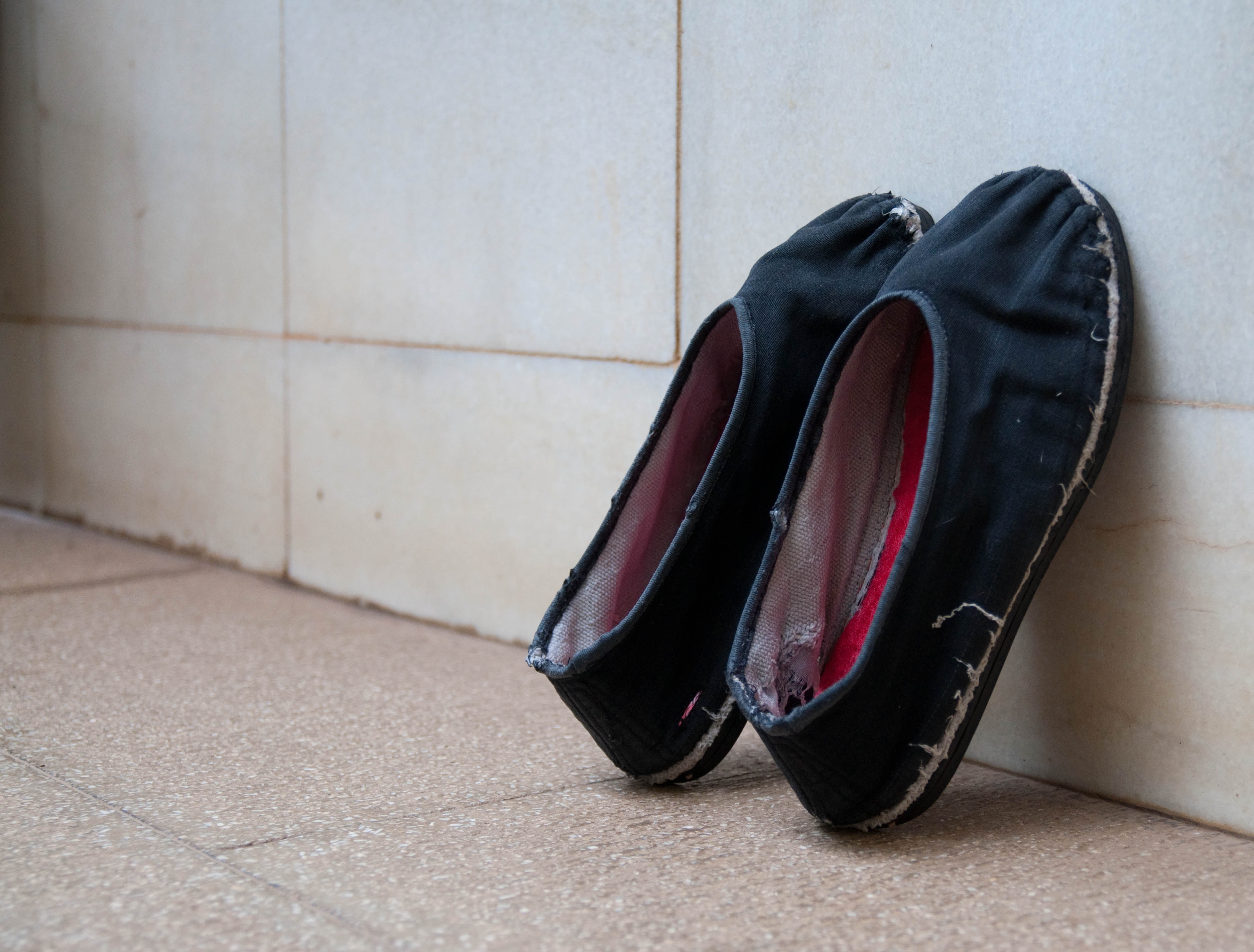
Monk shoes

A Trek on the Great Wall

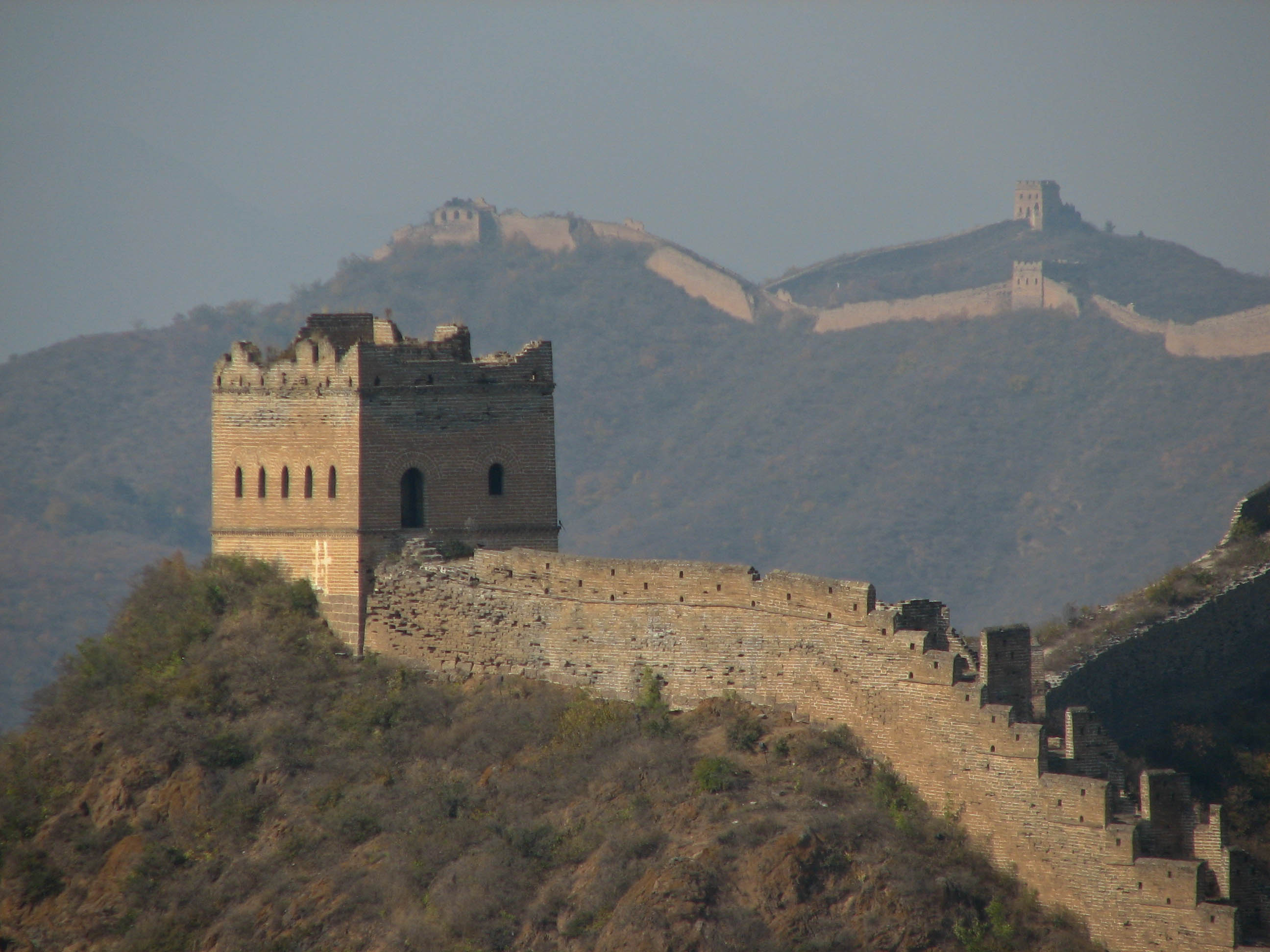
In the Autumn of 2005, I was directing a study abroad group in China. In mid-October we traveled to Beijing to see the sights. This was a great time to be there. The weather was cool, and there were not too many tourists. If you have never been to the Great Wall, you do need to go; it is pretty impressive. Though there are lots of myths about the Wall, like that you can see it from space (you cannot), or that it was built in 200 BC (only very short sections are that old), and so on, it is still quite impressive and fun way to spend a day.

The vast majority of tourists go to either Bādálǐng(八达岭) or Jūyōngguān (居庸关). This is where the big tour groups will take you. They are also the closest to Beijing. I had already been to both places and was less than impressed. They have been completely rebuilt, there are cable cars, hundreds of souvenir booths, and hordes of tourists, both Chinese and foreign.

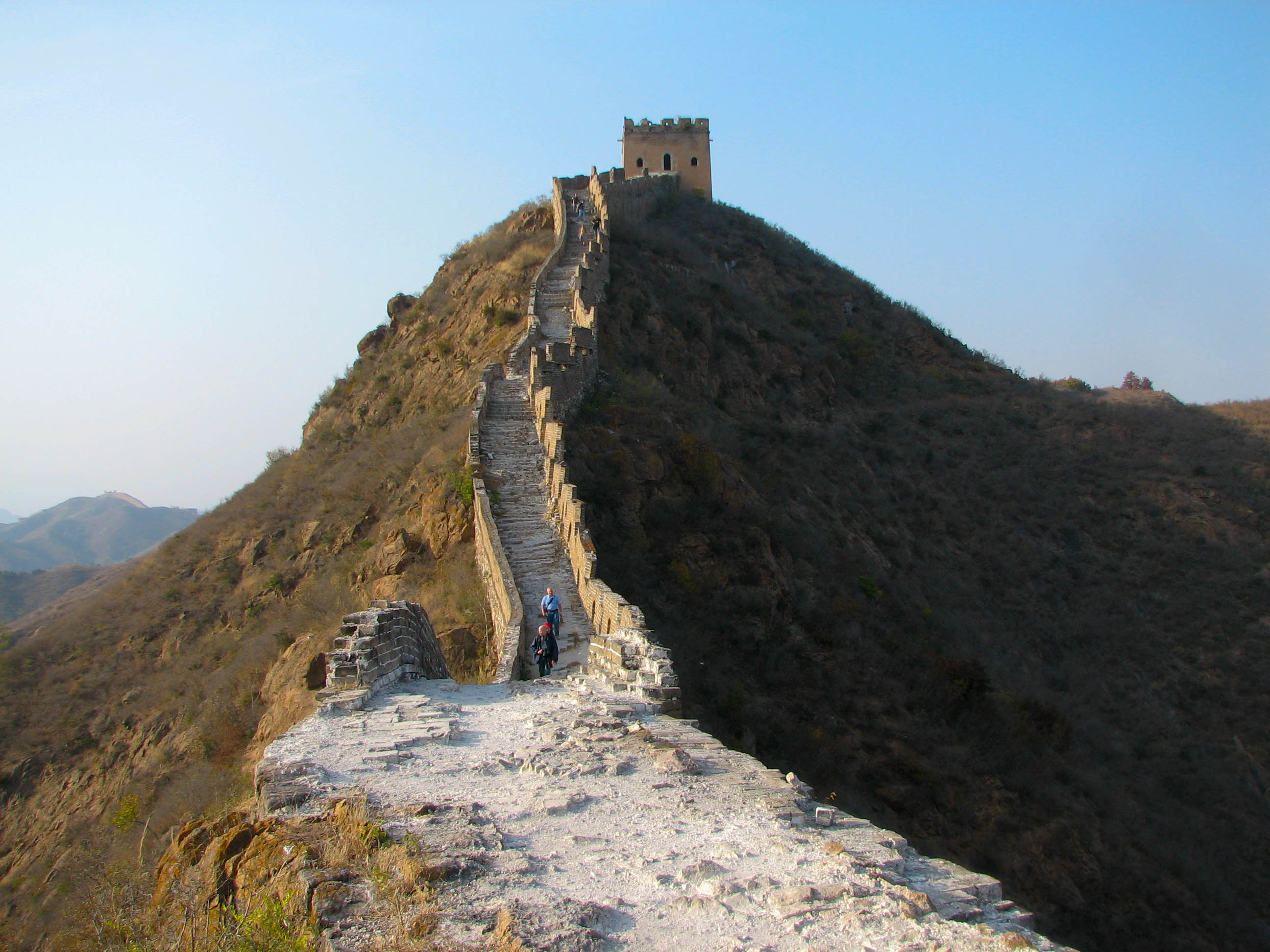
I had a friend who had done a trek on a less visited part of the Wall; this sounded much more appealing. I arranged for a bus to drop us off at a section of the Wall called 金山岭 jīnshānlǐng and pick us up at 司马台 sīmǎtái. This would give us a 10 kilometer hike along the wall. It was a beautiful, cool, clear, Autumn day. This section of the Wall is less developed, less rebuilt, has far fewer tourists, and at that time had zero souvenir shops.

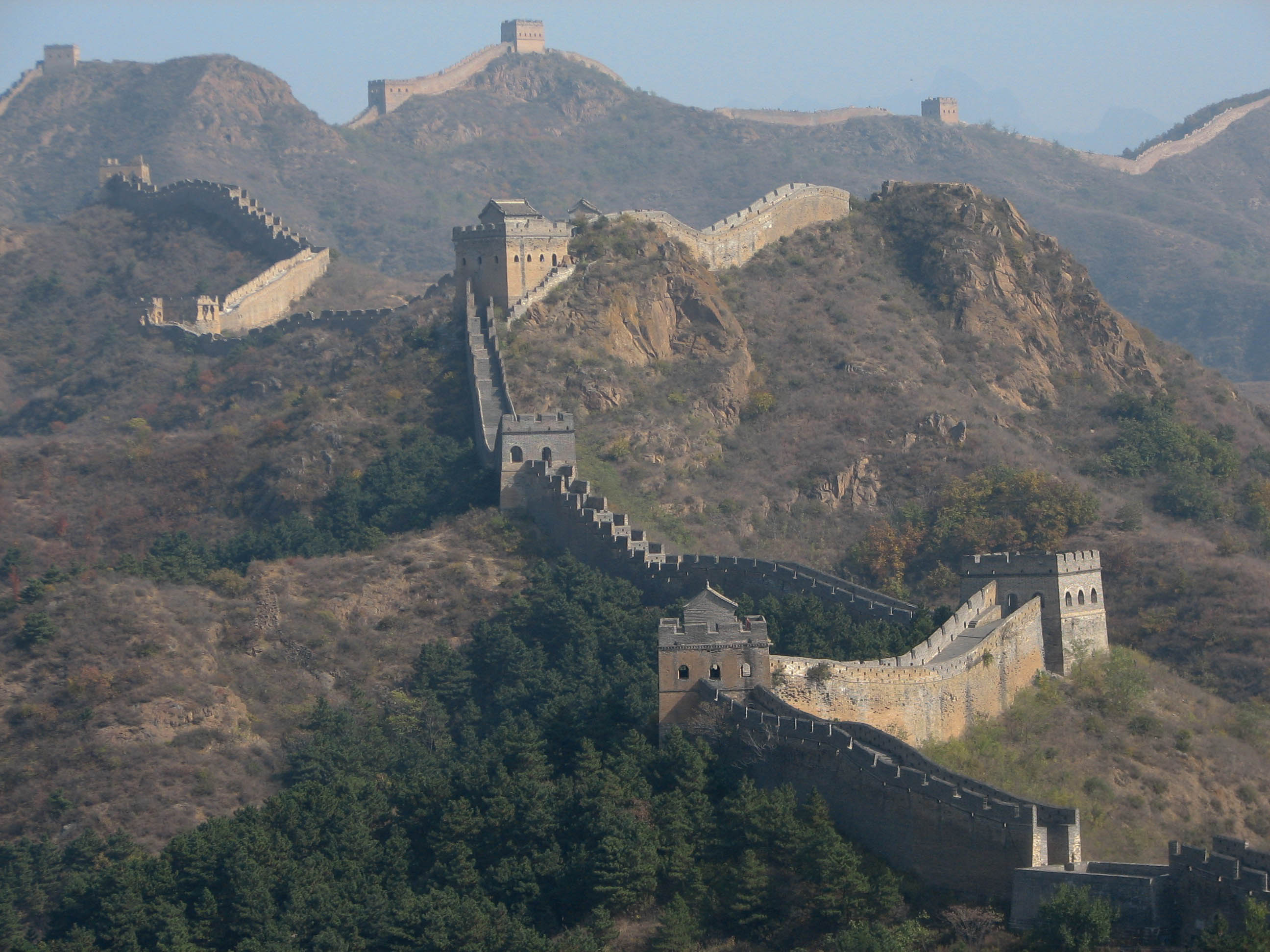
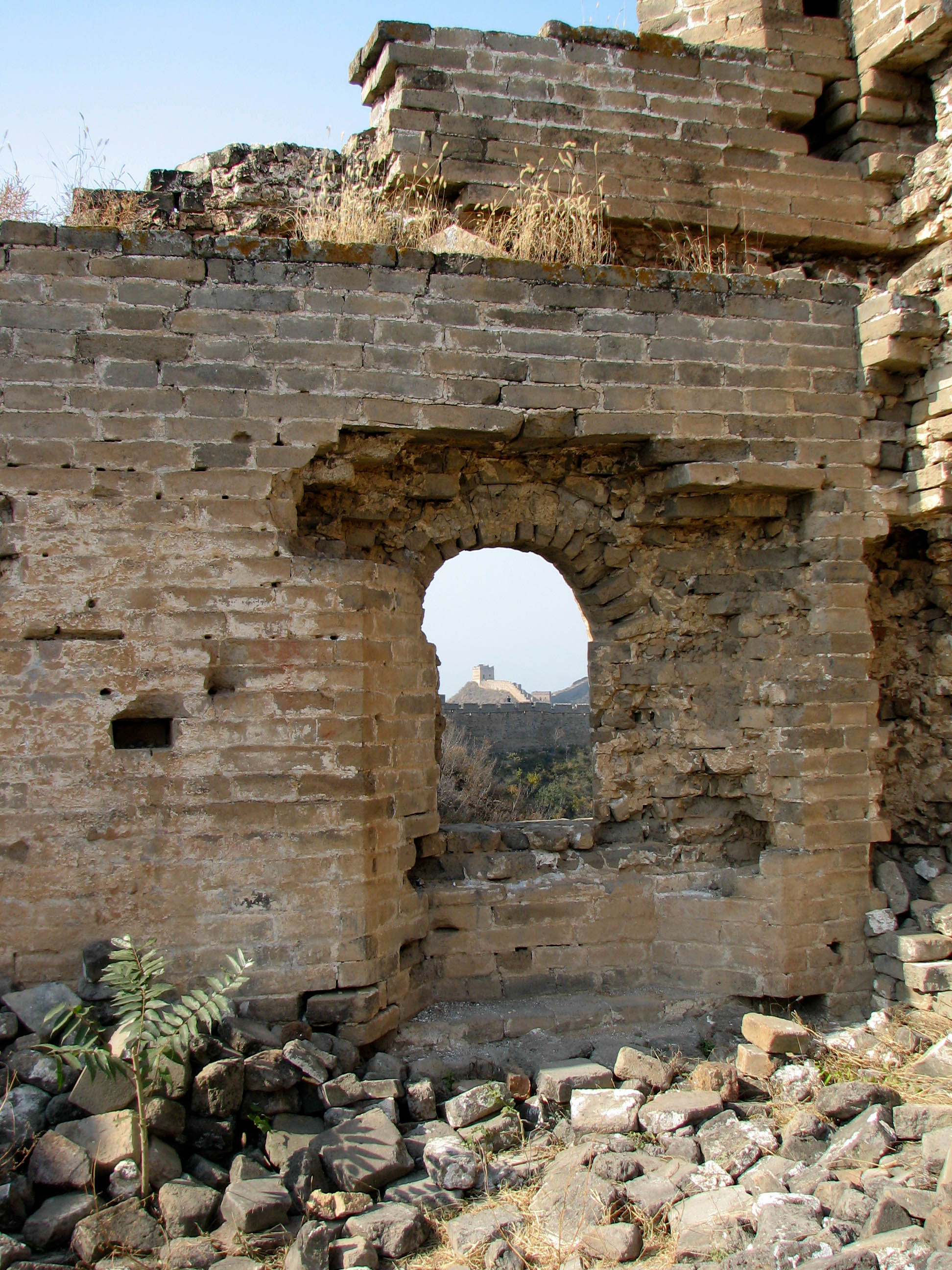
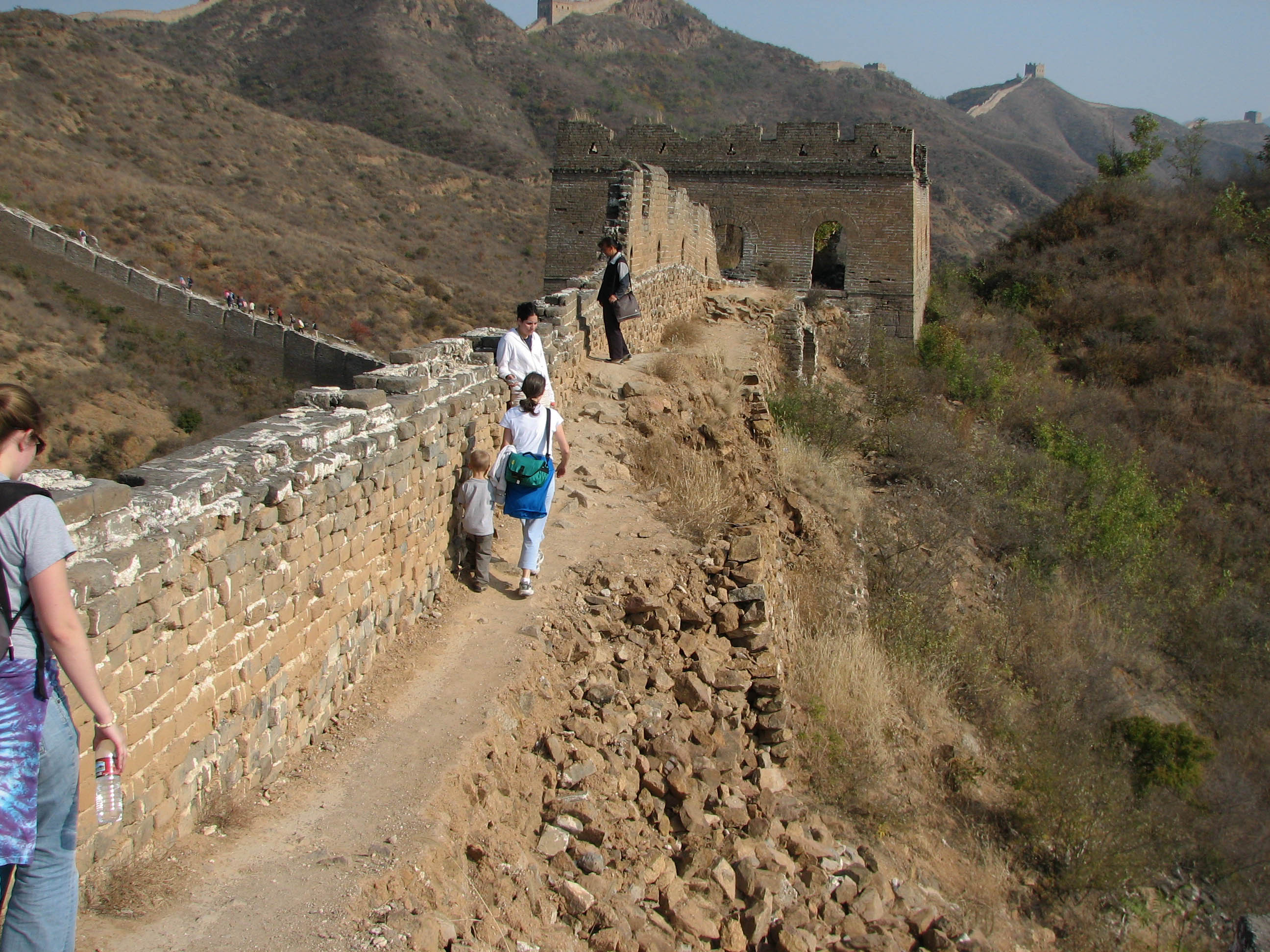
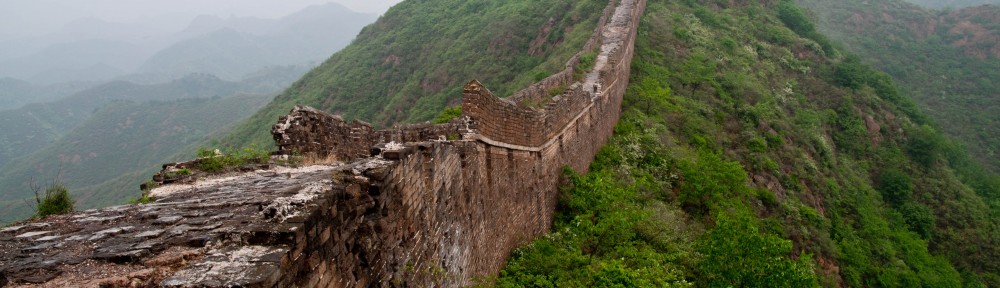
We had a great time hiking this section of the Wall. It had a much wilder feel than the other more touristy sections. Some sections of the Wall were literally broken down with bricks laying all over the place.

There were about 37 watchtowers along this 10 kilometer stretch of the Wall. Some of them were very large and functioned as barracks for soldiers.

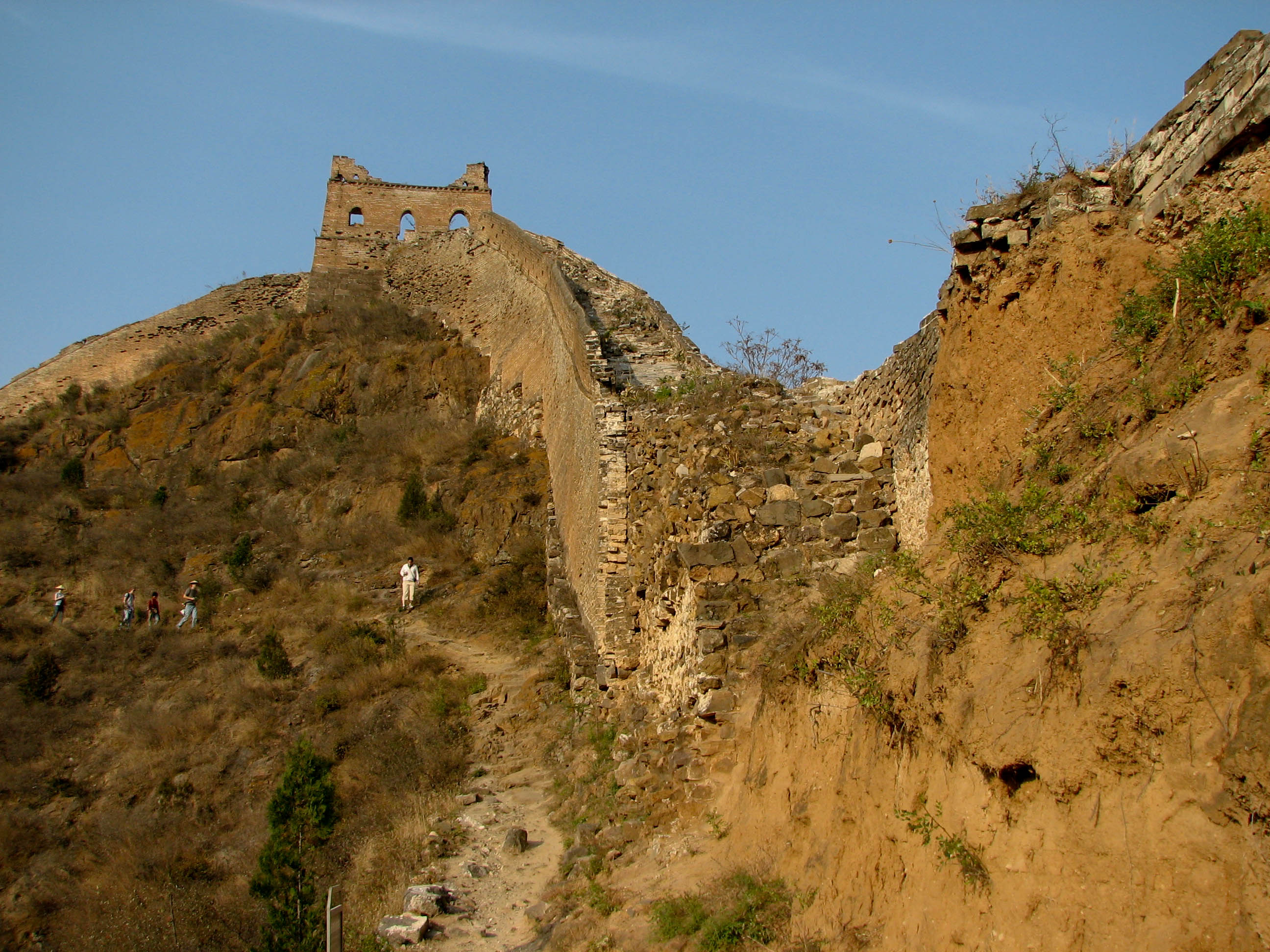
There are quite a few sections on this part of the wall that are broken down, and have not been restored like in the other popular sections.

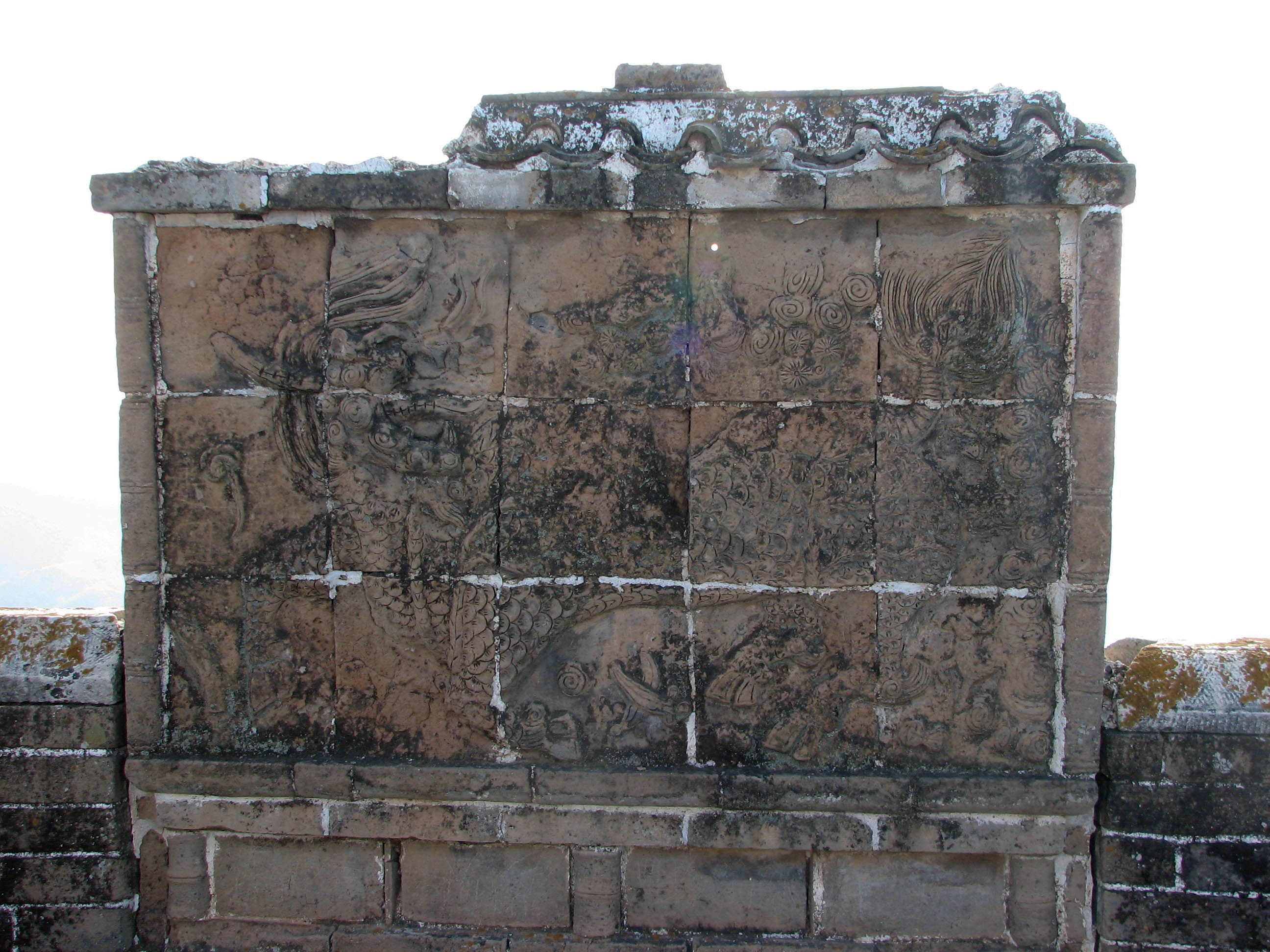
I had heard from a friend that on the top of one of the towers in this area of the Wall there is a stone carving of a qílín 麒麟. This mythical beast is sometimes called a Chinese unicorn. It is actually an auspicious beast that has the body of a deer, the legs of a horse, the paws of a wolf, the tail of a cow, and either one or two horns. Apparently not many people know about this stone carving, or where to find it.

As we were hiking along the wall I asked a peasant, who was following us trying sell us some trinkets, about it. He got all excited and said it was in the tower that we had just past. So several students and I ran back to the tower. The problem was that the 麒麟 was on top of the tower and there were no stairs or ladders to get up there. We ended up climbing a vertical wall about twelve to fifteen feet high to an square entrance in the roof. There were cracks and holes where partial bricks were missing that we used for hand and foot holds. The climbing was not too difficult, but was a little unnerving. The view was quite nice from up on top of the tower. The 麒麟 was carved into one of the walls. It’s kind of hard to make out in this photograph.

When we did this trek we had our four year old son along. It was pretty tough going for him but we kept him motivated with small pieces of candy that we would give him when we arrived at each tower. That kept him motivated. I only ended up carrying him for a total of about twenty minutes of the 5 hour hike.

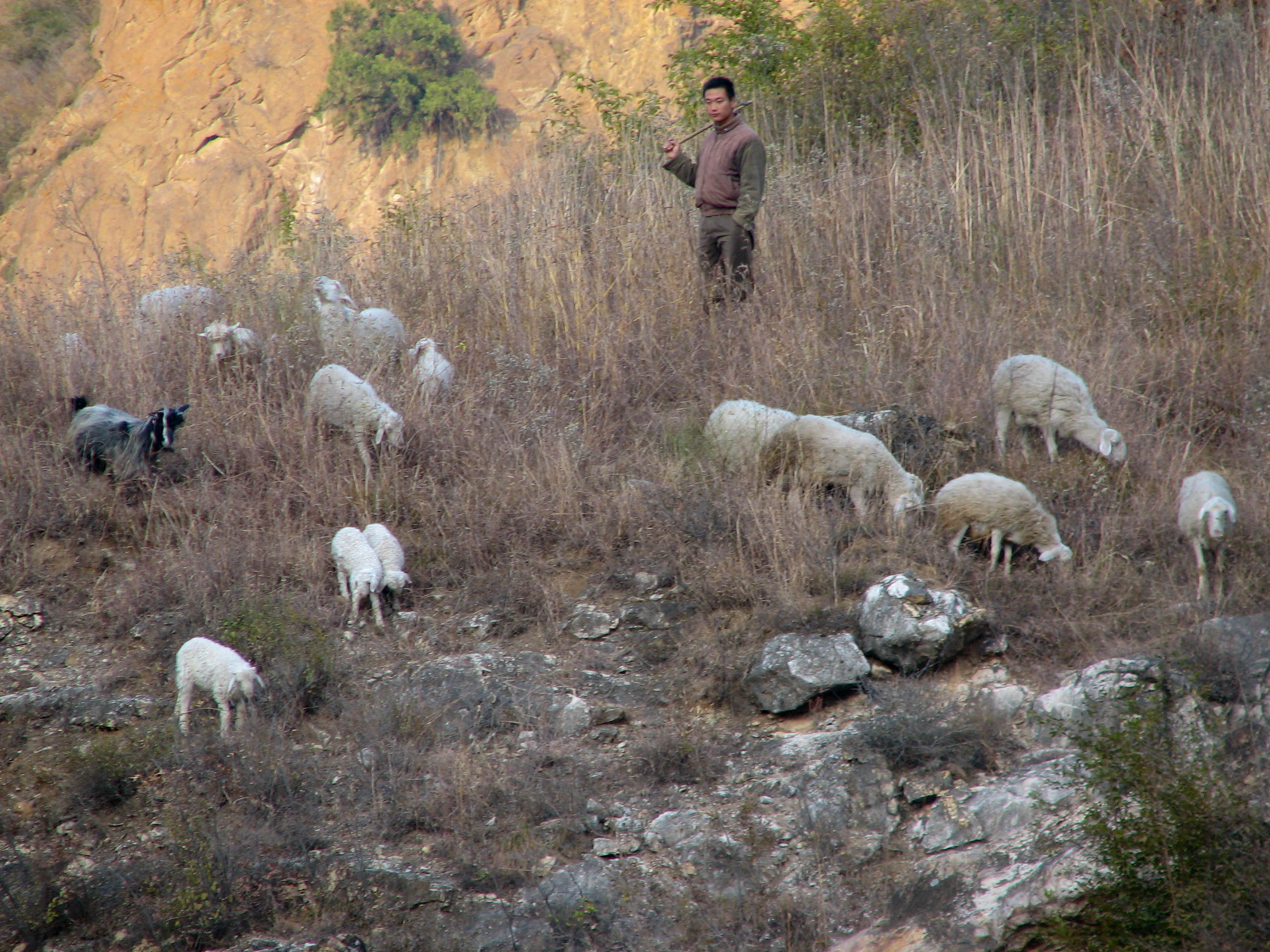
Right near the end of the trek, the wall descends a very steep slope into a narrow canyon. We saw this guy tending his sheep right near the end of this section of the wall.

This was by far the best experience we had in Beijing. It was really nice to get away from the crowds for a change. We only saw one small group of European tourists, and a handful of Chinese tourists the entire day. The only slight drawback were the several peasants who followed us the entire way trying to sell us books about the Great Wall, or t-shirts and other trinkets. The guy that followed my wife and son and I was pretty nice and we had a nice long conversation. Since it was past harvest time, he did this to make some extra money. He was from a small village nearby.

I highly recommend this section of the Great Wall. The only difficult part is the logistics. If you are traveling solo, or with just a couple friends, your best, and maybe only option, is to hire a taxi to take you to 金山岭 jīnshānlǐng and arrange to get picked up at 司马台 sīmǎtái. It is advisable to negotiate a flat rate before you set off. There may be public transportation, but it would be pretty long and potentially complicated. It’s also possible to go with a tour company to handle the logistics. Trips like this can often be arranged through tour companies in larger hotels.