
One of the great things about Taiwan is the food. Not only is it fresh, varied, and delicious, it’s also quite inexpensive. For these reasons, eating out is practically a national pastime. There are literally restaurants, cafes, and food stalls everywhere, in every neighborhood across the island. The quality of the food is outstanding. Like Chinese food on the Mainland, and in places like Hong Kong and Singapore, the people insist on freshly prepared food.
Taiwan’s version of Chinese food is unique and unlike anywhere else, including right across the Taiwan Straits in Fujian Province. However, Taiwan’s native cuisine is probably most related to that of Fujian Province. This makes sense since most Taiwanese have roots in Southern Fujian Province, and they speak Southern Min dialect (閩南話 mínnán huà) also known as 台語 táiyǔ, or Taiwanese. Other regional Chinese cuisines, such as Sichuan, Cantonese, and Hunnan, can also be found in Taiwan, but where the food really shines is in their uniquely fusion food.
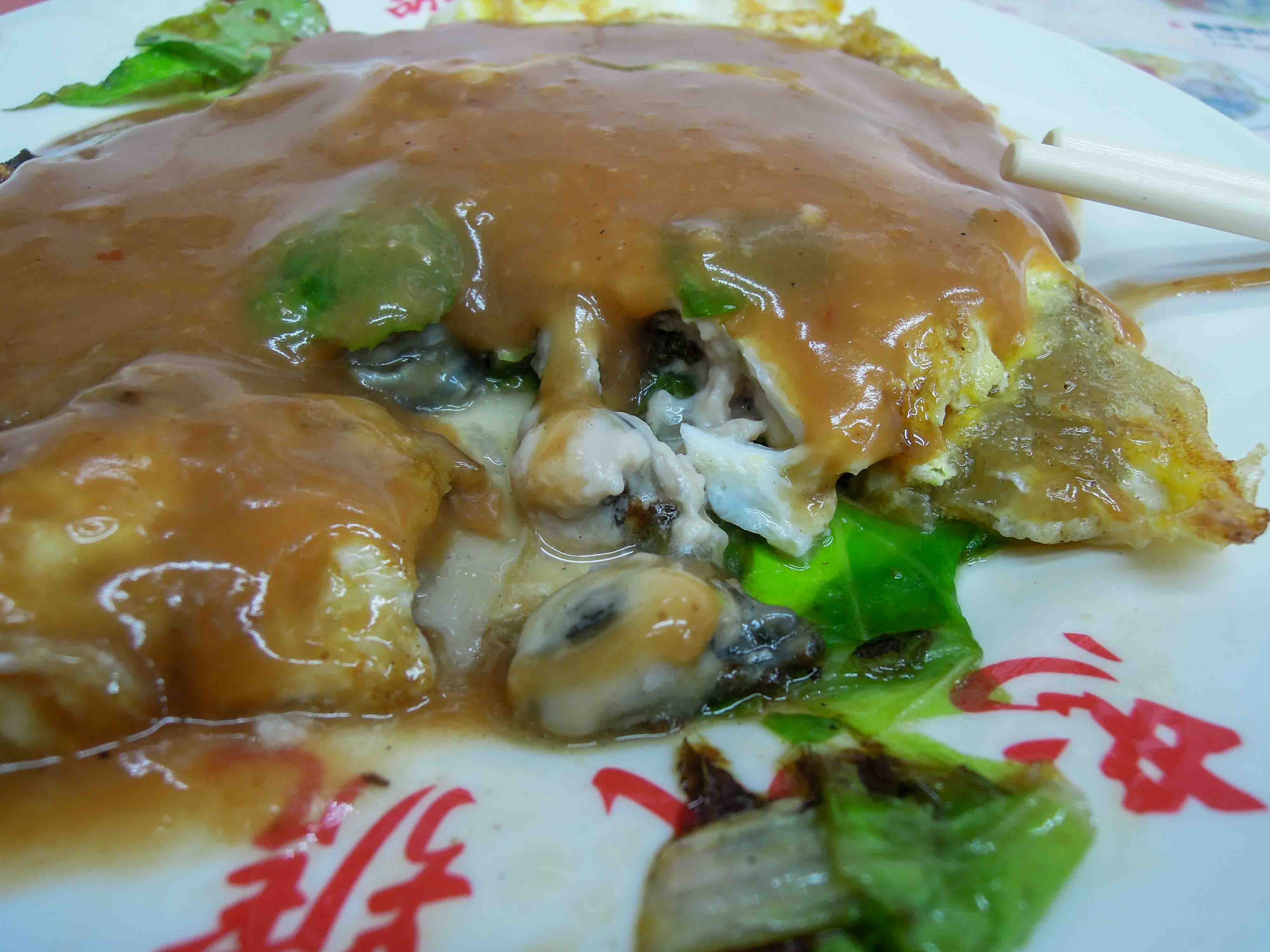
Taiwan has had hundreds of years of exposure to outside influences beginning with the Dutch the early 1600’s. Their cuisines has also been heavily influenced by Japanese, Korean, and North American and European food. A great example of this is Taiwan’s famous Oyster Omelet (蚵仔煎 ézǎijiān). The dish is probably originally from Fujian or Guangdong Province. Several years ago I was in the coastal city of Chaozhou (on the Mainland, Southeast coast) and ordered an oyster omelet at a local restaurant. It consisted of a plain egg omelet with fresh oysters mixed in, (below).
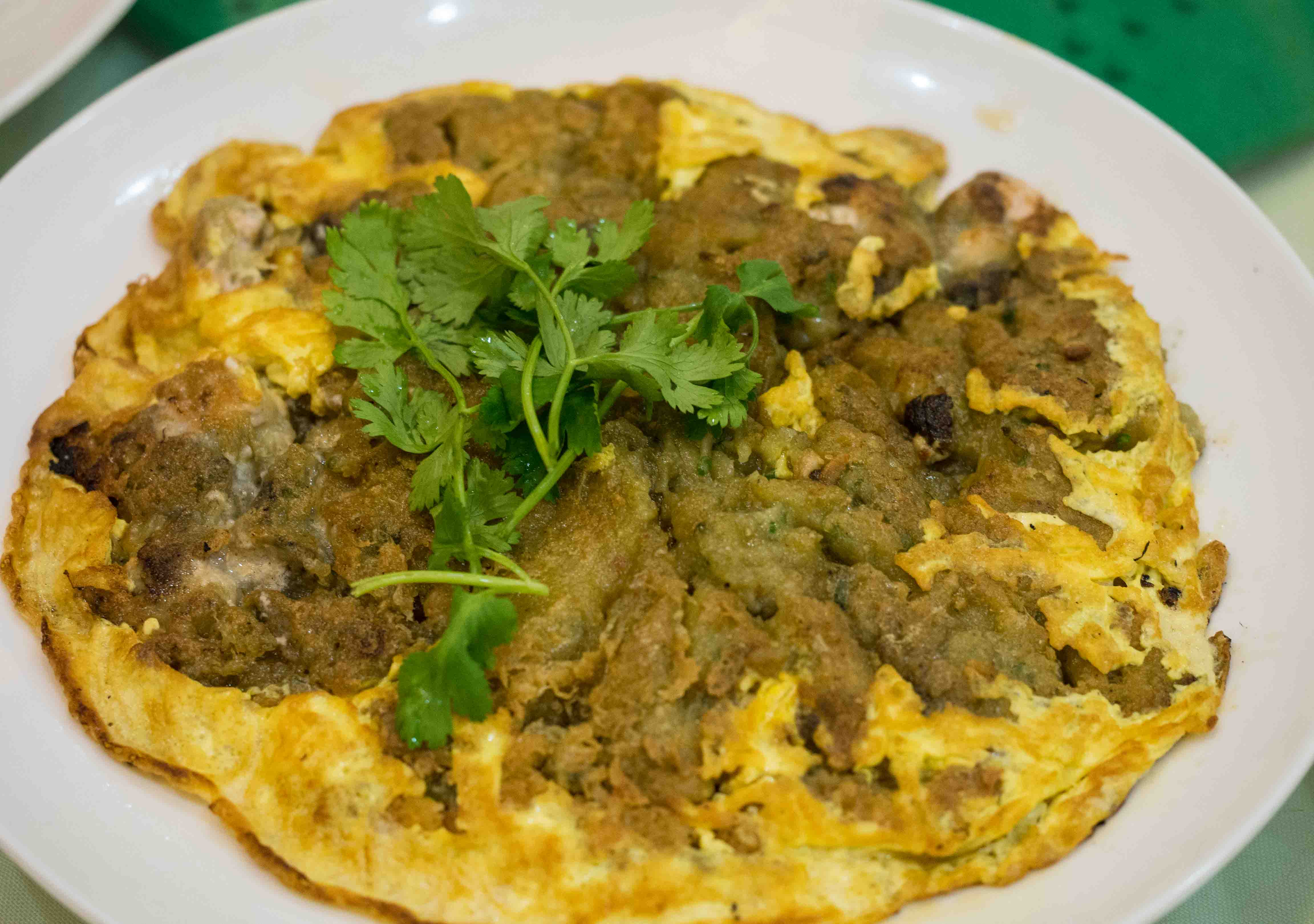
The Taiwanese have transformed this dish into something very different, and which caters to local tastes and outside influences. Taiwanese oyster omelets are made with a sticky and gelatinous batter made with tapioca starch. This gives it a chewy and QQ texture that Taiwanese love. The oysters are first fried on a large grill then the batter is poured over them. This is followed by eggs.
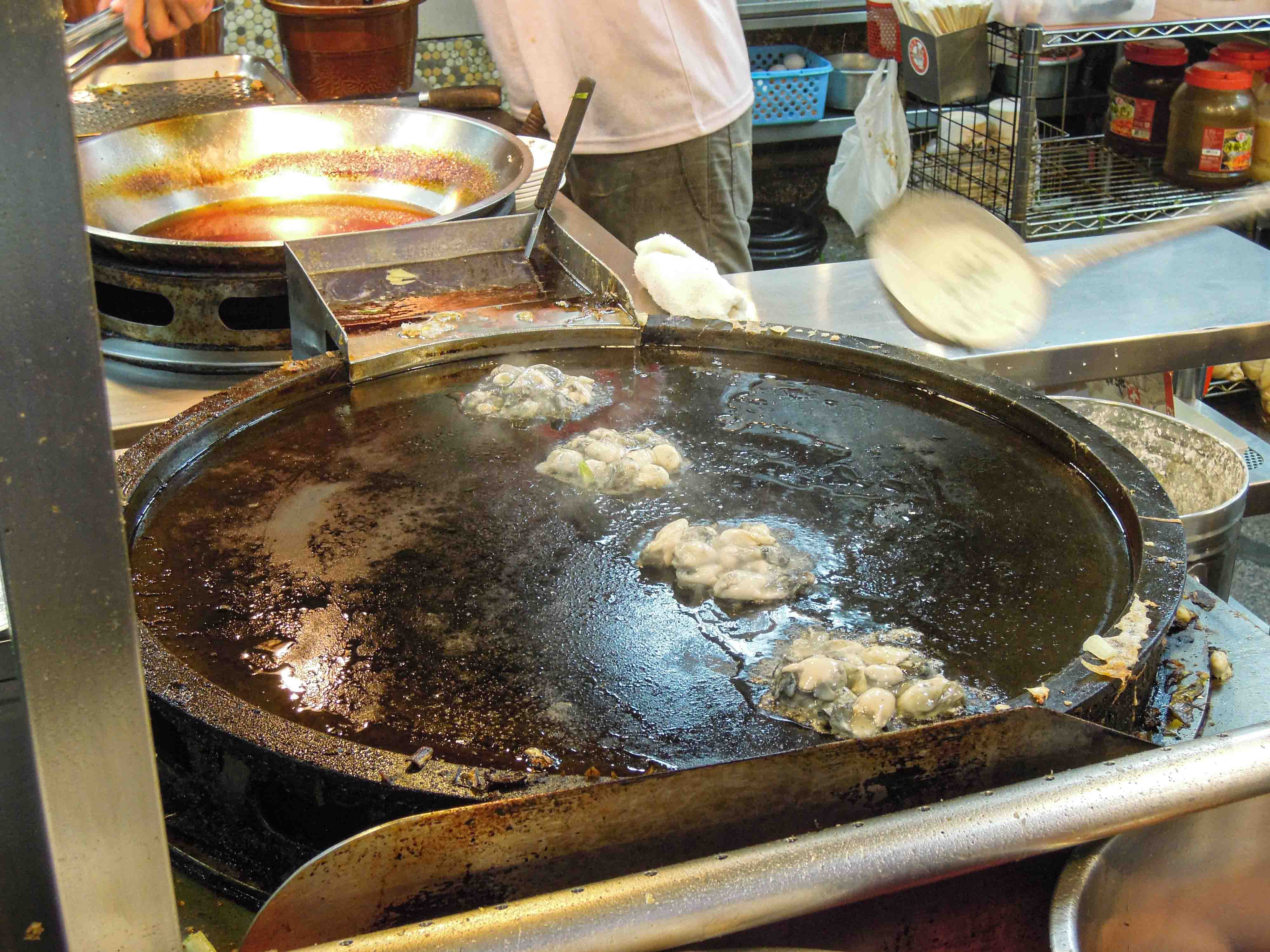
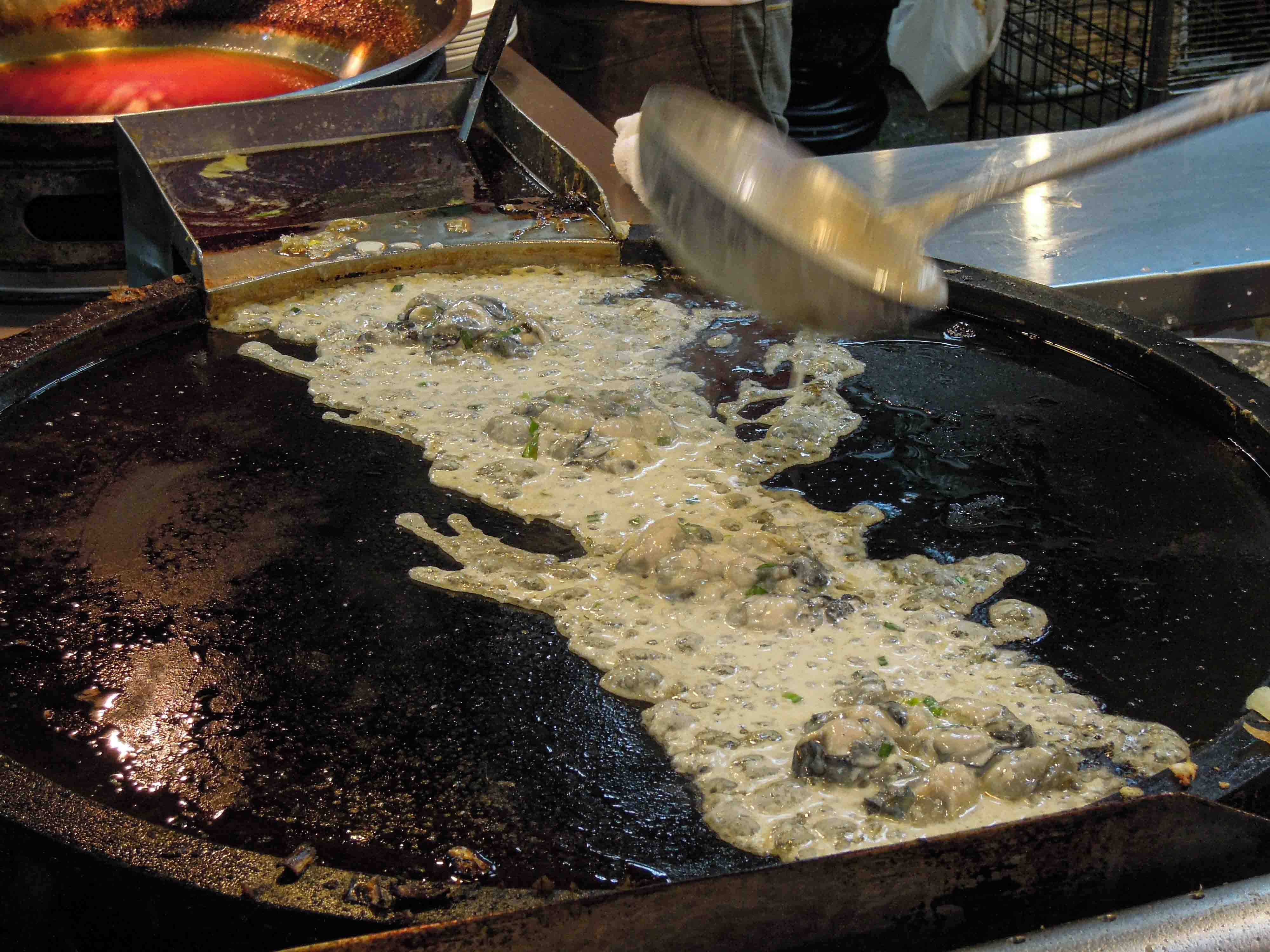
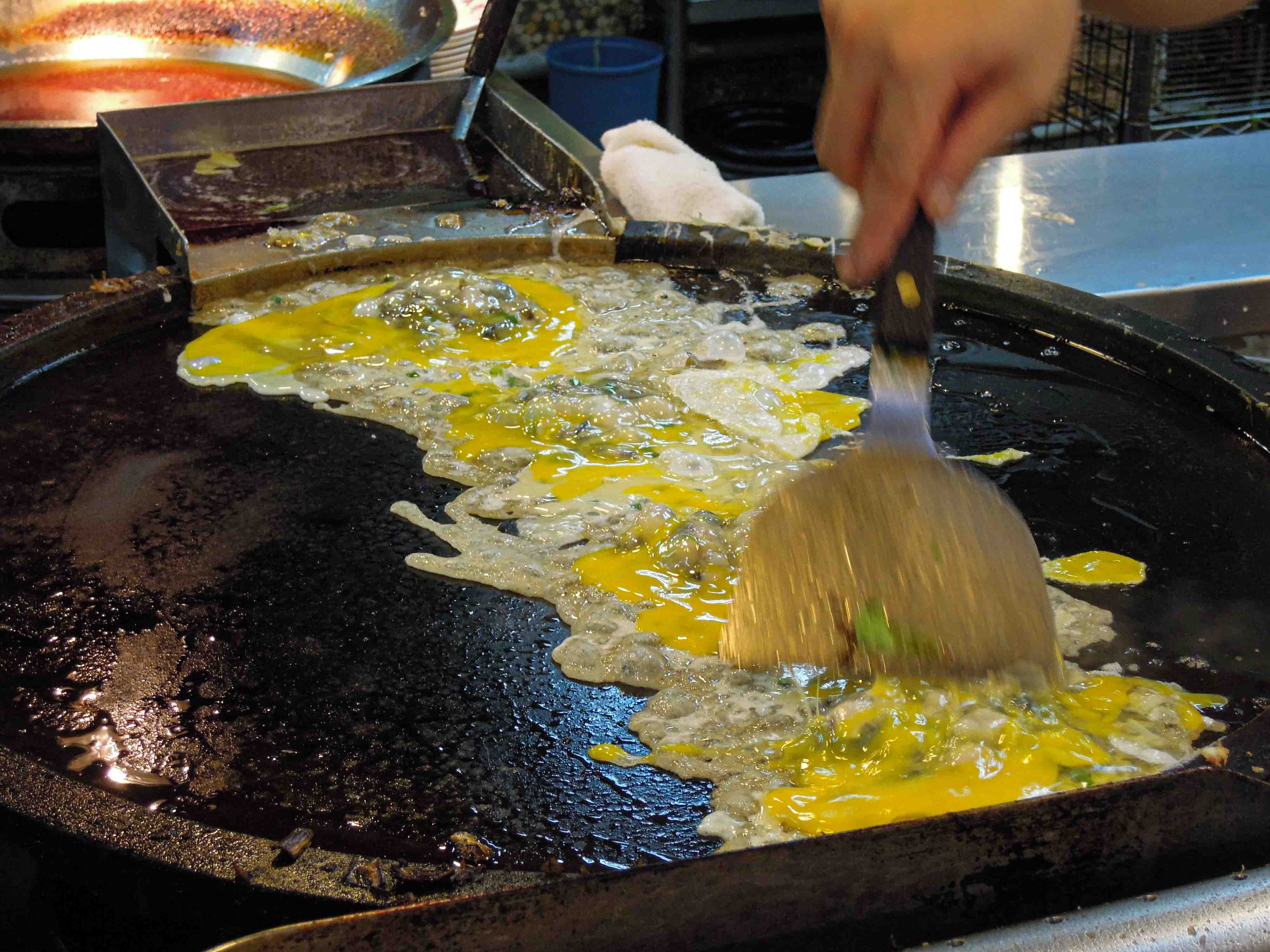
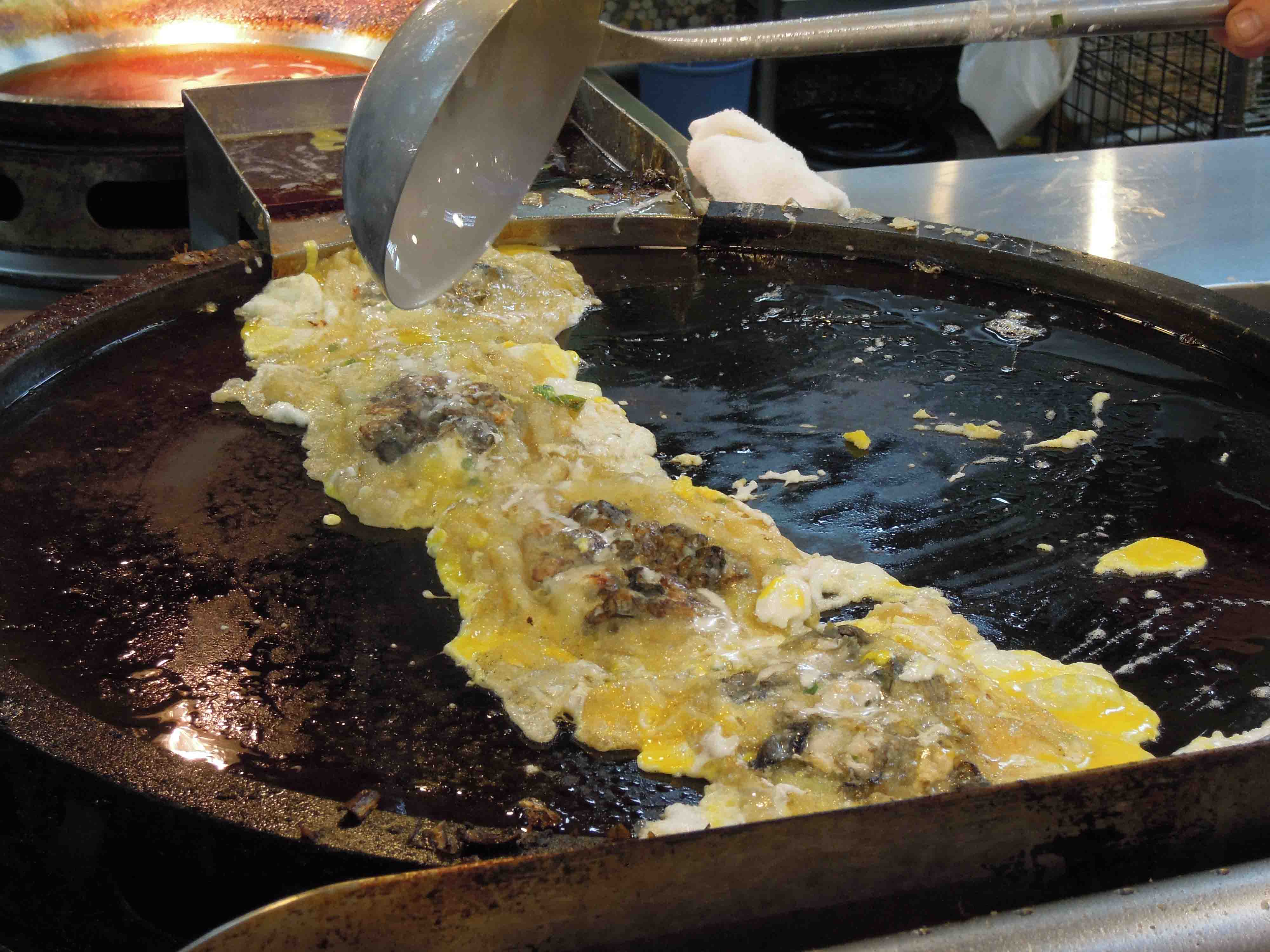
This is then topped with some fresh greens. Once it is cooked through it is drizzled with a sweet ketchup-based sauce that may include sweet chili sauce, soy sauce, maybe some peanut butter, and then is topped with cilantro. Of course there are countless different recipes for this dish and each restaurant or night market food stall with have their own version. The dish pictured here comes from a night market in Taipei.
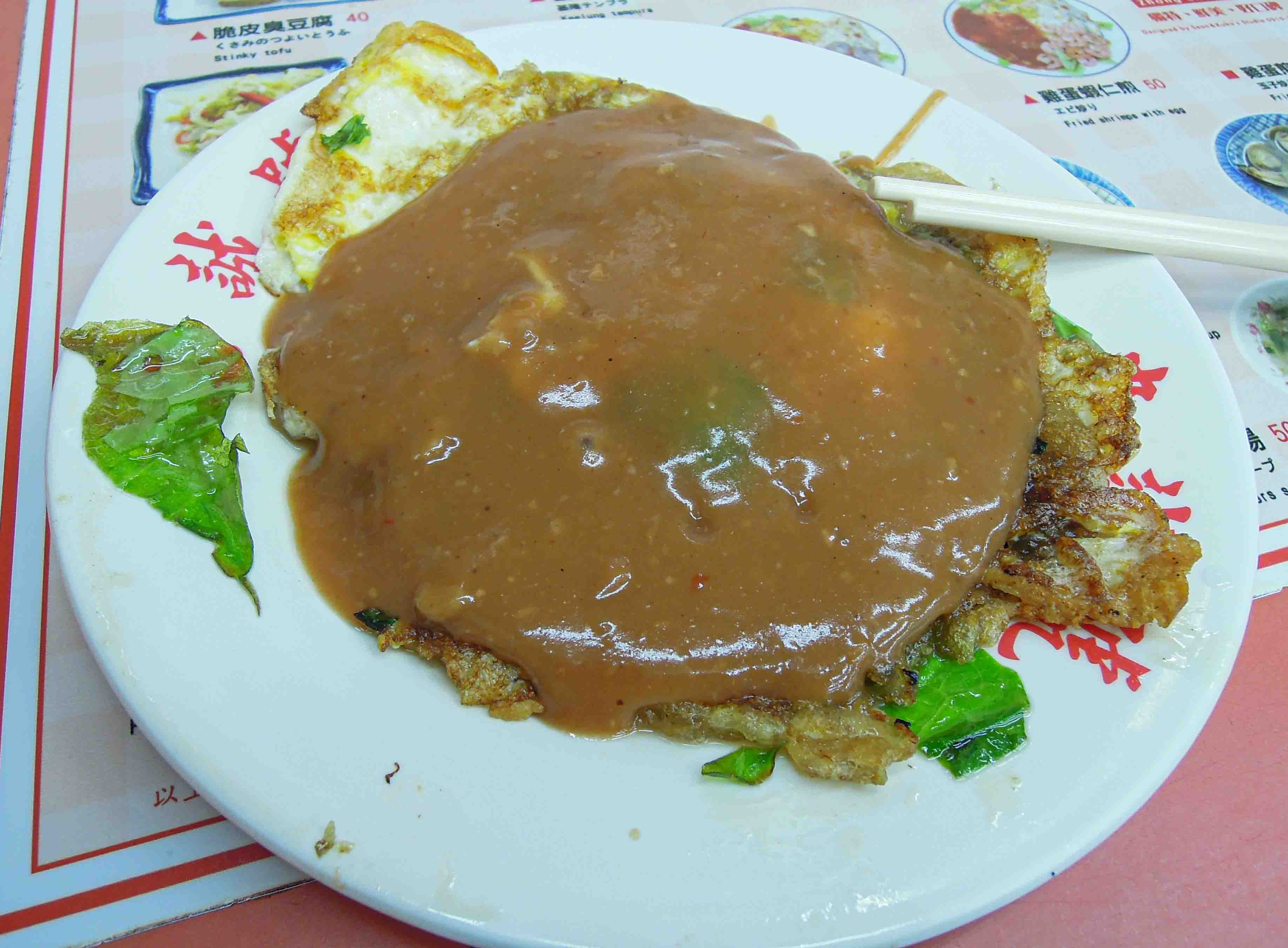
The result is a soft, chewy omelet with tender little nuggets of oyster embedded into the egg and pancake base with that sweet, tangy sauce. The tapioca starch is probably influenced by Japanese food.
Other Japanese influenced dishes include Taiwanese oden (關東煮 guāndōngzhǔ), commonly found in convenience stores, along with onigiri (Japanese style stuffed rice, usually in a triangle shape), instant ramen, and Japanese curry. Keep in mind that these are all Taiwanese versions of these Japanese dishes, and are probably pretty different from what you would get in Japan.
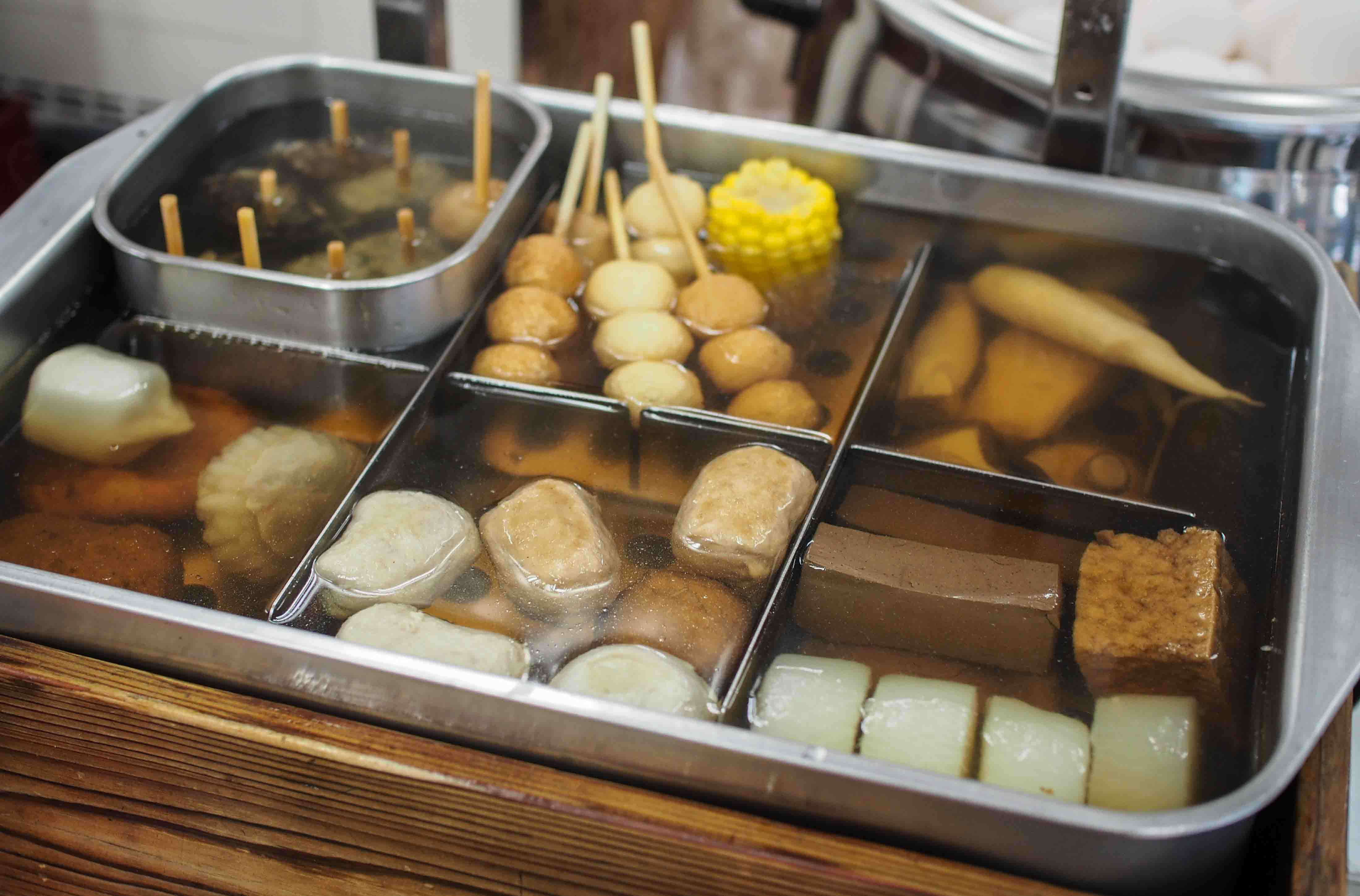
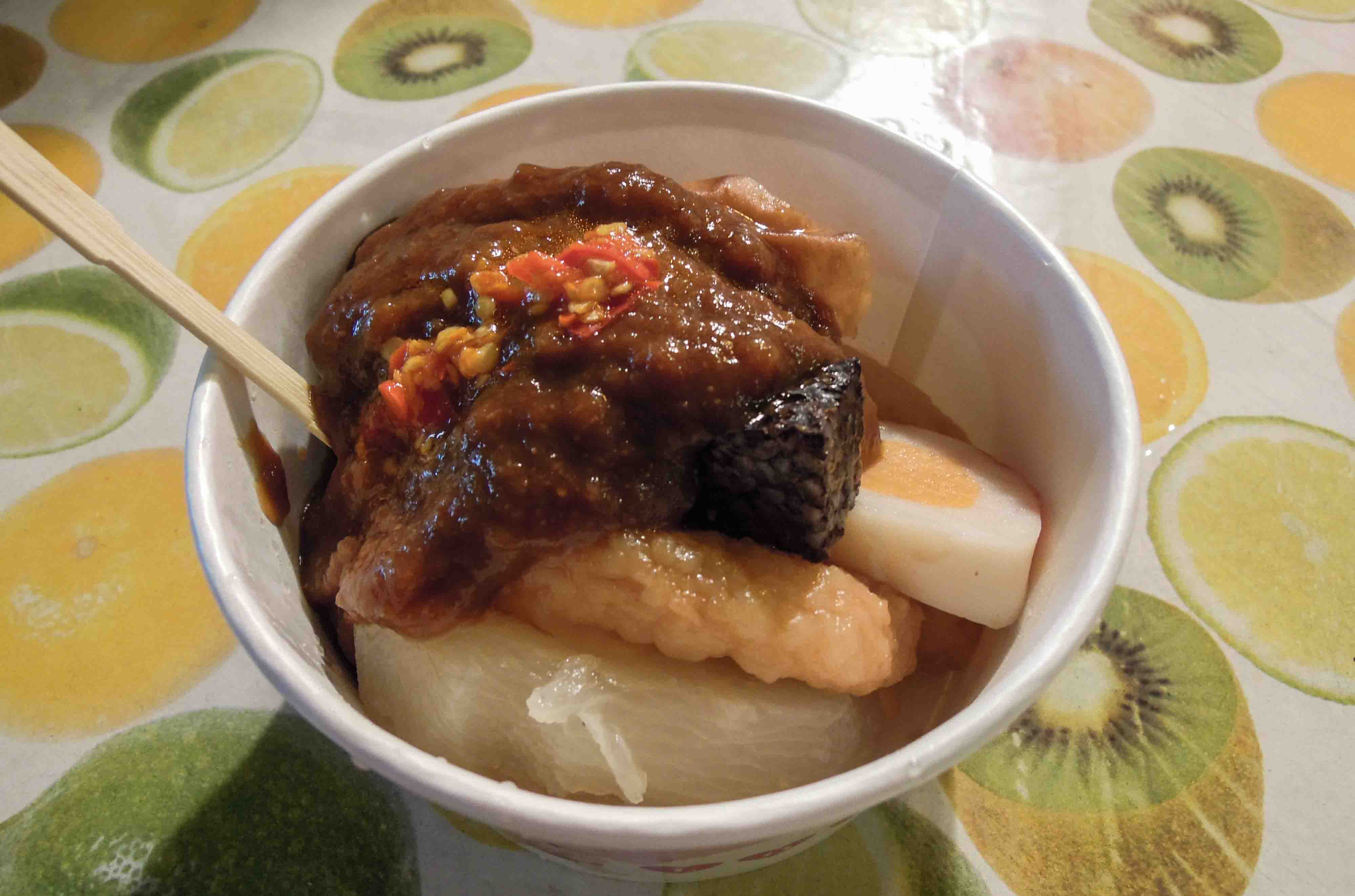
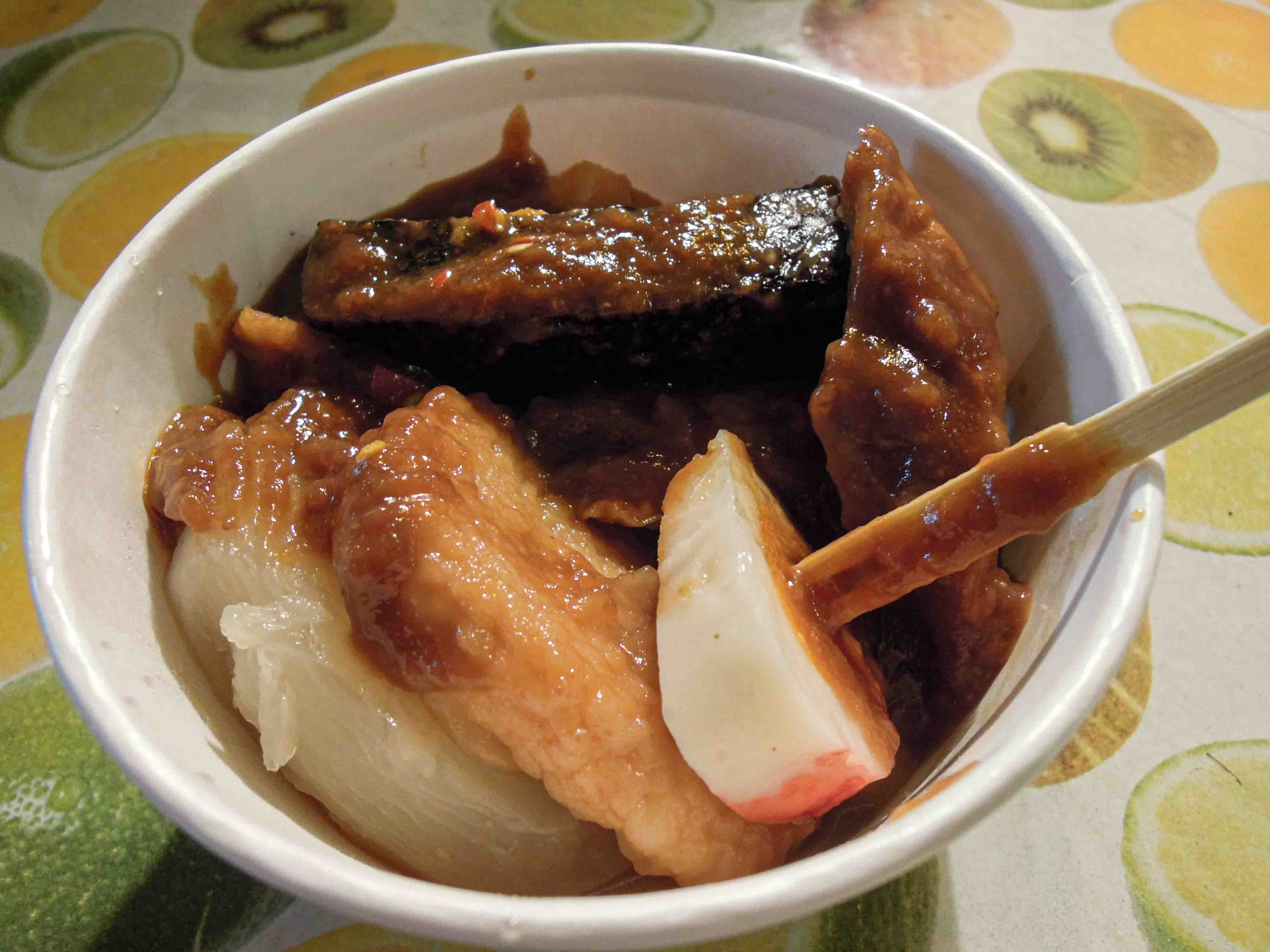
Another popular snack often found at night markets is Taiwanese tempura, 甜不辣 tiánbùlà, which is really nothing like the deep fried tempura we know of in the West or in Japan. In fact, the direct translation of this Taiwanese dish is “sweet not spicy.” In Taiwan it is seasoned fish cakes served with a sweet and sometimes spicy sauce (your choice).
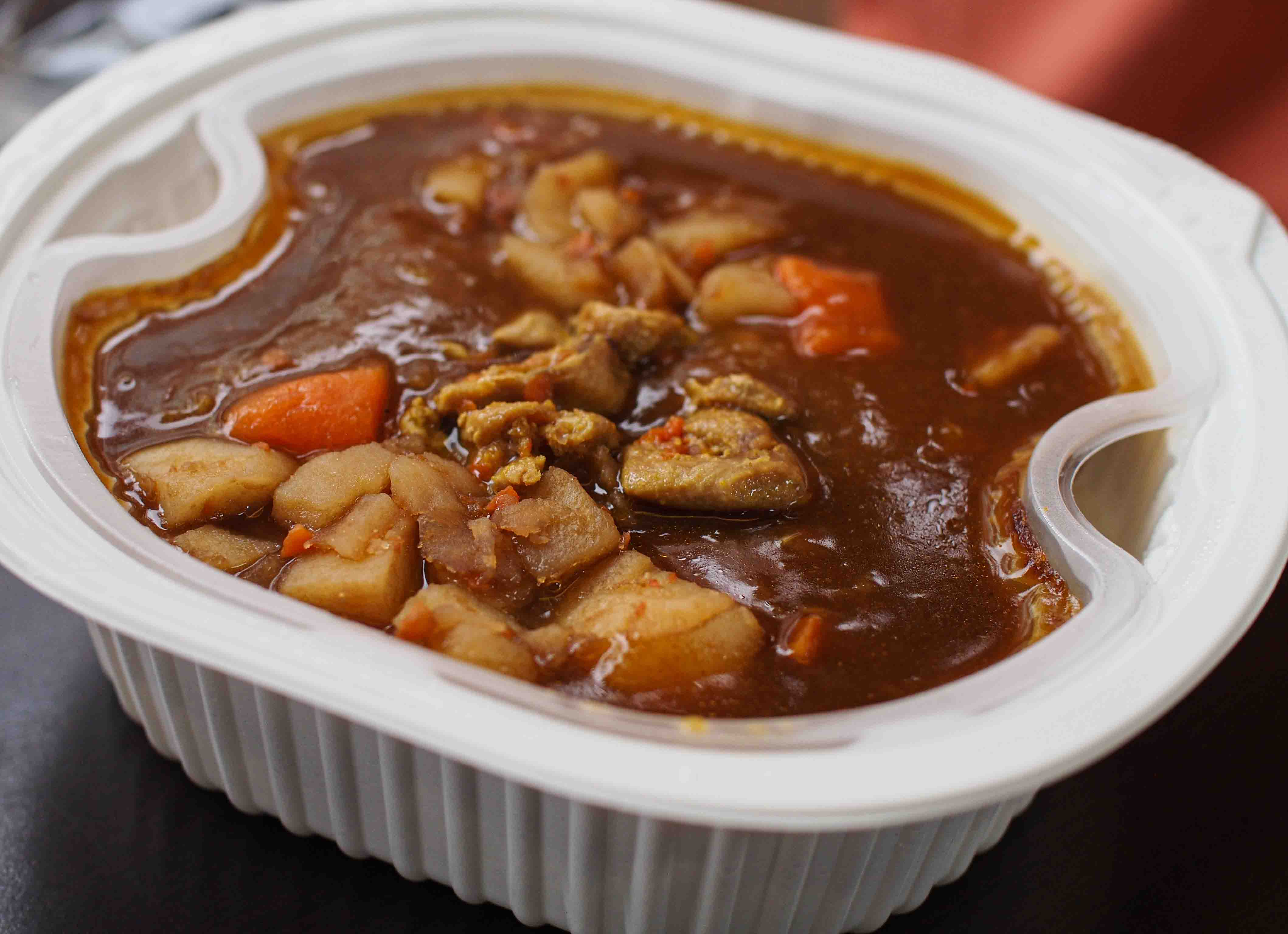
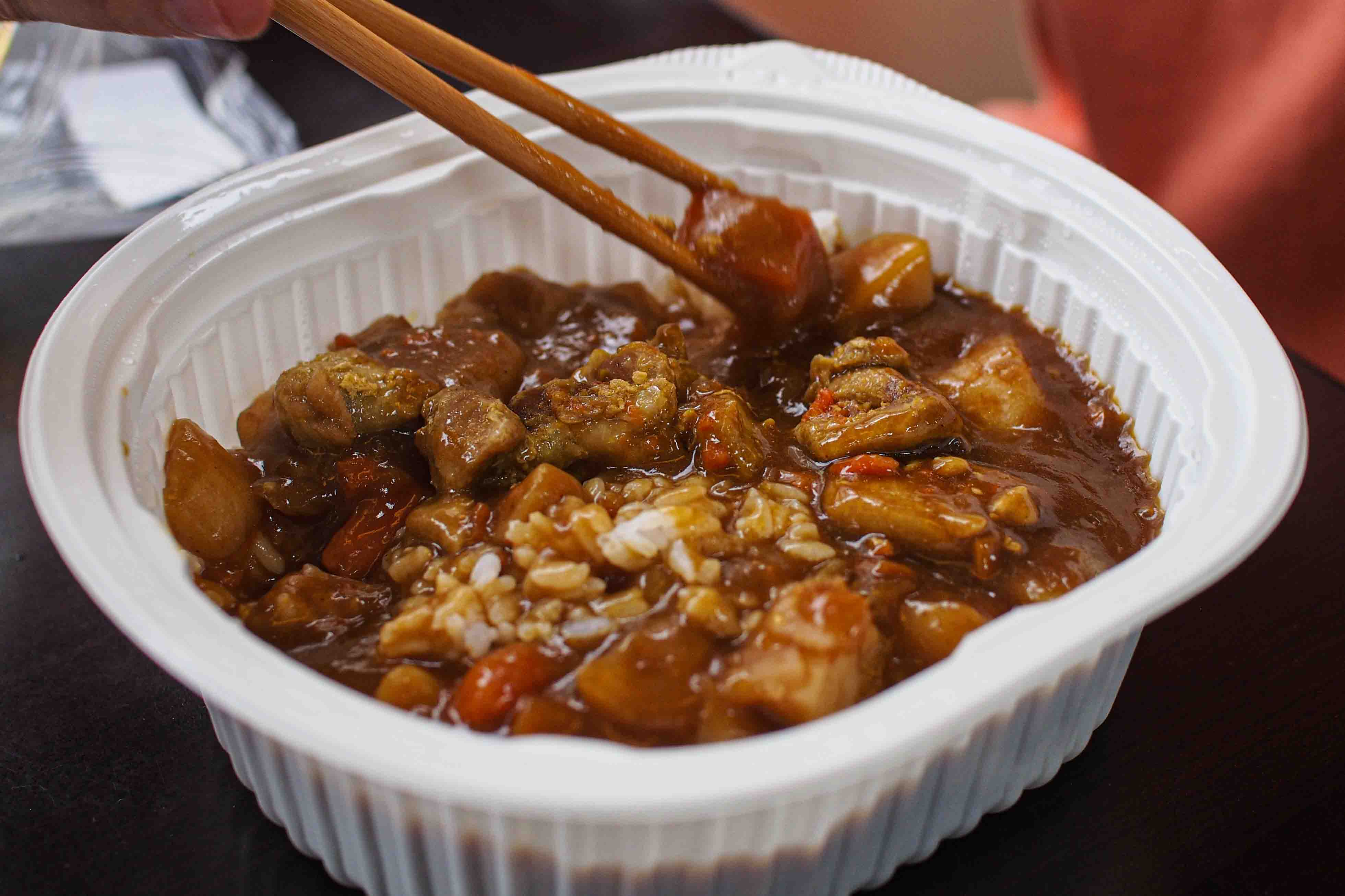
When I was in Taiwan recently I lived in a neighborhood in Taichung that was full of Taiwanese style Japanese restaurants. They included restaurants that specialized in donburi (Japanese rice bowls), ramen, and Japanese curry. Some were quite good, and others were just okay.
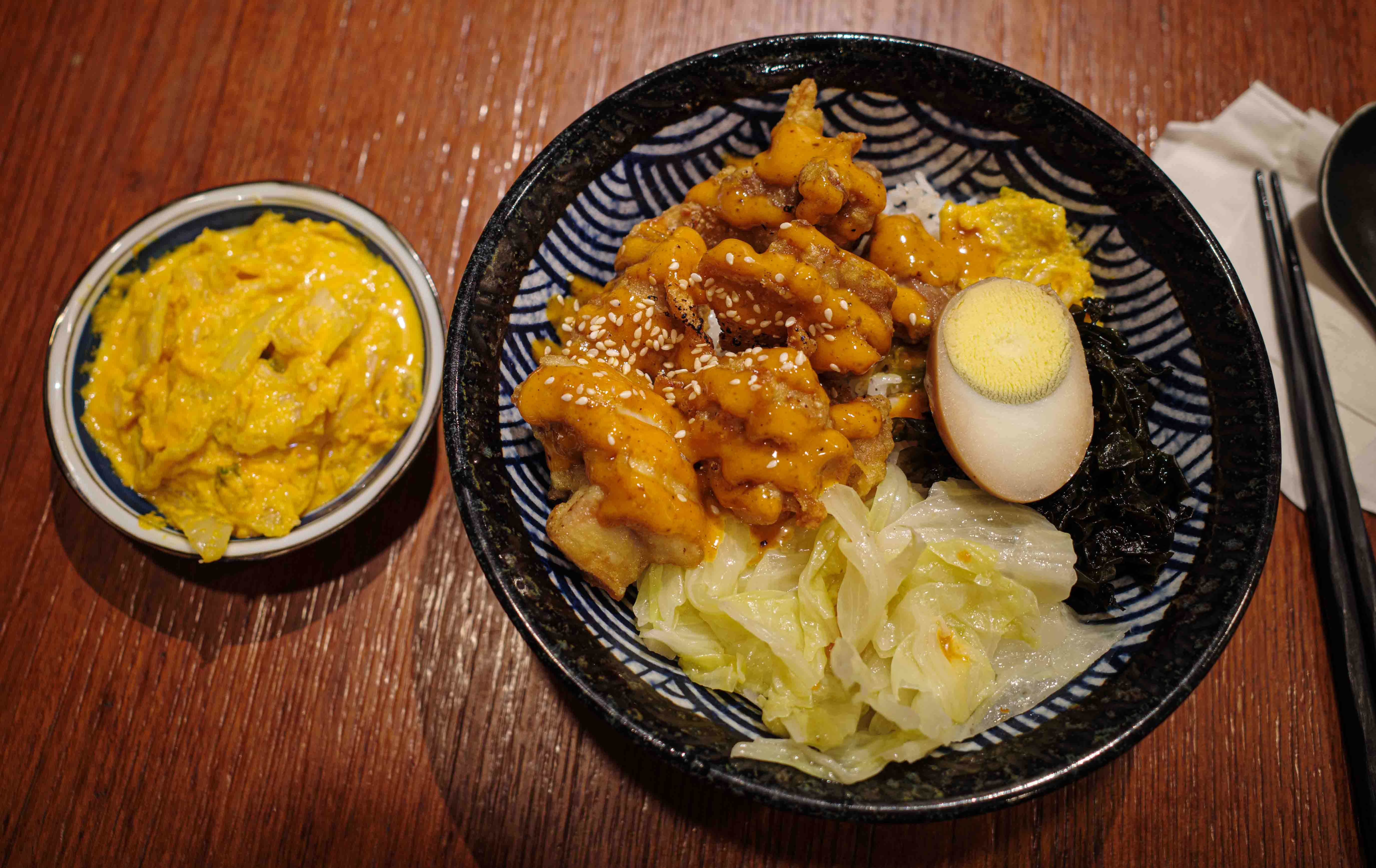
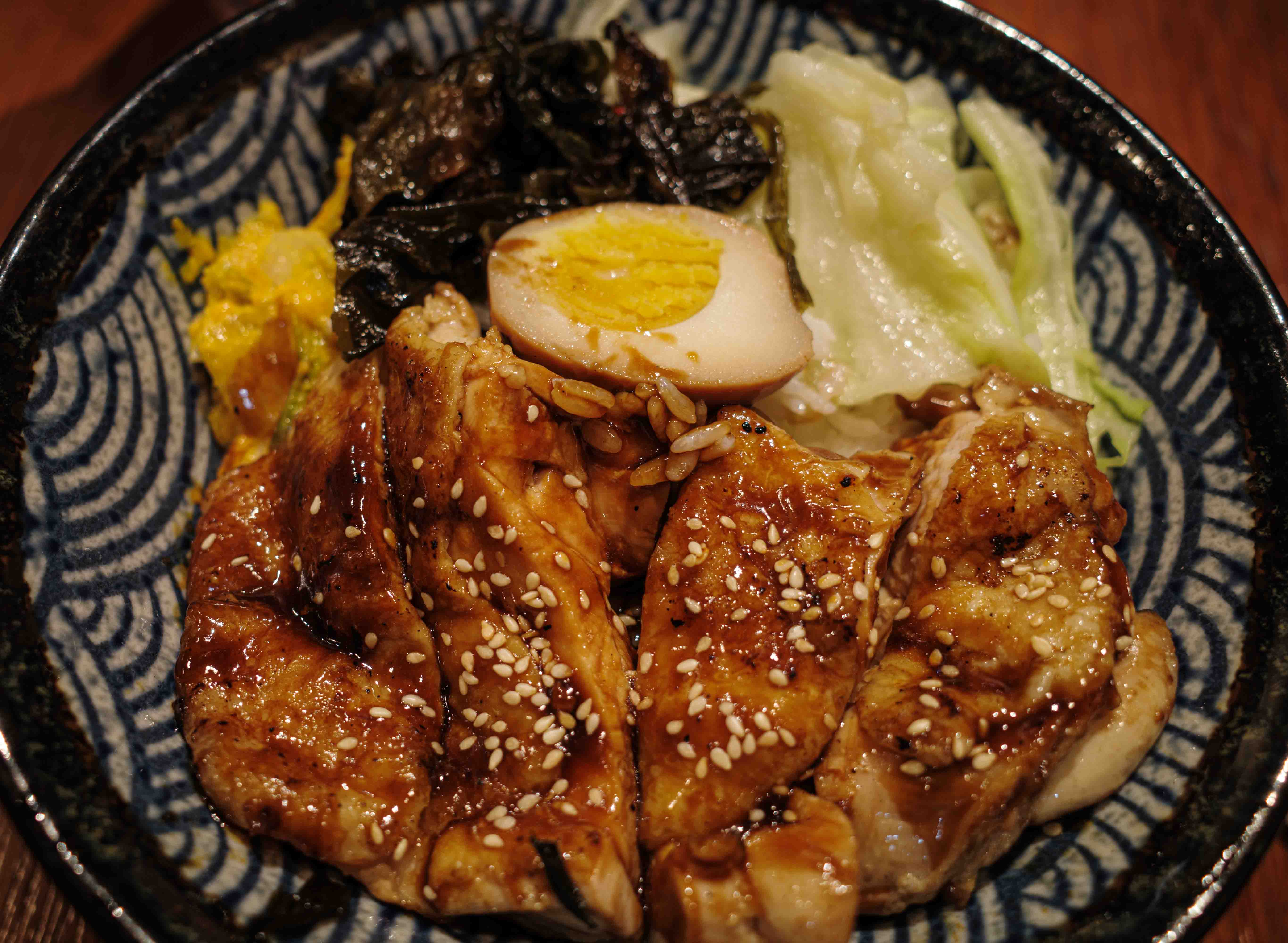
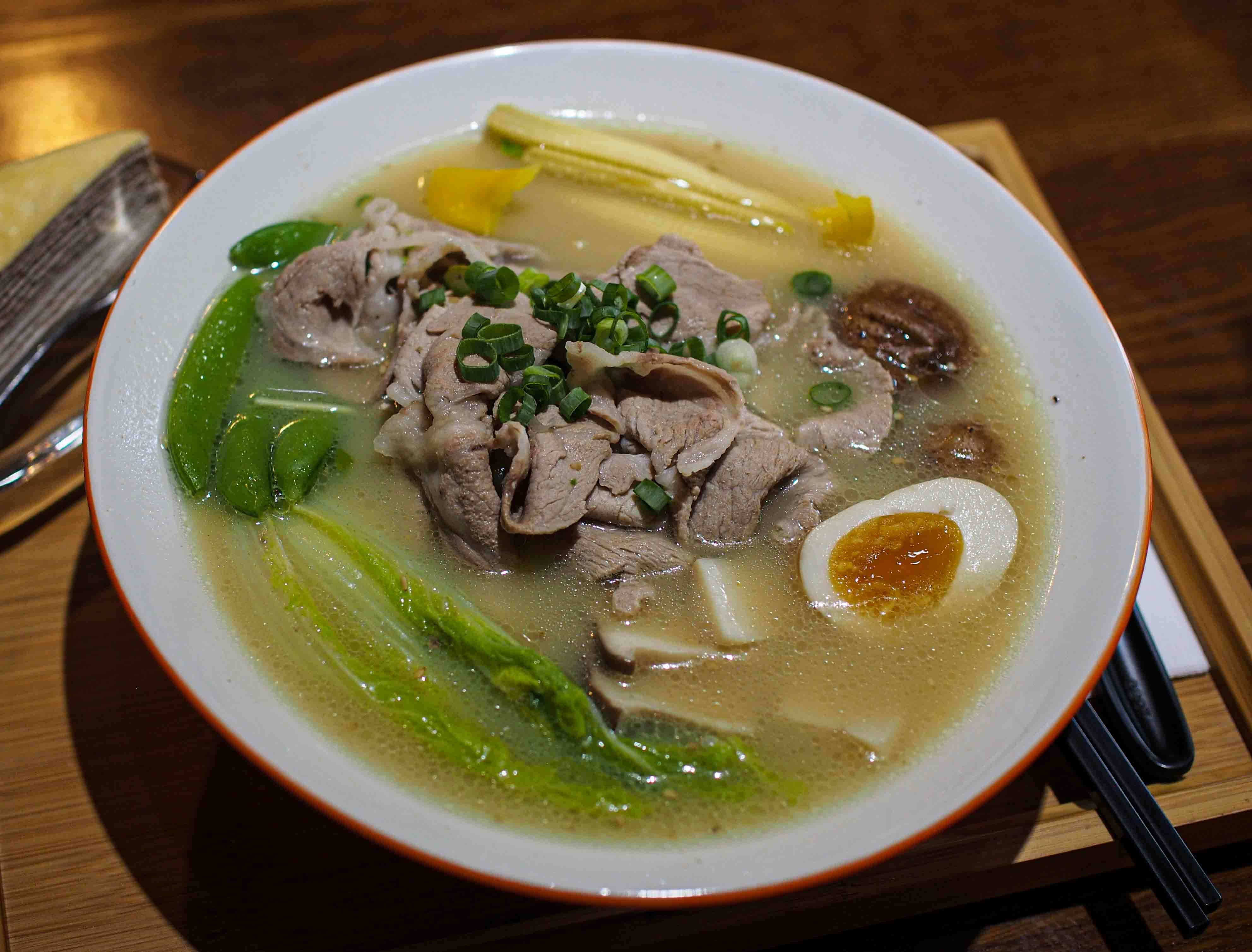
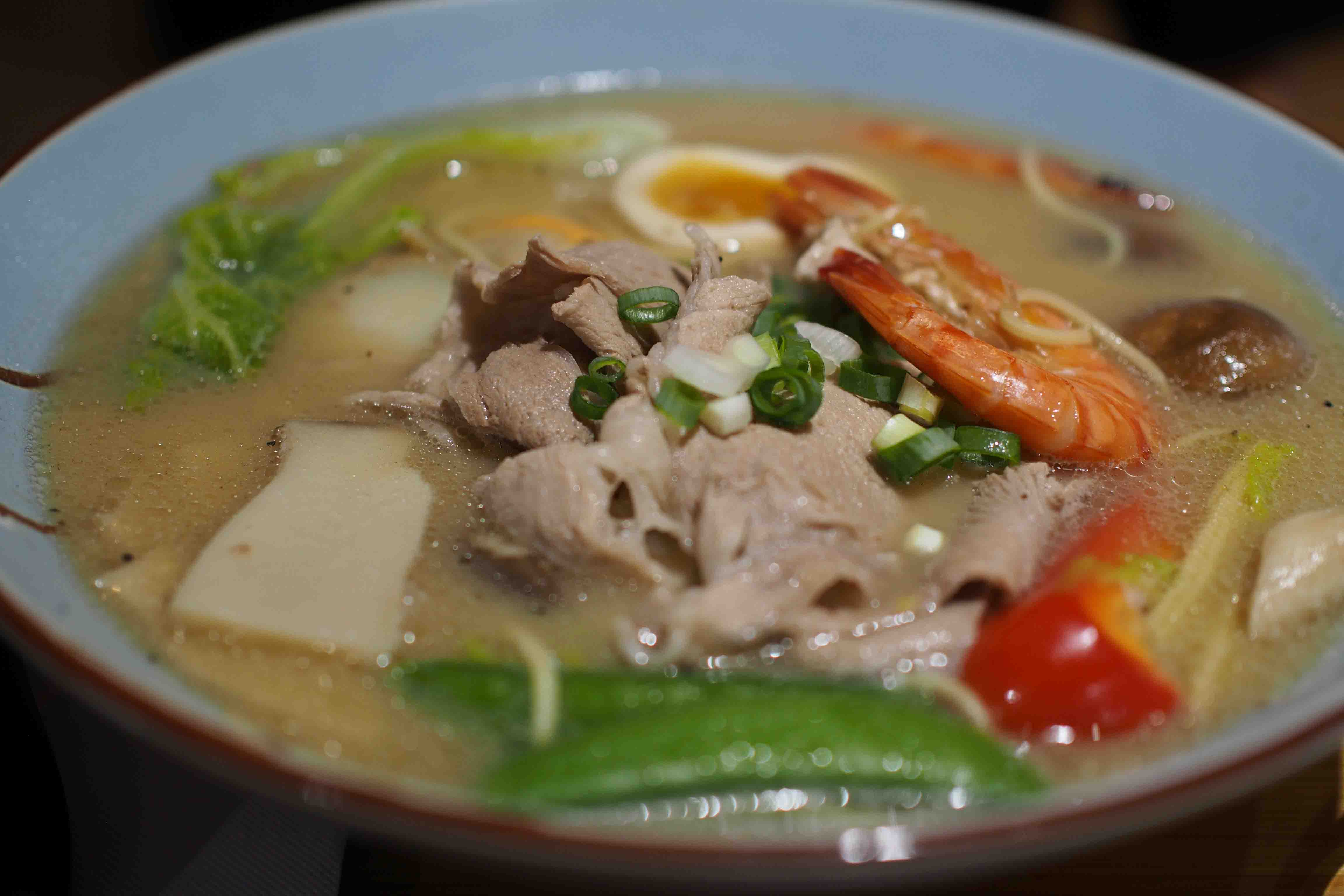
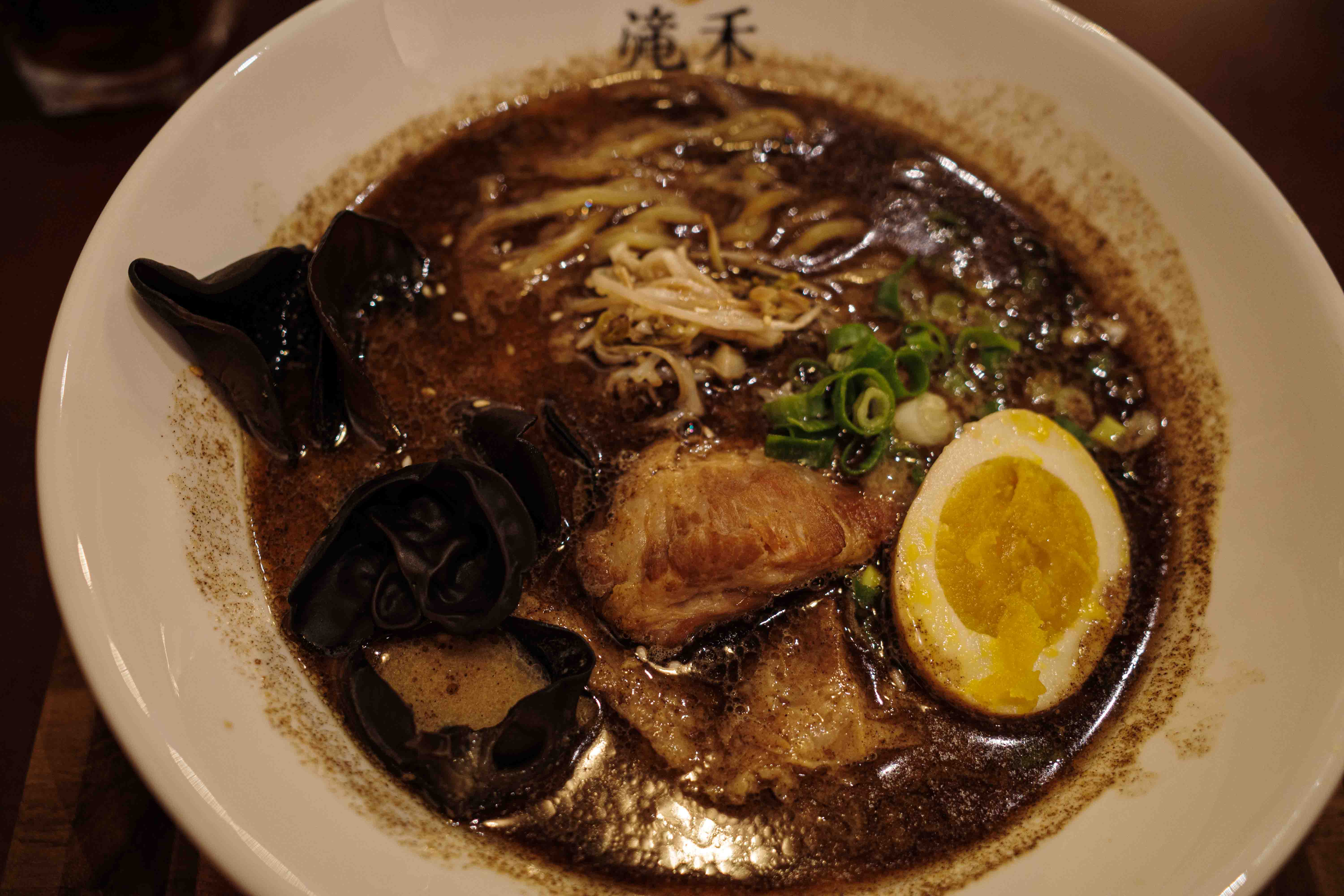
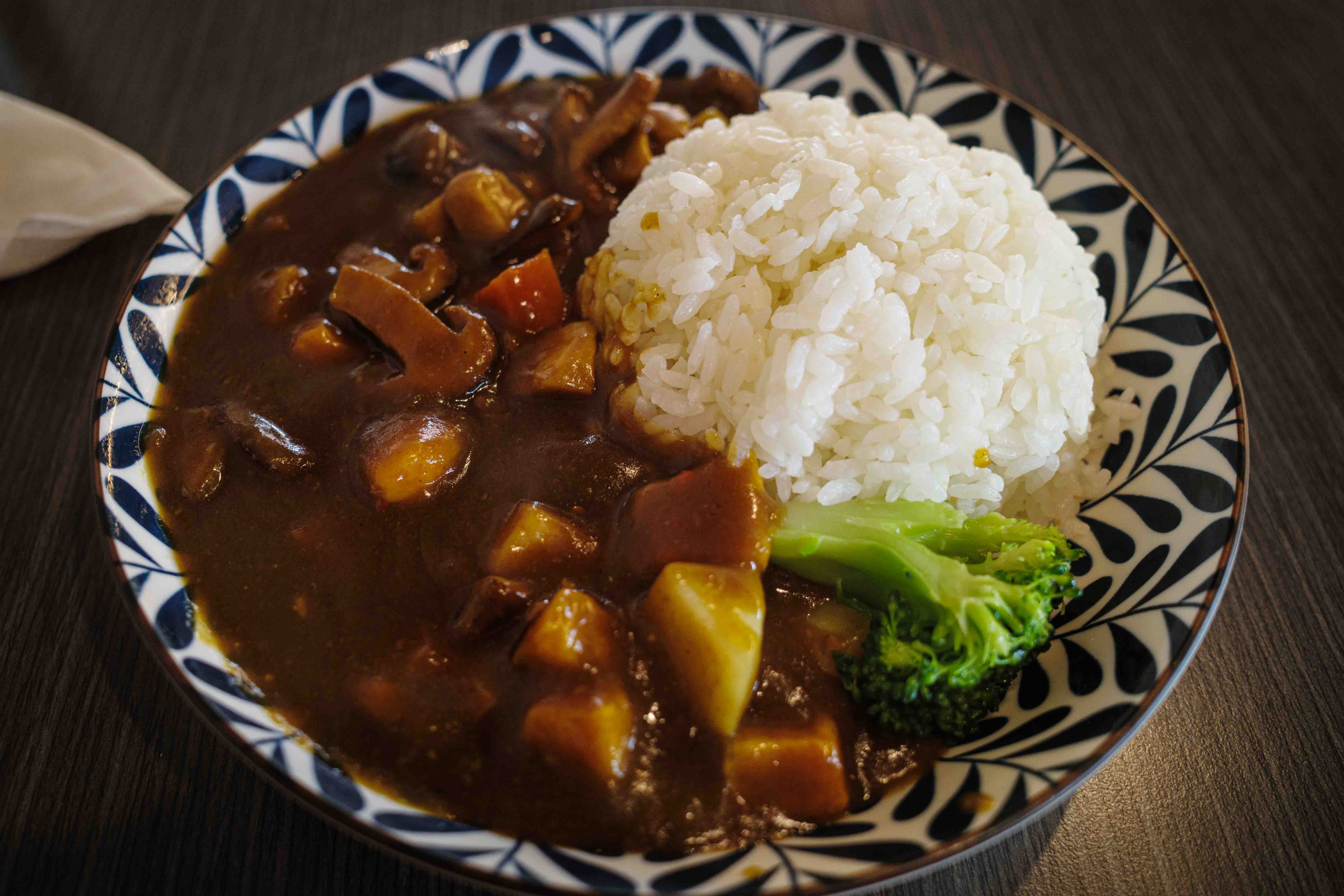
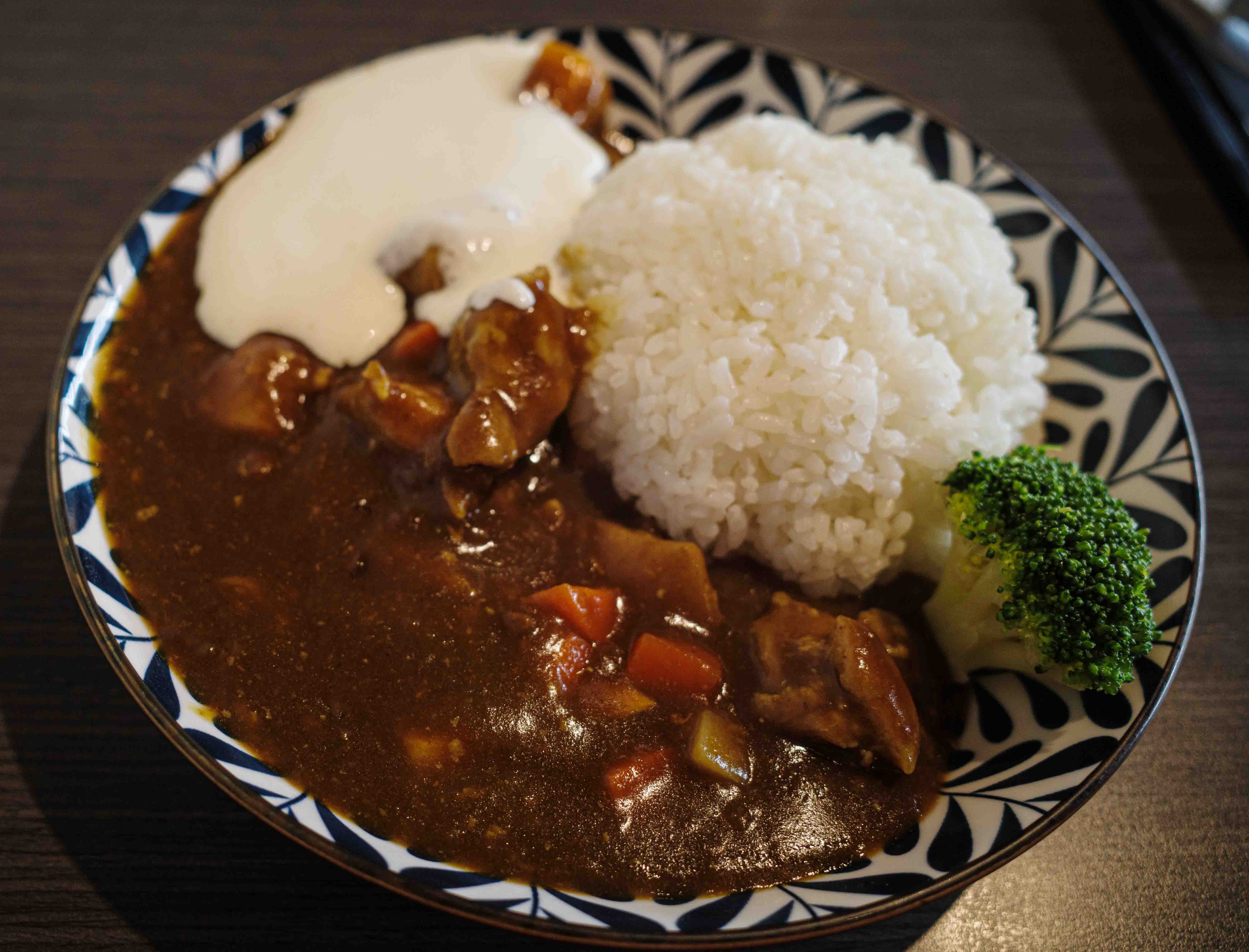
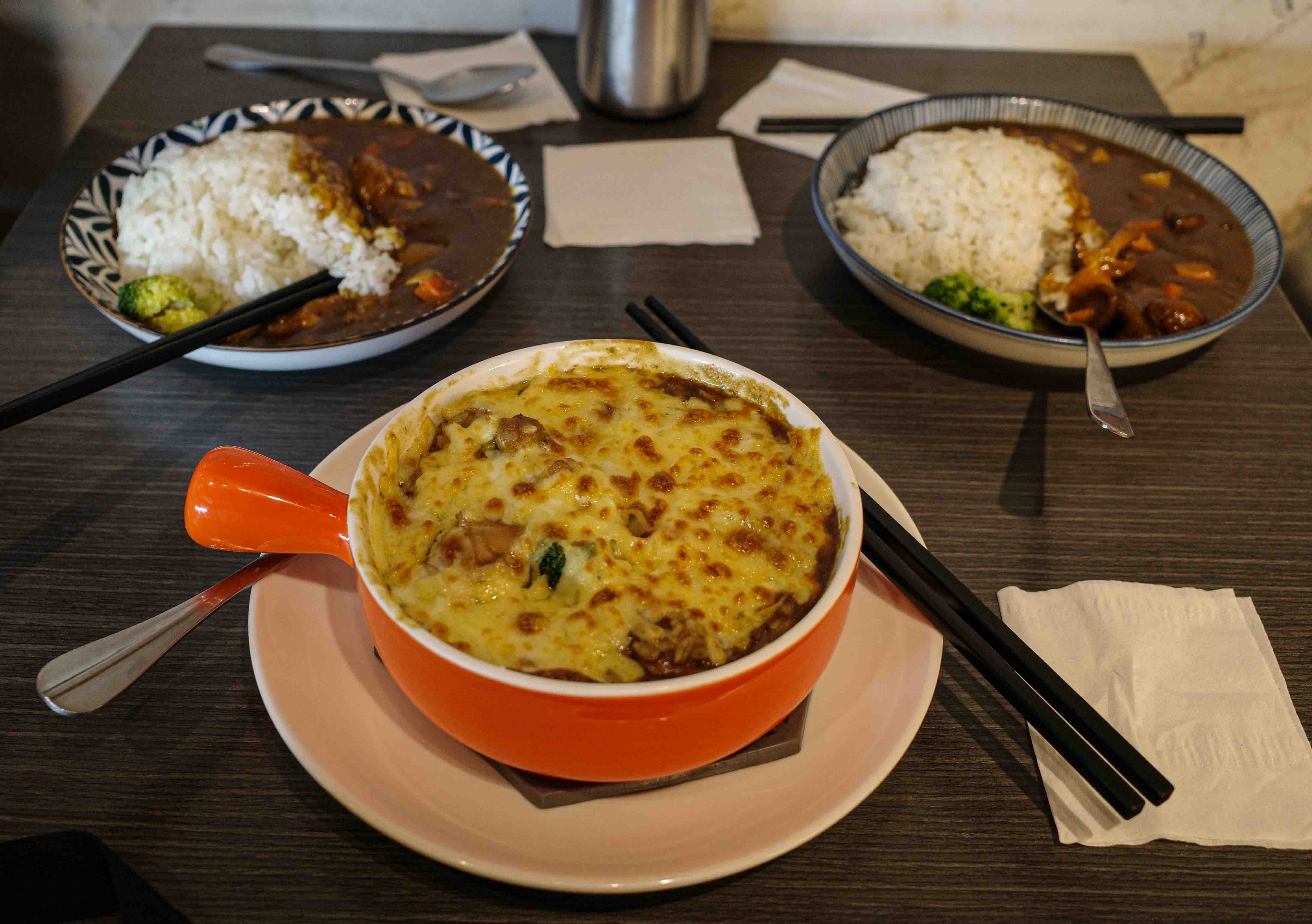
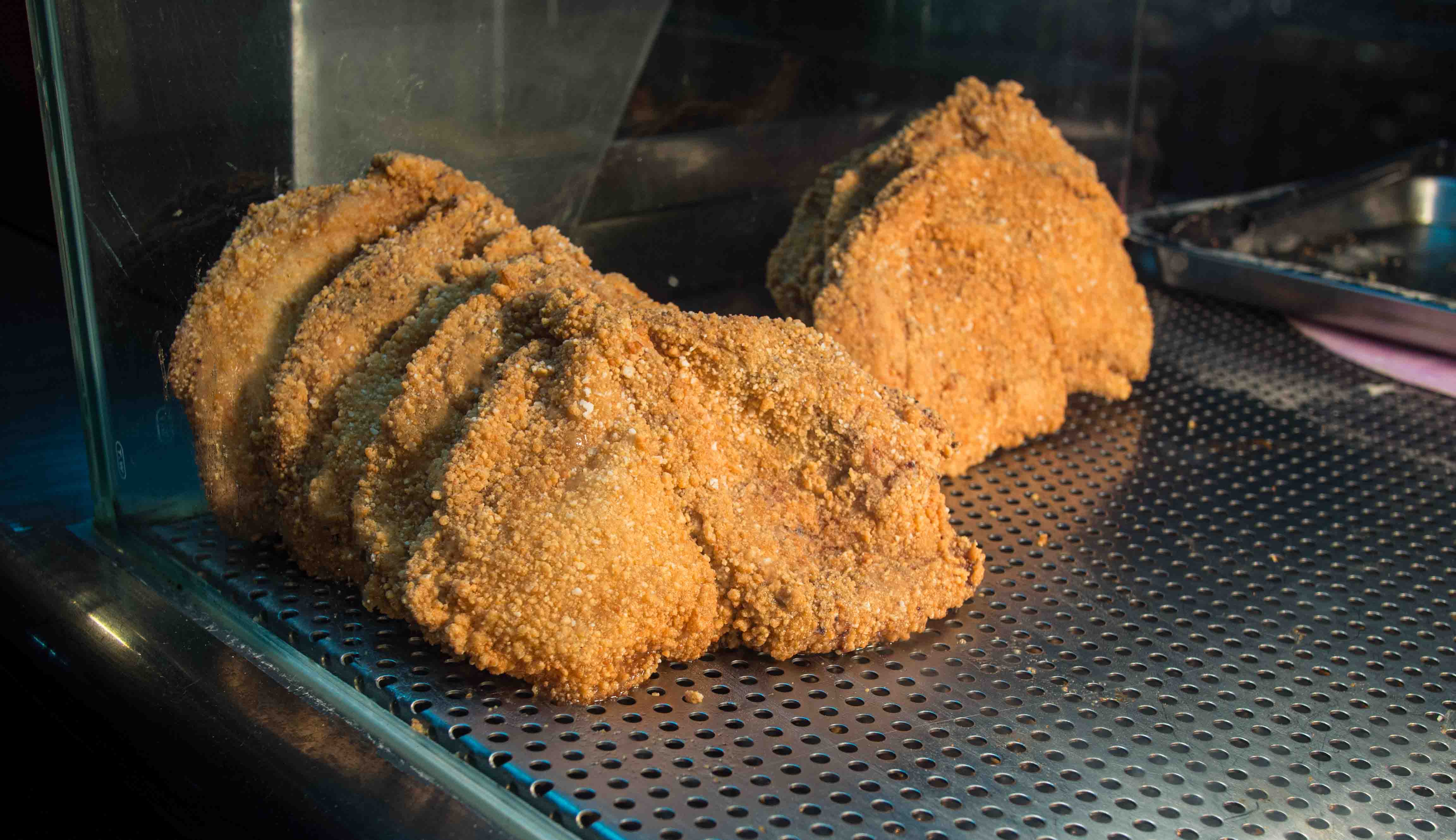
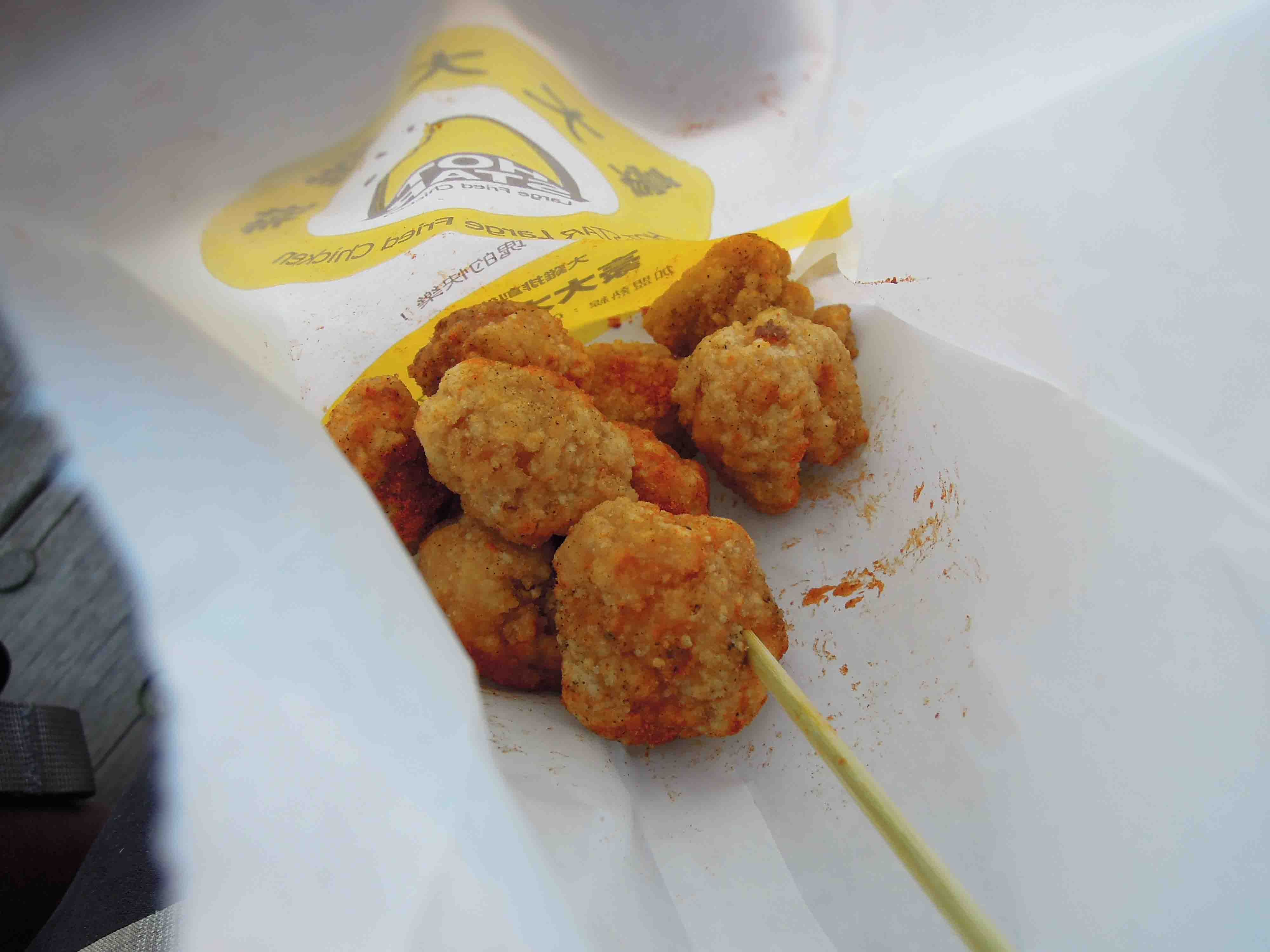
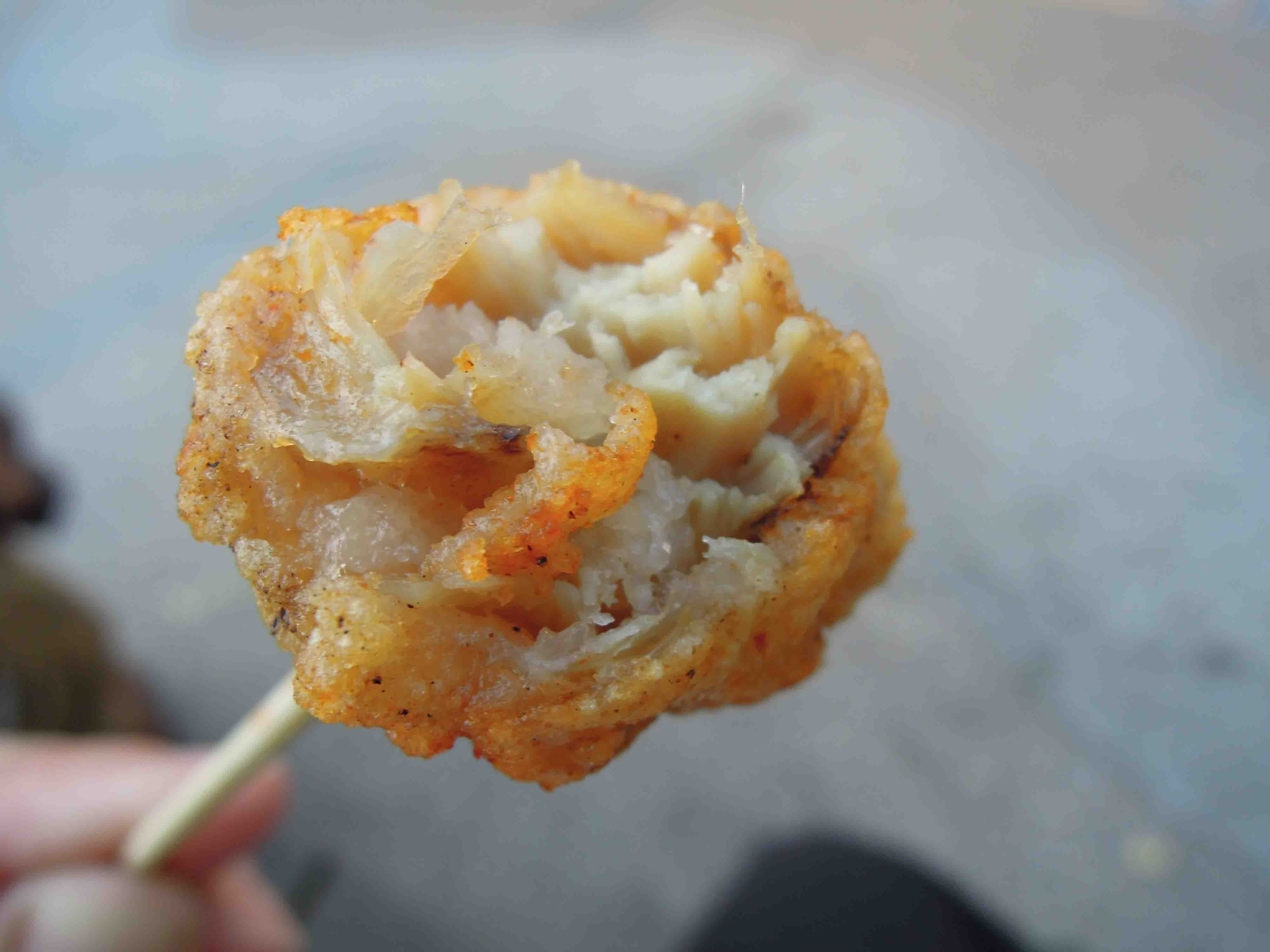
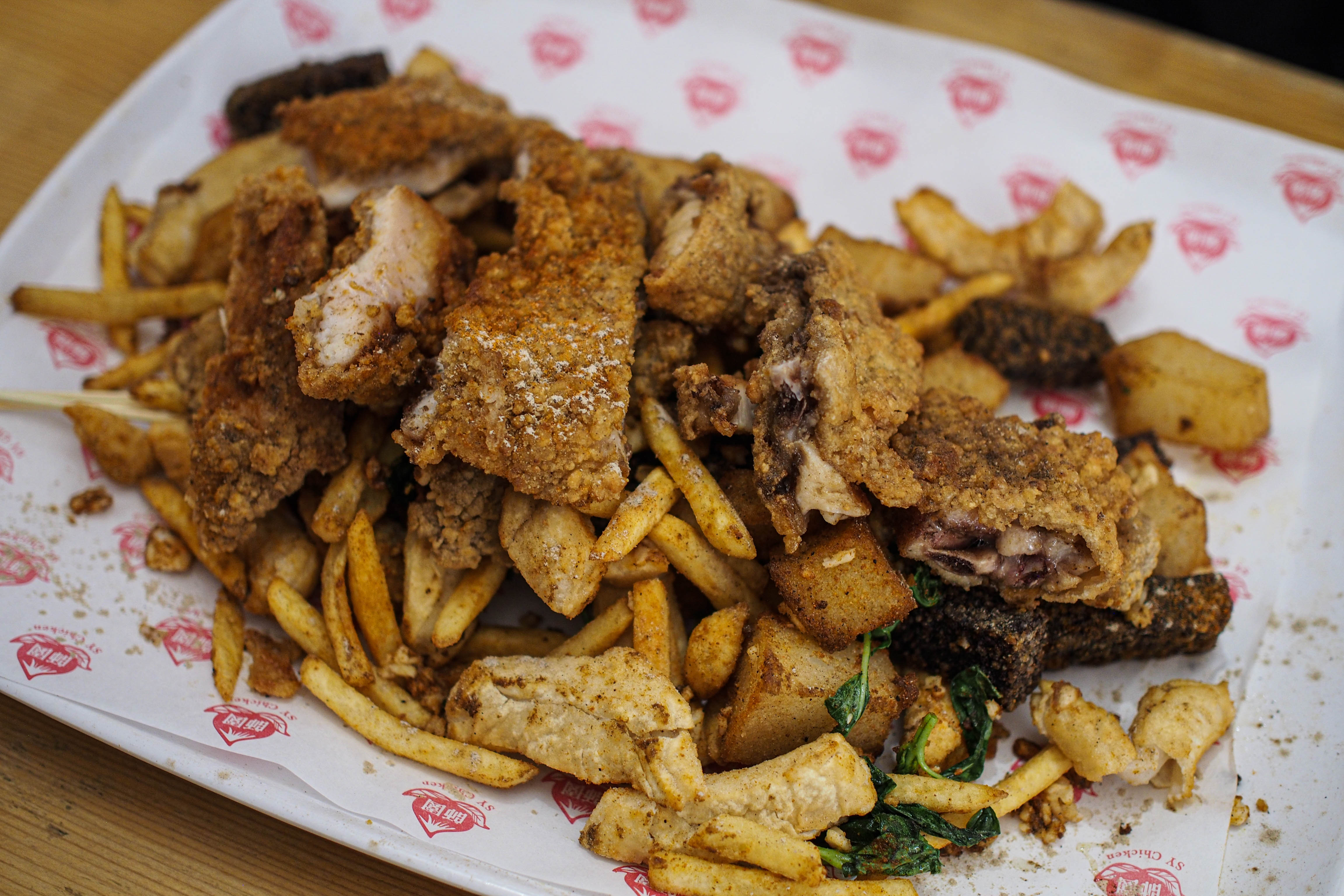
The Taiwanese also make delicious fried chicken. This is usually served as a large flattened and deep-fried chicken breast, or fried chicken is also prepared as what we call popcorn chicken.
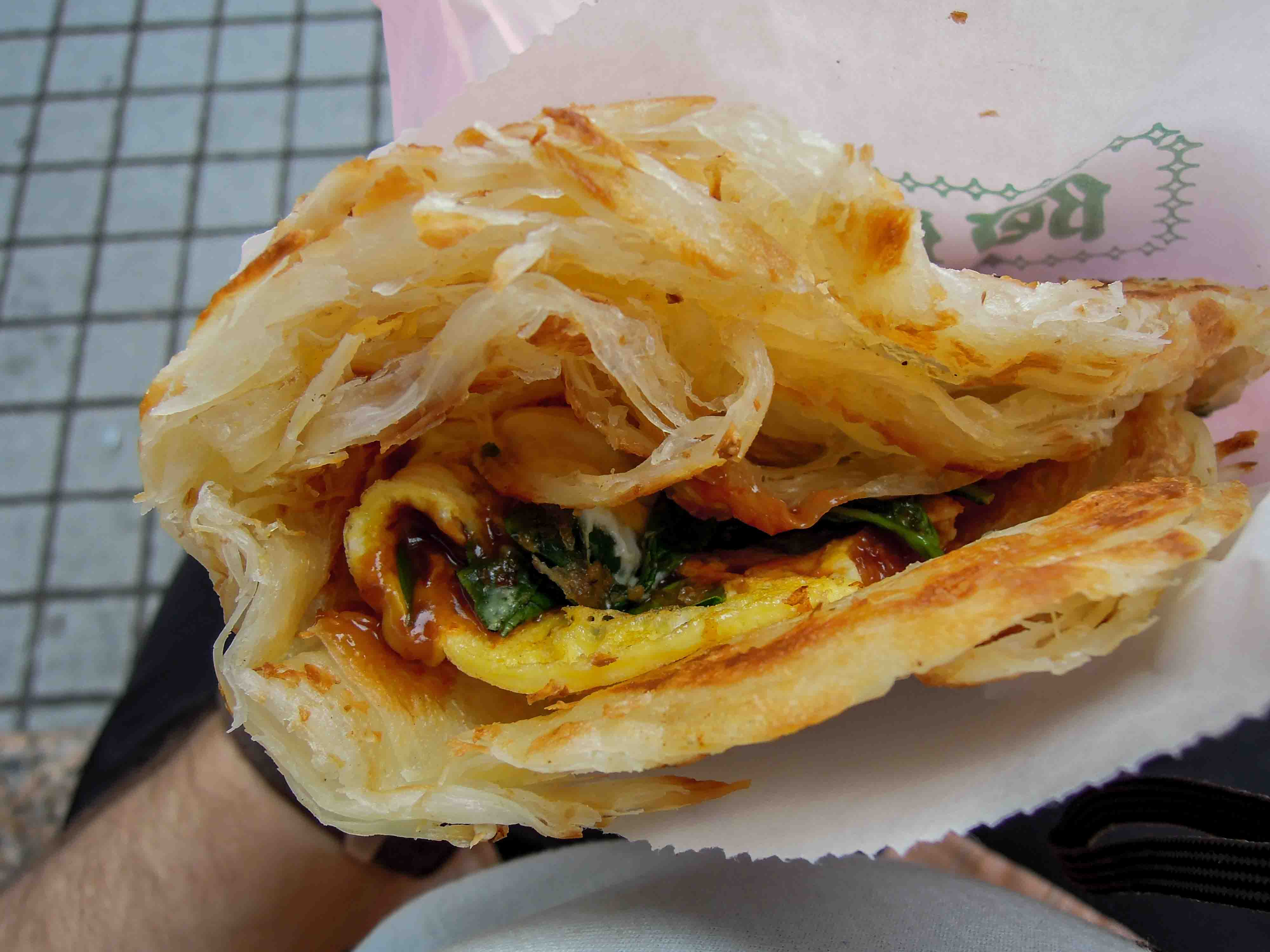
Another popular snack in Taiwan is called 抓餅 zhuābǐng. It is a fluffy, flaky pancake made from dough and chopped up on the grill to make if more flaky. It is then filled with various fillings like egg, meat, vegetables, and so on. At one stall, I ordered one with cheese, and was surprised when they pulled out a Kraft single and put it on. They are also often served with basil. In all my years traveling to Mainland China (30+) I don’t think I’ve ever had a dish with basil in it.
This is just a sampling of the many dishes in Taiwan that are influenced by other cuisines around the world. Does all this mean that Taiwanese food is not authentic Chinese food? Certainly not. It is authentic to Taiwan. The other big influence on Taiwanese food that I haven’t discussed is the native aboriginal cuisine that has existed on the island for thousands of years. Aboriginal food, and aboriginal influenced Taiwanese food has gained popularity in Taiwan in recent years.




 Into the Middle Kingdom