
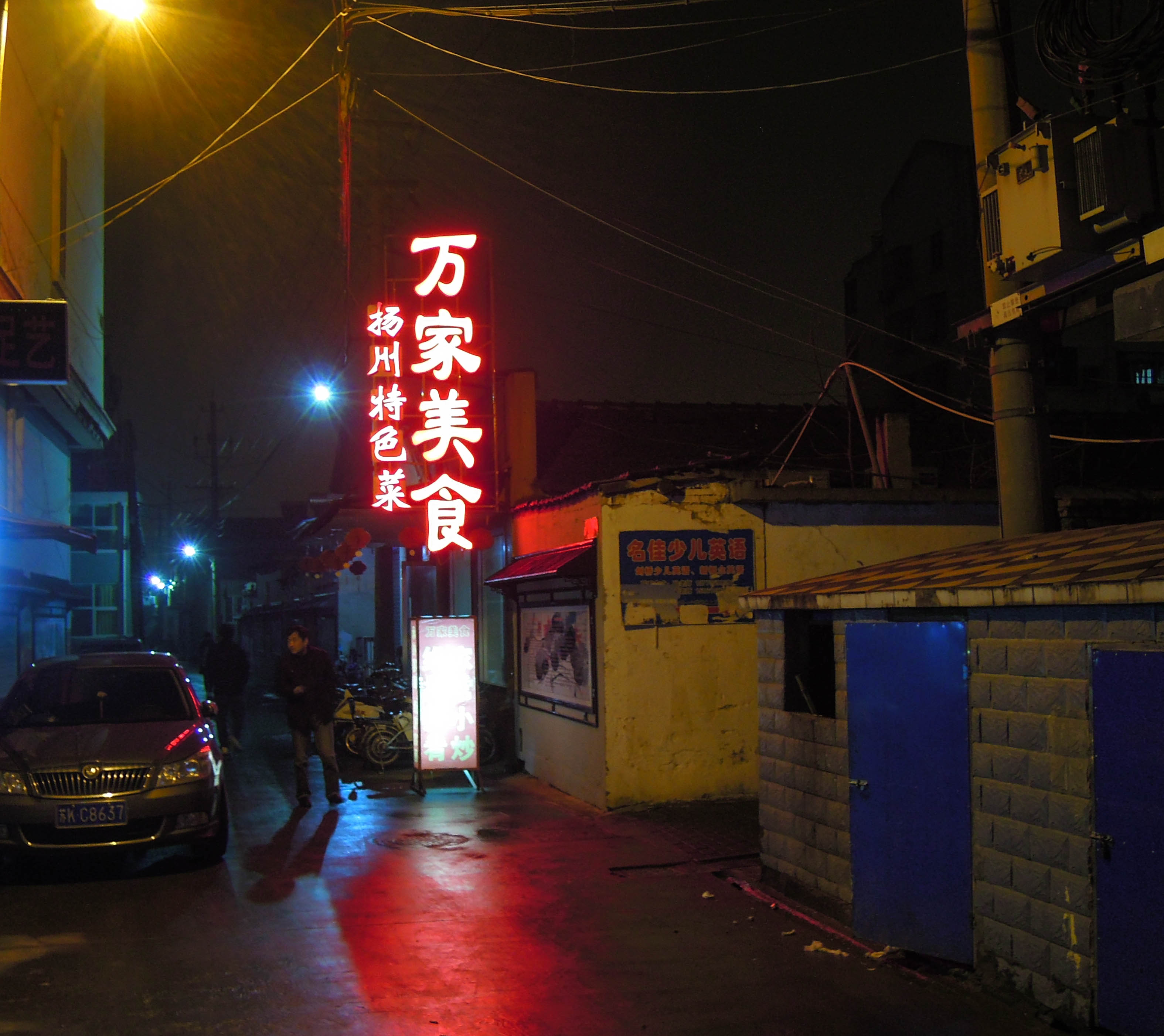
wànjiā měishí Restaurant in Yangzhou
The city of Yangzhou sits on the Northern banks of the Yangtze River (长江 chángjiāng) a short distance down river from Nanjing and a couple hours upriver from Shanghai. The city has approximately 4.5 million people and is often described as a quaint Chinese town or city. And guess what? It does feel smallish and quaint compared to China’s other massive, sprawling cities.
Yangzhou is a culinary hotspot. If you like to eat, you will love Yangzhou. It is a foodie’s paradise. In an earlier post I talked about Yangzhou’s famous and fabulous dimsum. (https://intothemiddlekingdom.com/2012/06/29/yangzhou-dimsum/). Yangzhou is one of the culinary centers of Huaiyang cuisine (淮扬菜 huáiyáng cài), one of the Eight major cuisines in China (八大菜系 bādàcàixī). The name comes from the Huai and Yangtze Rivers that cut through this fertile region. The Yangtze River is also called in Chinese the 扬子江 yángzi jiāng. Huaiyang Cuisine is characterized by super fresh ingredients with delicate seasoning. It is felt that you don’t want to overpower the freshness of the ingredients with heavy sauces or spices. Along with Cantonese (粤菜 yuècài), Sichuan (川菜 chuāncài), and Northern (鲁菜 lǔcài) cuisines, Huaiyang Cuisine is highly celebrated in China and for good reason.
As I have mentioned in previous posts, I was in Yangzhou for a couple days in February of this year and sampled some of the famous dishes of the city. It was truly a memorable culinary experience. Fortunately, I have my friend, and colleague from Nanjing University, and fellow foodie along with me. He knows the city well as he spent much time there as a child visting his grandmother.
One night we selected a small restaurant down an alley off a main street. It is pictured above and was called 万家美食 wànjiā měishí and specialized in Yangzhou’s specialties which is what the smaller characters on the sign say, 扬州特色菜 yángzhōu tèsè cài. It was a cold rainy night, and as many of you know, there is seldom central heat in buildings in this part of China so you get used to eating with your coat and hat on.
Yangzhou cuisine is famous for its “three heads” dishes. This includes fish head (鱼头 yǔtóu), lion’s head (狮子头 shīzitóu), and pig’s head (猪头 zhùtóu). I tried the first of the two, which were exceptional. The pig’s head is basically a braised pig face, which I decided to pass on.
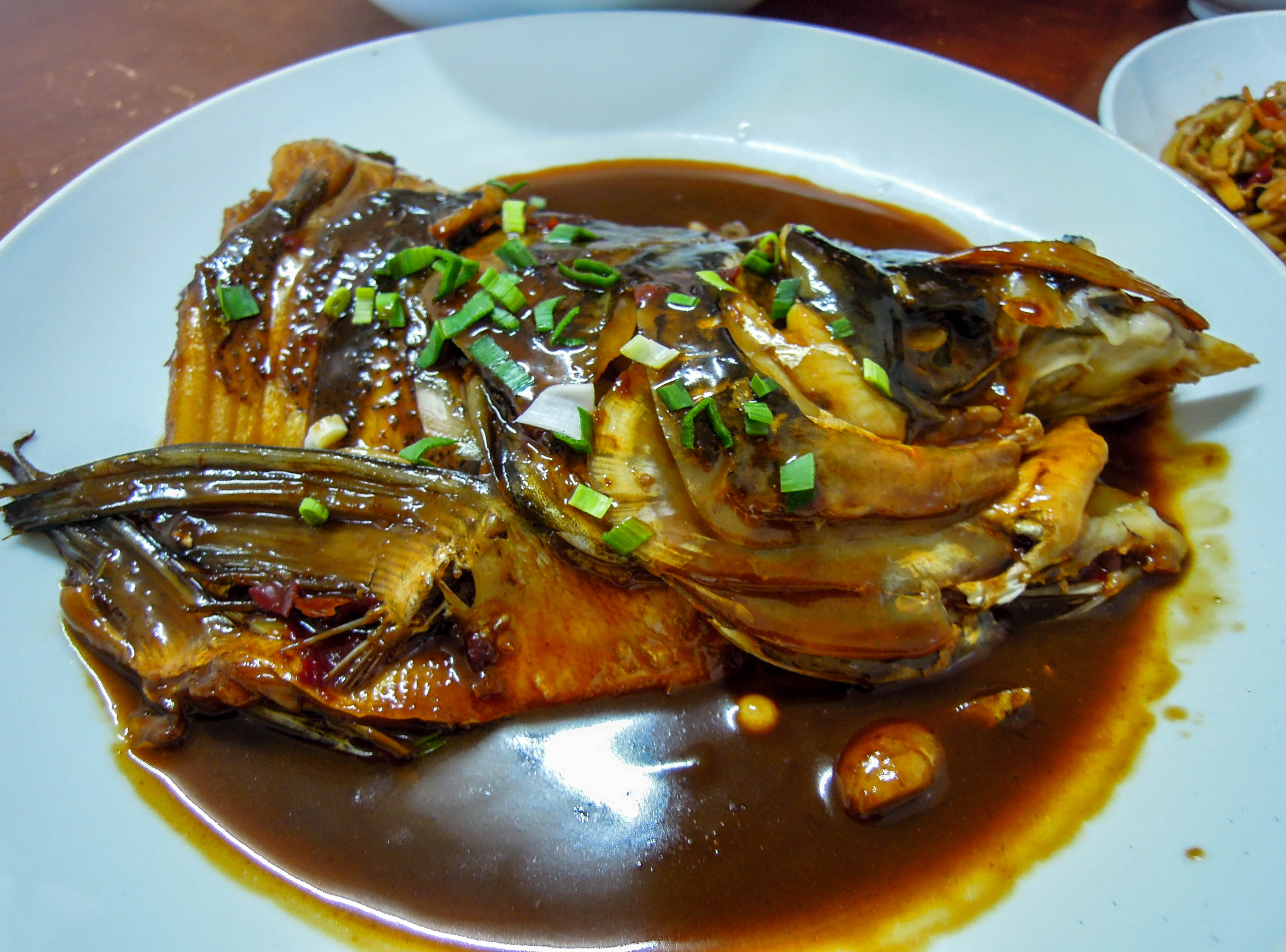
Delicious fish head steamed with a slightly sweet sauce
I know what many of you are thinking, fish head??? Trust me, it is delicious. The most tender and delicious meat from a fish comes from the cheek area, and the area just below the gills. Have you ever had halibut cheeks? I ate them once at a seafood restaurant in Seattle and they were to die for. This fish dish was exceptionally fresh, with a delicate sweet and slightly sour sauce with a few chopped scallions sprinkled on top. It was really good.
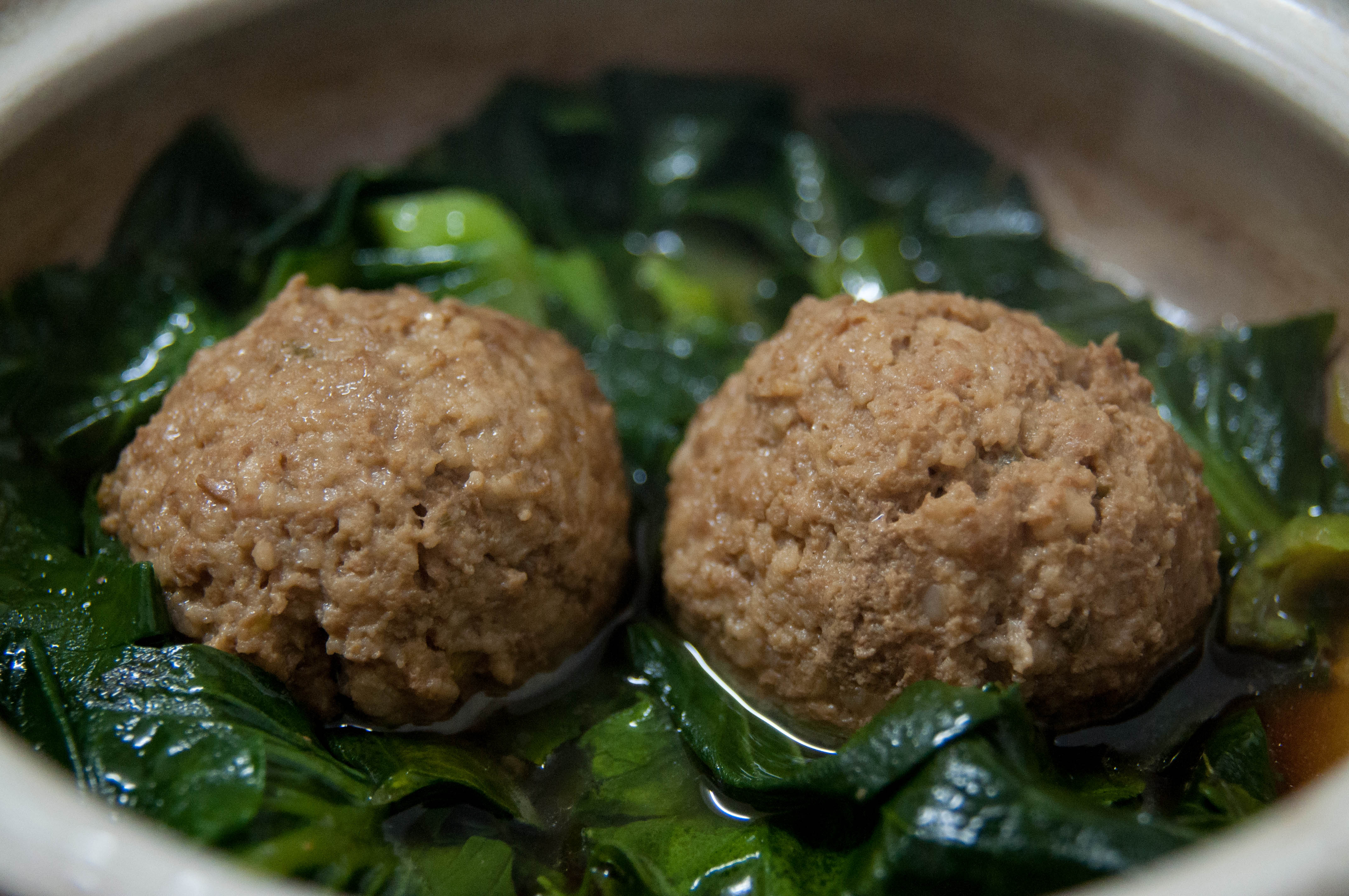
清蒸狮子头 qīngzhēng shīzitóu “fresh steamed lion’s head”
This dish contains no part of any lion. The Chinese have many creative names for dishes that have nothing to do with the ingredients. This dish is actually made with beef. However, it is not cheap ground beef. Prime cuts of beef are actually chopped with two large cleavers until the meat is minced into teeny tiny pieces. It is then seasoned with ginger and some onion, then steamed to perfection. The meat is so tender and succulent it can only be described as velvet-like. It was fantastic. The flavors were delicate, subtle, perfect. I really enjoyed this dish. It was ever better than the similar beef balls you get on Cantonese dimsum menus. I am not a big beef eater, but this dish was outstanding and I would order it again, and again.
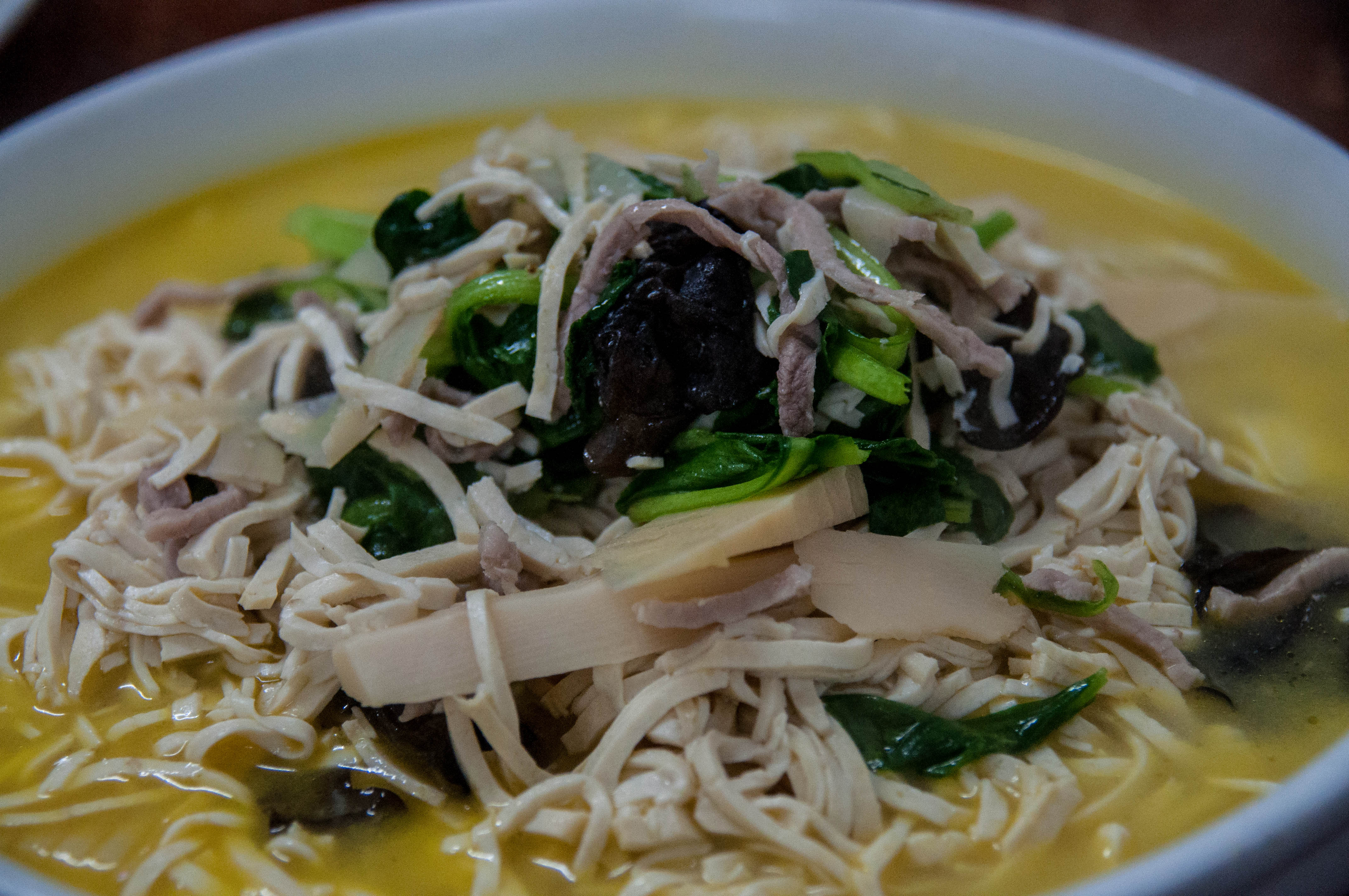
大煮干丝 dàzhǔ gānsī “boiled shredded tofu”
This is another famous Yangzhou dish. The noodle-looking things are actually a type of dried tofu called 豆腐干 dòufugān, which literally means “dry tofu.” It has a firm, chewy texture similar to noodles. Like all tofu dishes the tofu soaks up all the flavors it is mixed with. This dish contains some greens and bamboo shoots all cooked in a delicious, light chicken based stock. It is a wonderful dish and can be found all over Yangzhou.
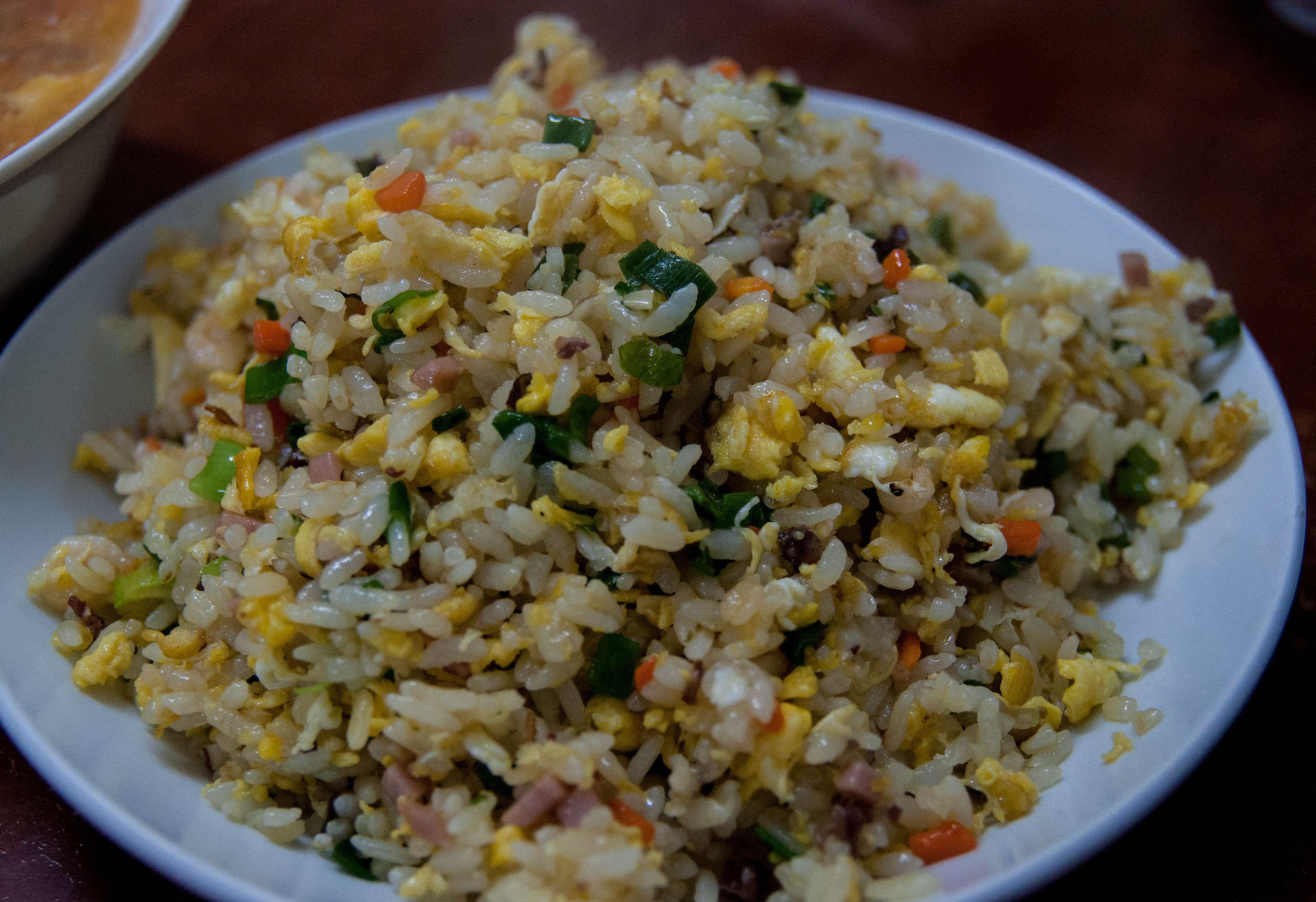
扬州炒饭 yángzhōu chǎofàn “Yangzhou fried rice”
This is not the greasy slop that you get at Chinese-American restaurants in the U.S. The first time I encountered Yangzhou style fried rice I had just arrived in Guangzhou after many hours on a plane. I finally got to my hotel around midnight and I was ravenous, but way too tired to go out and find a restaurant still open. So I ordered a plate of Yangzhou fried rice from room service. It was delicious!
Yangzhou fried rice is famous all over China. As with most Huaiyang cuisine it is lightly and delicately flavored, and is neither greasy nor smothered in salty soy sauce. It is seasoned with little bits of very fresh vegetables such as carrots, greens, maybe a bit of garlic. It almost always has freshly scrambled eggs and ham. I very seldom order fried rice; actually I never order fried rice, much preferring steamed rice. But Yangzhou style fried rice is the exception. It really is outstanding and the pinnacle of fried rice dishes in China.
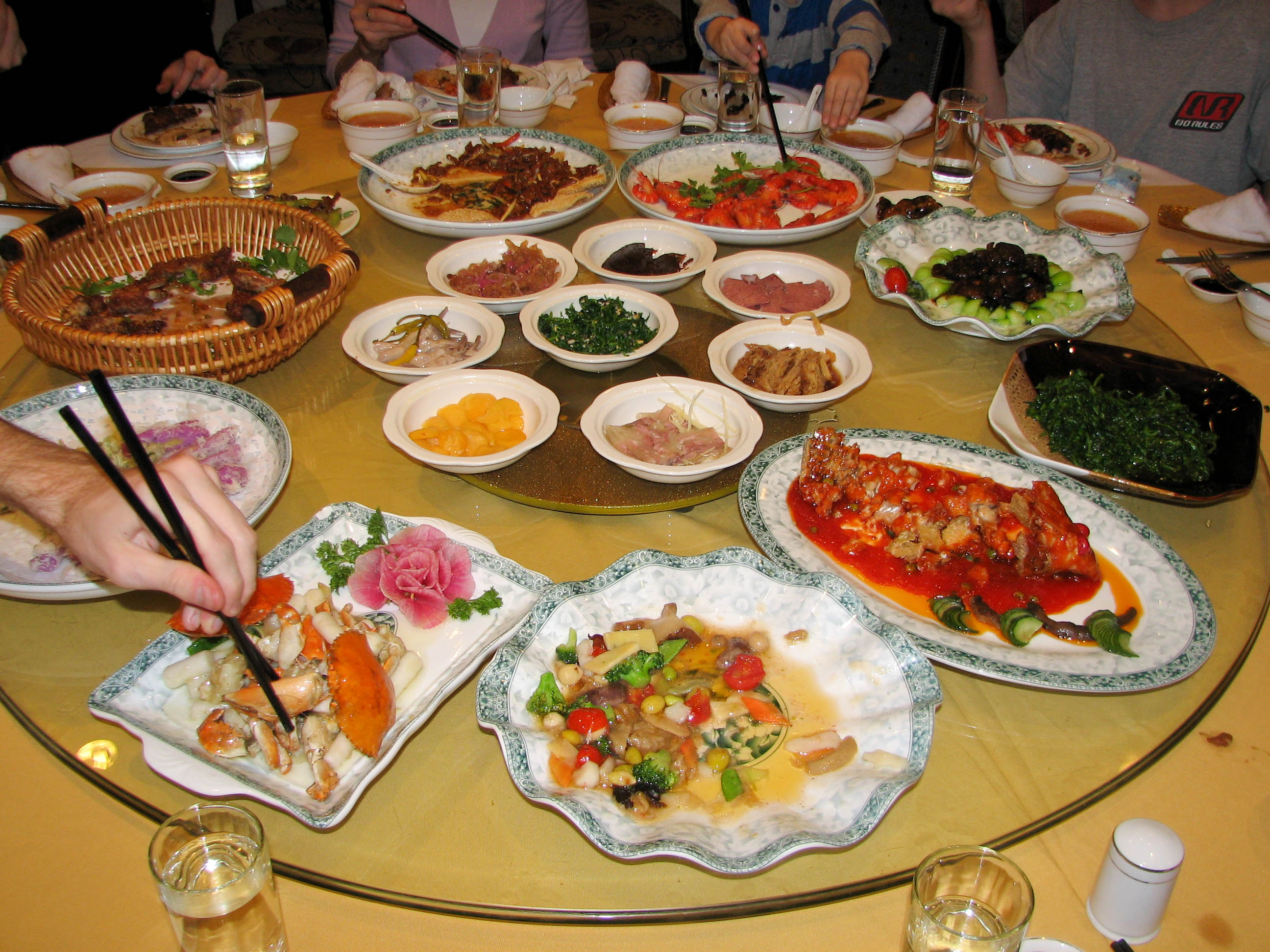
After this wonderful meal I was feeling very sleeping, and very chubby. In fact, on this trip I had been eating way too much as I was doing research (i.e. eating) on Huaiyang cuisine. Several of my friends and colleagues knew this so they were very eager to take me to their favorite restaurants and order way more food than we could possibly eat.

Feeling a bit chubby after an excellent meal in Yangzhou
In the future I’ll be posting more about Huaiyang cuisine as well as China’s other cuisines as I continue my research on China’s famous regional cuisines. Let’s just say that authentic Chinese food is more varied, more delicious, and much more exciting than anything you can find here in the U.S.



 Into the Middle Kingdom