Chaozhou (潮州, cháozhōu)

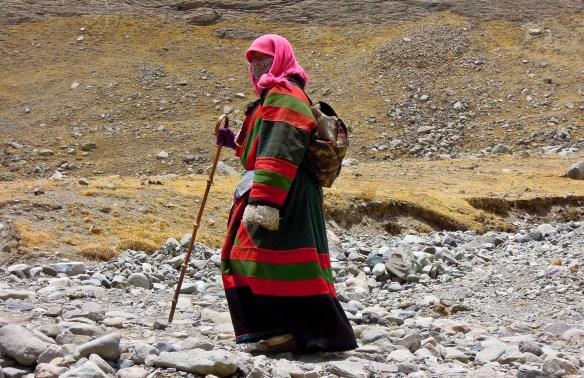
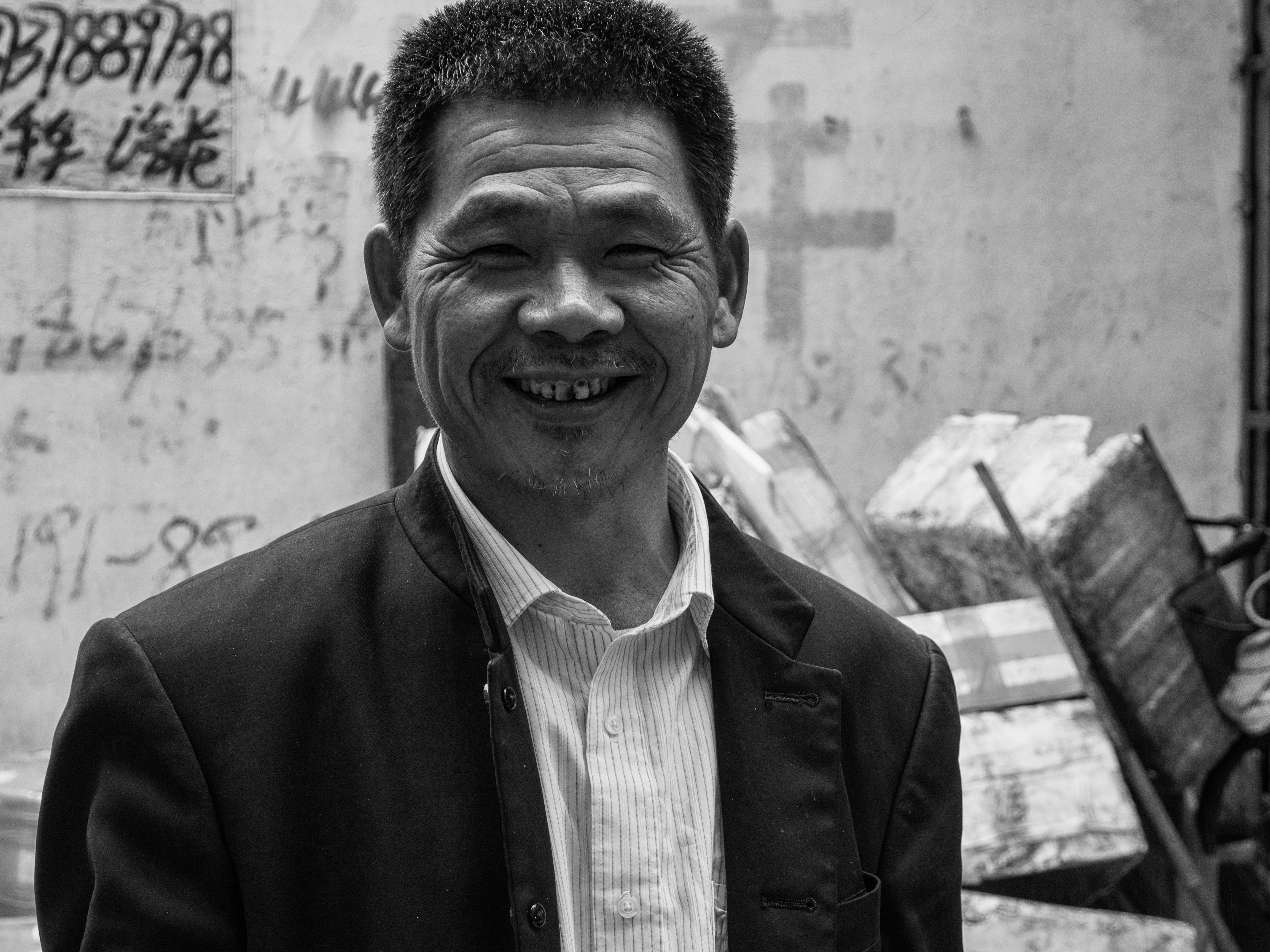
Chaozhou native

Chaozhou native

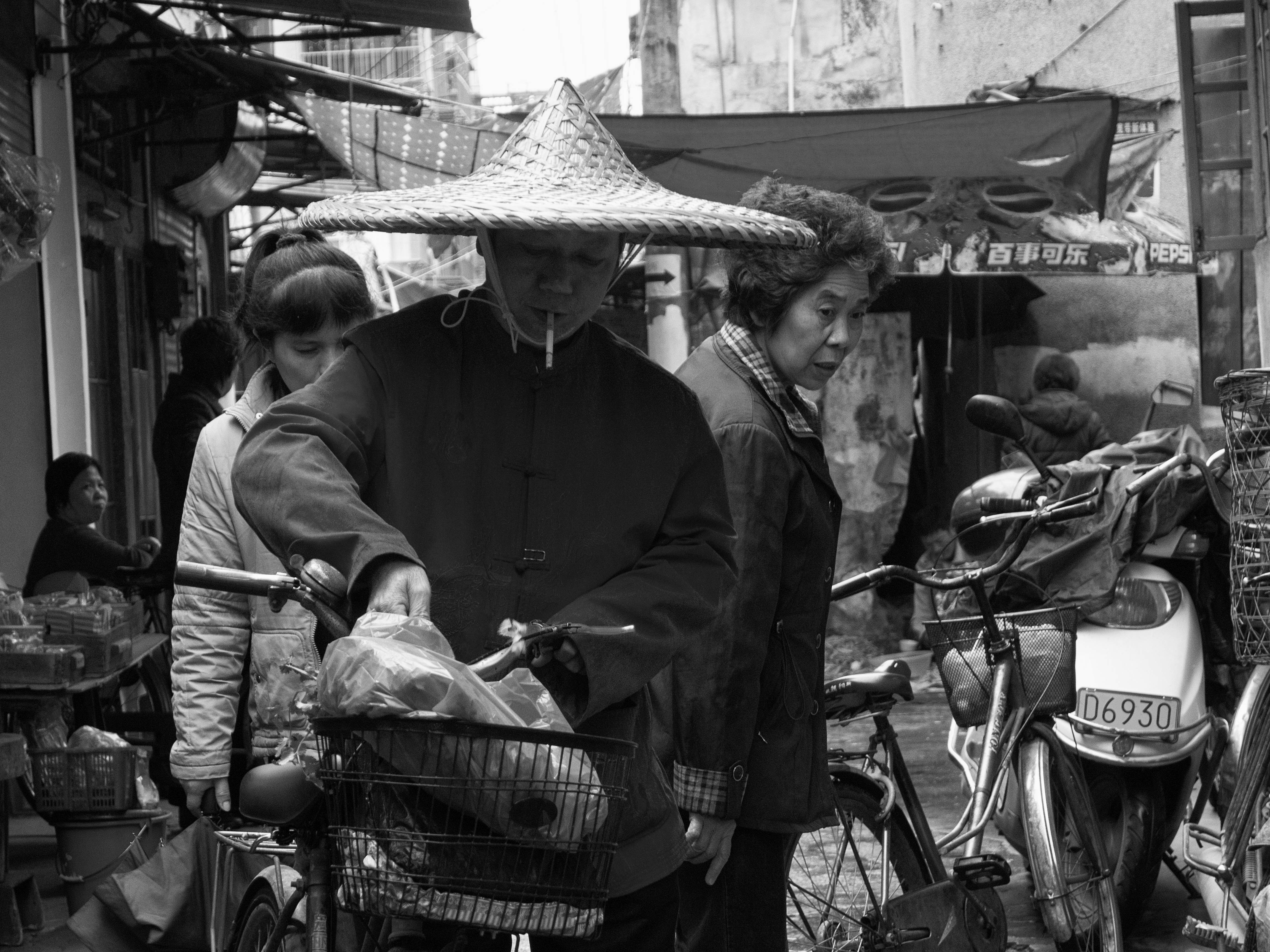
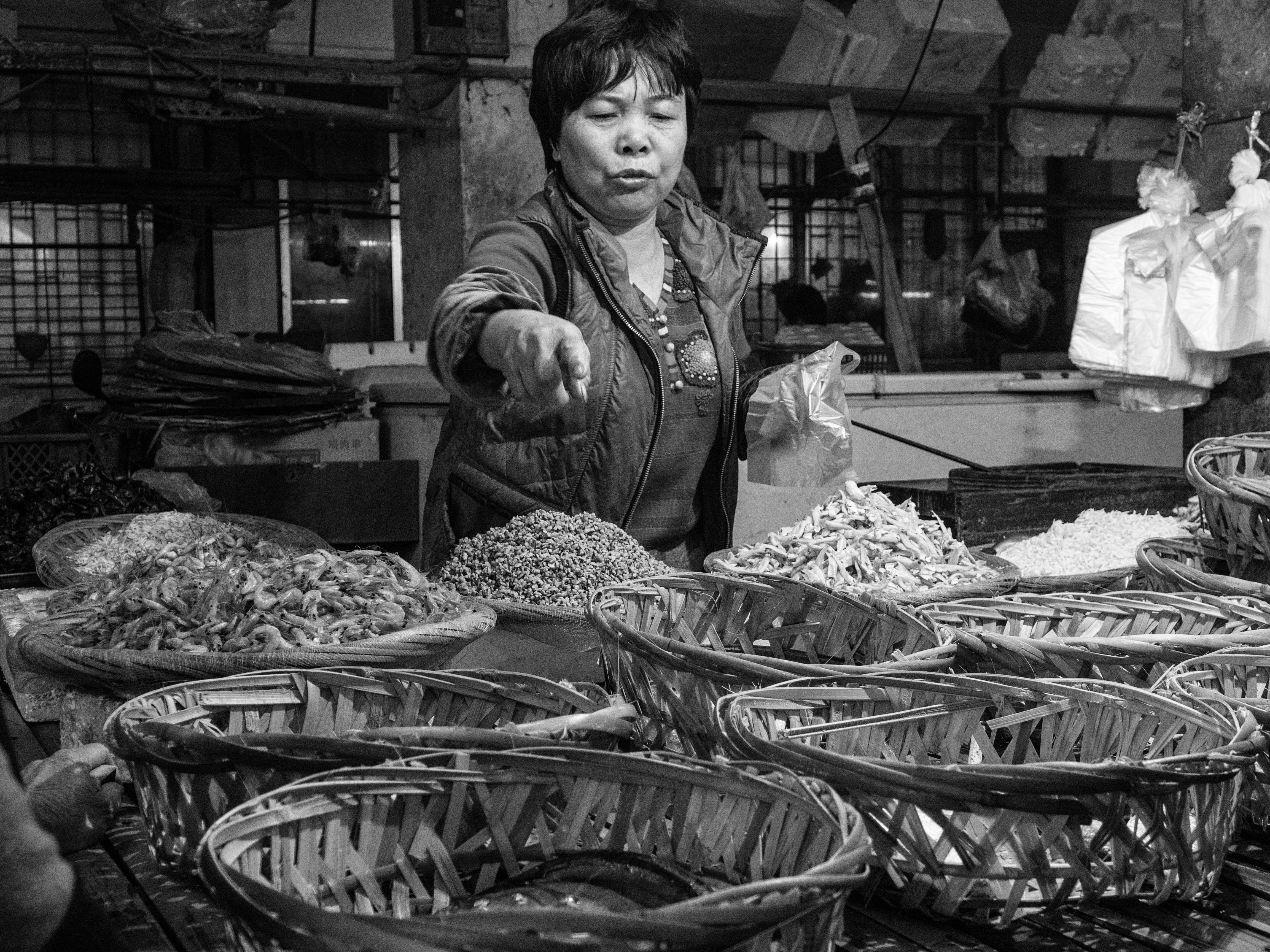
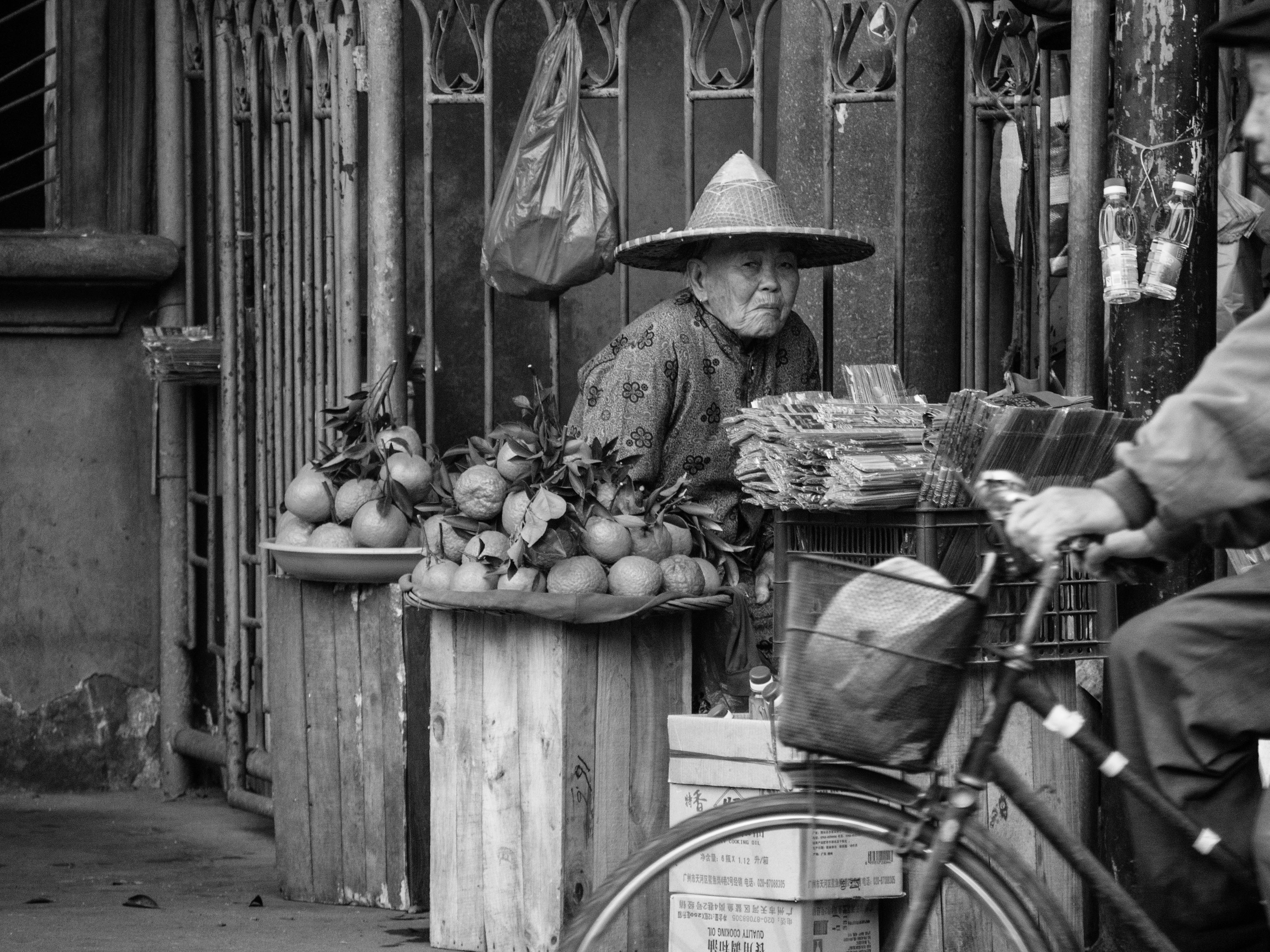
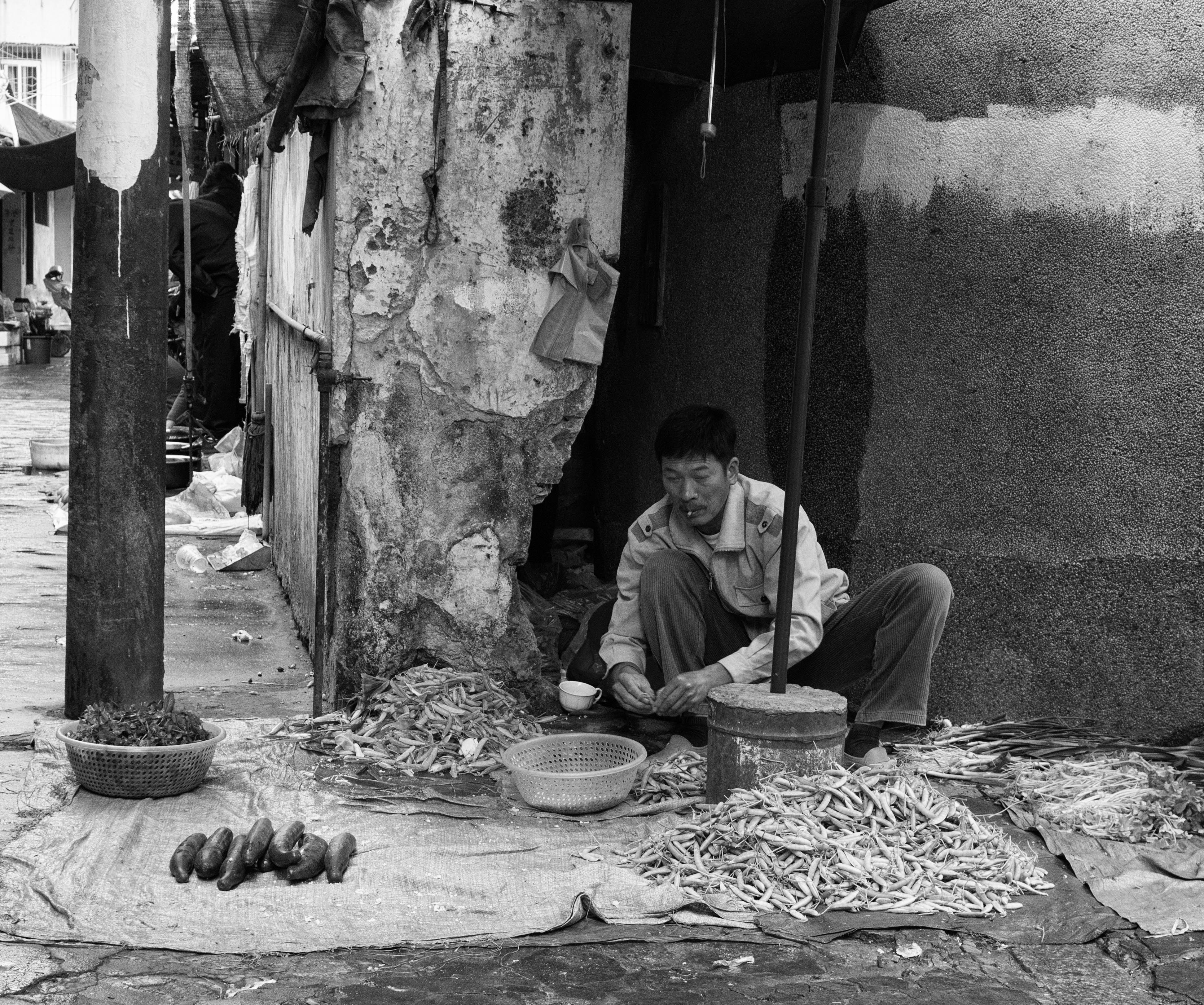
It is always interesting to visit a new city. In February I had the chance to spend a couple days in the Southern Guangdong city of Chaozhou, or as it is sometimes transliterated from the Cantonese pronunciation Chiuhchow (chiùhjāu) ; it is also sometimes written as Teochew. This smaller Chinese city (less than 3 million) sits along the Han River and is just 40 kilometers from the port city Shantou (Swatow) on the South China Sea. It is in the far southeastern part of Guangdong Province, quite close to Fujian. I was in Guangzhou and decided to take the 6 hour train ride out to see Chaozhou. When I was living in Hong Kong back in the early 80’s I had met many people from Chaozhou; I was also interested in Chaozhou cuisines which has a major culinary tradition, though it is usually considered a subcategory of Cantonese cuisine.

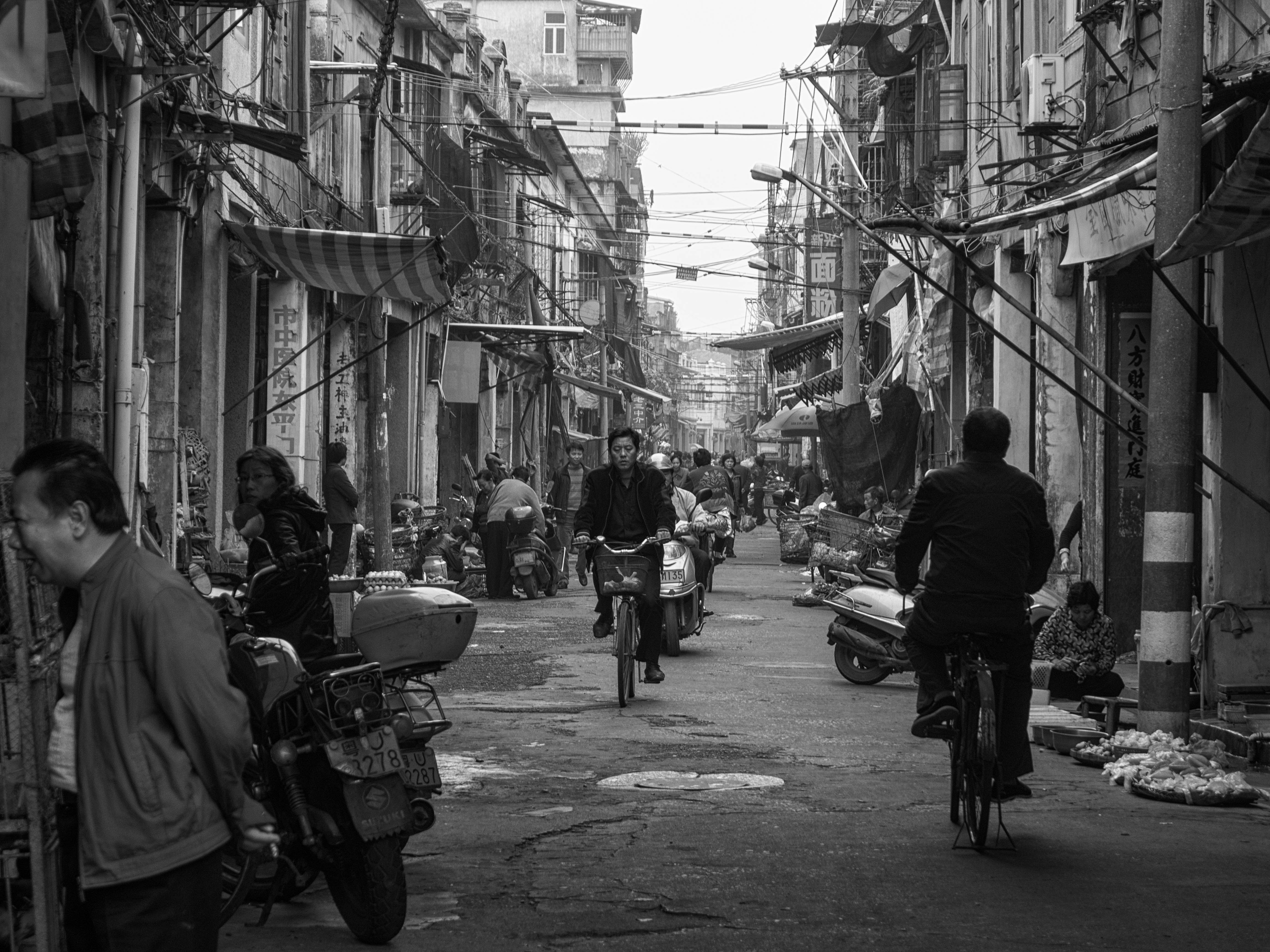
The old part of Chaozhou

The old part of Chaozhou

Many Chinese cities have two distinct parts, the old, original part, and the newer built up part. The old sections of these cities are full of character with winding alleys, vendors hawking their goods on the streets, and small restaurants and shops lining the streets. The new sections of these cities have wide streets, skyscrapers, and very little character, in my opinion. Chaozhou has a quaint feel to it. Though there is a newer section to town, most of the city seems to have retained that old China feel to it. The most interesting part of town consists of a maze of narrow alleys clustered around the Kaiyuan Temple (Buddhist). In ancient China these religious centers were the focus of any city and vendors would set up stalls and shops all around these temples. Even now in China some of the bigger outdoor markets surround Buddhist, Taoist, or Confucian Temples. The famous Fuzi Miao shopping area in Nanjing is a classic example of this. The very name of this market means “Confucius Temple.”

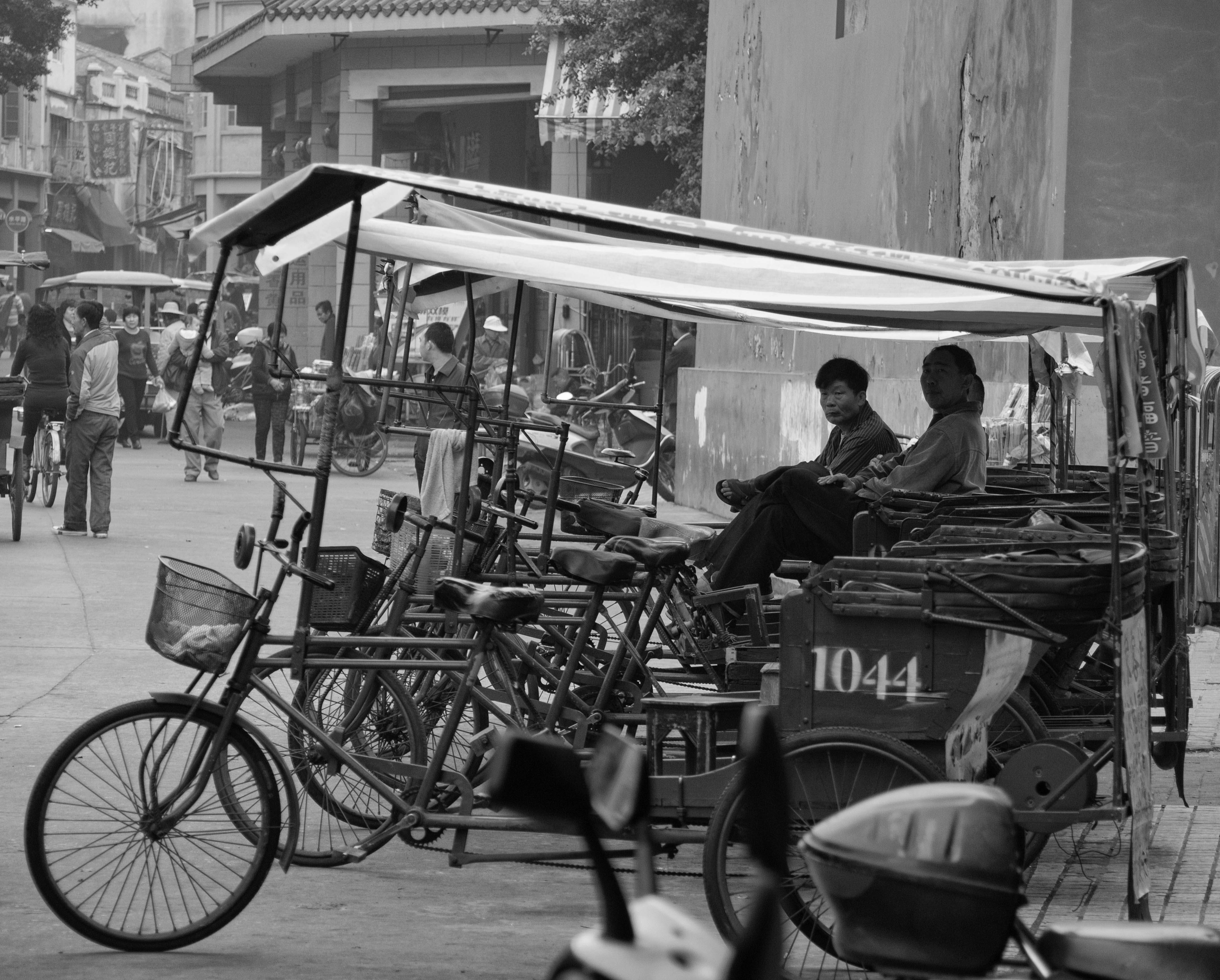
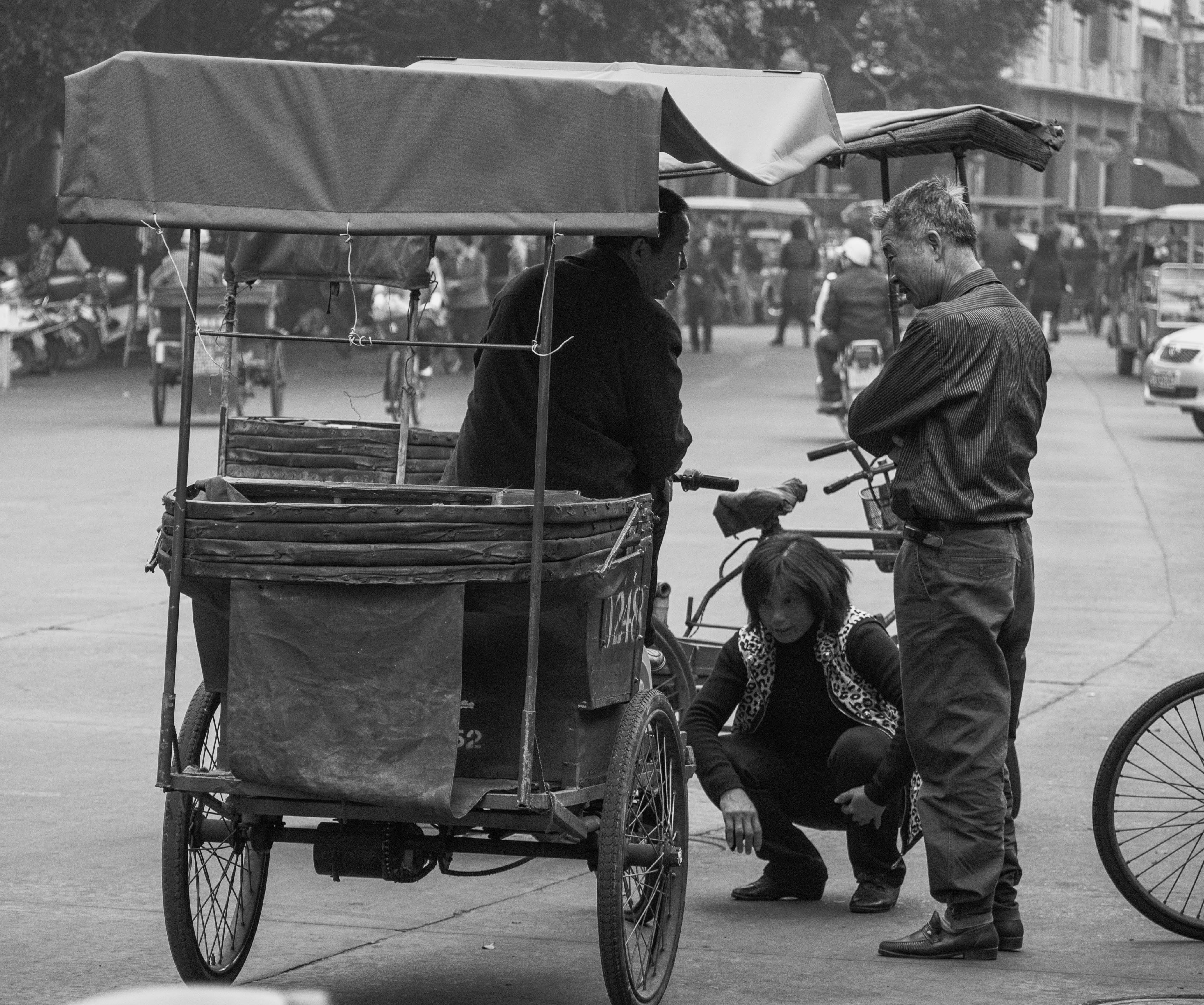
The pace of life seemed slower and more laid back than many other parts of China where I have spent time. Instead of large grocery stores and discount stores, there were open meat and vegetable markets. Vendors sold goods off the backs of their bicycles. Traditional hats and clothing were observed on the streets and in the markets. Three wheeled pedicabs were abundant, both for transporting people, as well as the flat bed variety for transported large goods. Restaurants were everywhere, sometimes with tables set out on the sidewalks. The people of Chaozhou take their food and eating very seriously, just like the Cantonese. Street food was everywhere and the snacks were delicious. The people were friendly, gracious, and not afraid to talk to a foreigner. The Chaozhou dialect is completely different from Mandarin or Cantonese. Since I don’t know any Chaozhou dialect I was stuck with using Mandarin, or occasionally Cantonese when I met someone from somewhere else in Guangdong Province.

I enjoyed two and half days wandering around sampling the local cuisine, strolling the narrow alleys, talking to locals, and relaxing in this rather laid back small city in China’s far south. The following photographs are my impressions of Chaozhou. Black and white seemed fitting for Chaozhou as the area I spent most of my time had that old China feel to it. It was a very nice change of pace from bigger, more hectic Chinese cities.

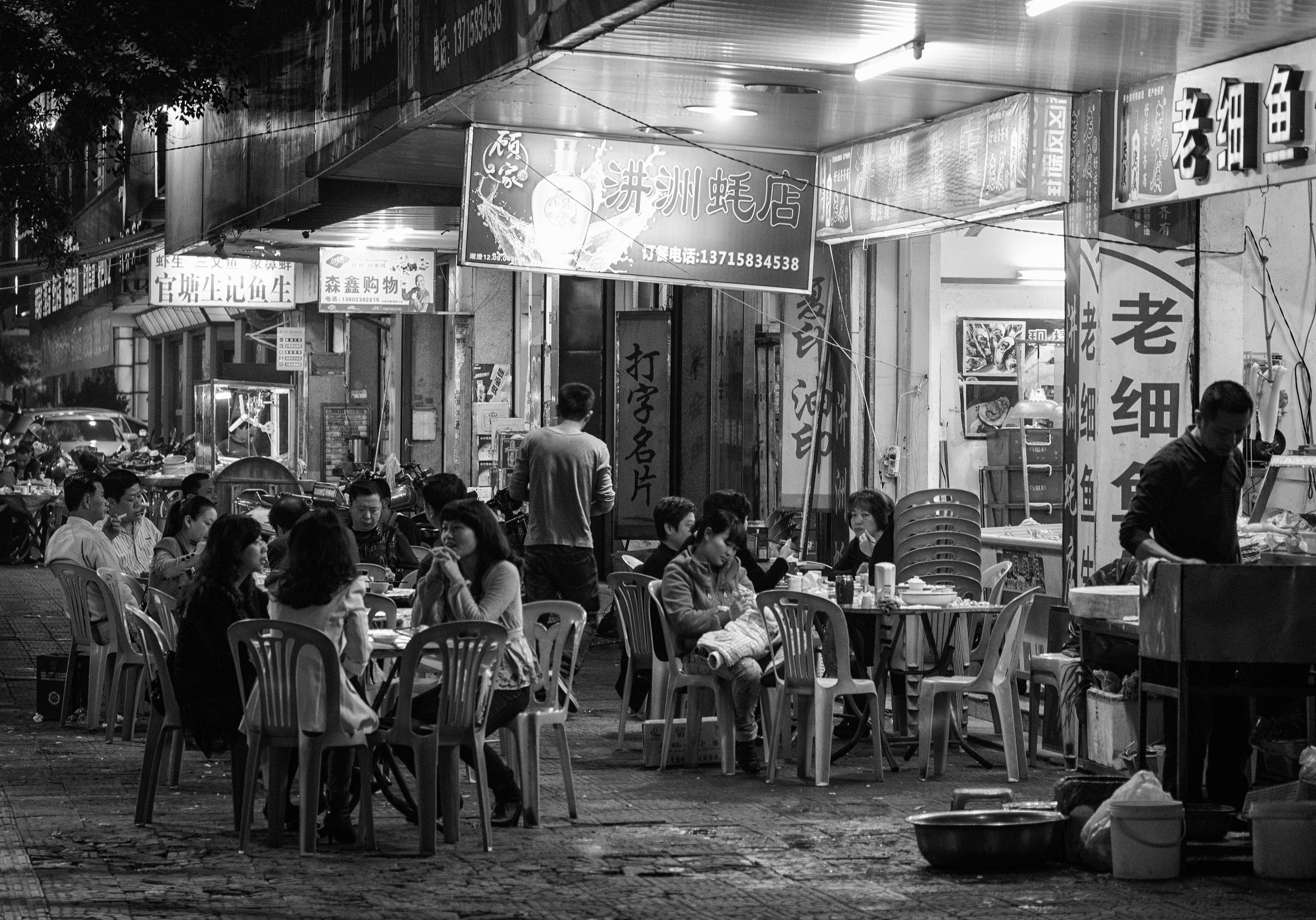
Informal outdoor dining

Informal outdoor dining

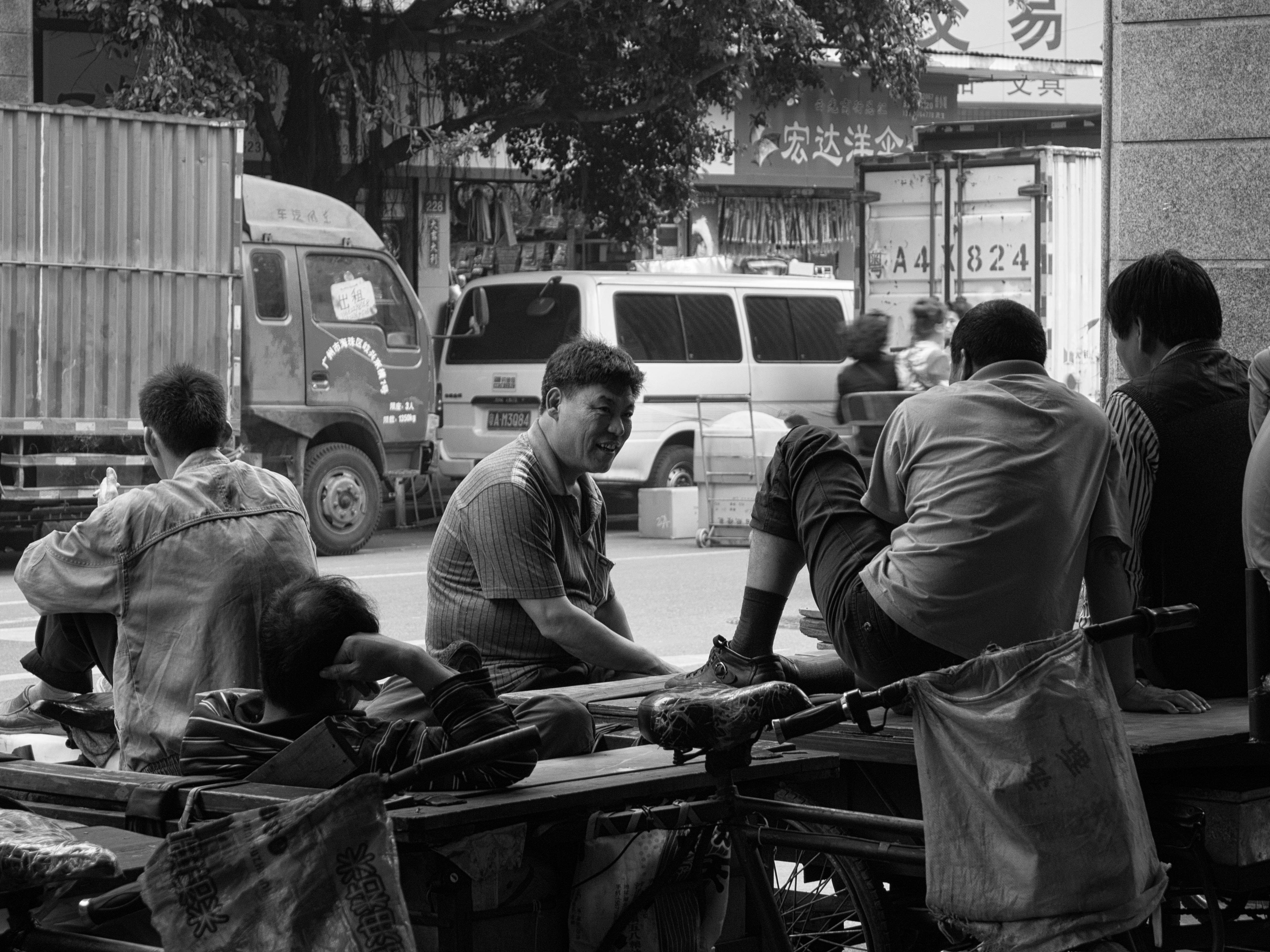
Waiting for a delivery job

Waiting for a delivery job

Pedicab station

Pedicab station

In no hurry

In no hurry

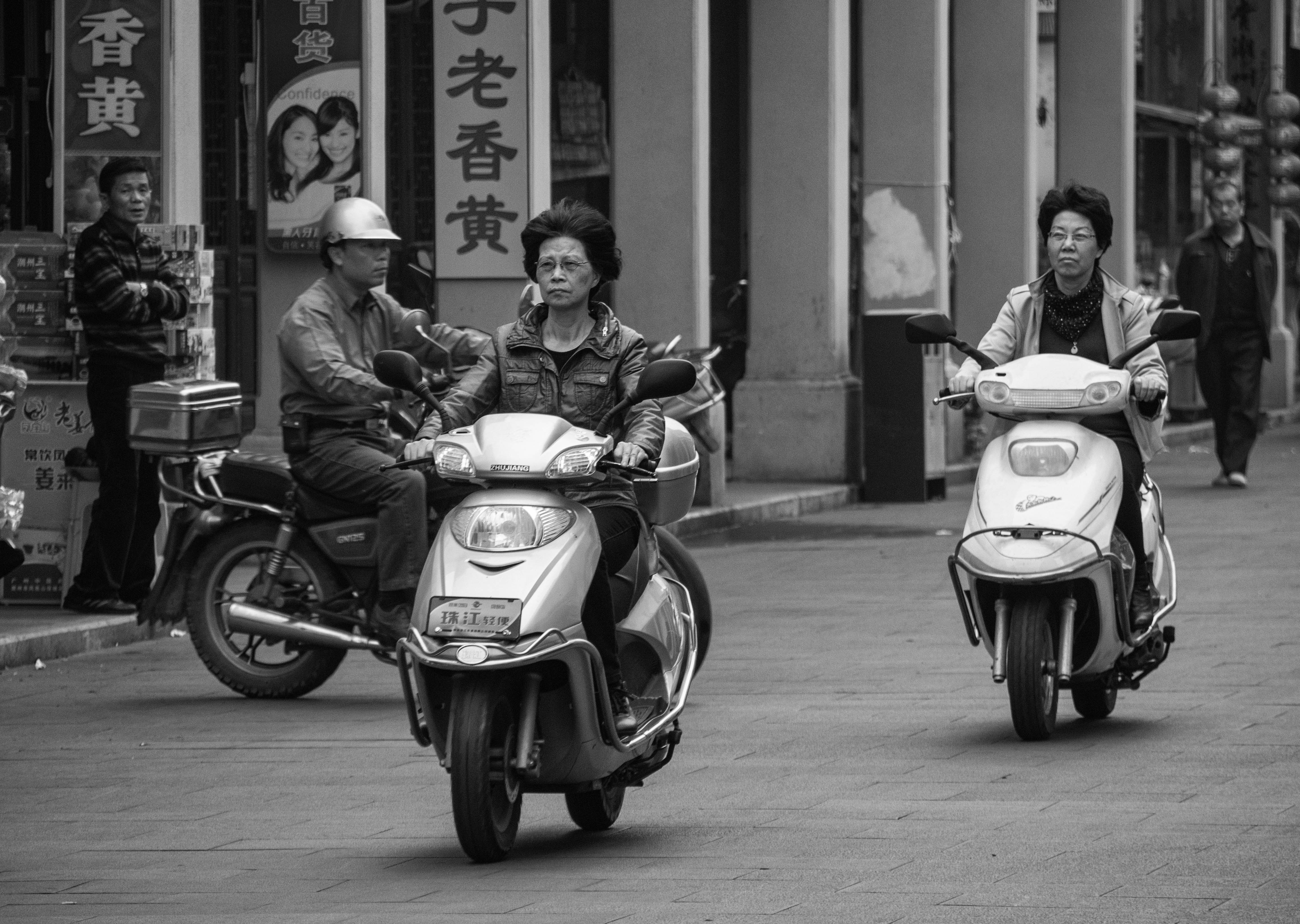
Scooter ladies

Scooter ladies

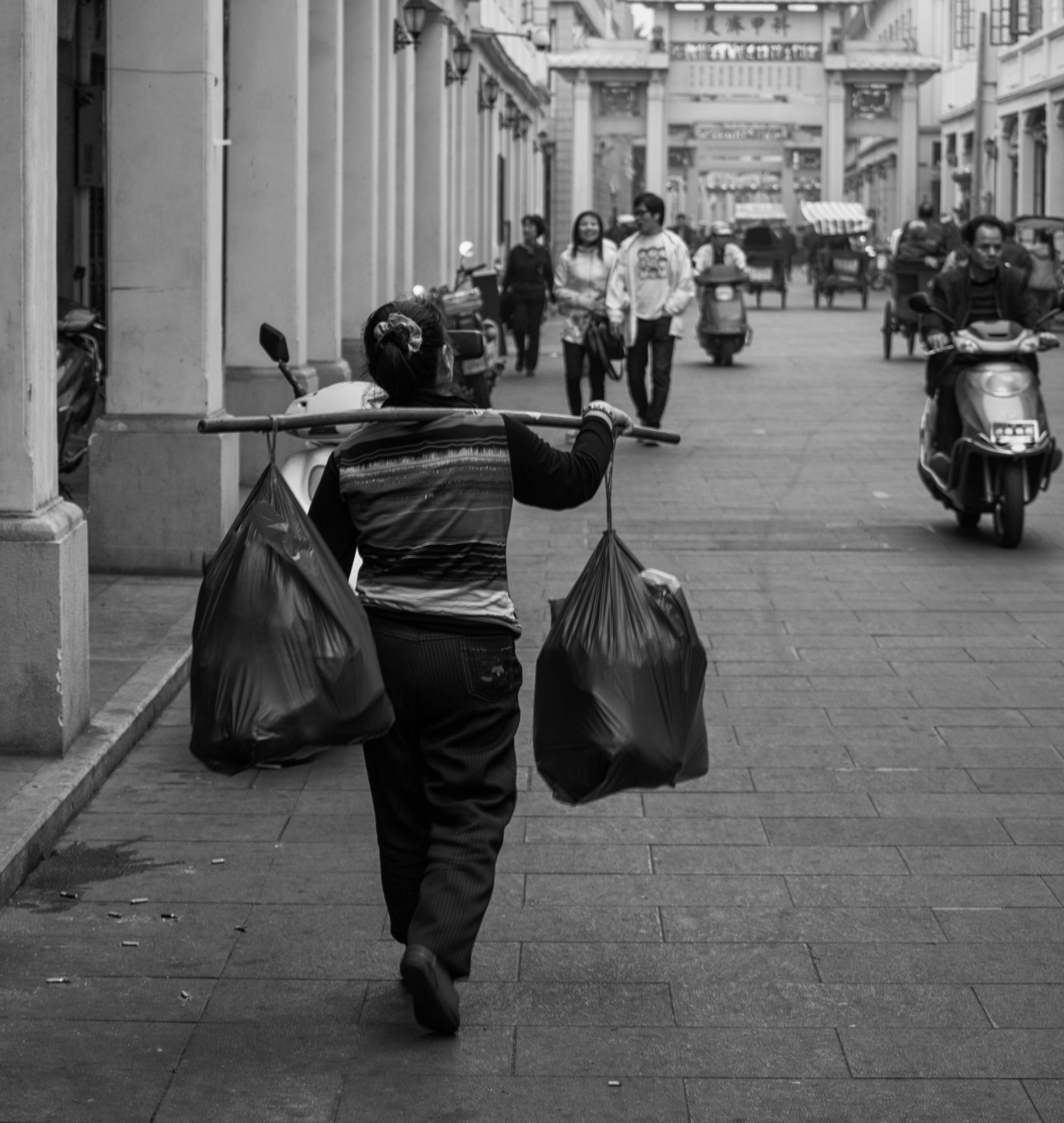
Shoulder pole

Shoulder pole

Shopping

Shopping

Dry goods

Dry goods

The hat

The hat

Vegetable hawker

Vegetable hawker

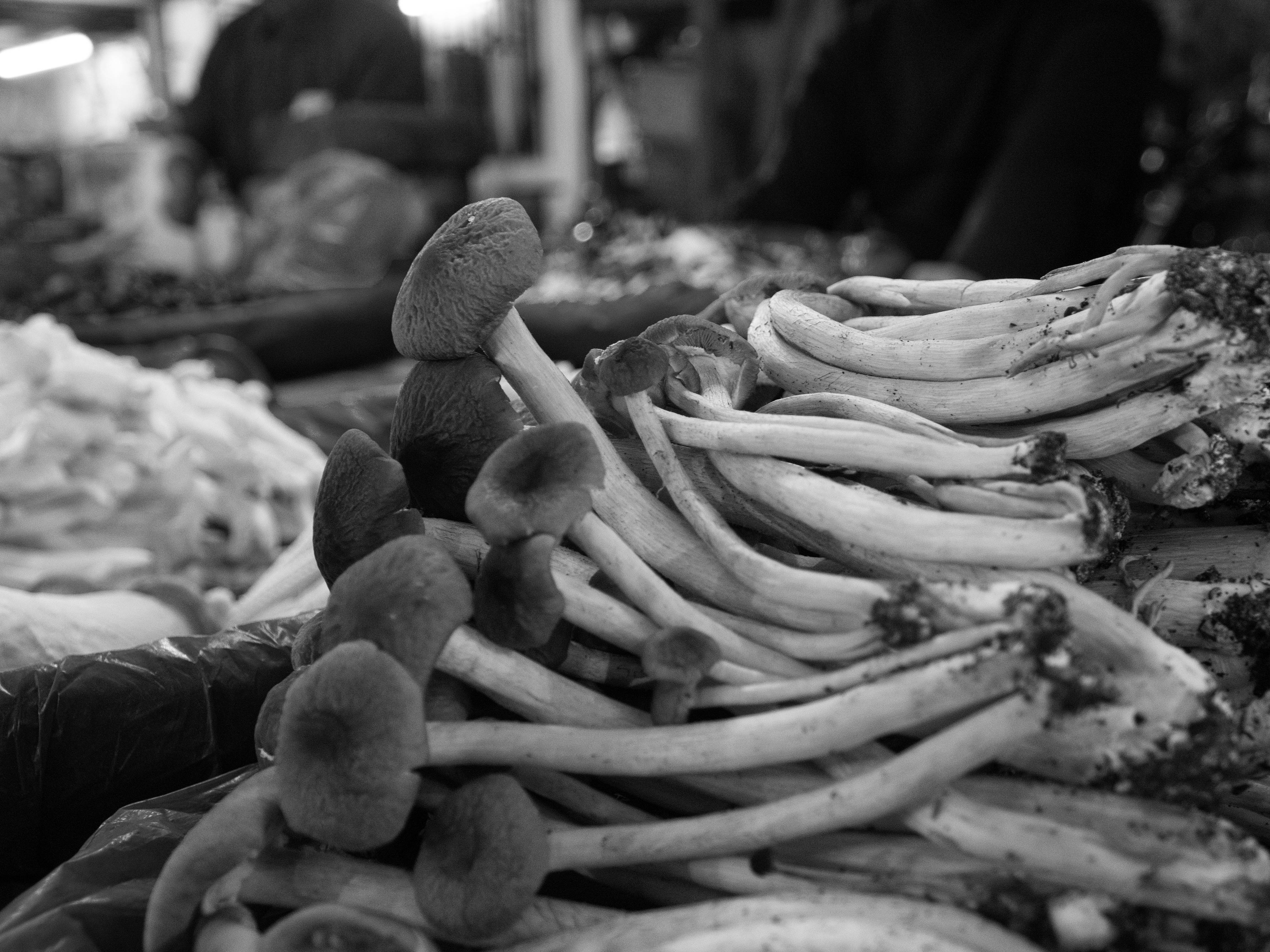
Mushrooms

Mushrooms

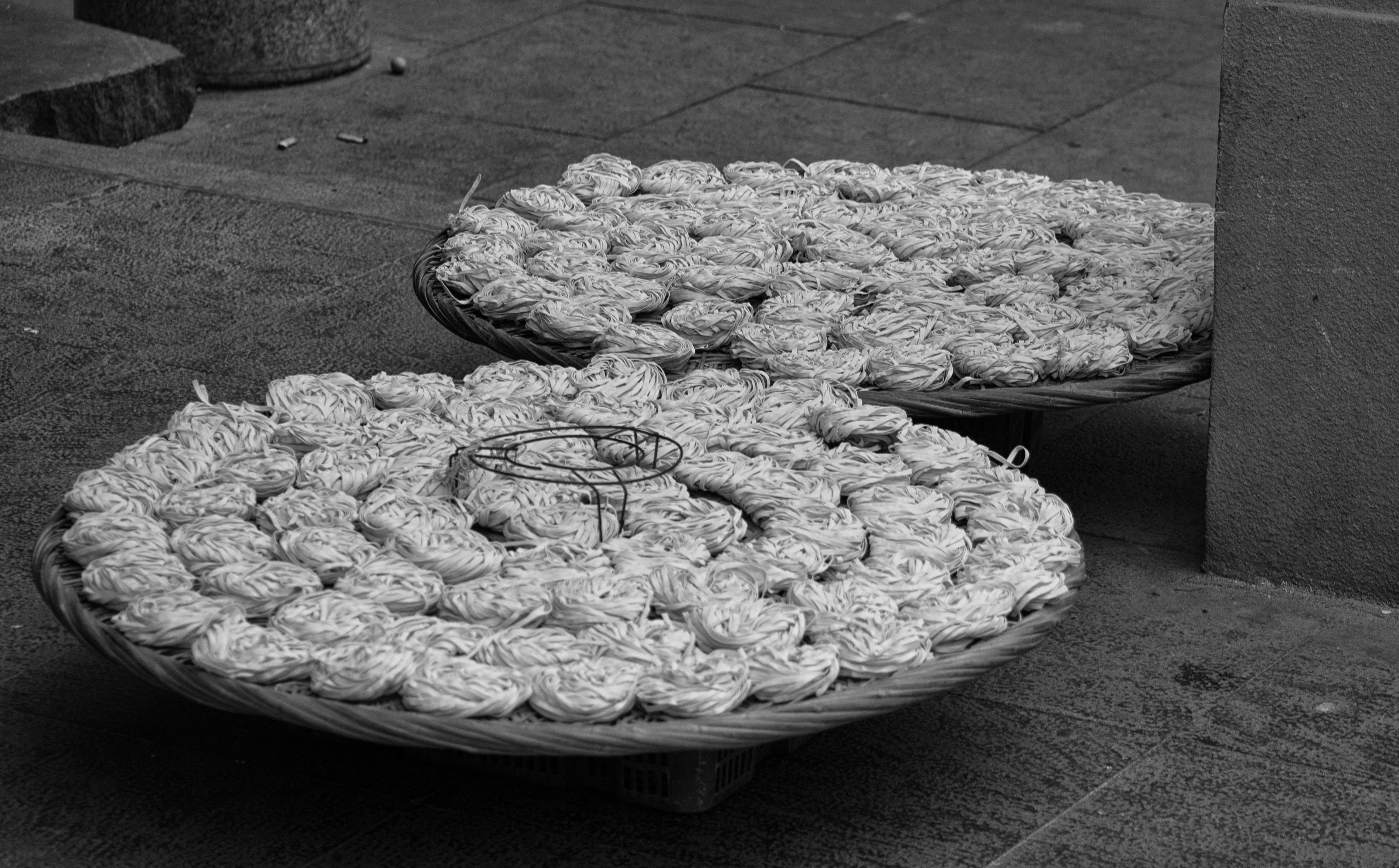
Noodles

Noodles

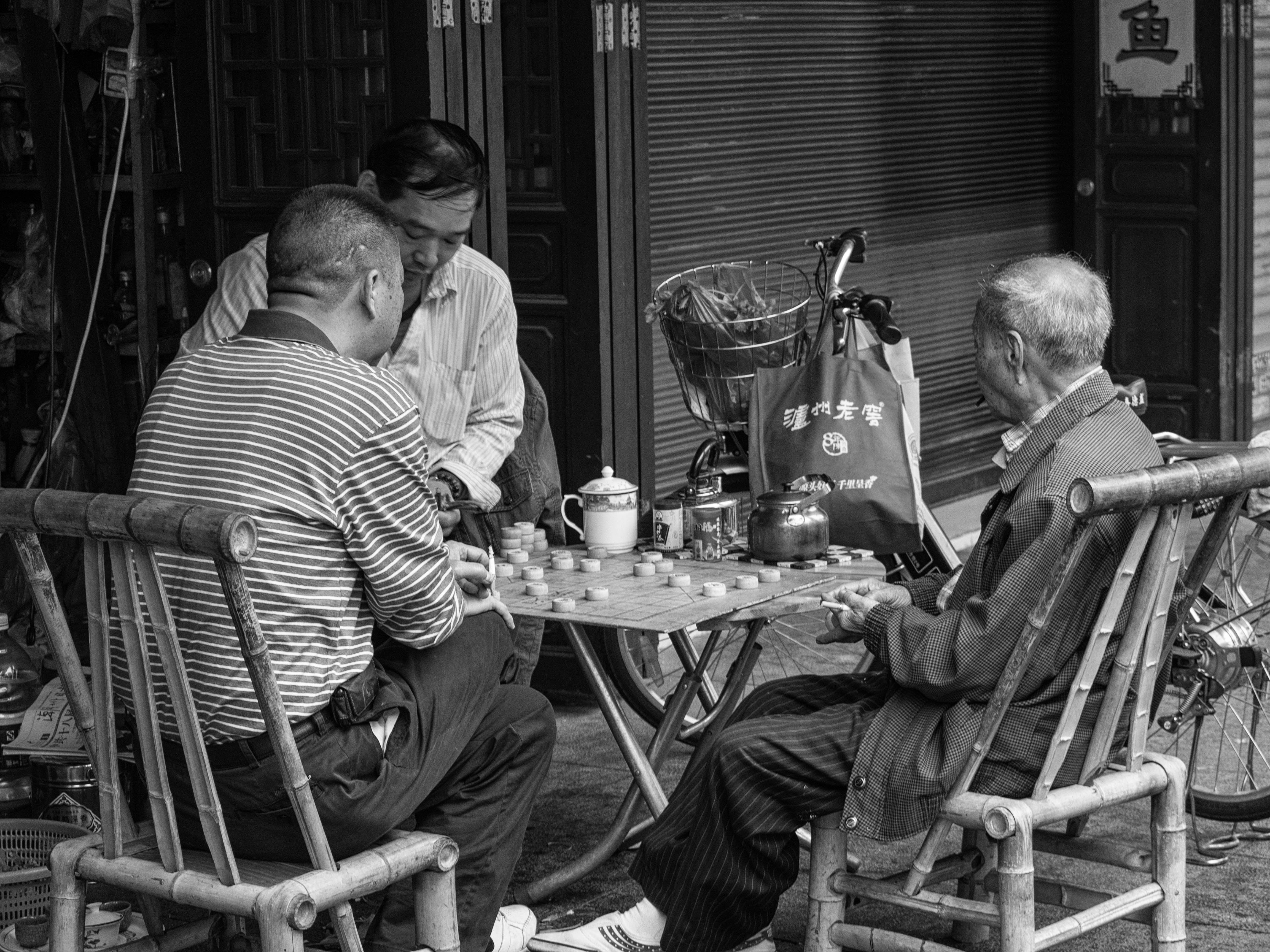
Chess

Chess

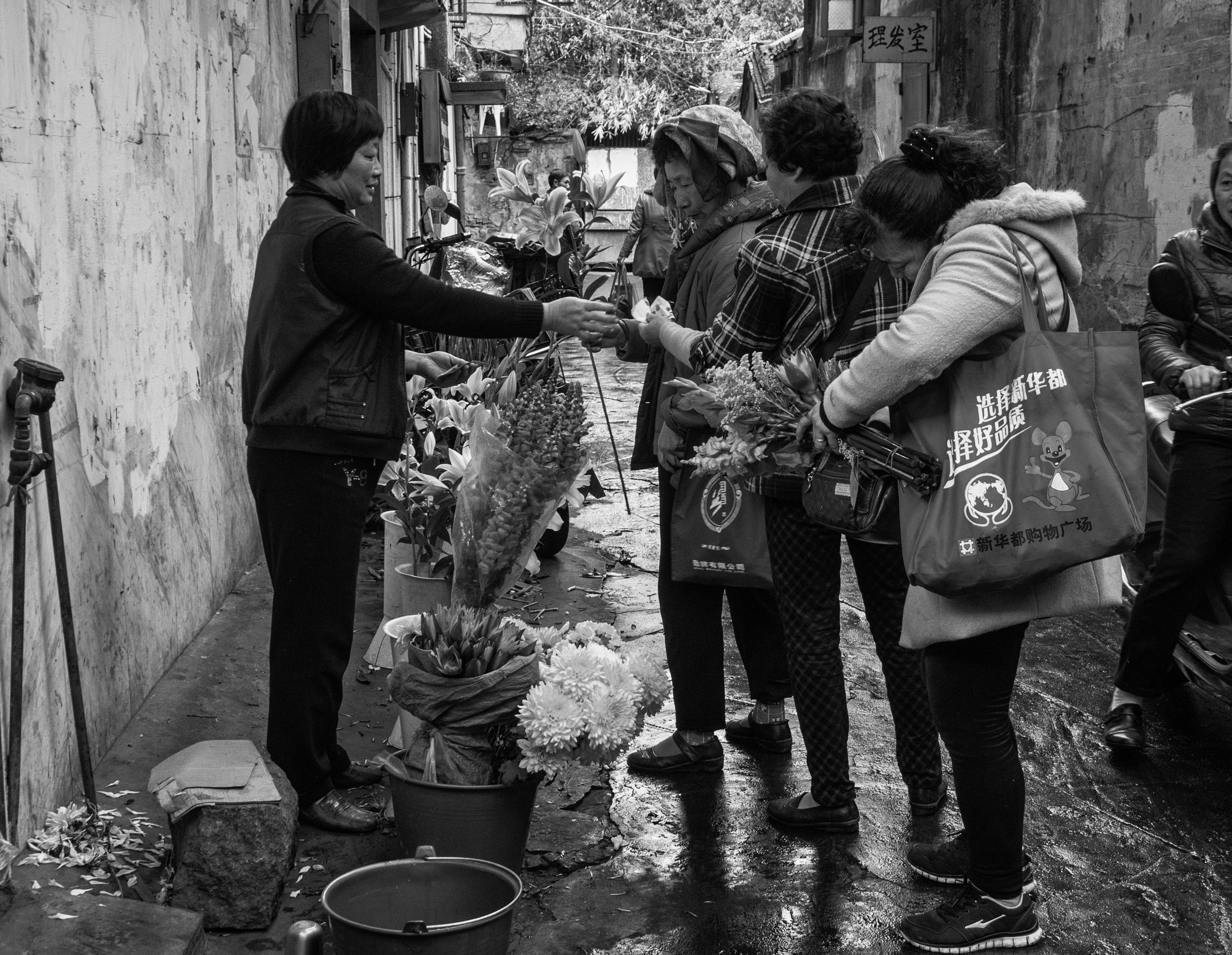
Buying flowers

Buying flowers

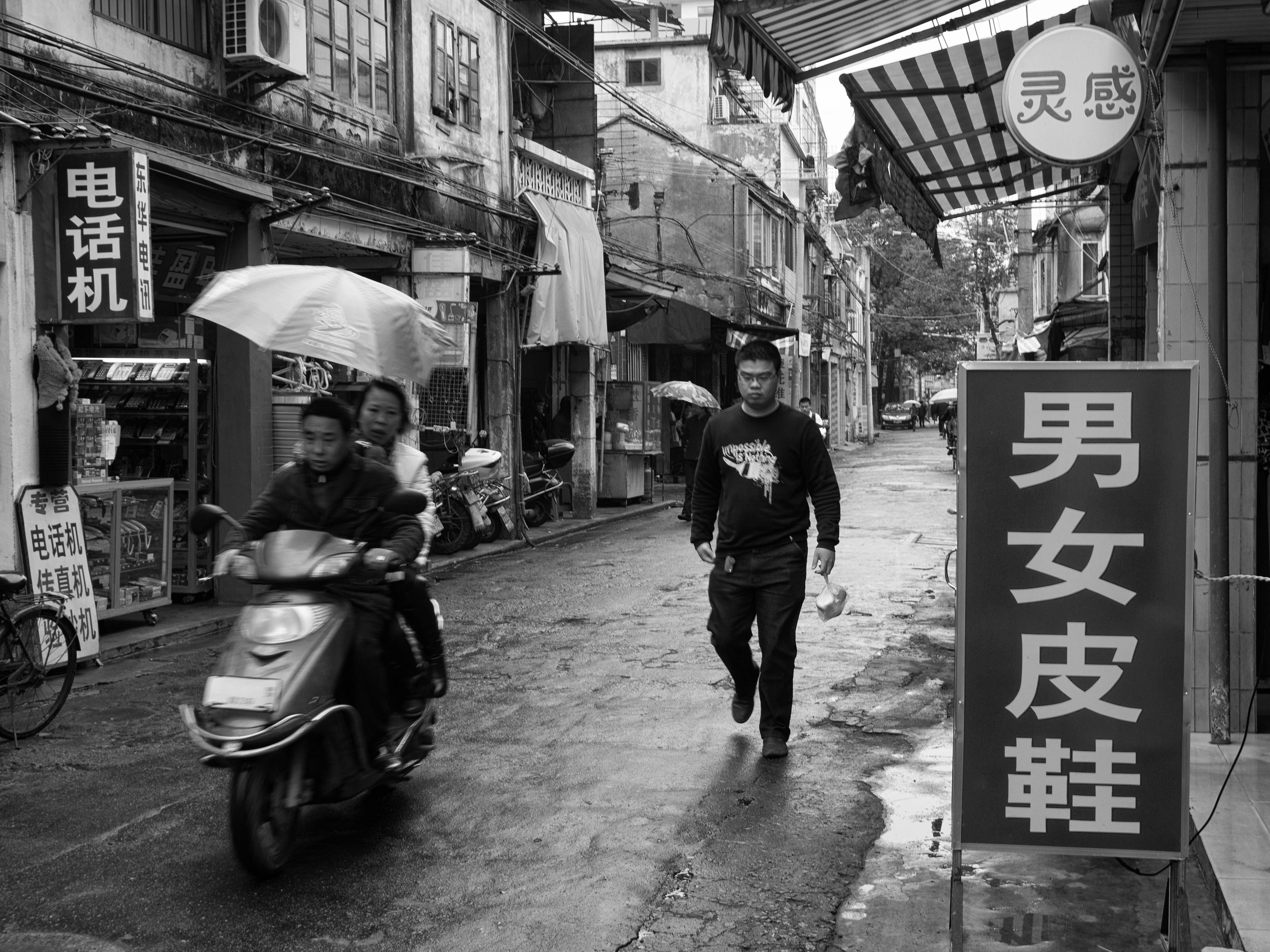
Alley in the rain

Alley in the rain

Men & Women's leather shoes

Men & Women’s leather shoes

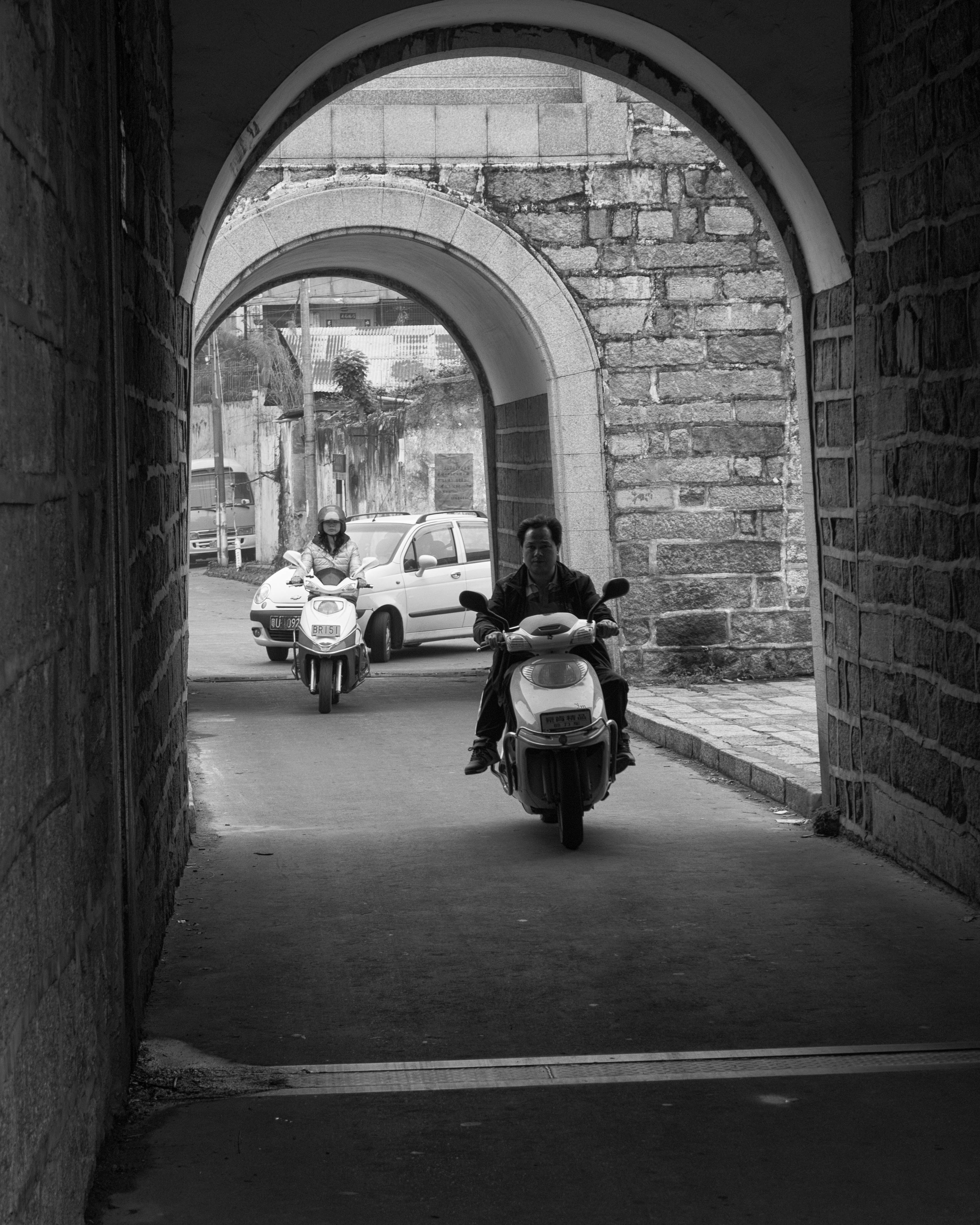
Old city wall

Old city wall

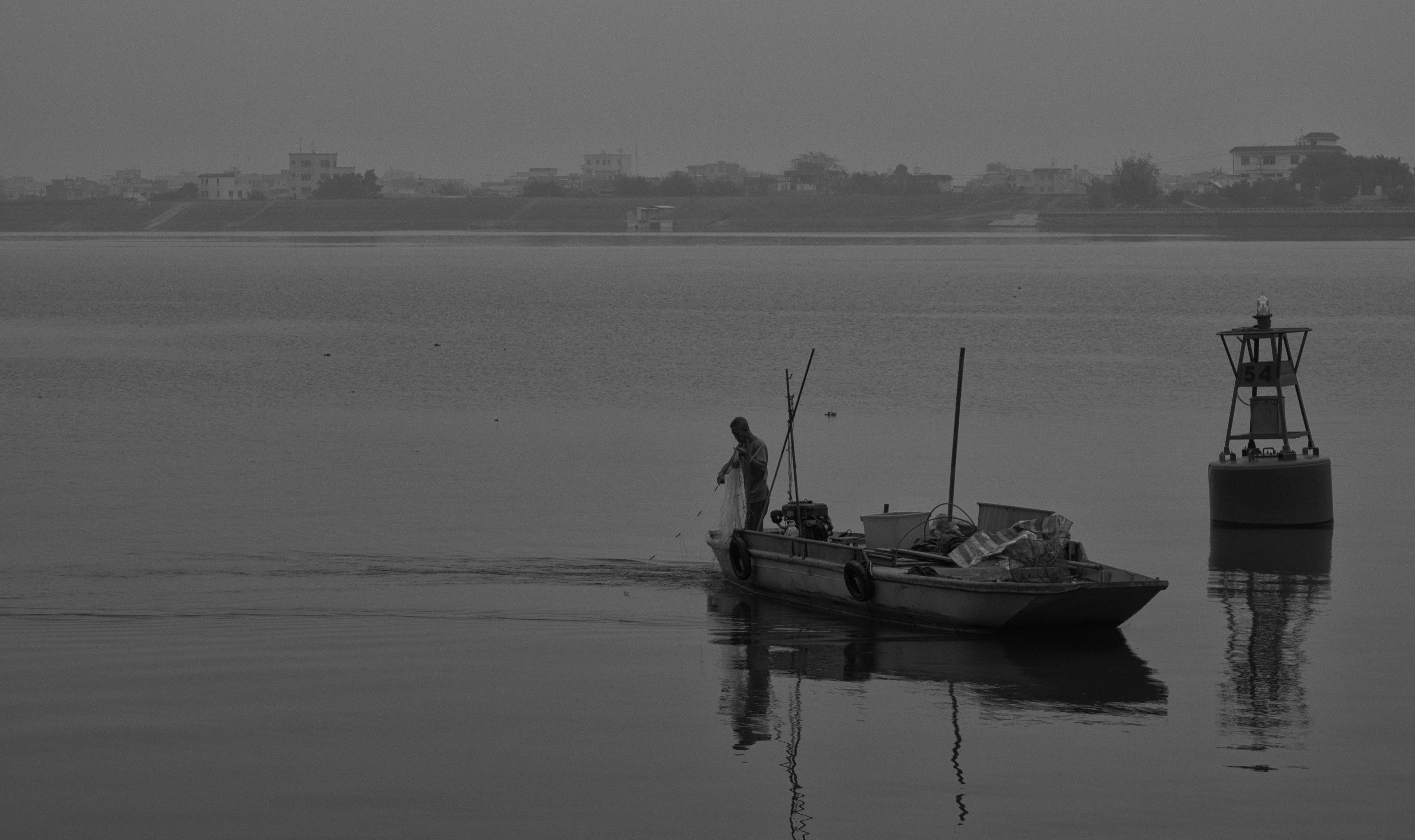
Fisherman on the Han River

Fisherman on the Han River

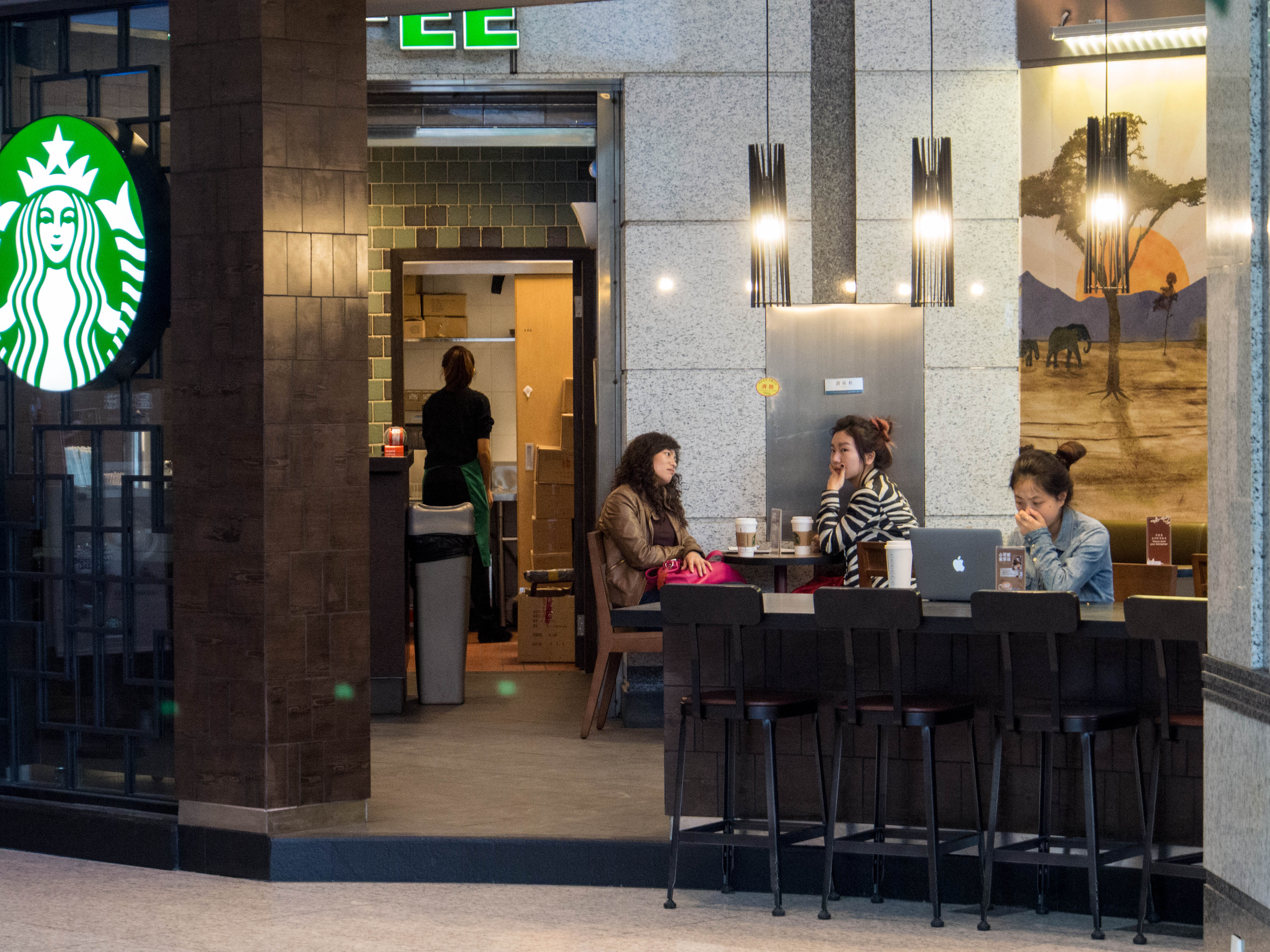
China’s Rising Middle Class

Starbucks, Macbook, young people.

Starbucks, Macbook, young people.

China has changed immensely in the 25+ years I have been traveling there. When I first spent time in China as a study abroad student, everyone wore green or blue Mao suits, and everyone addressed everyone else as ‘comrade.’ Private enterprise was unknown and most cities literally shut down at 8:00 pm. There was very little Western influence. It was a very different time.

I recently spent time in Guangzhou, Chaozhou, Chengdu, Chongqing, Guiyang, and Kunming. Everywhere I went there was ample evidence of China’s growing middle class. People have money to spend and time to play. Luxury cars are everywhere, high end Western designer boutiques abound, and Chinese tourists are all over the place. And it isn’t just high ranking officials that are enjoying these things. There is a new middle class in China comprised of ordinary folks. Granted this middles class, in most cases, come from larger urban areas. There is still a significant wealth gap between urban centers and the countryside (but that’s a topic for another post).

Here are a few things the visitor to China will see as evidence of this rising middle class.

1. Luxury cars

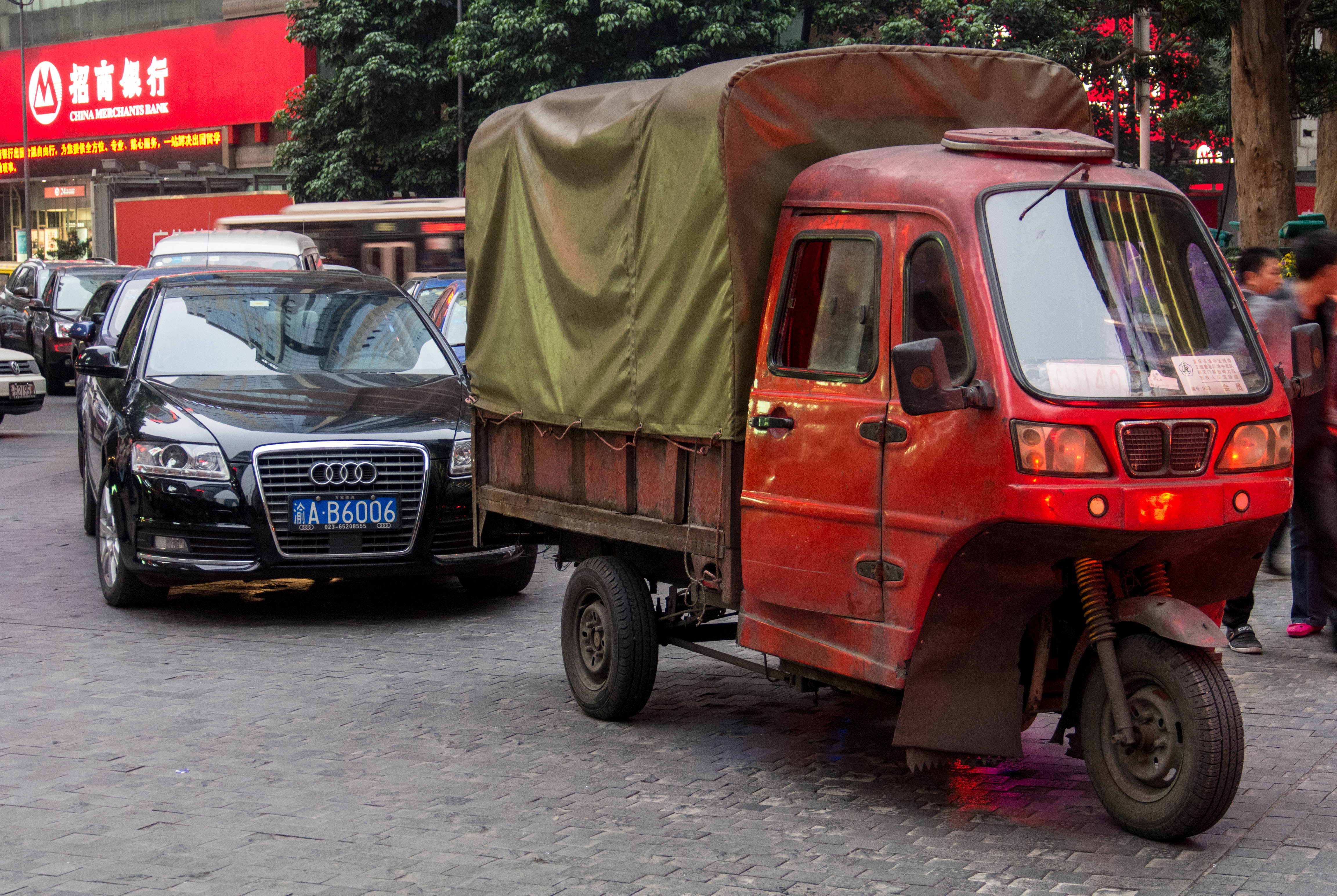
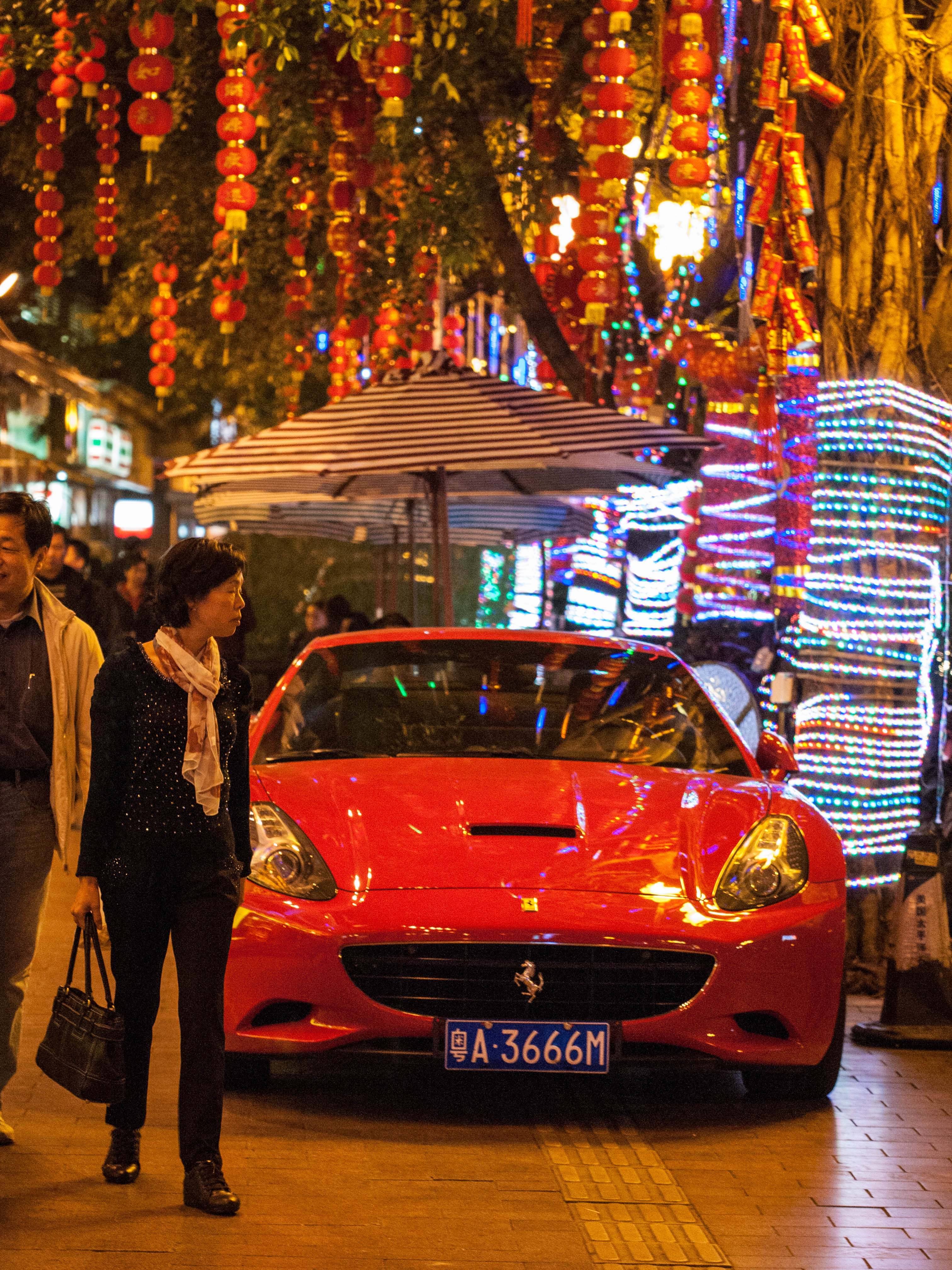
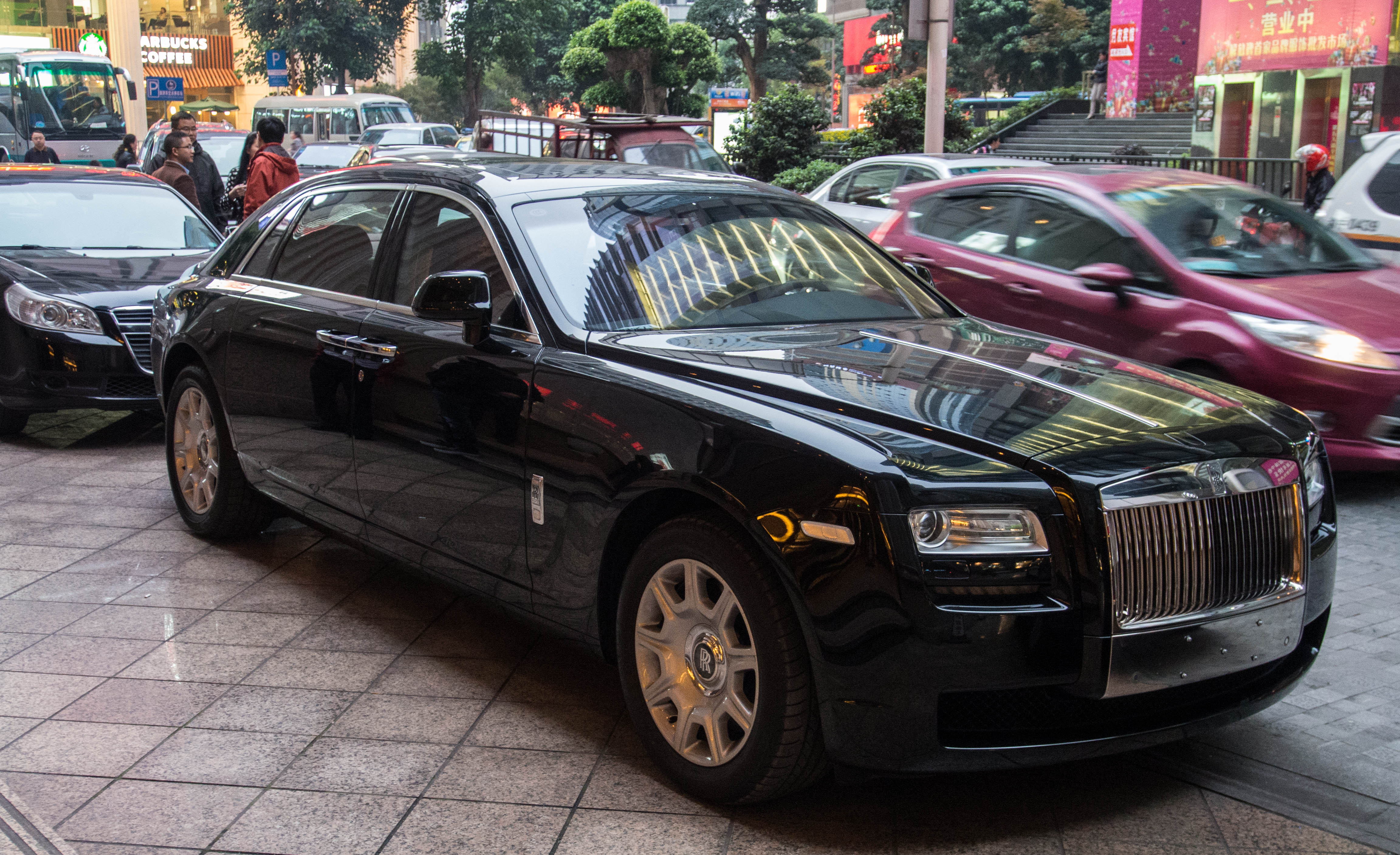
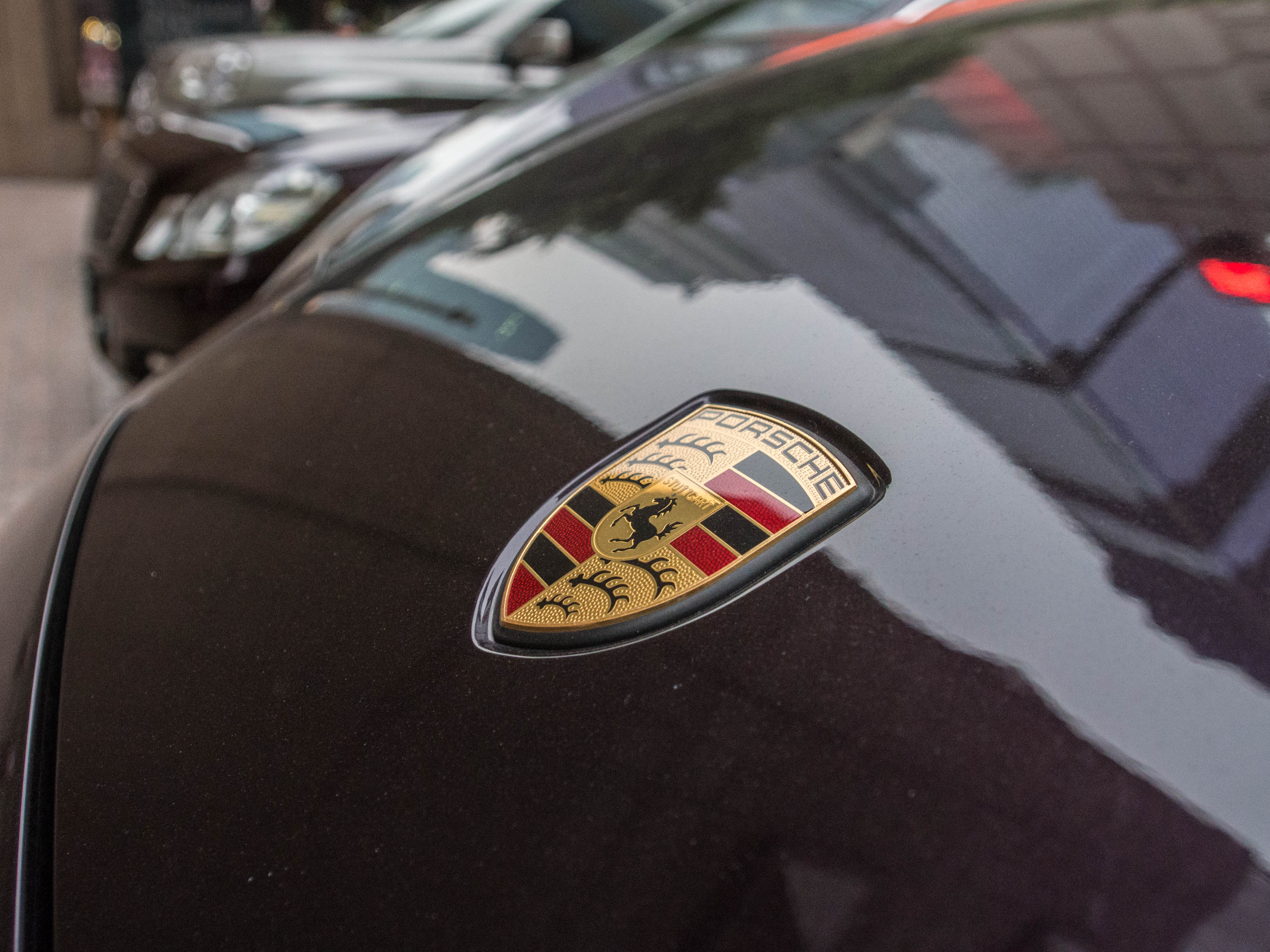
On these last two trips alone I saw Bentleys, Mercedes, Porches, BMWs, Ferraris, Audis, and just about every other kind of luxury car. This was in addition to the countless Toyota Camrys, Honda Accords, and Volkswagon Passats. When I was first in China in the mid 80’s private cars were practically unknown, and the bike lanes were wider than the lanes for cars. Now every city in China is congested with cars and the bike lanes get narrower and narrower every year.

Study in contrasts.

Study in contrasts.

Ferrari parked  on the sidewalk in front of a high end seafood restaurant in Guangzhou.

Ferrari parked on the sidewalk in front of a high end seafood restaurant in Guangzhou.

Bentley

Bentley

Porsche

Porsche

BMW

BMW

2. High end shopping malls

When I was a student in China my classmates and I would joke about going shopping for clothes in China. You would walk into the big state-run department store and say, “I’ll take a pair of the blue pants, the white shirt, and the belt.” Size didn’t matter because there seemed to be only one or two sizes. The belt fit the big guy pretty well, but the little skinny guy had the belt wrapped halfway around his waist again. There was not much selection and everyone dressed the same, men and women alike.

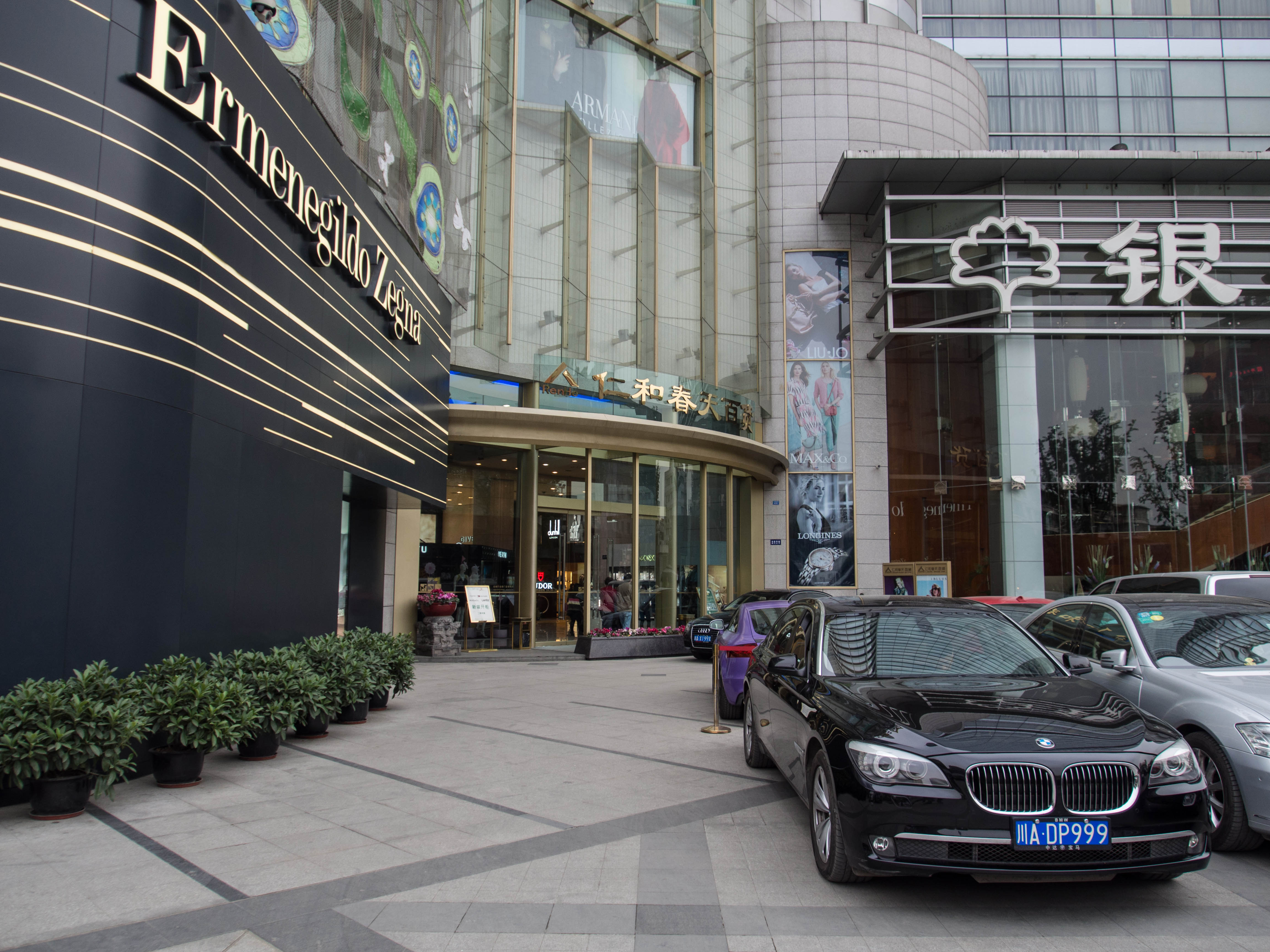
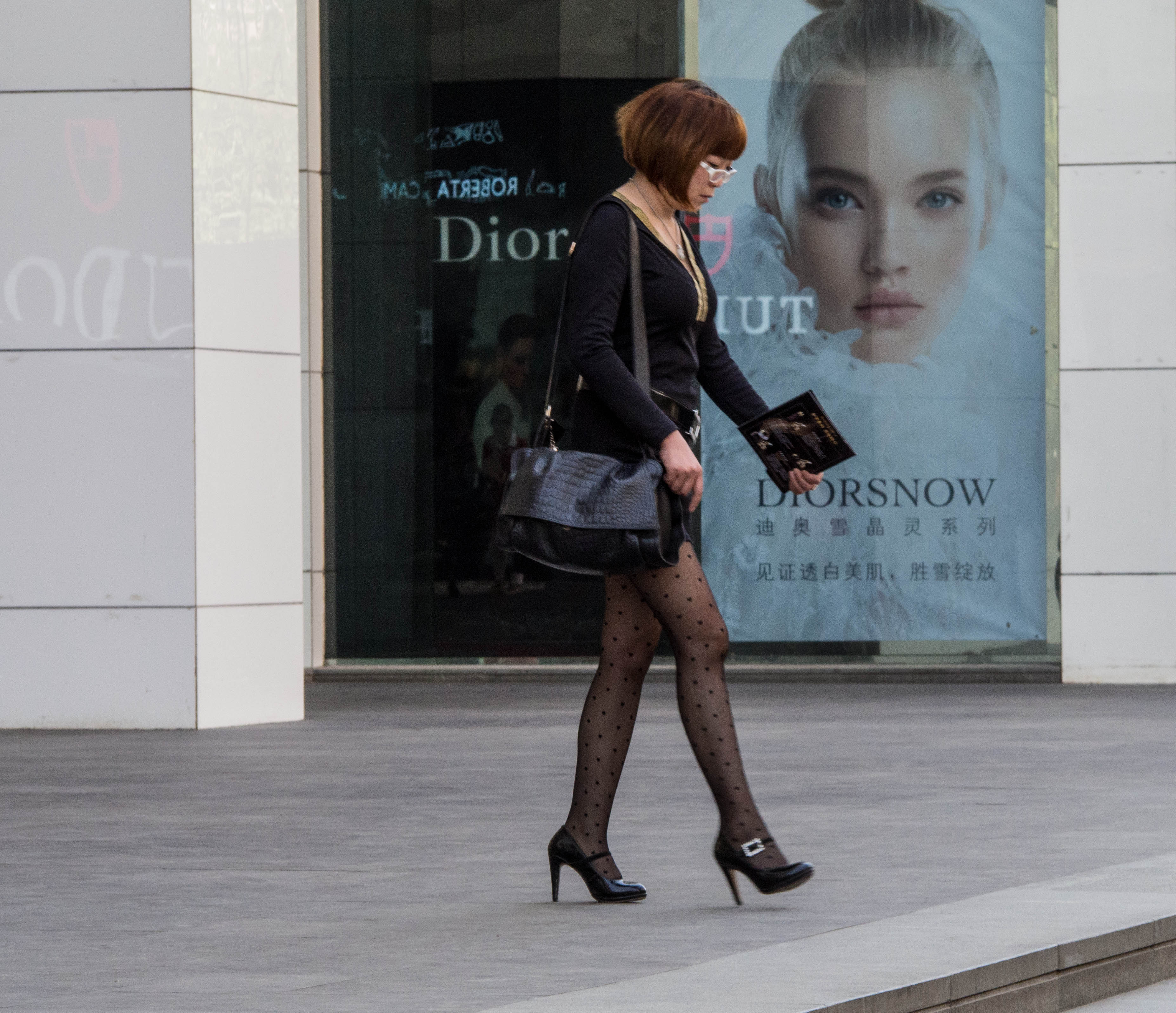
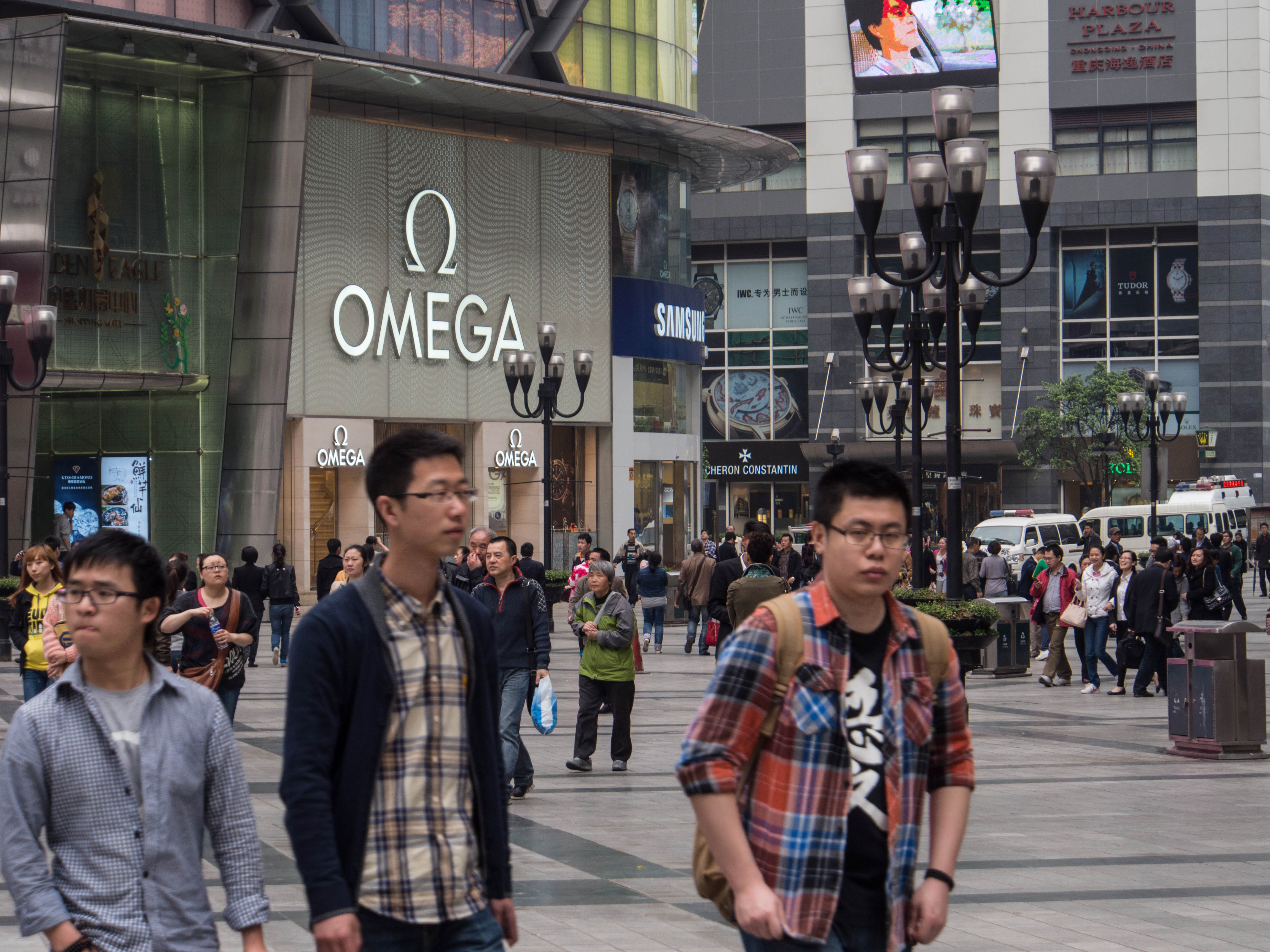
Now, every large-ish city has numerous high end shopping centers. Even the Chinese style department stores have an astonishing array of goods. But it is the Western designer boutiques that are really astonishing. And they are not just for decoration; these places are crowded with shoppers buying things. Some of the designers and other high end stores that have a noticeable presence in China include, Gucci, Zegna, Rolex, Tudor, Omega, Cartier, Louis Vuitton, Christian Dior, and so on.

Gucci

Gucci

Dior girl

Dior girl

Cartier

Cartier

Rolex

Rolex

Omega boys

Omega boys

Shopping in Chengdu

Shopping in Chengdu

3. Western restaurants and products.

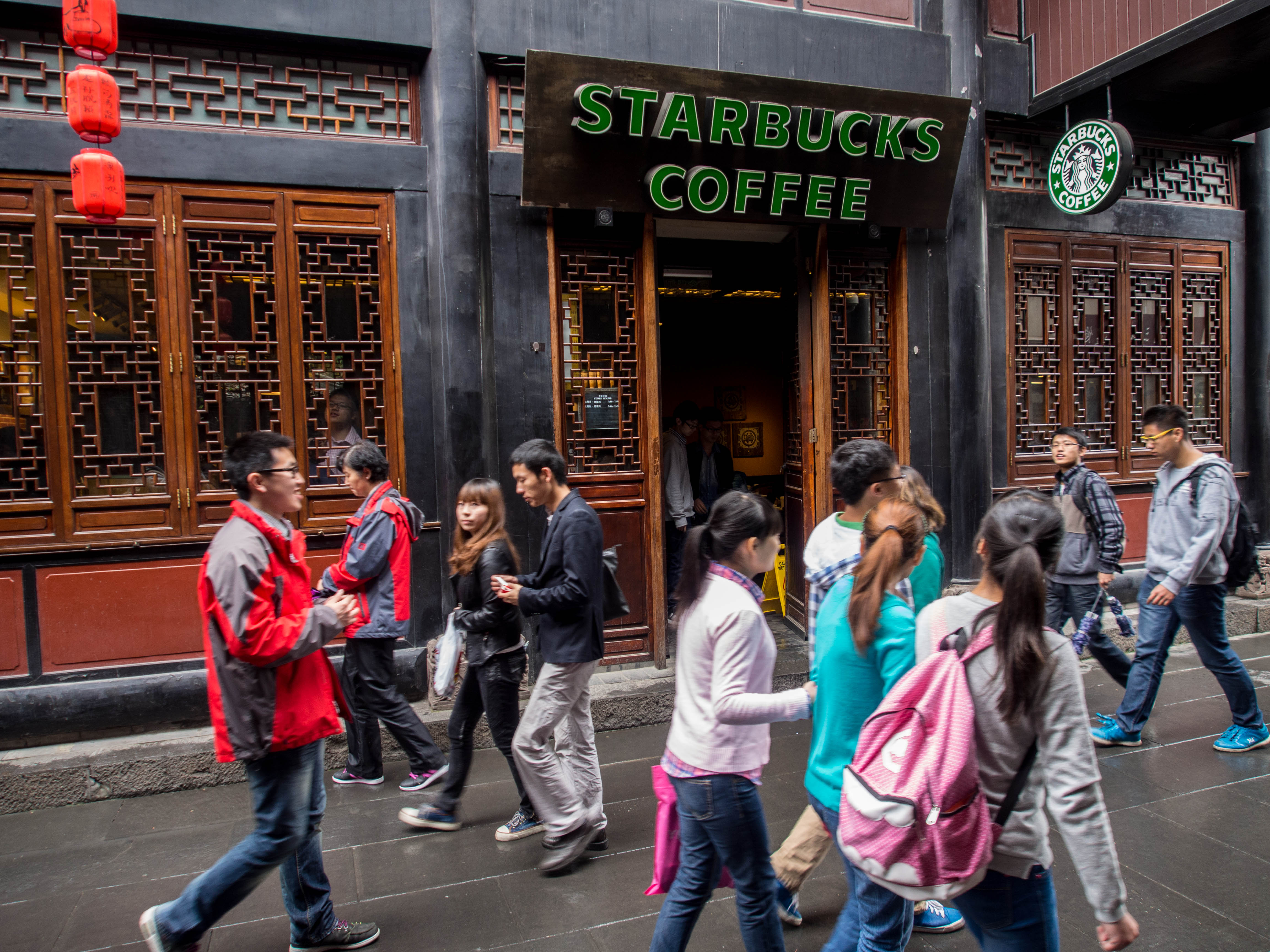
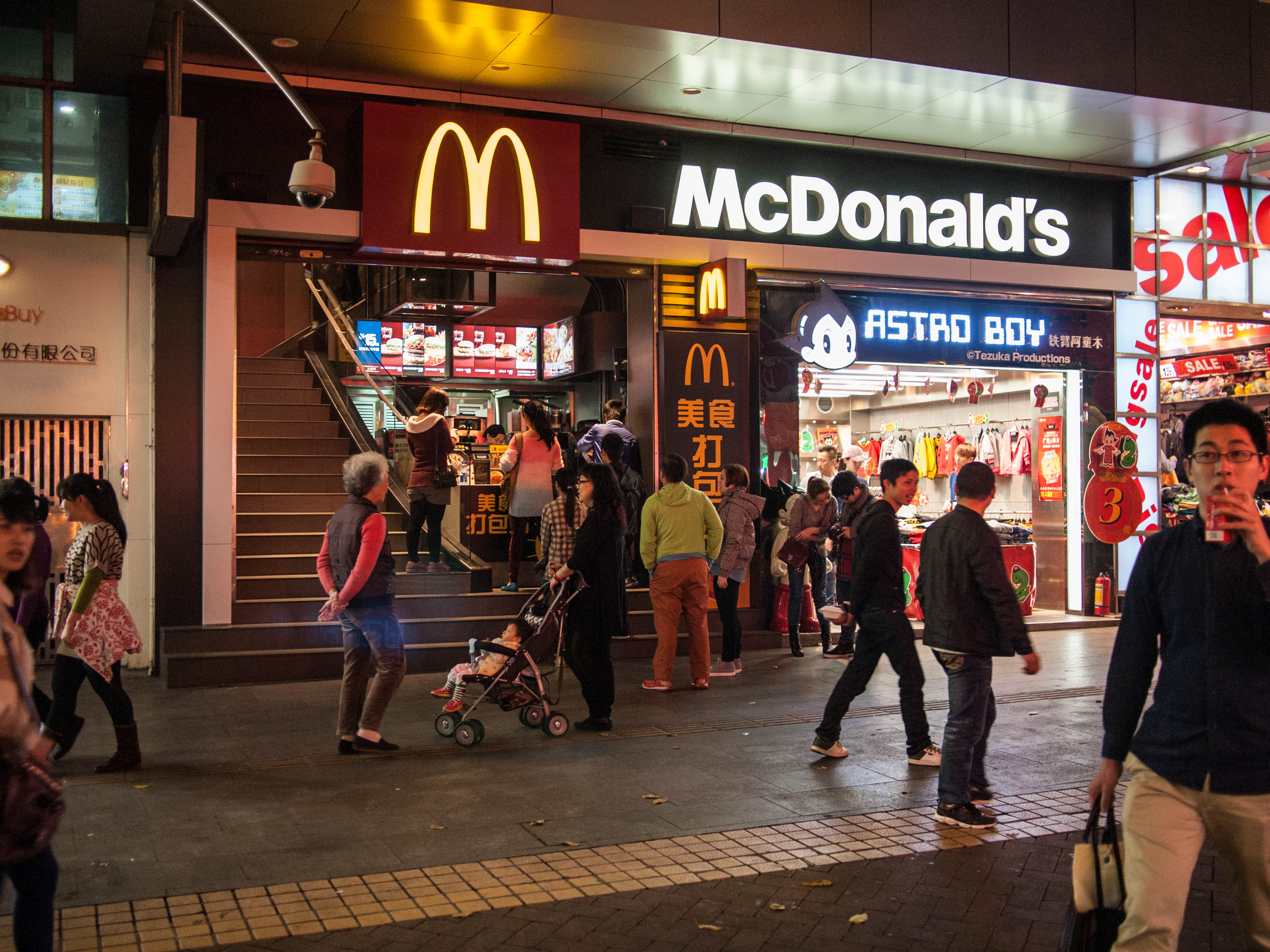
Though we would never think of McDonald’s as a hip place to hang out in the U.S., it is just that in China. Eating Western food in China tells people you have money, you’re hip, and you’re international. Young people especially like to hang out, study, and talk business at places like Starbucks and McDonalds. These Western restaurants in China are big business. In 2010 the 100th McDonalds opened . . . in Shanghai. That’s right, there are now more than 100 McDonalds restaurants in Shanghai alone. The first Starbucks in China opened in Beijing in 1999. There are now 851 Starbucks in China. Starbucks believes China will be the second largest market after the U.S.

Starbucks

Starbucks

McDonald's

McDonald’s

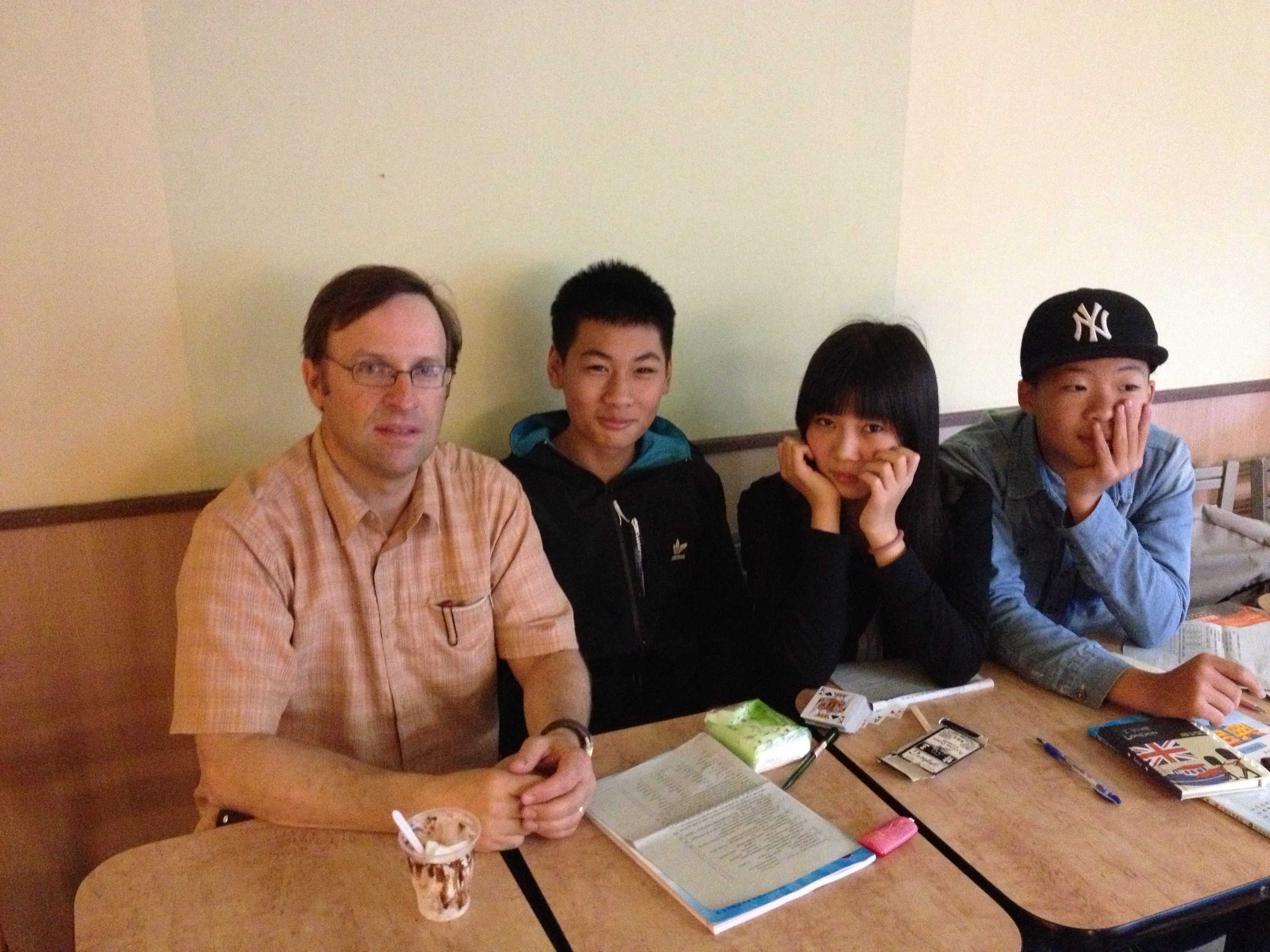
School kids I met at a McDonald's in Chaozhou. They said they liked to study there.

School kids I met at a McDonald’s in Chaozhou. They said they liked to study there.


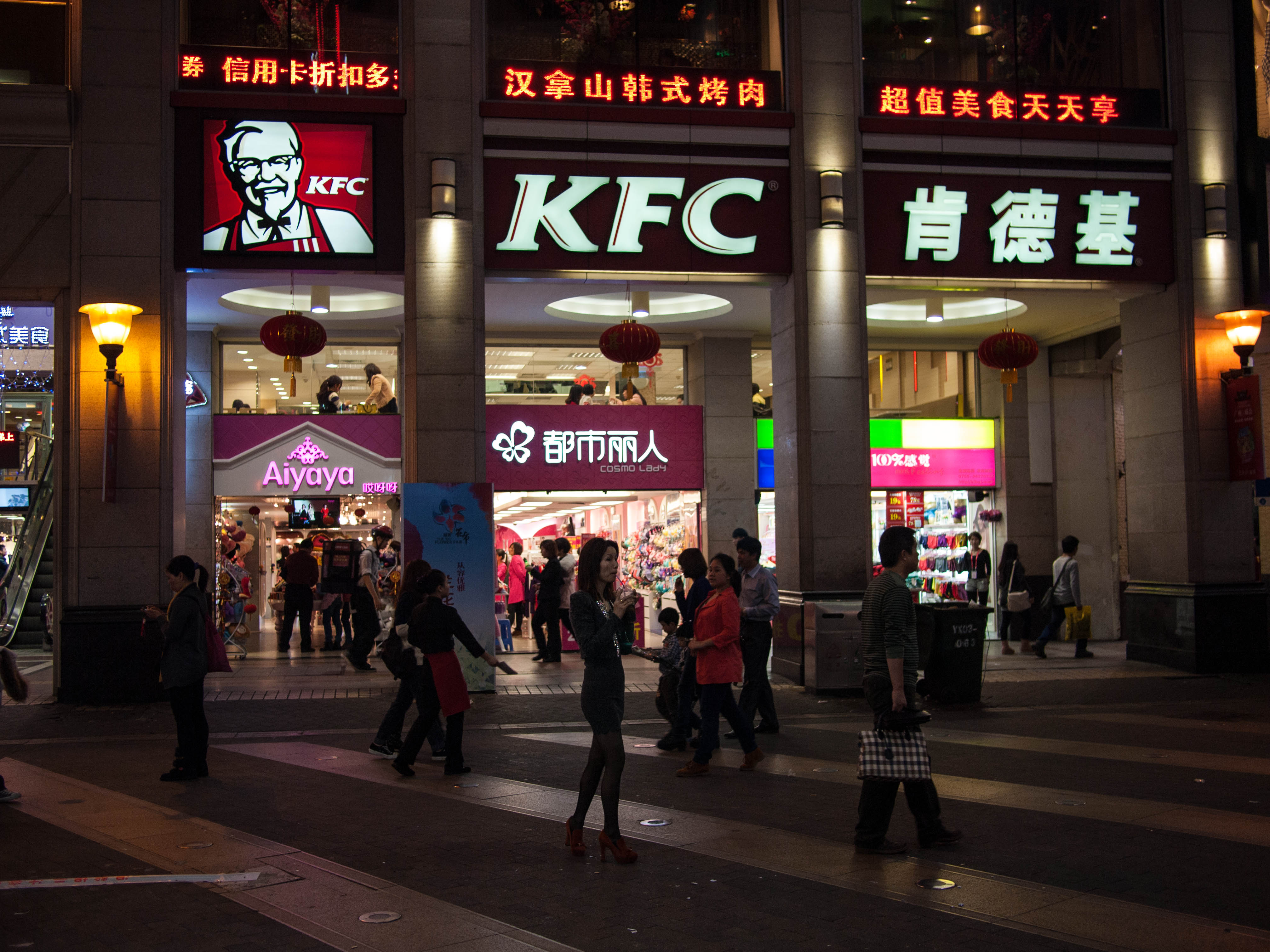
KFC is also immensely popular

KFC is also immensely popular

iPhones and fake iPhones are everywhere, as our Apple stores.

iPhones and fake iPhones are everywhere, as our Apple stores.

4. Pets, especially dogs

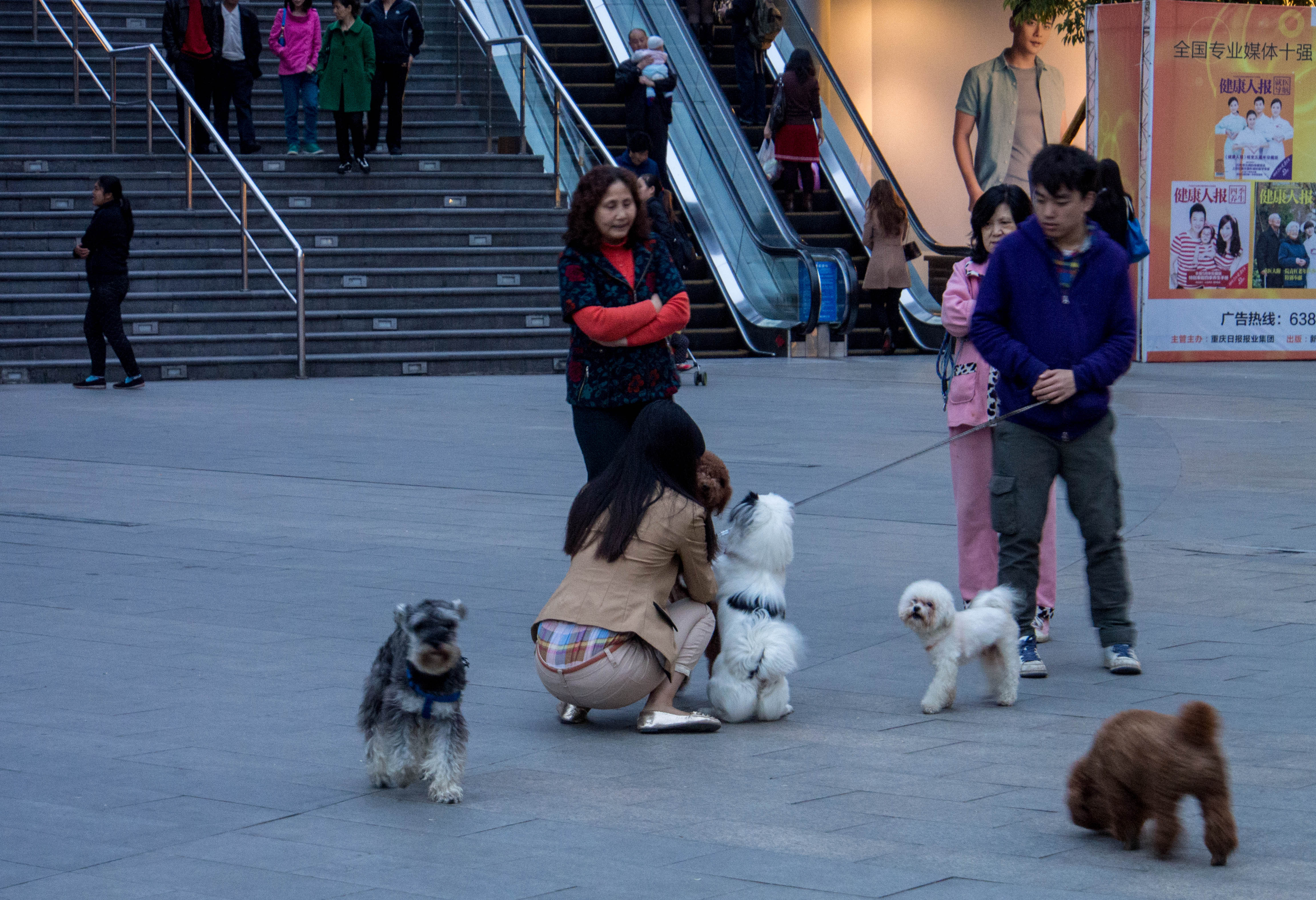
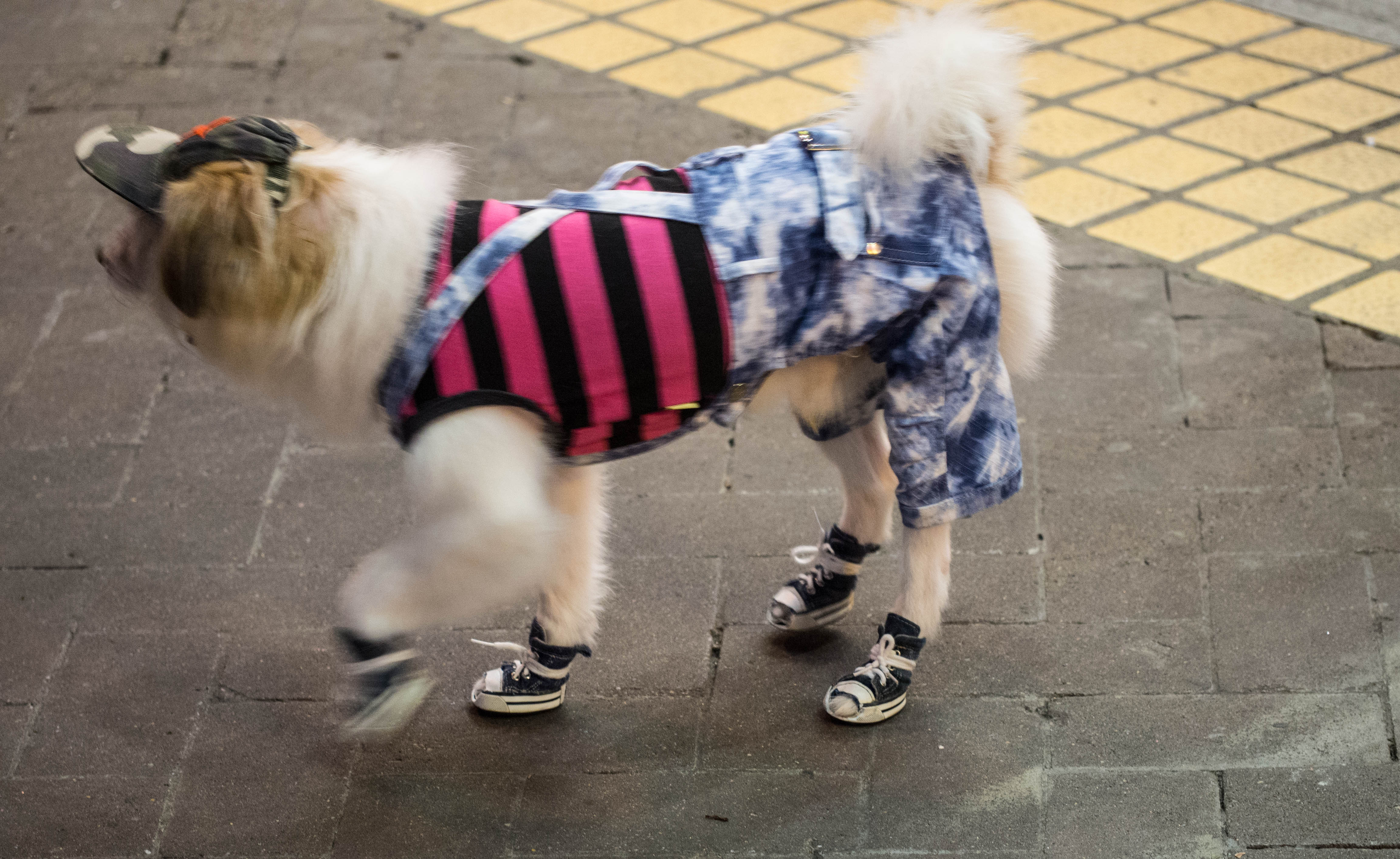
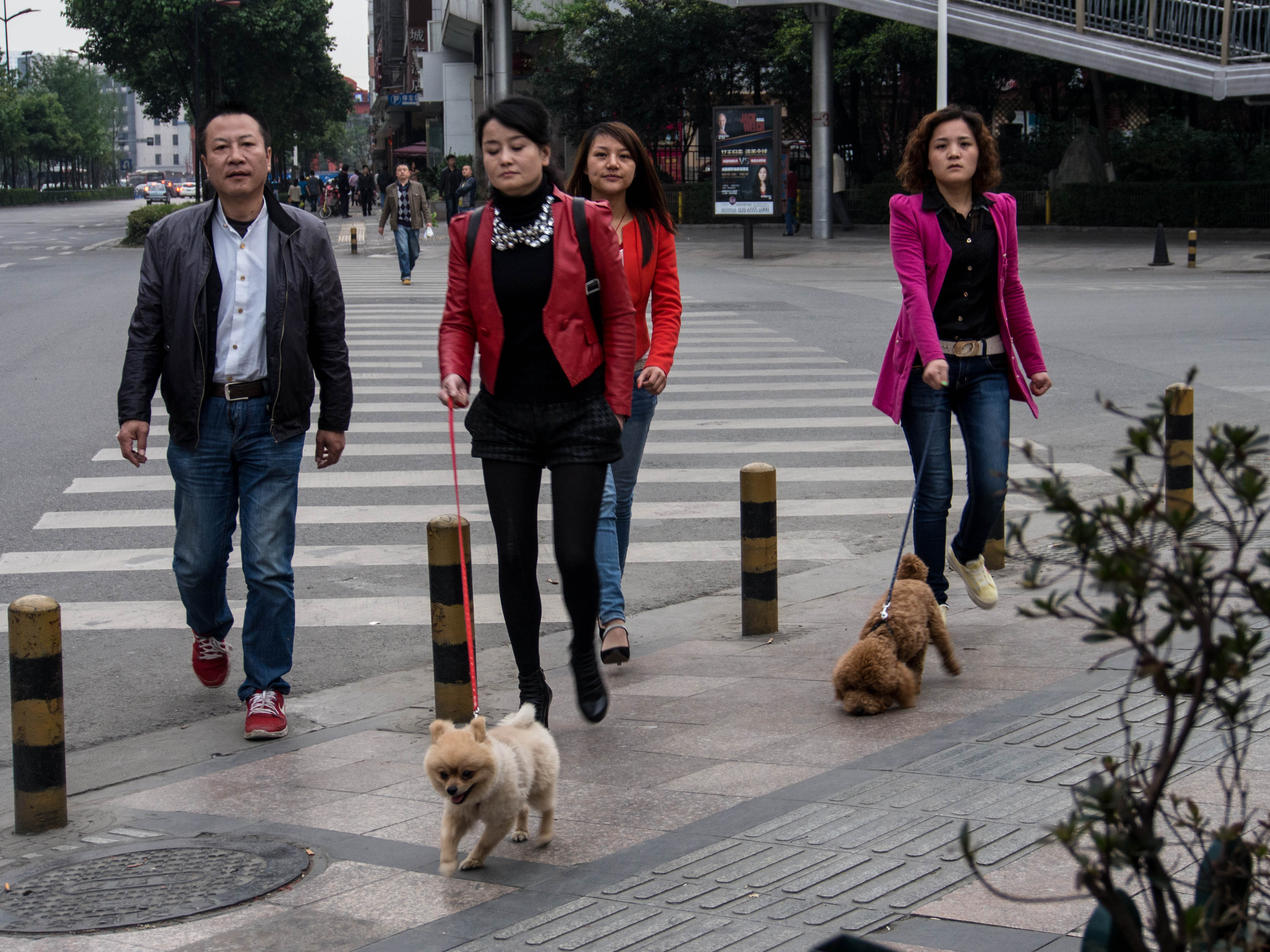
In traditional China pets generally consisted of crickets and birds. Now everyone wants a dog, and there are dogs all over the place. The Chinese not only like to walk them, but they like to congregate in public squares where they can socialize and let their dogs play together. Though many people like small dogs, especially the puffy poodle types, I have also seen many large dogs including Huskies, Labs, Golden Retrievers, German Shepherds, and so on. Having a dog for a pet is a sign of affluence in China. It says, “Hey, I can not only feed myself and my family, but I can also feed a dog and I have time to take care of it.”

Walking the dogs in Chengdu

Walking the dogs in Chengdu

Doggie playtime in Chongqing

Doggie playtime in Chongqing

Dressed up in Guangzhou. Seriously??

Dressed up in Guangzhou. Seriously??

5. Chinese tourists

In the past 10 years or so the Chinese have begun traveling. The Chinese middle class are the new tourists around the world and in China. It used to be the Japanese that you used to see all over in large groups, everyone with a large camera around their neck. Now it is the Chinese turn. They have taken to tourism in their own country in a big way. They are crowded all over the important cultural sites in China.

A quick story. Last year my son and I were on a  week long bicycle tour. We were sitting in front of a small store in the tiny ranching town of Woodruff, Utah, near the Wyoming border. We had been riding all day and still had a few miles to go to our campground. As we were sitting there two brand new Dodge minivans pulled up and a dozen or so Asians poured out. I learned they were a group of friends from Shanghai. They had flown into Las Vegas, rented the cars, and were working their way through the Utah National Parks and were on their way to Yellowstone. I was really surprised, and I think they were a little taken back seeing a middle-aged guy wearing spandex in the middle of nowhere speaking Chinese with them.

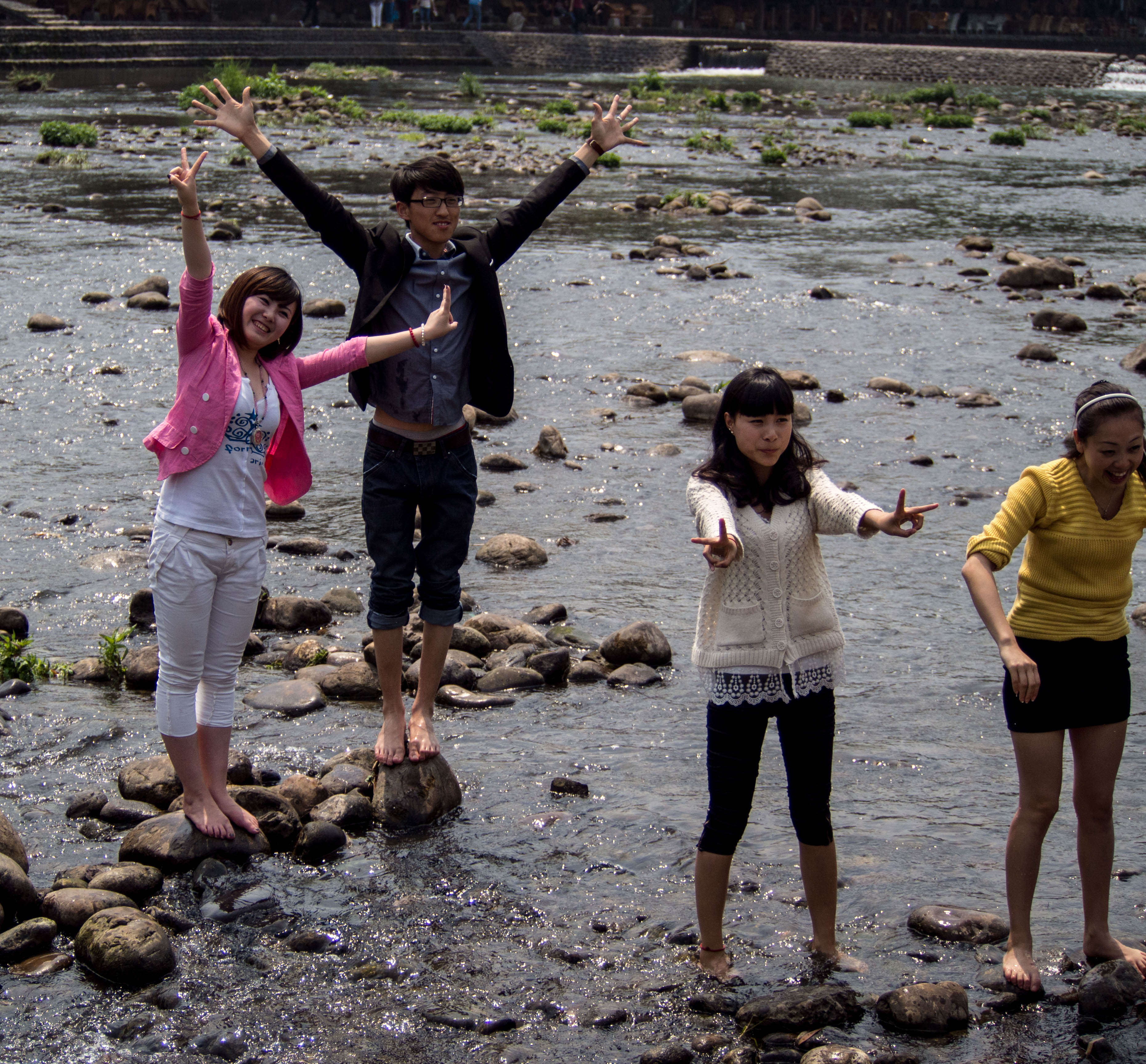
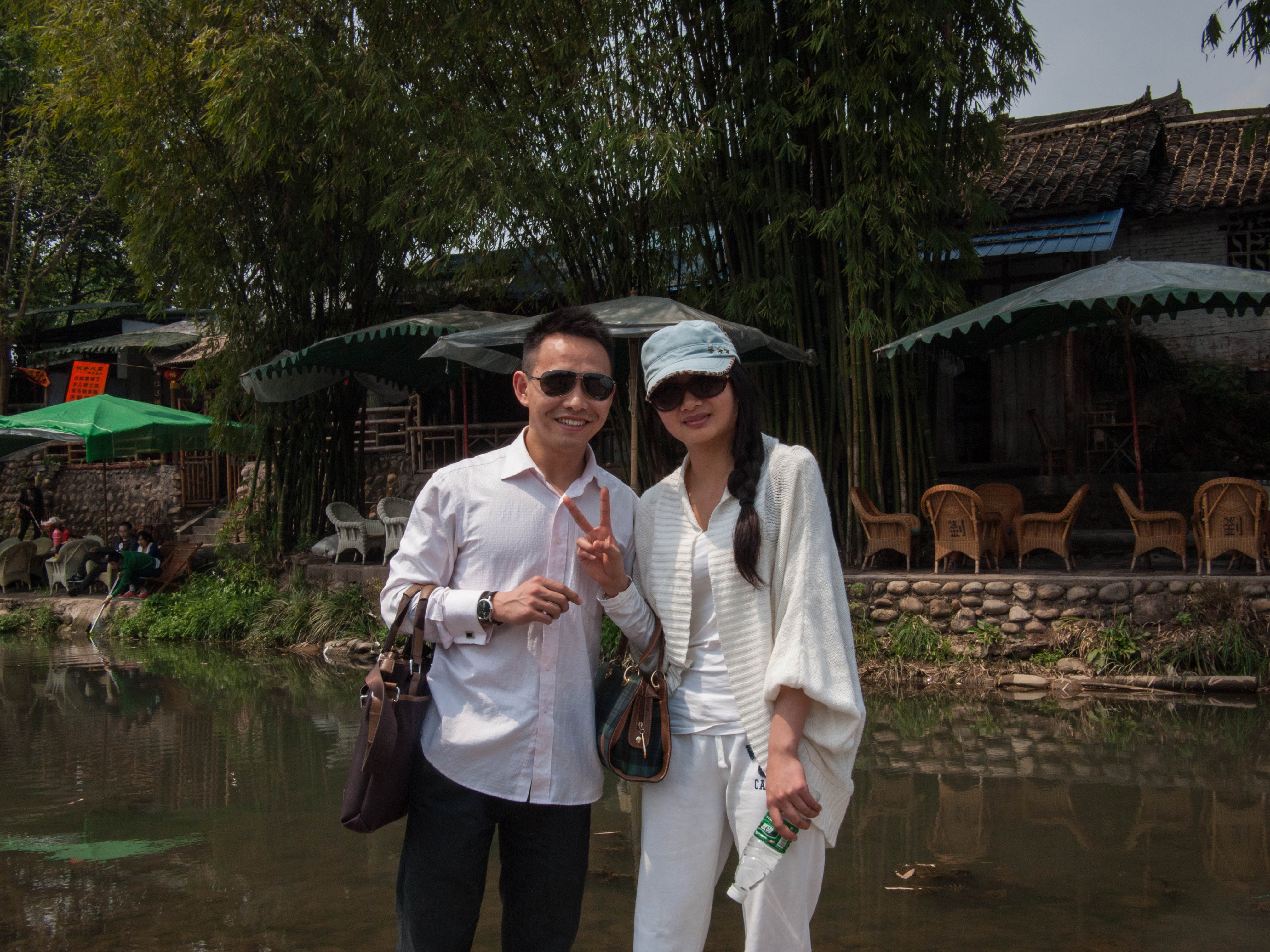
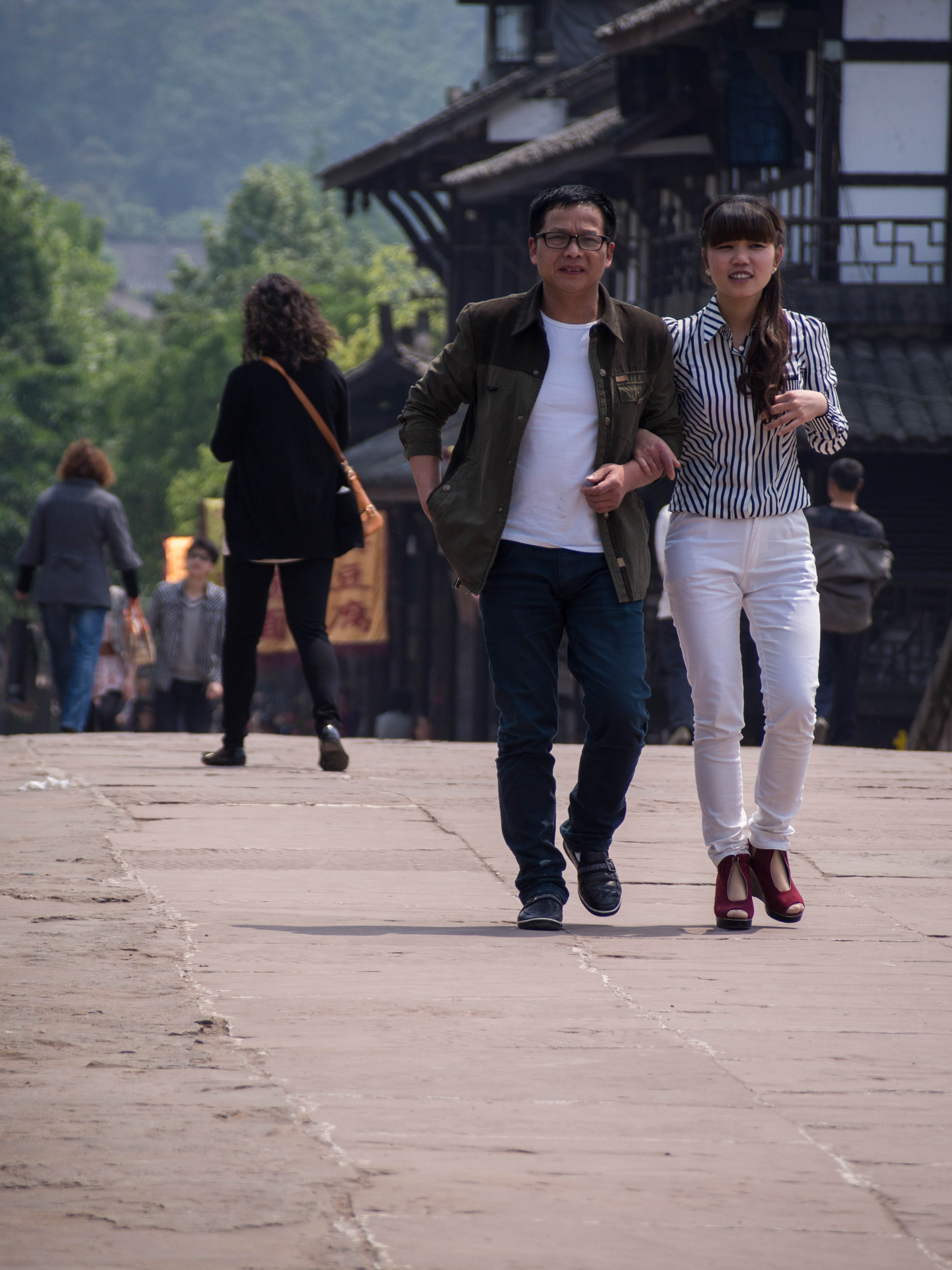
The photos below are from an ancient town about 75 km outside Chengdu.

Chinese tourists getting their feet wet.

Chinese tourists getting their feet wet.

Hip young couple from Chengdu.

Hip young couple from Chengdu.

Strolling though the ancient village.

Strolling though the ancient village.

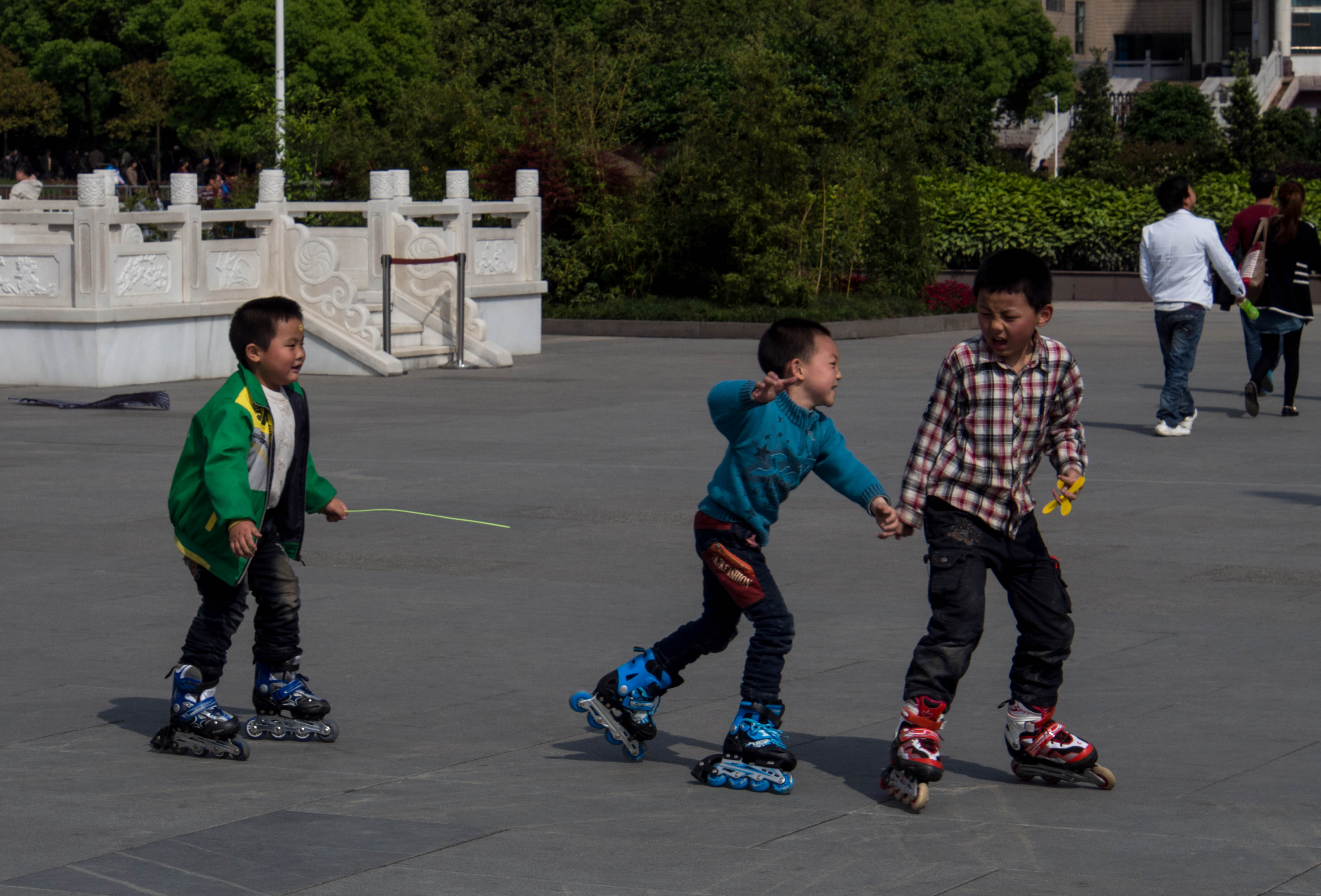
There is lots of other evidence of a wealth China as well. We saw one area in Chongqing where there were dozens of night clubs and dance clubs. On public squares kids flew kites, rode BMX bikes, and rollerblades. It’s getting harder and harder to see the old China; not impossible, you just have to look harder.

Dance club in Chongqing

Dance club in Chongqing

Rollerblading in Guiyang

Rollerblading in Guiyang

Taiwan, finally!

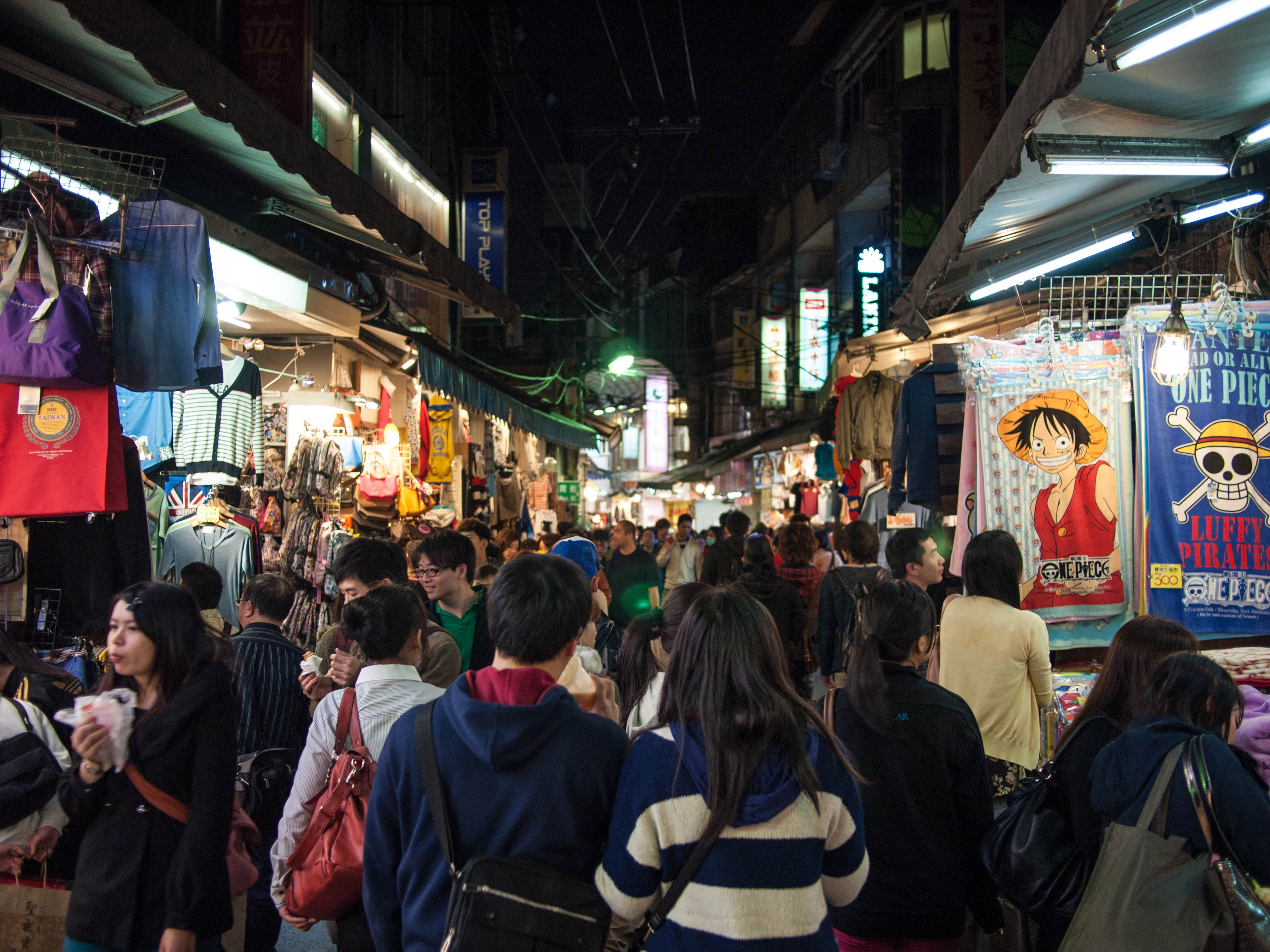
Typical night market in Taiwan

Typical night market in Taiwan

I have been traveling to Mainland China since 1984. I spent time there as a student, have led several study abroad groups as a professor, have attended academic conferences, and so on. I’ve traveled all over the Mainland, from North to South, and East to West. I lived in Hong Kong in the early 80’s and have traveled to Macau. But in all these years, I had never been to Taiwan. I have friends and colleagues from Taiwan, and many of my students have spent time there, but I guess I never felt overly compelled to go there. Maybe I didn’t believe all the hype about how great Taiwan was. A year and a half ago my daughter moved to Taiwan. Suddenly I had a great deal more interest in Taiwan.

Earlier this month I finally made it to Taiwan. I am working on a new book on Chinese culinary culture (basically a foodie’s guide to China), and practically everyone that I talked to told me that I couldn’t possibly do a book on Chinese food without including at least a section on Taiwan, especially Taiwan’s famous snack food. So, after spending a couple weeks in Guangzhou and surrounding areas researching Cantonese food, I stopped in Taiwan for six days to check out the culinary scene. And I was not disappointed.

In addition to meeting up with some former colleagues and a friend or two, I spent most of my time eating. I know, it’s a tough job, but somebody has to do it, as the saying goes.

Here are some of my initial observations about Taiwan, mostly compared with the Mainland.

1. Taiwan is really clean, neat, and orderly. Even the traffic is well behaved and I didn’t feel like I was going to get run over. In fact, I had bus drivers actually wait for me while I crossed the road. That’s pretty rare in the Mainland.

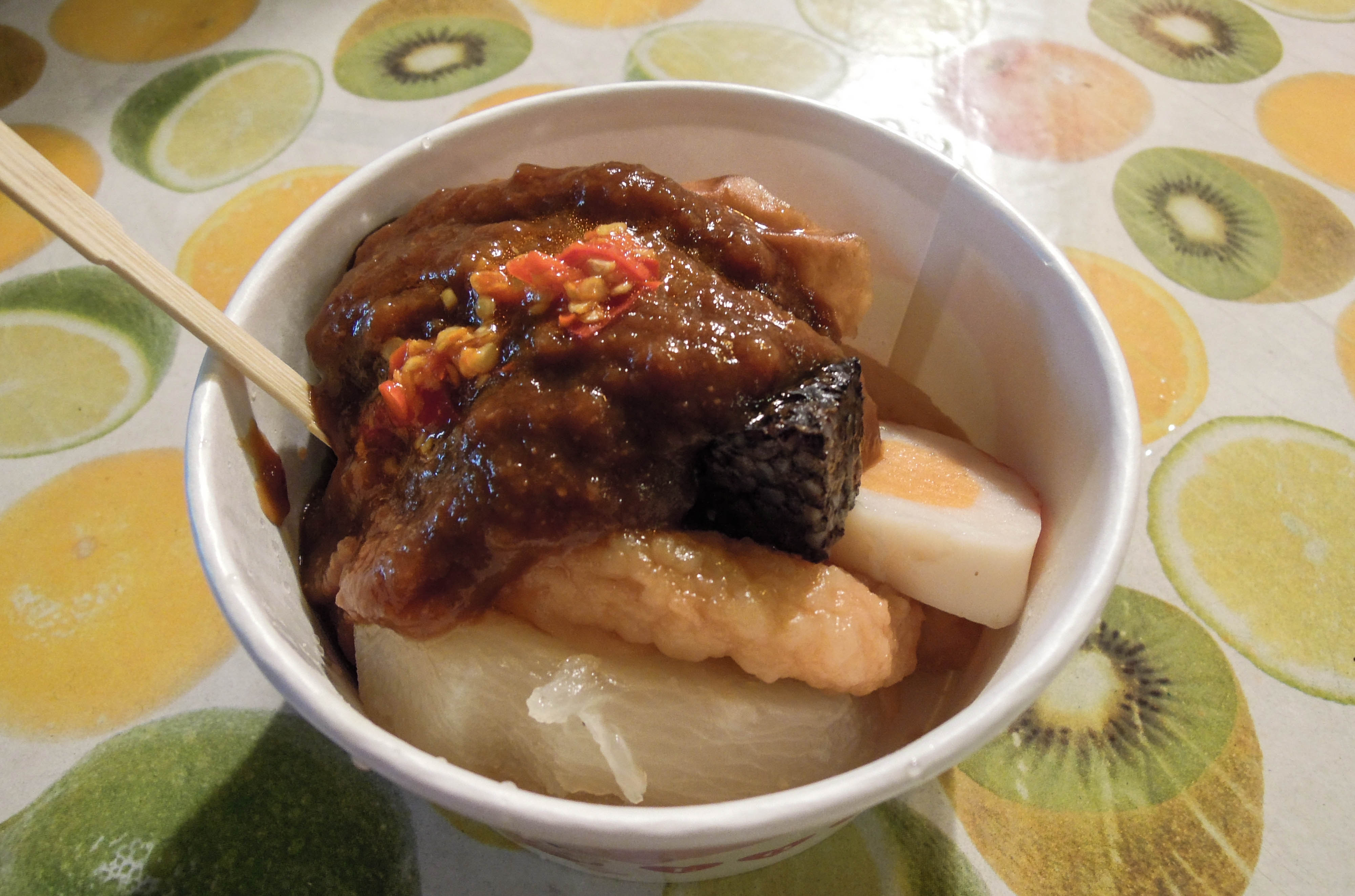
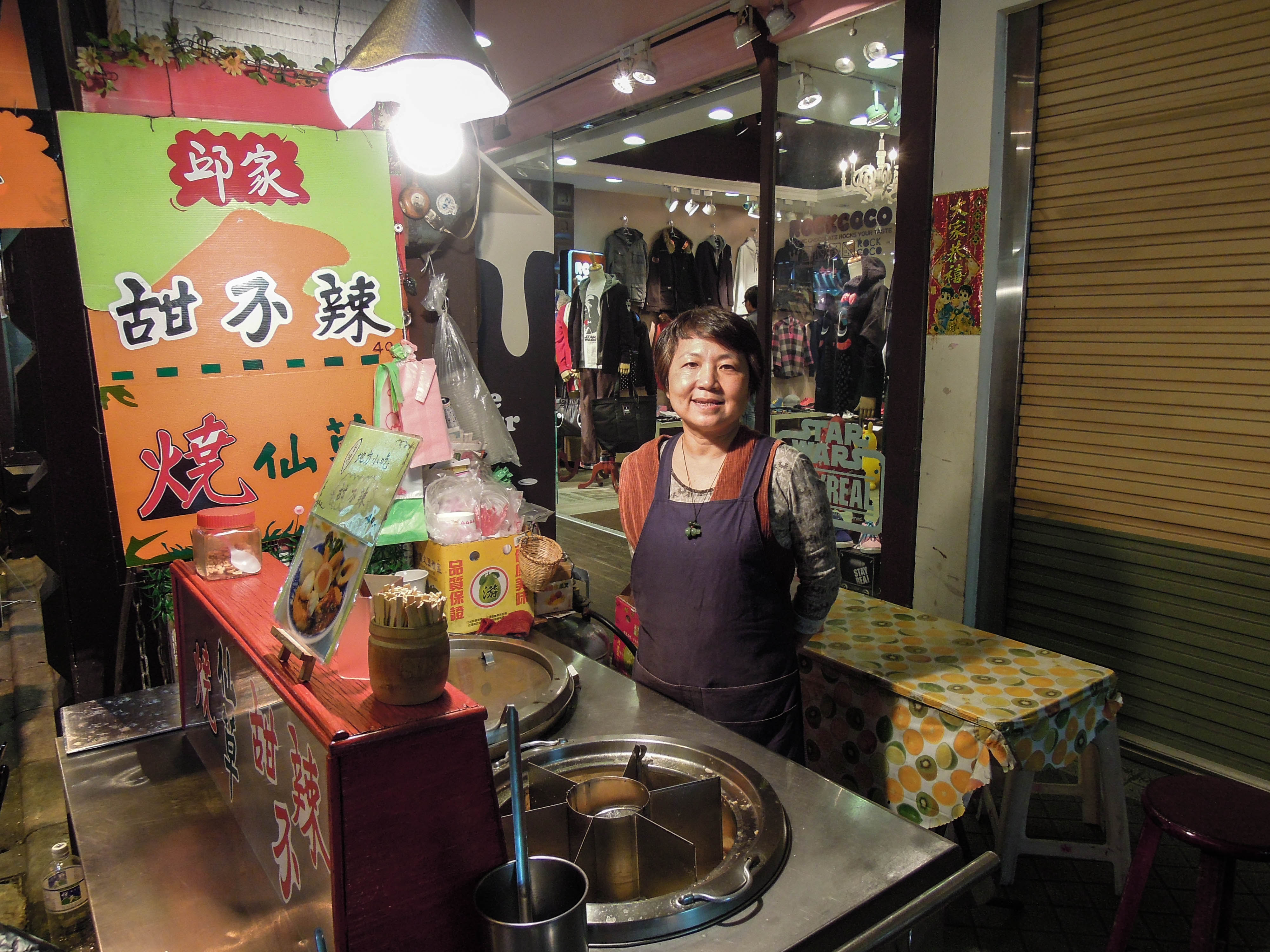
2. Taiwan people are generally friendly, polite, and eager to chat with a foreigner. Coming from China, and a socialist attitude toward customer service (i.e. non-existent), this was really surprising to me. At one night market I sat down at a tiny table to eat some delicious 甜不辣 tiánbúlà and since it was a bit quiet, the lady running the stall sat down with me and we chatted for a half hour or so. She kept giving me more food to try, on the house.

3. Taiwan is very Westernized. I guess this was not too surprising. There are lots of foreigners in Taiwan. I saw them all over (at least in Taibei). It is evident that Taiwan is heavily influenced by Western ideas, fashion, food, etc. There is also a very noticeable Japanese influence as well.

Overall, I had a very nice time in Taiwan and will definitely be back. I originally planned on going down to Tainan to try some of the famous snack food down there, but I ran out of time. I spent time in Zhongli, Taibei, and an evening up in Danshui.

Below are just a few of the delicious dishes I sampled at some of the night markets. I spent time in the Shilin Night Market, The Shida Night Market, and the Danshui night market.

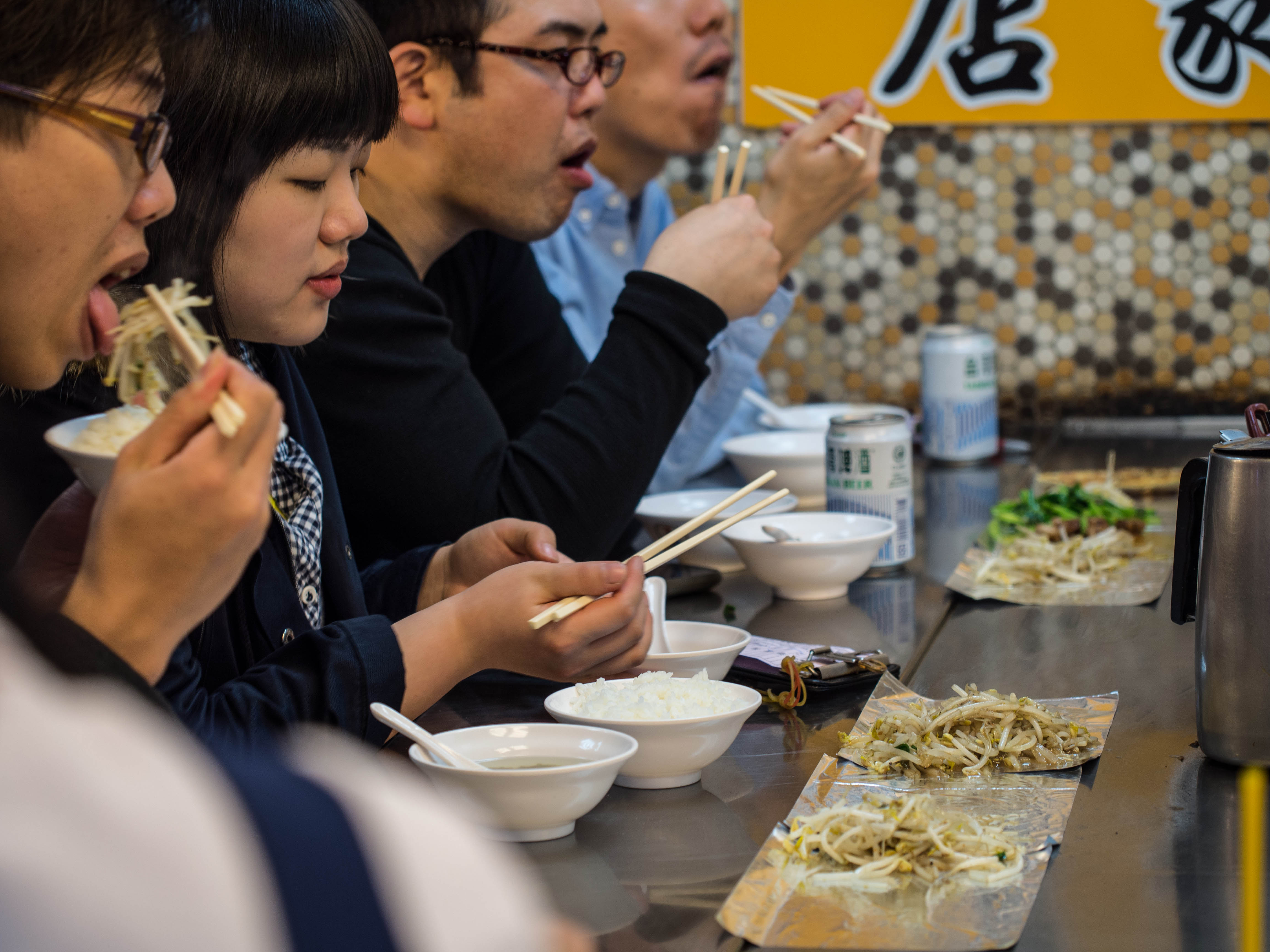
Night market 'restaurant'

Night market ‘restaurant’

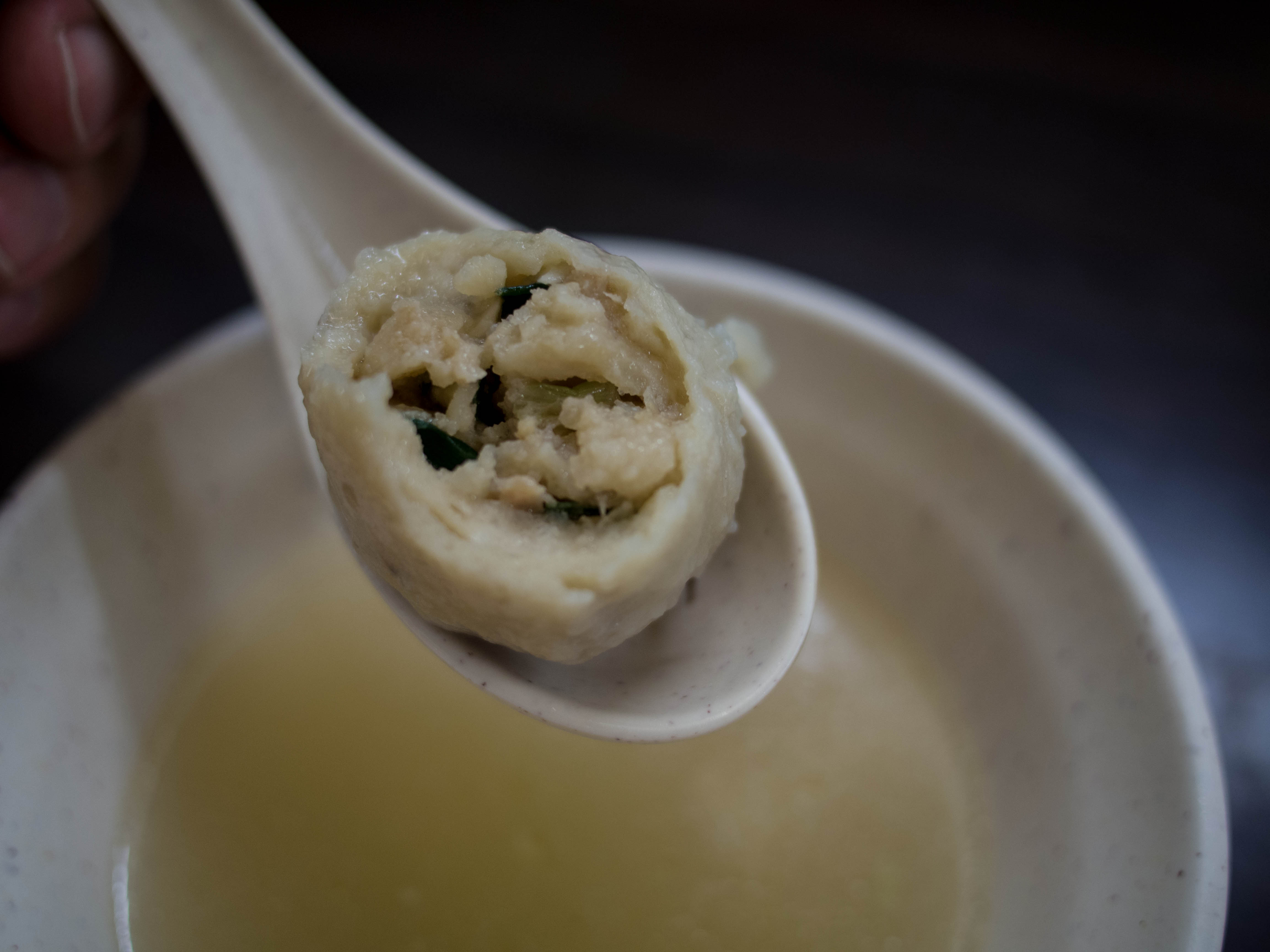
魚丸湯 yǔwán tāng; Fish ball soup

魚丸湯 yǔwán tāng; Fish ball soup

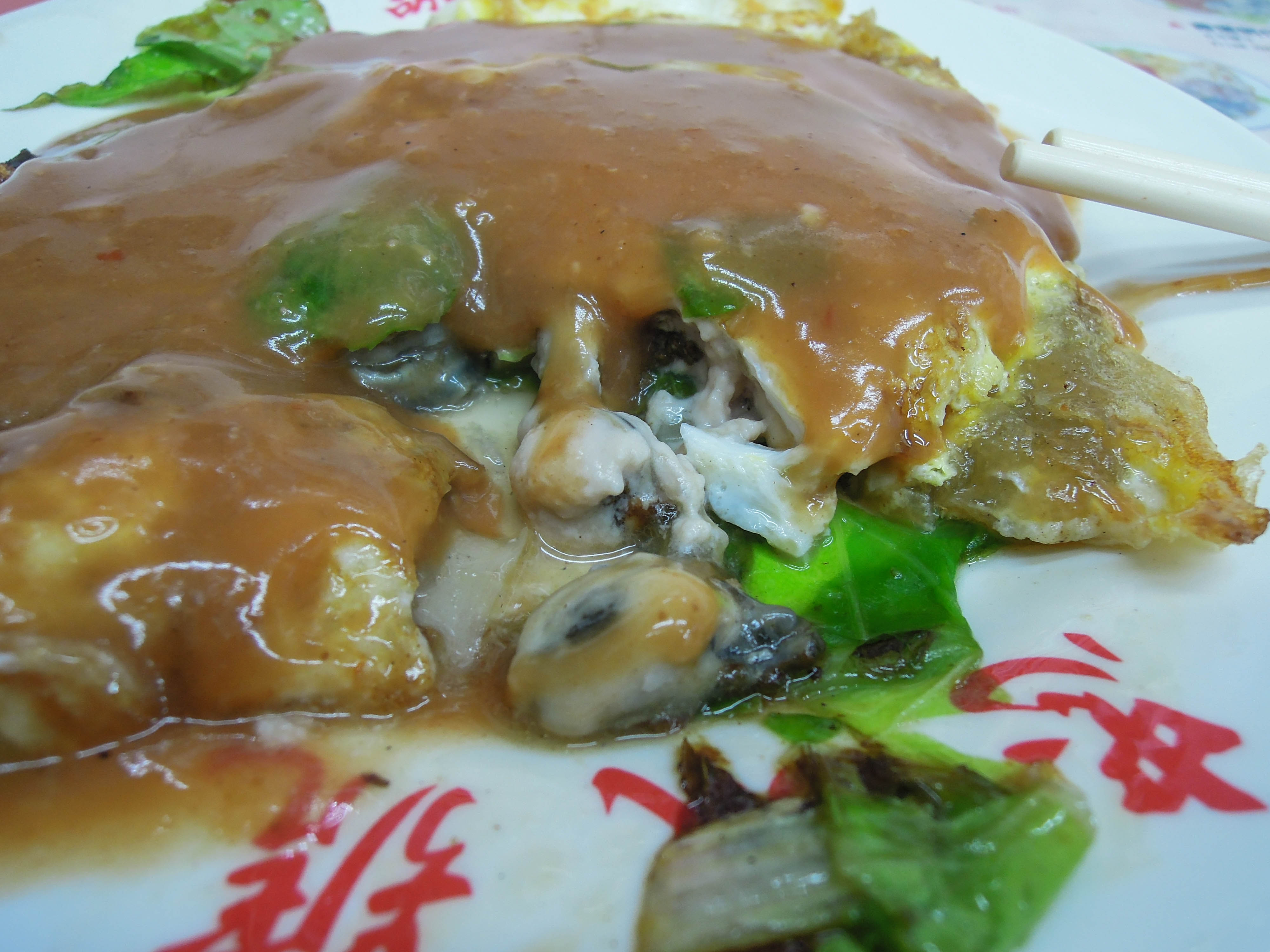
蚵仔煎 ézǎi jiān; Fresh oyster omelet

蚵仔煎 ézǎi jiān; Fresh oyster omelet

甜不辣 tiánbúlà; hard to translate—it is fish paste formed into various shapes, then boiled in a broth and topped with a miso gravy.

甜不辣 tiánbúlà; transliteration of the Japanese tempura—it is fish paste formed into various shapes, then boiled in a broth and topped with a miso gravy.

This is the nice lady running the tiánbúlà place

This is the nice lady running the tiánbúlà place

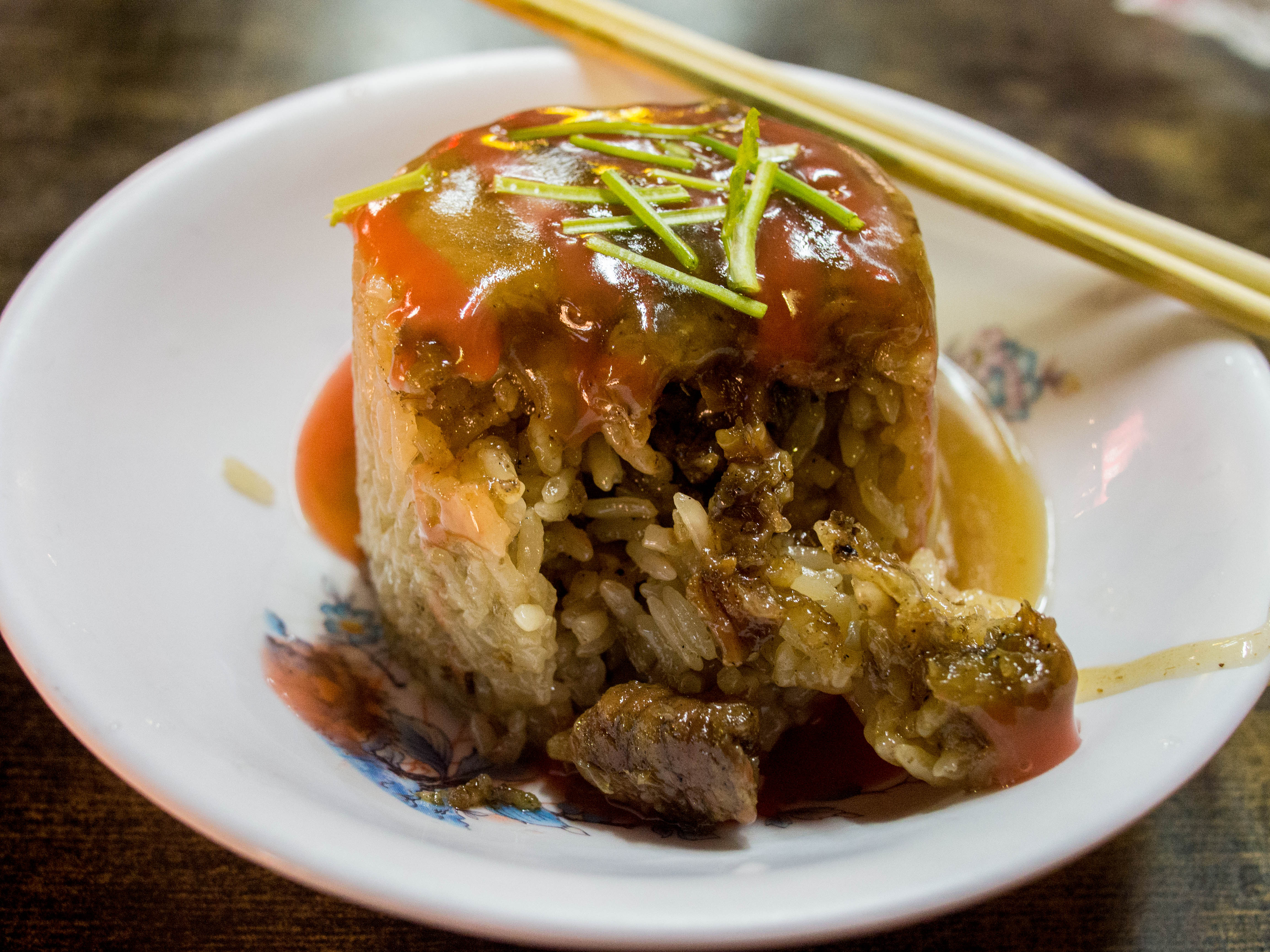
筒仔米糕 tǒngzǎi mǐgāo; tube rice pudding (with pork and mushrooms)

筒仔米糕 tǒngzǎi mǐgāo; tube rice pudding (with pork and mushrooms)

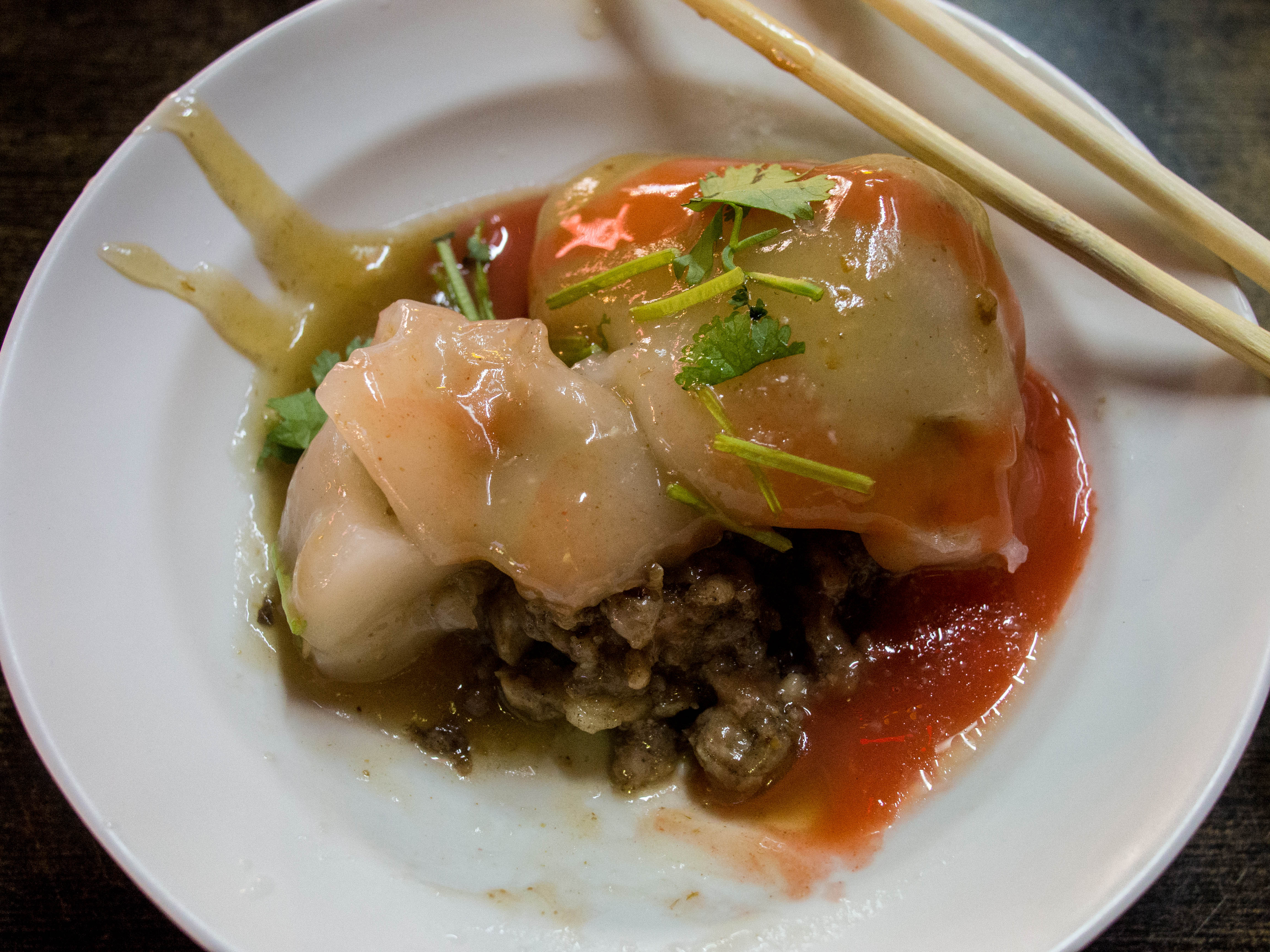
肉圓 ròuyuán, but more commonly called ba wan from the Taiwanese. It is a large rice flour dumpling.

肉圓 ròuyuán, but more commonly called ba wan from the Taiwanese. It is a large rice flour dumpling.

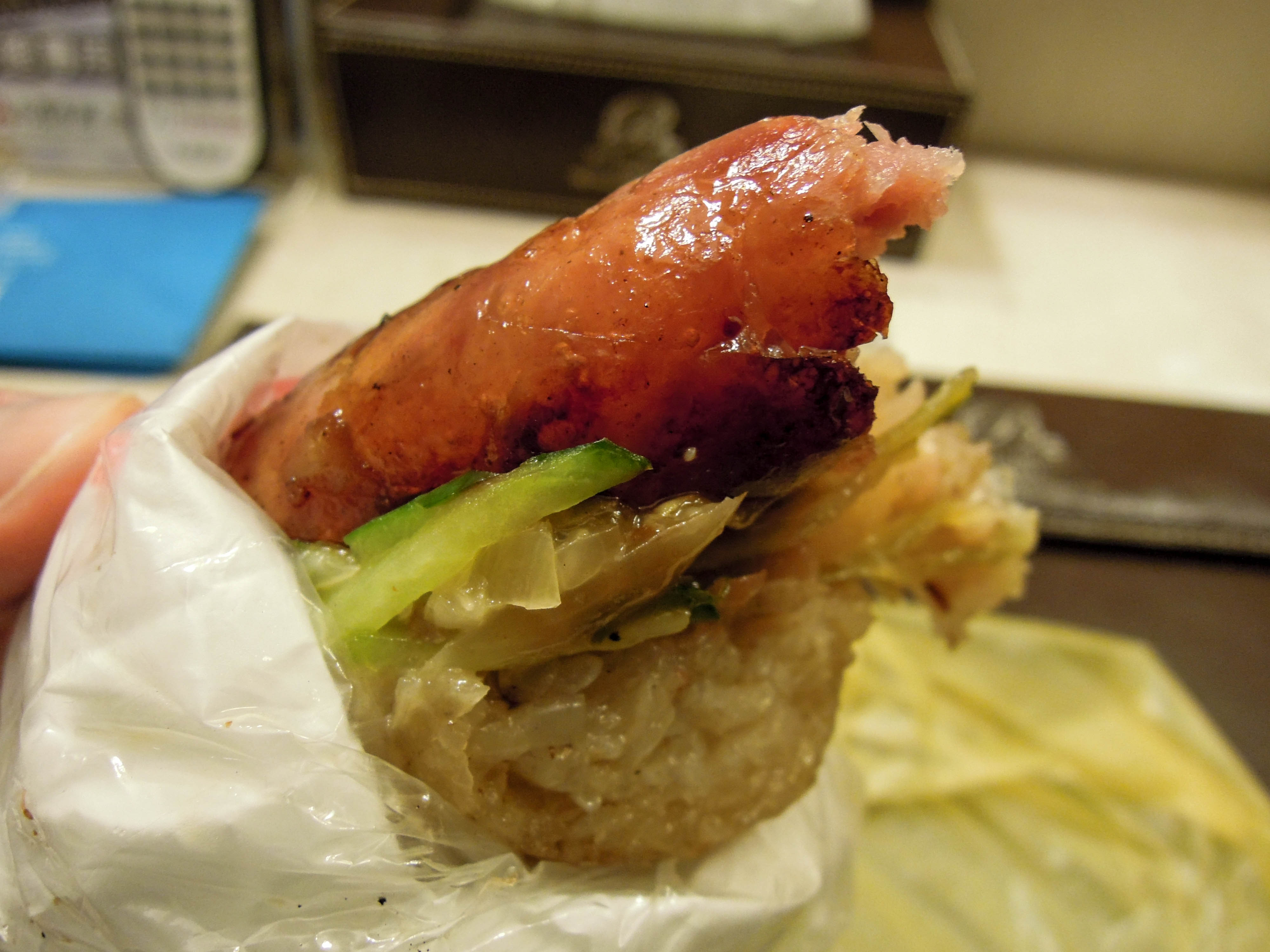
大腸包小腸 dàcháng bāo xiǎocháng ;Small sausage wrapped in a large sausage; the big sausage, which acts as a bun is actually sticky rice in a sausage casing.

大腸包小腸 dàcháng bāo xiǎocháng ; Small sausage wrapped in a large sausage; the big sausage, which acts as a bun is actually sticky rice in a sausage casing.

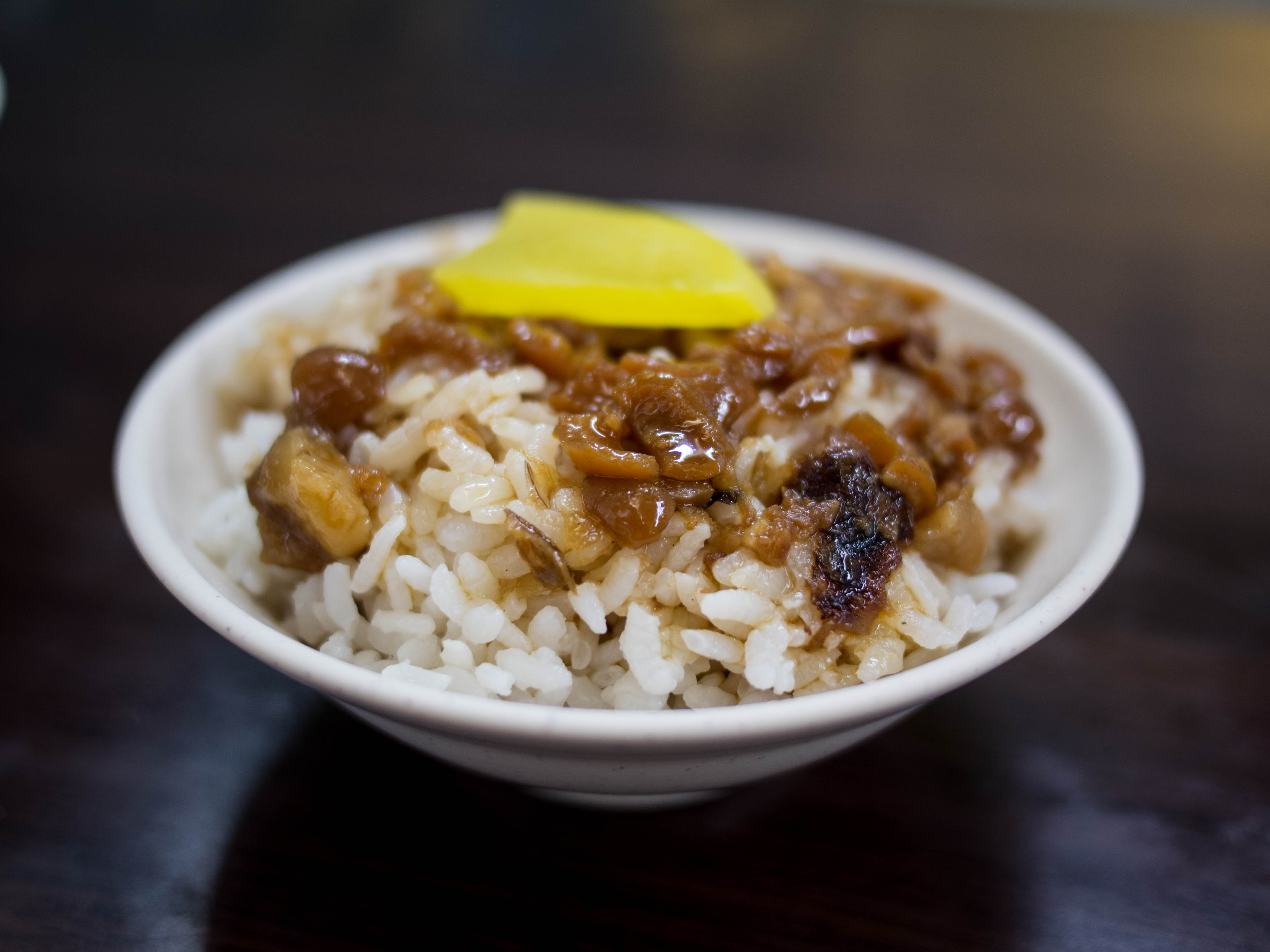
滷肉飯 lǔròu fàn; fatty seasoned pork on rice

滷肉飯 lǔròu fàn; fatty seasoned pork on rice

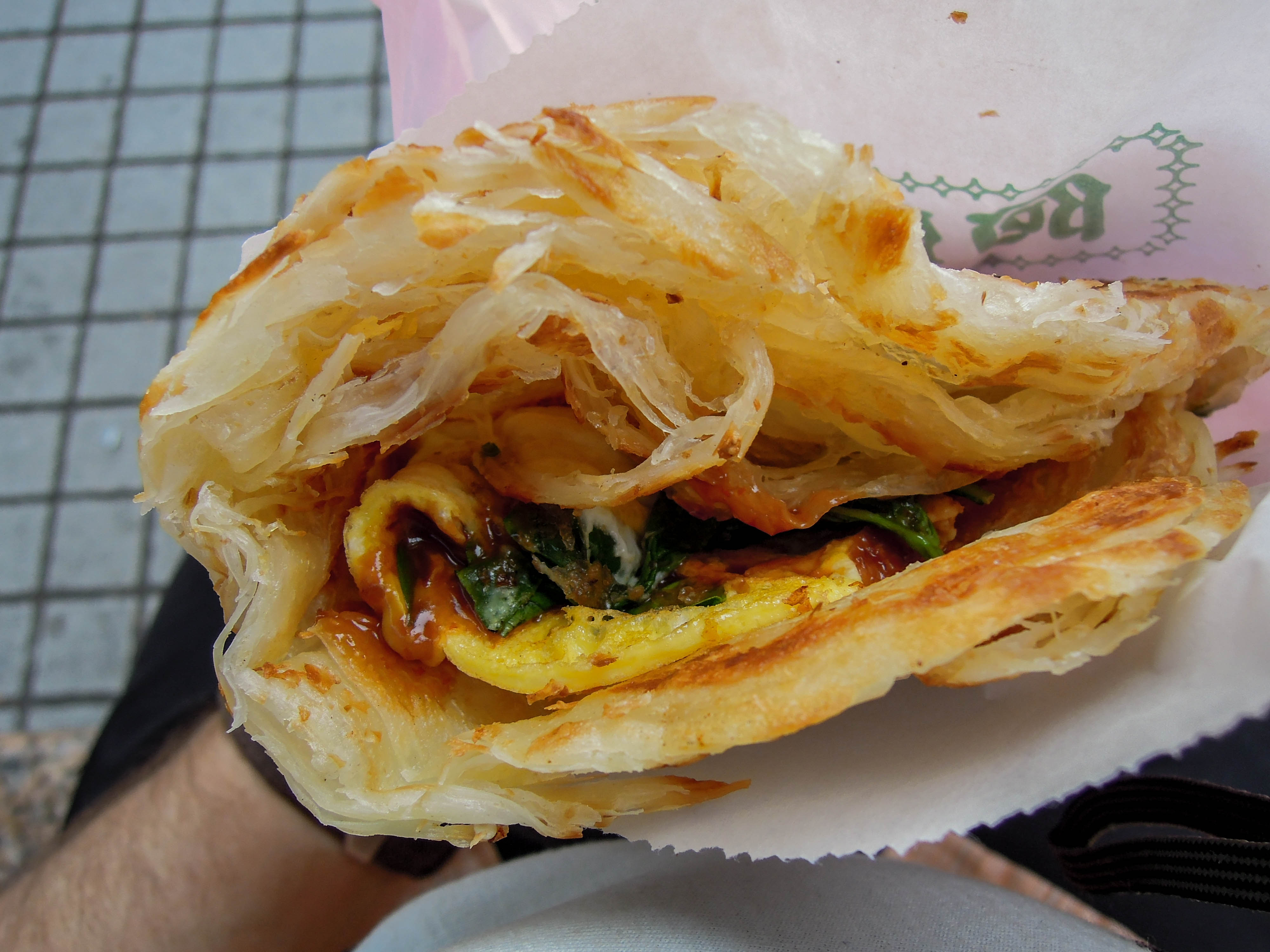
蔥抓餅 cōngzhuā bǐng; flaky scallion pancake w/egg

蔥抓餅 cōngzhuā bǐng; flaky scallion pancake w/egg

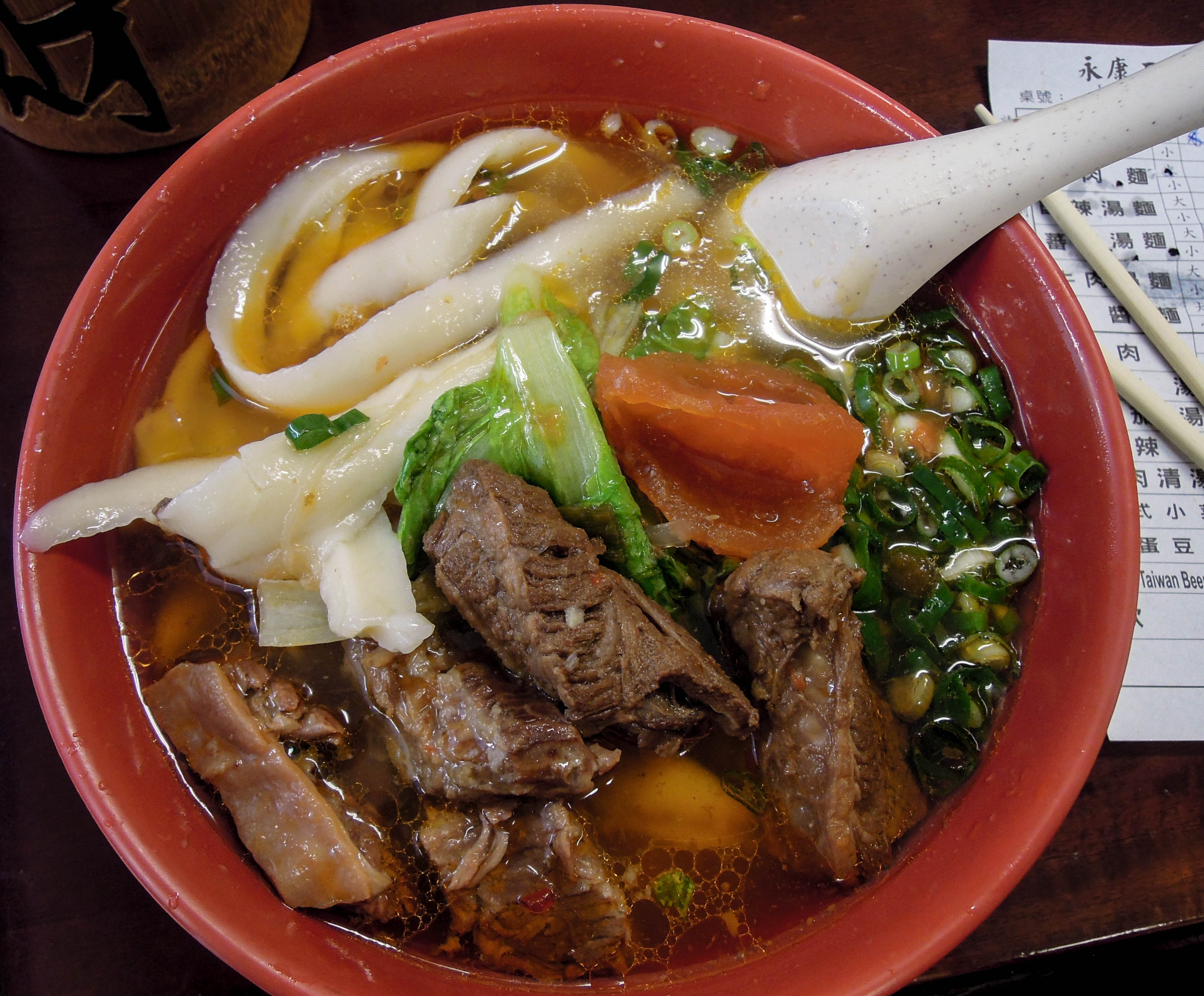
牛肉麵 niǔròu miàn; beef noodles

牛肉麵 niǔròu miàn; beef noodles

I went to Taiwan with a list of about 40 or so things I wanted to try. In the end, after 6 days I was able to try about 22 items on my list. The food was fresh, delicious, and quick. Next time I really need to get down to Tainan as I have heard the food there is pretty amazing as well.

China Street Photography

You have probably noticed by now that I enjoy photography. Whenever I am in China (or just about anywhere) I have a camera with me. The following are a few shots I took on my last trip in October/November 2013, on the streets of Nanjing, Beijing, and Tianjin. To see more of my photography, visit my Flickr site using the link on the right side of the page.

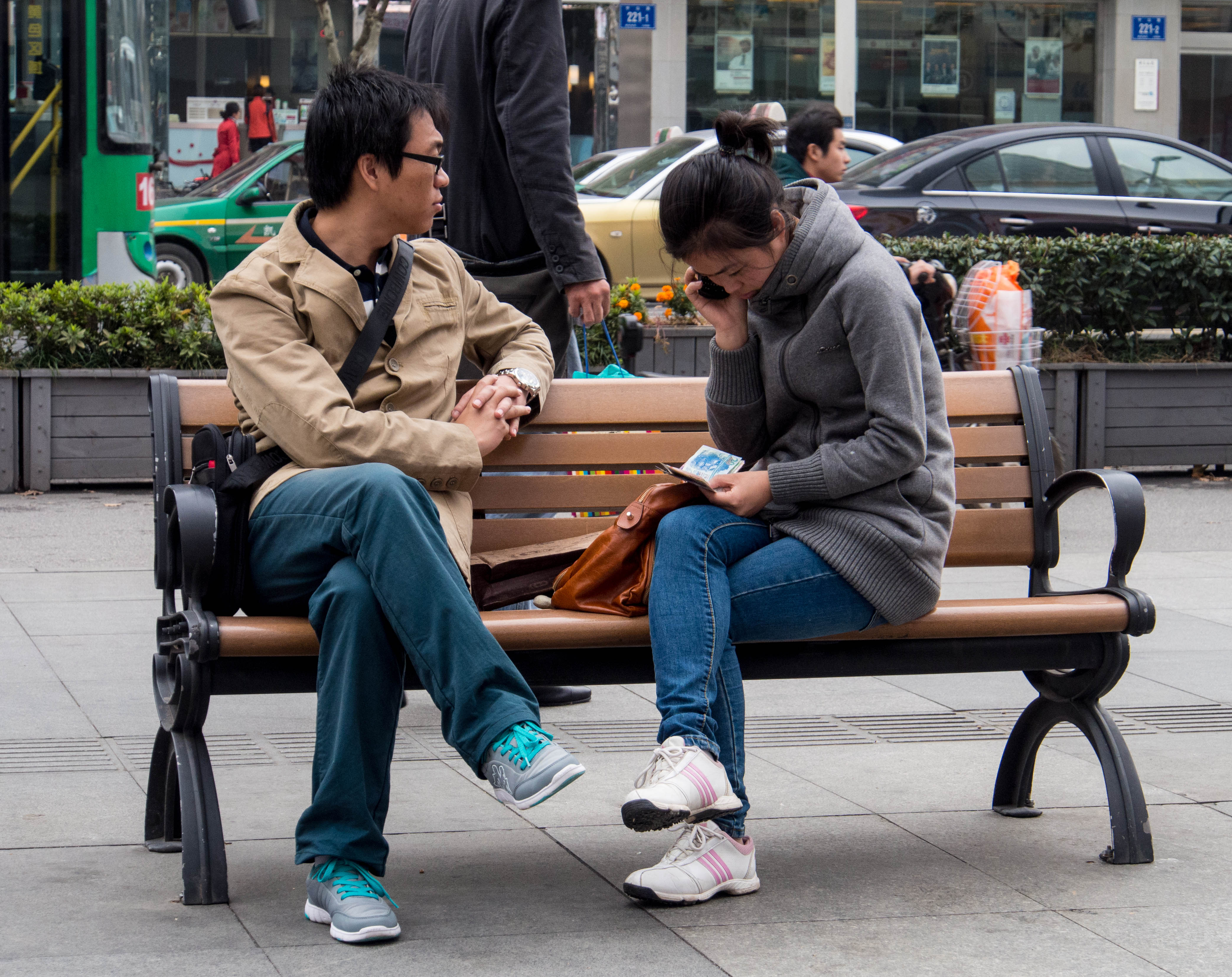
Not that into you.

Not that into you.

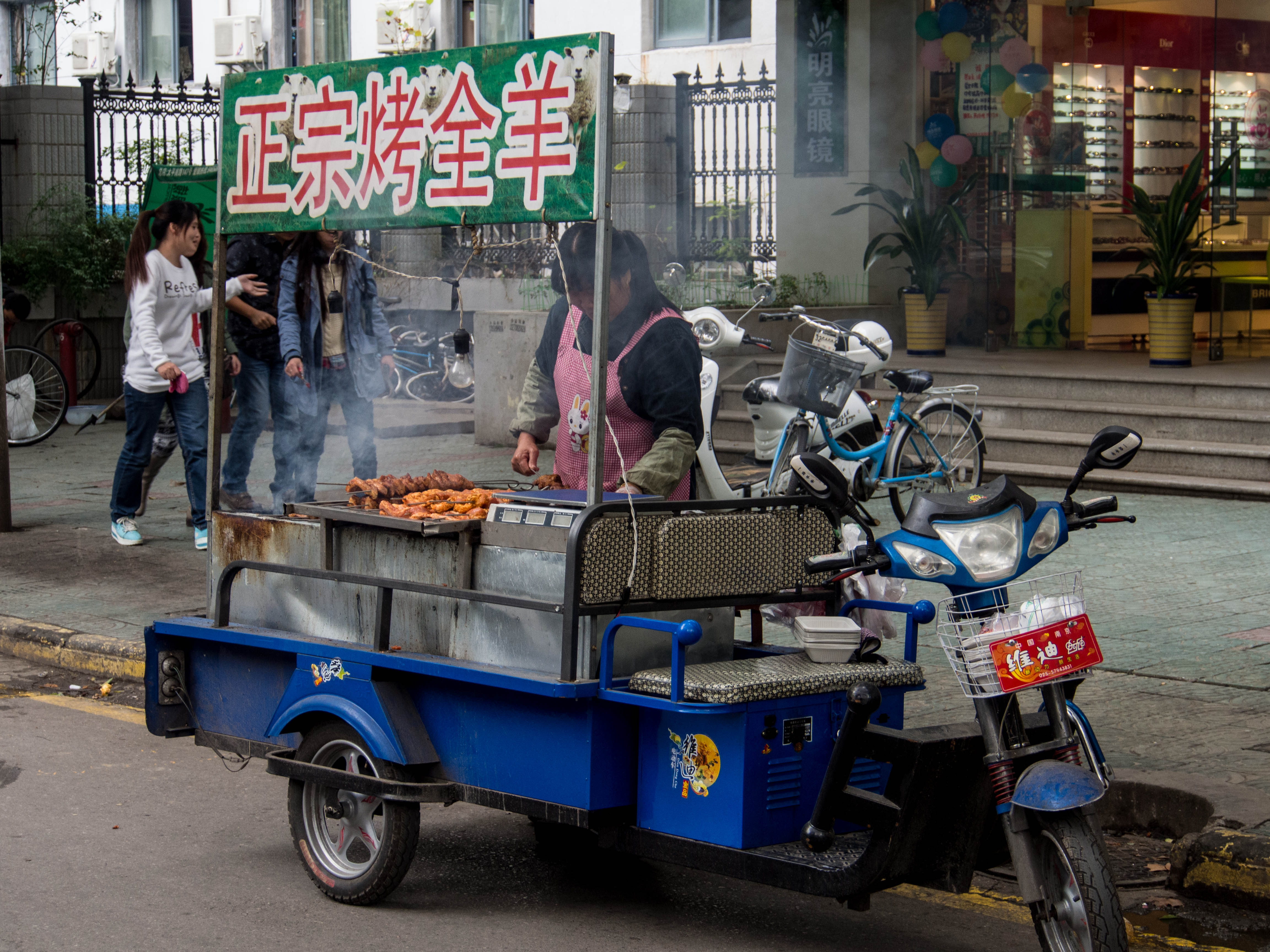
Street snacks

Street snacks

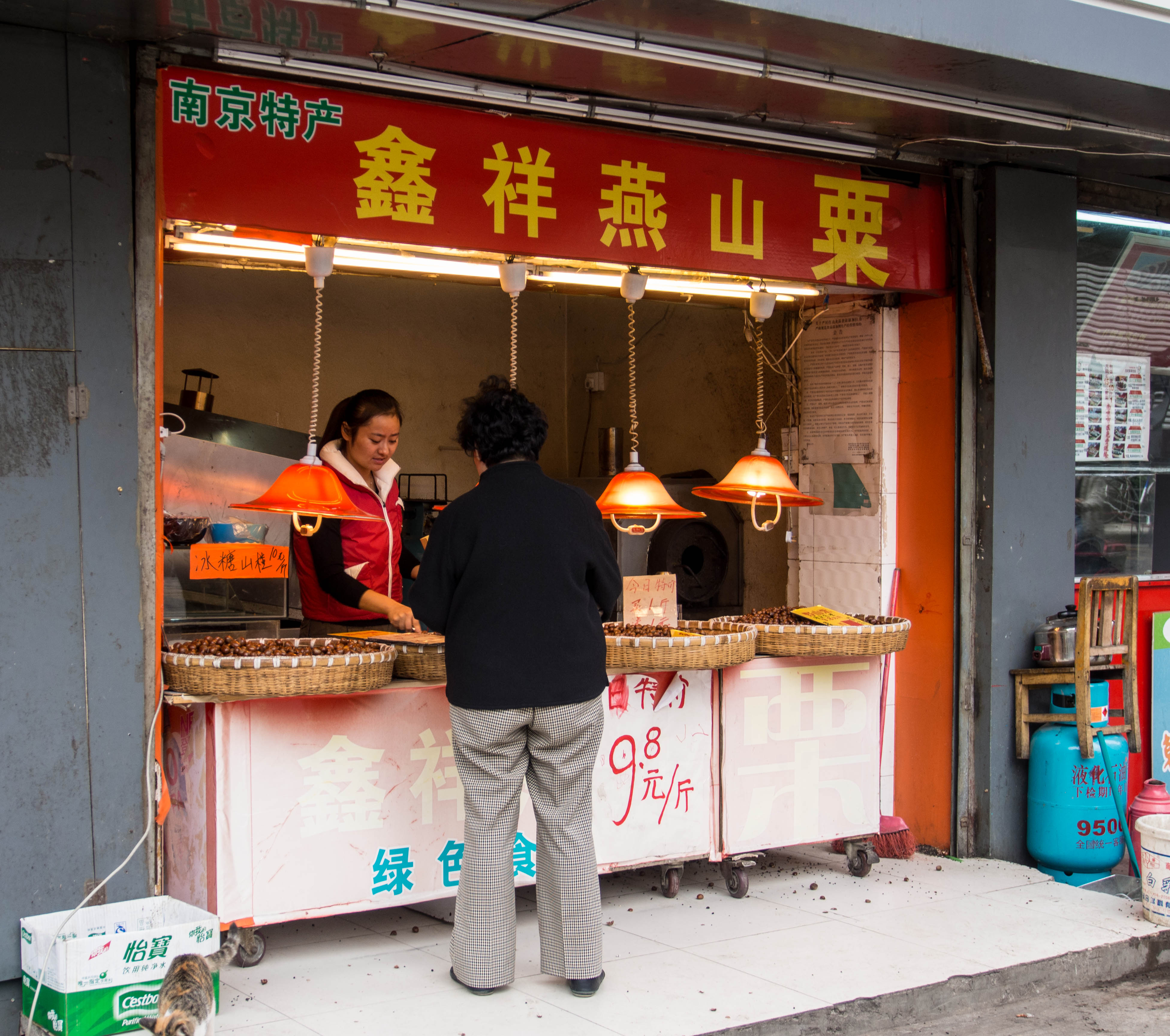
Nanjing specialty

Nanjing specialty

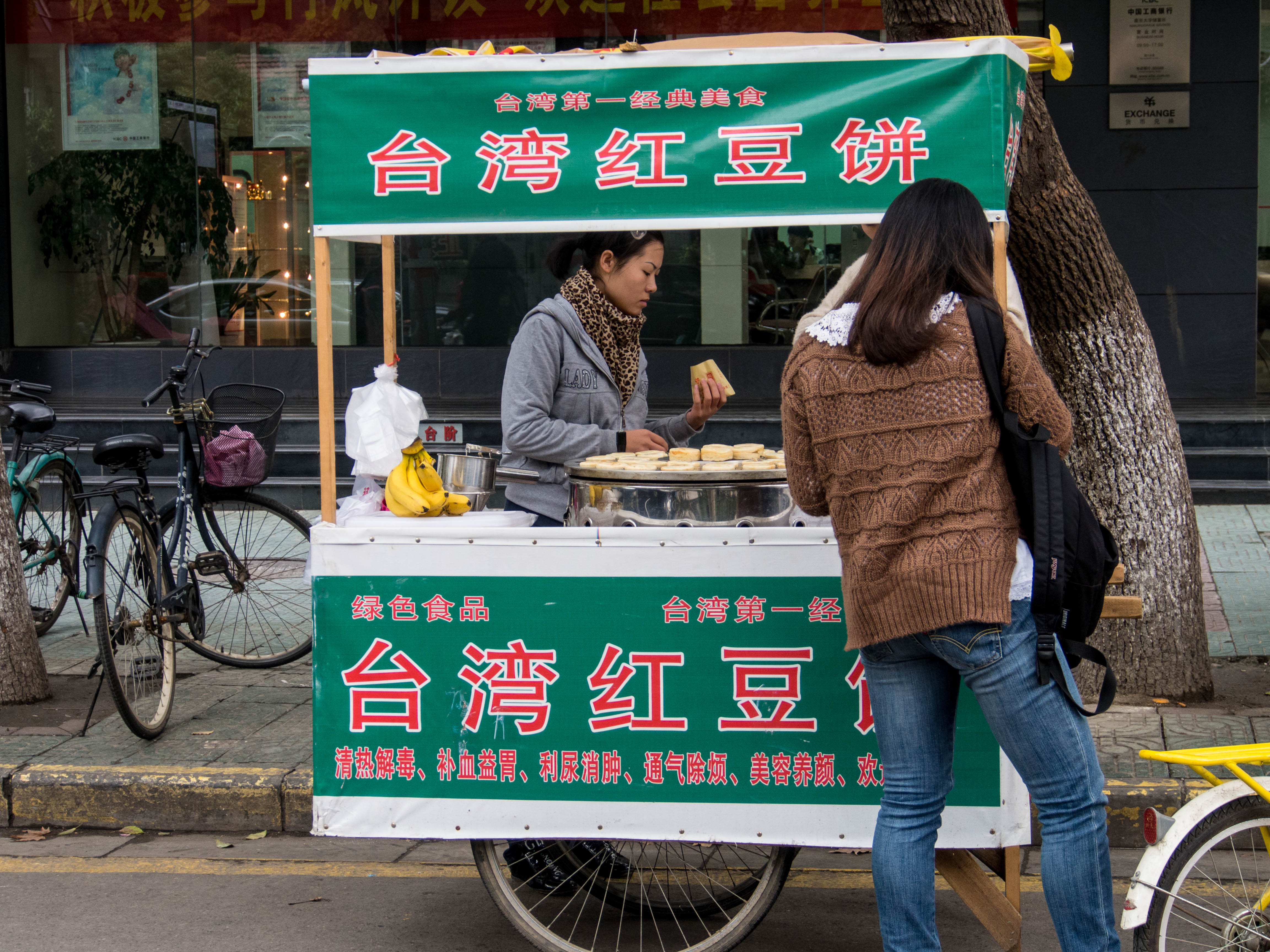
Taiwan food on the Mainland

Taiwan food on the Mainland

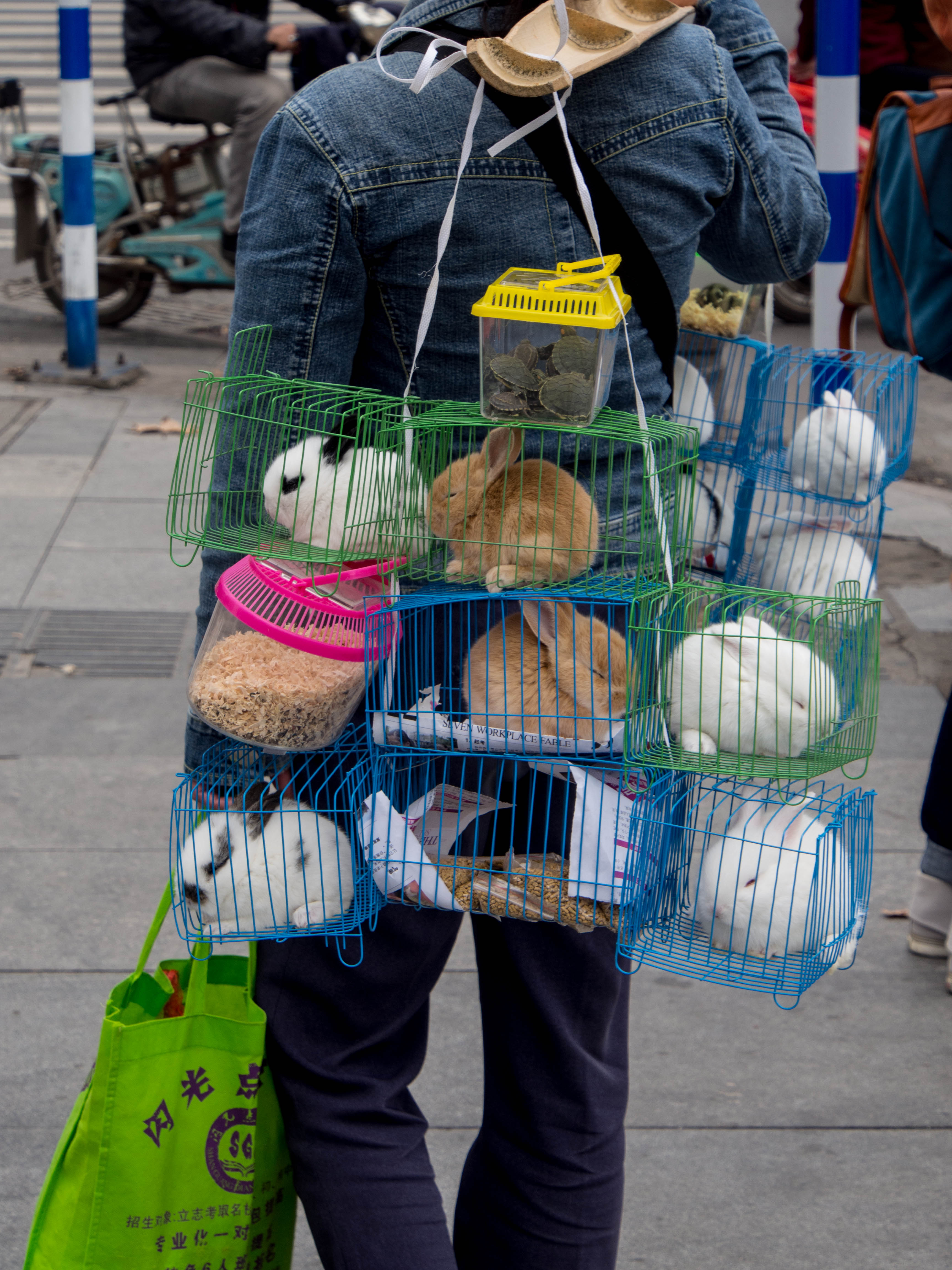
Bunnies anyone?

Bunnies anyone?

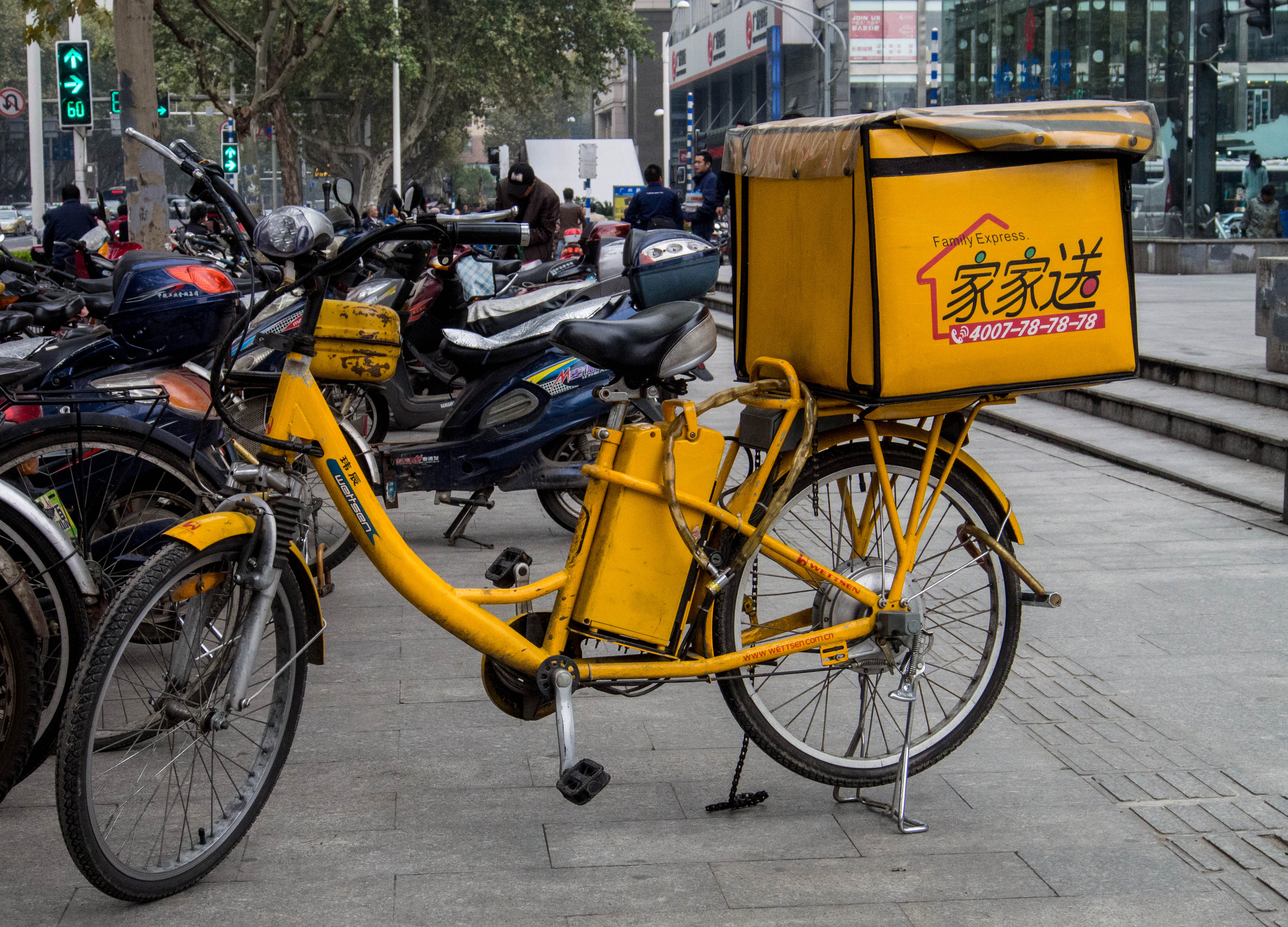
Delivery bike

Delivery bike

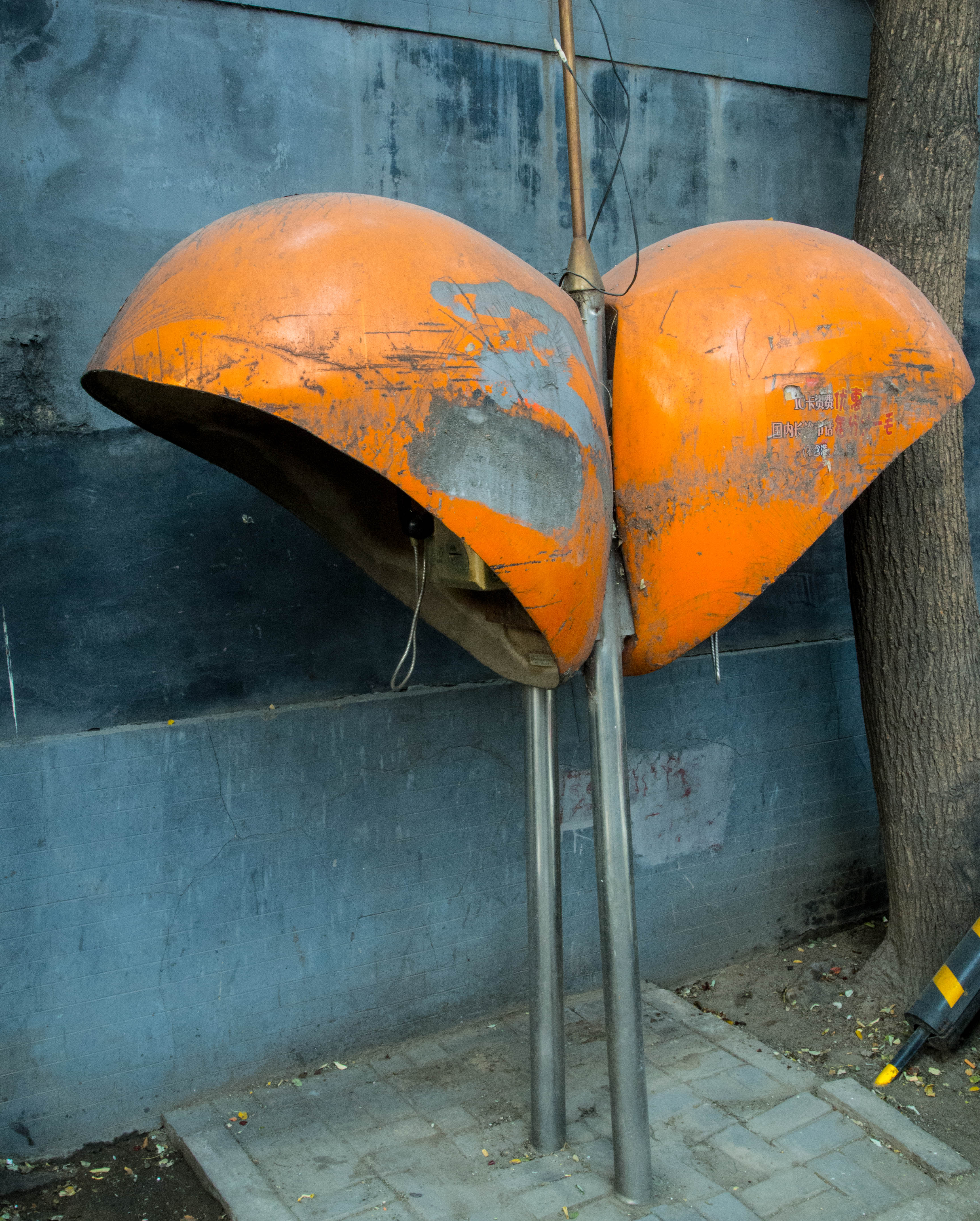
Yellow hoods

Orange hoods

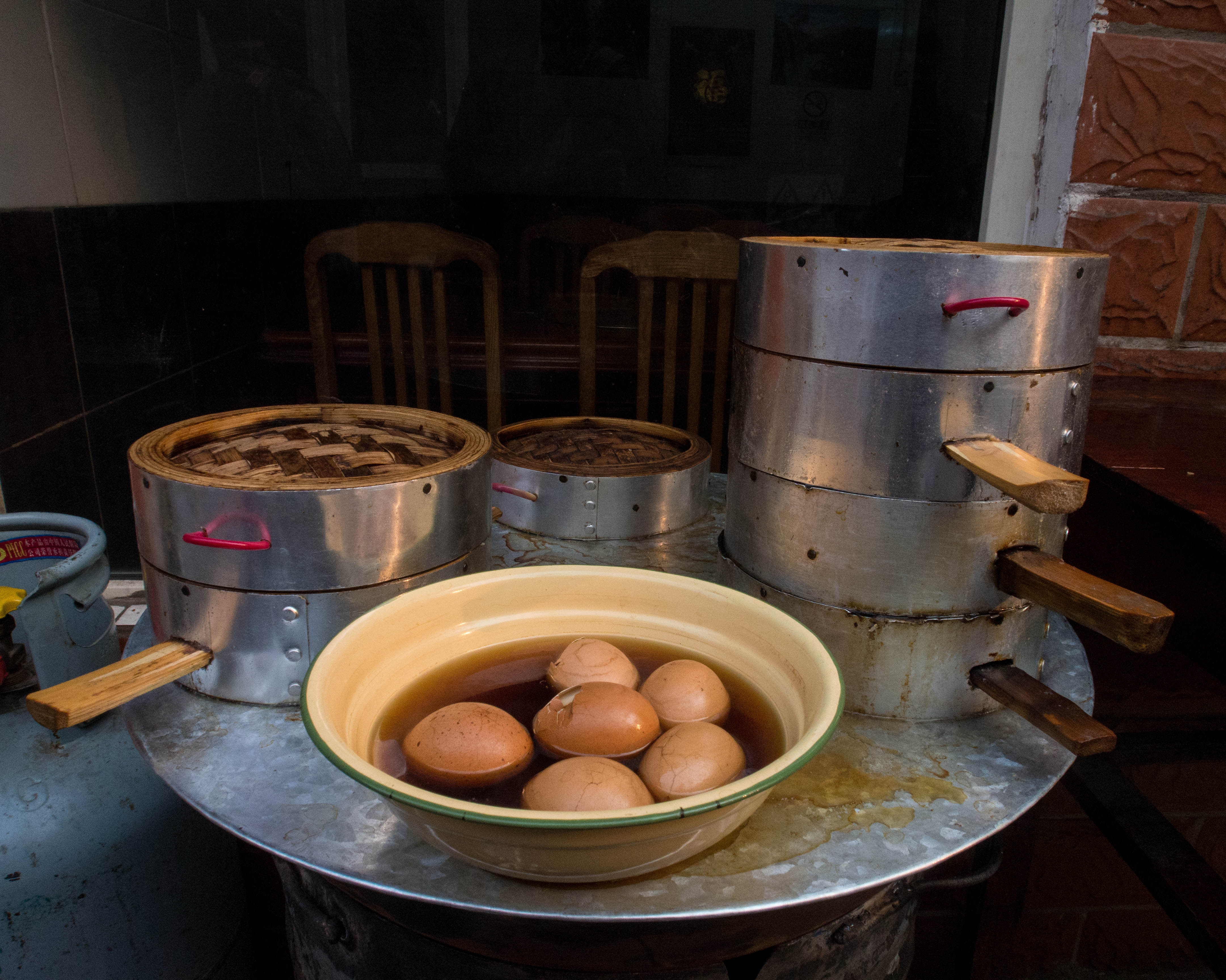
Hard boiled eggs, Chinese style

Hard boiled eggs, Chinese style

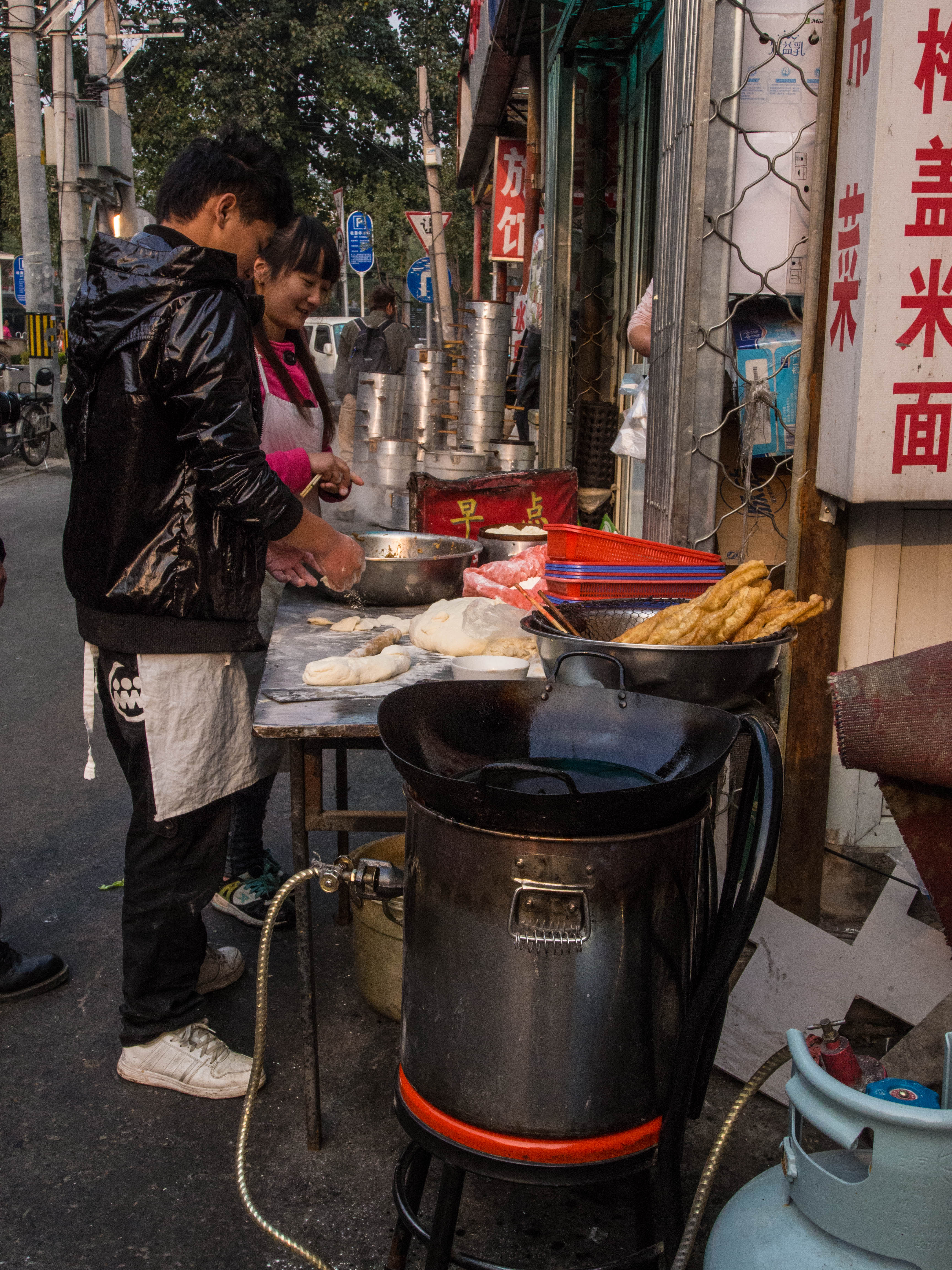
Beijing breakfast

Beijing breakfast

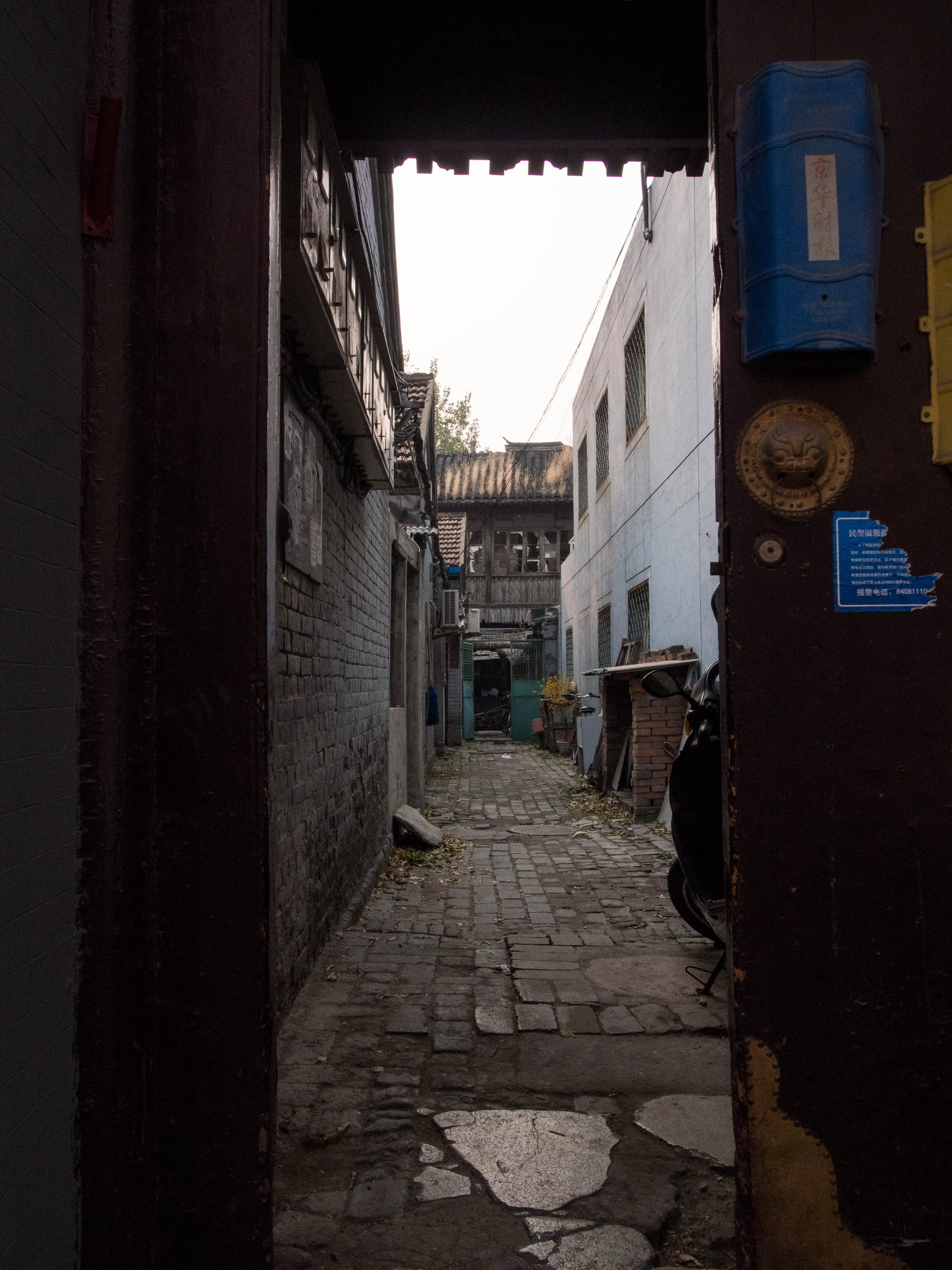
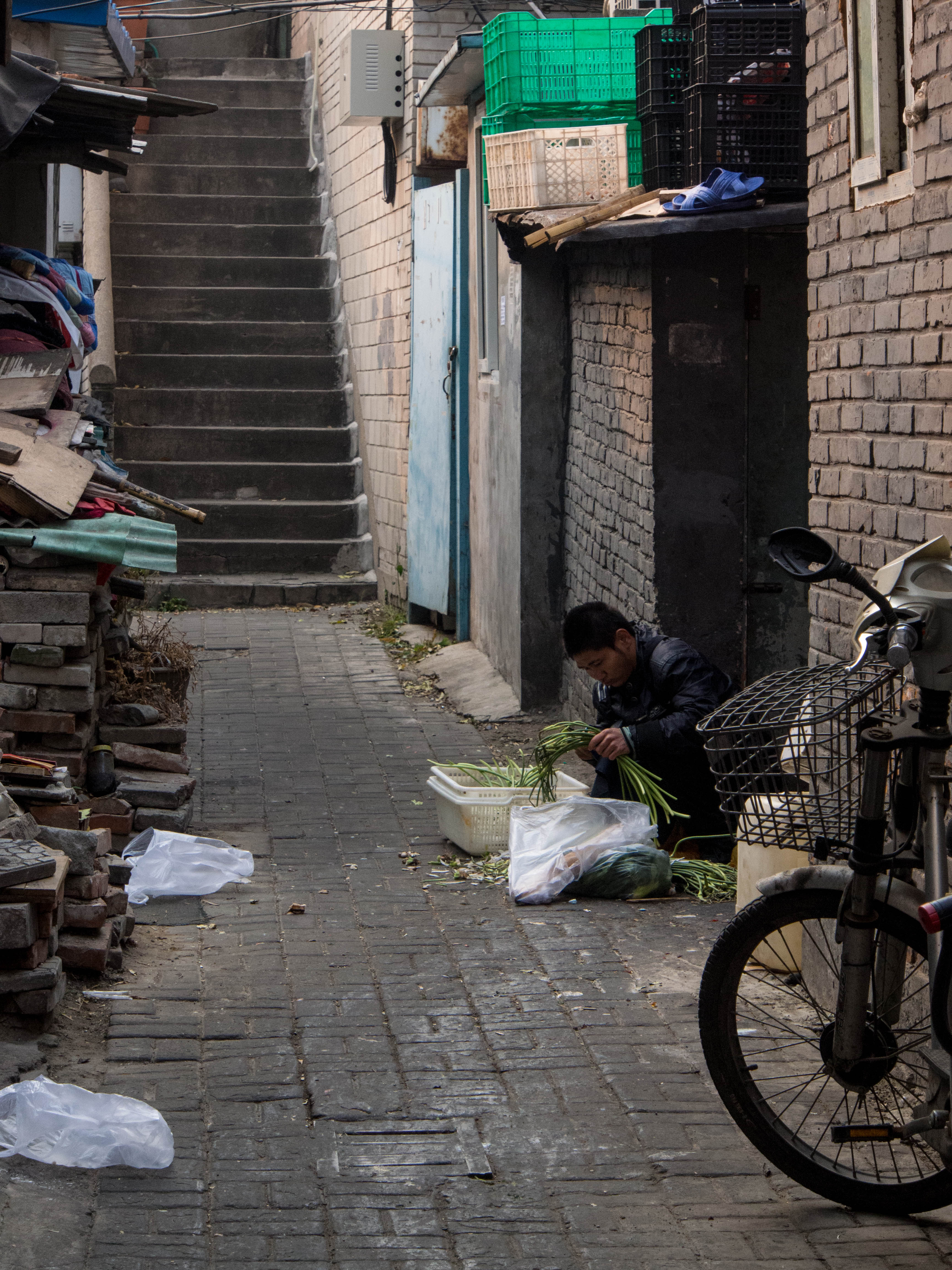
Hutong

Hutong

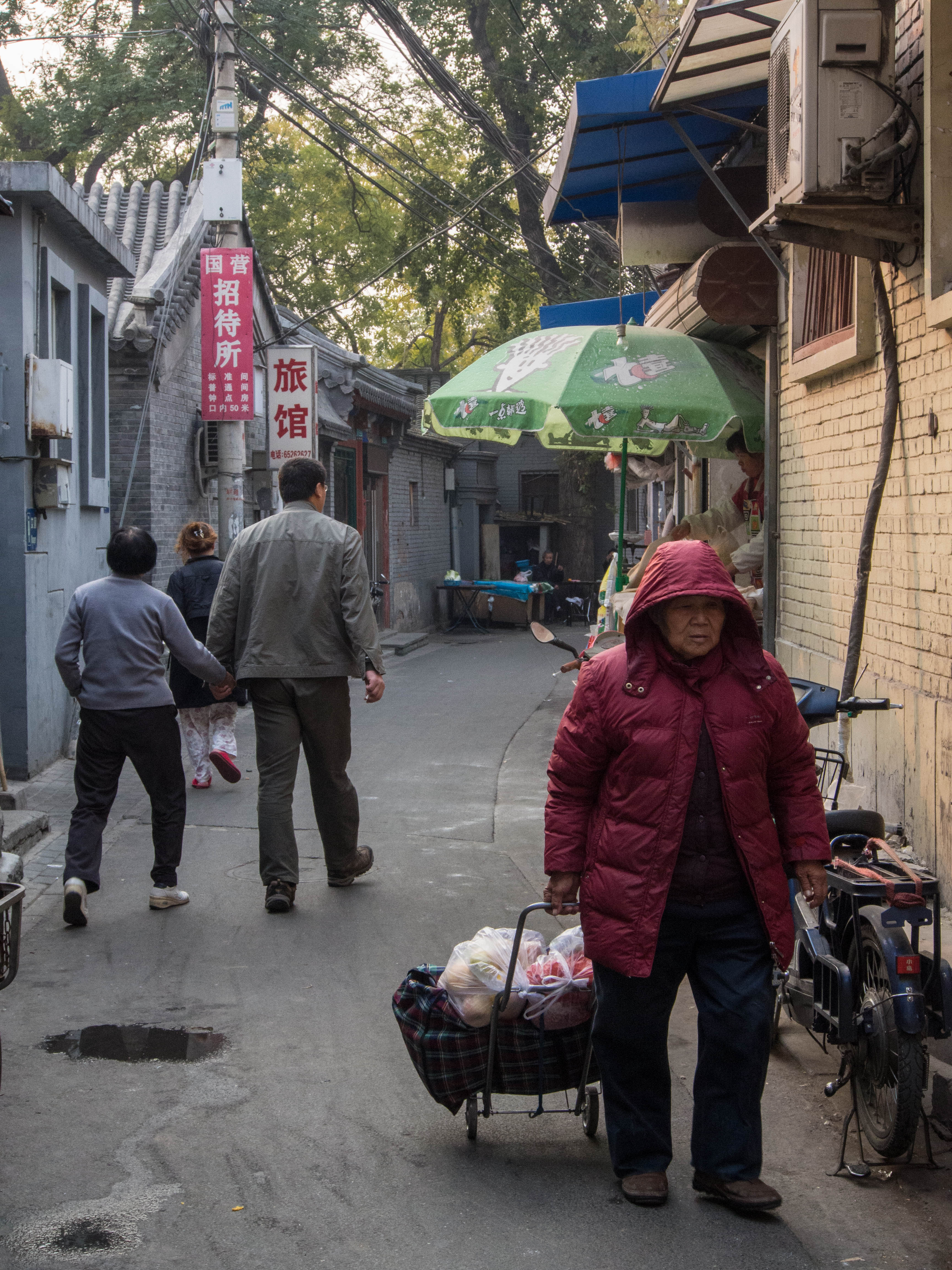
Hutong grandma

Hutong grandma

Hutong life

Hutong life

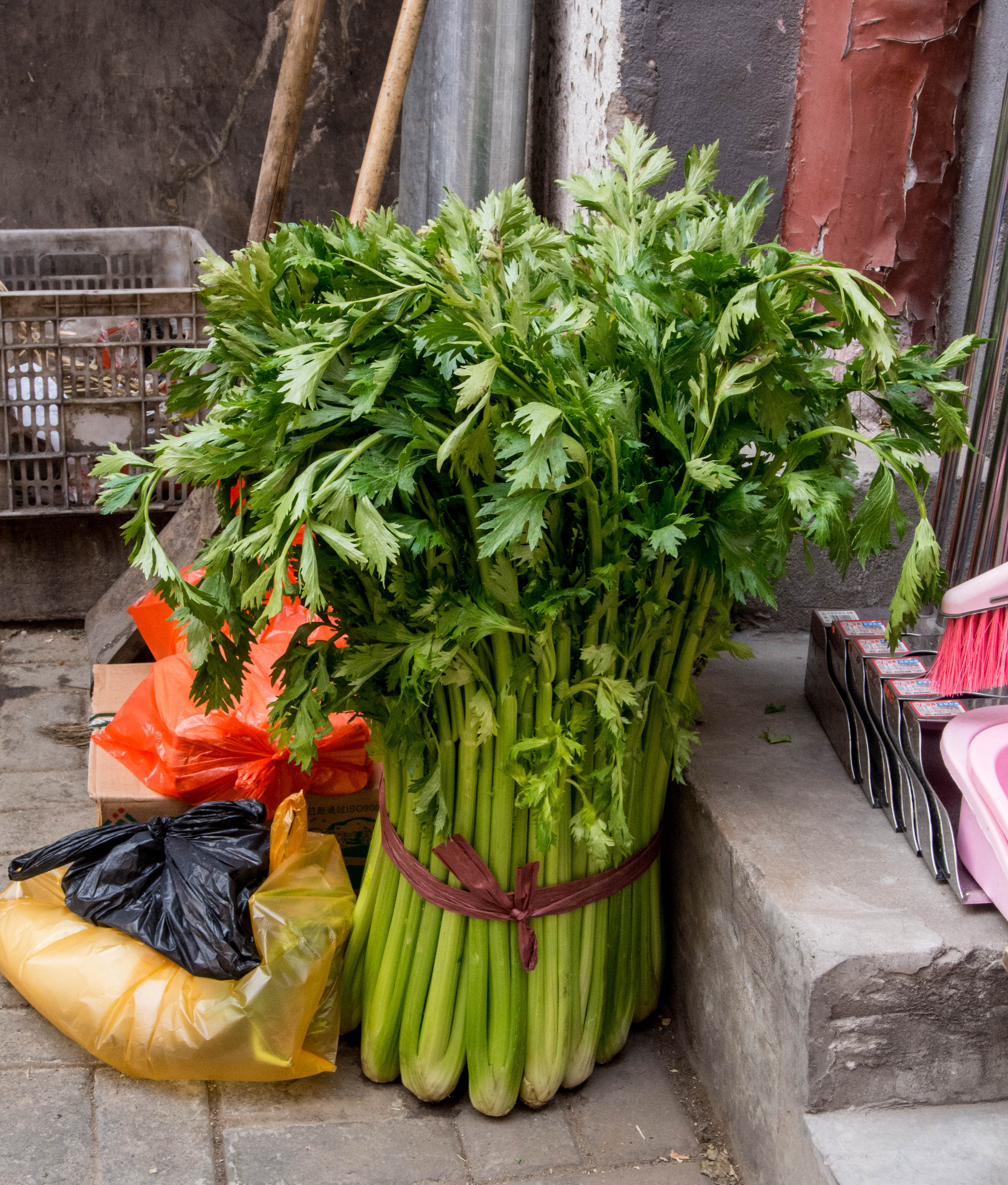
Big celery

Big celery

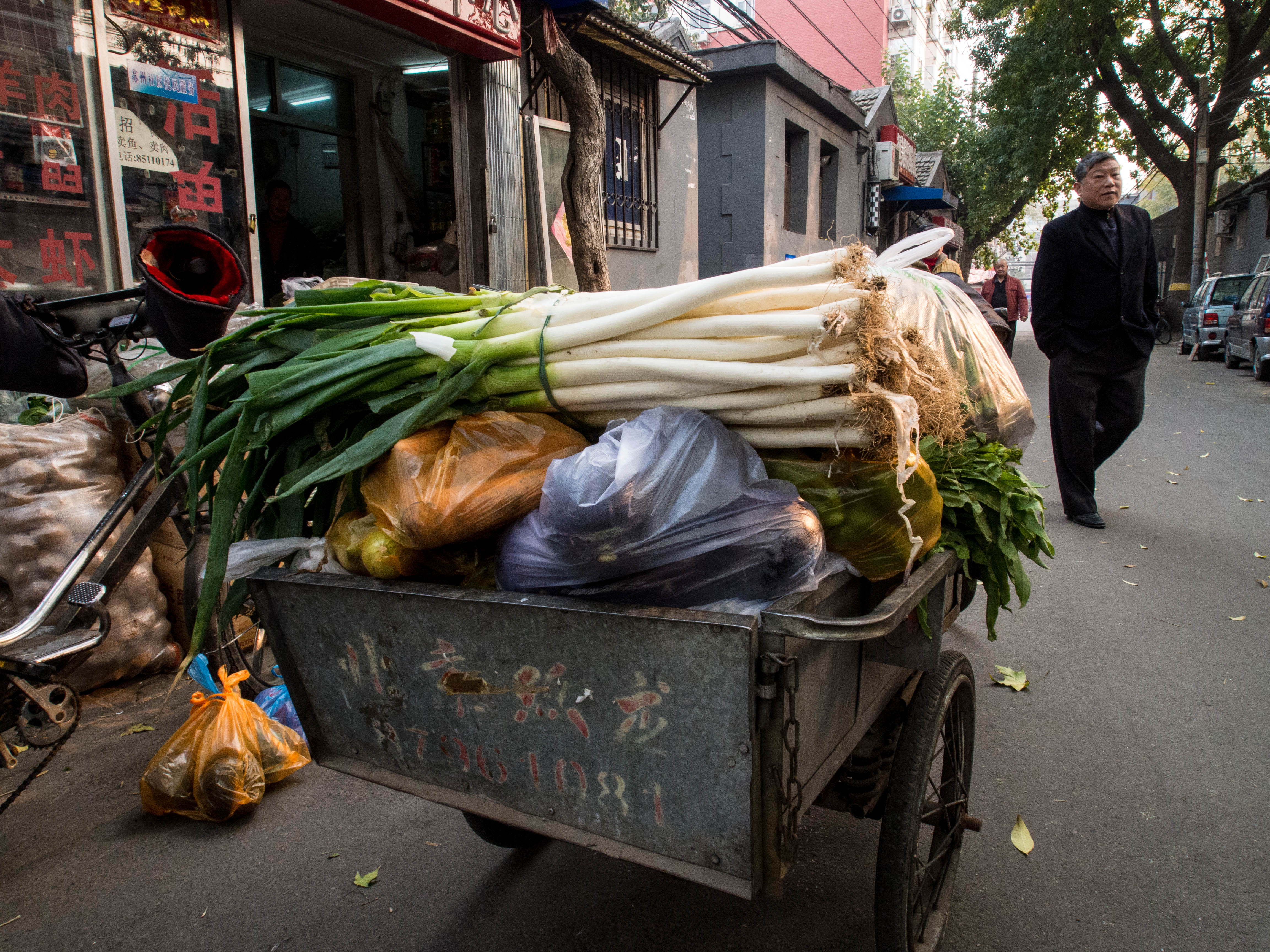
Leeks

Leeks

For Rent

For Rent

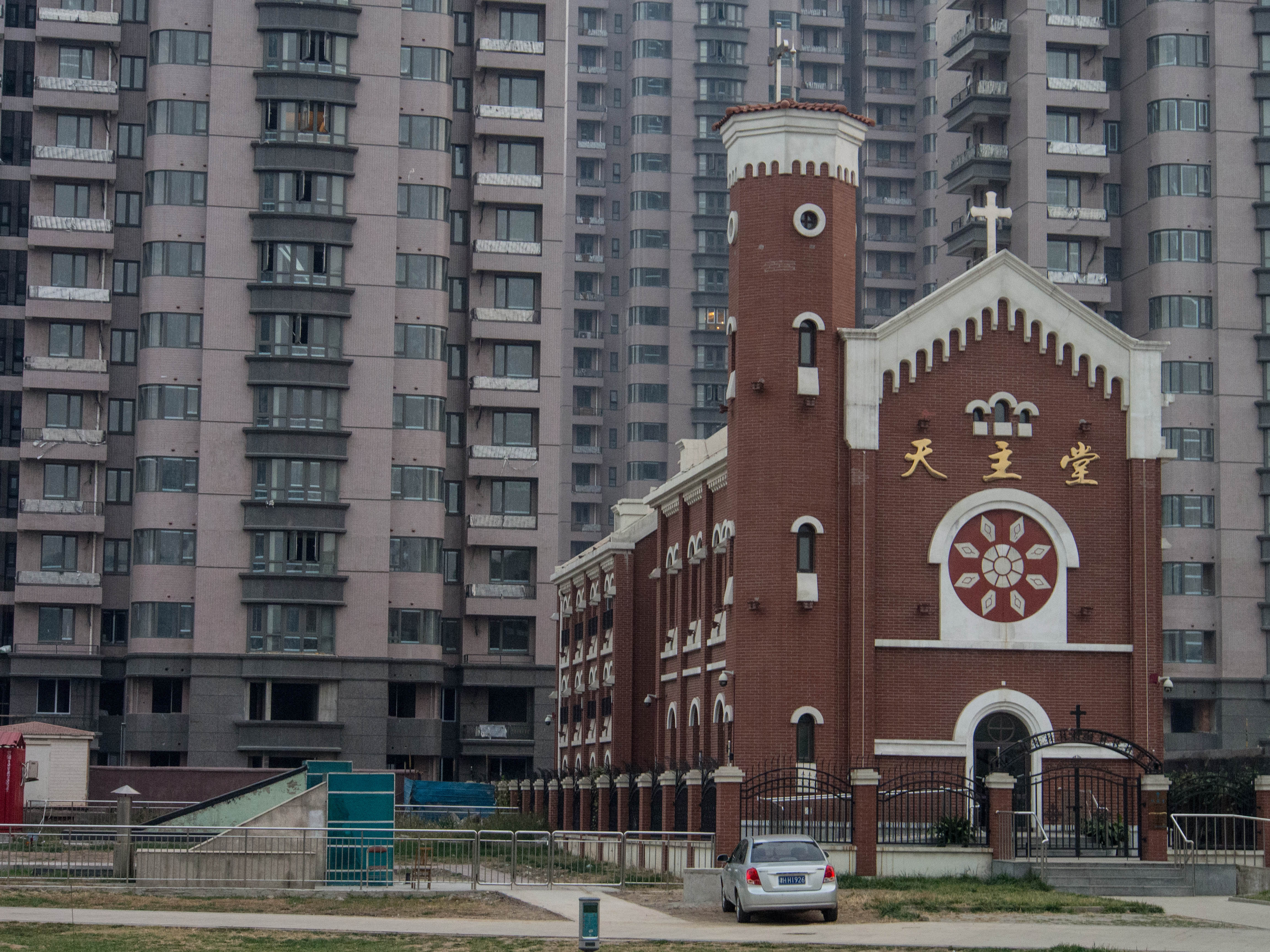
Catholic church in Tianjin

Catholic church in Tianjin

Mt. Kailash Kora, Part 2


We woke up to a beautiful clear day. The day we arrived in Darchen it was snowing and the pass got a few centimeters. The forecast was calling for more snow, but we lucked out and had clear skies all three days of the kora.
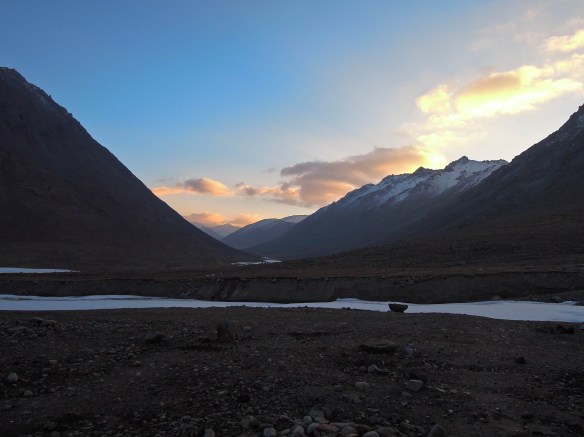
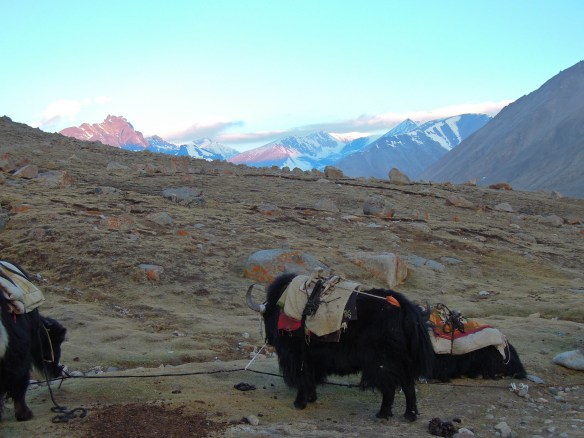
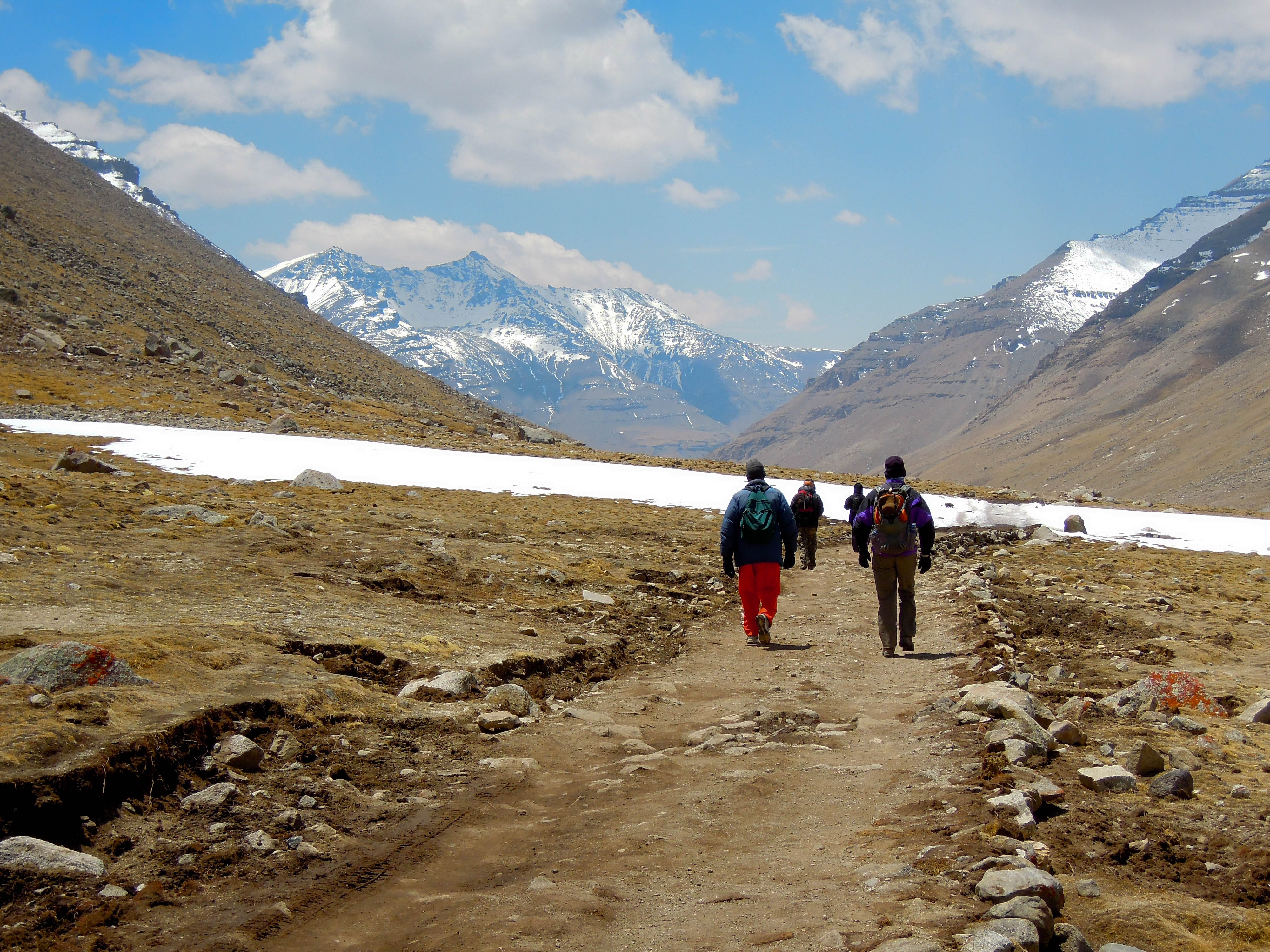
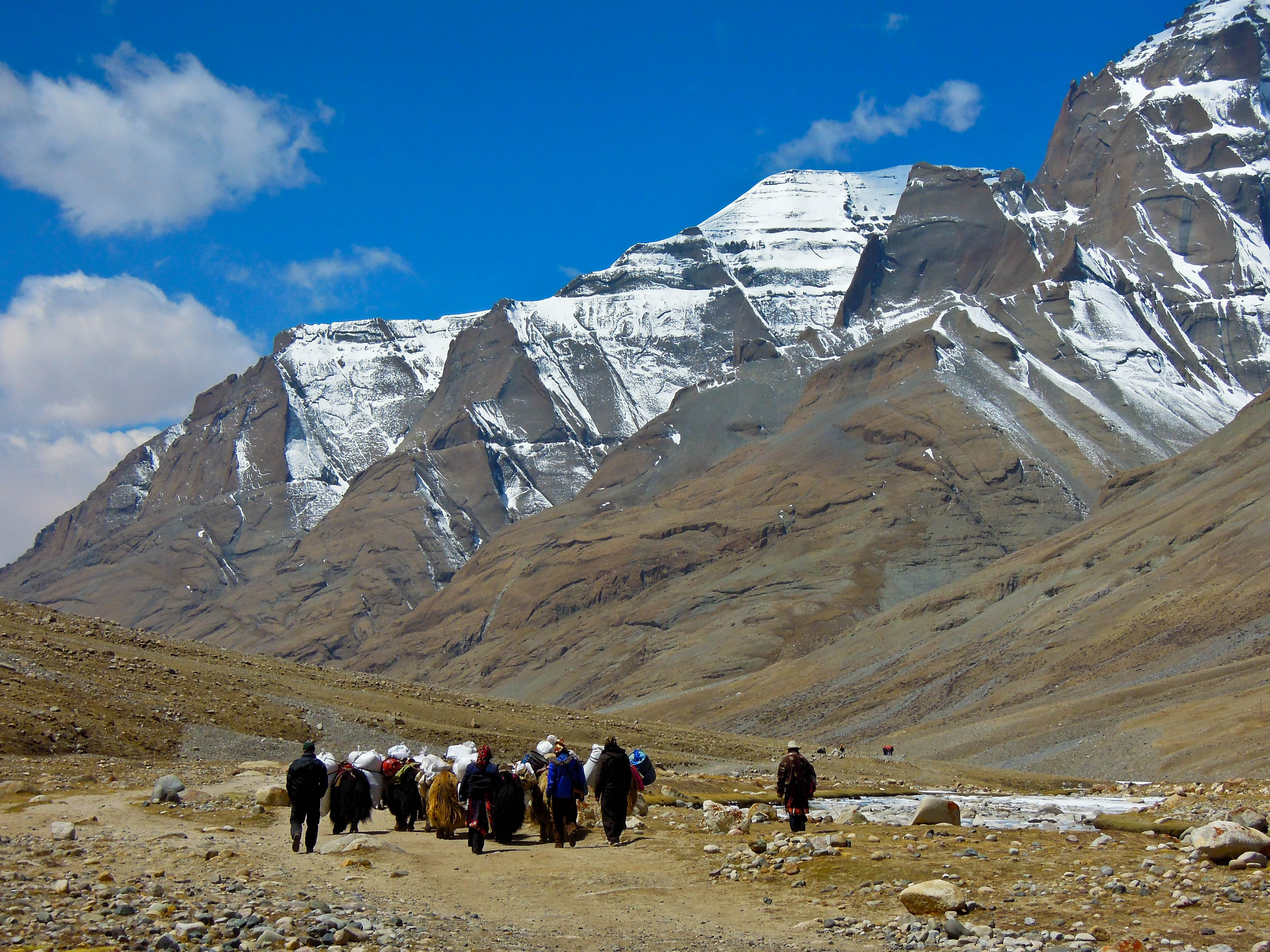
We got an early start this morning. Our Tibetan guide, Tenzin, said it would take 3.5-4 hours to reach Drolma La Pass. From where we camped it was about 6.4 km and 762 m higher. That doesn’t seem like much of a climb, but when you are starting at 16,500′ and climbing to 18,550′ it is pretty significant. Stephen, Brad, and I left together. Bruce, Susan, and Tenzin followed behind. Susan was struggling a bit with the altitude. We felt pretty good as long as we didn’t try to go too fast.

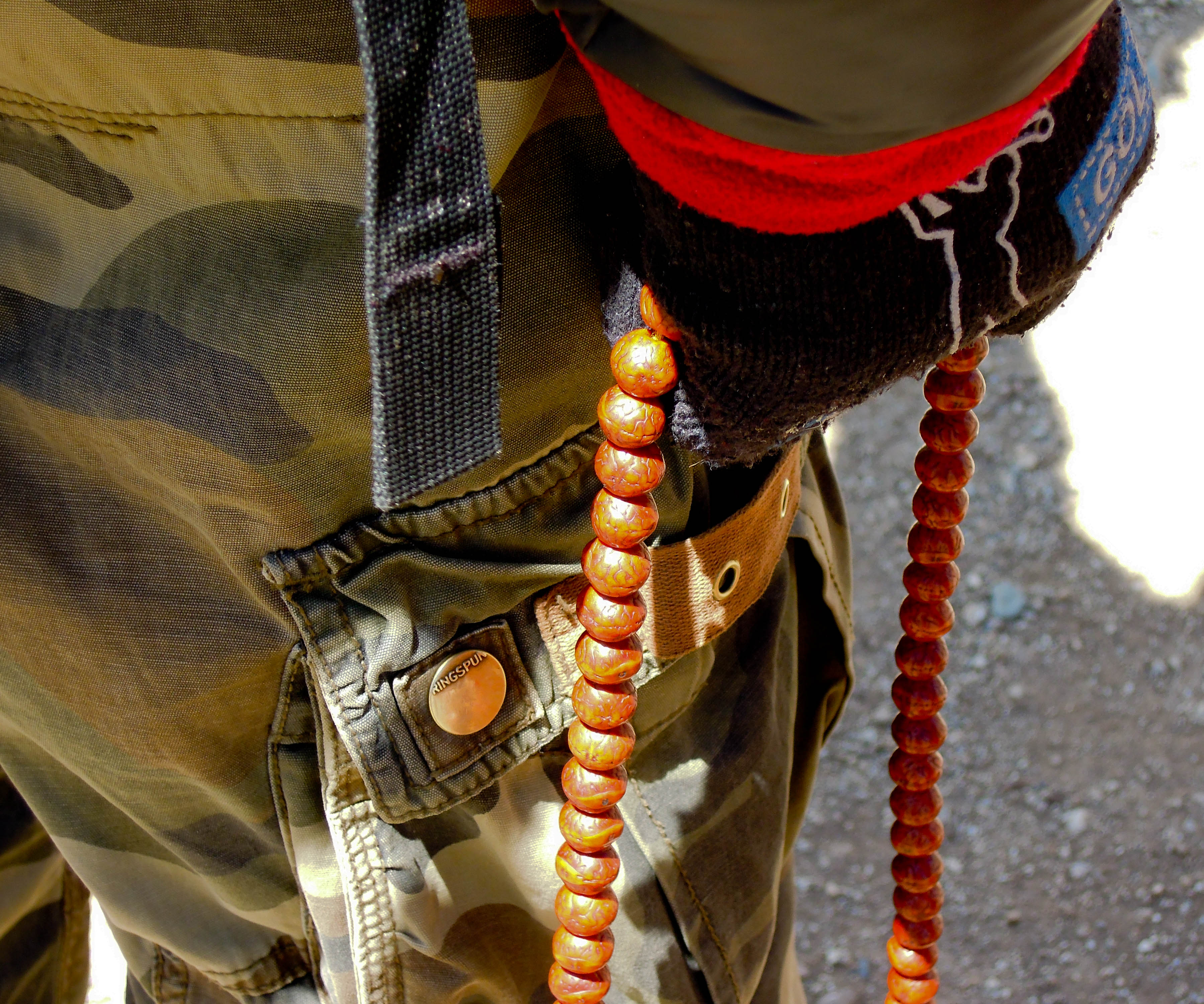
We began to see more and more Tibetan pilgrims heading up. Many of them do the kora in one day, which brings more merit than in the traditional three days. Bu the ultimate is to do full prostrations all the way around. This usually takes 14-16 days, but can be done in as few as 8 days as our guide had done previously. Tenzin had also done it in a day. This time with us was his 68th kora. He did not think he would make it to 108 as his knee had been bothering him the last few times. Tenzin was a very devout Buddhist. He always had his prayer beads in his hand, always, in the car, at camp, hiking. He never left them and they were well worn.
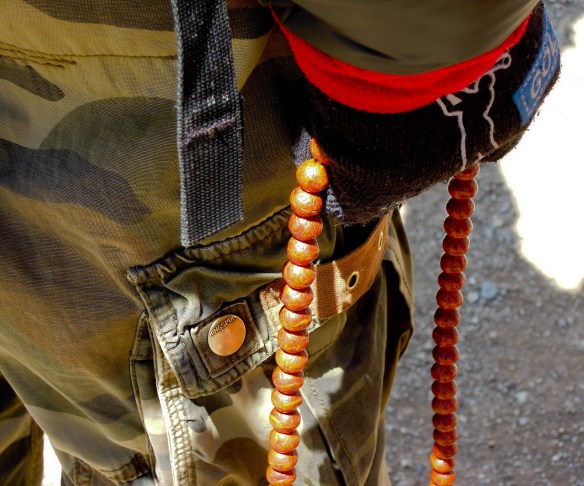
Tenzin’s well-worn prayer beads

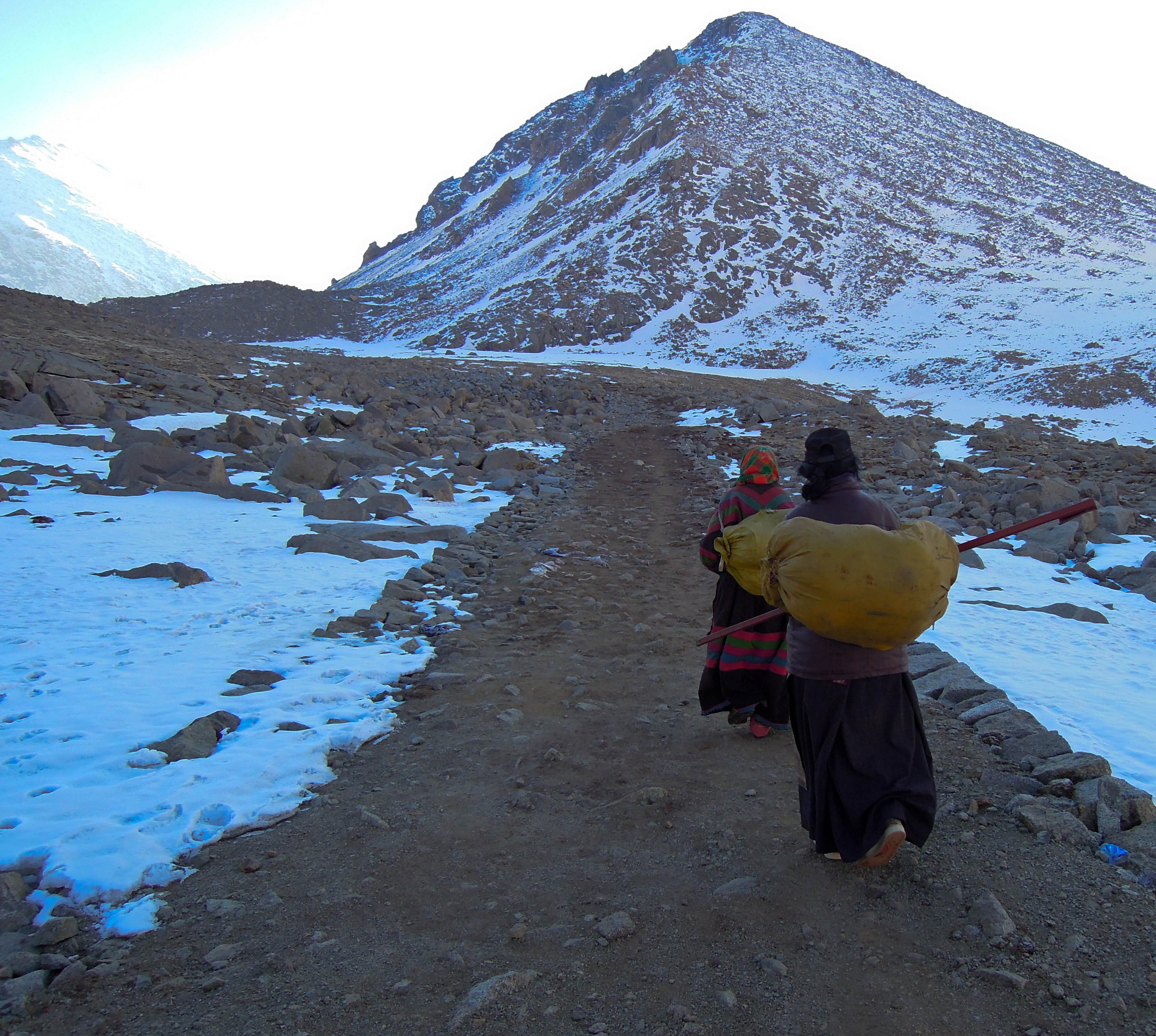
Pilgrims hiking up toward the pass

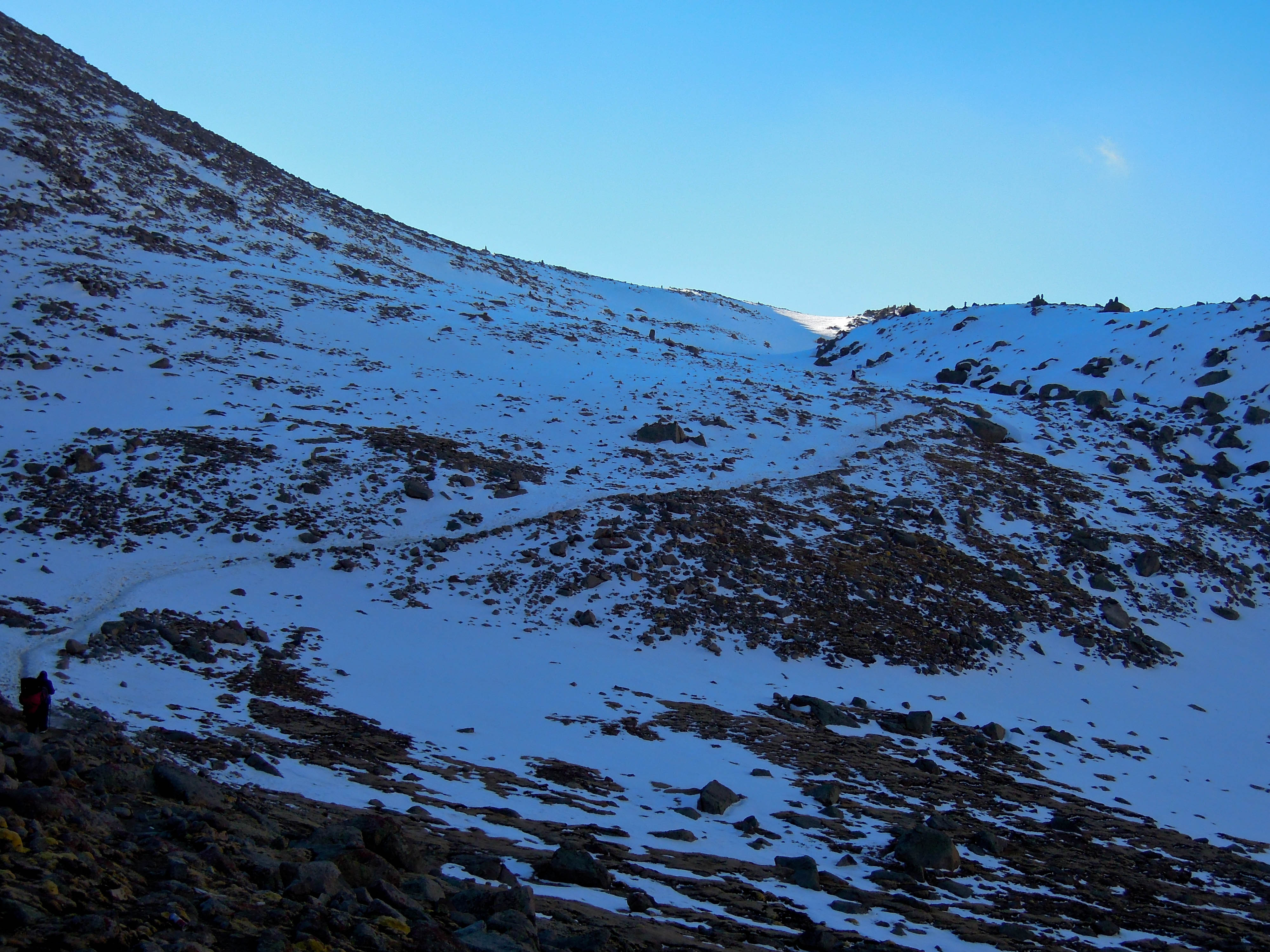
Right out of camp we climbed a long series of switchbacks. At the top of this section the trail flattened out a bit, then descended before it turned into snow as it headed up toward the pass.

Trail heading up to the pass

Heading up this snow slope, we had our last look at Kailash, then it was obscured by other mountains.
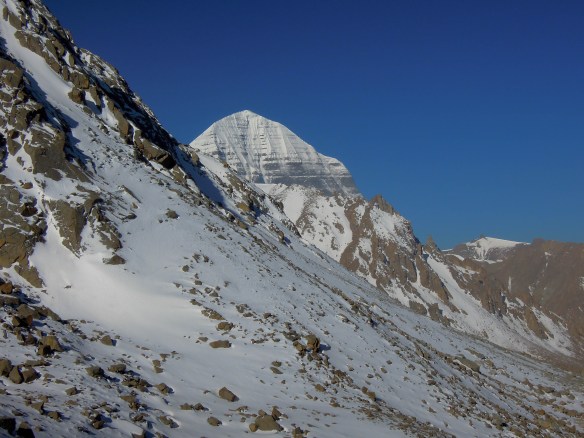
Last look at Kailash

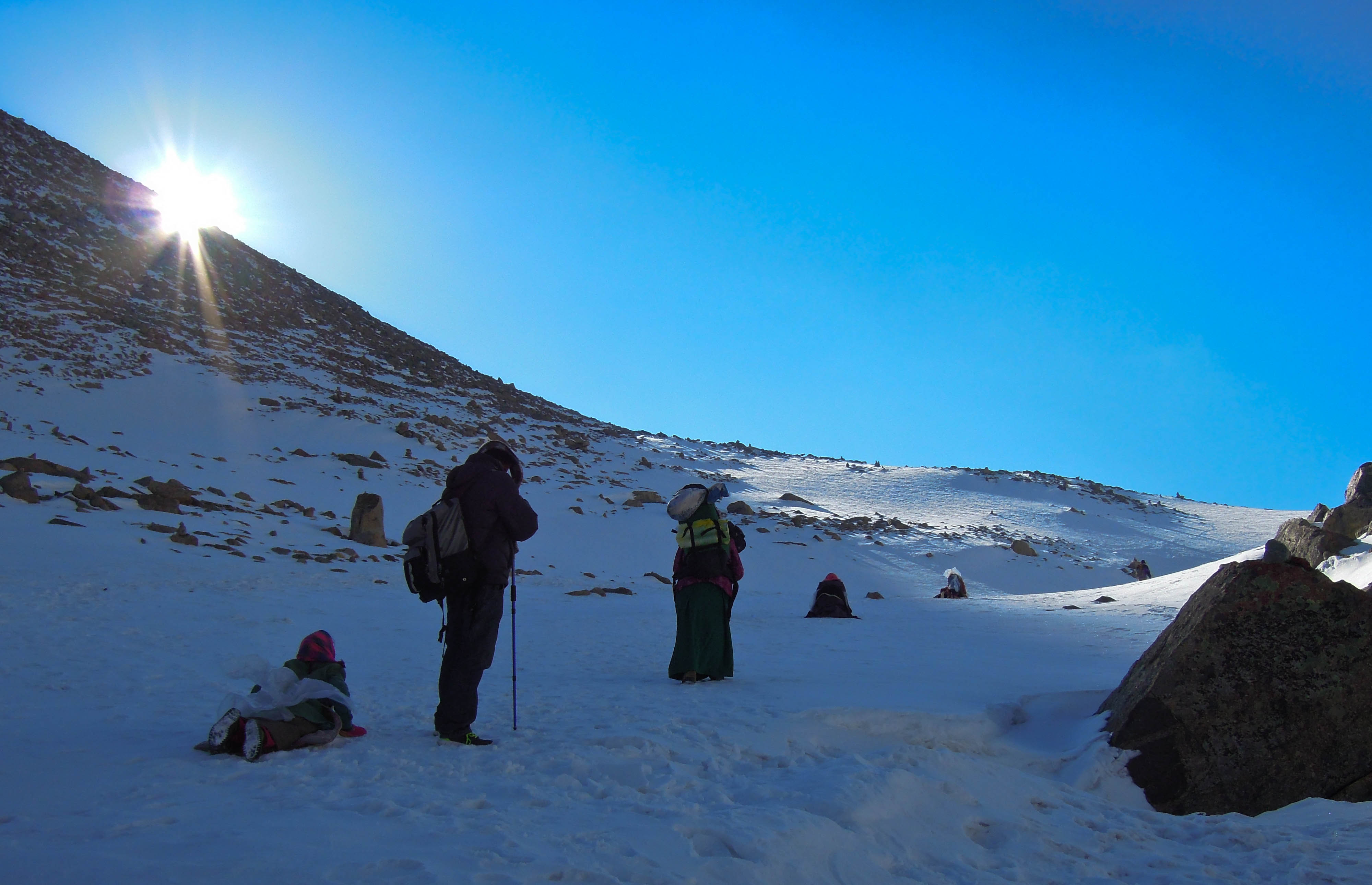
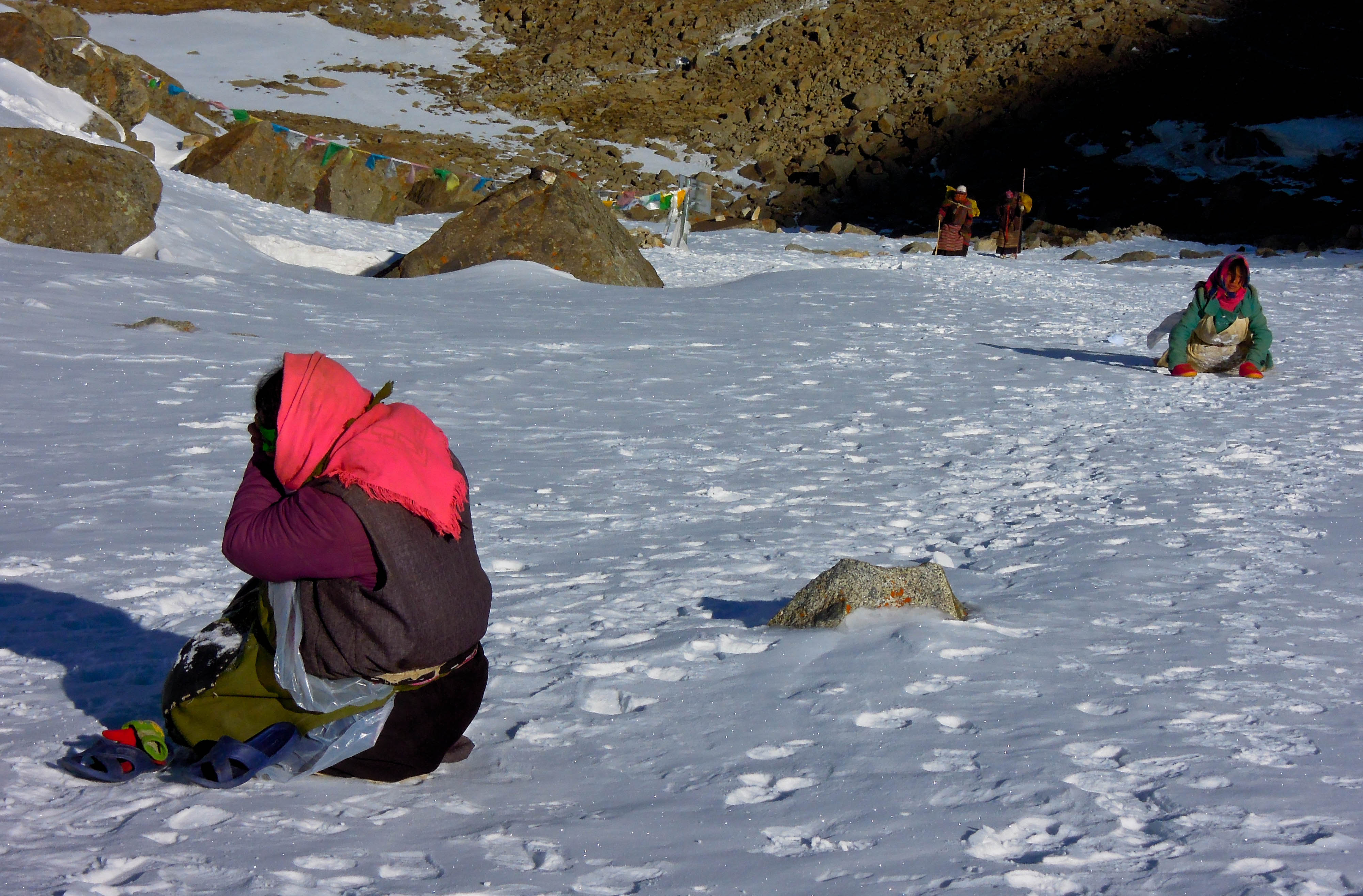
We pass several pilgrims heading up to the pass. Some of them were doing prostrations. I was blown away by the devotion of these simple, sincere people.

Pilgrims heading toward the pass
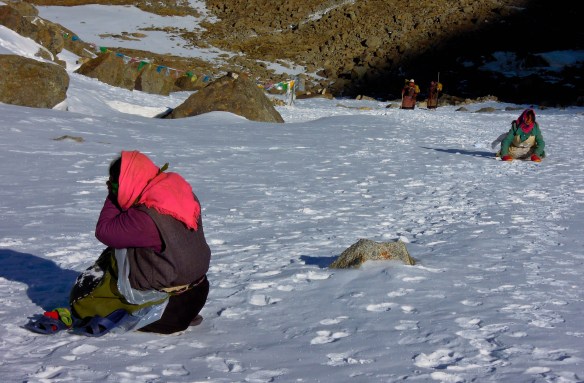
Prostrators taking a break on the way to the pass.

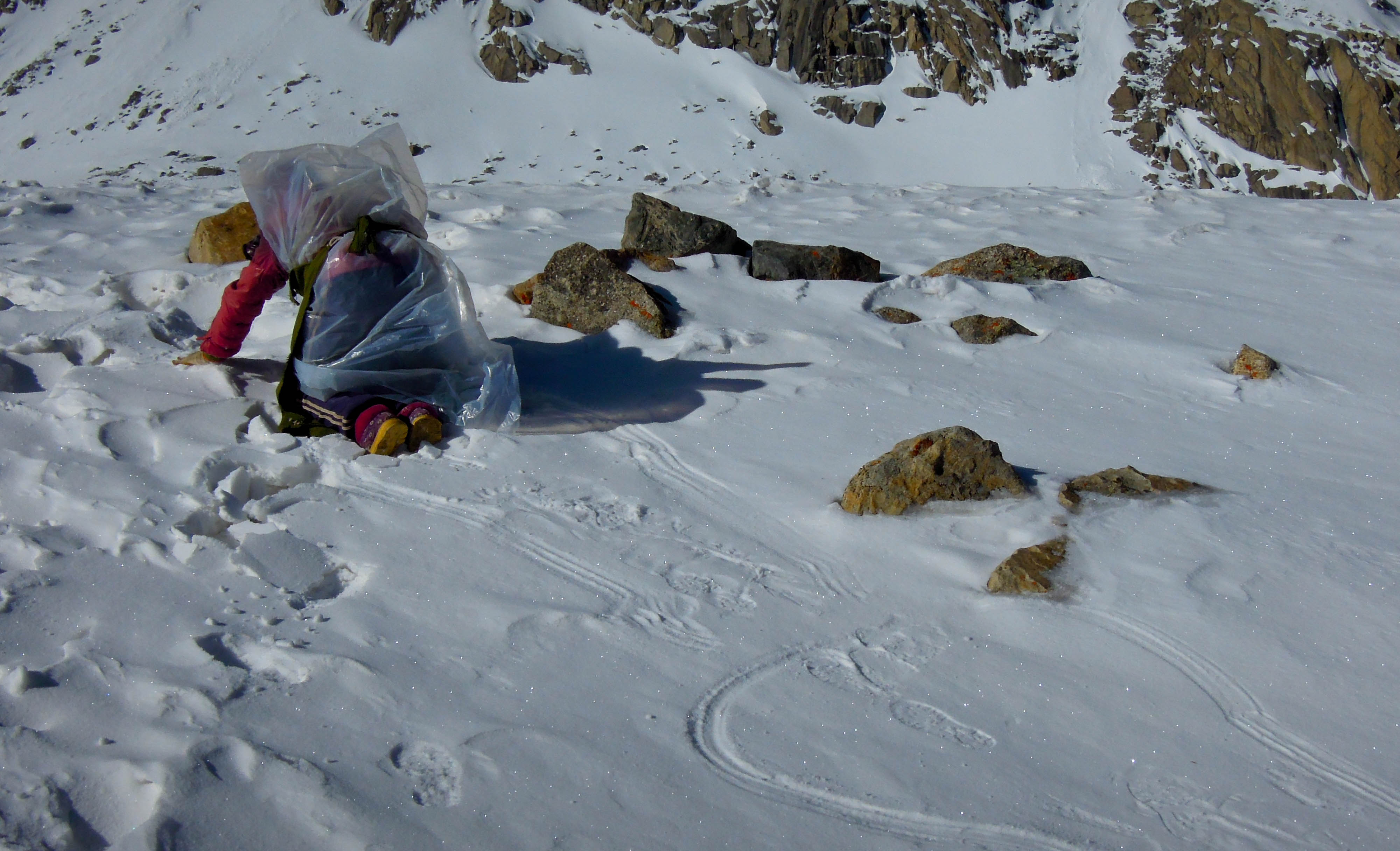
I was particularly impressed with this girl. She looked to be about 13 or 14 years old and was cruising up through the snow doing full prostrations. You can see the marks in the snow from her hands. They will mark on the ground the extent of their reach, then stand up, walk to that point and prostrate again. I have a short video clip of her on my Flickr photostream.

Young girl doing prostrations

Stephen and I would take about 30 steps, then stop for a moment to catch our breath. As we got higher that became 20 steps, then rest, then 15 steps and rest. We were certainly feeling the altitude. The highest I had been before was a mixed ice and rock climbing ascent of Mt. Meeker in Rocky Mountain National Park in Colorado. That peak is 13, 911′.
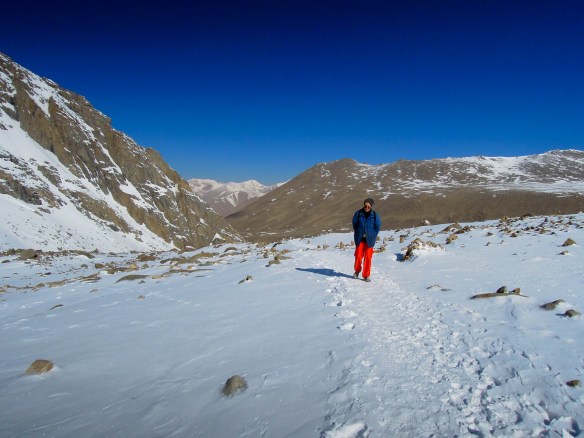
Stephen heading up toward the pass

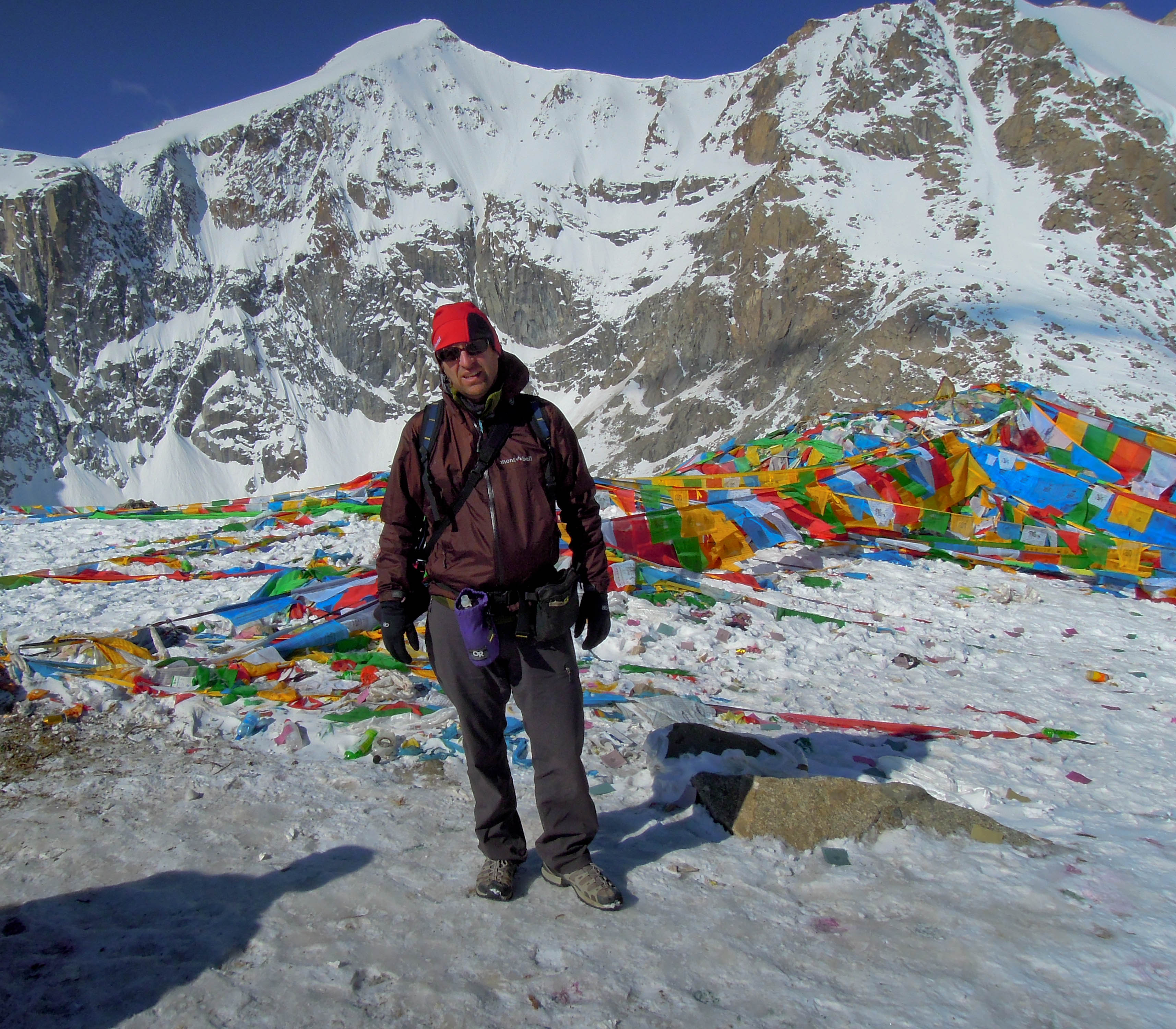
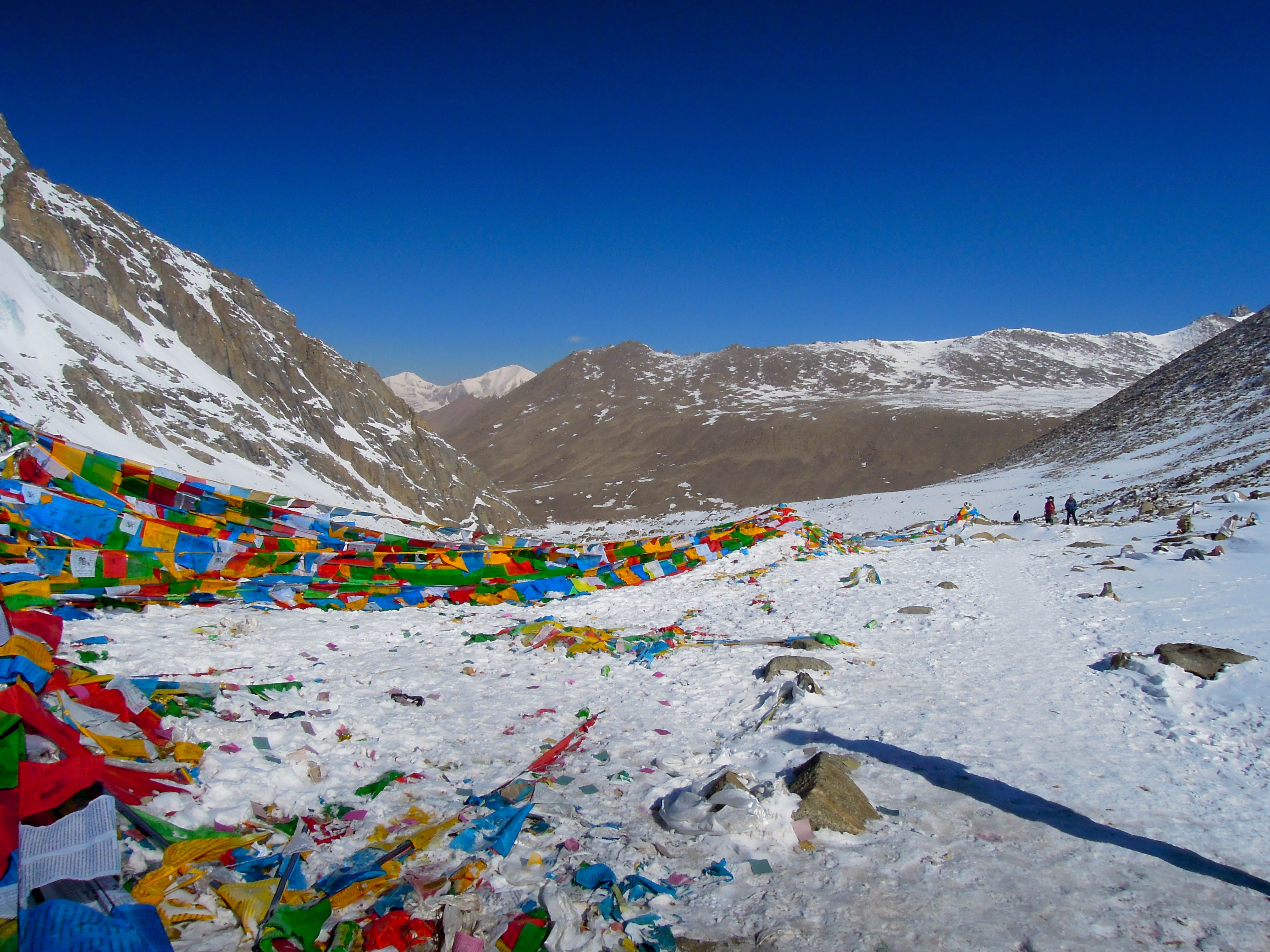
We finally arrived at the pass covered with prayer flags and the traditional Tibetan white scarves. Brad had arrived a few minutes before us. There was one other Western guy there as well as a few Tibetan pilgrims. It took us 2.5 hours from our camp. We felt pretty good about that.
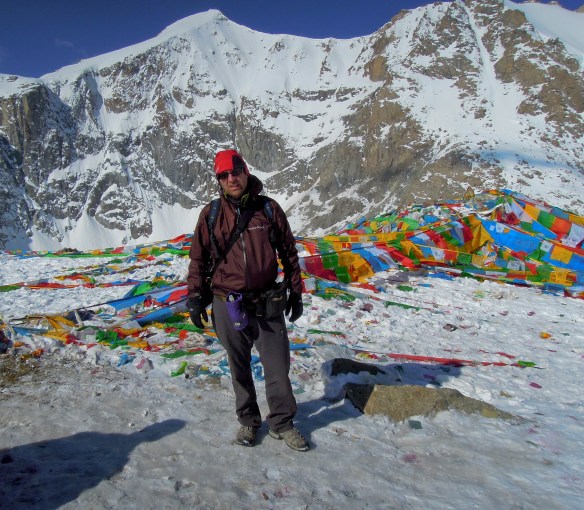
Matt on Drolma La Pass, 5723 m (Brad’s altimeter read 18,550′)
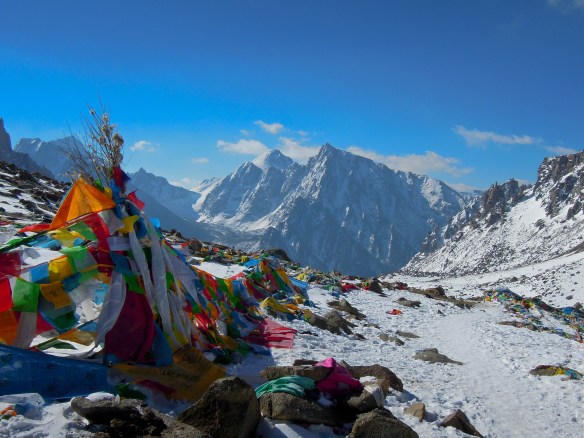
Prayer flags on Drolma La Pass
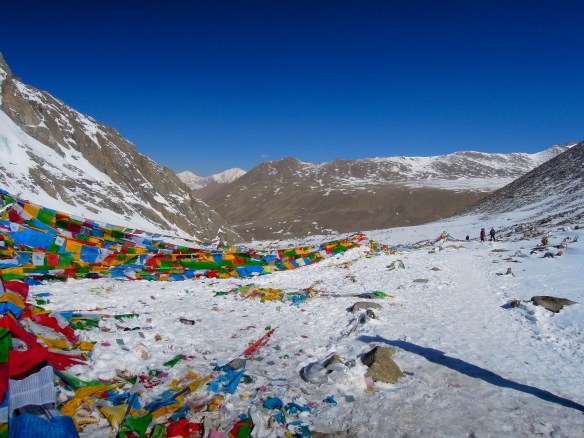
Looking back the way we had come

We had first seen this pilgrim at Drirupuk Monastery. He had a huge prayer wheel that he was constantly spinning. He looked to be in his 60’s but was probably younger than that as Tibetans typically look older than they really are.
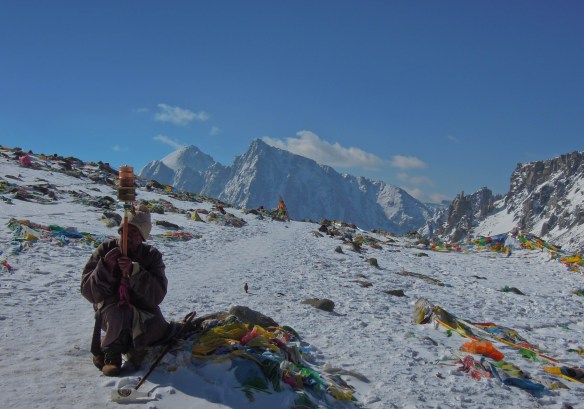
Old pilgrim on Drolma La Pass

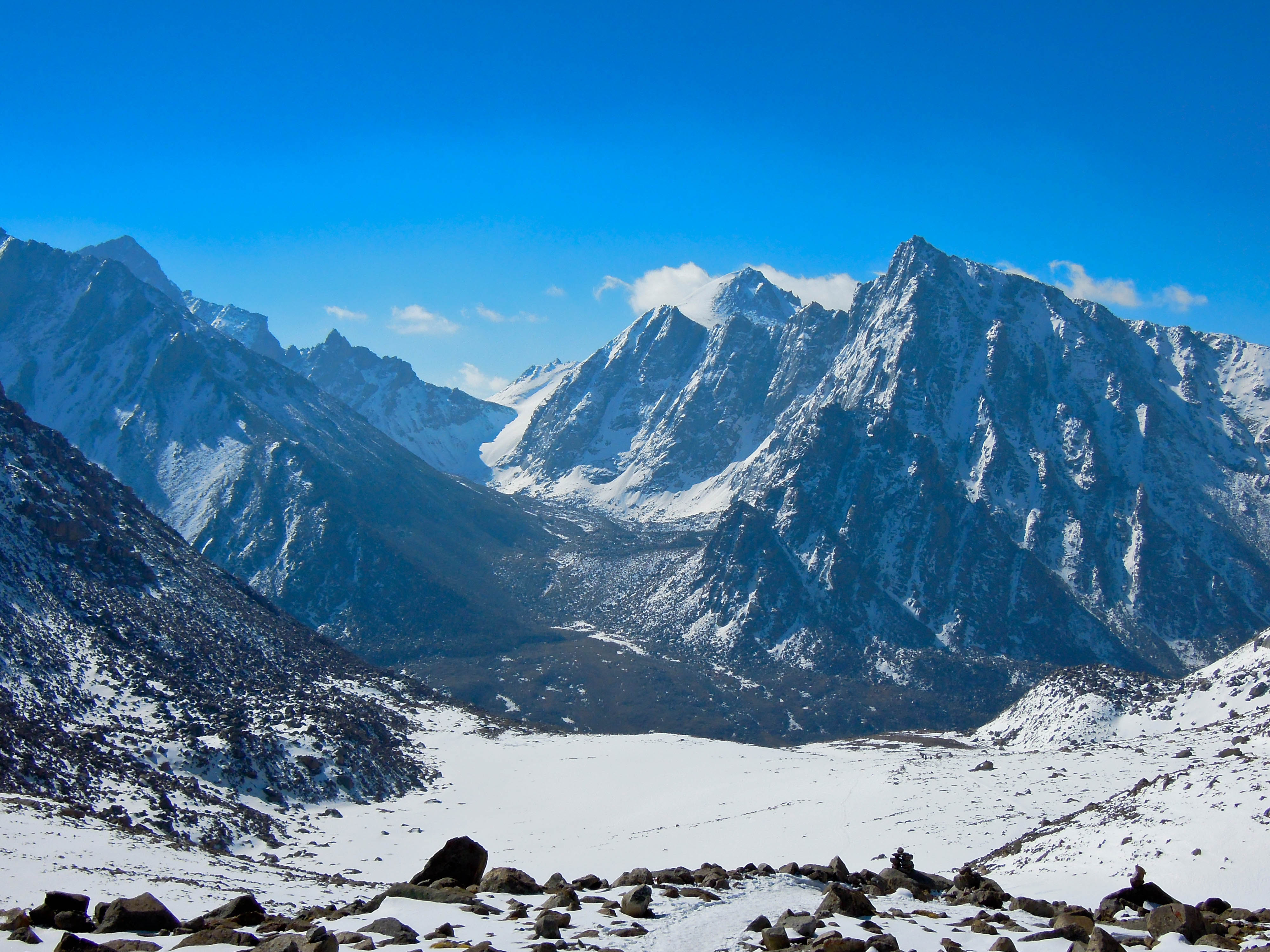
The views on the other side of the pass were spectacular. The mountains really were amazing. The photos do not do them justice.
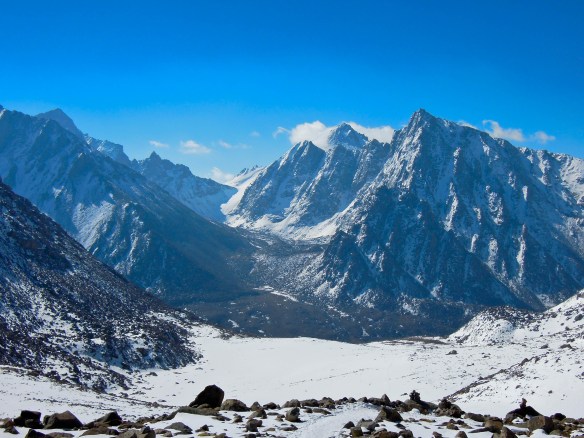
Unnamed mountains on the other side of the pass

The trail heading down from the pass was steep and very icy. It was pretty treacherous in places. I love the downhills and like to hike fast, so I left Stephen and Brad and headed down.

Heading down the icy trail

Pretty soon we were out of the snow and on very steep rocky terrain descending into another valley heading south. Where the steep section met the valley floor I decided to stop and take a break and eat a snack.

One thing that I did not anticipate on this trip is that with high altitude comes less oxygen to your extremities. We spent about 7 nights about 15,000′ and I had cold feet every night. I even wrapped my feet in my puffy jacket inside my sleeping bad and I still had cold feet. This was really strange because I seldom have cold feet, even ice climbing and winter camping. My hands were fine except for the day we hiked over the pass. I was wearing a pair of midweight windstopper fleece gloves and my hands got very cold. It was quite windy up there which contributed to it. When I stopped to take a break, I was down out of the wind and it was much warmer. When I took off my gloves I was surprised to see that my pinky fingers were a bit purple and swollen. After about an hour they were fine again.
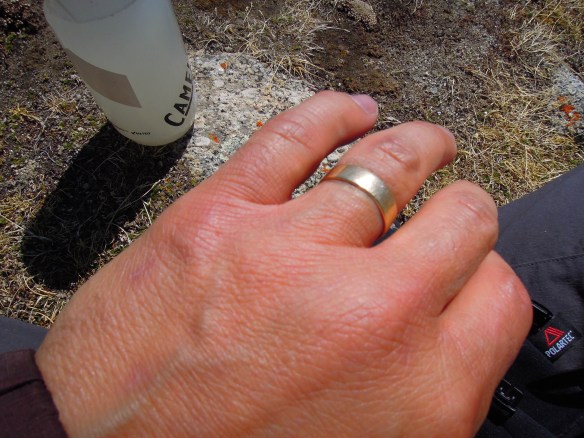
Cold hands

Stephen, Brad, and the rest of our group including our guide showed up shortly and we walked a short distance to a tent guest house. We decided to wait here for the Serpas and yaks. Tenzin wanted to make sure they knew where we would be camping. We relaxed inside for about an hour until they finally showed up. We then took off down the valley. We were under the impression that it would be a short distance to our destination, which was the monastery at Dzutrulpuk, the sight of Milarepa’s cave. Milarepa was an 11th century poet and  Buddhist yogi.

The trail followed a gentle valley along a peaceful river, grassy fields, and clear streams. Our short hiked turned into hours as we trudged down the valley.
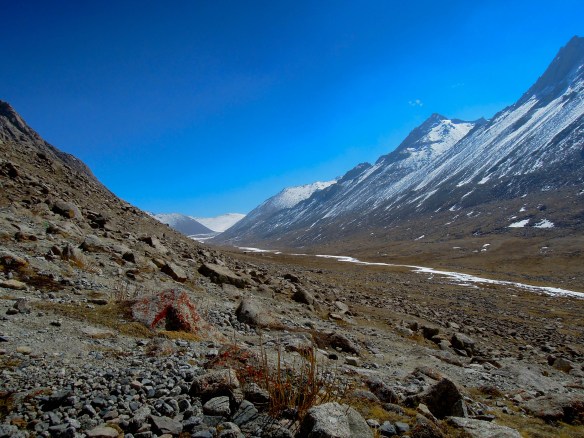
We turned right and headed down this gentle valley
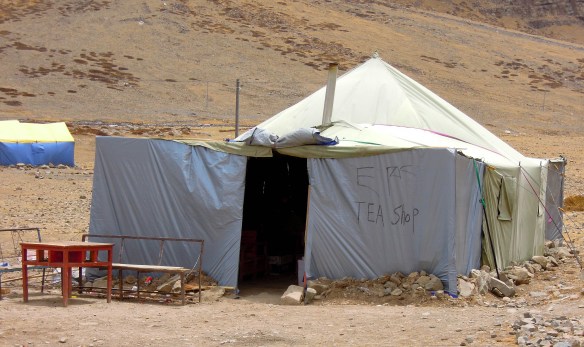
Tent teahouse along the kora route
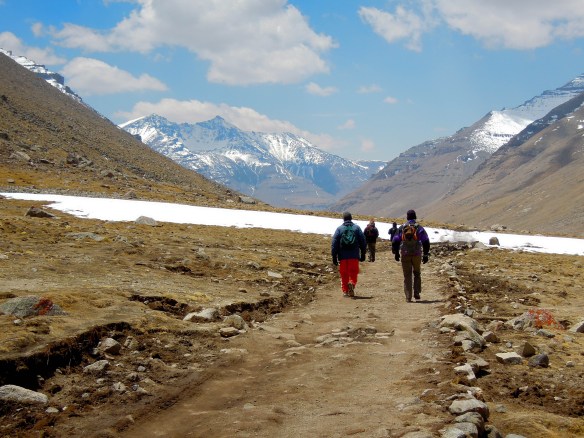
Hiking down the valley

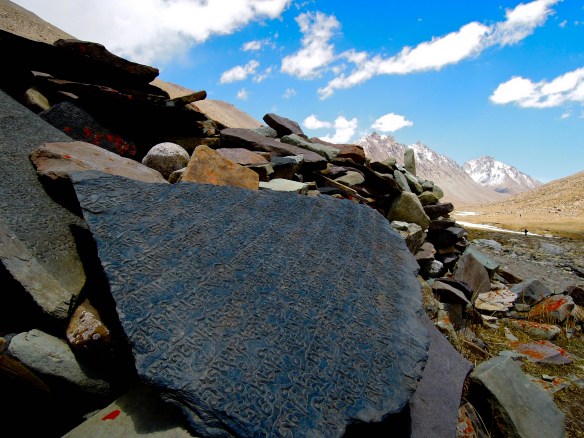
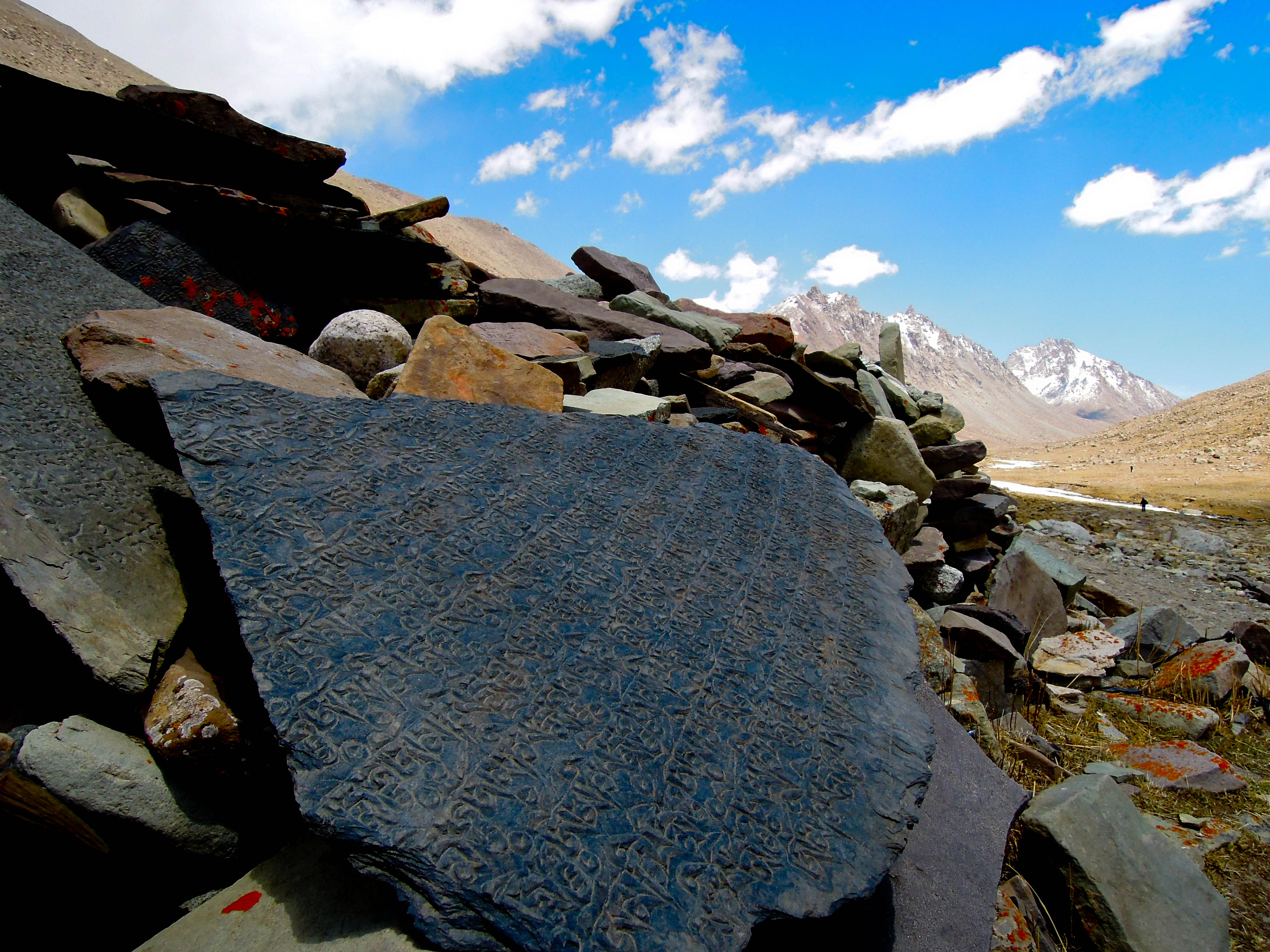
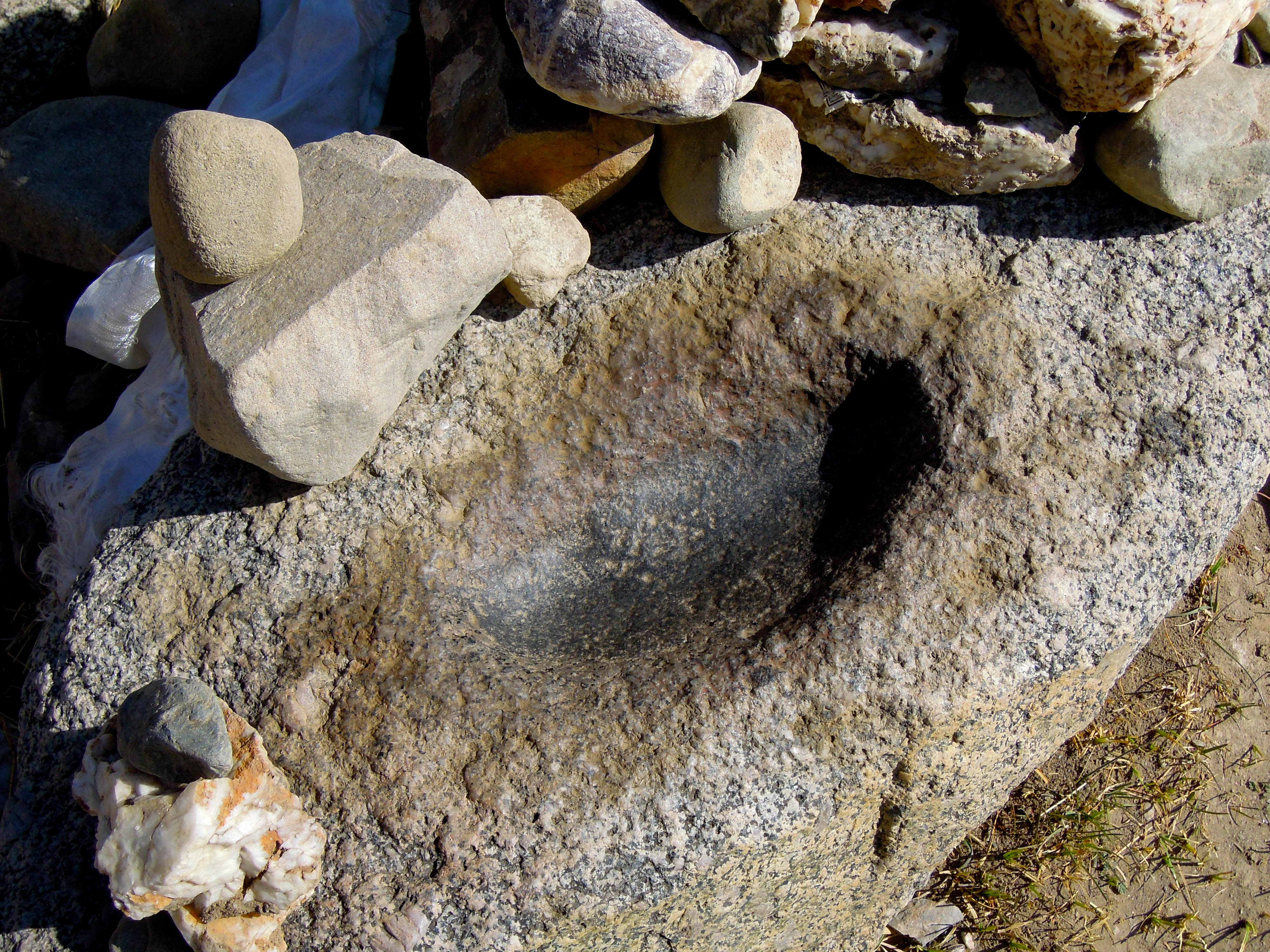
Mani stones

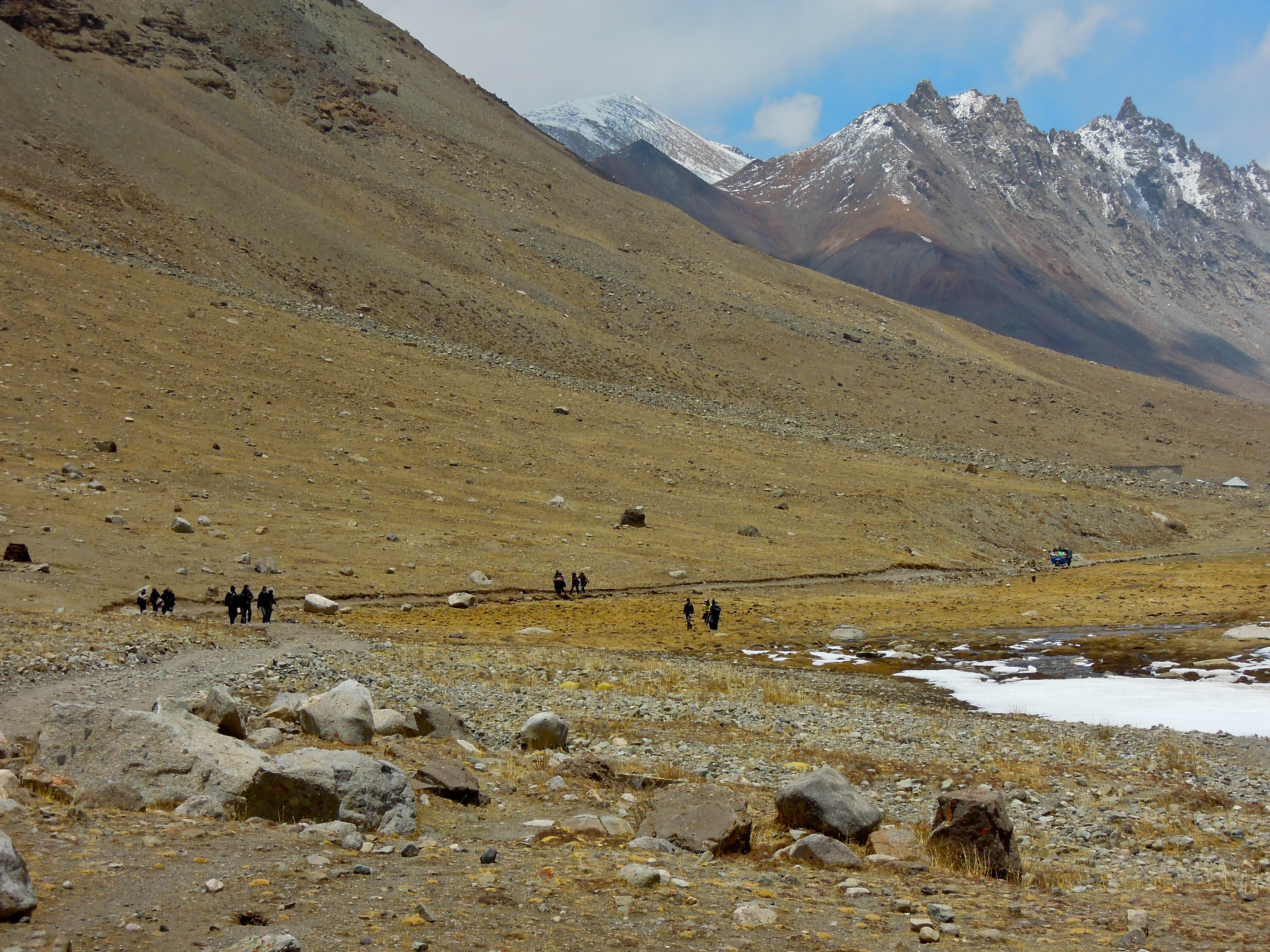
We continued to encounter pilgrims also hiking down this valley toward Darchen.
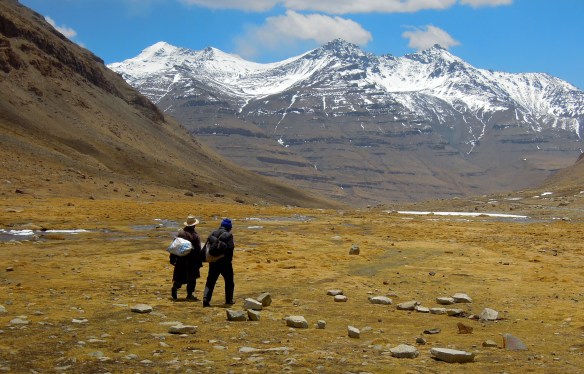
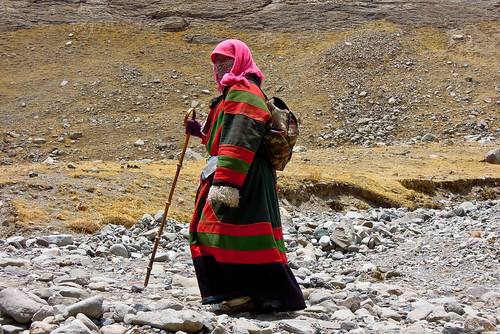
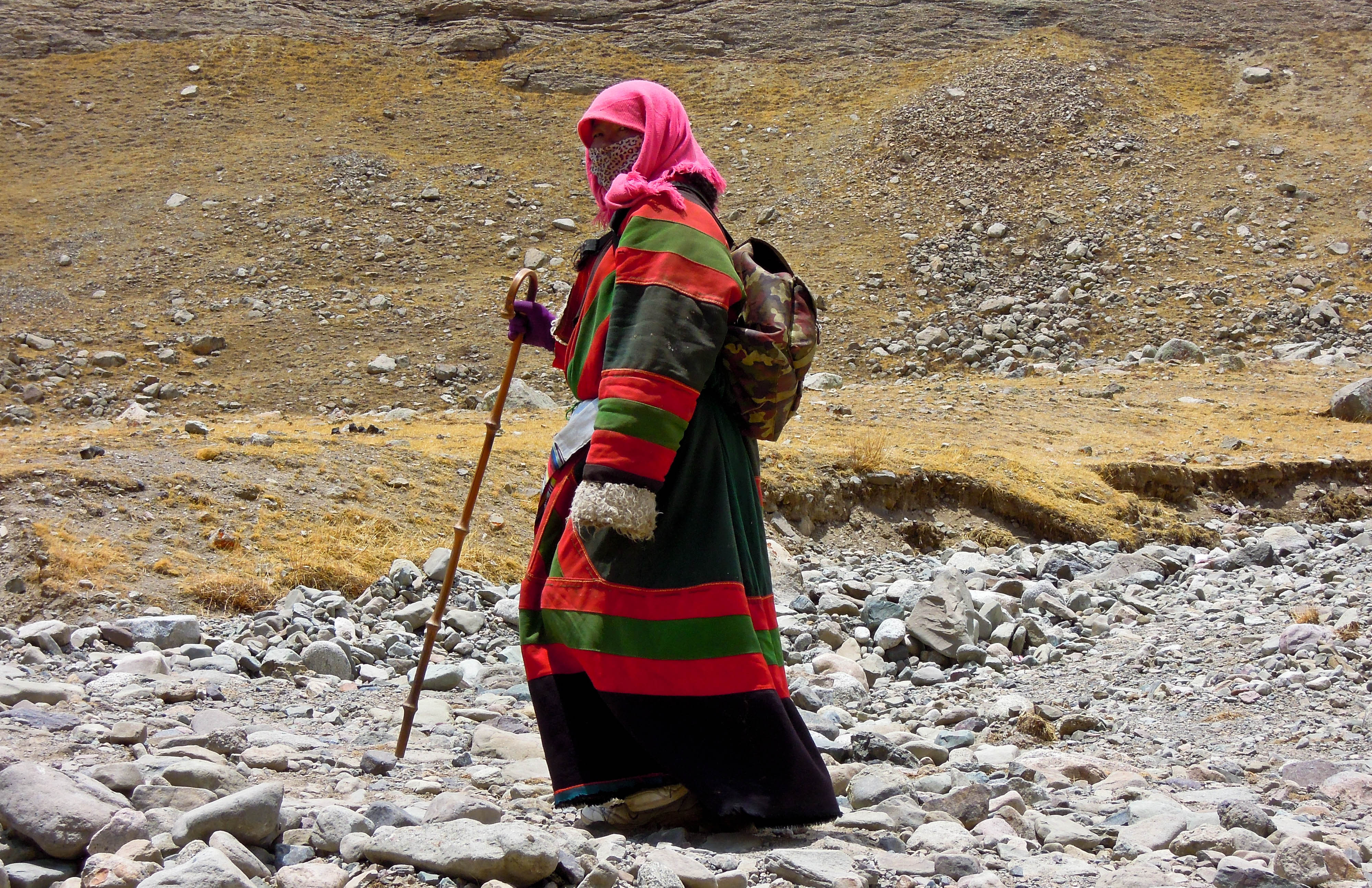
Typical dress of women in Western Tibet
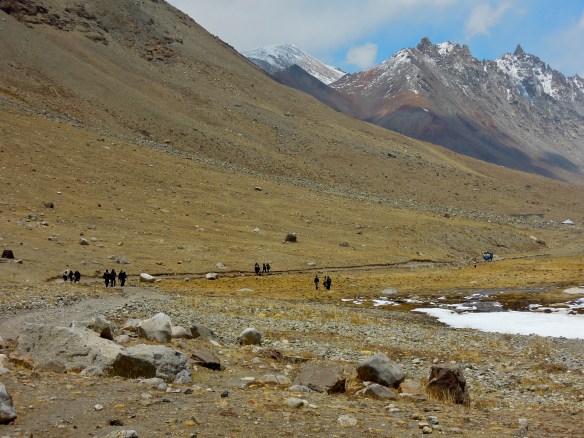
Pilgrims hiking down the valley
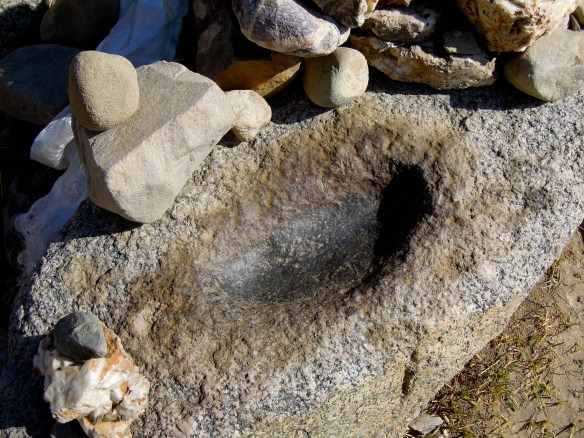
Footprint of an early Buddhist saint

In the afternoon the winds picked up and soon they were roaring down the valley. We came to expect this. It seems that every afternoon the winds would pick up. We experienced this all over the Tibetan Plateau. With the wind it got pretty cold. We decided to wait for the yaks as we were not exactly sure where we would be camping for the night.
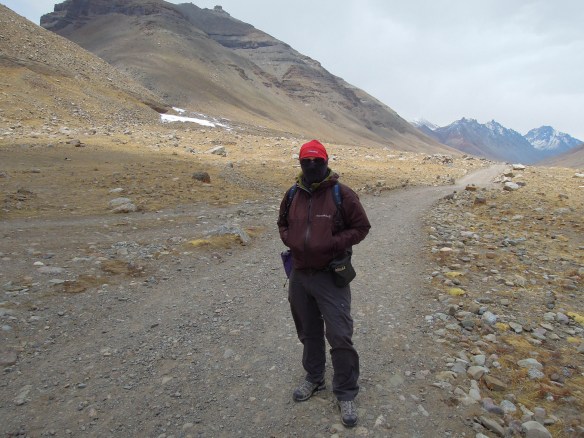
Bundled up against the wind and cold

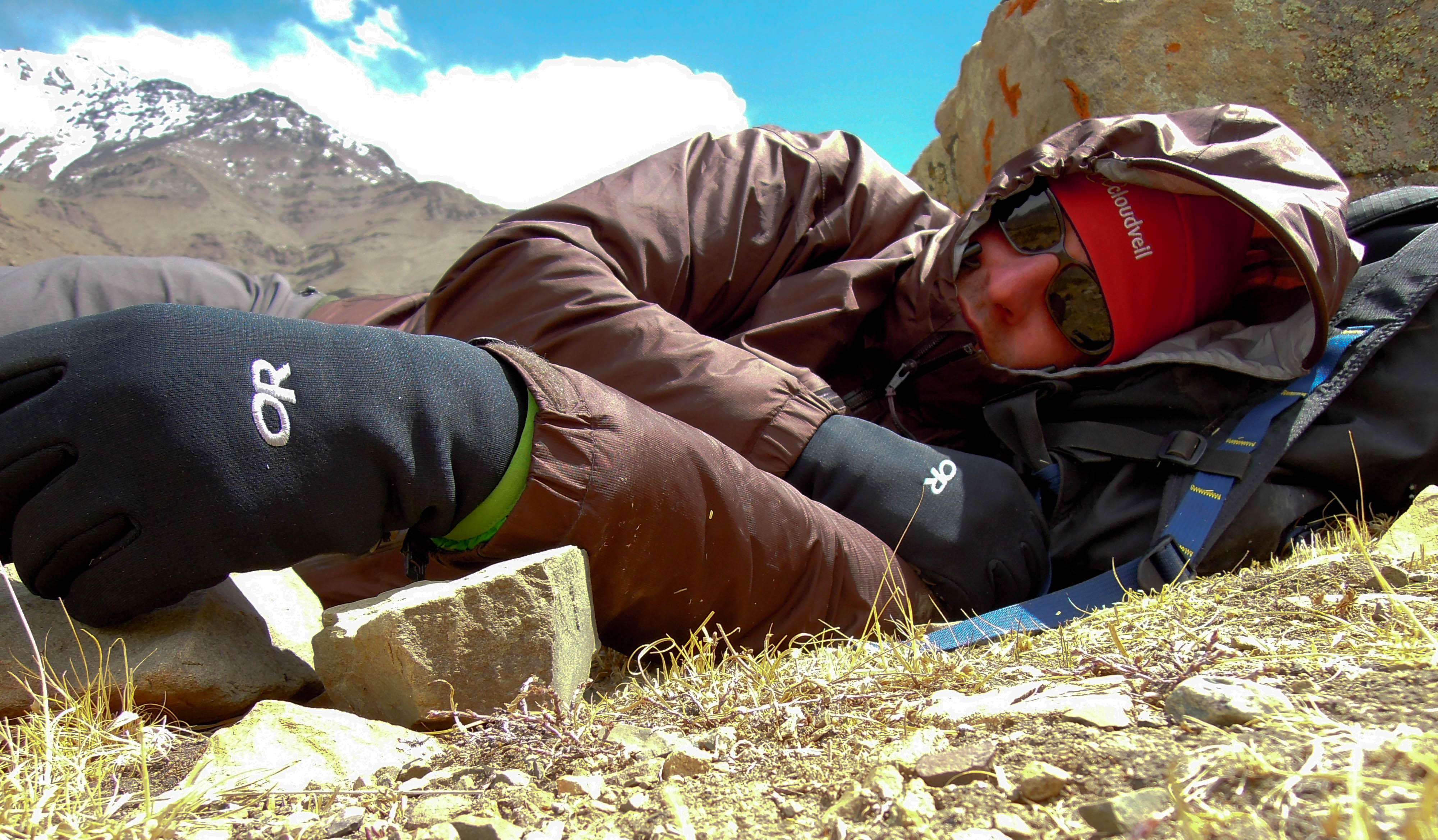
As we sat waiting it got pretty cold. I put on all my warm weather clothing, which consisted of a long sleeved base layer, fleece hoodie, Patagonia Nano puff jacket (a lightweight puffy jacket), and a hardshell jacket. I found an large rock, curled up behind it to stay out of most of the wind and took a nap. We ended up waiting about two hours for the yaks.
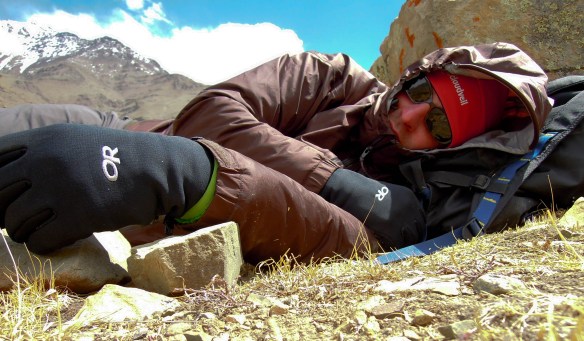
Trying to stay warm and nap

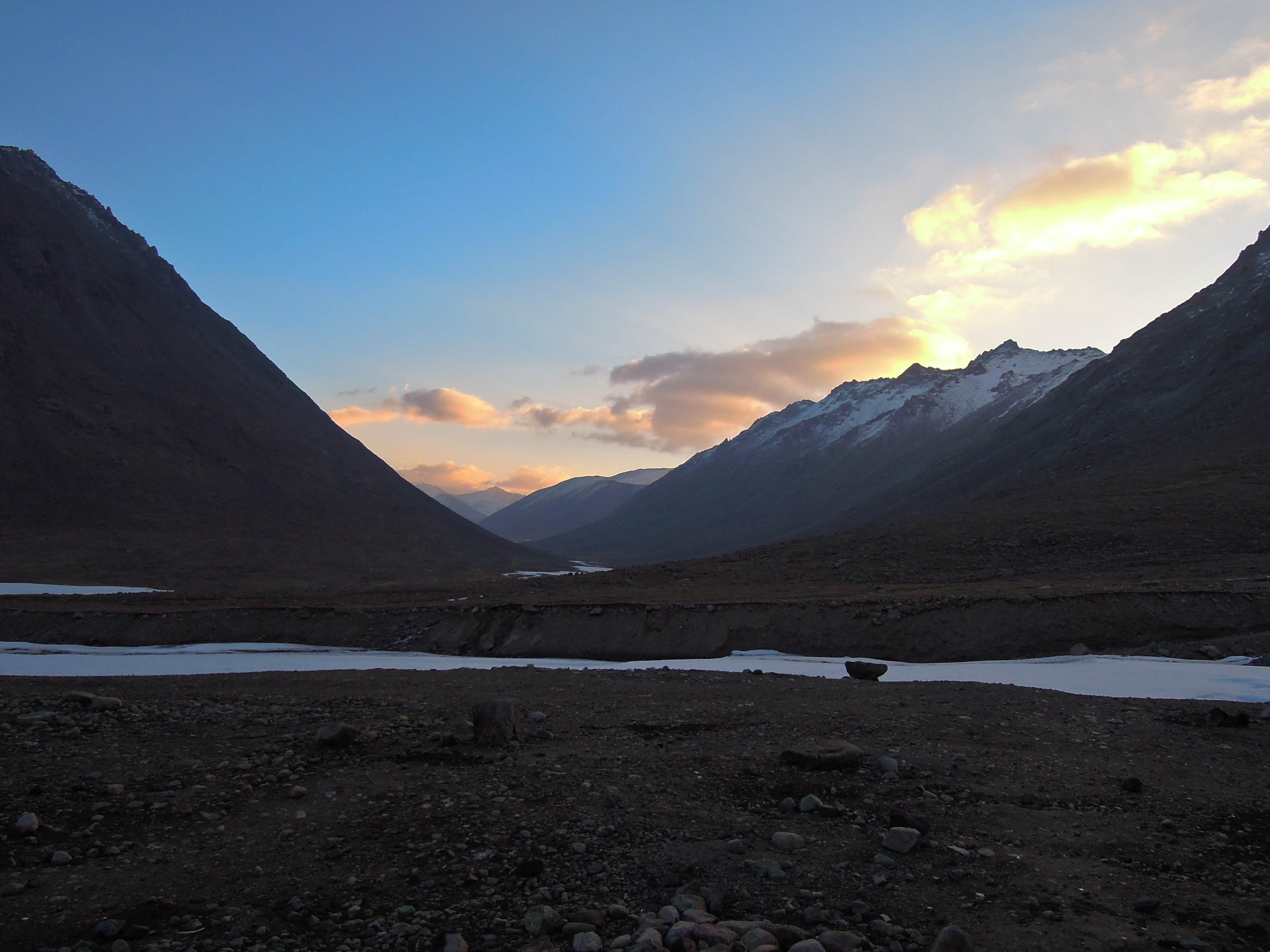
We got camp set up, ate dinner, and went to bed. Total distance for the day was jsut under 23 km. The following day was a short 2-3 hour (about 10 km) hike to the mouth of the valley where we were met by the Landcruisers and drivers. We returned briefly to Darchen, then began the long drive back across the Tibetan Plateau.

It was a very memorable trek. I was most impressed by the devout pilgrims making the circumambulation and the spectacular scenery. It really was breathtaking (literally and figuratively). I have newfound respect for high altitude mountaineers. It is really tough breathing up there and we were only hiking on a trail. I have spent most of my life climbing and I can’t imagine difficult technical climbing at high altitudes. Pretty amazing. The wild landscape and the people of Tibet left a deep impression on me and I hope to return someday.
Mt. Kailash Kora: Western Tibet (Part 1)

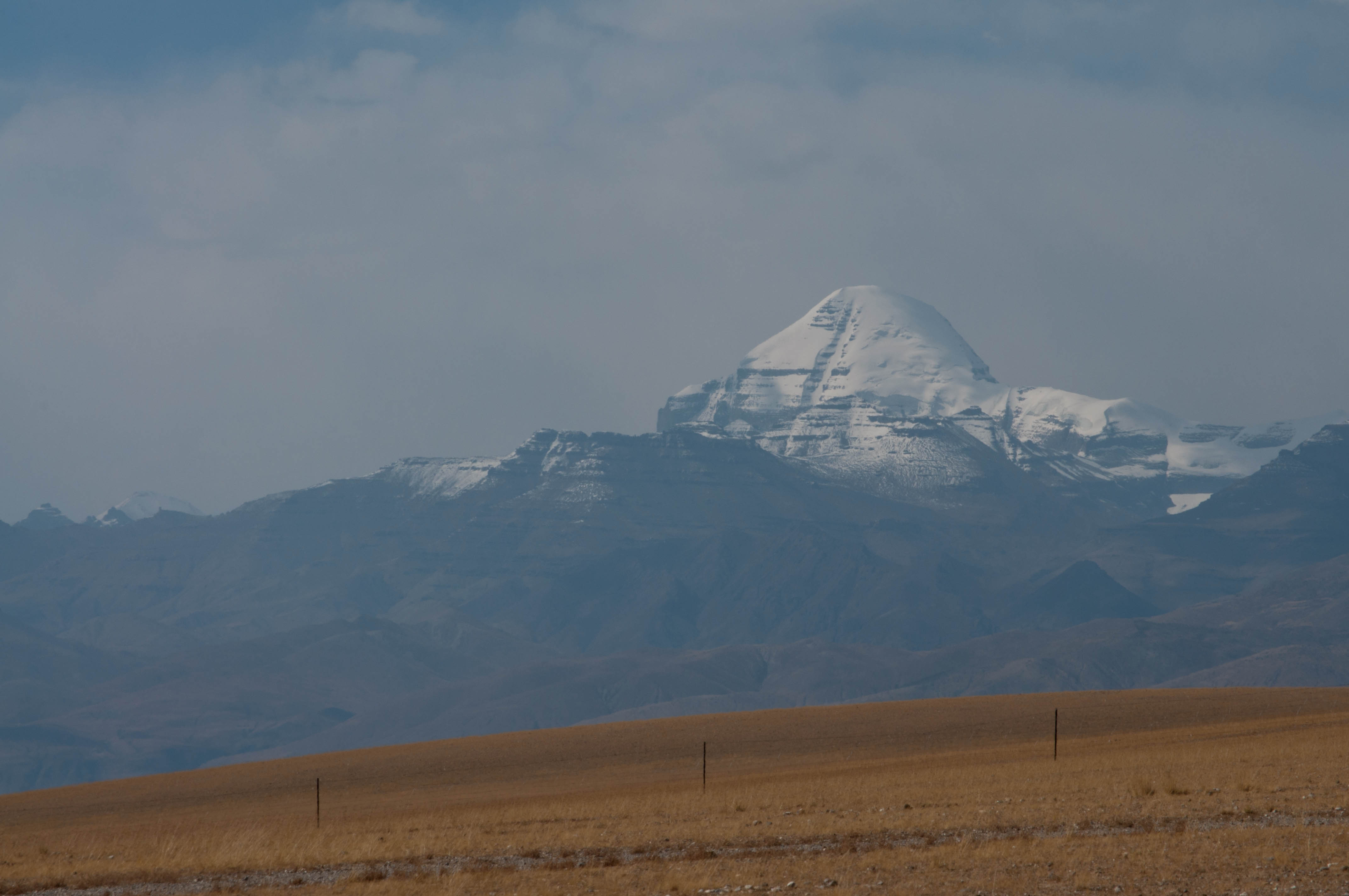
North Face of Mt. Kailash

For most of the month of May (2012) I was traveling in Tibet. The highlight of the trip was a kora (circumambulation) around Mt. Kailash (6658 m, 21,843′), or the Tibetan name Gang Rinpoche (“Precious Snow Mountain”), in Western Tibet. This consisted of hiking about 50 km in three days. The high point was Drolma La Pass at 18,550′.

Just getting to Kailash was quite an adventure, consisting of driving overland from Lhasa in Toyota Landcruisers for four days covering 1436 km (892 miles). I’ll save that for another post. In this post I will describe the actual kora around Mt. Kailash.

Mt. Kailash is a sacred mountain, considered the heart of the world and the headwaters of four major Asian rivers (the Indus north, the Brahmaputra east, the Karnali, and the Sutlej west). For Tibetan Buddhist, Hindus, Jains, and the Tibetan indigenous religion Bon, it is considered the most holy of pilgrimage sites. It is said that a kora around Kailash will erase your sins, and 108 koras breaks the cycle of rebirth and assures one of nirvana at death. Buddhists, Hindus, Jains, and believers of Bon all converge on this holy mountain to make the circumambulation. Young and old alike practice their devotion by making this pilgrimage. We saw pilgrims from all over Tibet making the long, arduous journey to Kailash.

First look at Mt. Kailash, the south face, on the way to Darchen.

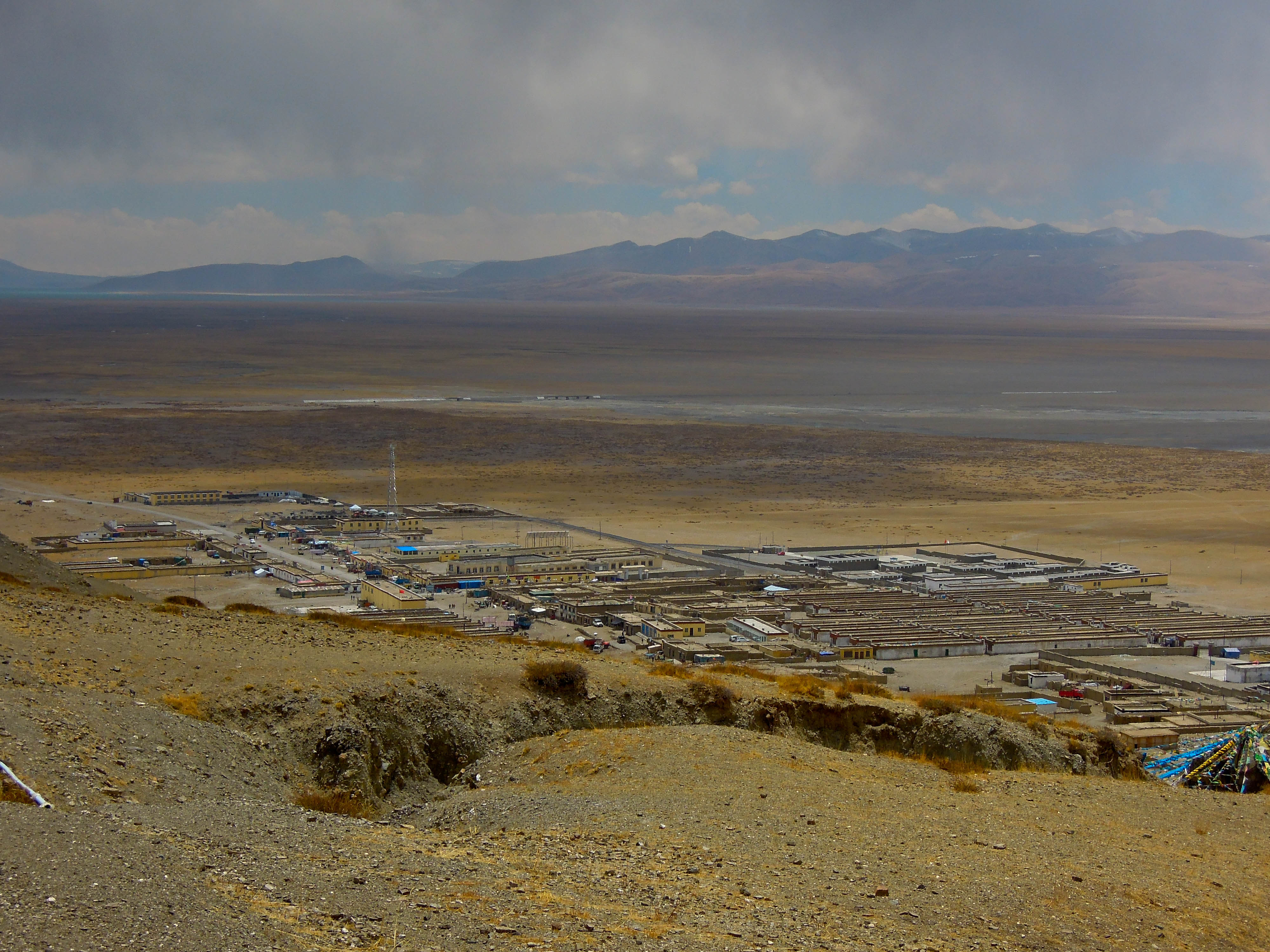
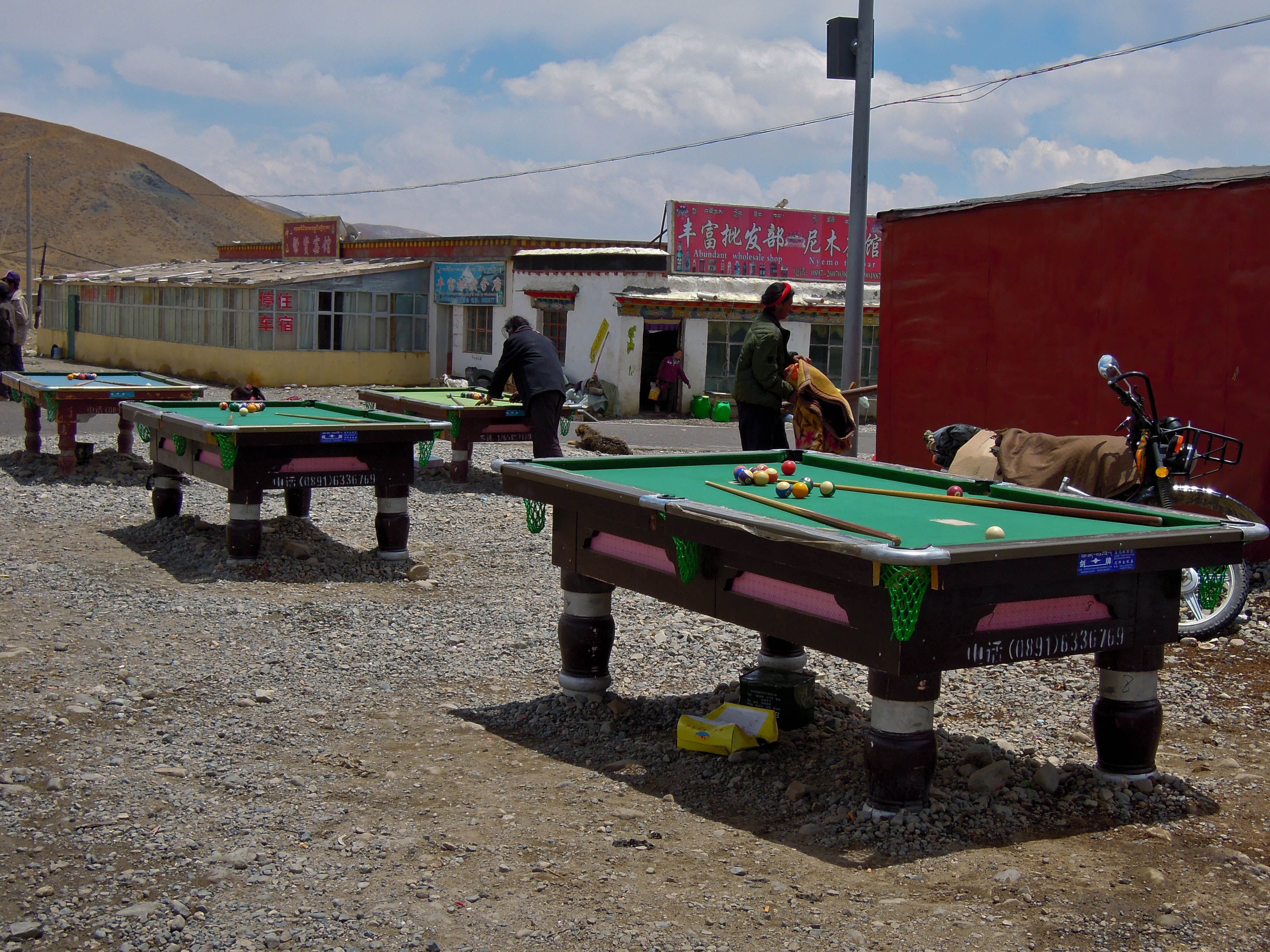
The starting point of the kora is the small, nondescript Tibetan town of Darchen. It consists of two streets, one of which is paved for about one and half blocks, then deteriorates into a rough dirt road.

Main Street in Darchen

The upper part of town

Darchen from above

Roadside entertainment in Darchen

We arrived in Darchen in the afternoon and stayed in a very rustic Tibetan guesthouse. It consisted of a bare concrete room with four single beds, a single lightbulb, a washbasin, and a thermos of hot water. Typical Chinese pit toilets were located a short walk across the courtyard. For those of you who are familiar with Chinese squatter toilets know that they can be very smelly, to the point that it is difficult to breathe when doing your business. Well, try not breathing in a very stinky, dirty pit toilet at 15,000′. Not a simple task.

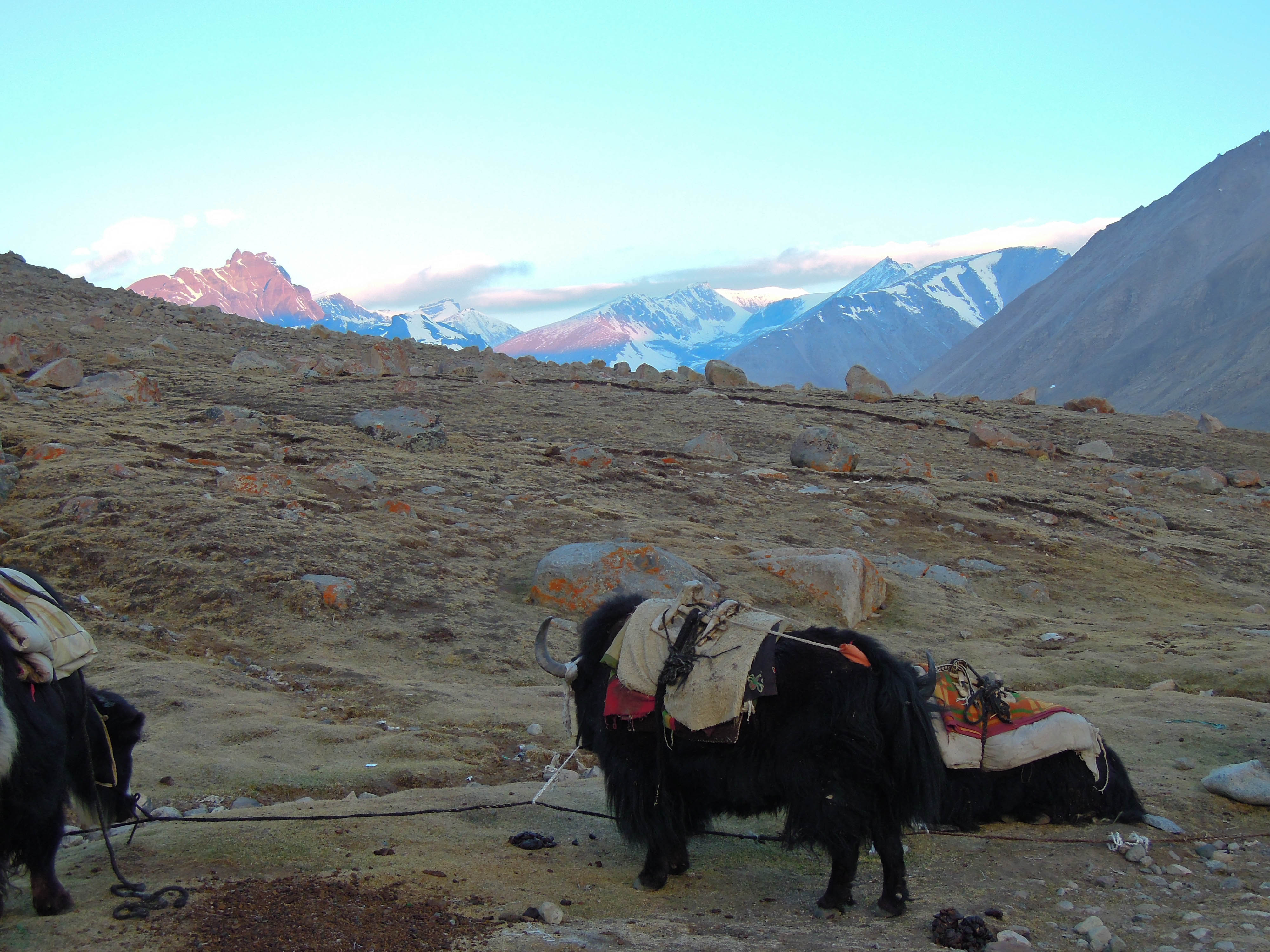
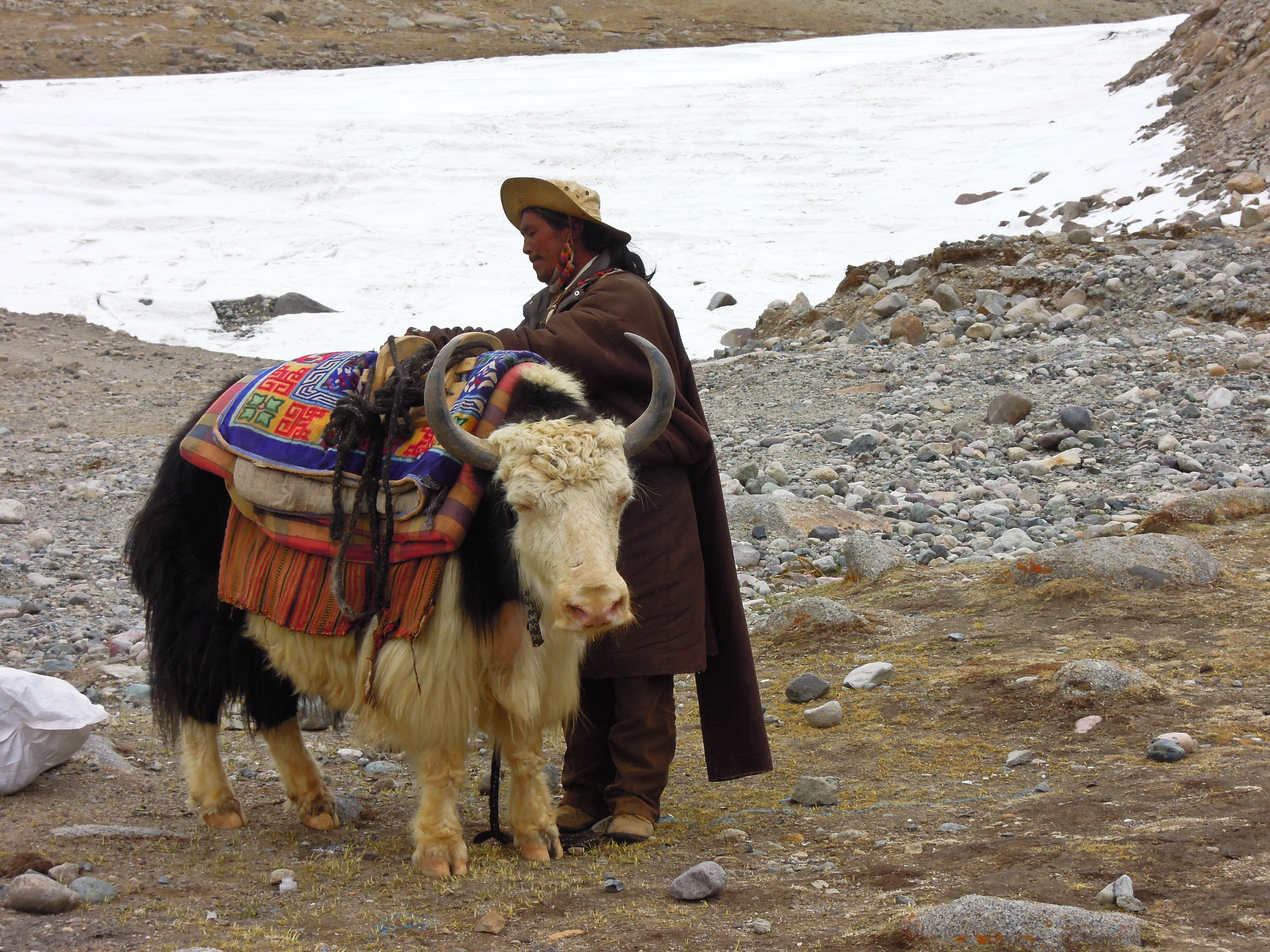
We ate in the Tibetan teahouse located at the guesthouse. The next morning, five of us set off for the Kailash kora. Traveling in Tibet requires that you have a guide with you at all times. Our guide was a thirty something Tibetan man named Tenzin. He was a very pleasant guy. He knew his Tibetan history and was very attentive to our needs. He was also a devout Buddhist and this kora for him was number 68. He had completed it in as few as 14 hours, and had done full prostrations around the mountain in 8 days (it usually takes 14-16 days). He was pretty hard core. Also traveling with us were four Nepalese young men (2 sherpas, and 2 Newaris) that arranged all our camping gear. In Darchen Tenzin hired three yak herders and 6 yaks to carry our gear. This felt a little funny to me as I have backpacked a great deal in the U.S. and am used to being totally self sufficient and carry my own gear. But this is how it is done in this part of the world.

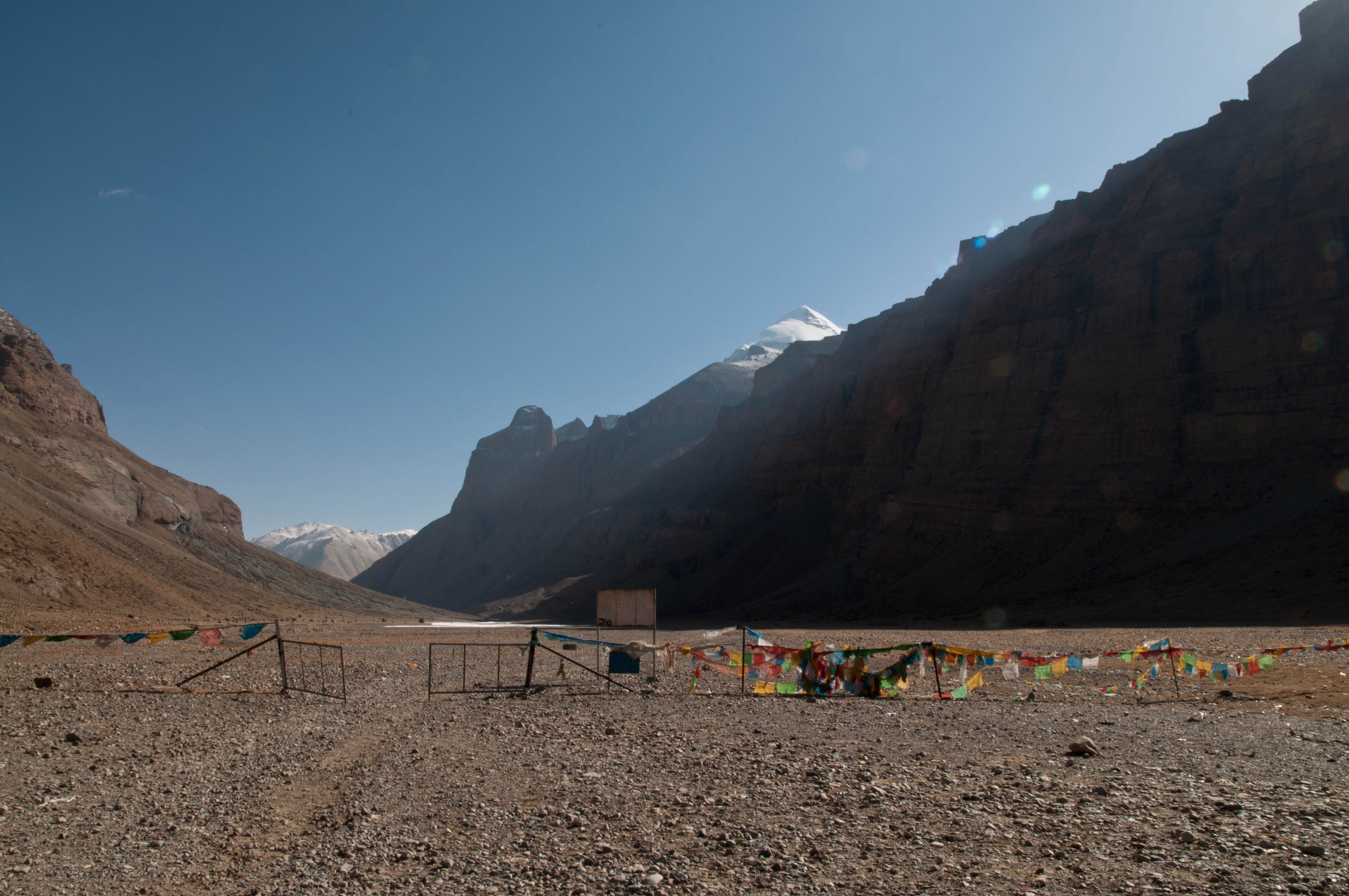
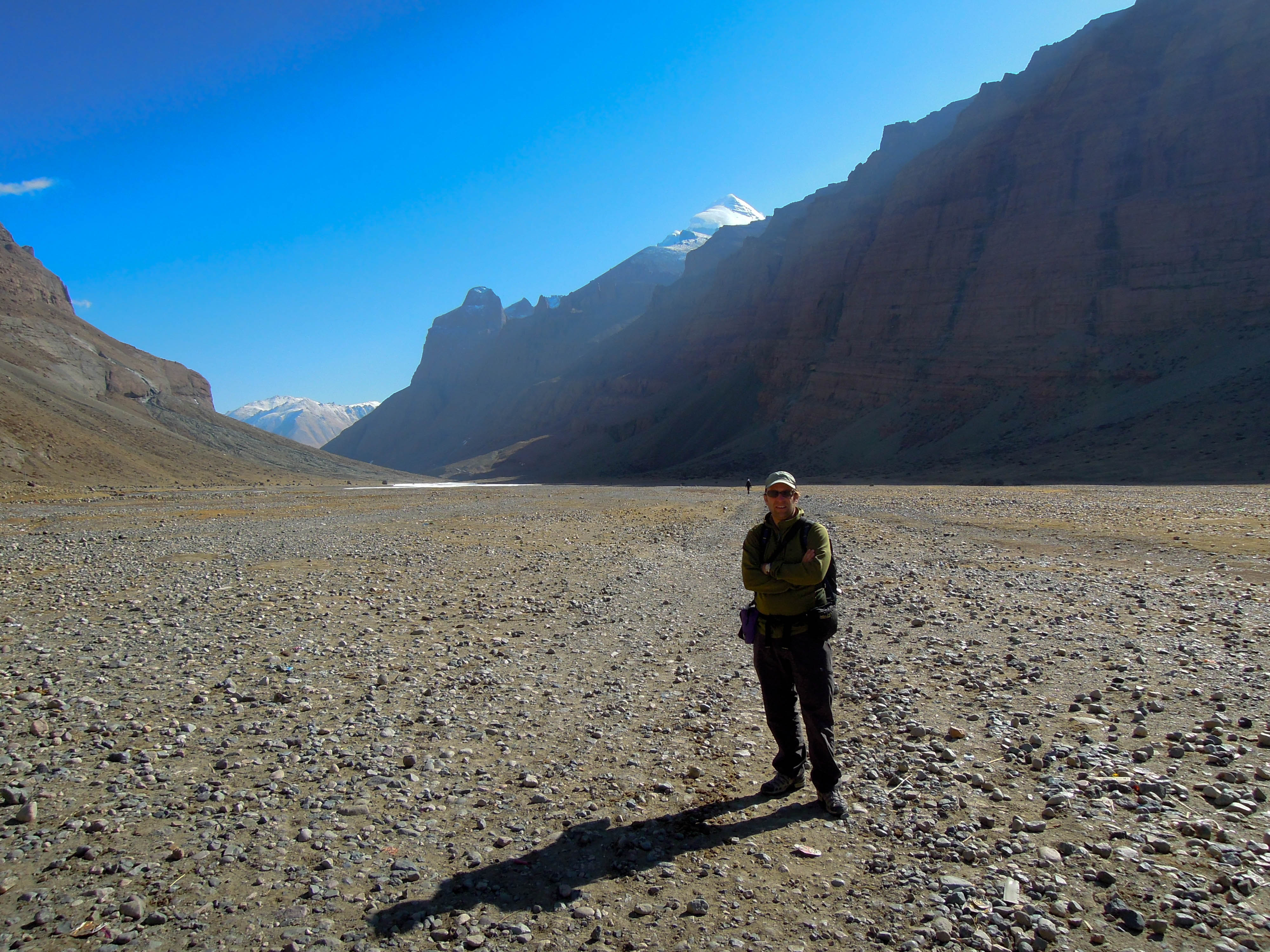
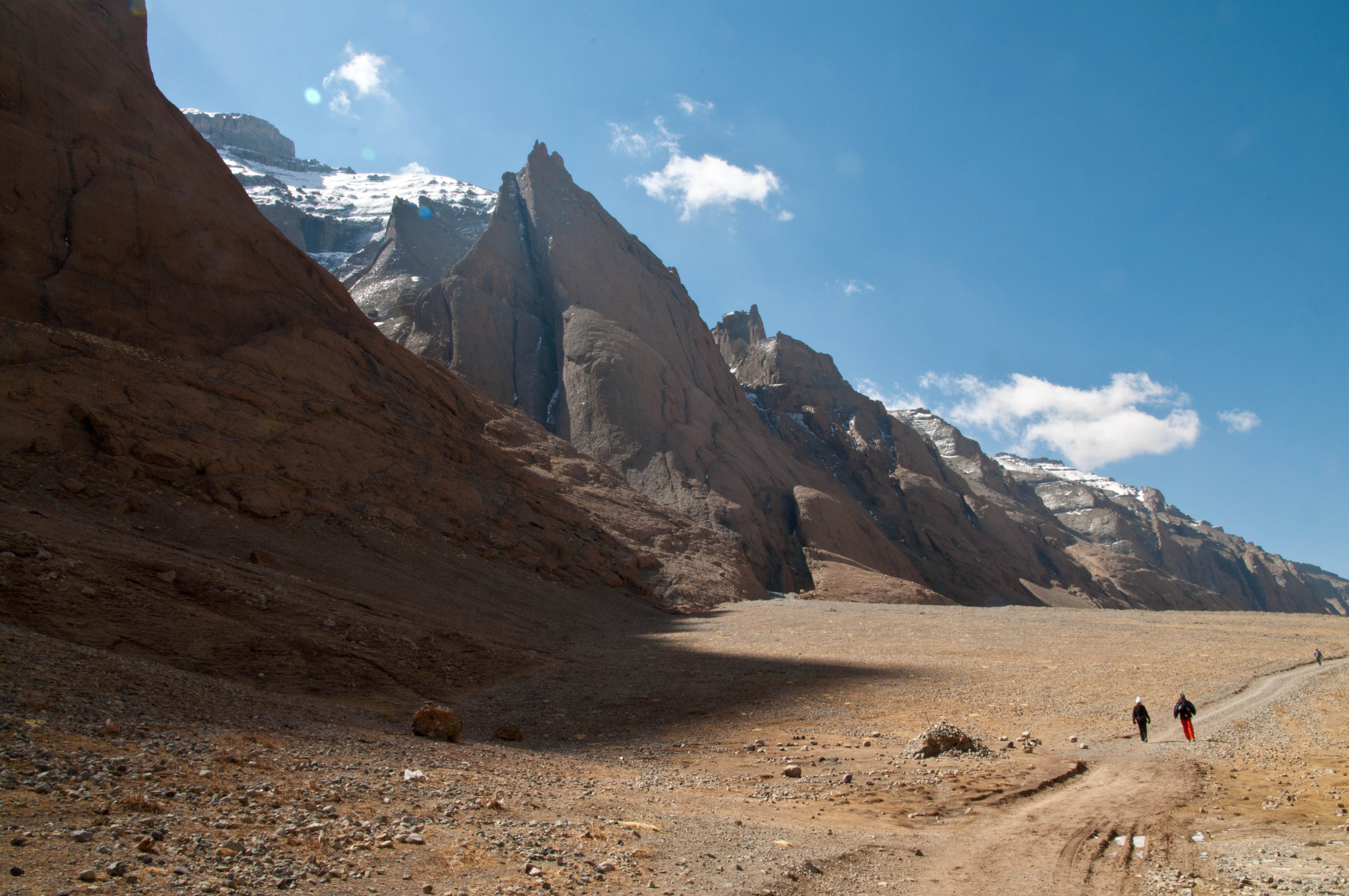
The beginning of the kora was about 3 km from town and began in a wide river valley.

Beginning of the kora

At the start of the kora

We carried day packs, while the yaks carried all our camping gear. My day pack consisted of snacks for the day, warm clothing including a puffy jacket, fleece jacket, and a hardshell jacket, and my photography equipment.

It stared off very easy up this wide valley with little elevation gain. It was a beautiful sunny day. At 15,000’+ it is never too warm, but it was very pleasant. For most of the day I hiked with just a lightweight long sleeved base layer and a fleece hoodie.
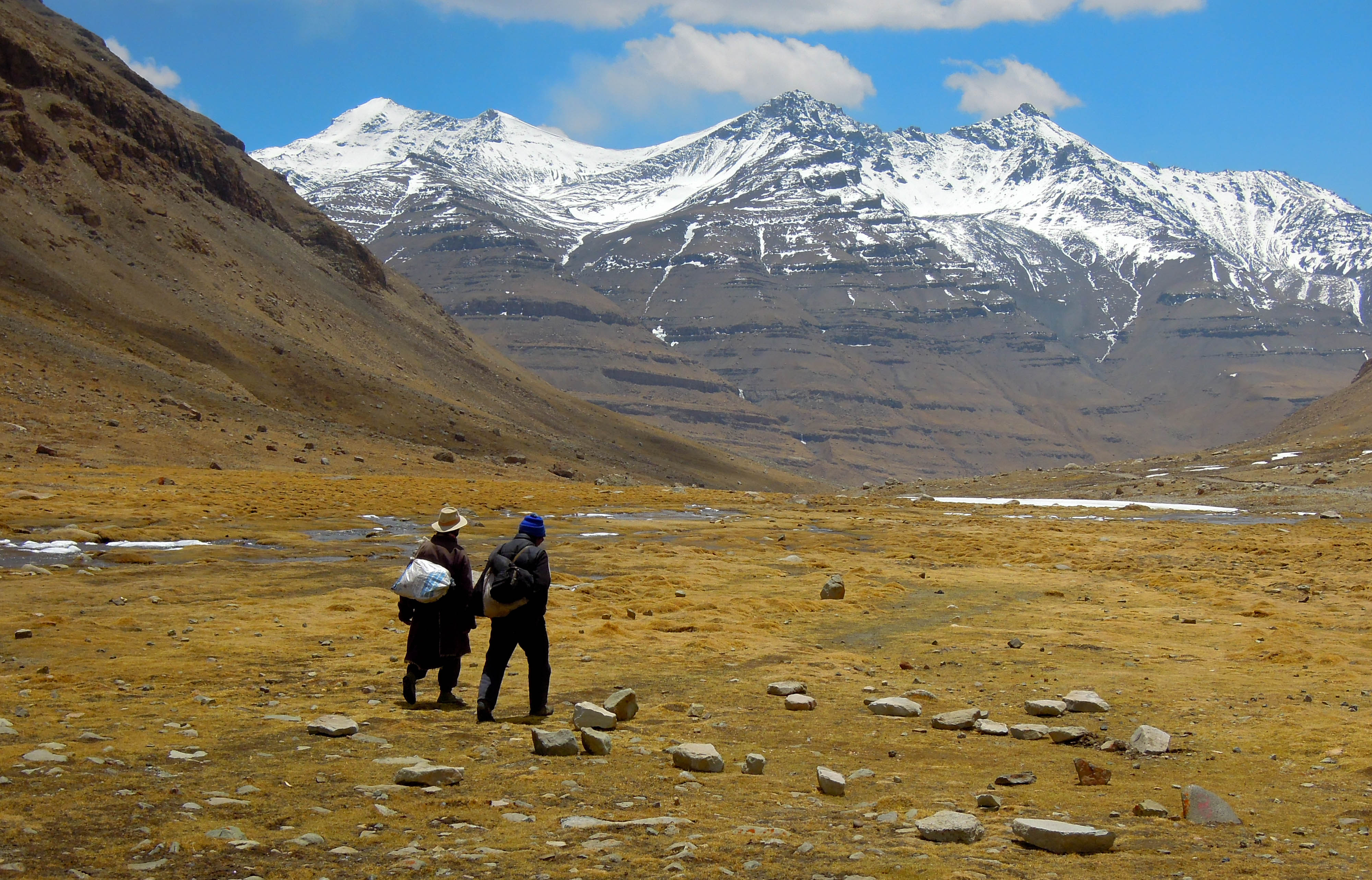
Looking back down the valley we hike up

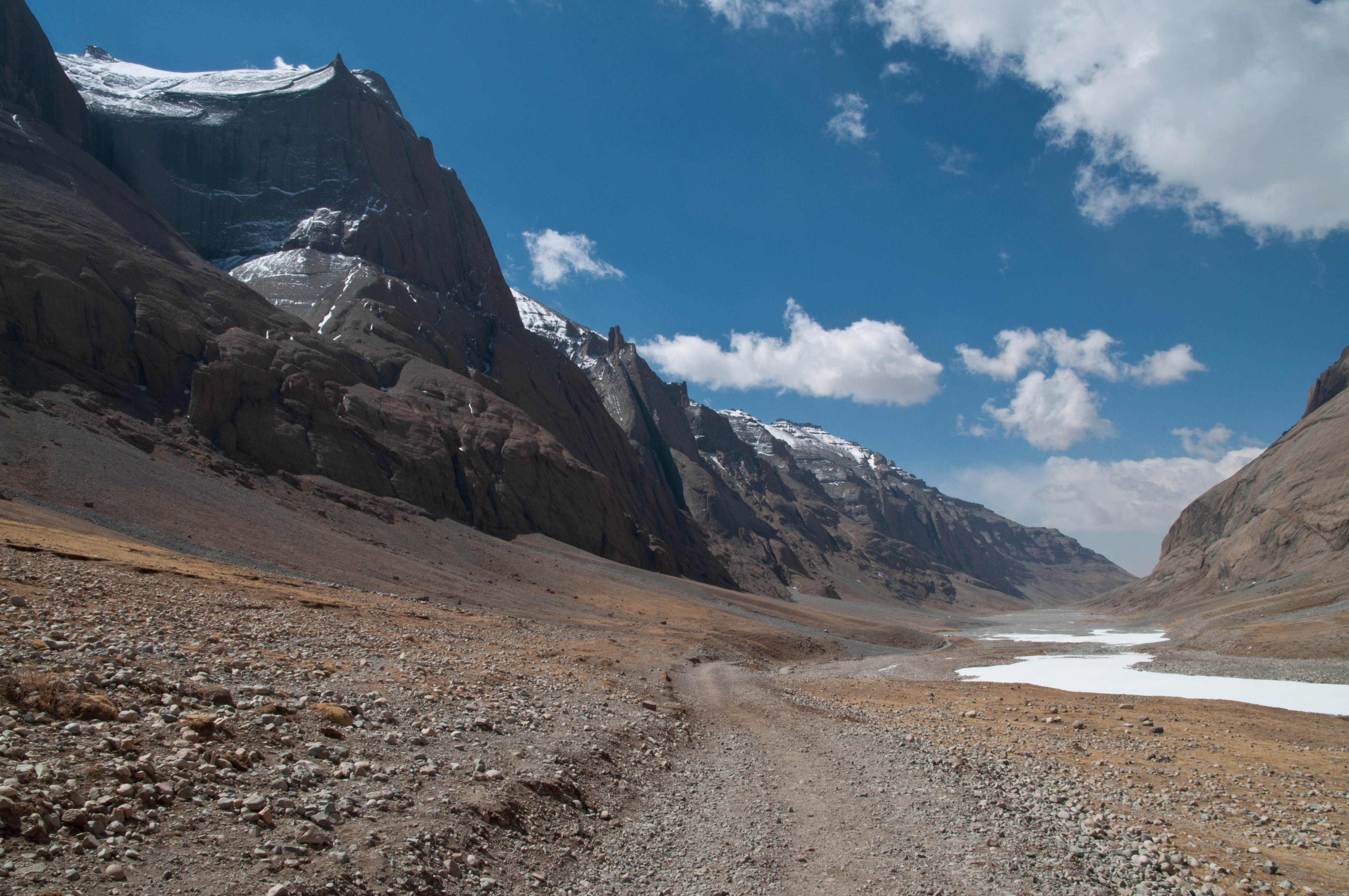
Dramatic rock faces below the west face of Kailash

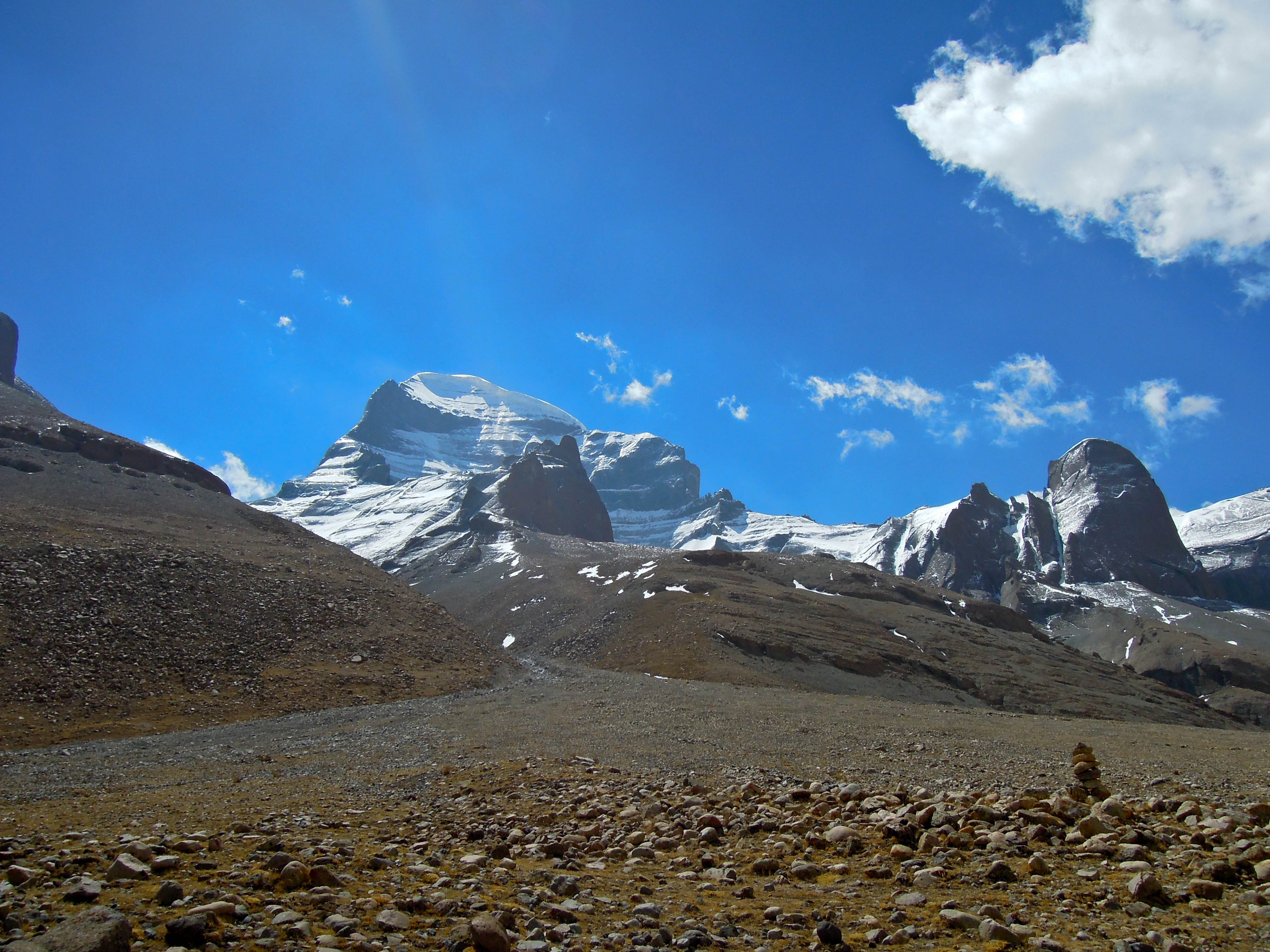
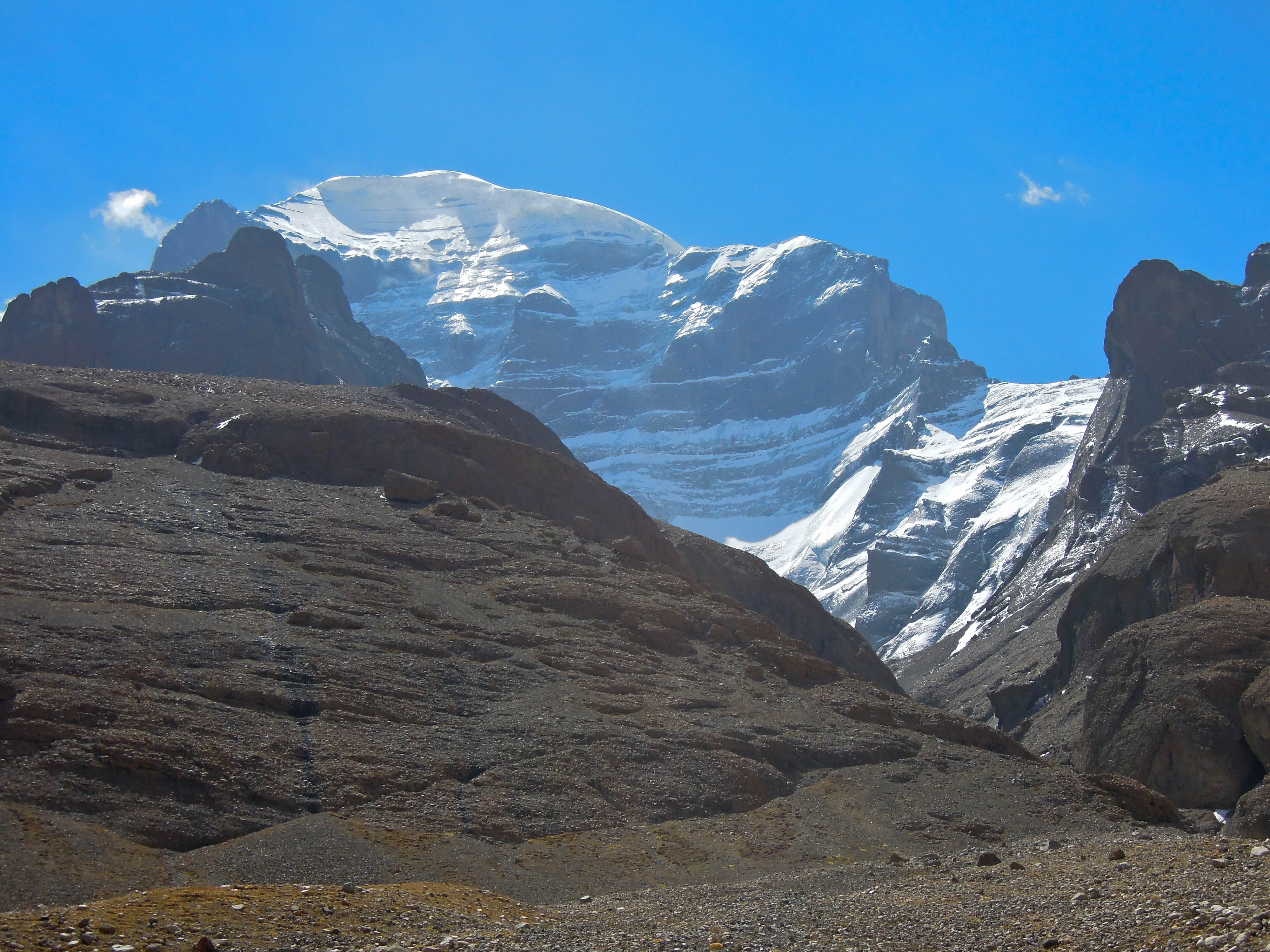
West face of Mt. Kailash

Close up of the west face of Mt. Kailash

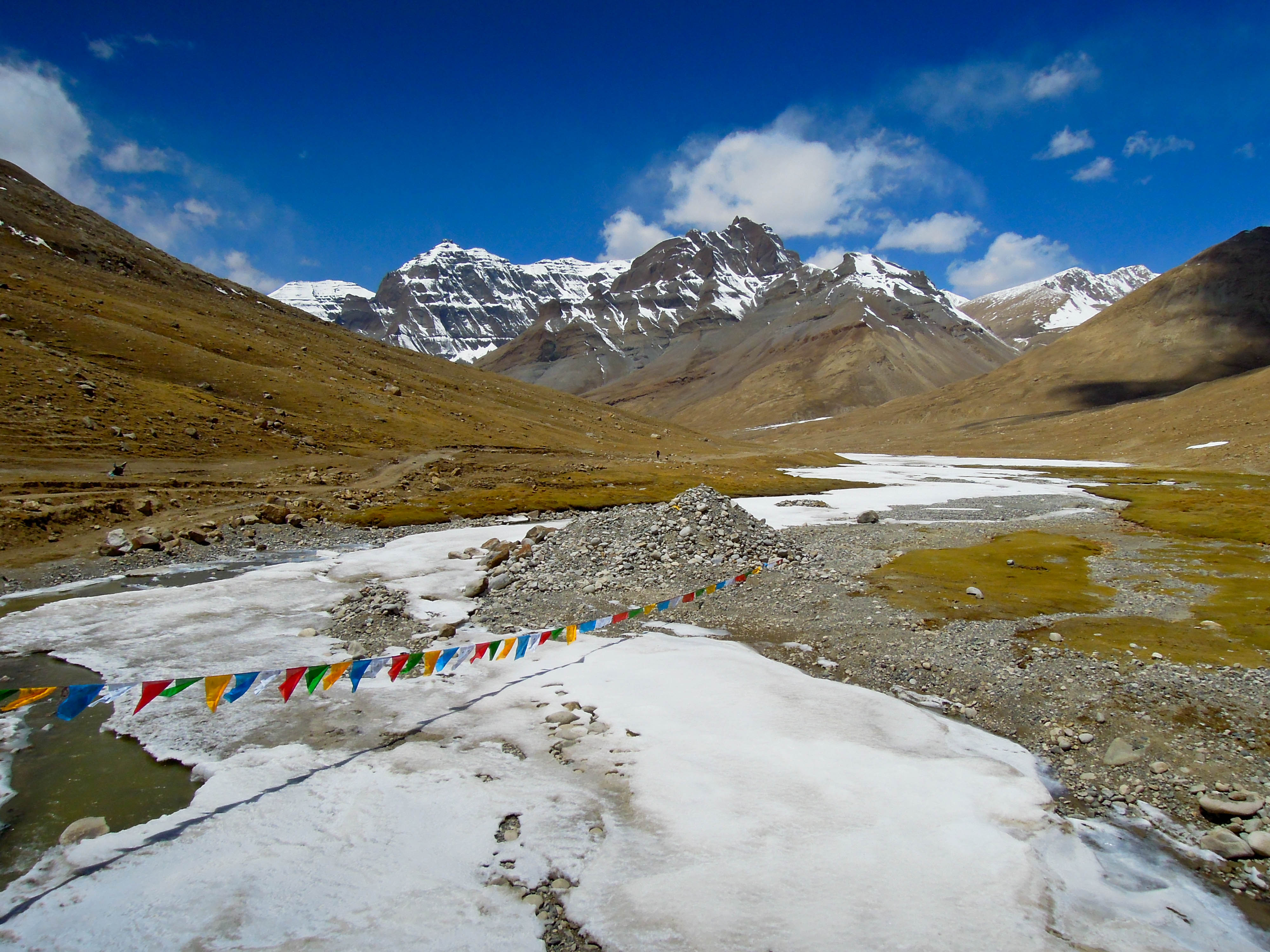
We followed this partially frozen river up the valley

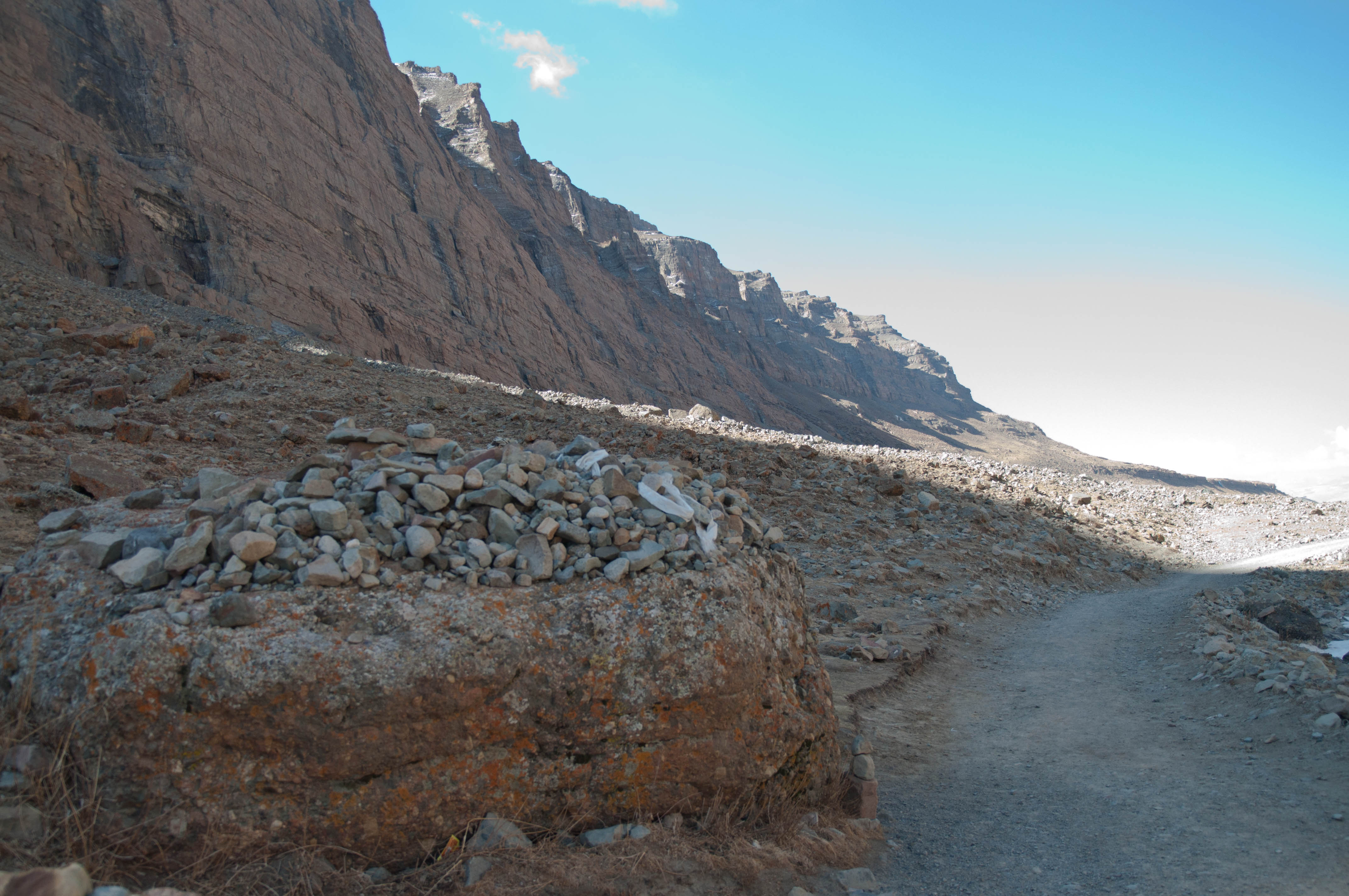
Pilgrims stack rocks making cairns at various places along the kora

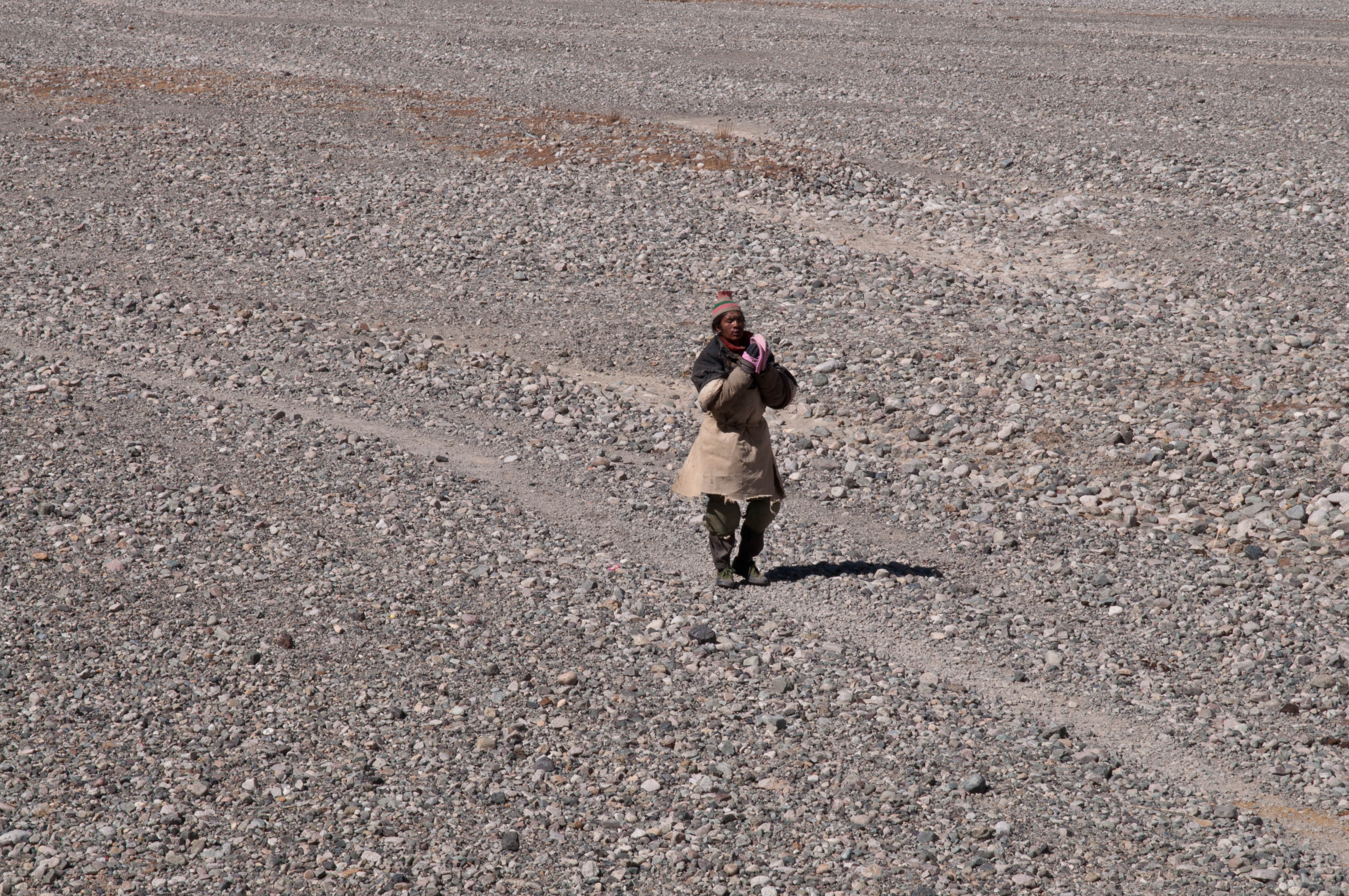
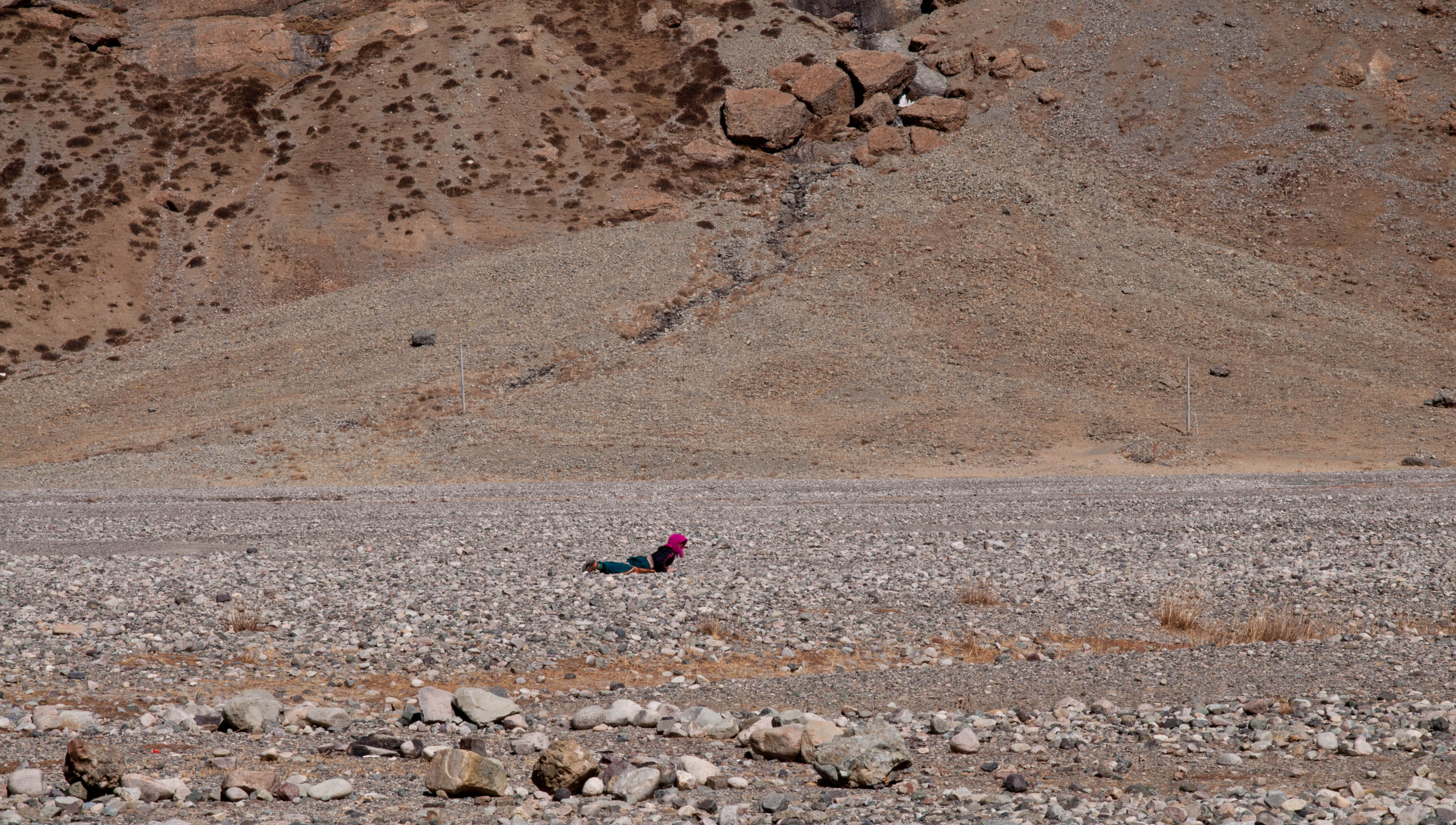
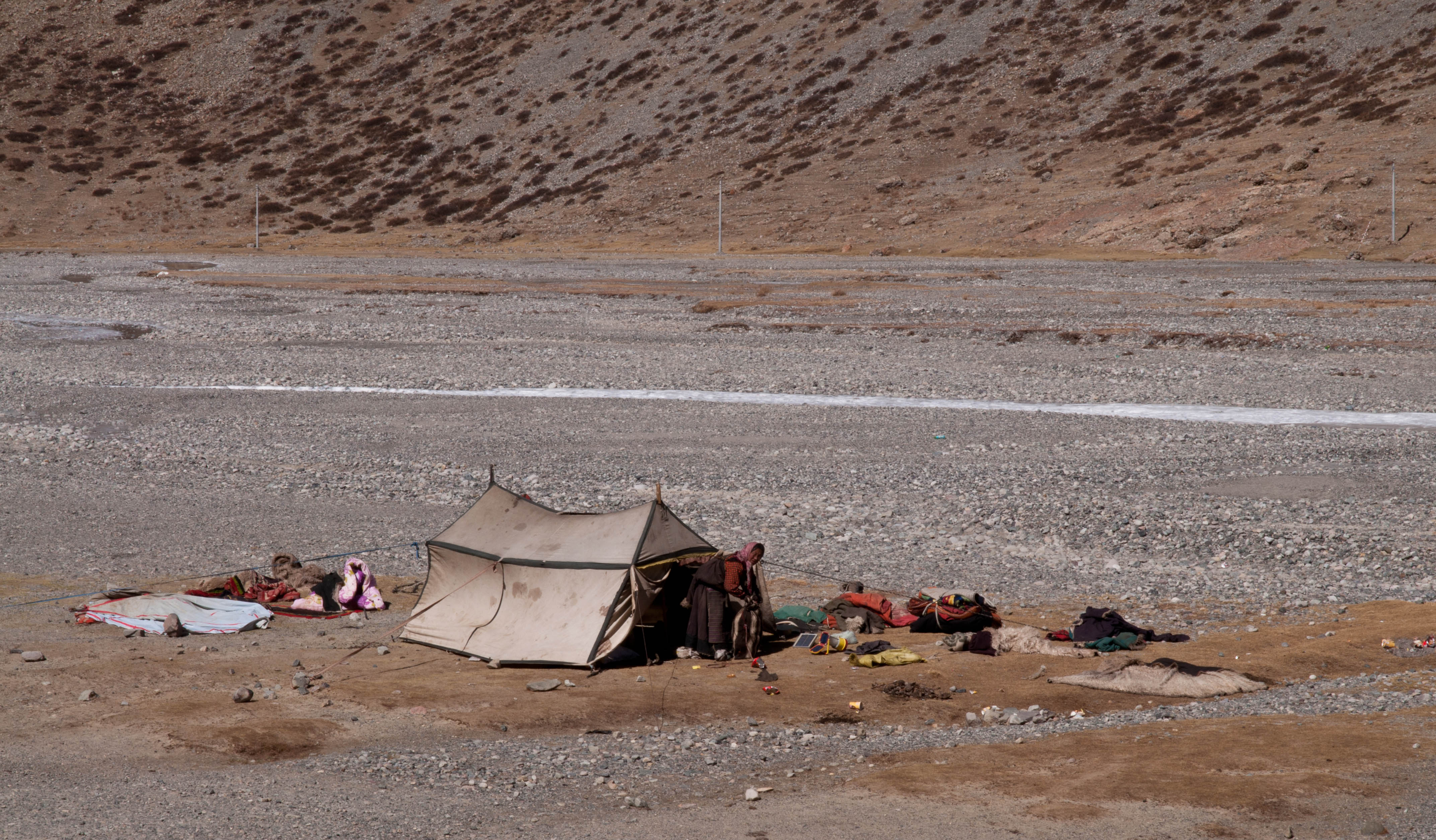
After about 8 km we saw the first of many prostrating Tibetan pilgrims. The ultimate in devotion is to do the entire 52 km kora in full prostrations. This consists of laying full length on the ground, over and over again covering the entire distance. These very devoted pilgrims will usually hike ahead estimating how far they will be able to go for the day, stash their camping gear, then walk back to where they started and begin their prostrations. They will typically wear a heavy apron to protect their body from the rough ground. They will also wear shoes or sandals on their hands to protect them as well. I was amazed at the devotion of these sincere, religious people.

Prostrating pilgrims

Pilgrim camp

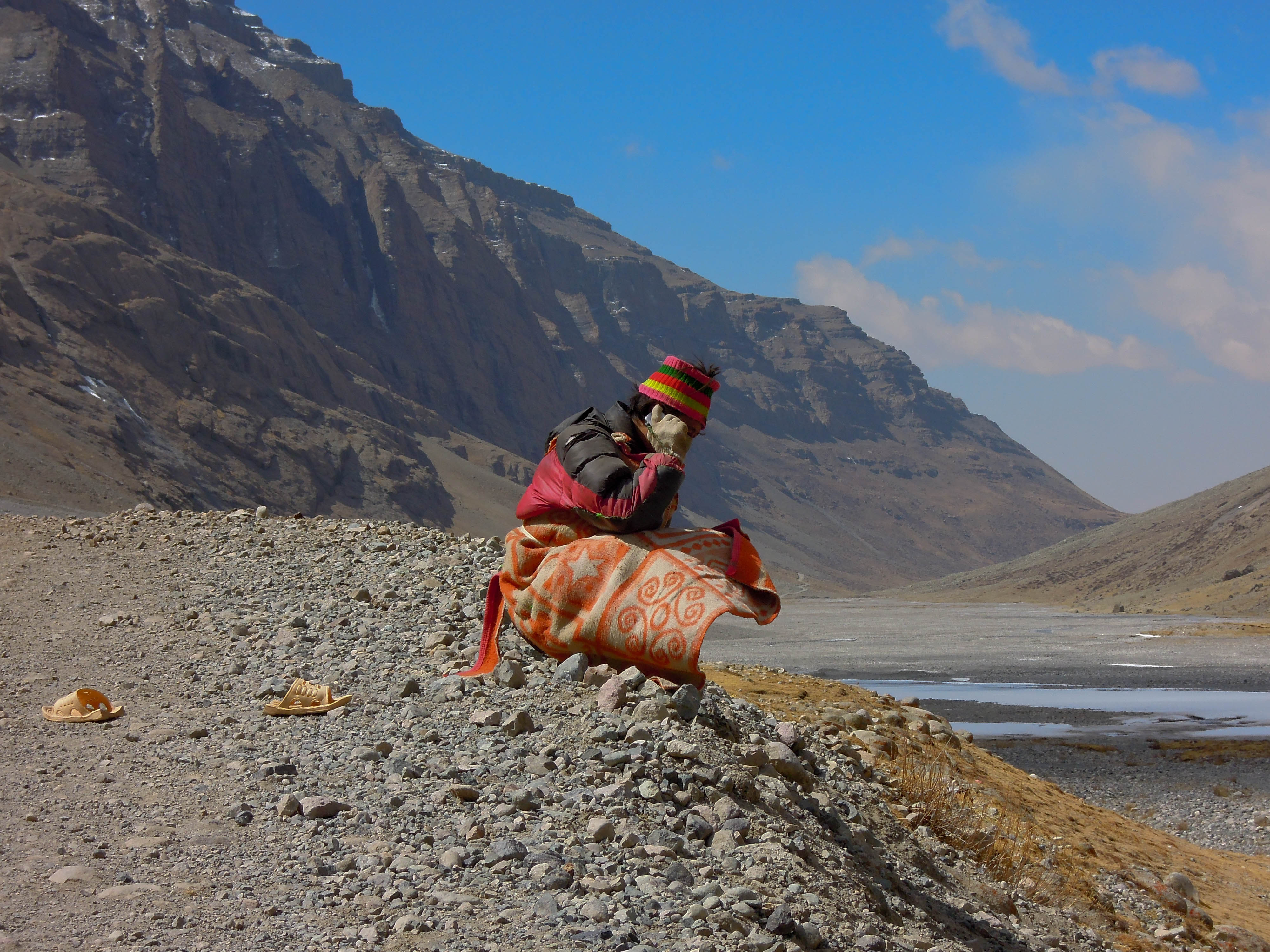
Prostrating pilgrim taking a call on his cell phone

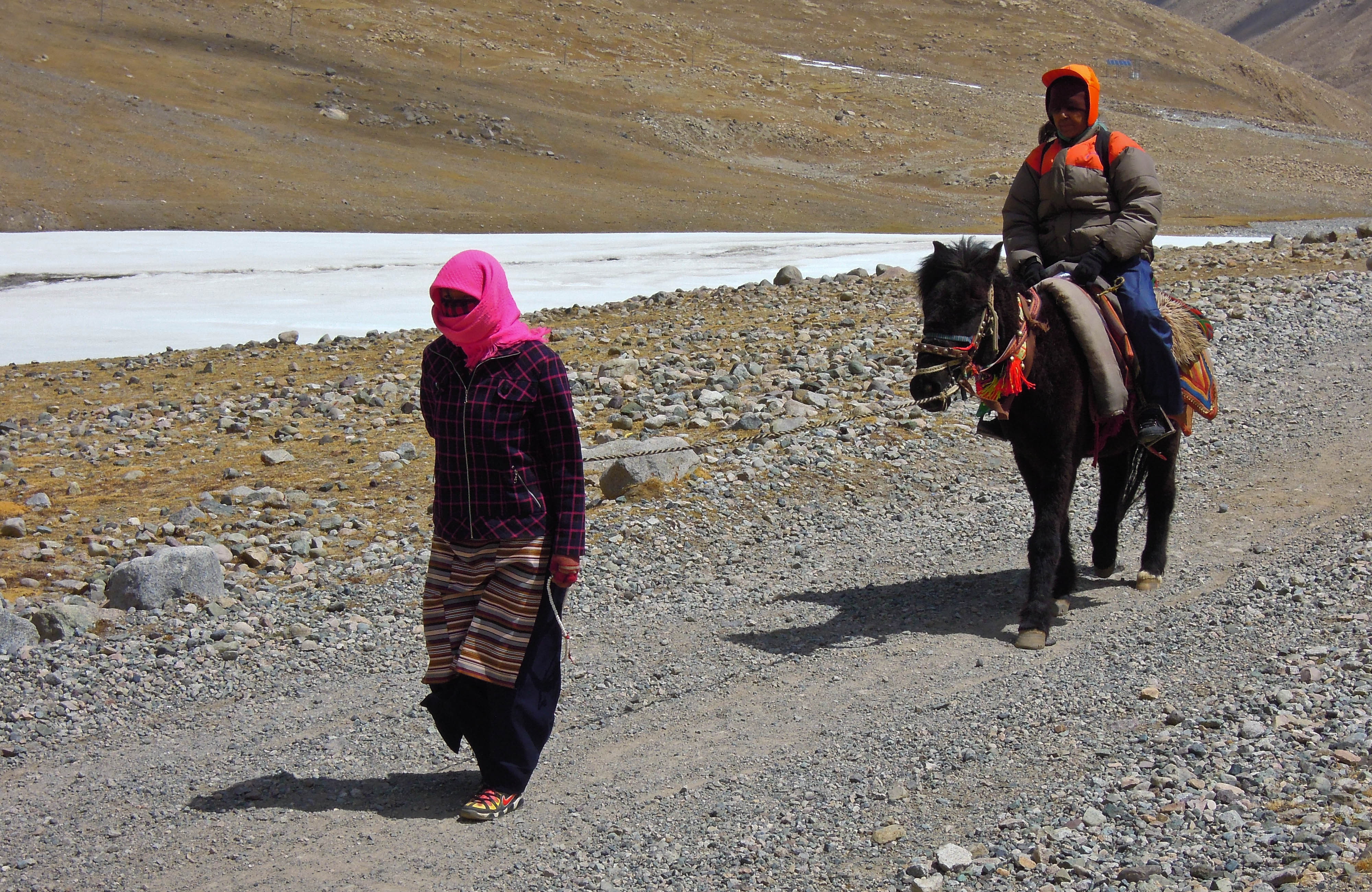
After about 12 km the trail began to turn east and climb up another river valley. Along this portion we began seeing Hindu pilgrims on the way down. According to another Tibetan guide that we met, these Indians did not want to go over the pass as it was snowy and icy and they were on horseback. It’s no problem with yaks, but quite serious for horses. Most Hindu pilgrims ride horses, instead of walking.

Indian Hindu pilgrims heading down

Tibetan woman leading a Hindu pilgrim

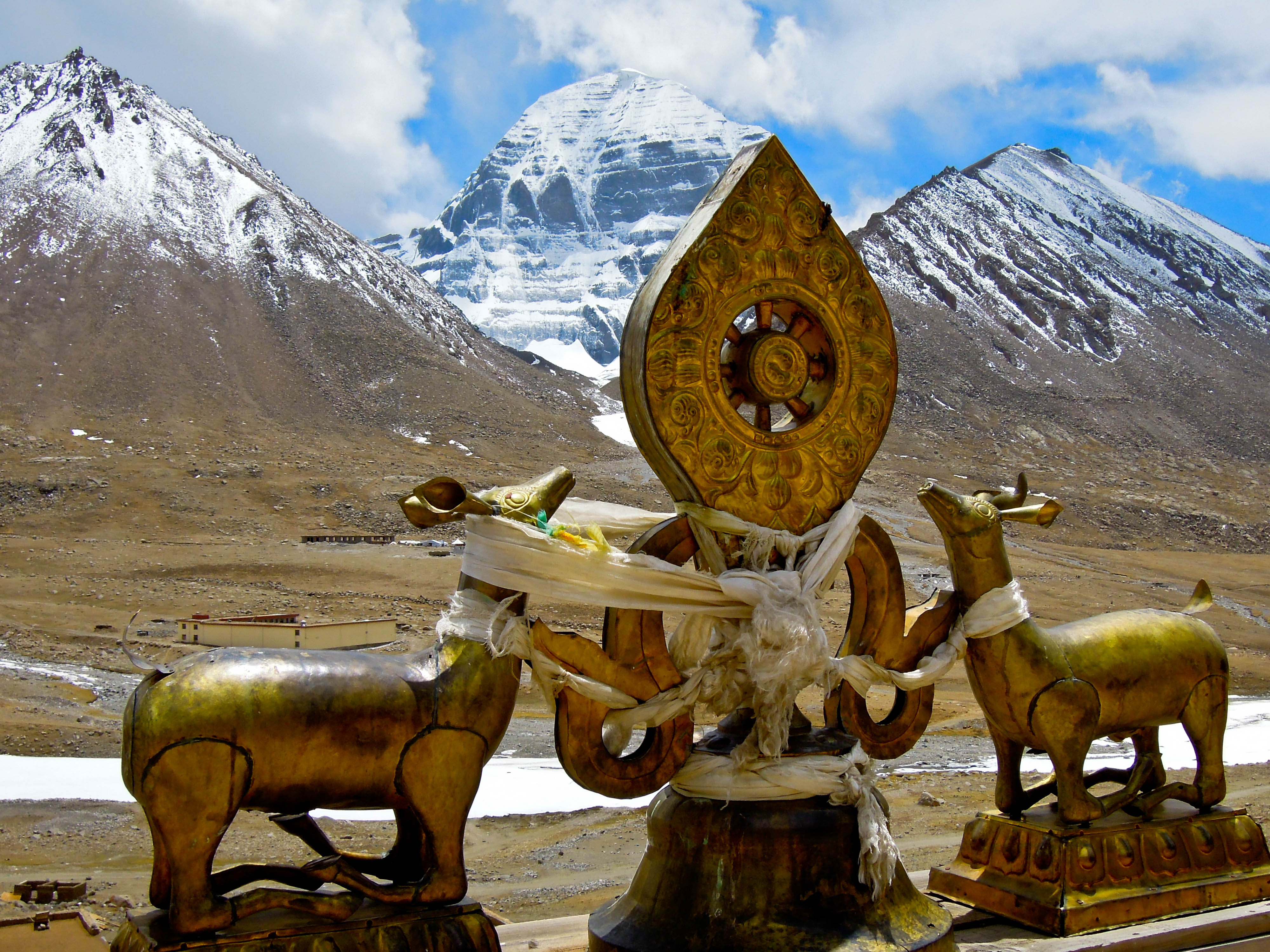
After hiking about 20 km, and climbing to 16,700′ we arrived at the Drirapuk Monastery. It was not a very steep climb, but was steady and with the altitude it was certainly no walk in the park. Slow, steady hiking was the key. Try to go too fast and you were very soon out of breath. The views of the north face of Mt. Kailash from the monastery were spectacular.
North face of Mt. Kailash from Drirapuk Monastery

North Face of Mt. Kailash

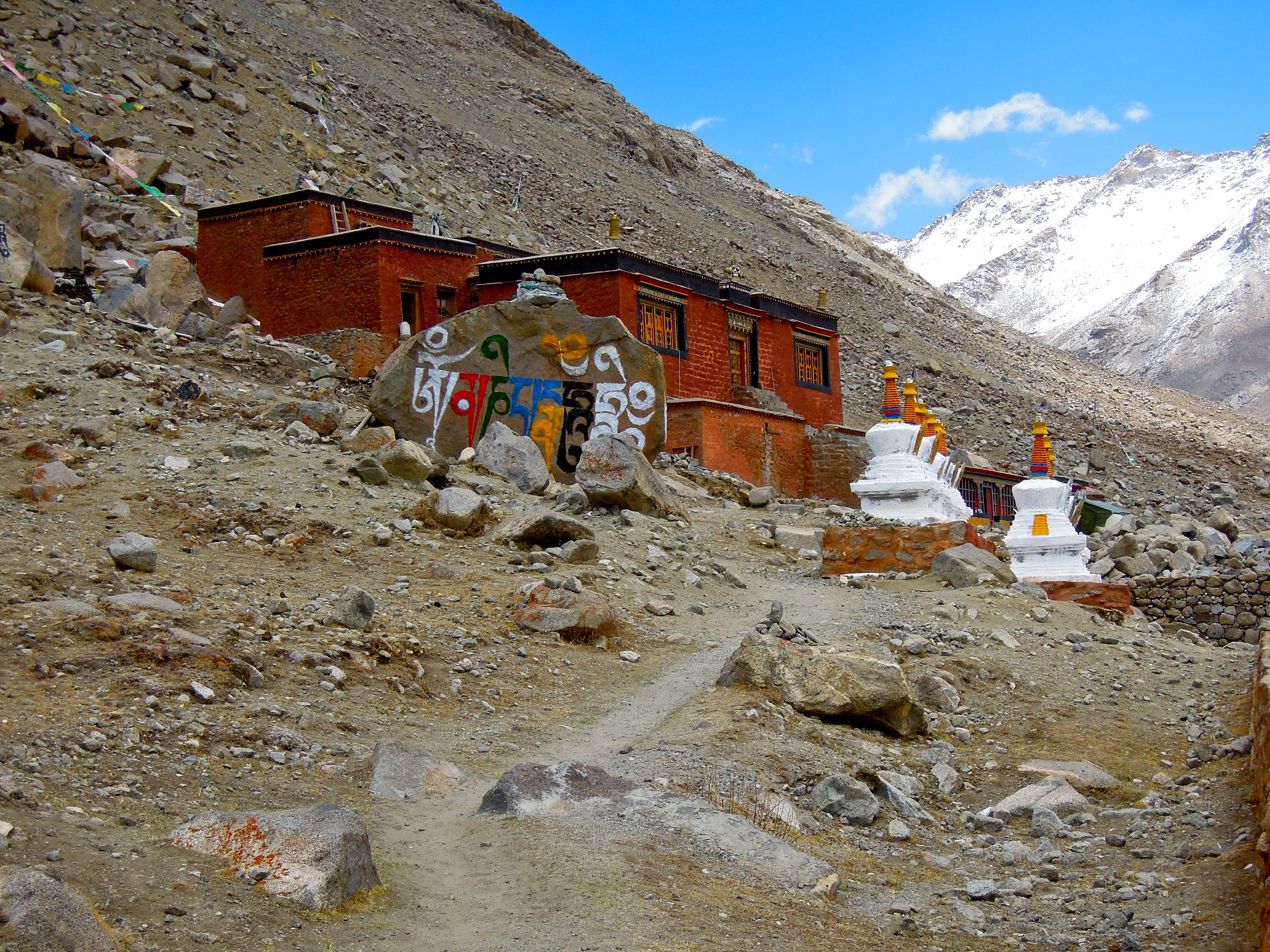
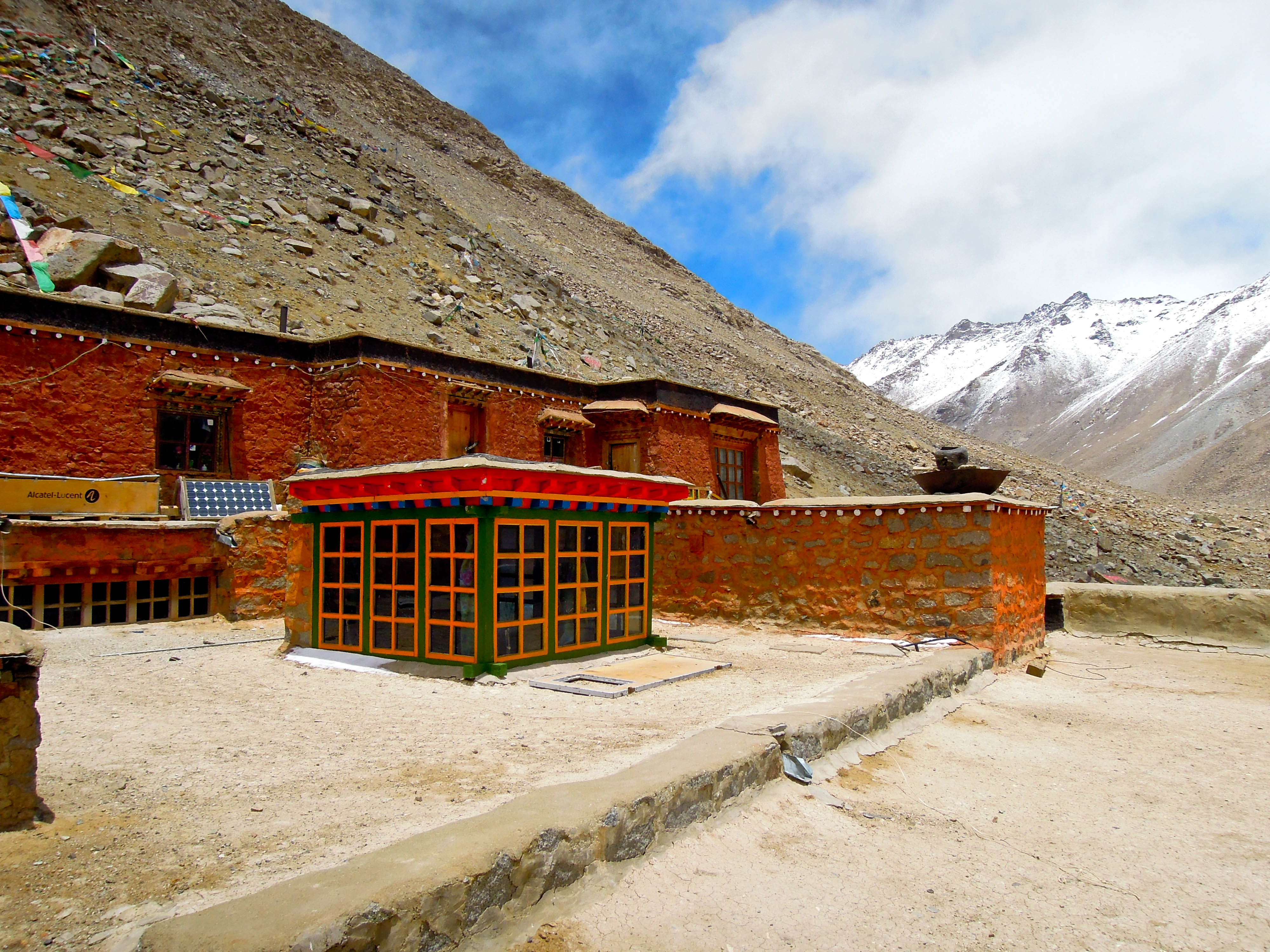
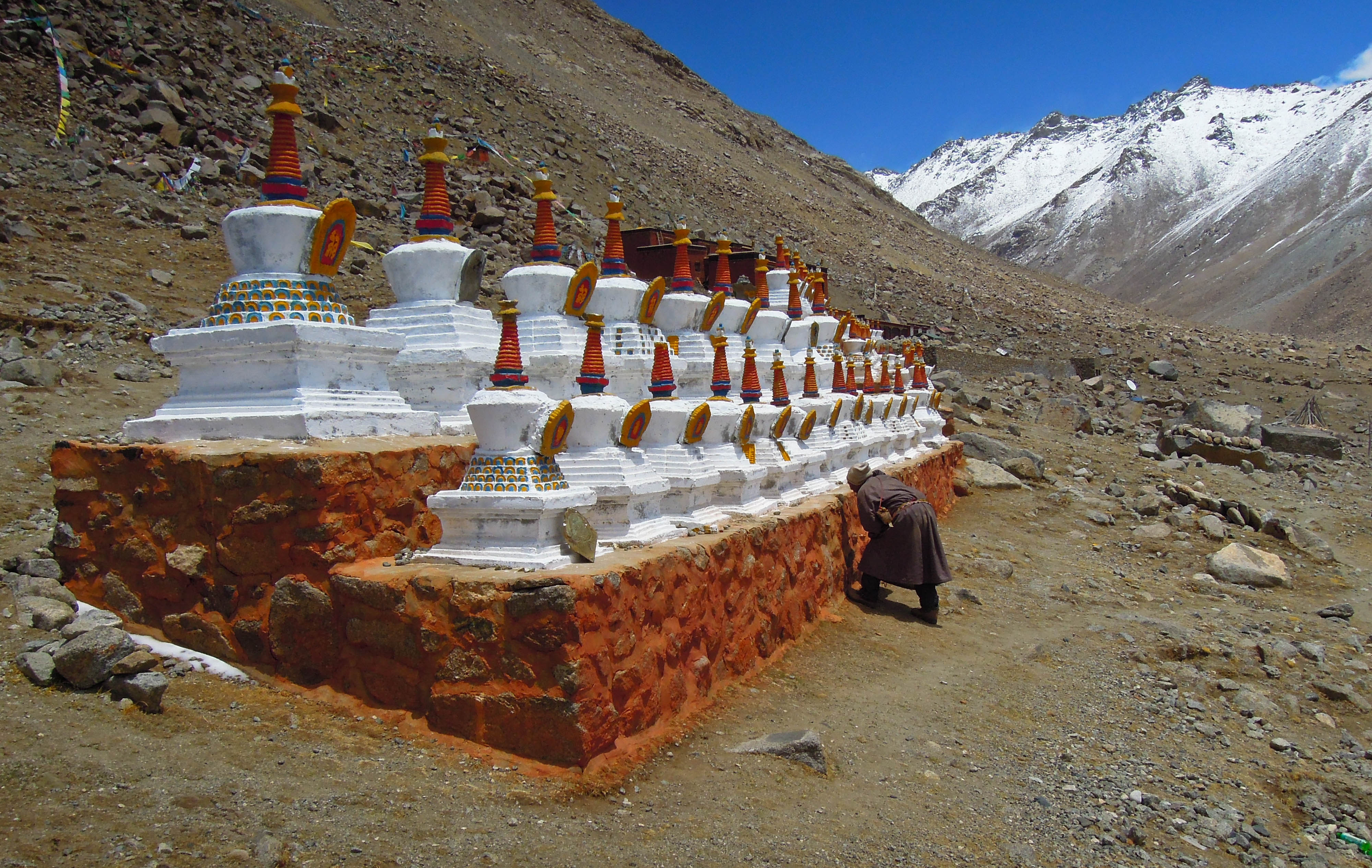
Drirupuk Monastery is set high on the cliffs across the valley from Kailash. It is a very small monastery with only a few resident monks. They were friendly and were willing to allow us into the monastery to look around.

Drirupuk Monastery

Pilgrim at stupas. Monastery in the background

Monk waving from the roof of the monastery

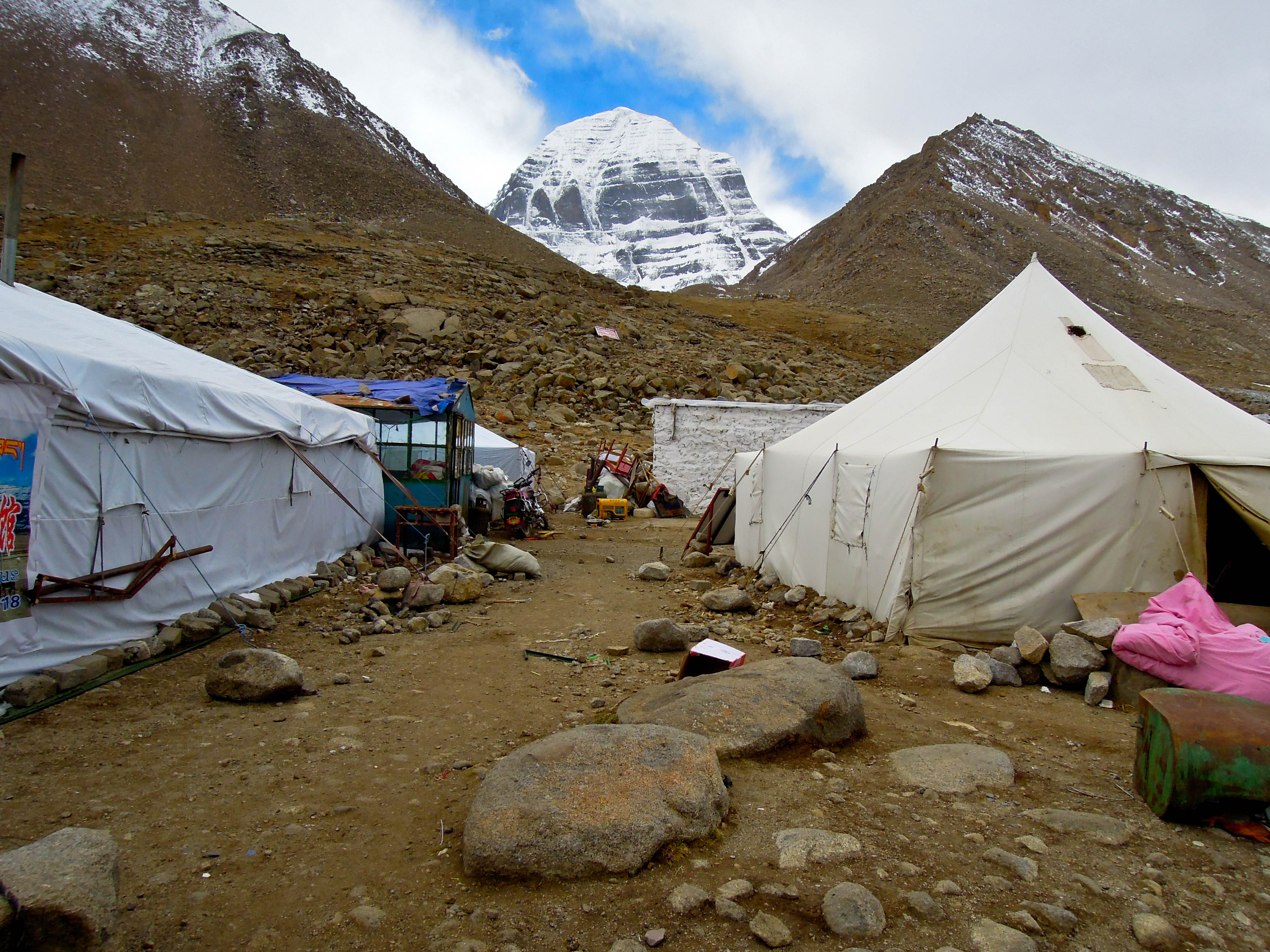
From the monastery we had to hike down to the bottom of the valley, cross a frozen river, then up the other side to a group of tent teahouses.

Tent guesthouses at 16,700′ below the north face of Mt. Kailash

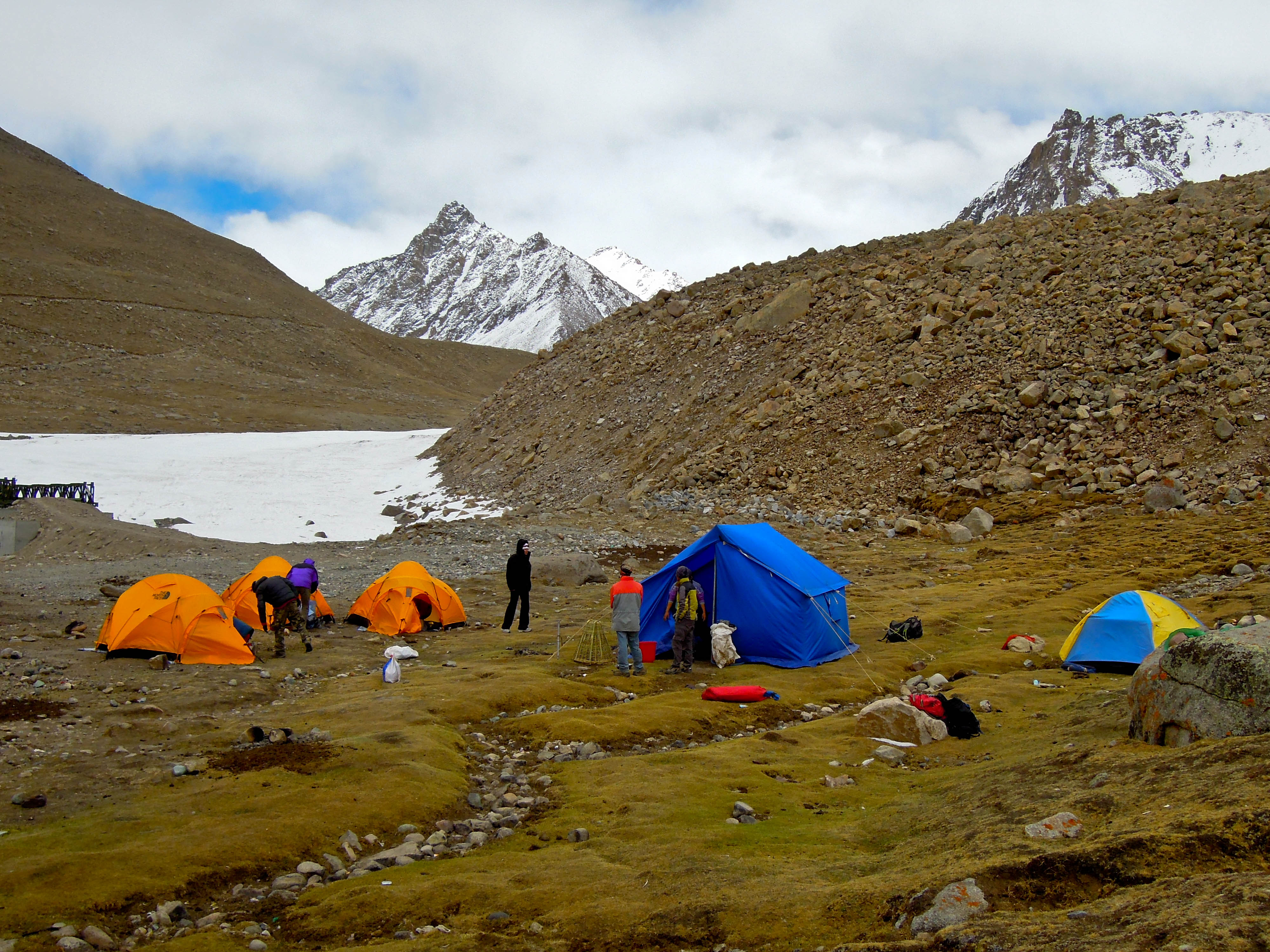
We met up with the yaks and headed up the valley about a half mile to a meadow area where we set up camp. It was a beautiful, wild setting surrounded by high peaks.

Camp at 16,700′ below the north face of Mt. Kailash

Yak herder unloading a yak

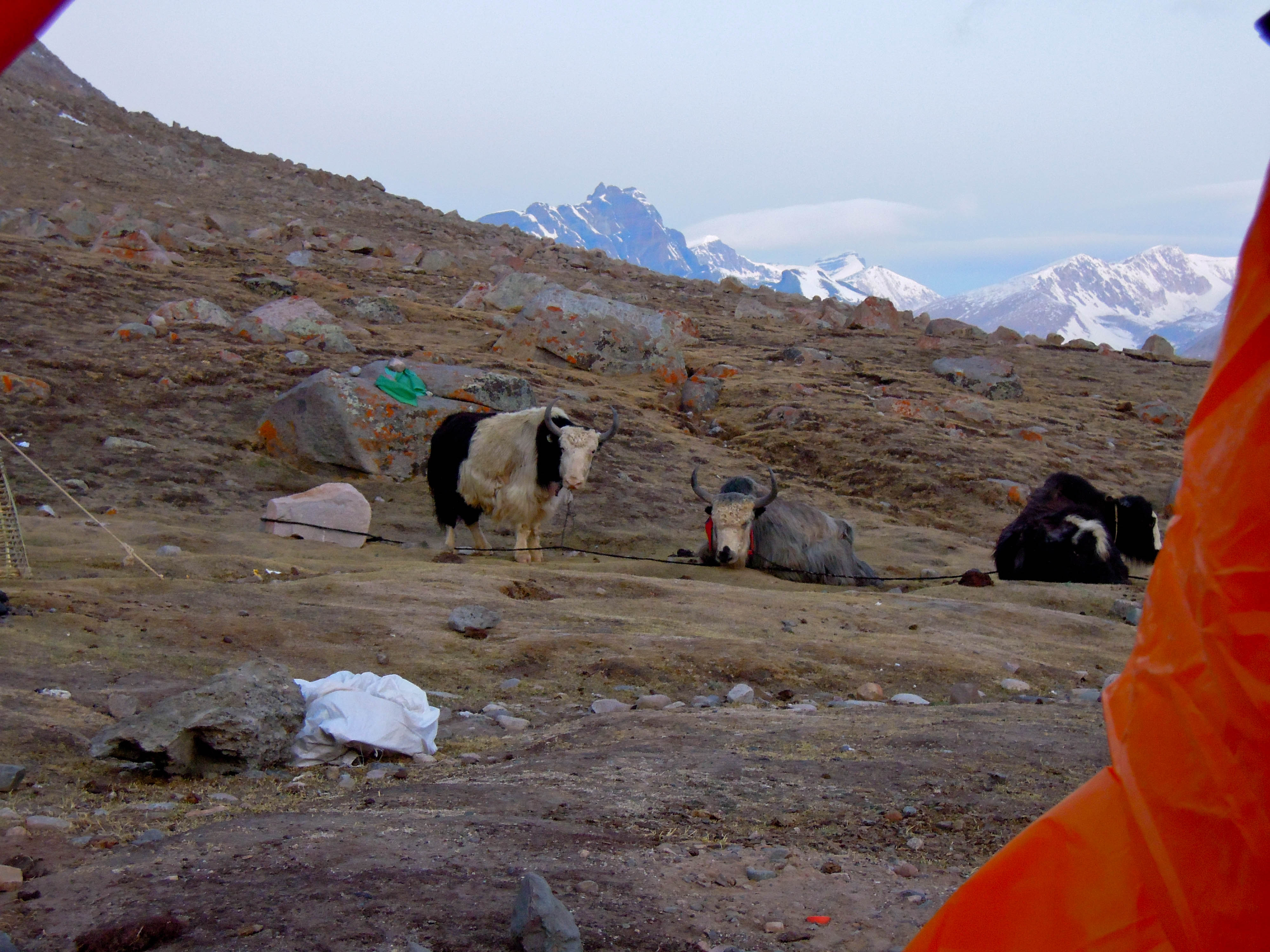
The view from my tent door

I felt pretty good for most of the day, but by the time we got to camp I was pretty tired. My legs felt fine, but the altitude was really getting to me. I had a headache and was not too hungry. My friend gave me a Diamox tablet (for altitude sickness), and it really helped. By morning my headache was completely gone and I felt great, full of energy.

TO BE CONTINUED

See lots more photos of the Mt. Kailash kora at:

Tibetan pilgrim.

The Forbidden City: Architectural Details

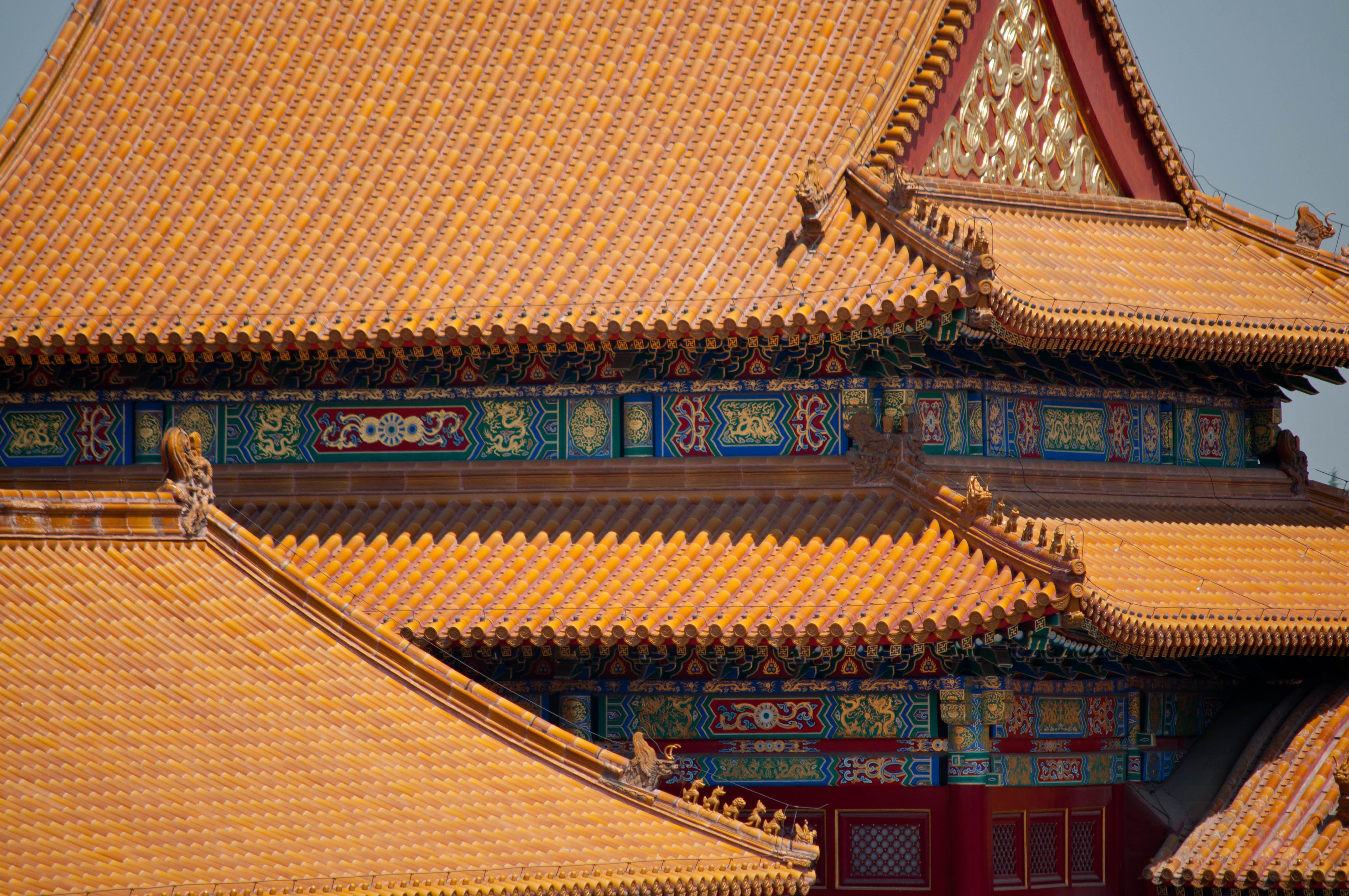
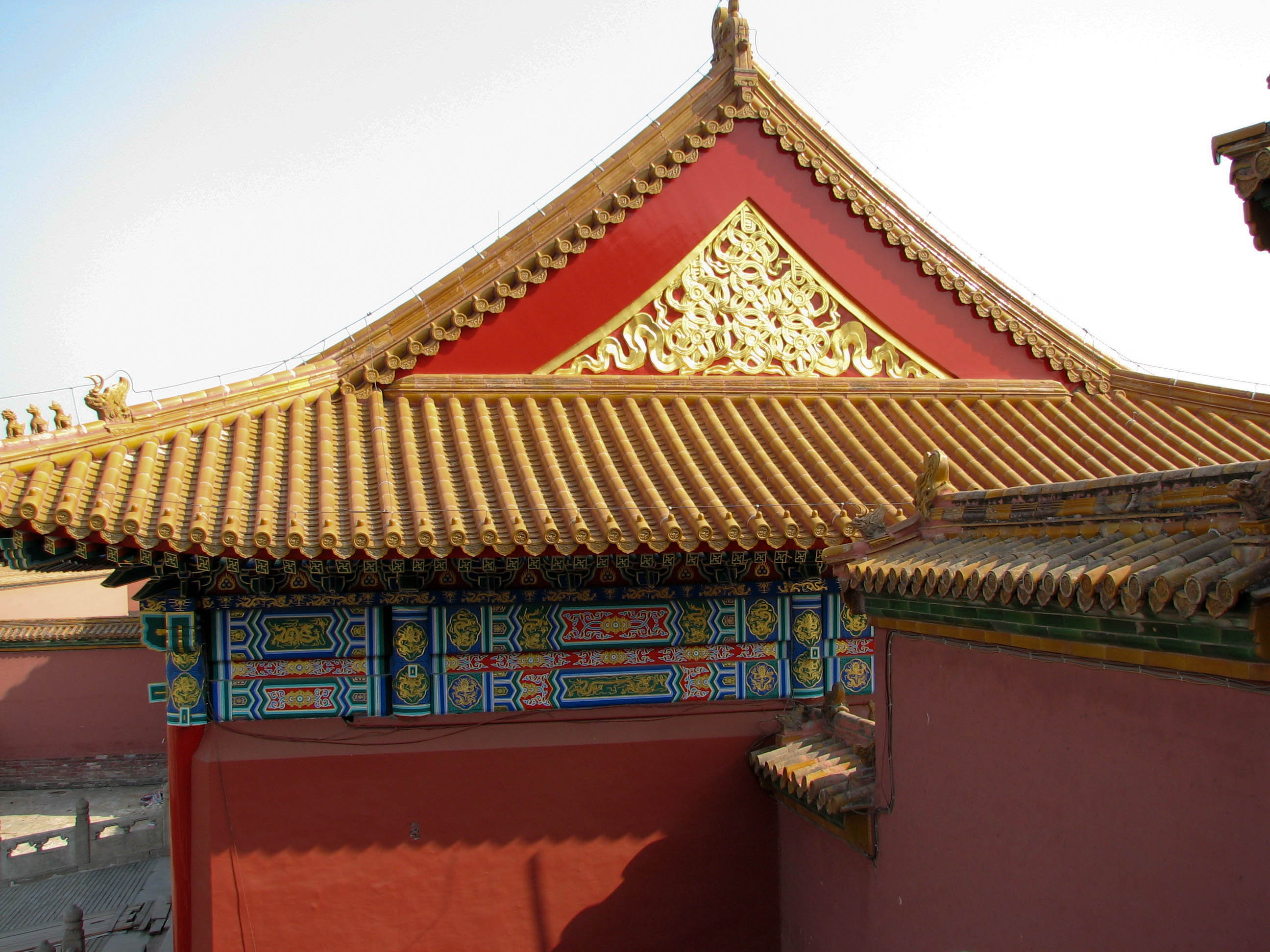
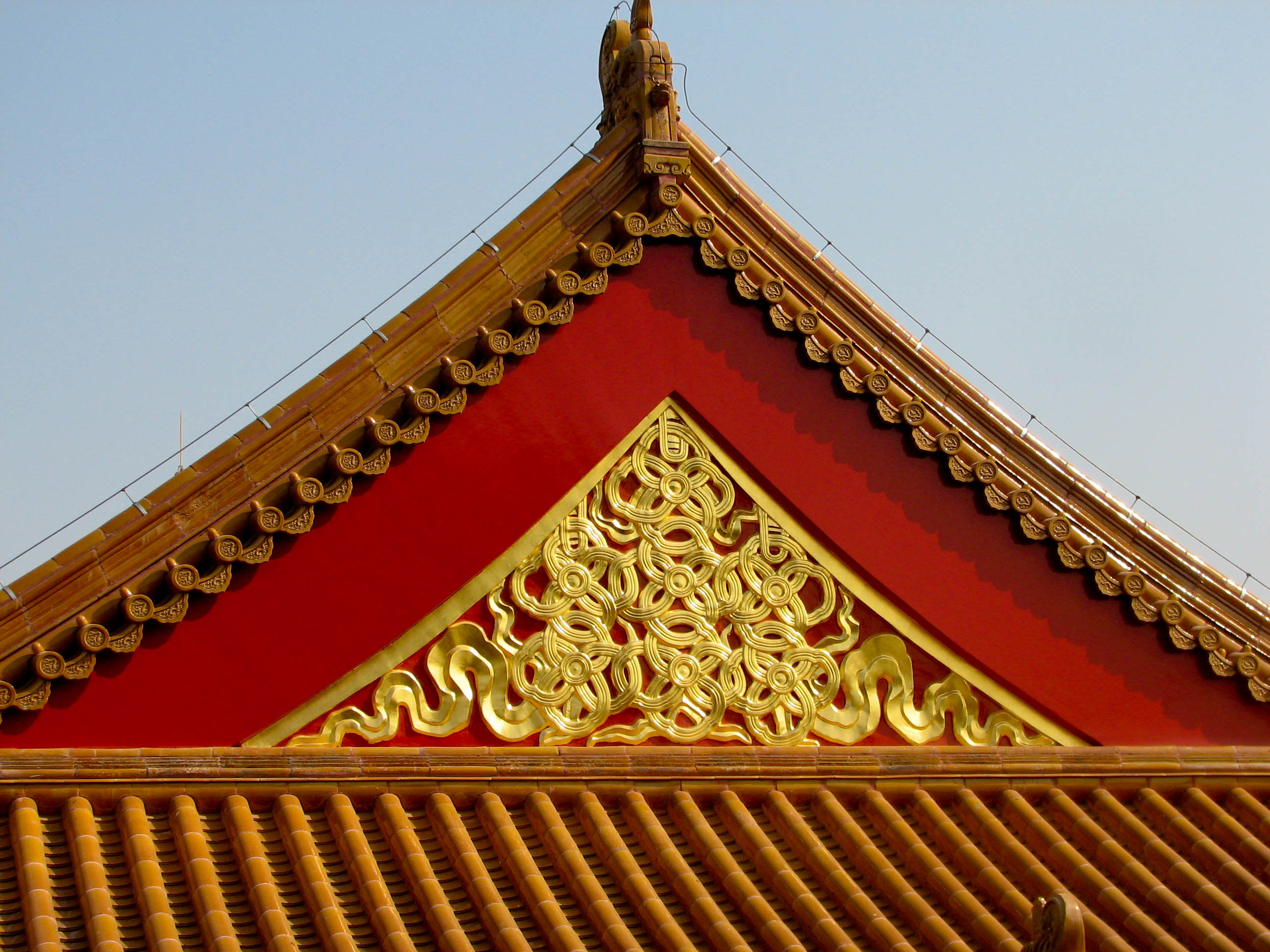
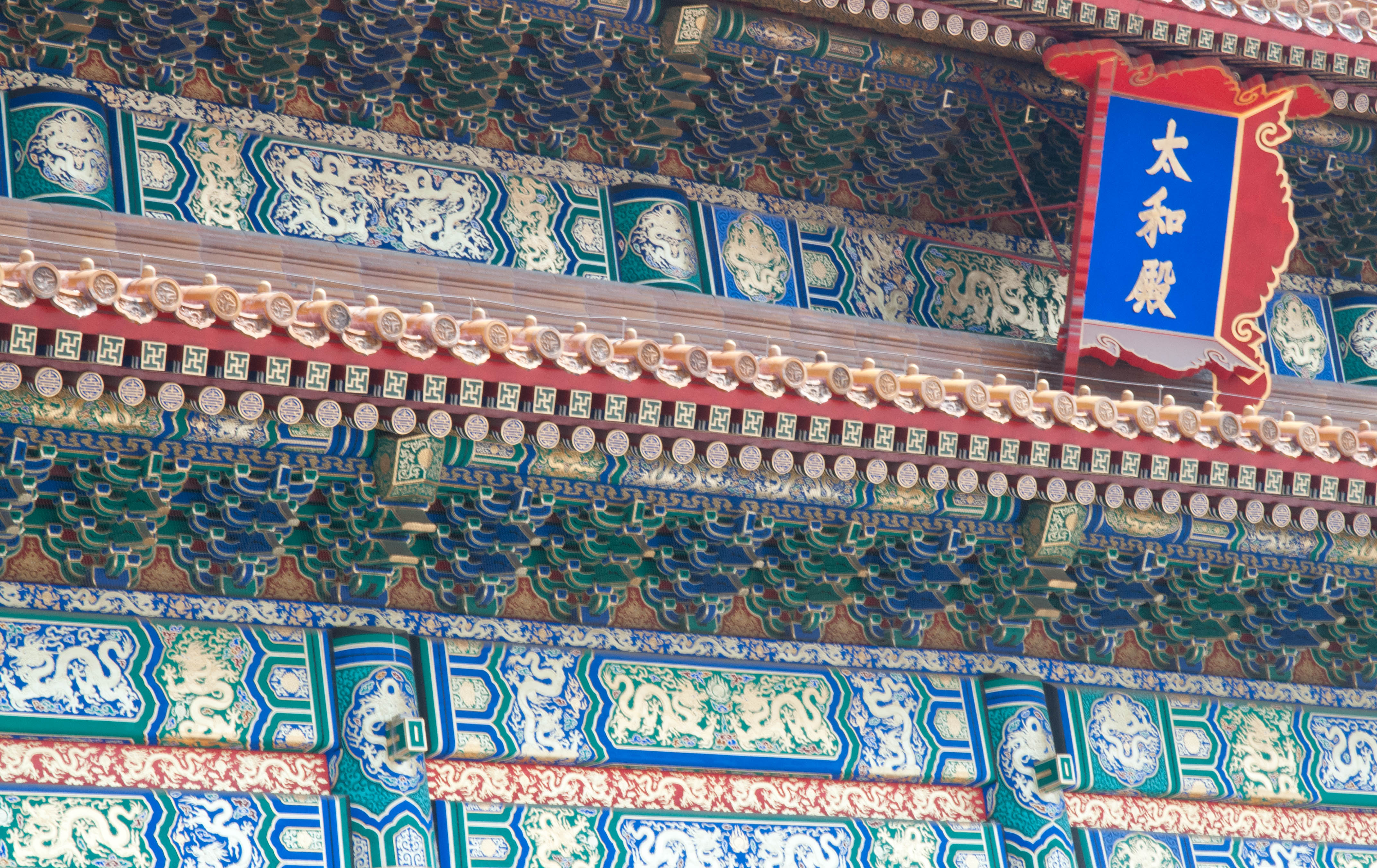
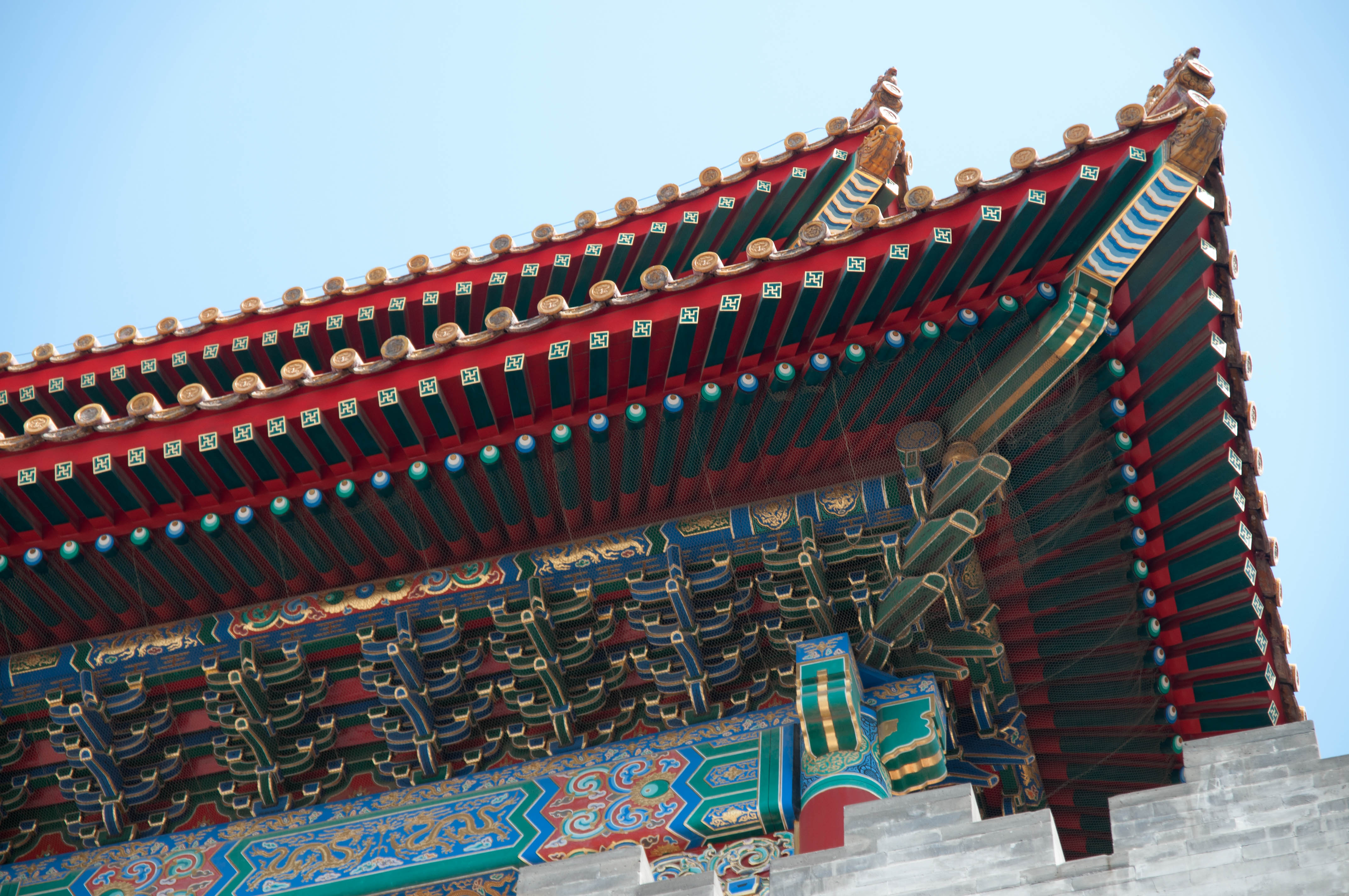
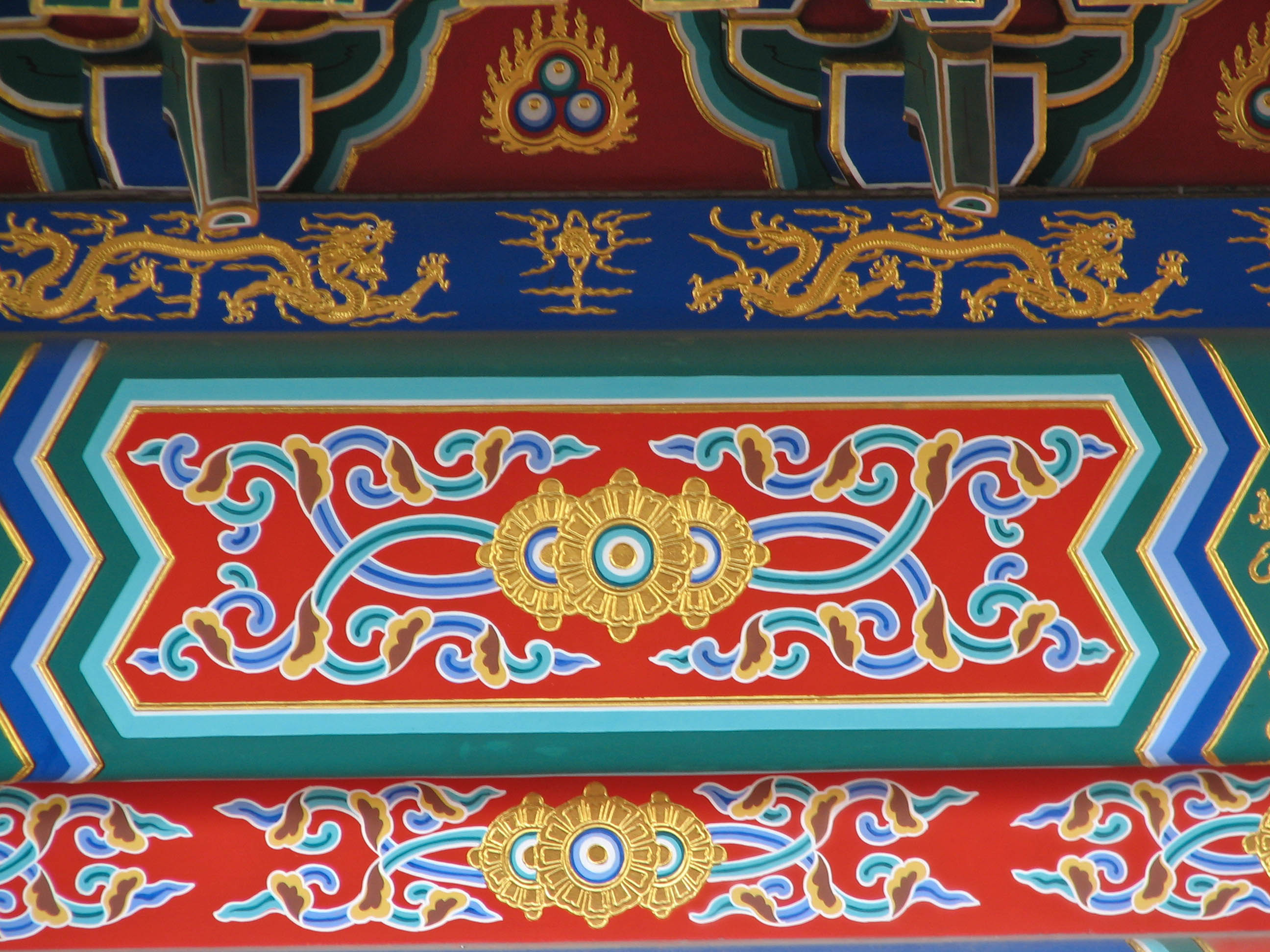
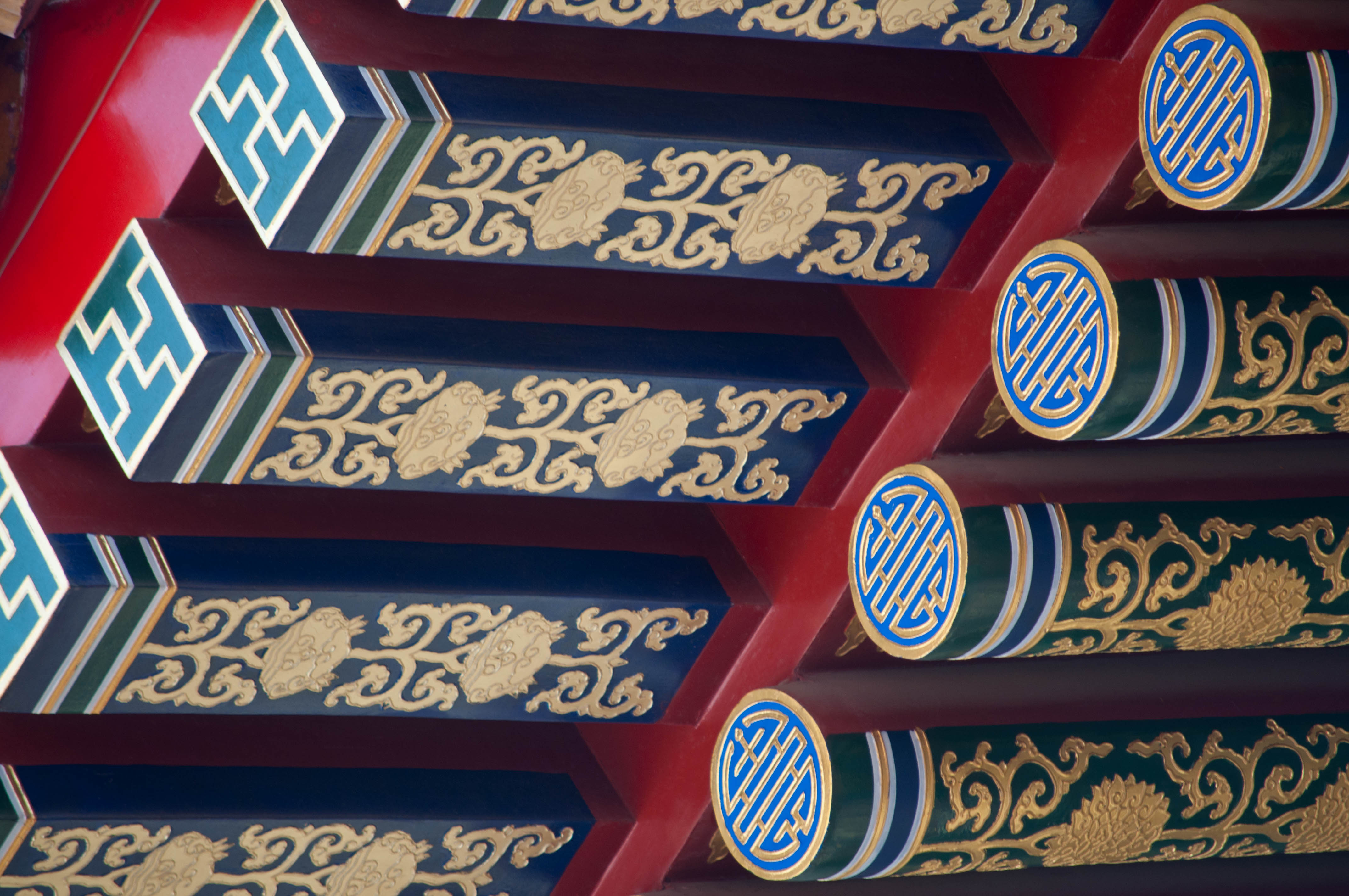
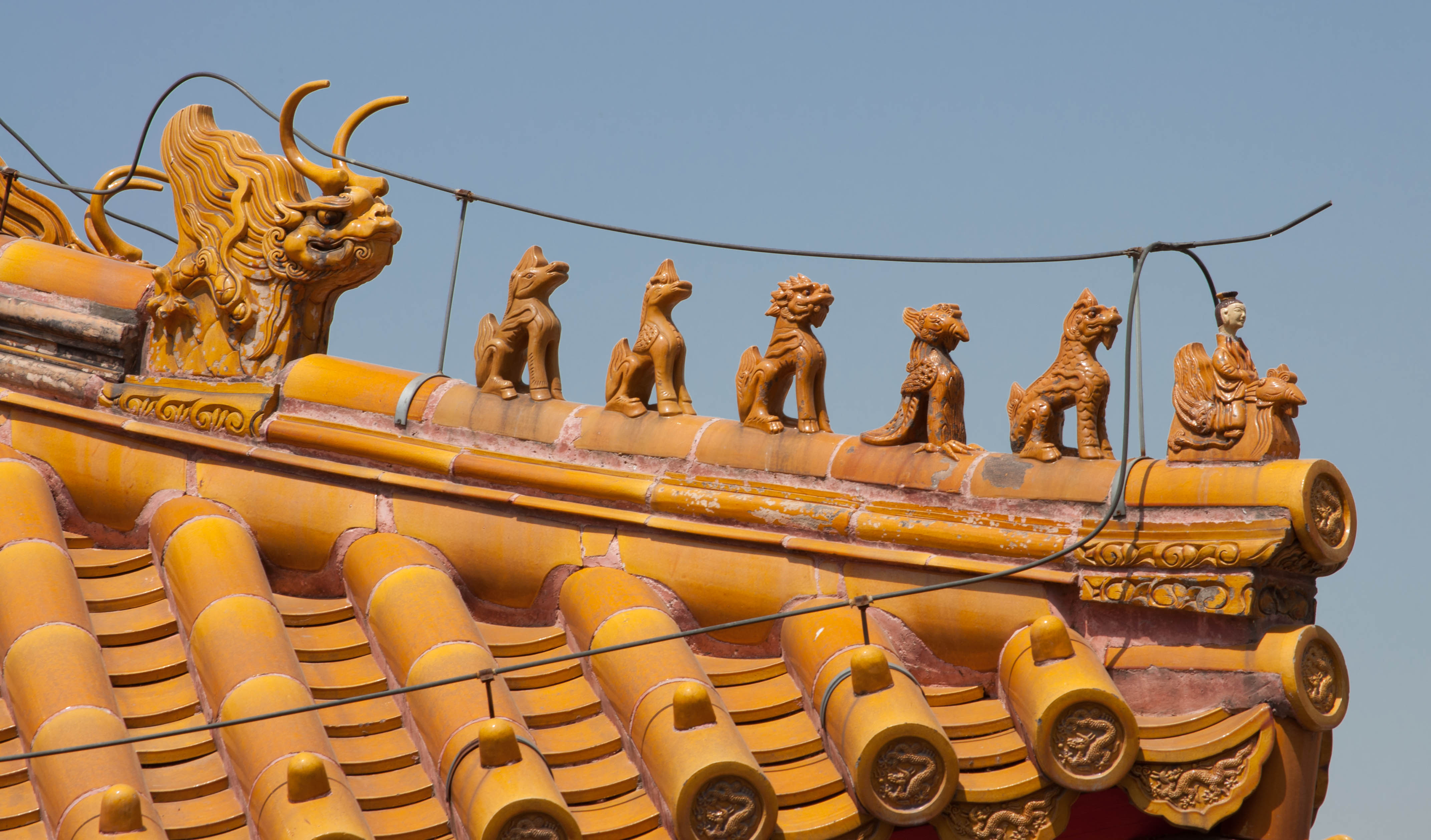
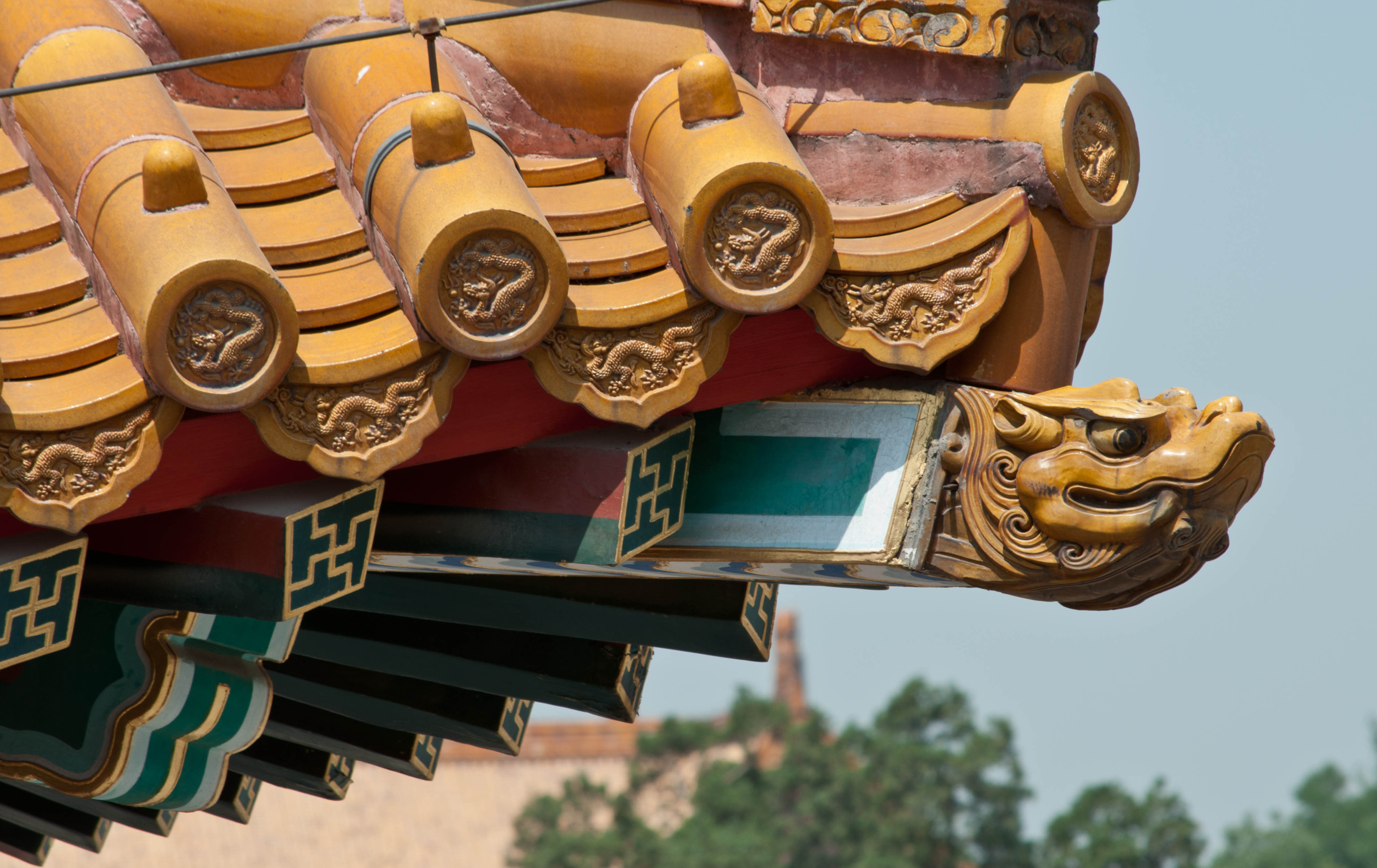
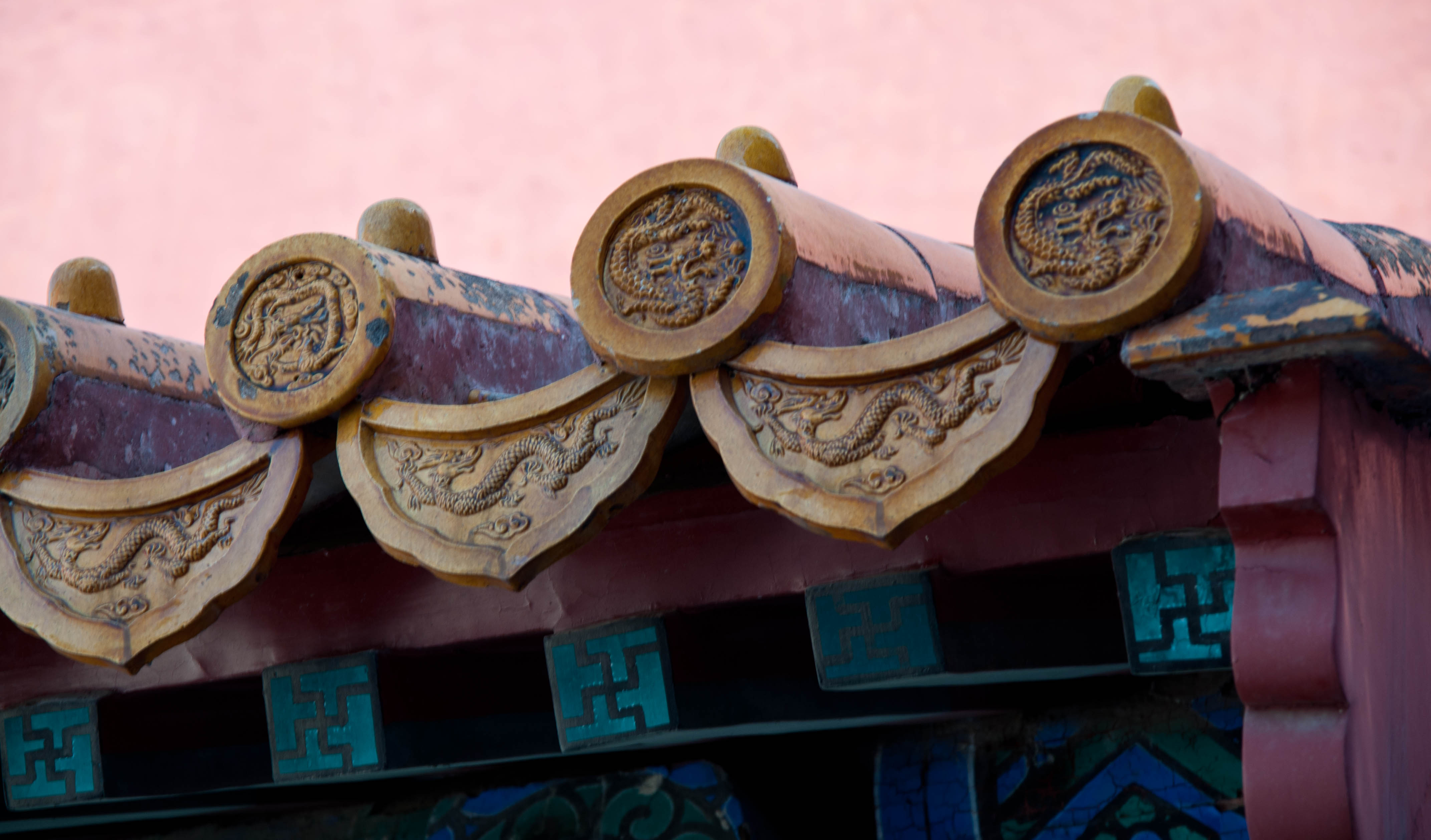
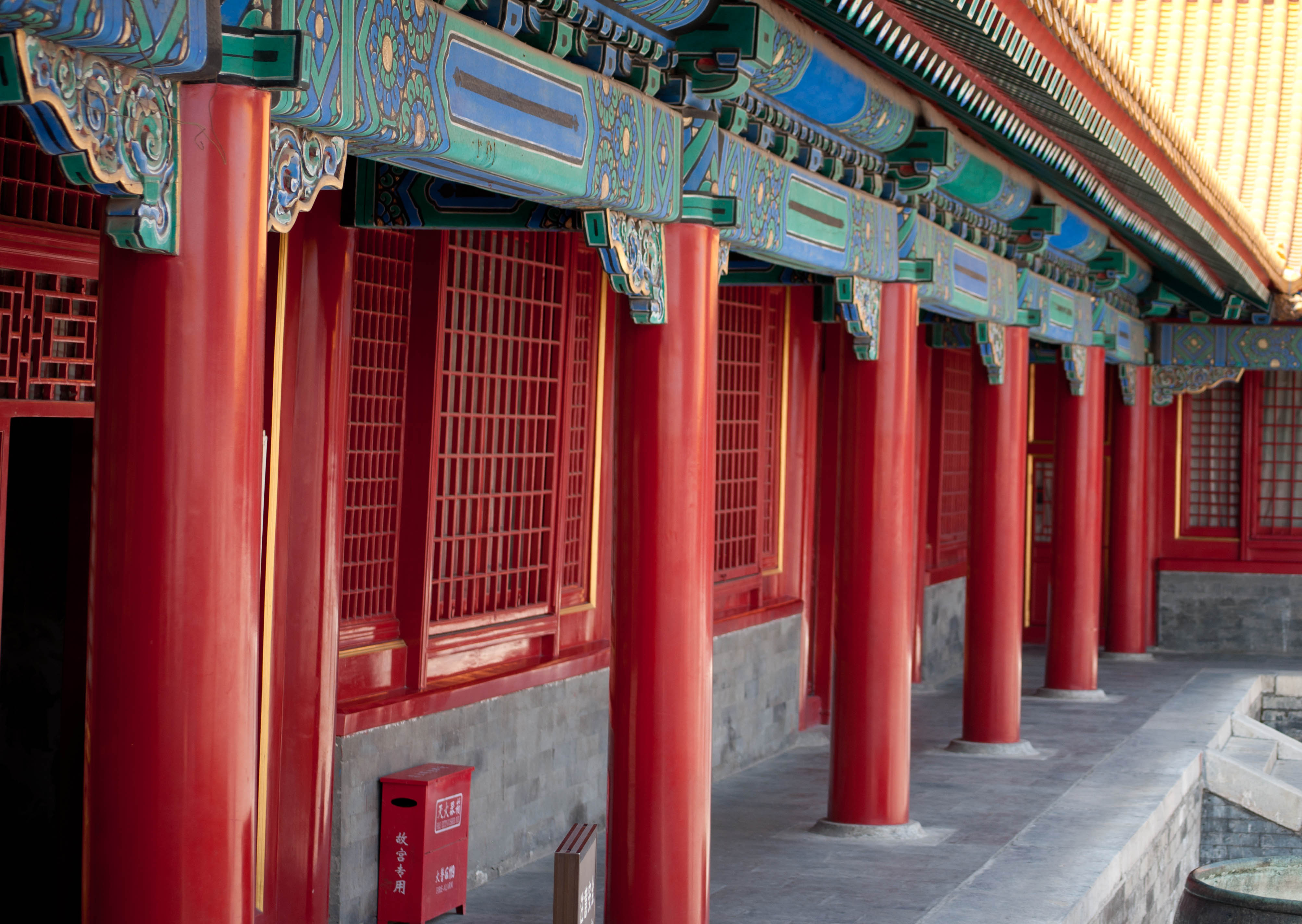
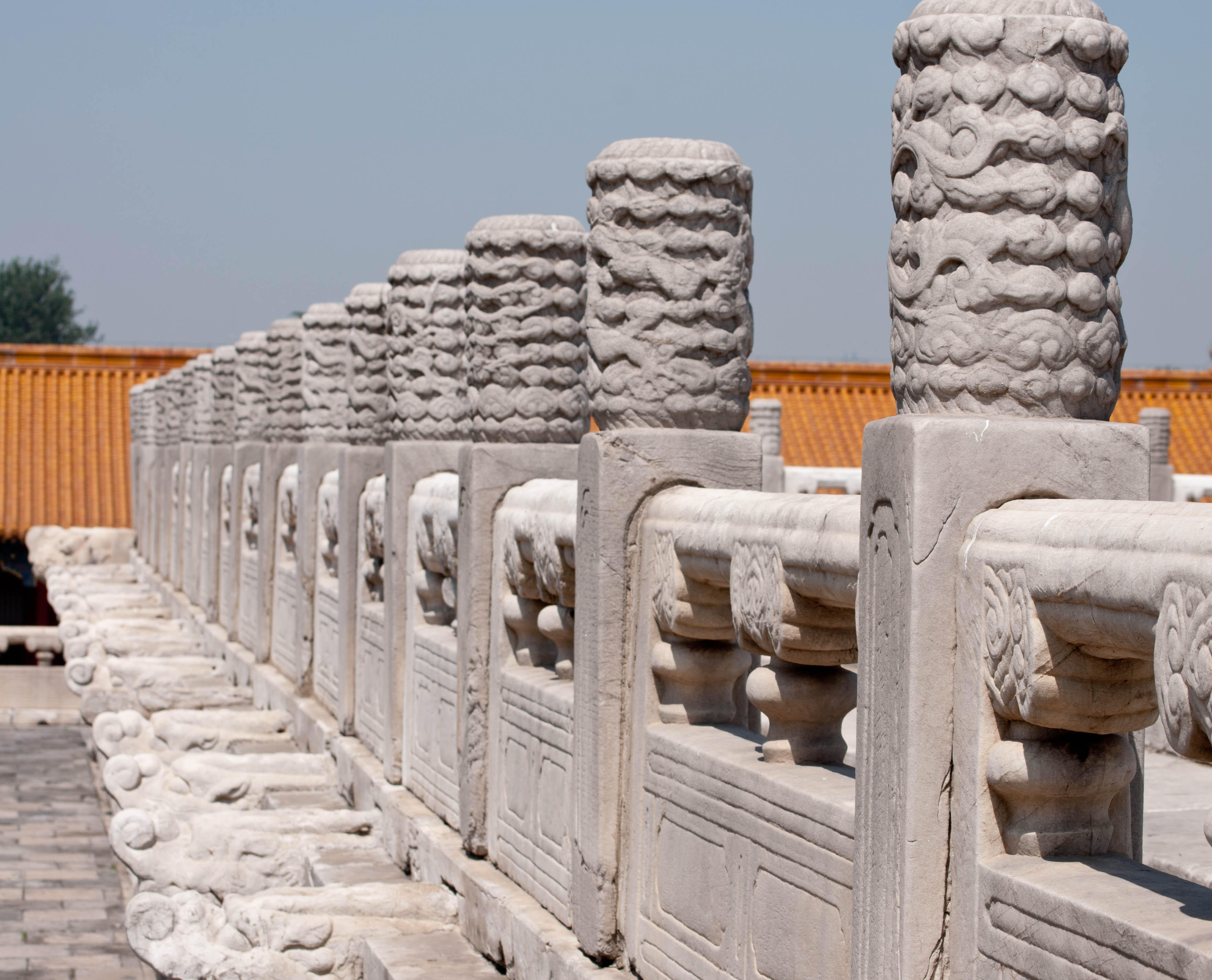
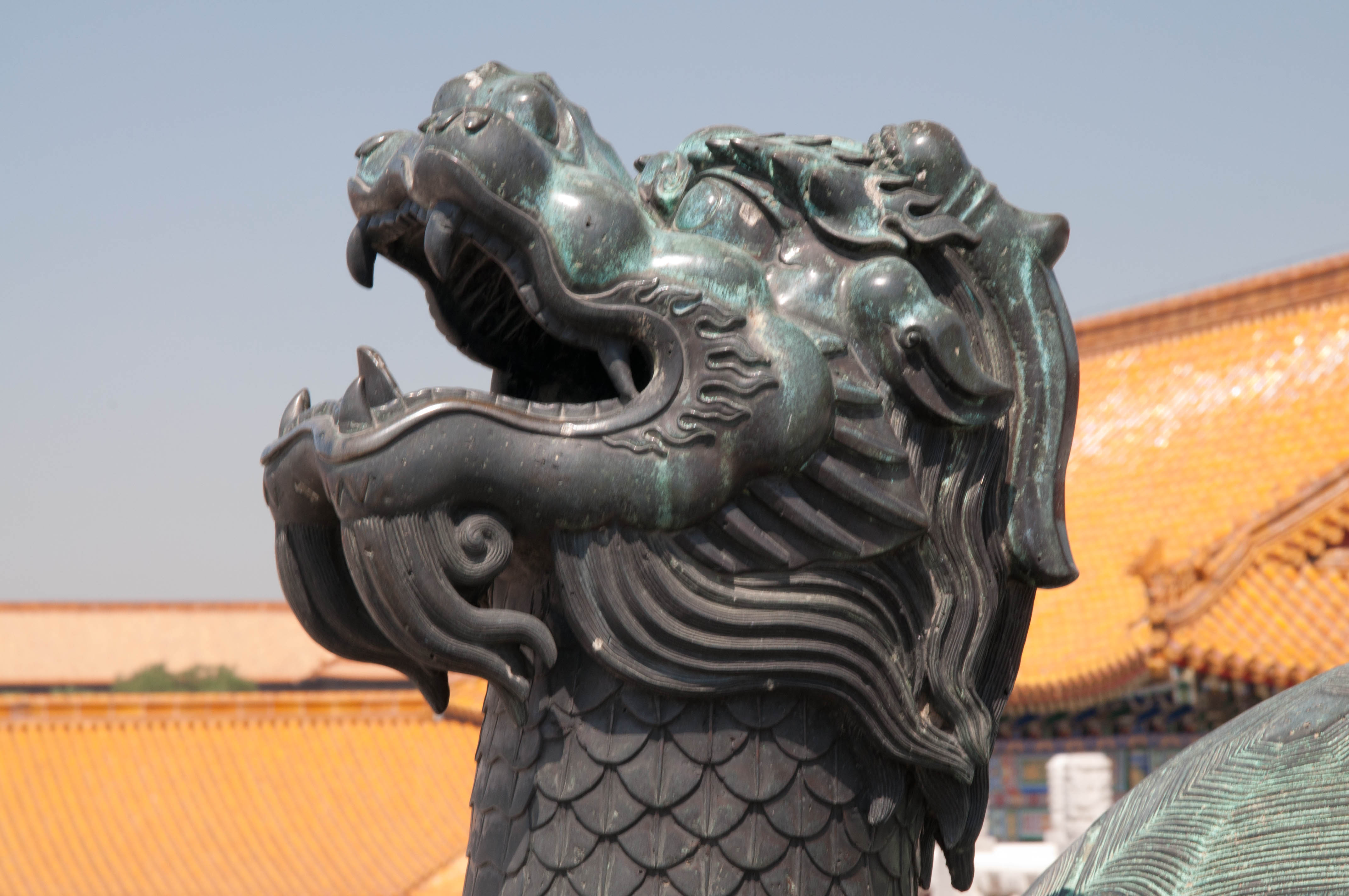
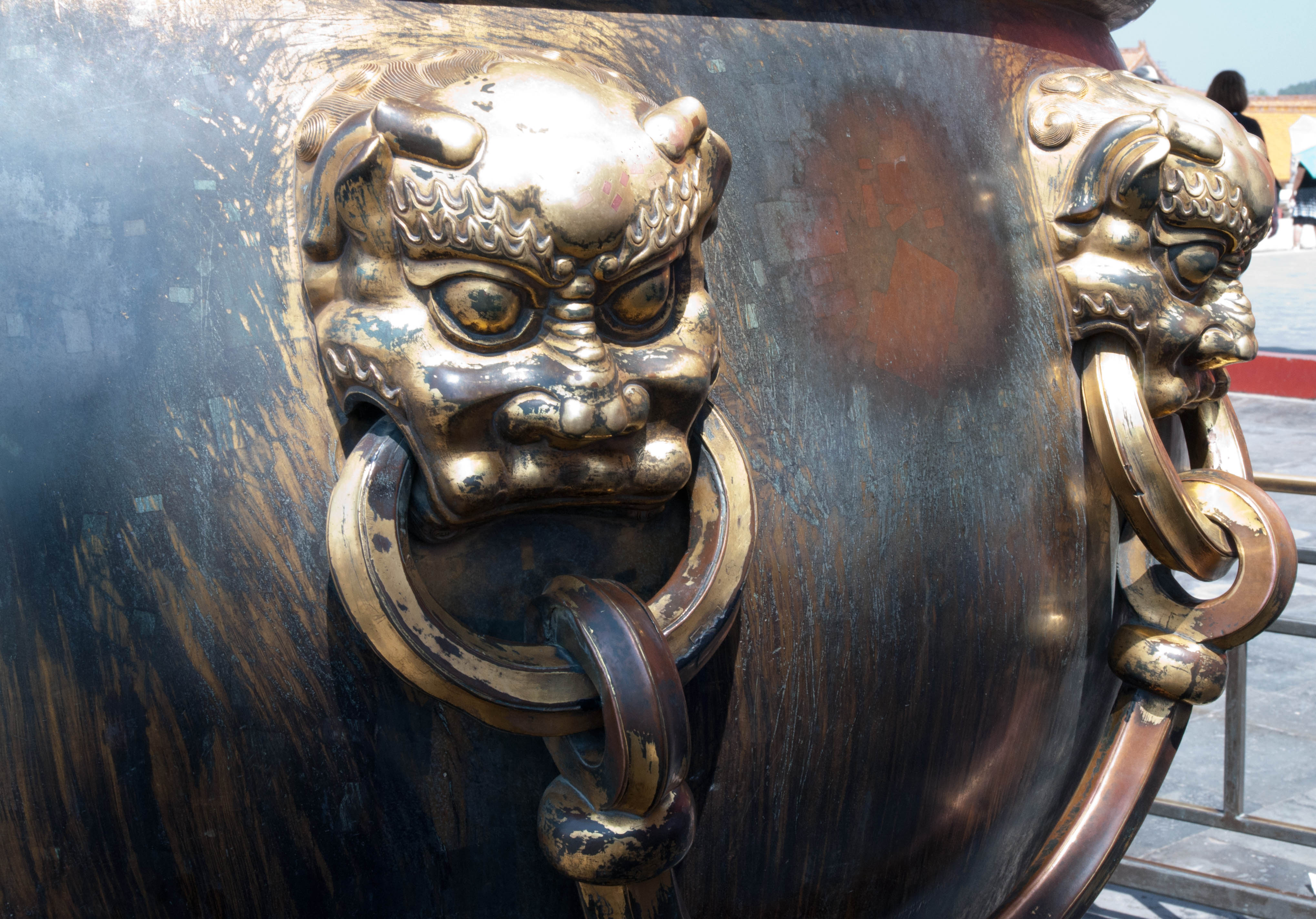
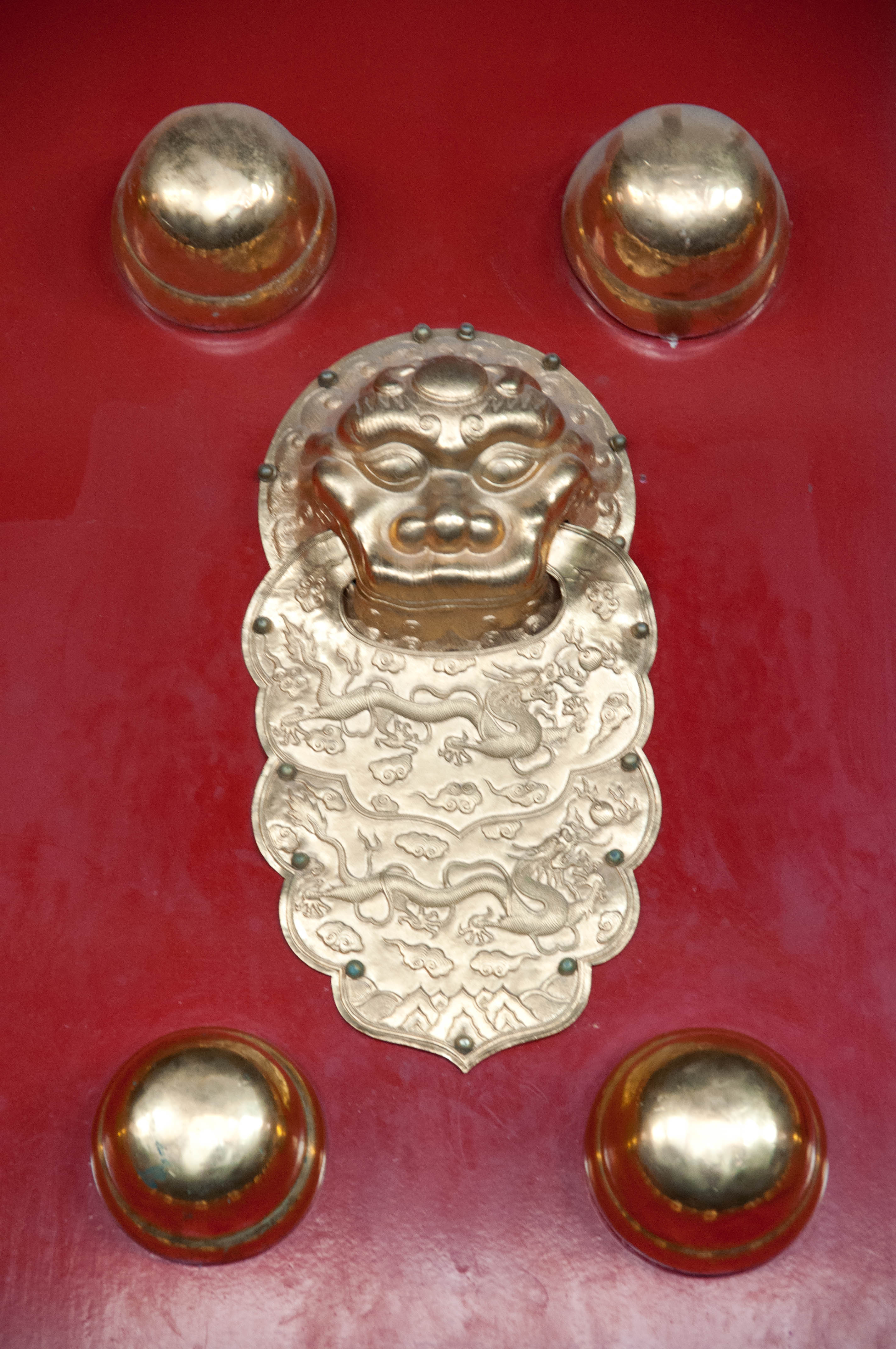
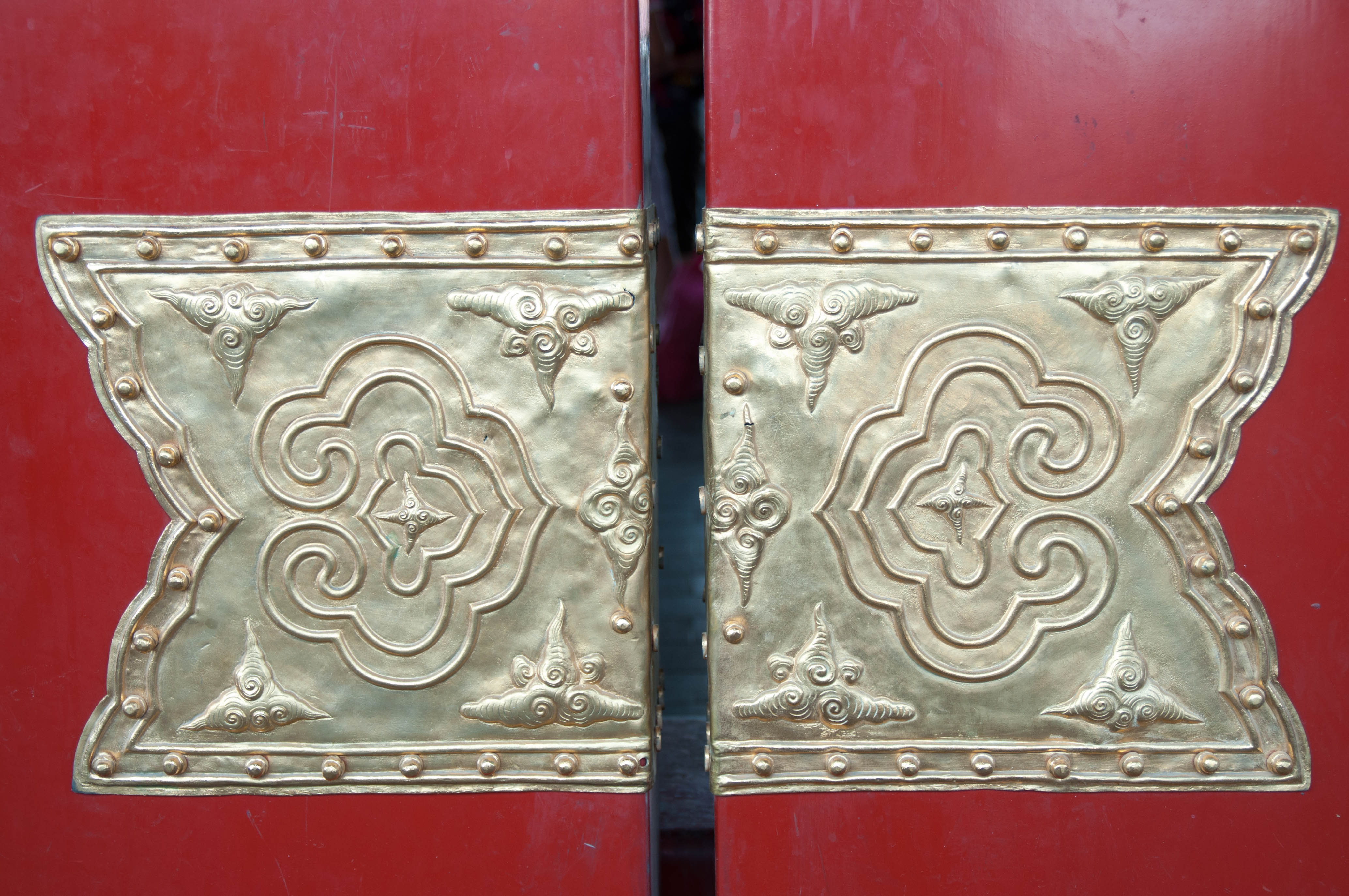
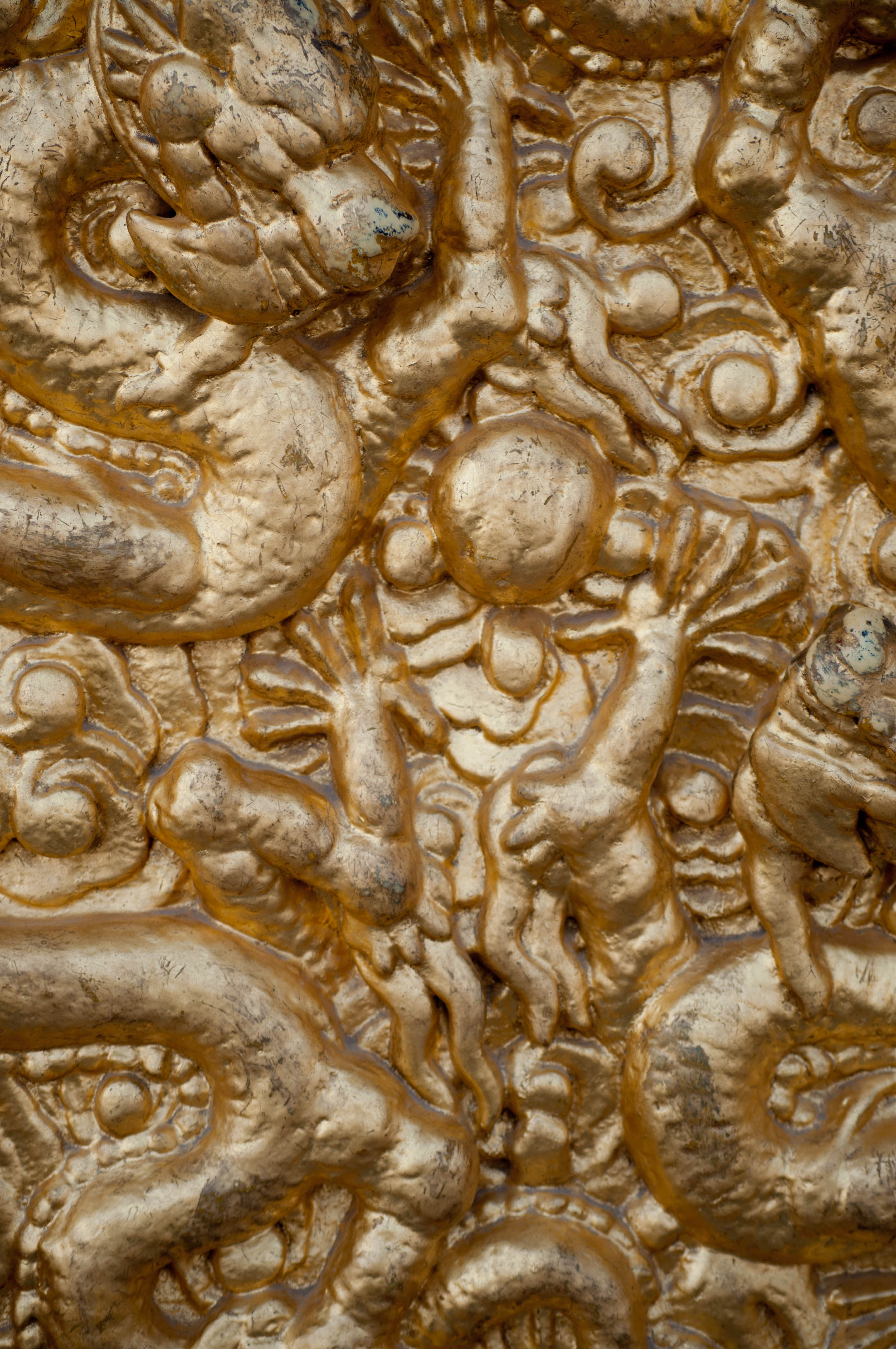
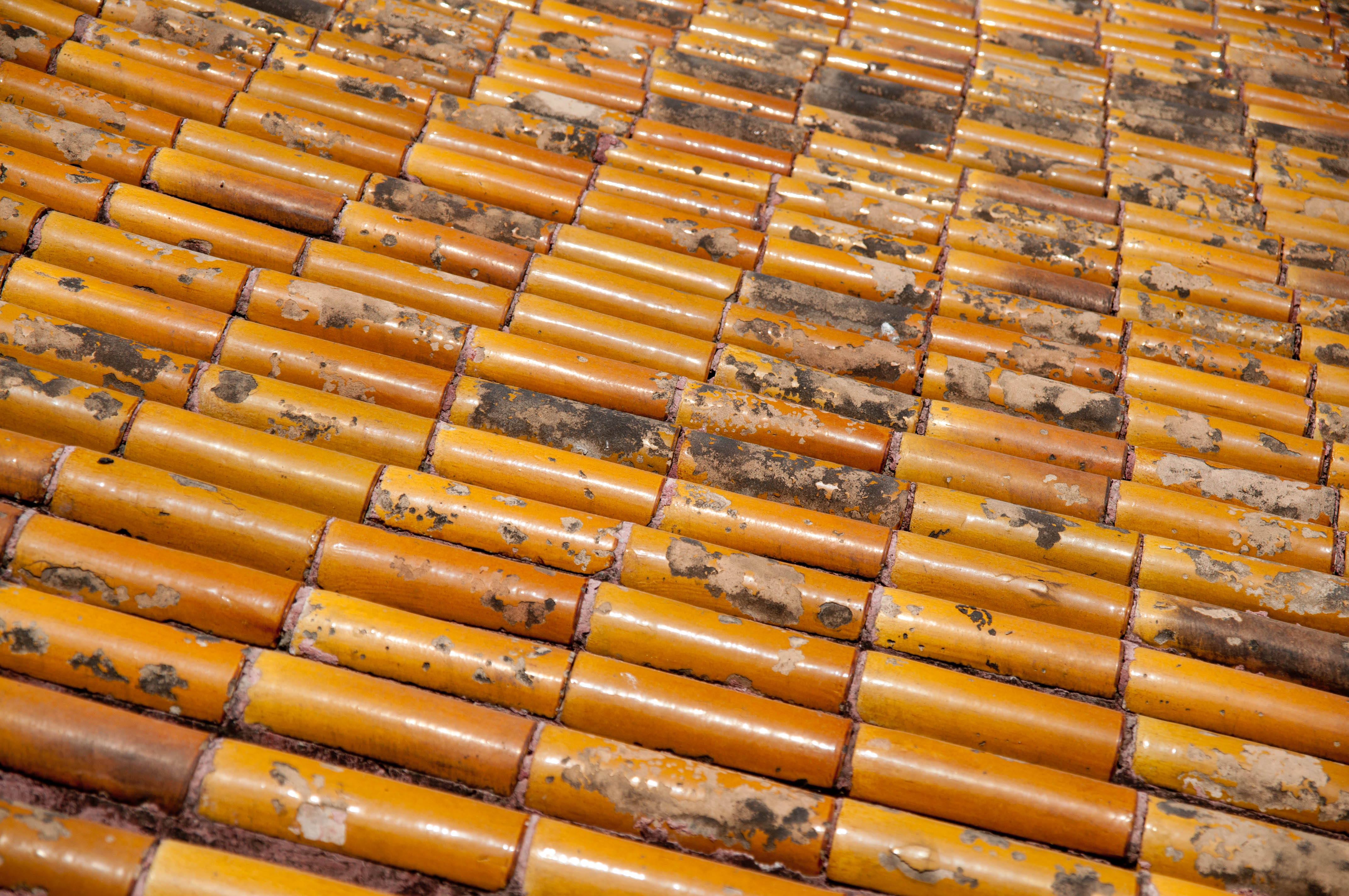
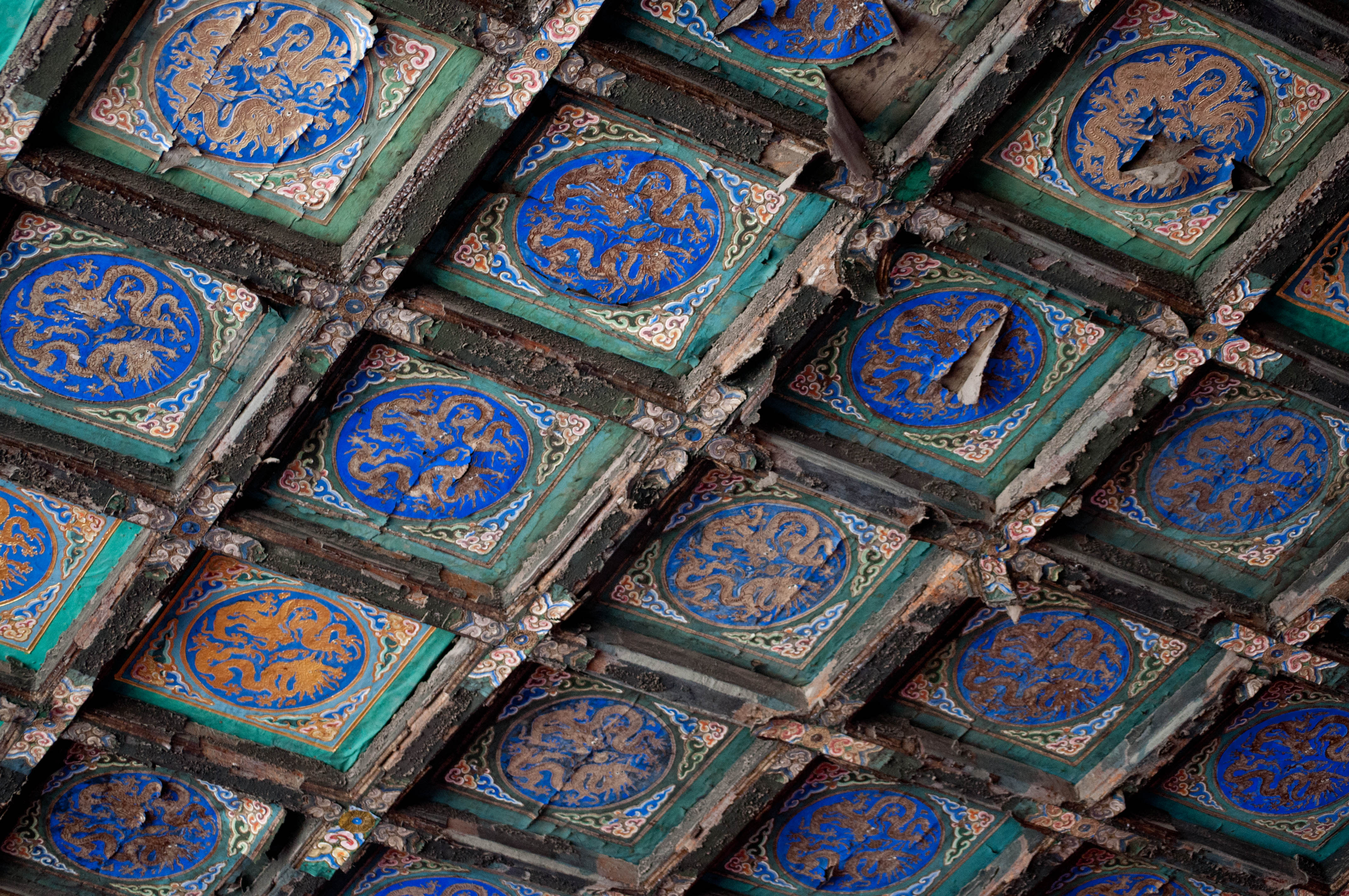
One day in the Forbidden City I decided to focus my photography on the many architectural details of the construction. I am drawn to color, lines, patterns, and details. Sometimes we are awed by the huge scale of the palace and the many buildings that we fail to notice the little things. I hope you enjoy these photos. Much of the Forbidden City has been meticulously restored, but there are still a few sections that remain dilapidated.

Unrestored roof tiles

Unrestored ceiling


你吃饭了吗?“Have you eaten yet?”

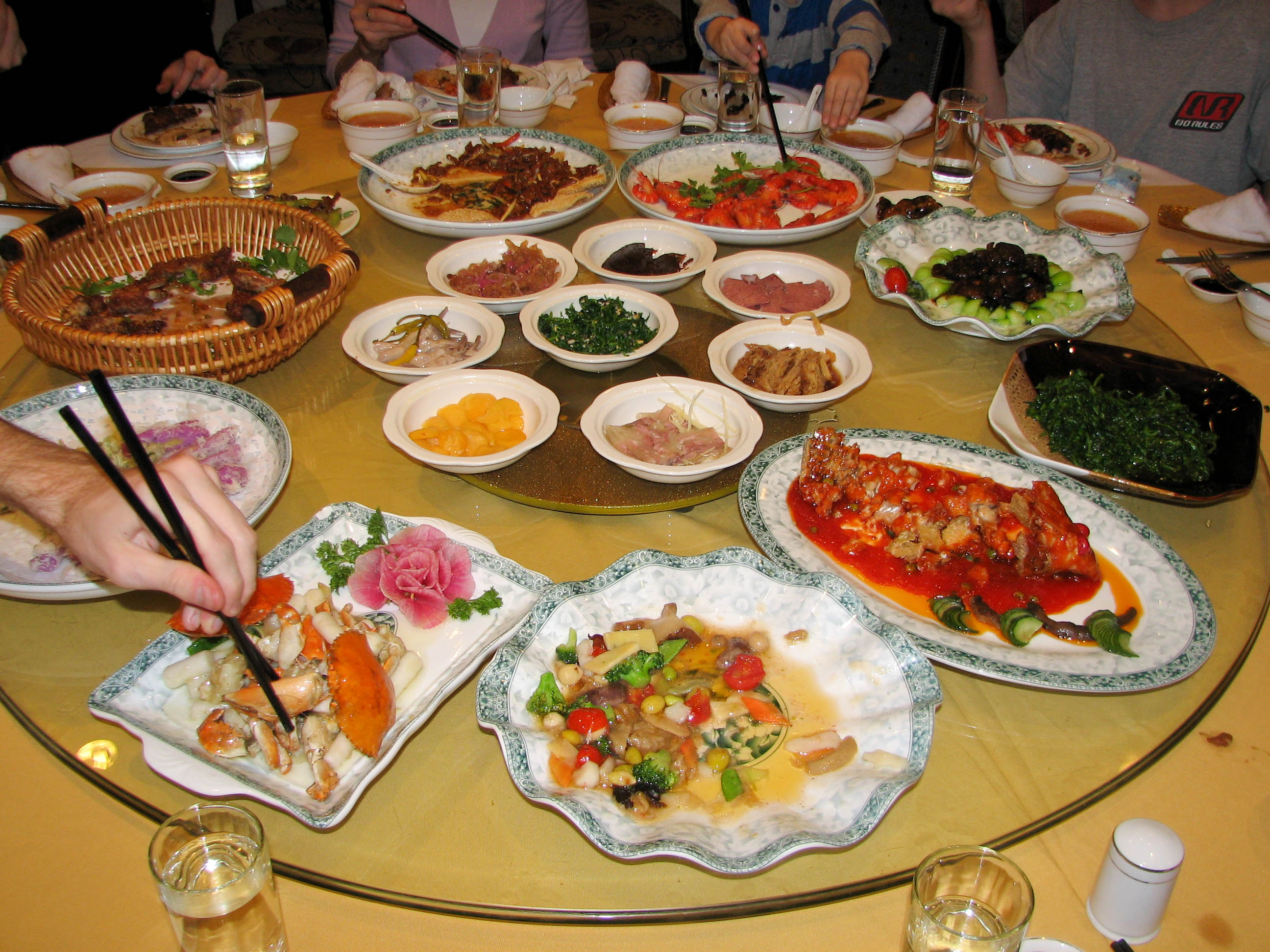
To say that Chinese life revolves around food and eating is not an overstatement. Food is at the core of literally every Chinese holiday and a multitude of everyday activities. In fact, a very common greeting in Chinese is 你吃饭了吗? nǐ chīfàn le ma? “Have you eaten yet?”  It is an expression of well-being, or concern for the other individual. This seems pretty logical coming from a country that has endured centuries of on and off famine.

Food is so important in Chinese culture that the language is full of food and eating terminology. In fact, a search in the wenlin electronic dictionary for the word 吃 chī “to eat” found literally pages and pages of words and expressions that incorporate this word. A similar result was found with the word 食 shí also meaning “to eat” in many Chinese dialects, such as Cantonese. A sampling of the these terms include:

吃苦 chīkǔ eat-bitterness = bear hardship

吃力 chīlì eat-strength =  strenuous effort

吃醋 chīcù eat-vinegar = to be jealous

吃亏 chīkuī eat-loss = suffer a lose; come to grief

吃惊 chījīng eat-surprise = to be startled or shocked

A couple other food related expressions that are commonly used in everyday speech include:

铁饭碗 tiěfànwǎn       iron rice bowl = to have a secure job

炒鱿鱼 chǎo yóuyú    fry squid = to be fired, as in“他炒了我的鱿鱼” tā chǎo le wǒde yóuyú “He fired me” literally, “He fried my squid.”

吃不了兜着走 chībuliǎo dōuzhe zǒu

carry away leftovers from a meal = to get into serious trouble; for example if I said, 你吃不了兜着走 nǐ chībuliǎo dōuzhe zǒu  means that you are in serious trouble. Obviously the meaning in this expression is metaphorical.

China truly is one of the great ancient cuisines, along with France and Greece. It is a cuisine that has survived and evolved for thousands of years. What most Americans do not realize is that Chinese cuisine varies dramatically across the country. In other words, there is not just one kind of Chinese food, but rather many kinds of Chinese food, that use different ingredients, different methods of preparation, and different methods of cooking. There are also popular dishes that you can find all over China.

Below are a few photographs of some dishes I like to eat when I travel to China. In a later post I’ll discuss some of the different kinds of Chinese food.

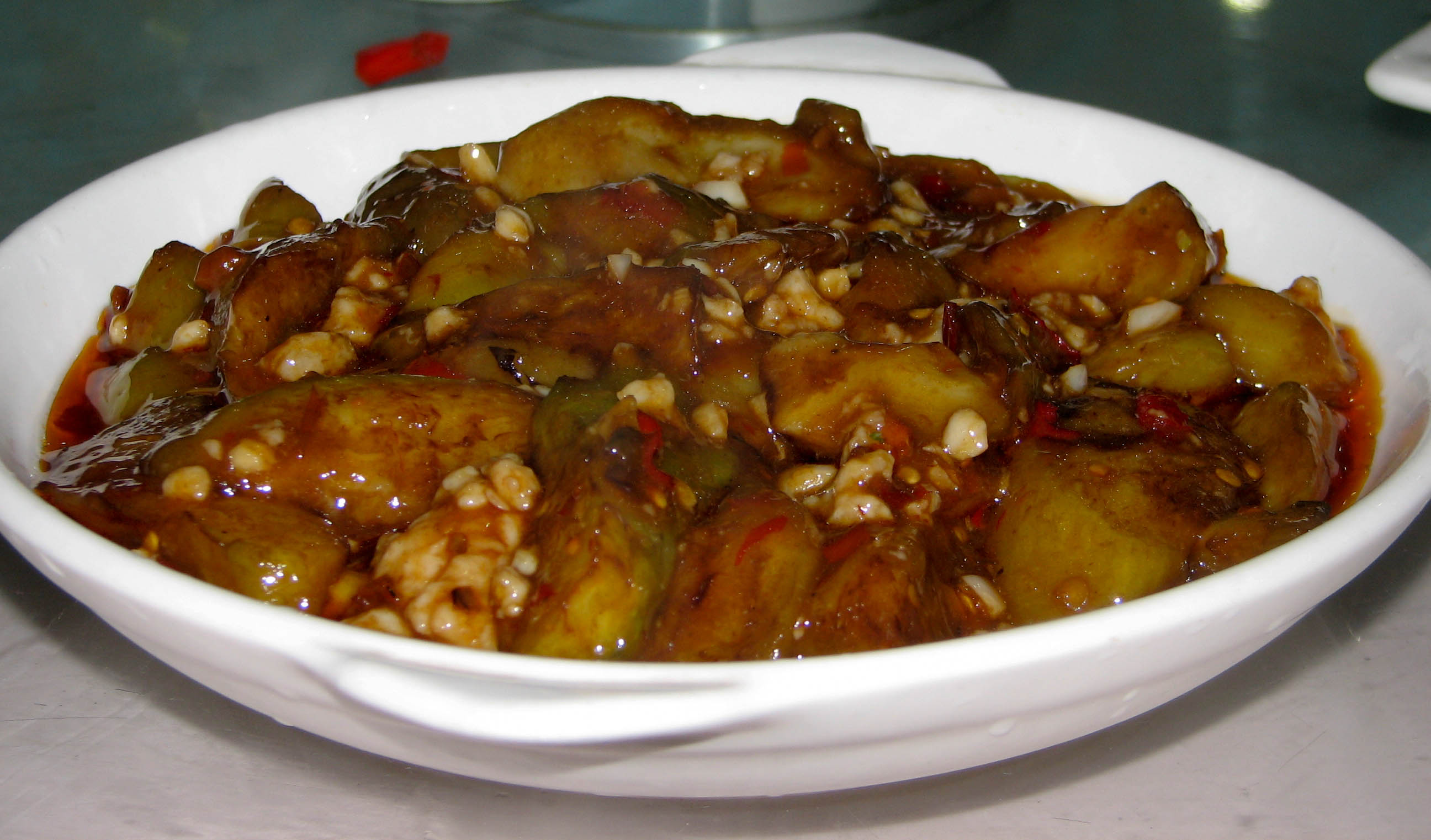
鱼香茄子 yǔxiāng qiézi; fish flavored eggplant

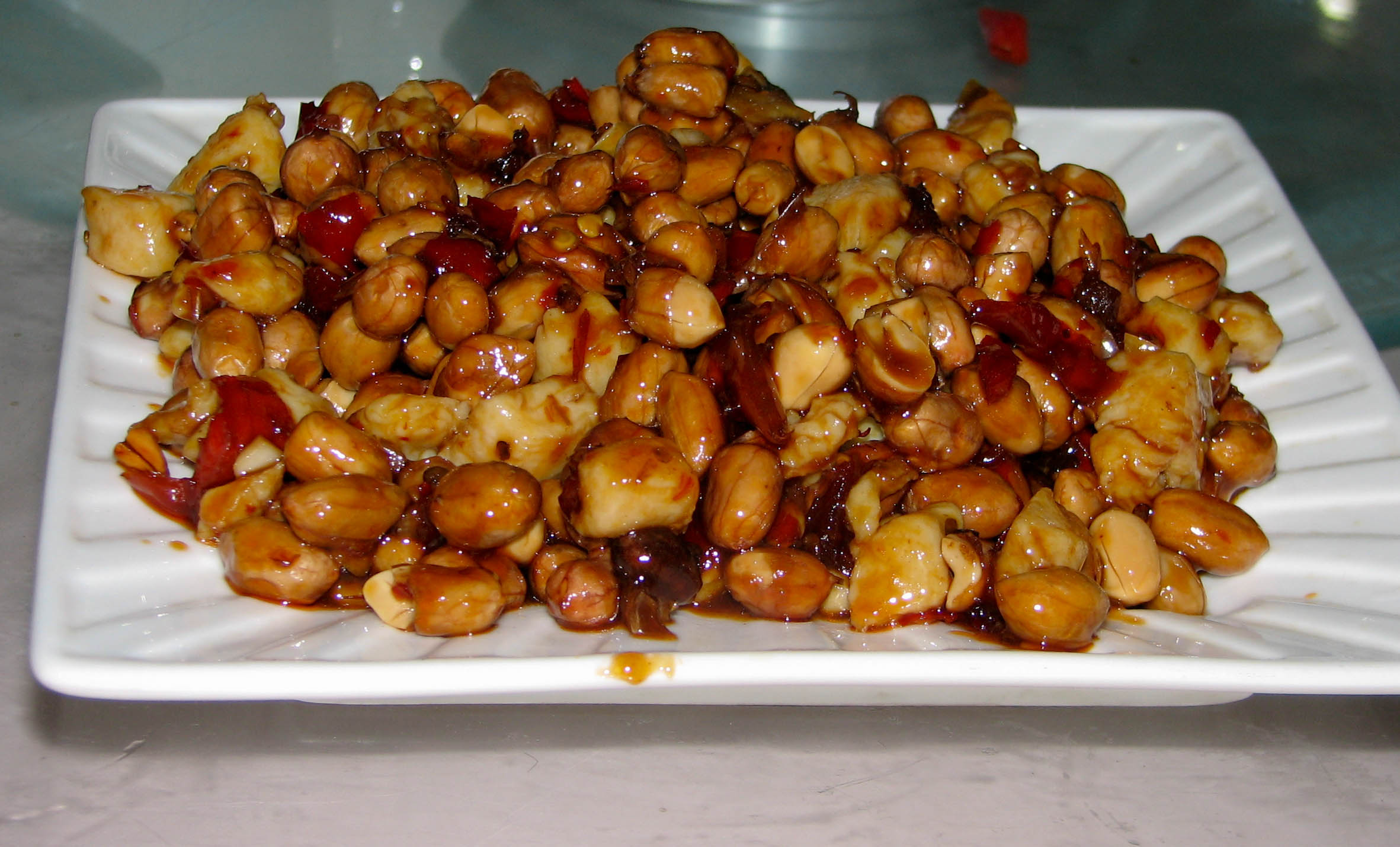
宫宝鸡丁gōngbǎo jīdīng; Kung Pao Chicken

番茄炒鸡蛋 fānqié chǎo jīdàn; scrambled eggs with tomatoes

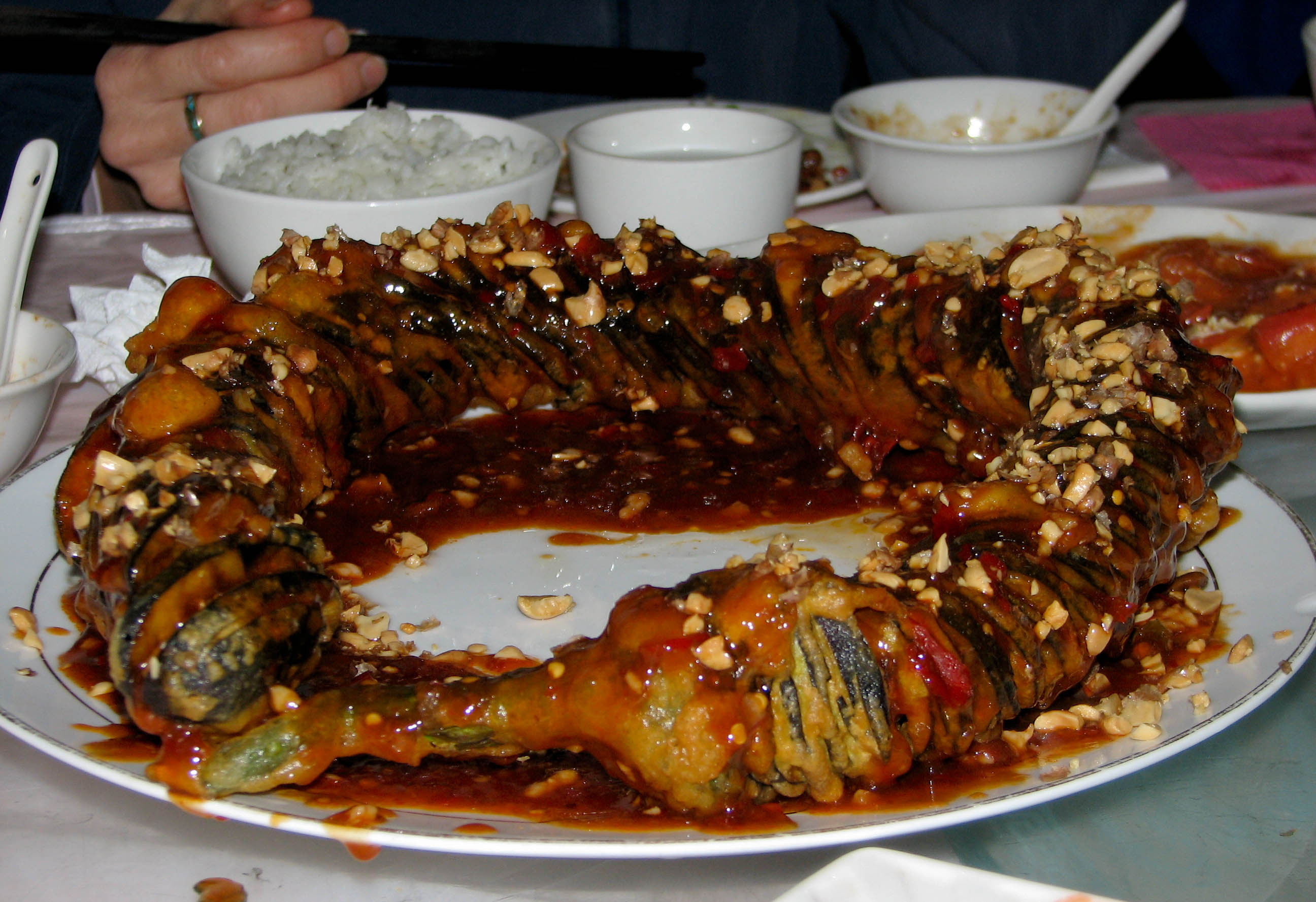
I don’t know the origin of the eggplant dish below, but I have only found it at one very small restaurant in Nanjing. It is truly delicious—spicy, sweet, and crunchy.

蟠龙茄子 pánlóng qíezi; coiled dragon eggplant

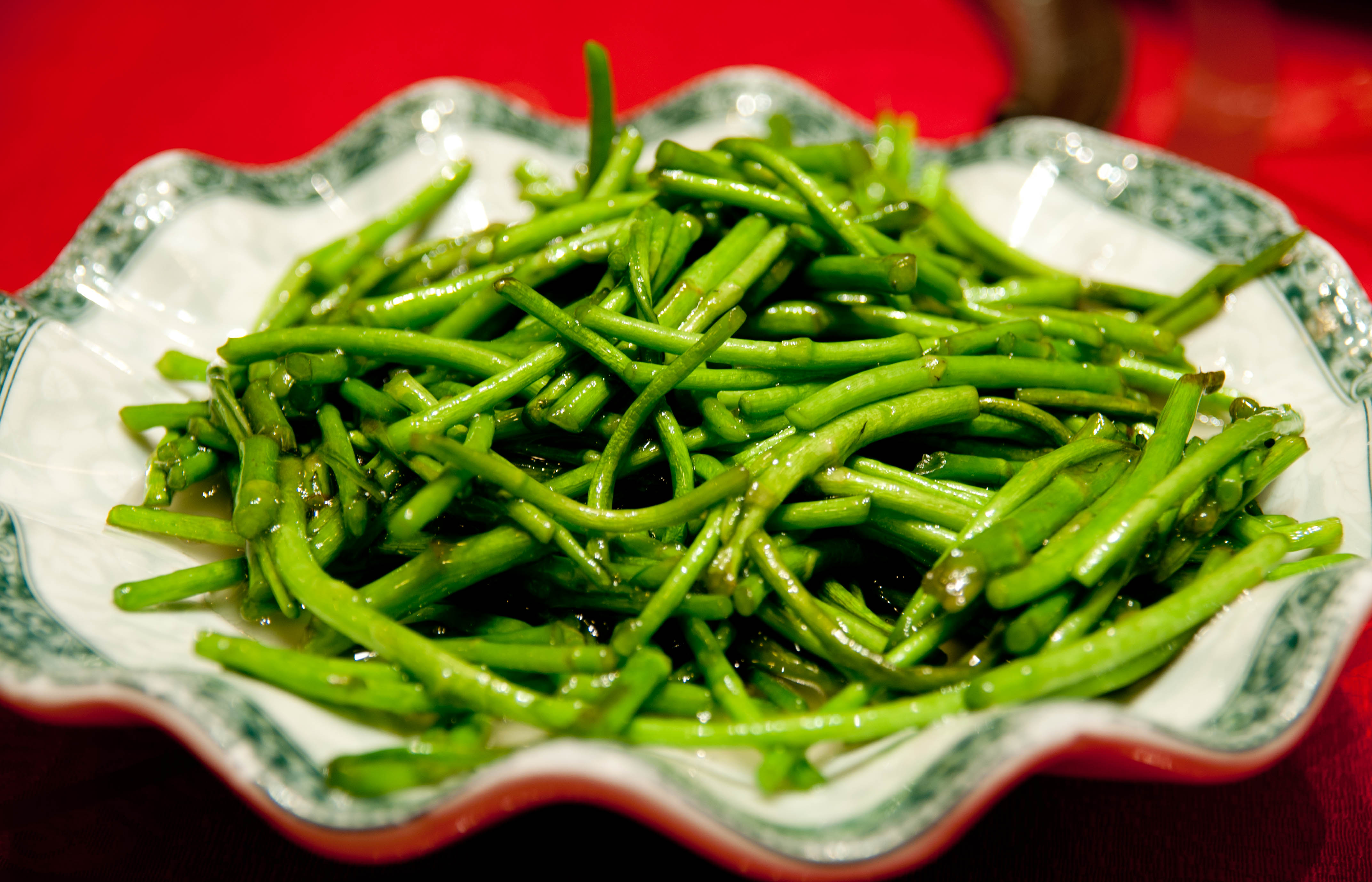
四季豆 sìjìdòu; green beans

南京盐水鸭 nánjīng yánshuǐyā; Nanjing salted duck

穆斯林羊排 mùsīlín yángpái; Muslim lamb ribs

烤鸭 kǎoyā; roast duck

And finally some dimsum dishes from Hong Kong.