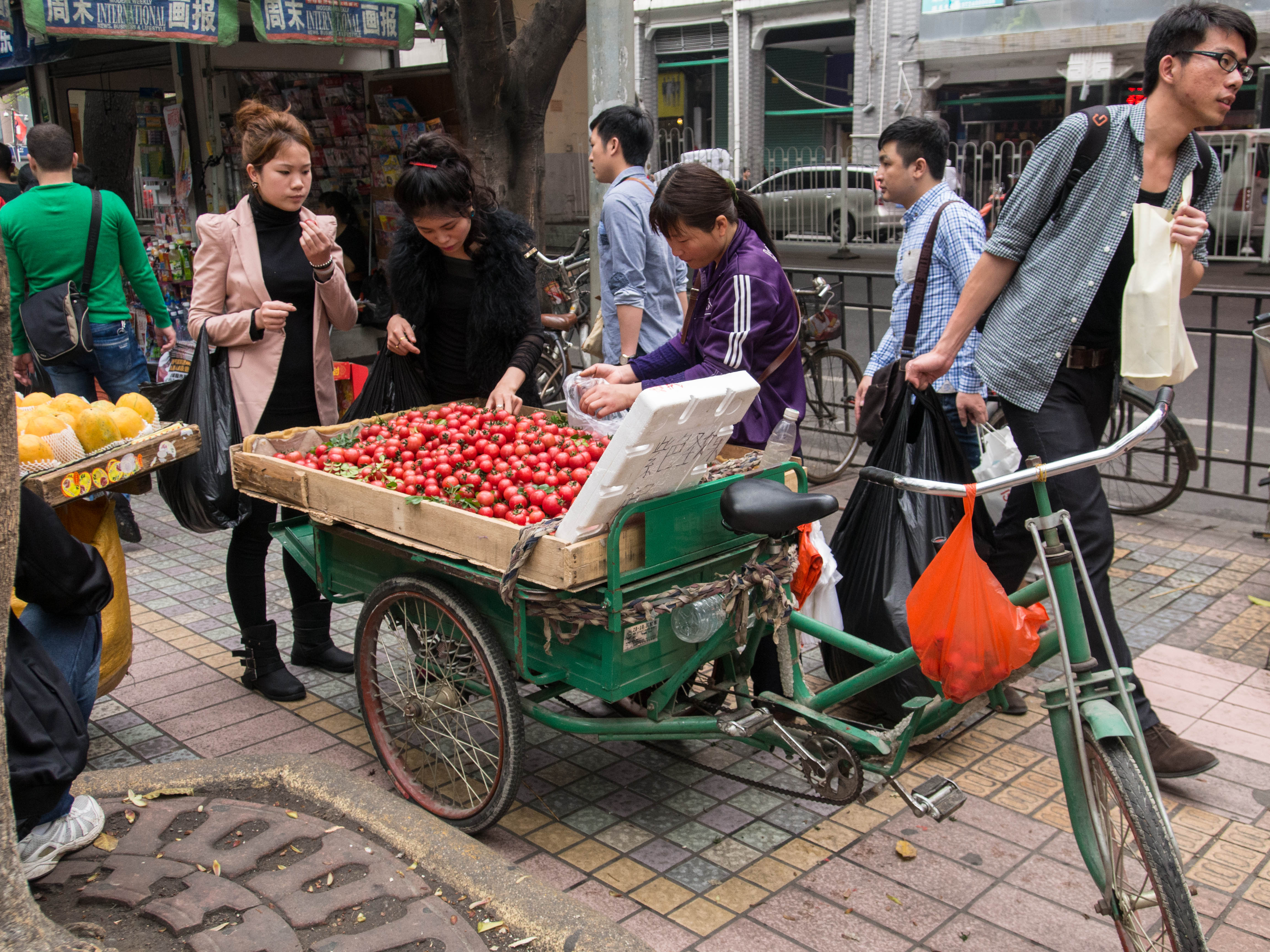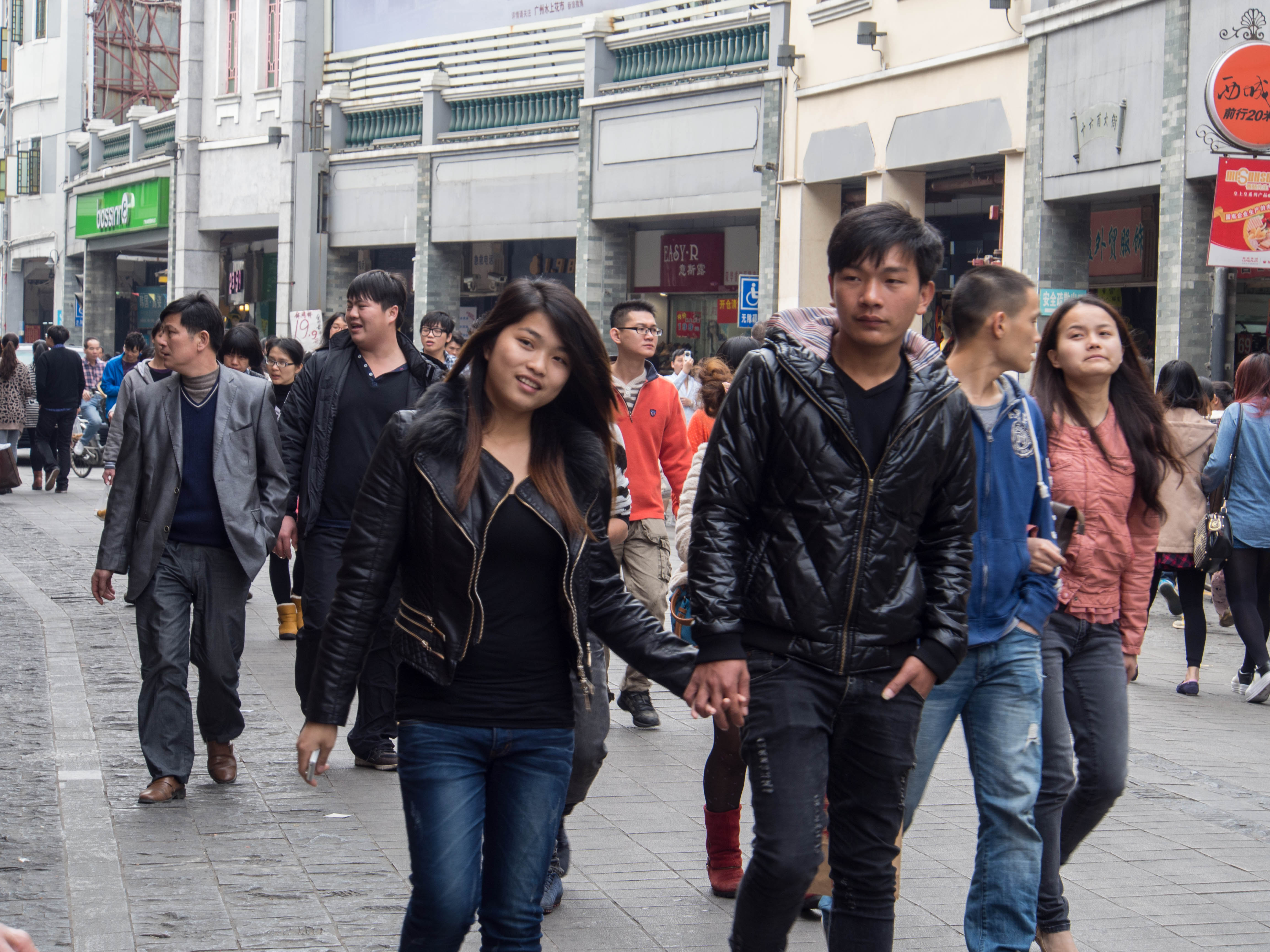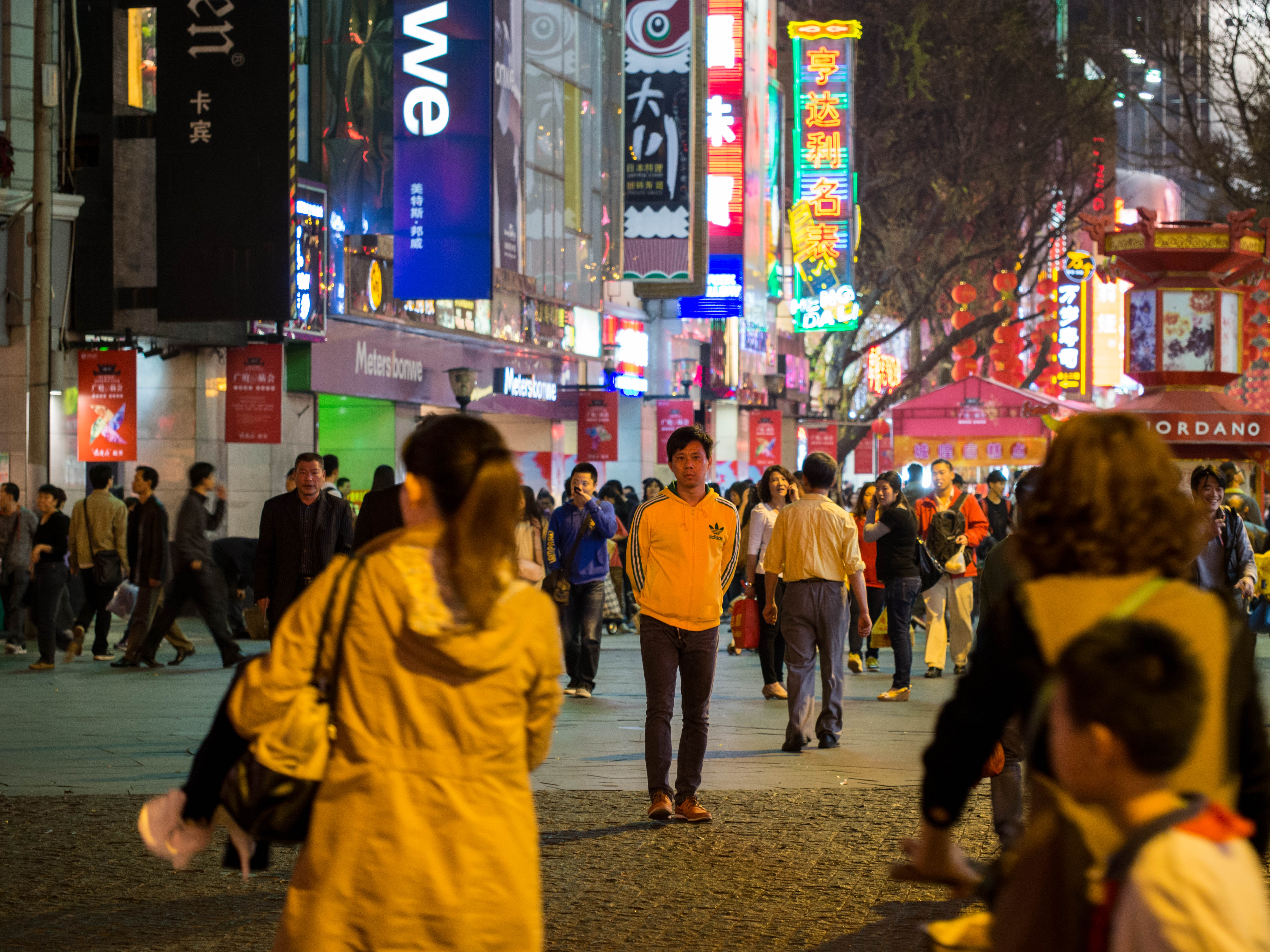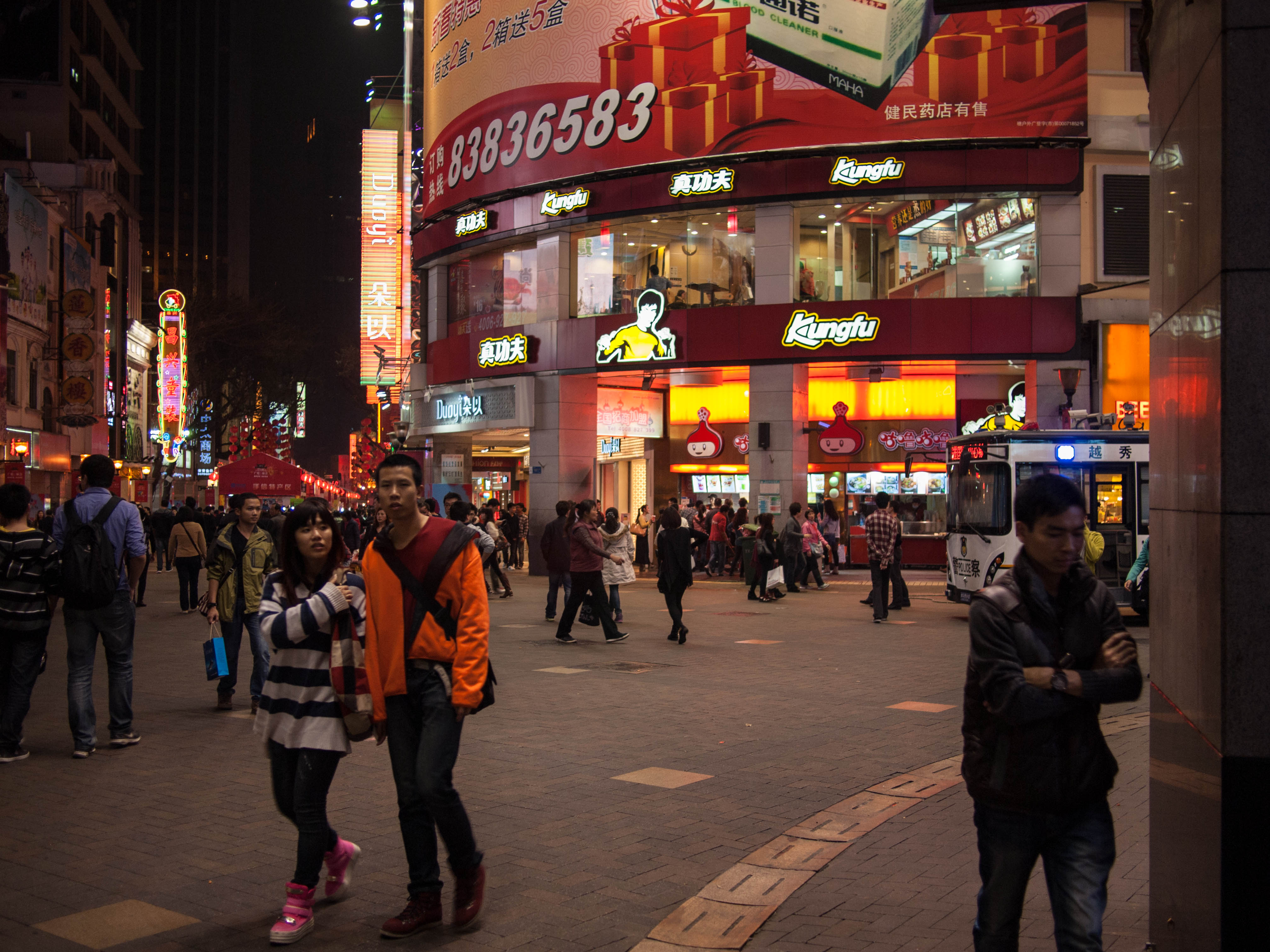
Poetry is alive and well in China

I came across this article today about a popular poetry app in China. The article is by Wu Yiyao in Shanghai at China Daily. The story is about a WeChat (微信 wēi xìn) app called 读 诗再睡觉  (dú shǒu shī zài shuìjiào Read a poem before bed). Poetry has been an important and integral part of Chinese society for most of its history. Though poetry is no longer a part of the Chinese education system, to some people it is still important. The 40,000 subscribers to this app are evidence of that. The original story is below, along with a link to the China Daily (Europe) online version.

Here also is a link to a Chinese story about this app.

http://www.nx.xinhuanet.com/2013-10/20/c_117789507.htm

Source: China Daily (1/30/14):

http://europe.chinadaily.com.cn/culture/2014-01/30/content_17265962_2.htm

Reviving the power of poetry

By Wu Yiyao

Wang Xiaoyu’s favorite bedtime routine now is to reach for her smartphone and play a poem. Every night at 10 pm, the 32-year-old sales executive in Shanghai logs on to a poetry-sharing group on the social network WeChat and listens to or reads a poem. It has become a regular pastime ever since she discovered the group, whose Chinese name literally translates to “Read a poem before you sleep”.

“At first I felt the poetry helped me relax and made me calm, but I gradually discovered that joining the group also let me connect with people who share the same passion,” Wang says. Like many of the 40,000 subscribers of the account, Wang used to write poems when she was in college, but gave it up after she started working. Having a family and raising a child left her little time or energy to get creative.

“Read a poem” was initiated by Fan Zhi-xing in March 2013. He had intended to make it a romantic way to express and connect, by reading a poem “to the one you care and love for”, in this age where relationships are both advantaged and disadvantaged by virtual connections. He started the ball rolling with a Chinese translation of Crossing the Bar by English poet Alfred Tennyson.

More and more found out about the poetry account and started to join the discussions, and shared poems. By early 2014, group members had already shared more than 300 poems of a wide range of genres. Subscribers soon grew beyond Fan’s personal network, and volunteers joined an editing team to select works to be sent out through the account. An introduction posted on the poetry-sharing group tells newcomers that “poems will not erase the wrinkles on your face, but they will keep your heart young”.

“It all started from a private emotional need, but it so happened that it also answered the inner callings of many others,” Fan says. A poet himself, Fan says he believes poetry is not distanced from the fast pace of modern life. Not so long ago, poetry societies flourished in China’s universities and high schools, and even with the far-reaching influence of the Internet, a poet at that time would still find a large and appreciative following through books, magazines or even hand-written copies.

“Those were times when people were zealous about poems and poets, which I reckon may not necessarily be healthy. But these days, there is a noticeable gap between how people feel and their ability to express their feelings.”Emotions are often suppressed in today’s world for many reasons, Fan says. It could be due to a lack of time, a neglect of personal feelings, and sometimes, a systemic failure to encourage expression.

His poetry-sharing group has gradually shifted focus from just individual expression to a broader mission – to close the gap between emotions to be expressed and paying attention to and understanding these emotions. “Poetry appreciation is unlikely to be adopted in our education system, and it is not necessary for it to be. Since we have the Internet, we can promote it outside the schooling system, through mobile devices,” Fan says.

An increasing number of volunteers who join the editing team add diversity to the poems introduced to subscribers, who may find themselves listening to a wide range of poetry ranging from Batso Basho’s haiku to Chinese rock ‘n’ roll lyrics, Tang Dynasty (AD 618-907) love songs to the works of the English Lake poets.

Some poems, often recommended by “a friend of a friend”, may also make their debut on the poetry cluster. One contributor of original poems is Yu Xinqiao, whose work If I Die, I Must Die in Your Hands was recently adapted into lyrics for a song which became popular after being promoted on a television program on songwriters. Like Yu, many contributors are keen poets who are not shy about expressing their strongest feeling or most delicate emotional nuances. Some poets may be more reticent about seeking fame, but for the editors of the poetry group, they feel it their duty to share interesting works with their subscribers.

In the age of we-media, there are now more channels to share their works with others, even total strangers. Read a Poem can expand the reach of these interesting poems to a wider audience, Fan says. “Mainstream, scholarly monographs or periodicals may not spare space for these new poets, but they deserve to be more widely known. They are the current voices of this age,” Fan says.
Spectacular Meals: Guiyang (贵阳 guìyáng)

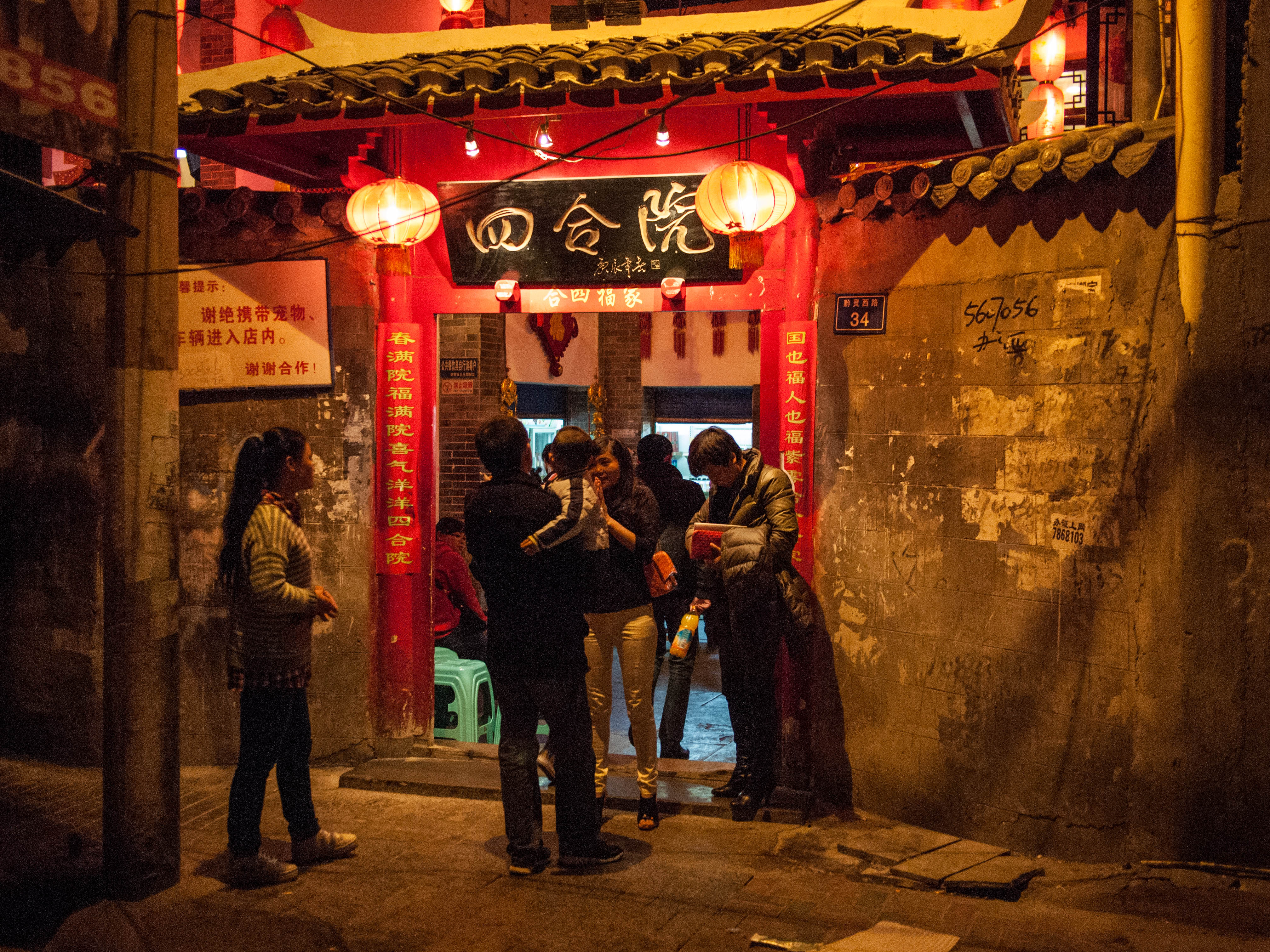
The name of the restaurant was simply 四合院 sì hé yuàn; this is what traditional courtyard houses were called in China.

The name of the restaurant was simply 四合院 sì hé yuàn; this is what traditional courtyard houses were called in China.

April, 2013 my side kick Michael and I were in Guiyang for a few days to check out the cuisine. We weren’t expecting much, especially when we arrived at the bus station outside town. It was pretty gritty and teaming with peasants and workers. Guizhou is China’s poorest province. We boarded a local bus that brought us downtown. From there we walked to our hotel. We were pleasantly surprised at what we found in Guiyang. We ate well. There was a definite influence from Sichuan cuisine with spicy chili peppers, Sichuan pepper, and fermented soy beans. One night we had a spectacular meal. We read about it on a Chinese foodie blog. It wasn’t easy to find tucked away down an unmarked alley.

The restaurant was at the back of this alley where the red lanterns are hanging.

The restaurant was at the back of this alley and on the right, where the red lanterns are hanging.

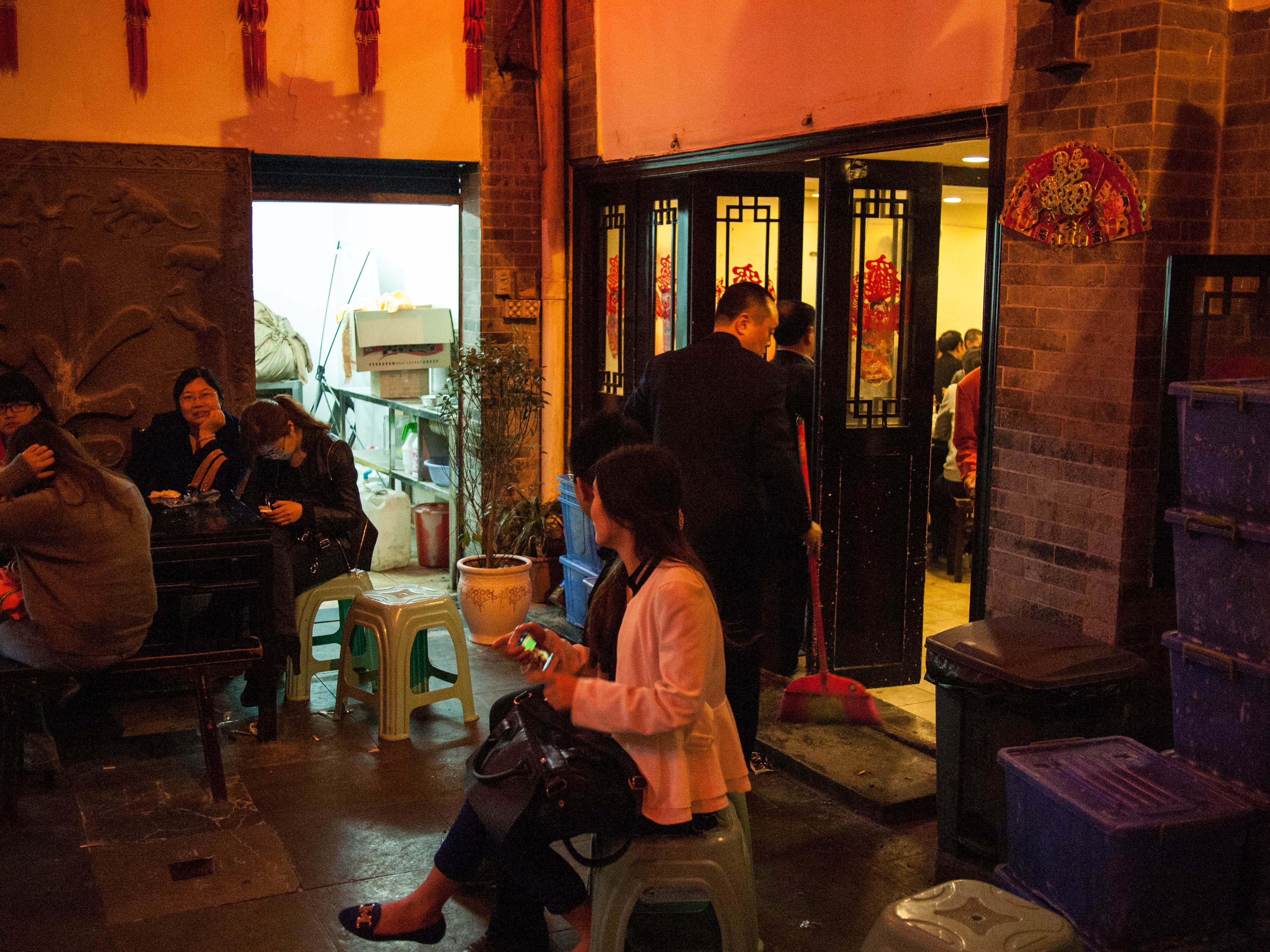
We were excited when we arrived as the place was packed, with lots of people waiting outside in the courtyard. It was loud, crowded, dirty, chaotic. Perfect. All the ingredients for a good meal in China.

People waiting outside in the courtyard.

People waiting outside in the courtyard.

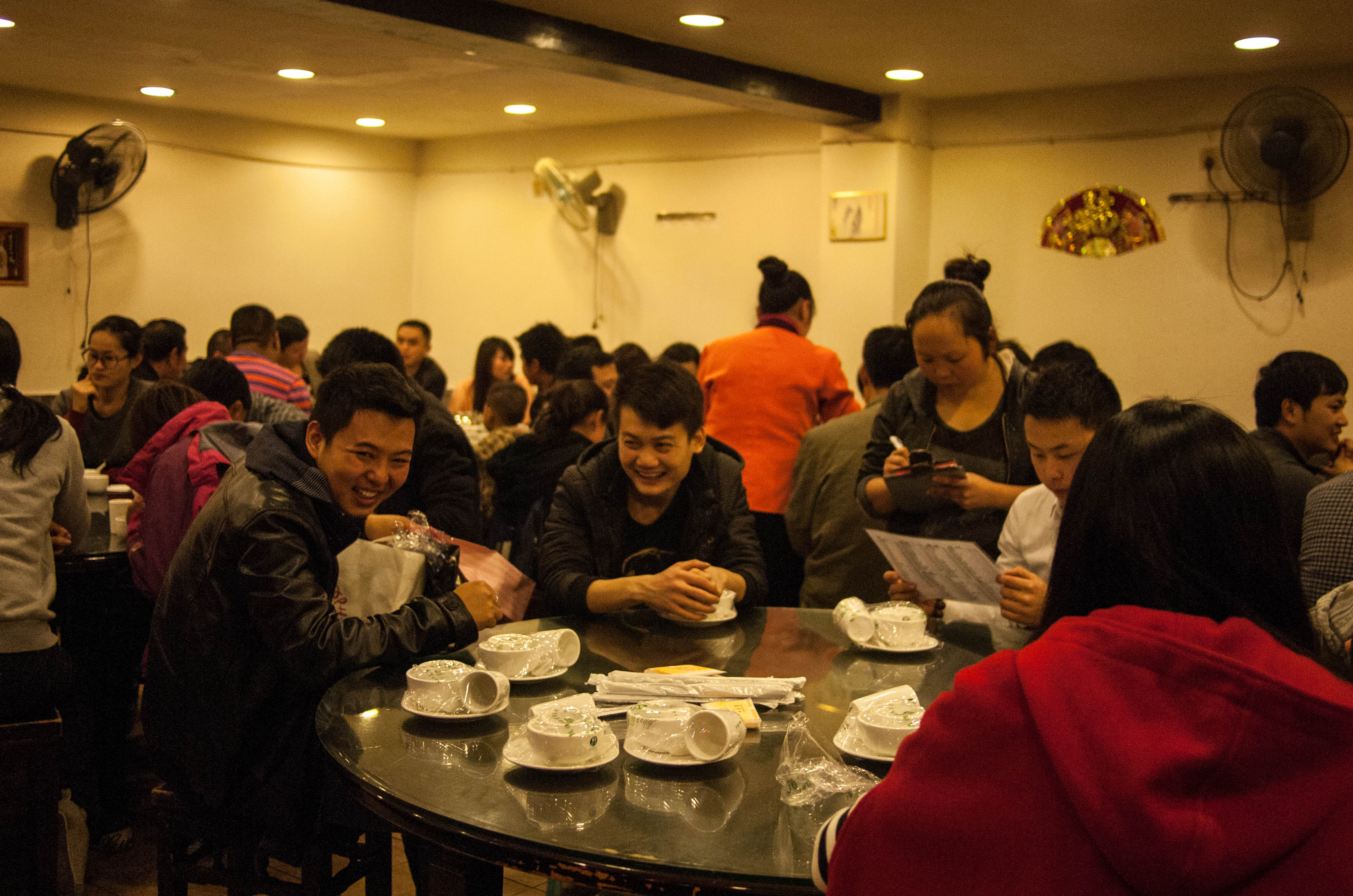
Inside the restaurant. Loud, crowded and trash all over the floor.

Inside the restaurant. Loud, crowded and trash all over the floor.

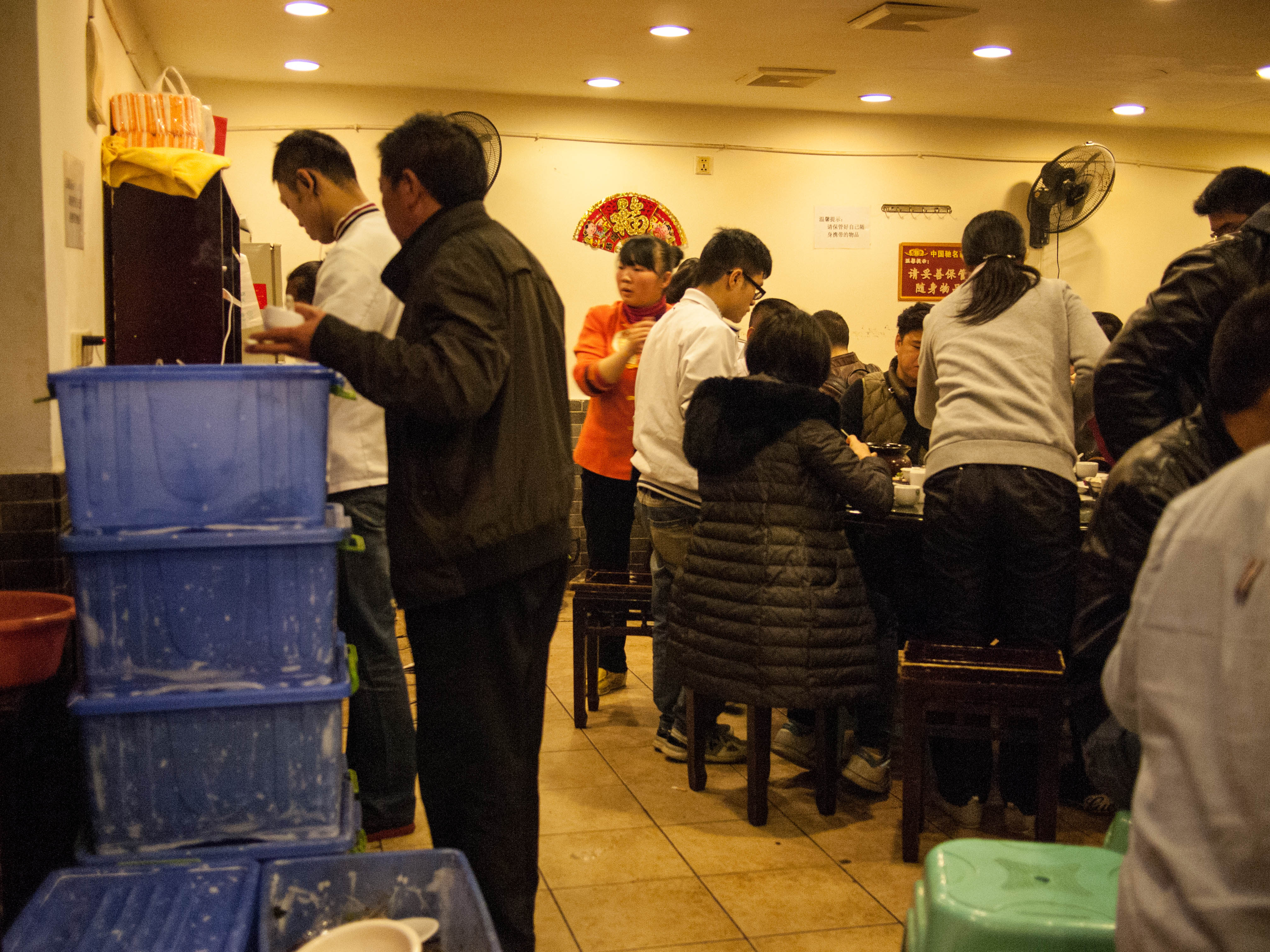
The kitchen spilled over into the dining room.

The kitchen spilled over into the dining room.

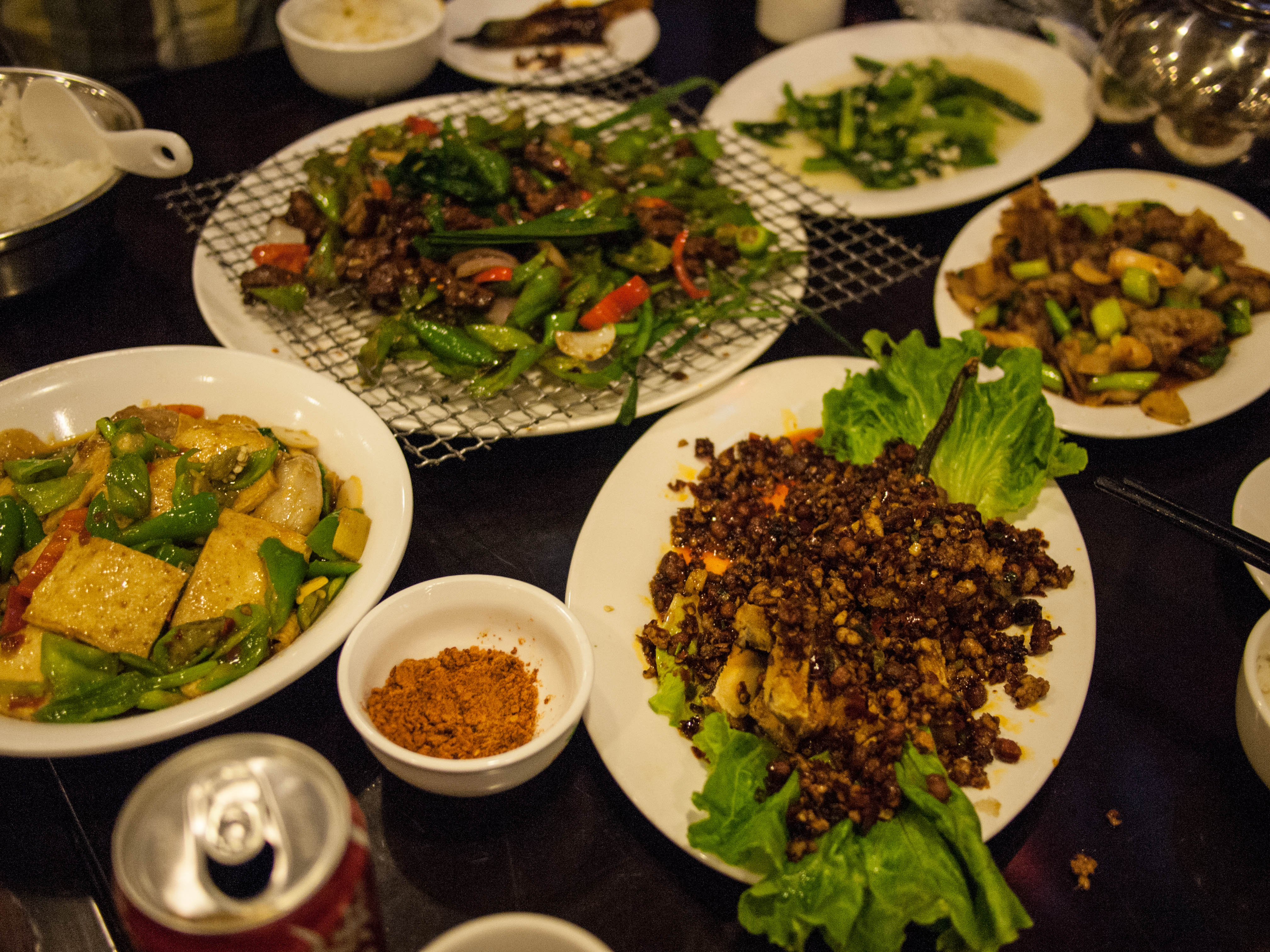
We decided on five dishes. We typically talk to the server and ask what the restaurant is famous for, what are the best dishes. We wanted to get some popular local dishes, dishes that were typical of Guiyang. We were not disappointed with her recommendations. This is what we ate.

OLYMPUS DIGITAL CAMERA

1. 蒜泥笋尖 suànní sǔnjiān (mashed garlic bamboo shoots)

A local vegetable with garlic; maybe it was a type of bamboo based on the name of the dish, but it didn't seem like it.

A local vegetable with garlic

We were a little perplexed by the name of this dish. It certainly didn’t look or taste like bamboo shoots. The waitress told us it was a local, popularly eaten vegetable. It was  prepared very simply, stir-fried with garlic and was crunchy, buttery, and delicious.

Crunchy, buttery, and delicious.

Crunchy, buttery, and delicious.

2. 玉排三线 yùpái sānxiàn (?)

Eggplant with green chilis

Tofu with green chilis

The name of this dish tells us nothing about what it is. Literally it is something like “jade rows, three strings.” It probably has something to do with the symmetric tofu glistening like jade. The three strings refers to the slender cut chili peppers. This was a pretty good dish. The sliced tofu was stir-fried with fatty pork, green chili peppers, red bell pepper, a little tomato, and some ginger. The sauce was rich and complex. The crunchy vegetables provided a nice counterbalance to the smooth, silky tofu. One of the many wonderful things about tofu is that is readily absorbs the flavors of whatever it is cooked with. Tofu is eaten all over China and I like to see all the different ways it is prepared in different regions of China.

Silky tofu.

Silky tofu.

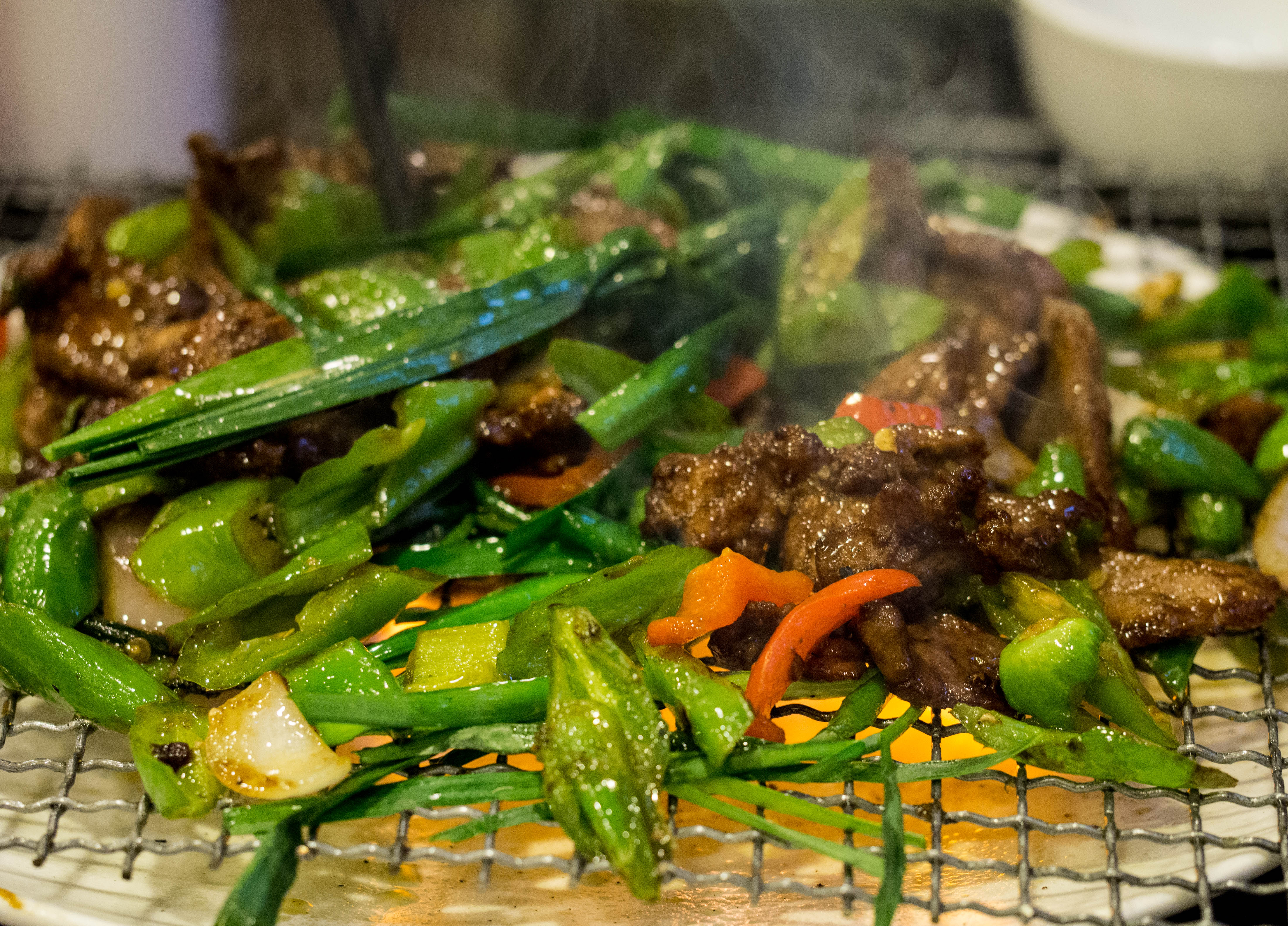
3. 火焰牛肉 huǒyàn niǔròu (Flame cooked beef)

Tender beef and vegetables served over a flame.

Tender beef and vegetables served over a flame.

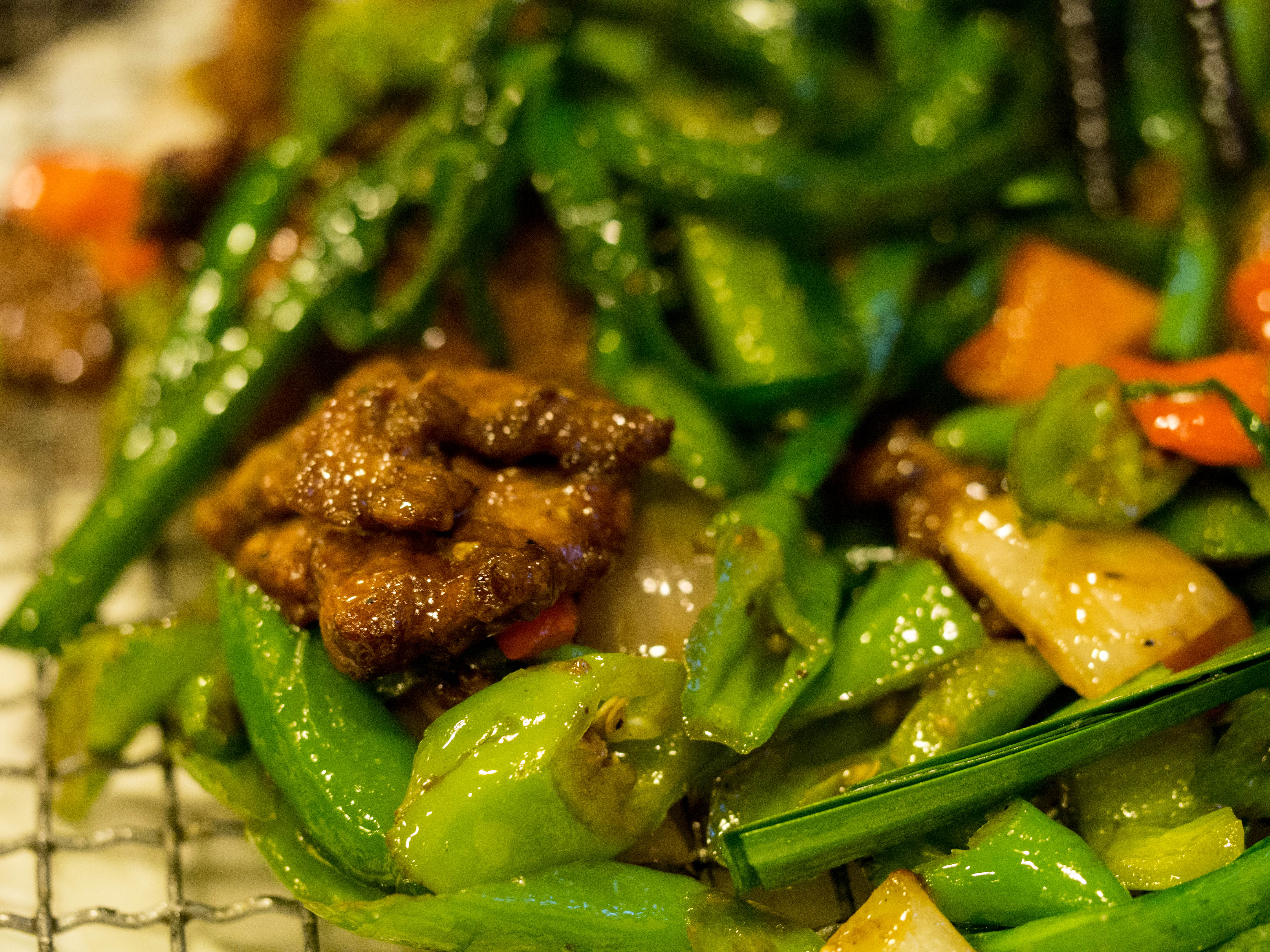
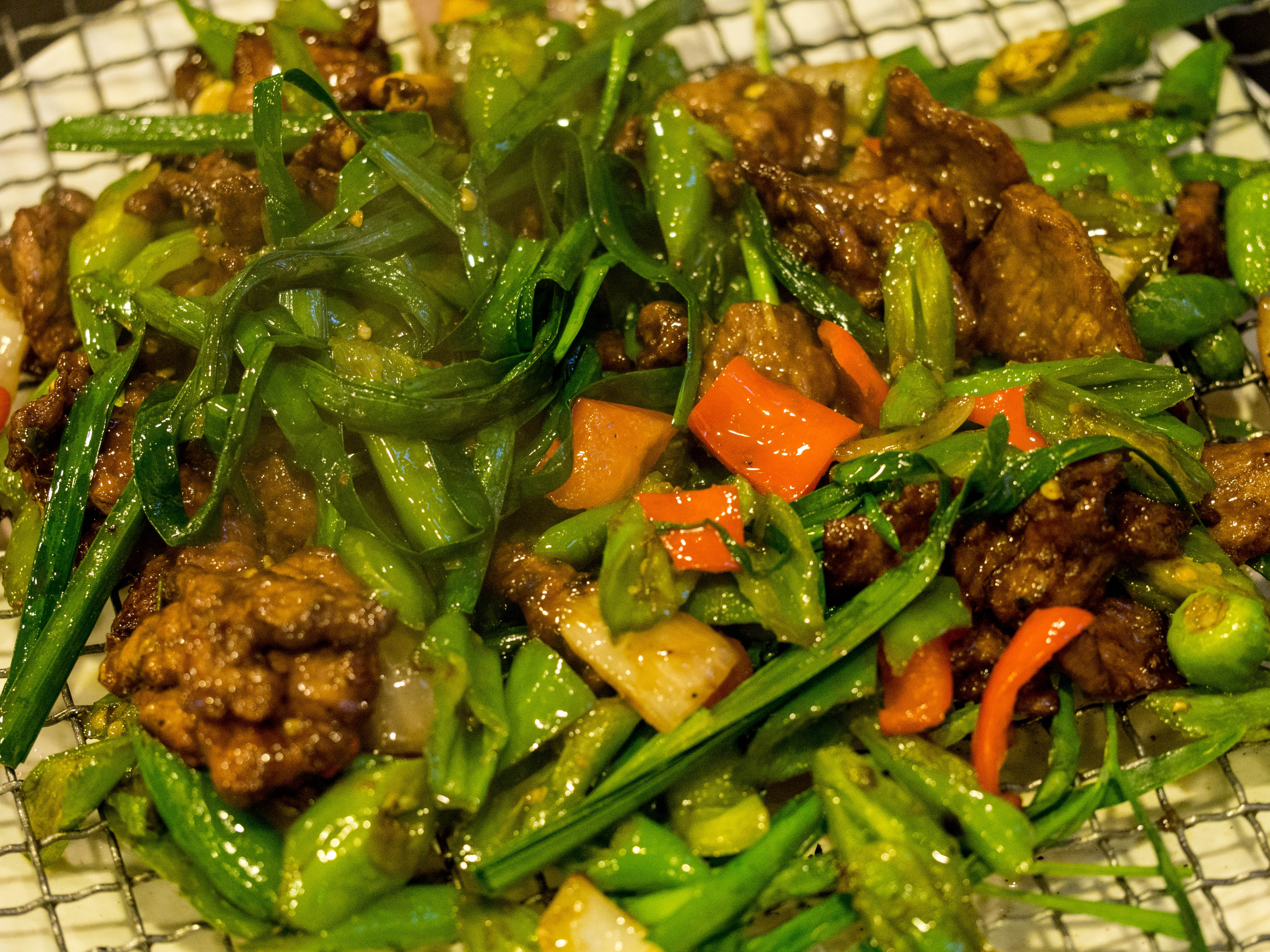
As you can see from the photo this dish was served on a metal grating over a plate. A flame was placed under the grate to continue the cooking and to keep it warm at the table. The beef was very tender—you could cut it with a fork, if you had one. It was cooked with garlic, ginger, purple onion, green pepper, green chili, red bell pepper, all on top of a base of the green tops of scallions. Ground Sichuan pepper corn was sprinkled over the top. This dish was excellent. I’m not a big beef eater, but his was very tender and fresh. The vegetables provided a good balance of spicy and mild flavors.

Very tender beef.

Very tender beef.

One more shot of this excellent dish.

One more shot of this excellent dish.

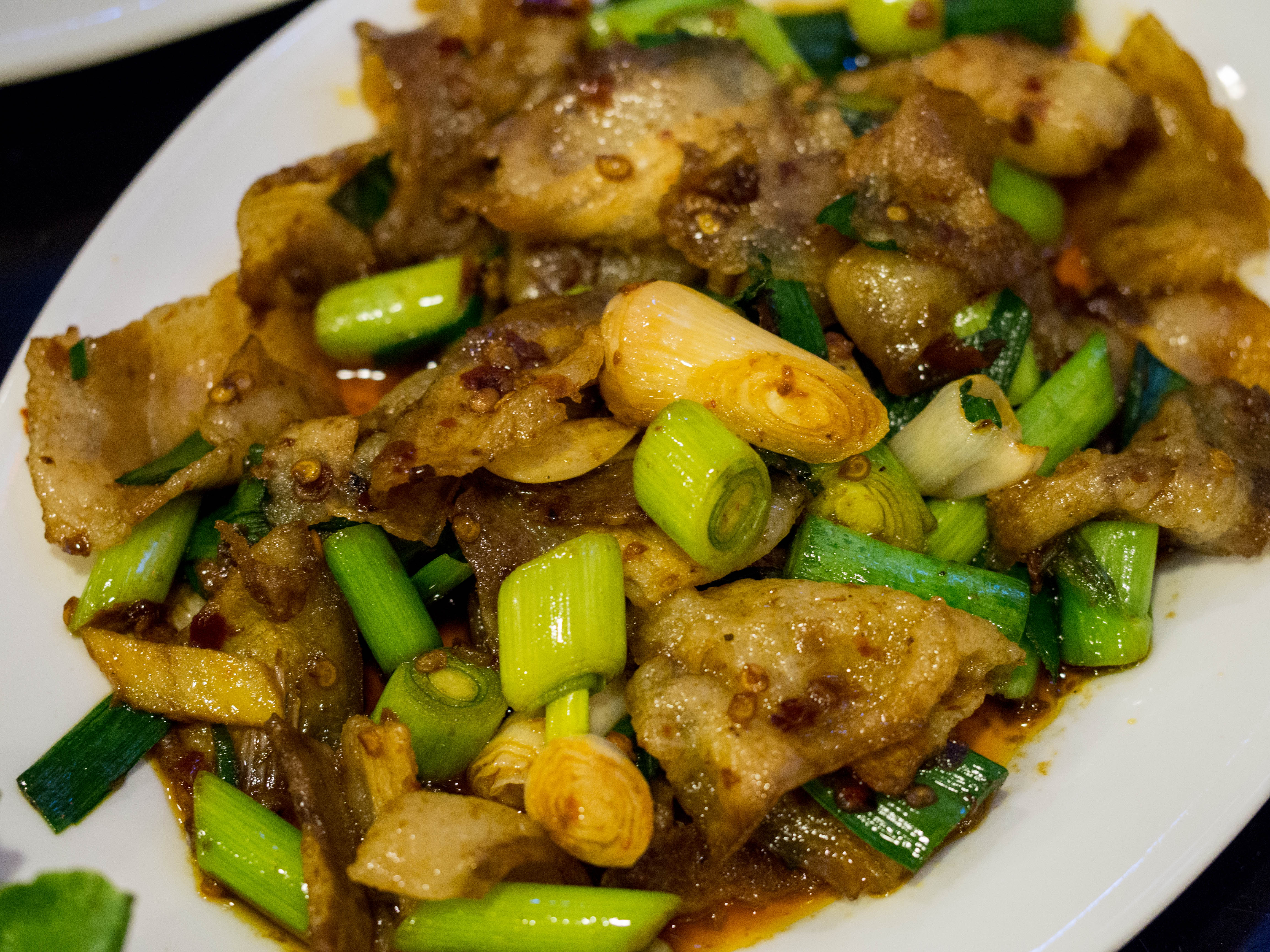
4. 回锅肉 huí guō ròu (Twice cooked pork)

Twice cooked pork; or more literally, "back to the pot pork."

Twice cooked pork; or more literally, “back to the pot pork.”

There is nothing really special about this dish. It is one of those ubiquitous dishes in China that can be found just about anywhere. It probably comes from Sichuan Province somewhere, but it is one of those dishes that has become Chinese comfort food and everyone has their own version of it, just like Mapo Tofu, scrambled eggs with tomatoes and so on. The dish is made with fatty pork belly that is simmered in water with various seasonings. It is then cooled, sliced thin, and thrown into the wok to cook with the vegetables. We sometimes like to order these very common dishes to see how it differs in different regions of China. This was a pretty good version of this popular dish.

Cooked with lots of sliced scallion and a little minced chili pepper.

Cooked with lots of sliced scallion and a little minced chili pepper.

5. 农家茄子 nóngjiā qiézi (Peasant family eggplant)

Peasant family eggplant.

Peasant family eggplant.

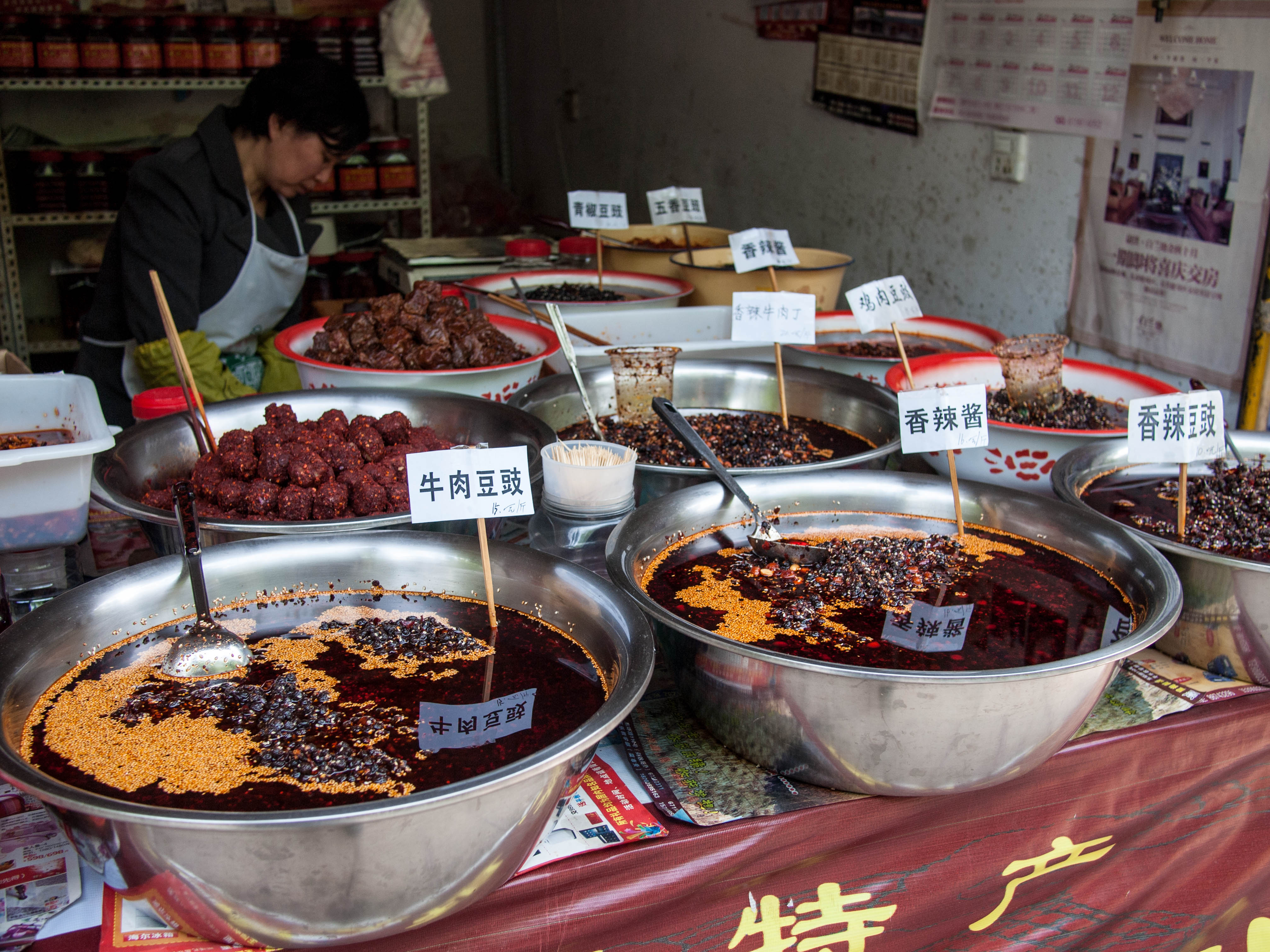
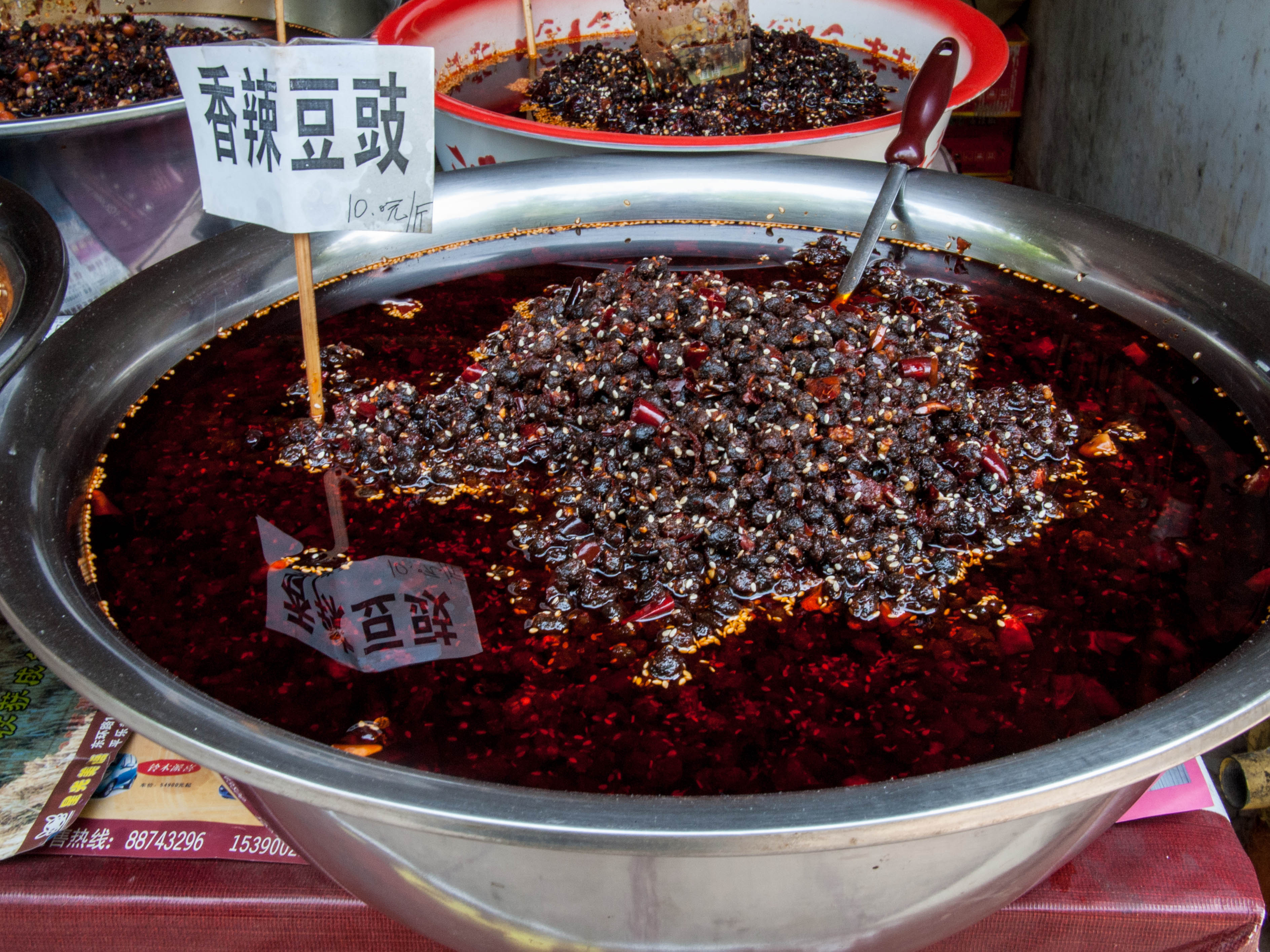
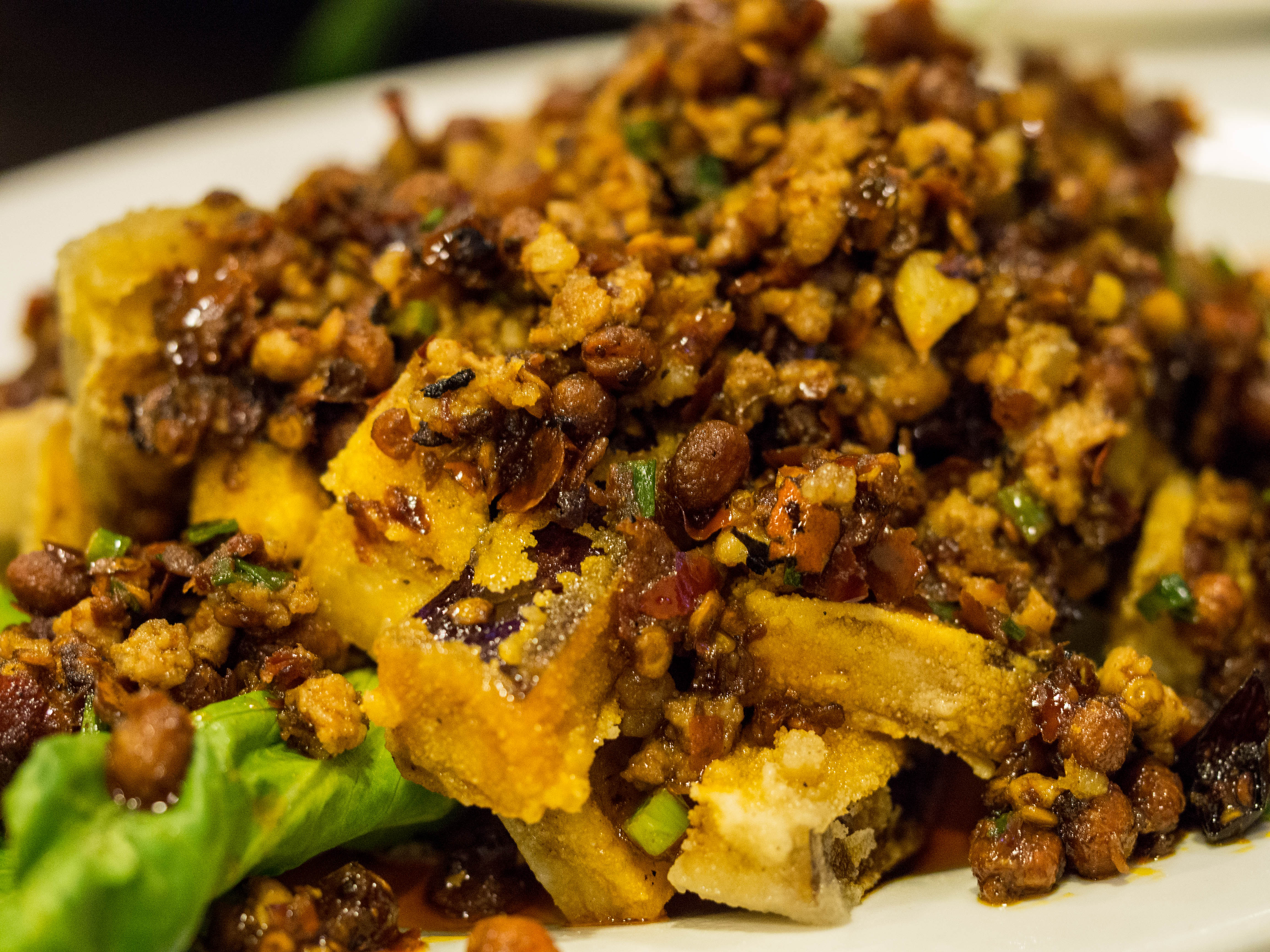
I saved the best dish for last. This was truly an extraordinary dish. The thing that made this dish so good, and unique to this part of China, were the fermented and seasoned soy beans (豆豉 dòuchǐ) that you can see smothering the eggplant. Earlier on this trip when we were in a rural part of Sichuan Province we were in a small village where they were selling numerous variations of these seasoned and fermented soy beans. Some versions had beef and others just had chili peppers and who knows what other delectable seasonings.

Vendor selling fermented and seasoned soy beans.

Vendor selling fermented and seasoned soy beans.

This one is a "fresh, spicy" version.

This one is a “fresh, spicy” version.

This dish was prepared by taking a long eggplant and cutting it lengthwise, then cutting it crosswise and deep frying it. The eggplant ended up in chunky sticks, like big french fries. The soy beans were then mixed with minced pork, dried chili, and a little green chili. The soy beans have a wonderful chewy texture with the occasional crunch for those that got cooked a bit too much in the wok. They are at once salty and spicy and full of rich, dark, earthy flavor (not at all like soy sauce). Eggplant, like tofu readily absorbs the flavors of what it is cooked with. This dish was a revelation and I just couldn’t get over how delicious the soy beans were. It was by far our favorite dish at this meal. Fermented and seasoned soy beans are very popular throughout Sichuan, Guizhou, and Yunnan Provinces. Each region within these areas have their own versions. It is truly a wonderful ingredient. I would love to find some here in the States.

Just the sight of this dish is driving me mad (with hunger).

Just the sight of this dish is driving me mad (with hunger).

One last shot of this extraordinary dish.

One last shot of this extraordinary dish.

We walked out of this tucked away restaurant marveling at how good the meal was. We couldn’t believe that Guiyang, the capital of Chinese poorest province (Guizhou) would have such fantastic food. Though the other meals we had in Giuyang were not quite this good, they were impressive. We ate well for the three days we were there. The other highlights were some really good bowls of noodles.

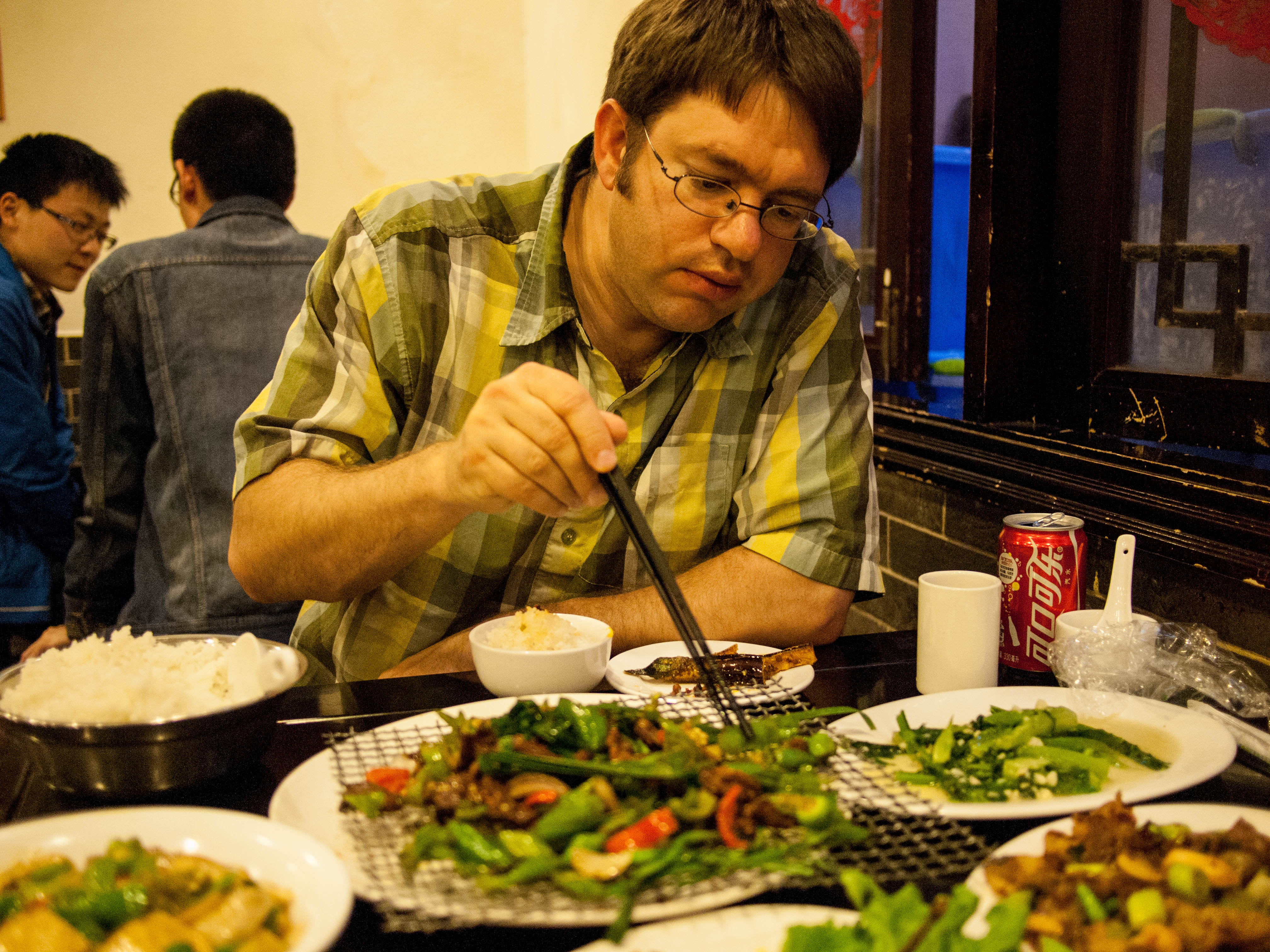
Michael enjoying the meal.

Michael enjoying the meal.

Good meals make me happy!

Good meals make me happy!

Spectacular Meals: Chengdu (成都 chéngdū)

Chen Mapo Doufu restaurant in Chengdu.

Chen Mapo Doufu restaurant in Chengdu.

Chengdu is a wonderful city for eating. It is one of the great culinary centers of China and the heart of Sichuan cuisine (川菜 chuāncài). Sichuan cuisine is mostly known in the West as the spicy food of China. It is true that there is some truly spicy food here, but it’s not all about chili peppers. There are quite a few dishes that have no heat at all. But the most famous dishes tend to be pretty spicy.

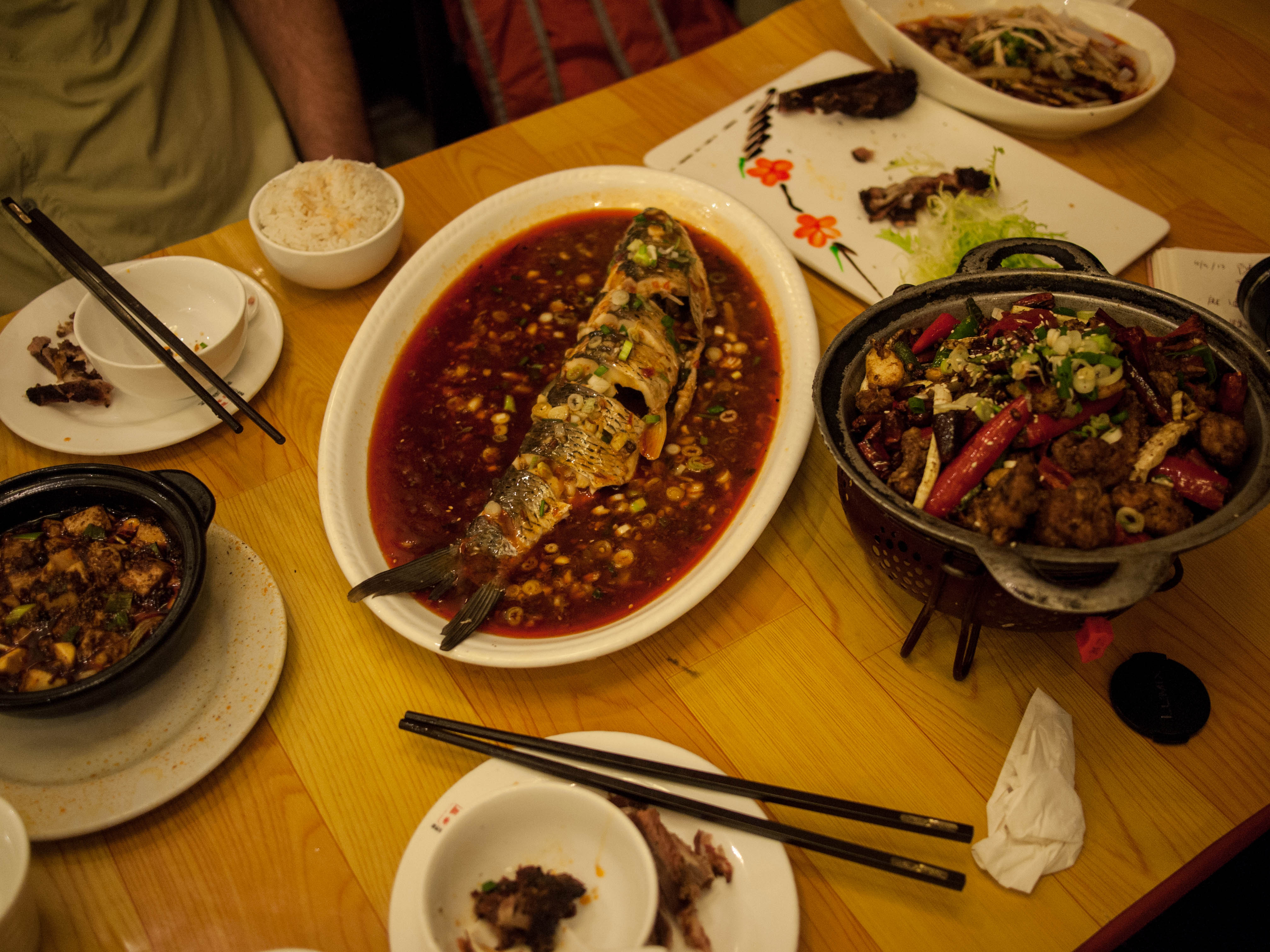
In April my friend and colleague and I spent a week in Chengdu doing research on Sichuan cuisine. The research was rigorous and demanding requiring us to eat as many Sichuan dishes as we could in the short time that we had. Our first evening in Chengdu we went to the restaurant 陳麻婆豆腐 chén mápó dòufu (Chen’s Mapo Tofu). This restaurant has been around since 1862 and claims to be the originator of the famous Sichuan dish, Mapo Doufu, a spicy tofu dish. We had read about this restaurant and wanted to give it a try. We are both quite fond of Mapo Doufu and I have eaten it all over China, but never at its source.

Inside the restaurant.

Inside the restaurant.

We had a very memorable meal. All five dishes that we ordered that night were excellent and I still think of that spectacular meal.

An exquisite dinner.

An exquisite dinner.

Below I describe each of the five dishes that we ordered.

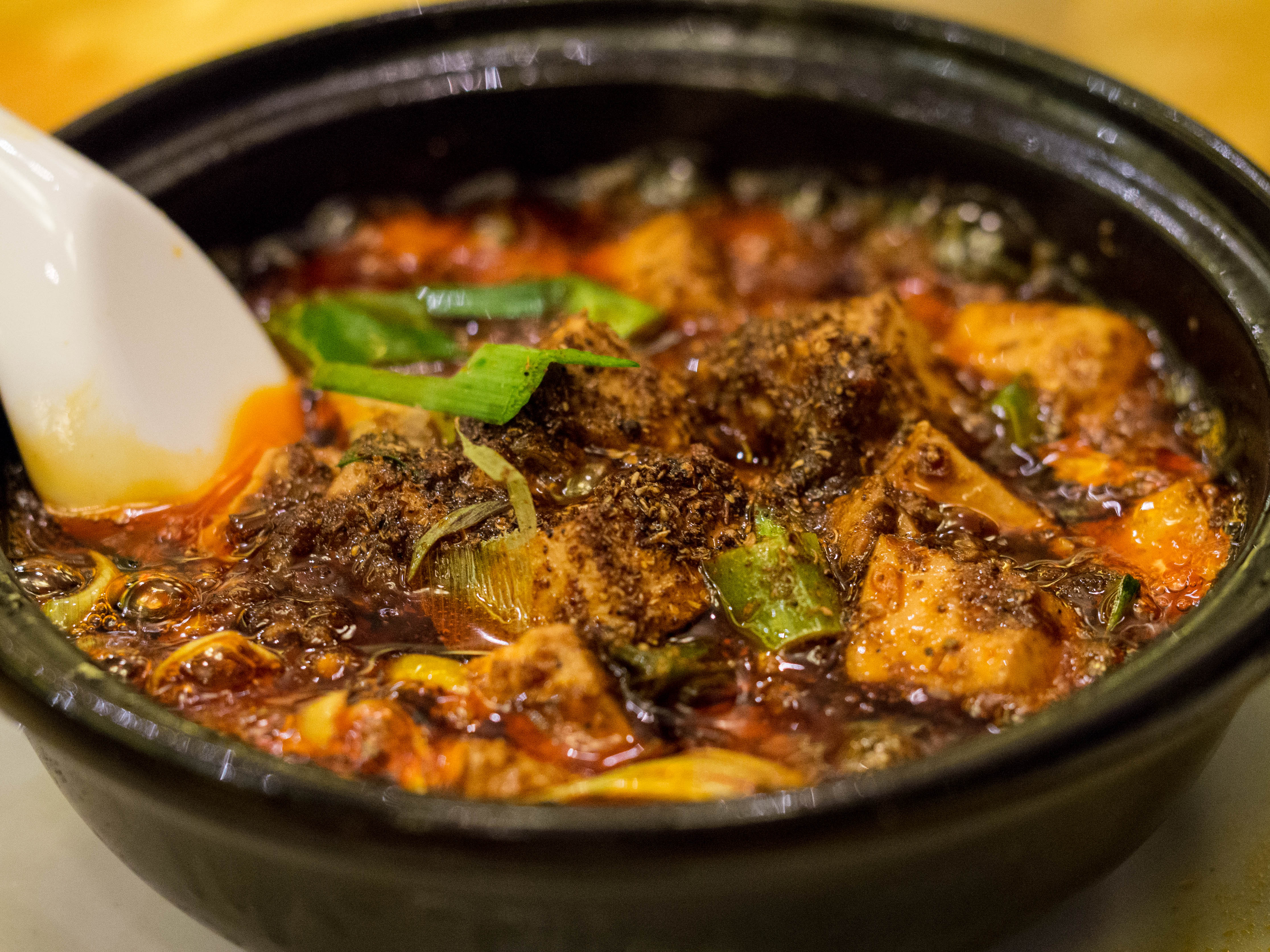
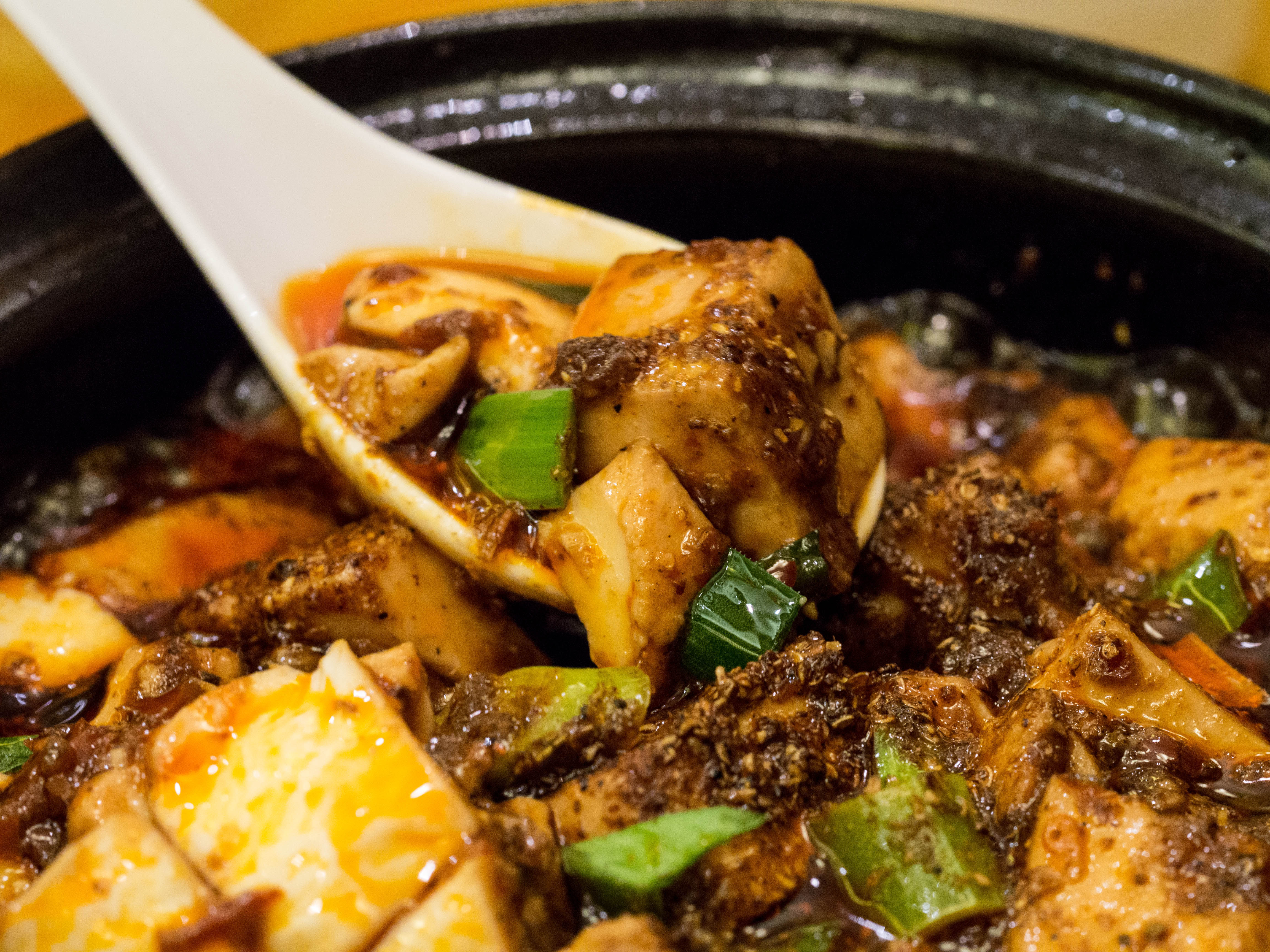
1. Mapo Doufu 麻婆豆腐 mápó dòufu

Mapo Doufu

Mapo Doufu

What made this Mapo Doufu different from all others I have had was the Sichuan pepper or 花椒 huājiāo. This is sometimes translated as prickly ash. It isn’t a true pepper. It is a seed that grows on a bush. The husk is dried, ground, and added to dishes. It produces a numbing heat that the Chinese call 麻辣 málà literally meaning “numb-spicy.” It really does numb your lips, tongue, and mouth. It is a very pleasant sensation, though many Westerners don’t like it. This particular dish had a great deal of Sichuan pepper mixed into the dish, as well as quite a bit of freshly ground Sichuan pepper sprinkled on top. It was very numbing. The dish also had just a bit of ground beef to give it a fuller flavor and it was swimming in hot red chili oil. It was quite salty and as I mentioned very spicy, both in the traditional sense and the numbing sense.

You can see the freshly ground Sichuan pepper.

You can see the freshly ground Sichuan pepper.

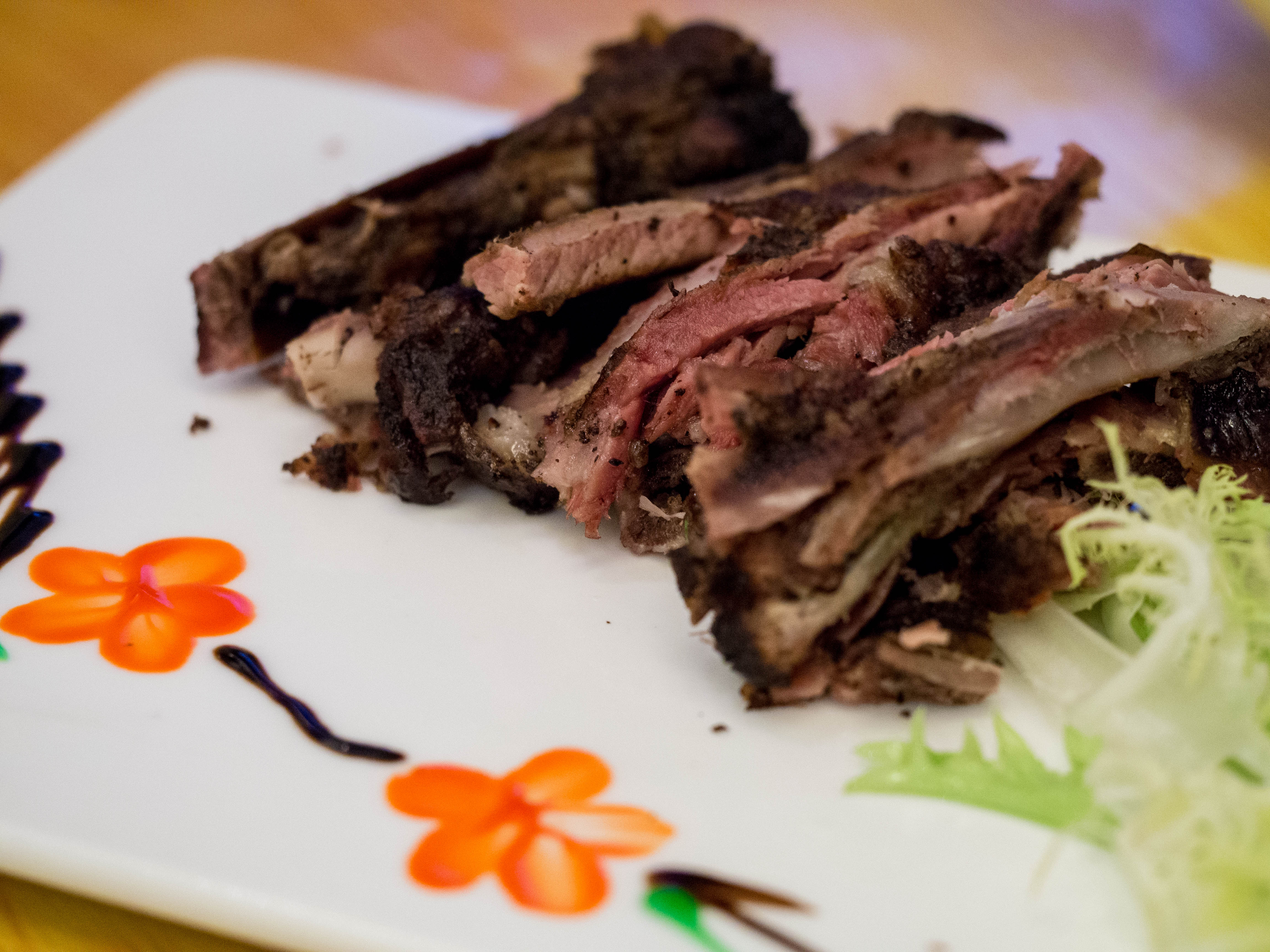
2. Smoked Ribs 烟熏骨 yānxūn gǔ

OLYMPUS DIGITAL CAMERA

This was a dish that was not spicy at all. These pork ribs were smokey and meaty,  seasoned with black pepper and maybe just a hint of ginger. The meat was very tender, literally falling off the bone. And the flavor was deep and rich. We really enjoyed this dish, and it was so different than your typical Chinese dish. We could have eaten two more plates of this delicious dish. This is the kind of dish that you wake up in the middle of the night thinking about.

A true revelation of Chinese cuisine.

A true revelation of Chinese cuisine.

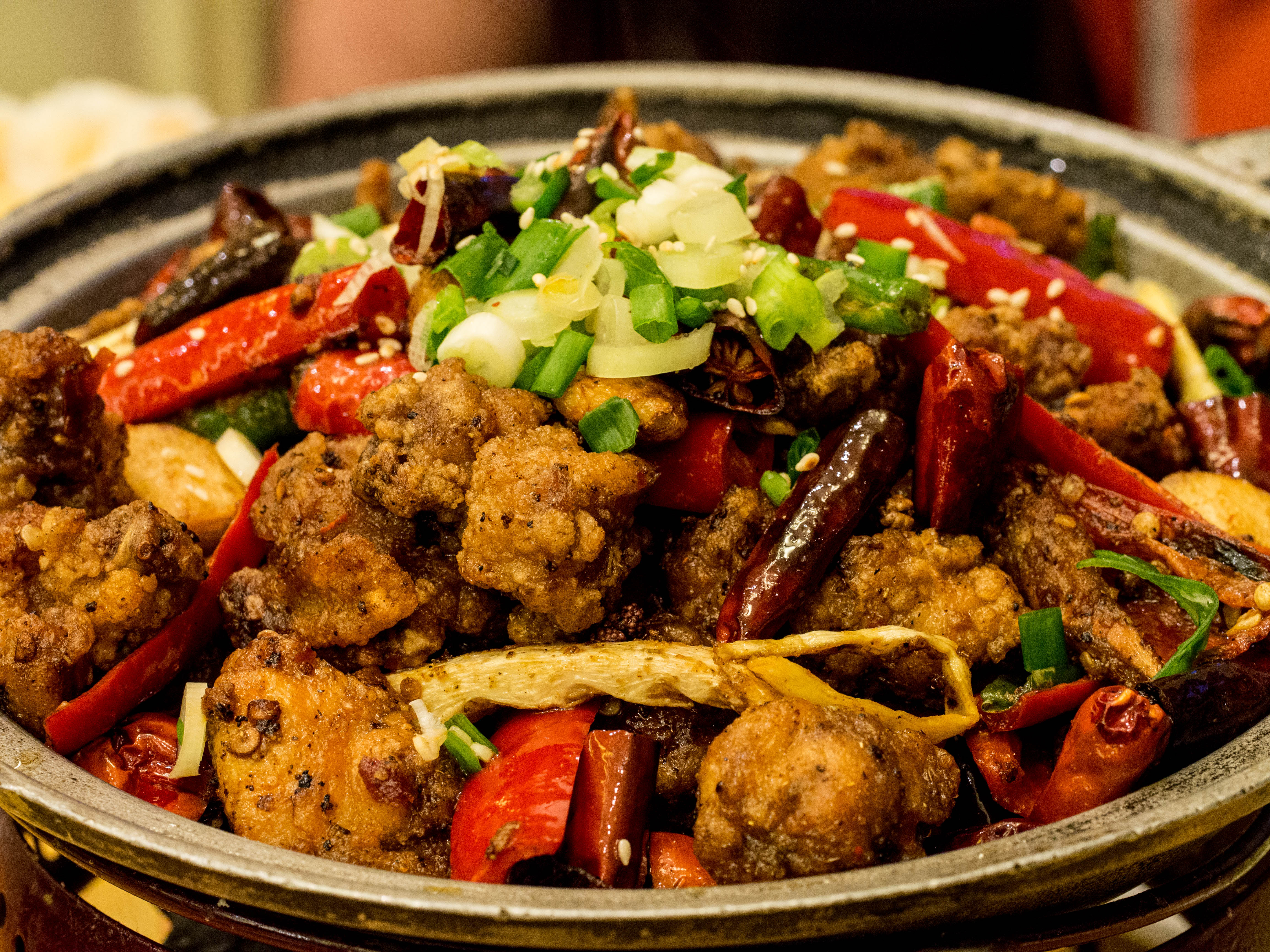
3. Dry-pot Chicken 干锅鸡 gānguō jī

Sichuan-style fried chicken.

Sichuan-style fried chicken.

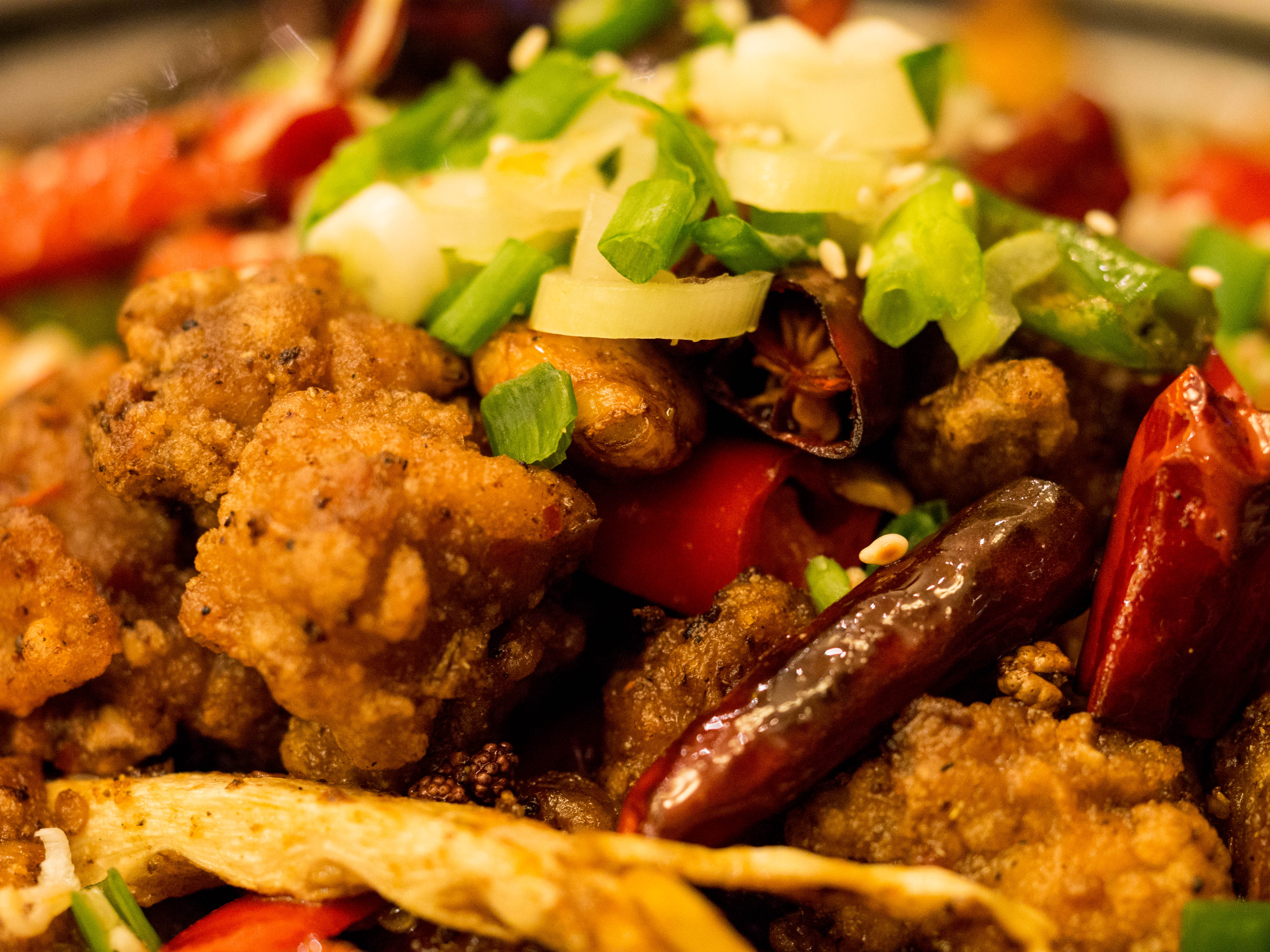
This dish was spectacular. From the first bite we were transported to some culinary place we had never imagined. These small pieces of bone-in chicken are deep fried, then cooked in a dry iron pot with the other ingredients. This dish contained whole cloves of garlic, baby bamboo shoots, scallion, lots of dried red chilis, and Sichuan pepper. This chicken had so much flavor—fiery, salty, crispy. It was truly remarkable. This was another dish that we felt like we could eat very night. We had never had fried chicken like this before.

A truly exceptional dish.

A truly exceptional dish.

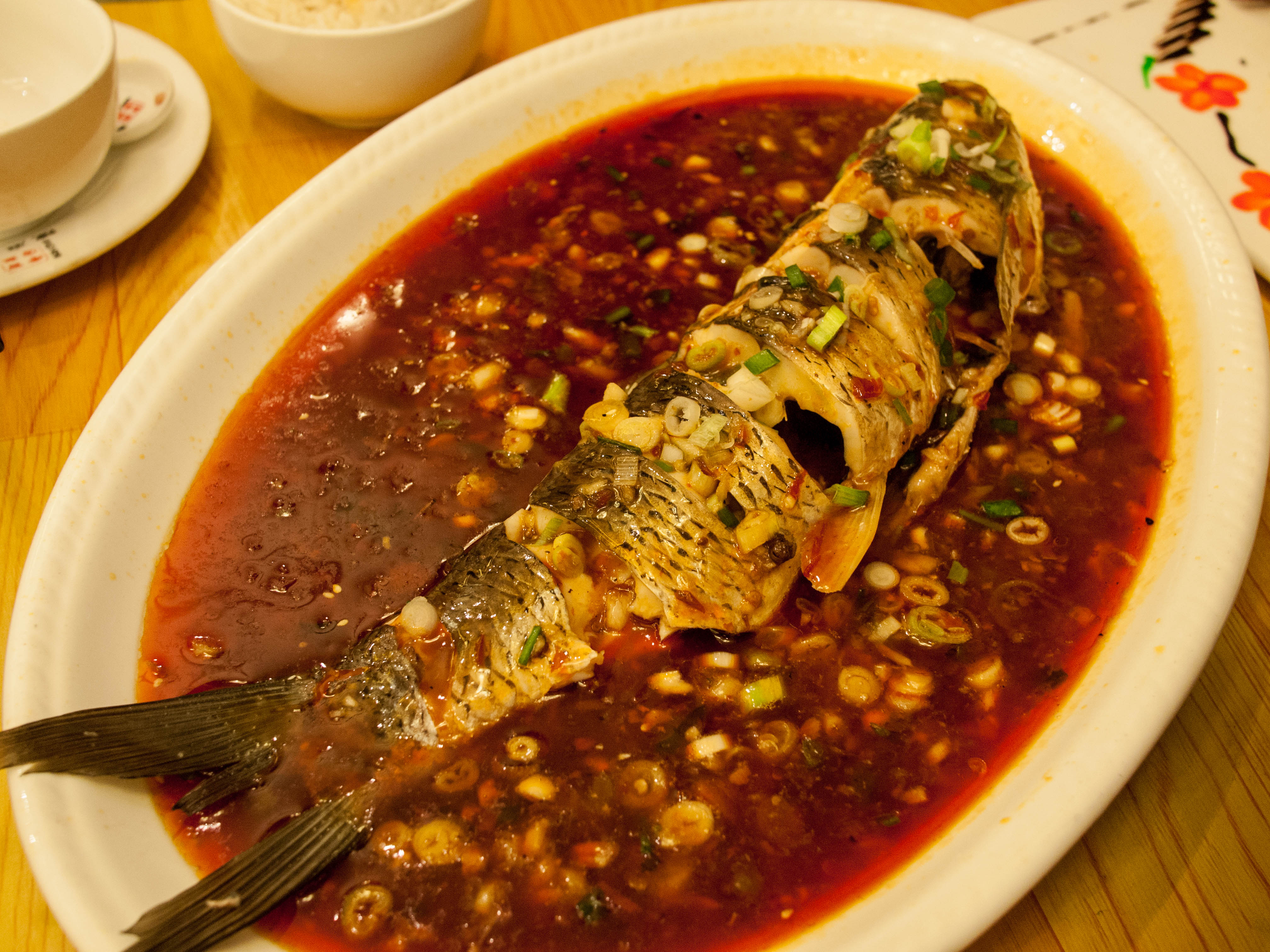
4. Bean-garlic Fish 豆辫鱼 dòubiàn yǔ

A type of sweet and spicy fish.

A type of sweet and spicy fish.

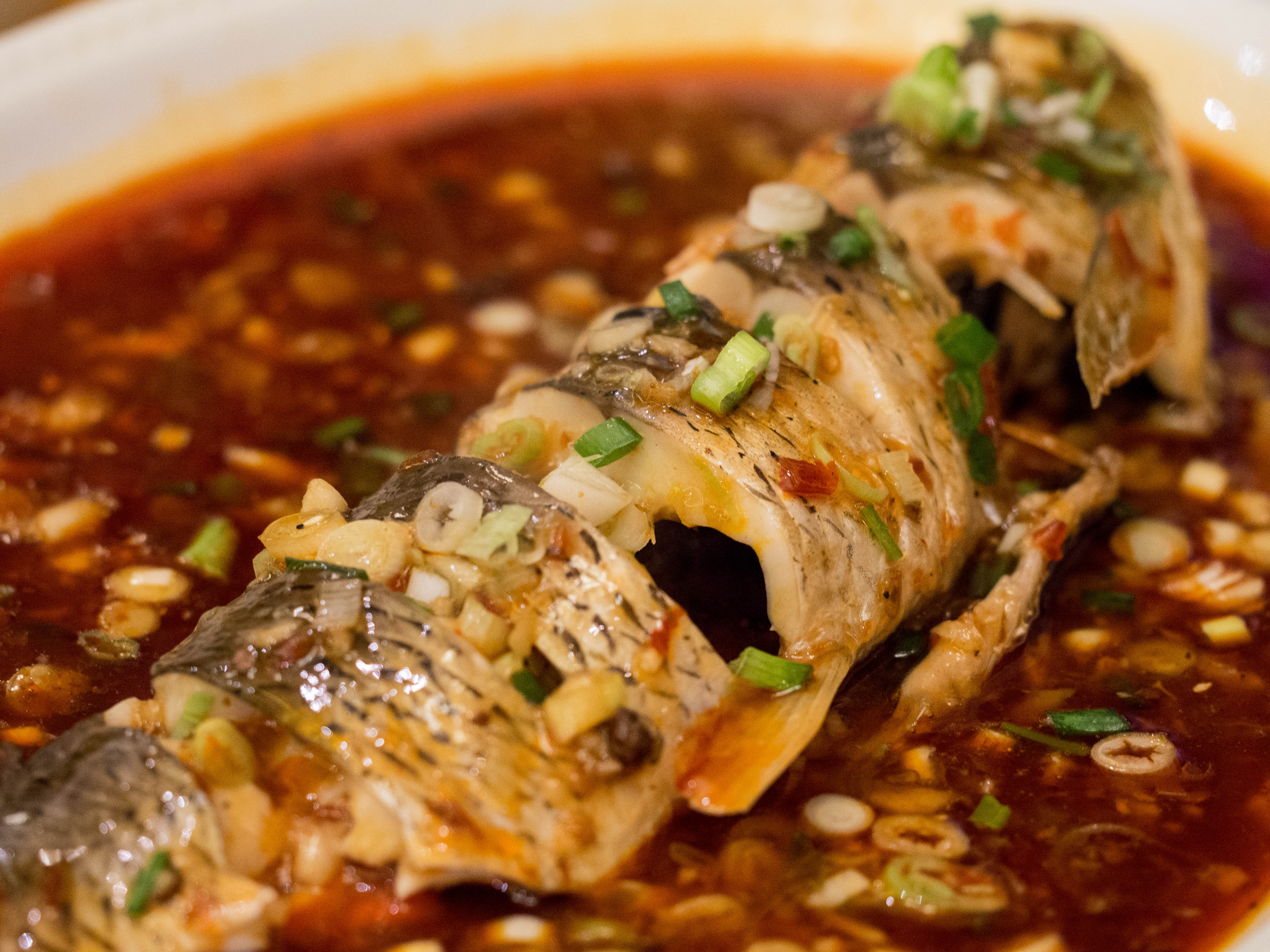
I’m not really sure how to translate this dish, but who cares, it was delicious. The Chinese typically serve fish whole, that is with the head and tail intact. And why not, the tastiest, most tender part of the meat on a fish is right behind the gills. This fish was steamed then smothered in a sweet and spicy sauce with chili pepper and scallions. It was not that spicy and there was that nice sweet contrast to the chilis. The fish was very tender and the mellow flavor of the fish was nicely enhanced with the rich flavorful sauce. I like fish and I really liked this dish. It was exceptional.

An exceptional steamed fish.

An exceptional steamed fish.

5. Shredded chicken with cold noodles 鸡丝凉粉 jīsī liángfěn

OLYMPUS DIGITAL CAMERA

There are quite a few cold dishes served in Sichuan cuisine and this was a good one. 凉粉 liángfěn are a bean noodle typically served cold. They are thick and chewy with a light delicate flavor. This dish was seasoned with chili oil, sesame seeds, scallions, and a little minced garlic. On top was shredded chicken just lightly salted. The coolness of the dish was a nice contrast to the other hot dishes. Noodles are pretty important in Sichuan cuisine and there are noodle shops all over Chengdu. Noodles are a traditional fast food in China and in Sichuan they take their noodles pretty seriously.

As we finished this meal (and no we could not finish it all) we were reeling, intoxicated with the rich flavors of these dishes. Our mouths glowed from the heat of chili peppers and Sichuan pepper. Outside it was a cool evening, drizzling softly and this was just the beginning of a memorable few weeks eating in Western China.

Satisfied.

Satisfied.


More on Chinese Poetry (or which translations should I read?)

It was Ezra Pound who really brought Chinese poetry to the Western world. Whether his translations are any good or not has been debated. Some say he was a brilliant poet, but a lousy translator. Regardless,  we do owe it to him for bringing this rich and important poetic tradition to our attention. T.S. Eliot said, “Chinese poetry, as we know it today, is something invented by Ezra Pound.”

There are volumes and volumes of Chinese poetry that has been translated into English, most of it from the Tang and Song Dynasties. Translations range from literal to free. That is a literal translation that stays as true to the original as possible and tries as much as possible to retain the form and content of the original poem. On the other hand, you have free translations that focus on capturing the feeling or mood of a poem with less concern on accounting for every word in the original. When translating Chinese poetry, the first thing you lose is form and rhyme. It is also very difficult to translate the literary and historical allusions without copious endnotes.

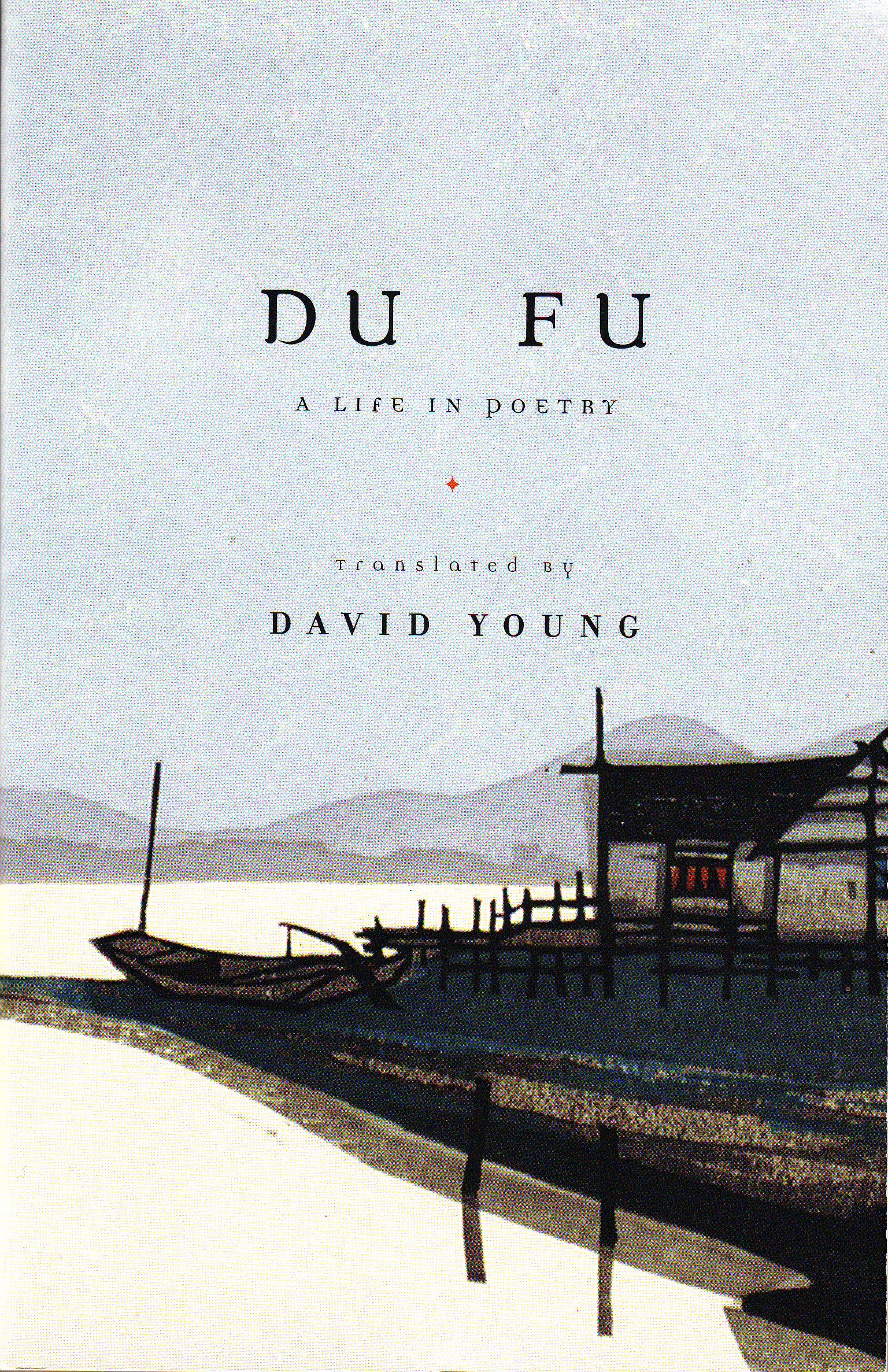
I also argue that when you translate a poem you end up with a new poem, the product of the translator. In other words, a Burton Watson translation is very different from a David Hinton translation. I would even go so far as saying that reading poetry in translation is reading the poetry of the translator. In Keats’ famous poem, “On first looking into Chapman’s Homer” he talks about how Chapman’s translation of Homer moved him. He had read other translations of Homer, but it was Chapman’s translation that really affected him; not Homer, but Chapman’s Homer. Thus, when we read a particular translation we are reading that translators version of the poems. Over many years, I have read many translations of the Tang Dynasty poet Du Fu (Tu Fu), considered to be one of the greatest of all Chinese poets. His poetry was good, but never really resonated with me. Then in 2009 I bought a new translation of his poems called, Du Fu: A Life in Poetry translated by the American poet, David Young.

du fu book

I had read some of Young’s original poetry and liked it quite a bit so I was interested in his take on Chinese poetry. The book is arranged chronologically following Du Fu’s life. I began reading and could hardly put it down. It read like a biography but in verse. It was fabulous and I couldn’t believe this was Du Fu. For me, David Young’s translations of Du Fu moved me like no other translations I had read before.

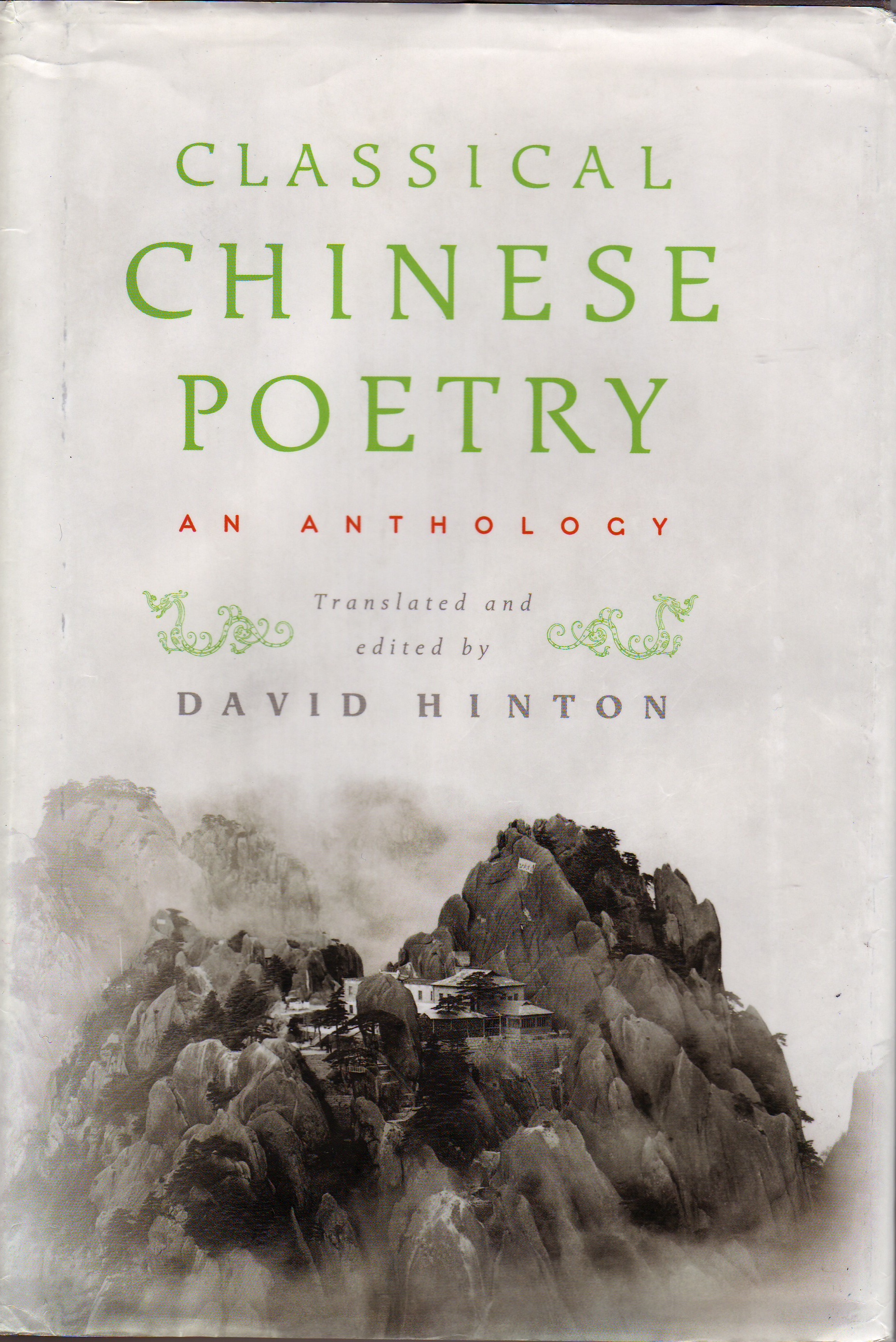
With all the translations of classical Chinese poetry out there, what should you read? What do I recommend? Keep in mind that my recommendations are subjective. Some of my colleagues will not agree with me, especially since I am not a specialist in Chinese poetry. I do teach a Chinese poetry in translation course, but that is not my specialty (though I did take several graduate seminars in Chinese poetry). My current favorite poet is David Hinton, a full-time translator of Chinese poetry. He has published a large anthology of Chinese poetry as well as individual collections of the more well-known Chinese poets. I like his anthology, Classical Chinese Poetry: An Anthology.

Hinton book

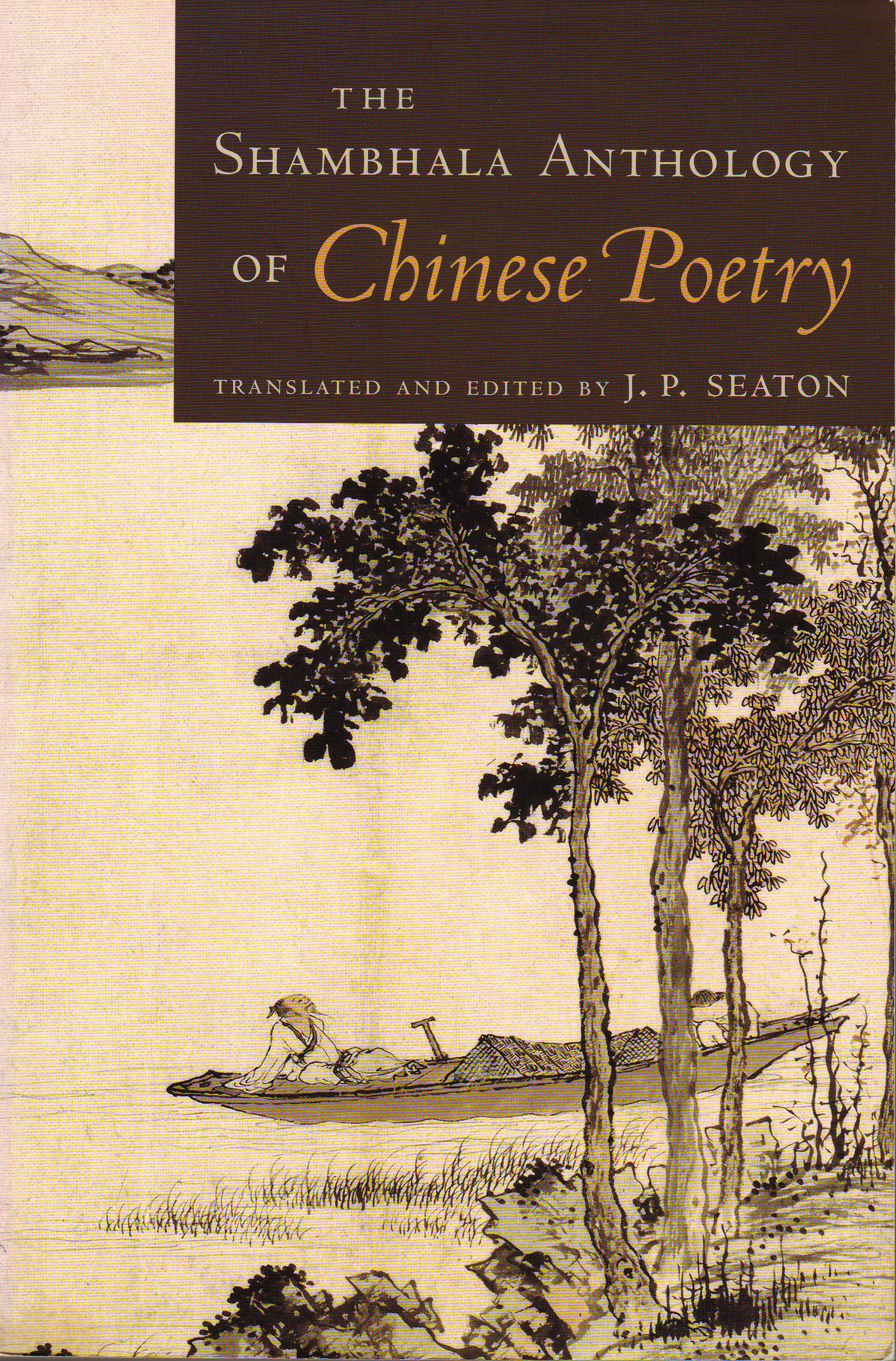
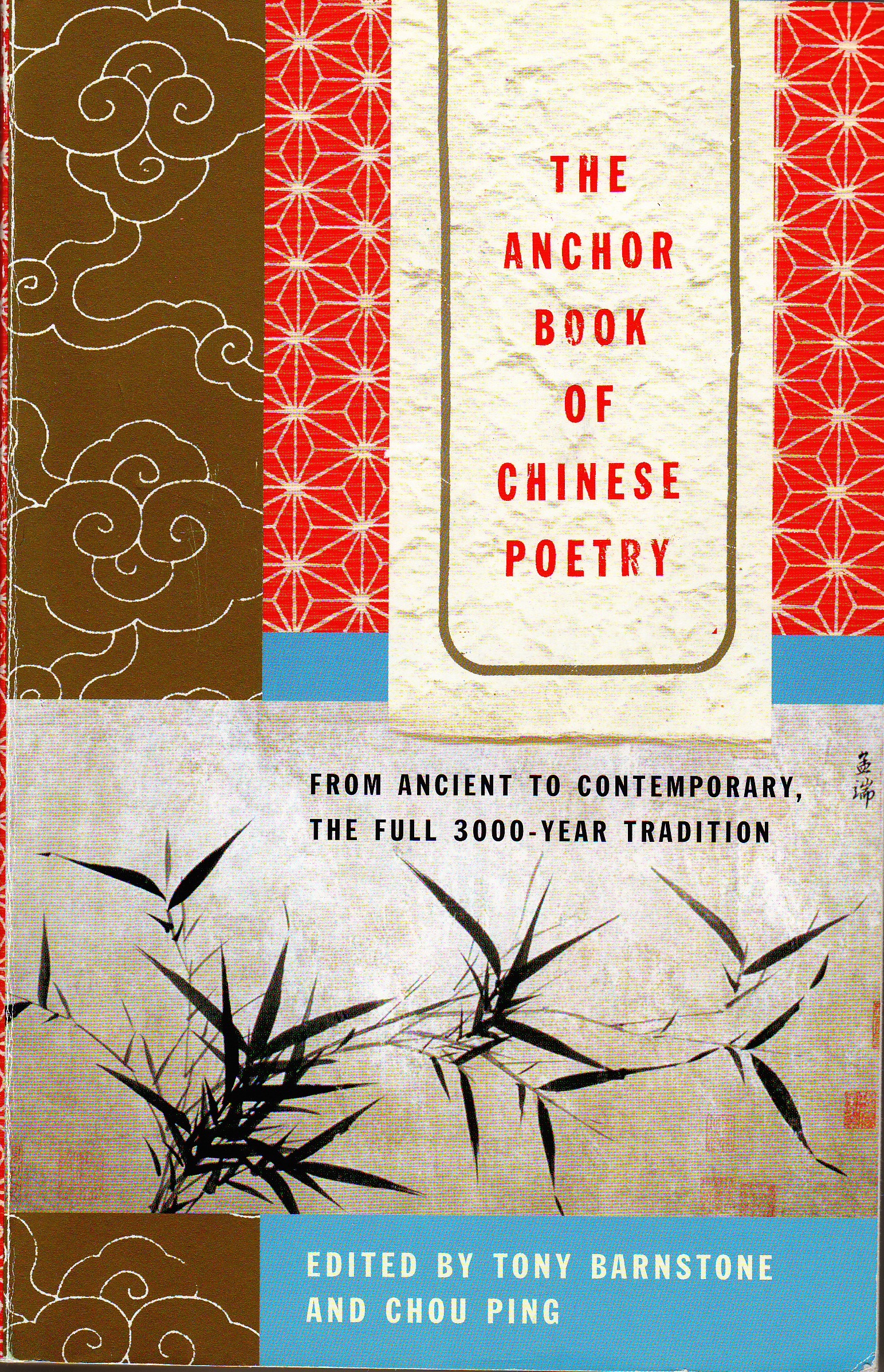
I find his translations fresh and accessible. He strikes a nice balance between staying true to the original but creating a fine poem that reads well in English. Two other  anthologies that I like include: The Anchor Book of Chinese Poetry: From Ancient to Contemporary, The Full 3,000 Year Tradition, edited by Tony Barnstone and Chou Ping and The Shambhala Anthology of Chinese Poetry, translated and edited by J. P. Seaton. Barnstone is a poet and translator and Seaton is an academic (professor of Chinese). If you want something more poetic and perhaps less true to the originals, I recommend, The New Directions Anthology of Classical Chinese Poetry, edited by Eliot Weinberger. This volume includes translations by famous American poets, like William Carlos Williams, Ezra Pound, Kenneth Rexroth, Gary Snyder, and David Hinton. This will give you a feel for some of the first translations of Chinese poetry in the West.

seaton book

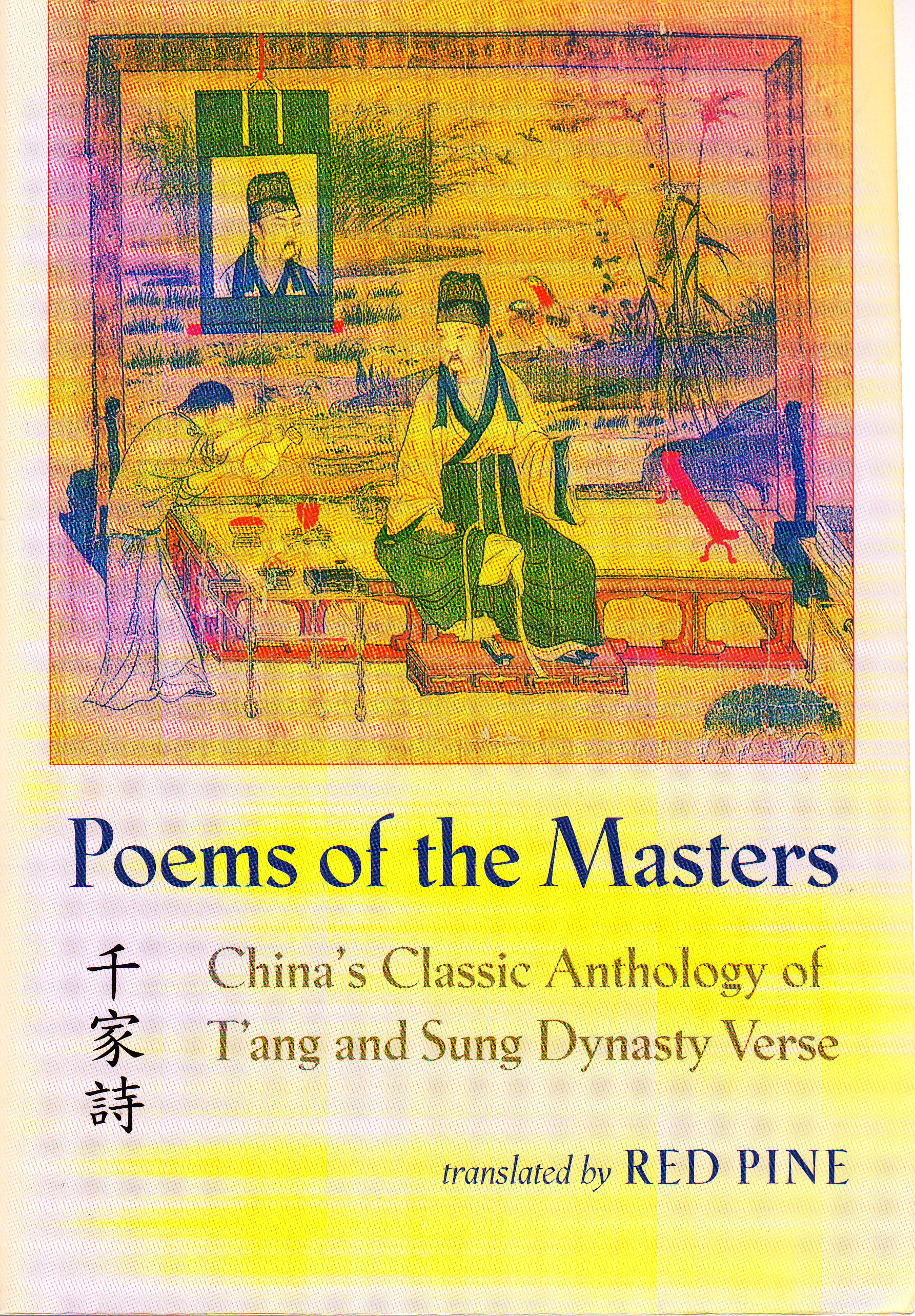
penguin poetryI also want to mention the translator Red Pine. This is the pen name of Bill Porter who has spent his life translating Chinese poetry and Buddhist classics. One thing I really like about his translations is that he always includes the original Chinese and does an excellent job of contextualizing the poems providing background information about the poets, the historical context, and the situation in which the poet wrote the poem. I like this kind of contextualization. He is one of the few translators who has translated all the known poems of the Tang Dynasty poet known as Cold Mountain. Perhaps his other most important work of Chinese poetry is his translation of  Poems of the Masters (千家詩 qiān jiā shī). This is an important anthology first published at the end of the Song Dynasty.

Red Pine book

Finally, if you are really into Chinese poetry and know some Chinese I recommend How to Read Chinese Poetry: A Guided Anthology edited by Zong-Qi Cai. This book provides the original Chinese, pinyin, and an English translation, as well as exhaustive explanations and commentary on the form of the poem, the literary and historical allusions, etc. It is rather dense and not for casual reading, but well researched and written. Two other important anthologies that should be mentioned are Burton Watson’s The Columbia Book of Chinese Poetry and Liu and Lo’s Sunflower Splendor: Three Thousand Years of Chinese Poetry (translated by many different translators). These two are a bit older and in my opinion not as fresh or as interesting as the translations I mentioned above, but worth looking at. Of course, most anyone translating Chinese poetry today owes a debt to Watson for his groundbreaking translations.

Of course there are many other anthologies that are worth reading, but to me these are the highlights.

Chinese Poetry & a Visit to Du Fu’s Thatched Cottage

OLYMPUS DIGITAL CAMERA

In the West we have Greek philosophy, Roman law, Renaissance art, and Italian opera. In China poetry is the most striking cultural element of Chinese civilization.

Poetry was one of the earliest forms of written expression in China, with the Shijing 诗经 shījīng or The Book of Songs dating back to the 7th Century BC. It became the highest form of creative expression throughout Chinese civilization and was promoted by the government and pursued as a vehicle for personal pleasure and communication.  For most of China’s history, poetry was an integral part of daily life for the educated class. In the Tang Dynasty (618-908) alone more poetry was composed than in all the rest of the world combined until the 18th Century. One anthology, the Complete Tang Poems (全唐诗 quán táng shī), which is considered incomplete, contains 48,900 poems by 2,200 poets. People in the Chinese speaking world today still read and compose classical poems in the styles developed during the Tang Dynasty.

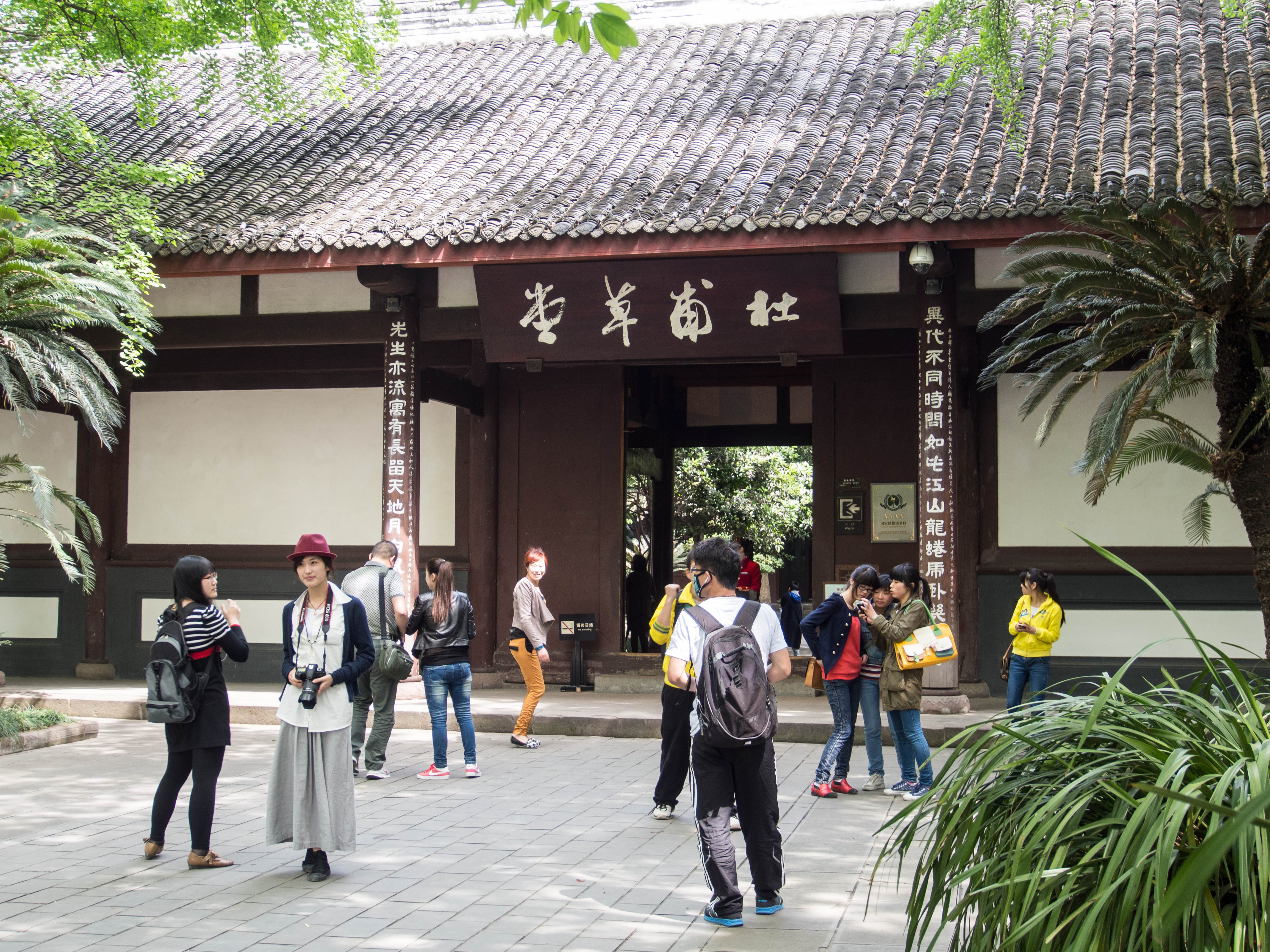
杜甫草堂 Dù Fǔ cǎo táng Du Fu Thatched Cottage

杜甫草堂 Dù Fǔ cǎo táng
Du Fu Thatched Cottage

When I visited Chengdu earlier this year, one of the first places I wanted to visit was the  thatched hut of perhaps China’s most famous poet, Du Fu. What I wasn’t quite expecting was the carnival-like atmosphere at this very popular cultural site. It was swarming with Chinese tourists and was a reaffirmation to me of the importance of poetry in Chinese culture, history, and civilization. Not only does the site pay homage to Du Fu, but it also celebrates all of Chinese poetry and the great poets throughout history.

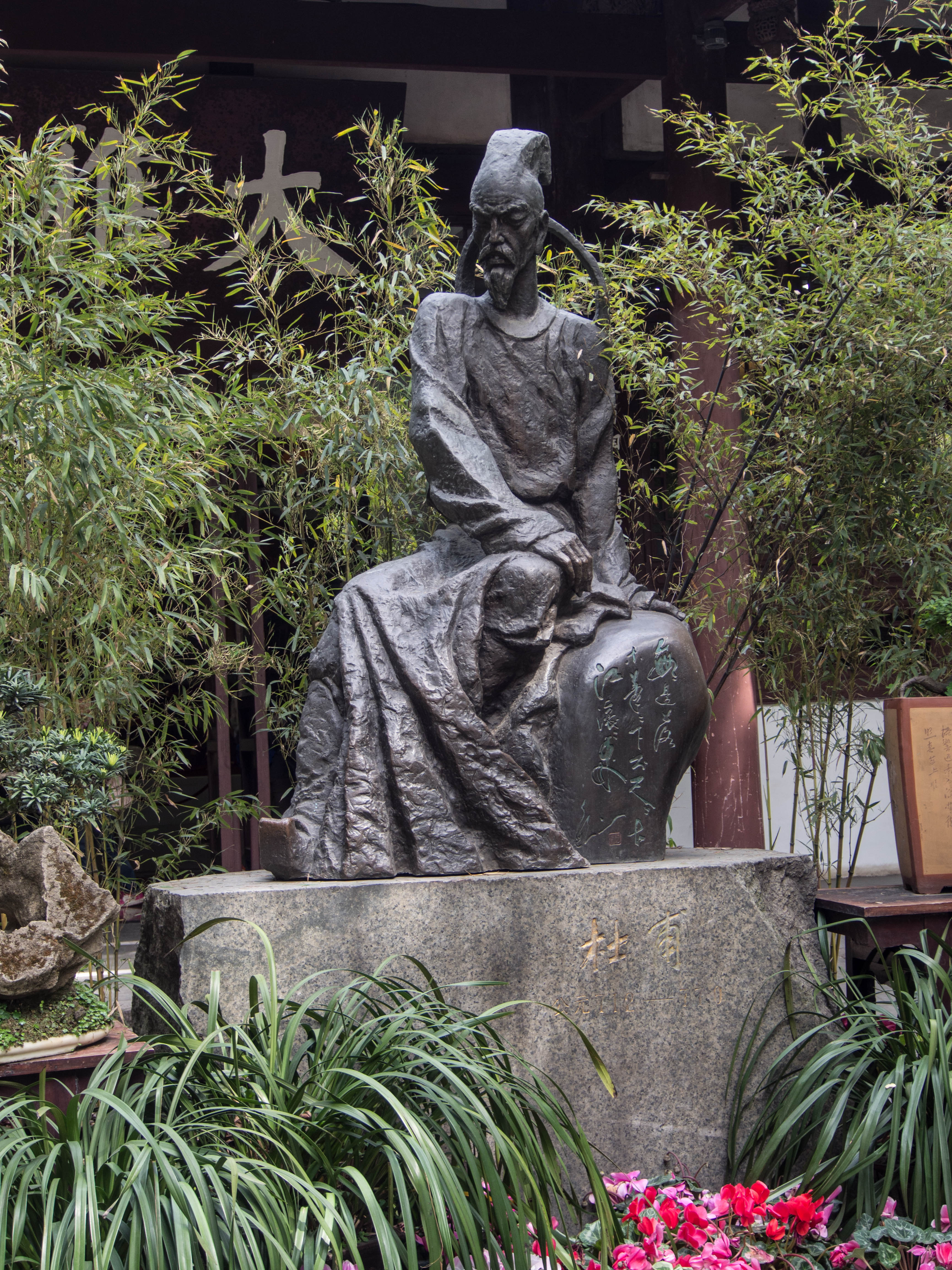
Statue of Du Fu

Statue of Du Fu

Du Fu (712-770, sometimes written Tu Fu) was a scholar-official during the Tang Dynasty. His career varied from government official to full-time poet at various times during his life. Du Fu was an innovator in language and structure and wrote about public and private life. His poems are accessible, intimate at times, and offer a glimpse into life in China during this period. He spent about five years in Sichuan Province where he built a comfortable thatched cottage on the outskirts of Chengdu. He wrote prolifically during this period, and though he suffered financial hardship during this time, it was a kind of hermitage for him and it was a happy and peaceful time. The Du Fu Thatched Cottage attraction is now in the center of Chengdu. Archeological excavations done on the site have unearthed buildings and pavilions that fit the time period when Du Fu lived there and are very similar to structures he describes in his poems.

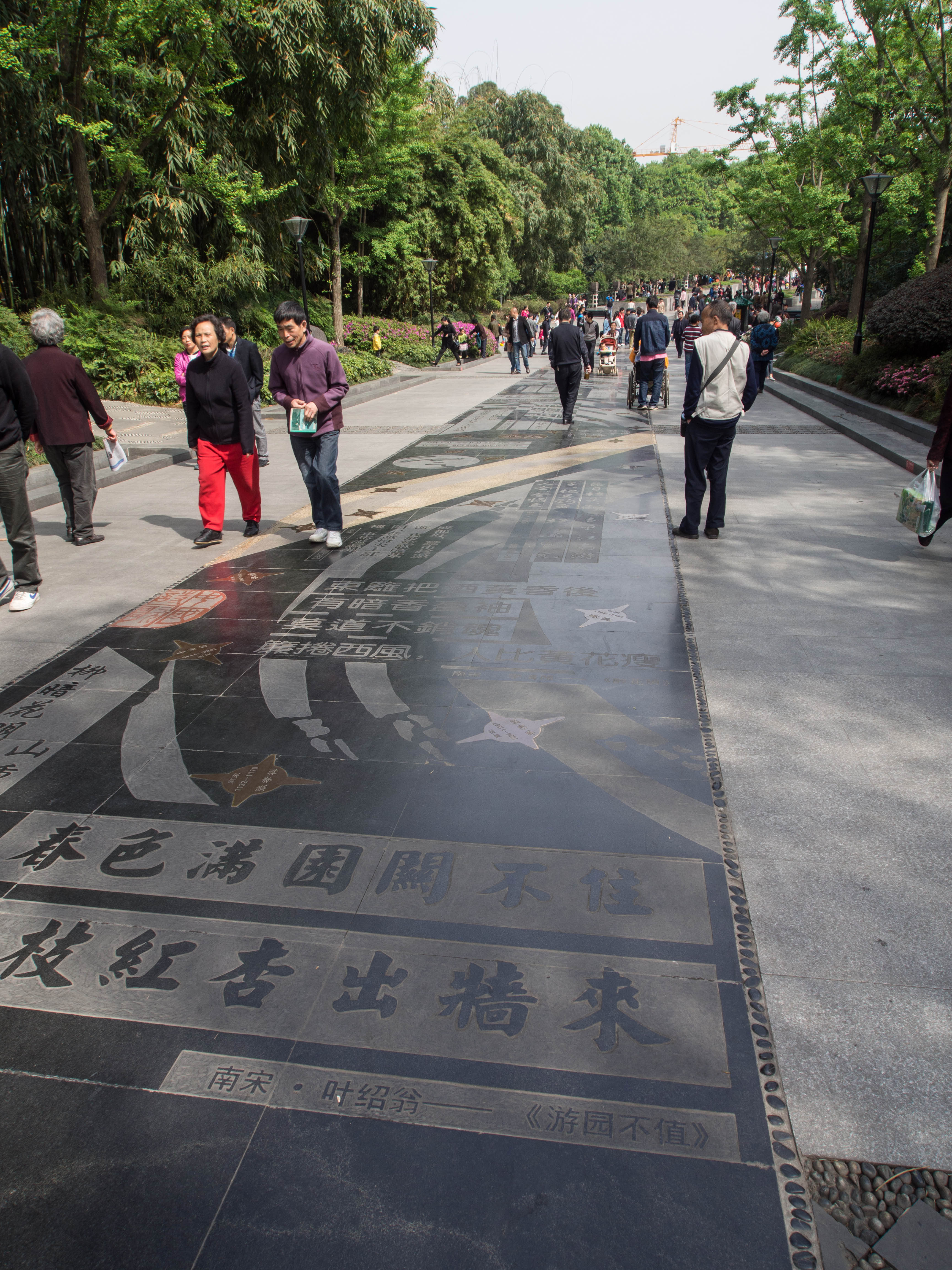
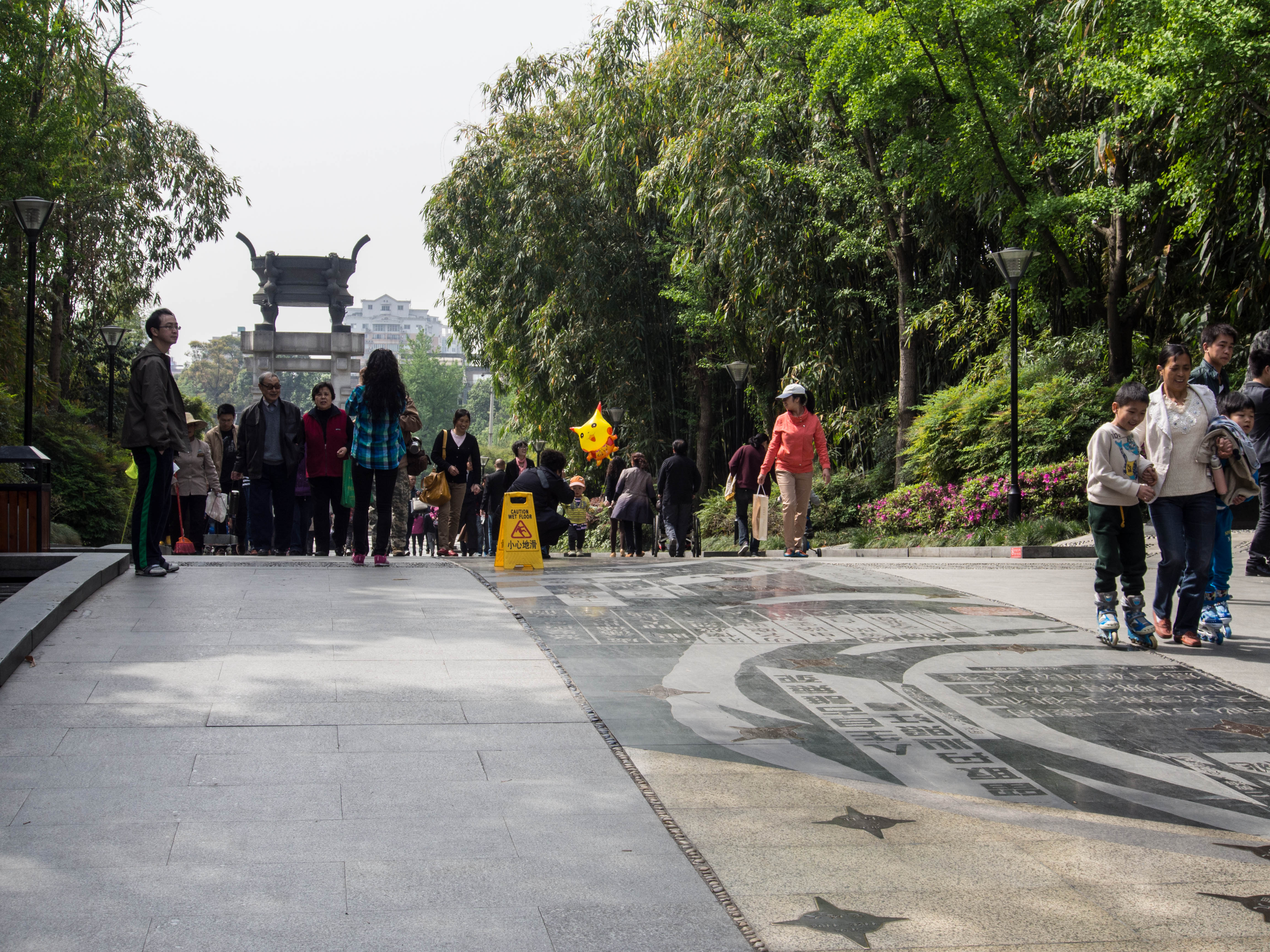
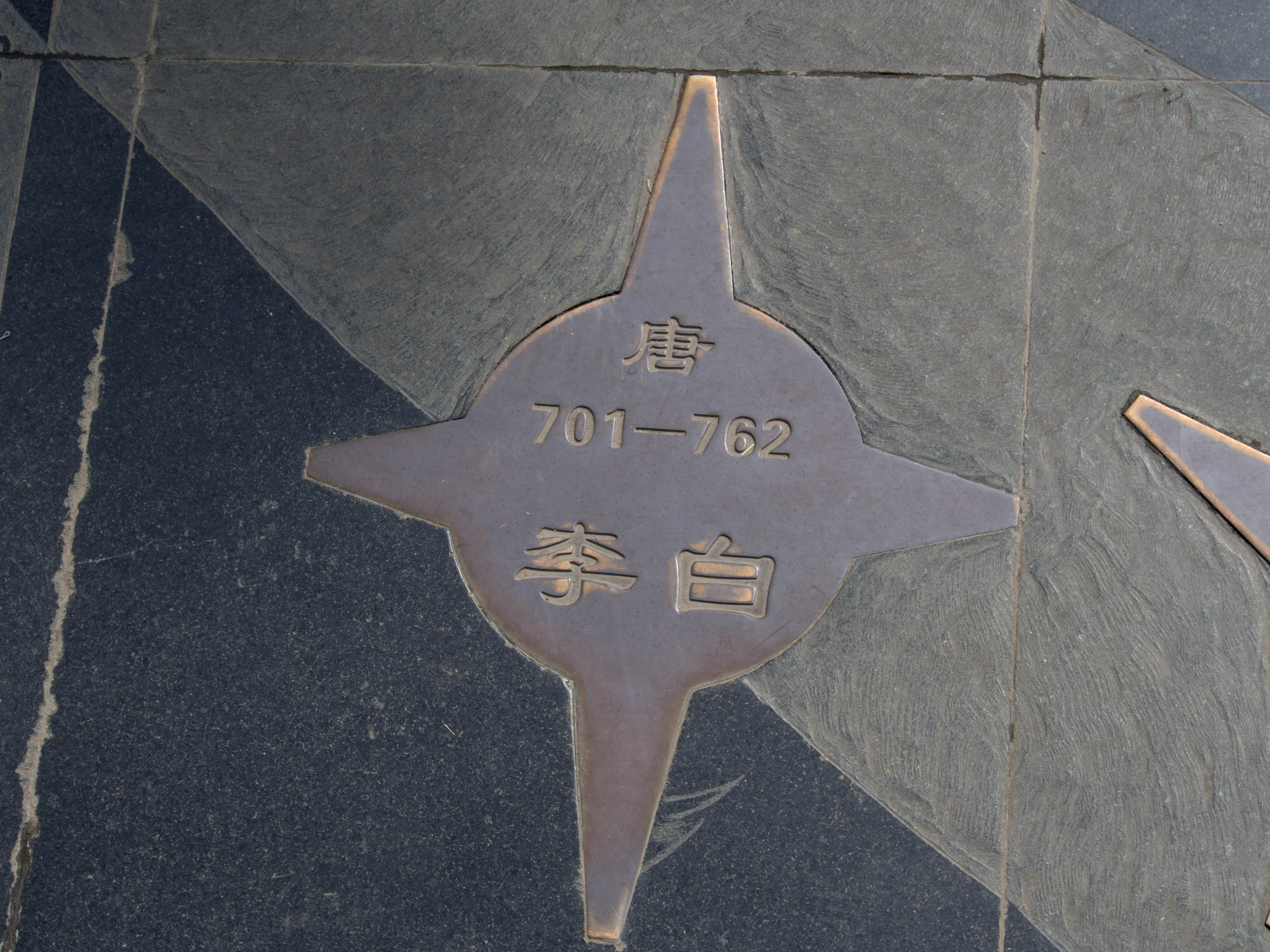
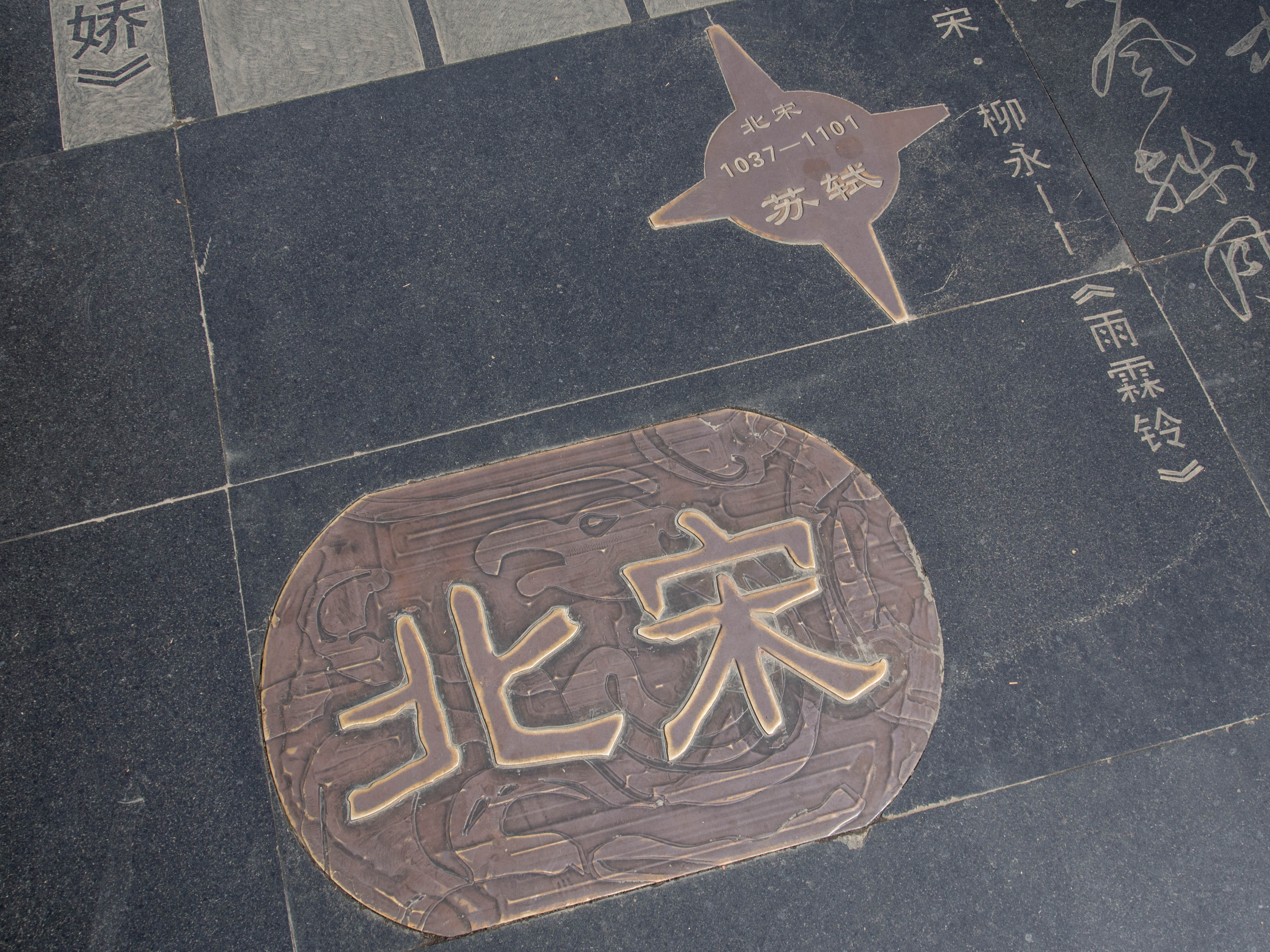
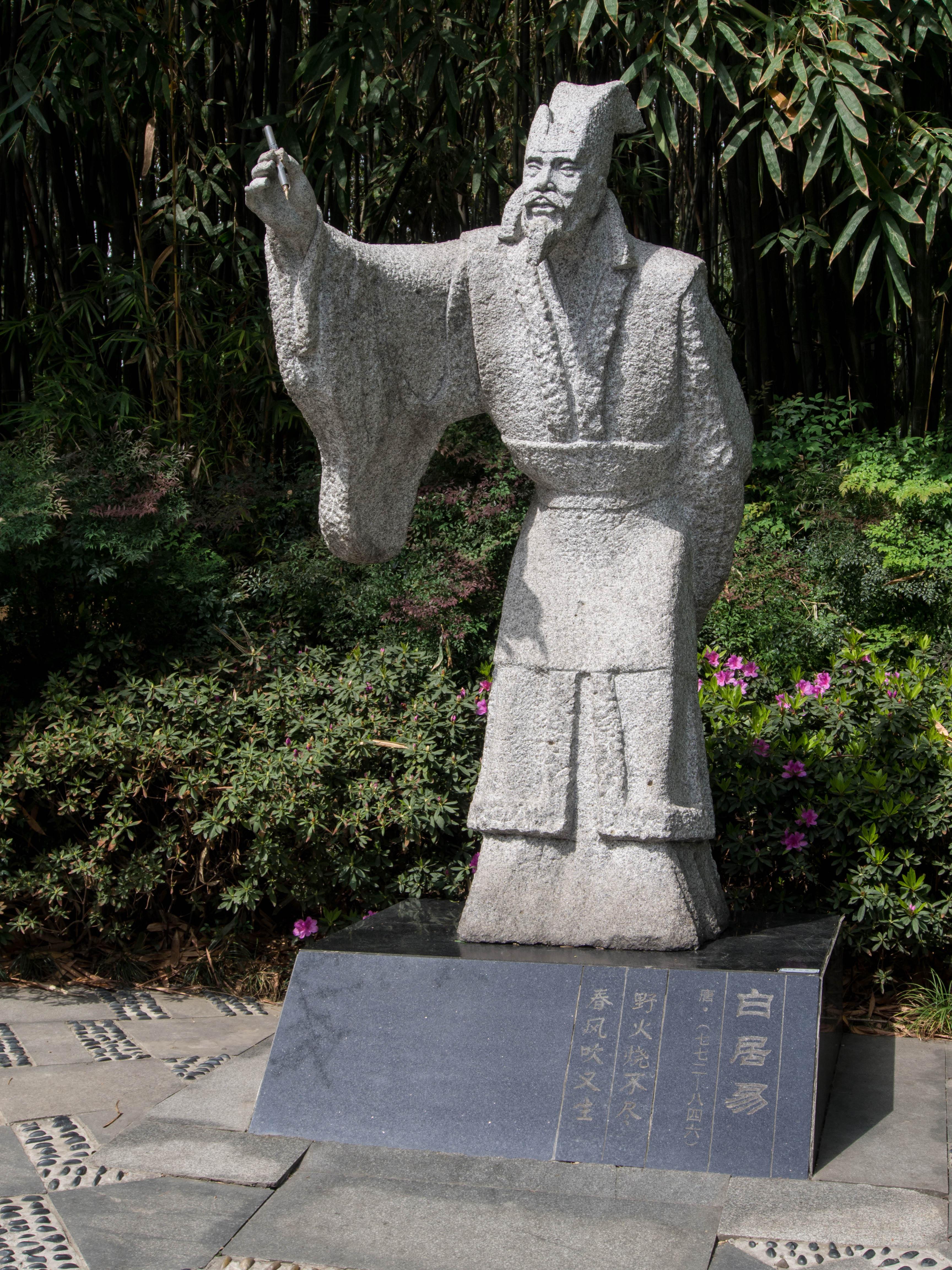
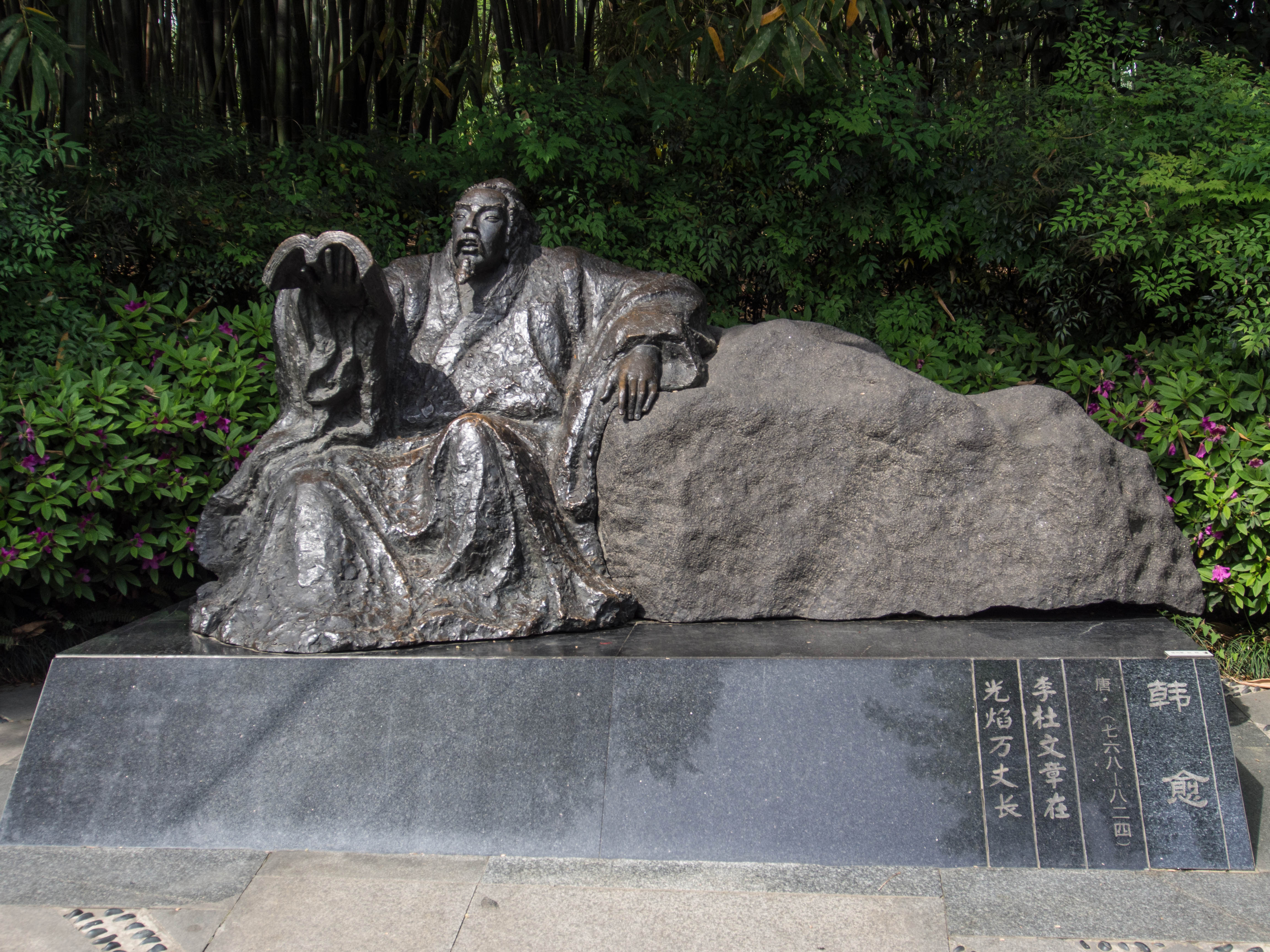
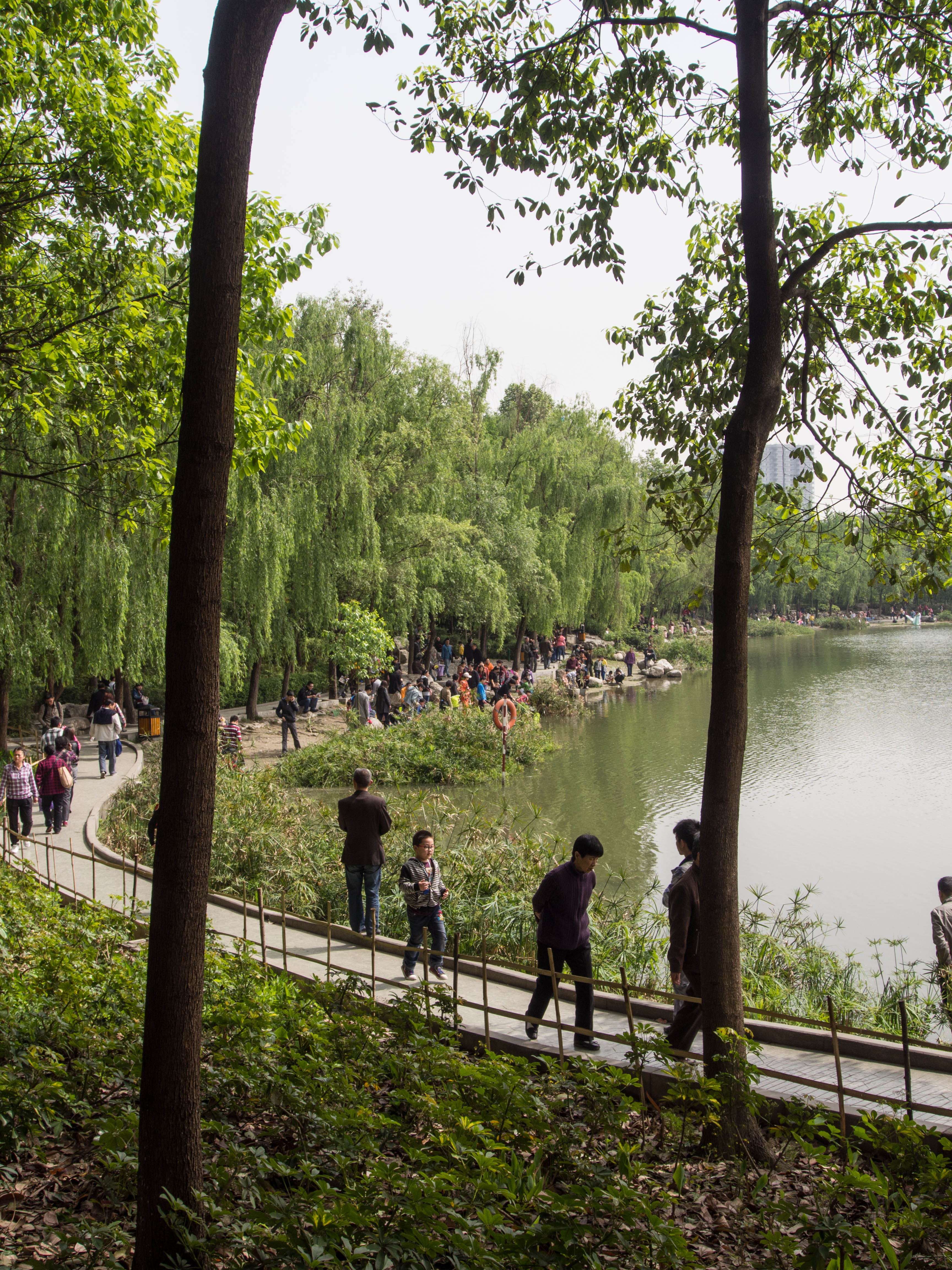
The whole complex is in a beautiful park with bamboo groves, flowers, trees, and ponds. At the entrance to the park is a long paved “walkway of the stars.” This consists of a timeline of Chinese poetry with each poet having a star on the pavement. Statues of the major poets line the pathway as well.

The long pathway of the star Chinese poets

The long pathway of the star Chinese poets

OLYMPUS DIGITAL CAMERA

Li Bai's star

Li Bai’s star

Su Shi of the Northern Song Dynasty

Su Shi of the Northern Song Dynasty

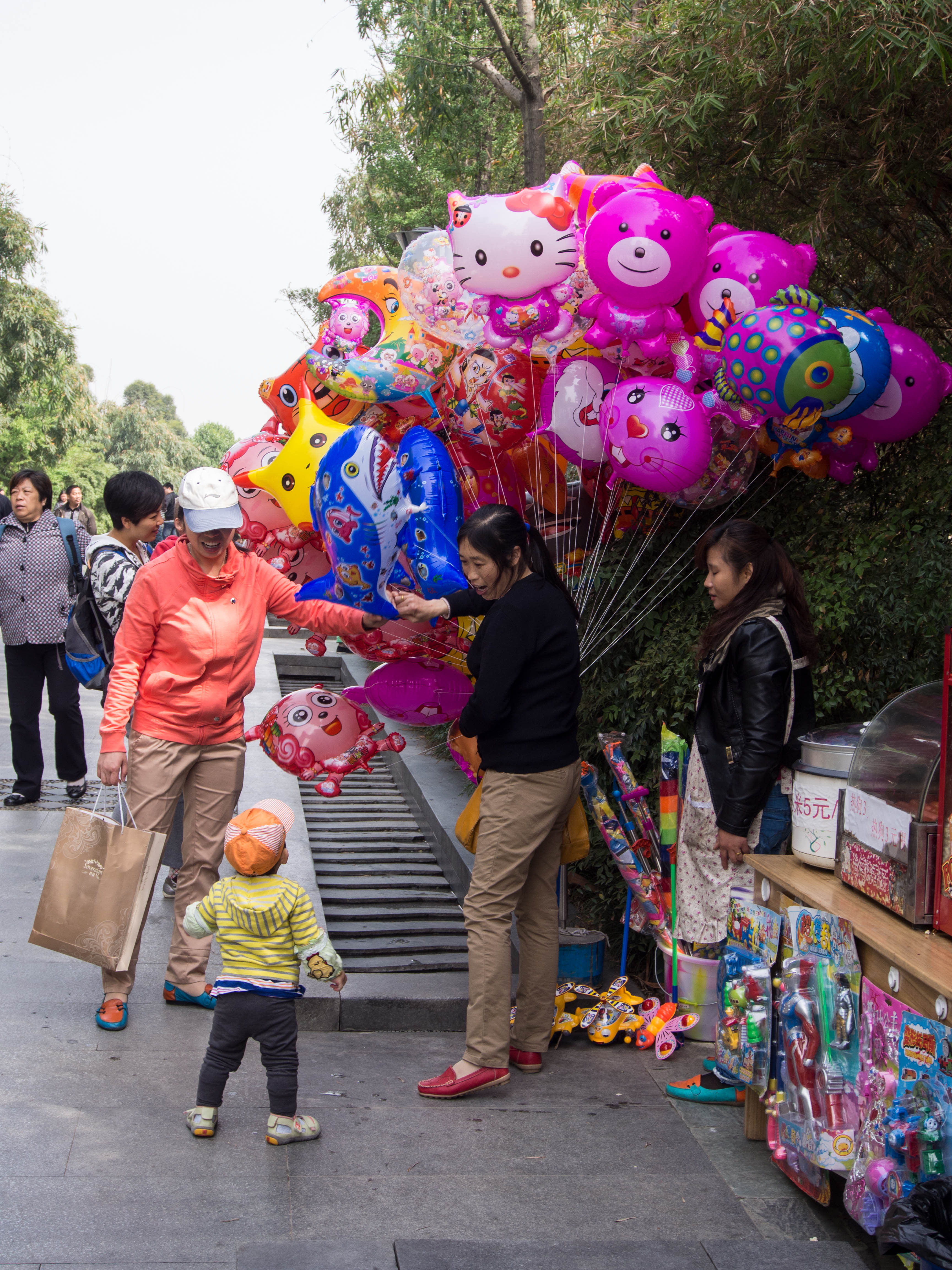
Balloon vendor along the Chinese stars path

Balloon vendor along the Chinese stars path

The Tang poet Bai Juyi

The Tang poet Bai Juyi

The Tang poet, Han Yu

The Tang poet, Han Yu

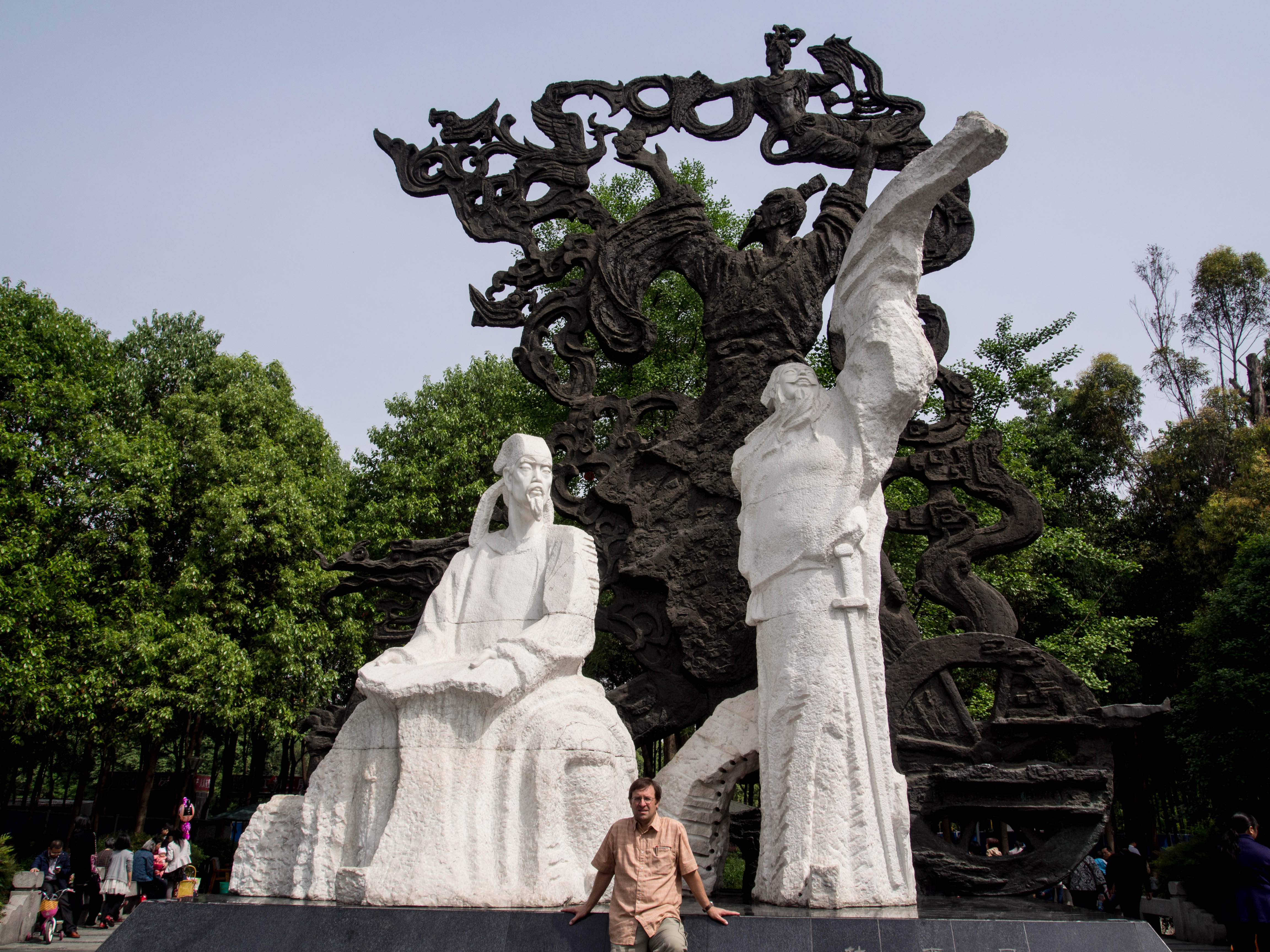
Du Fu and Li Bai with Qu Yuan in the background

Du Fu and Li Bai with Qu Yuan in the background

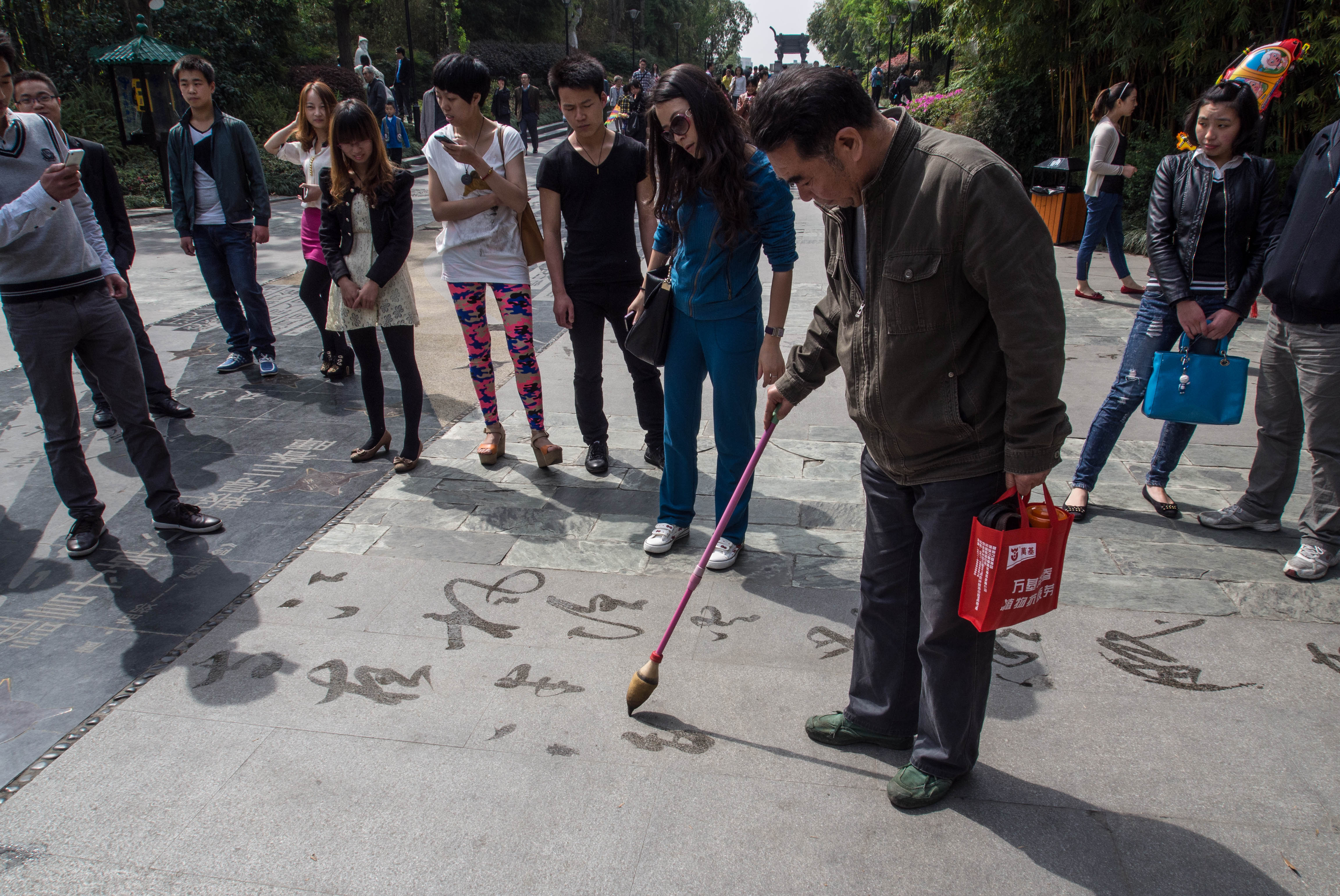
This gentleman was practicing calligraphy on the sidewalk using water for ink. He was writing poetry of course.

This gentleman was practicing calligraphy on the sidewalk using water for ink. He was writing poetry of course.

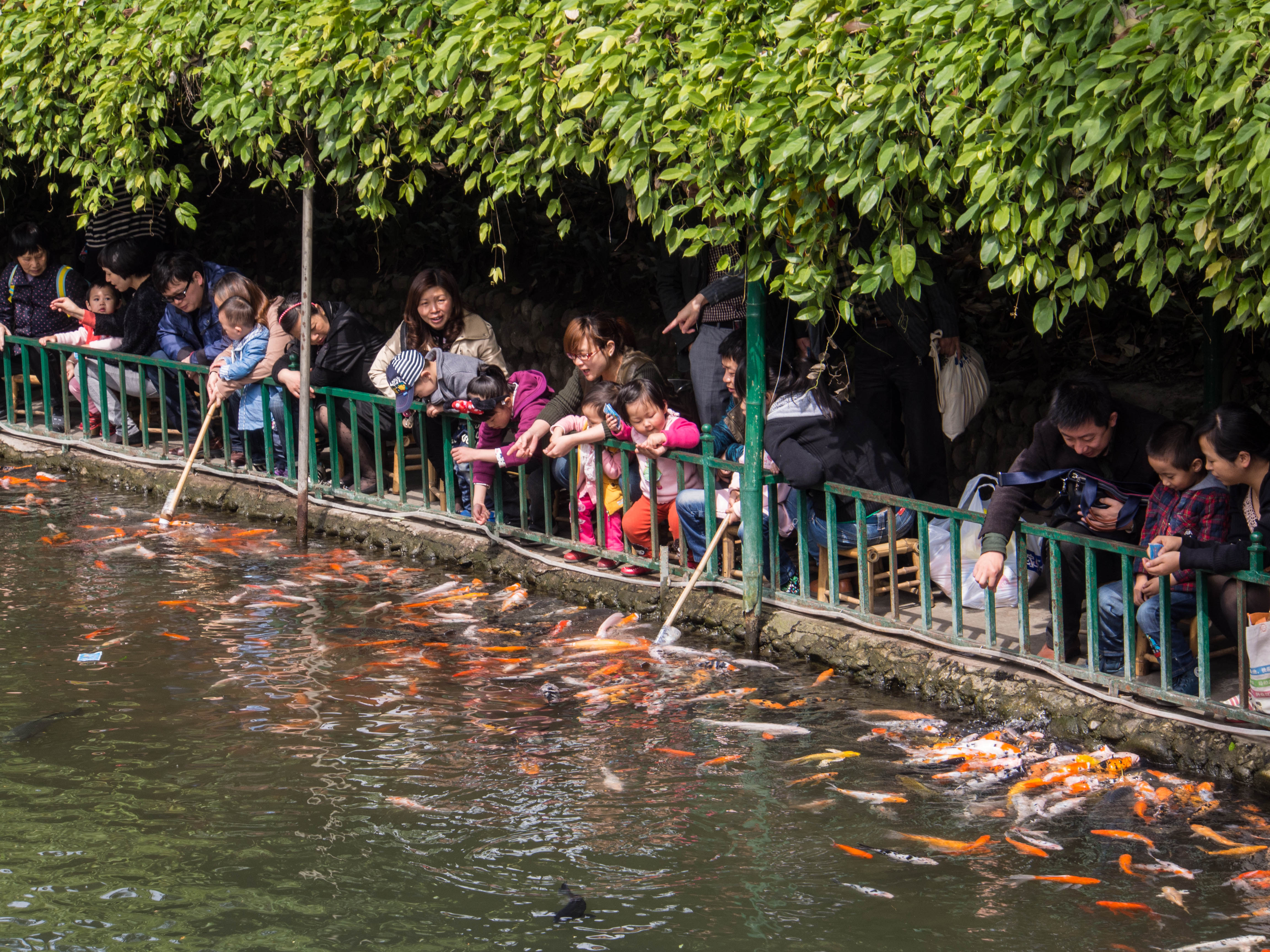
Ponds with fish to feed for the children

Ponds with fish to feed for the children

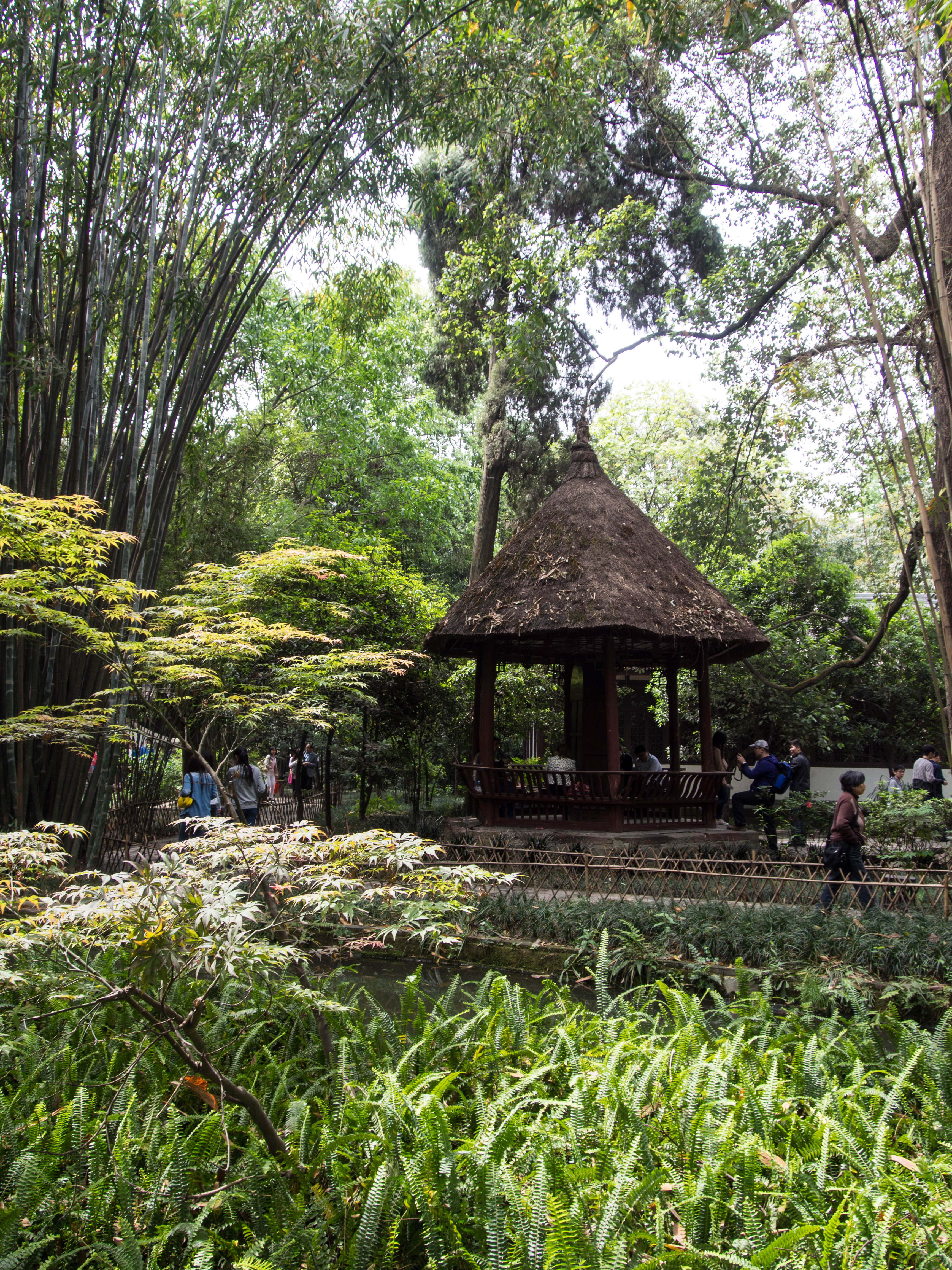
One of many pavillions

One of many pavilions

Pond and walkway

Pond and walkway

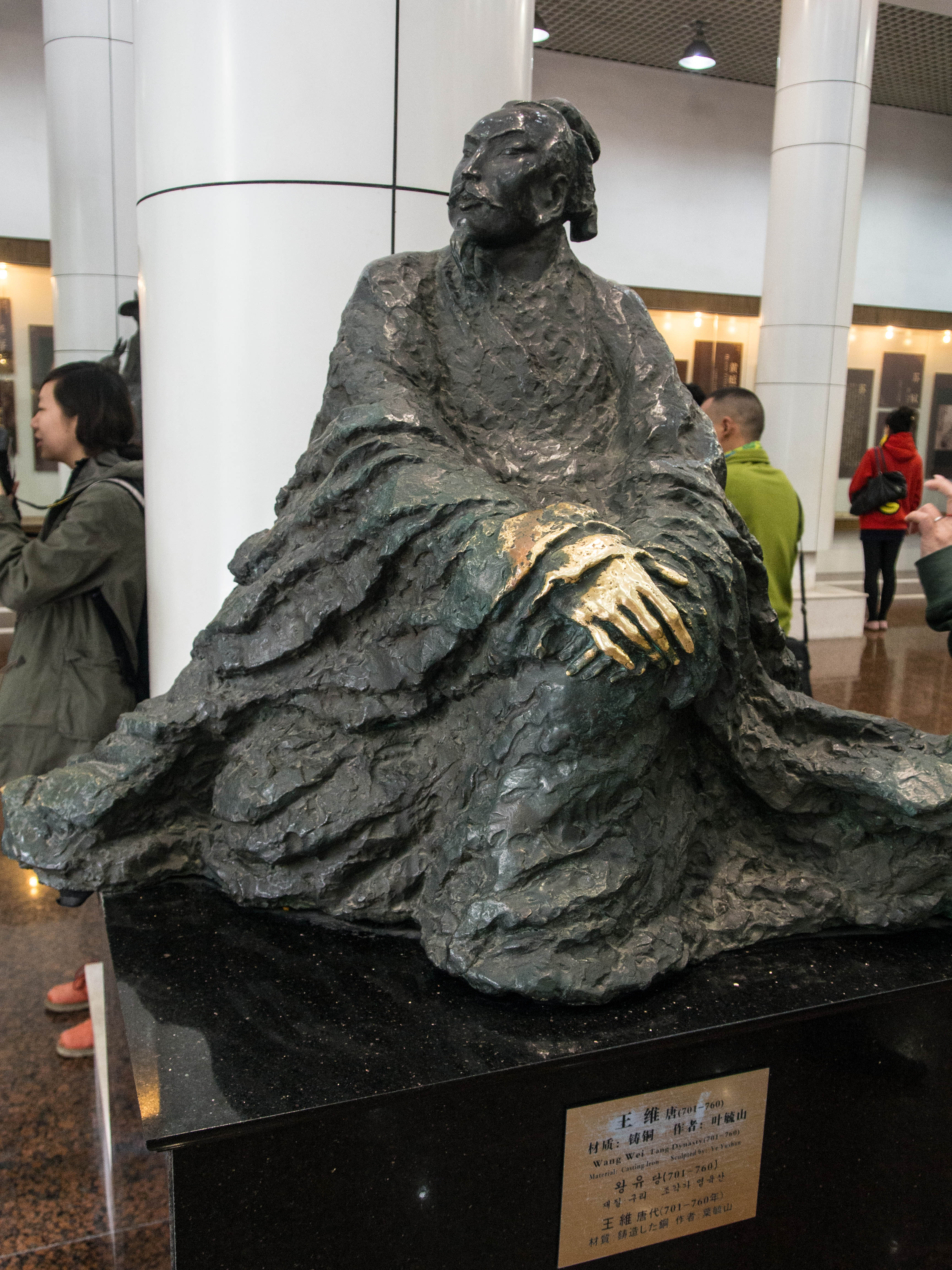
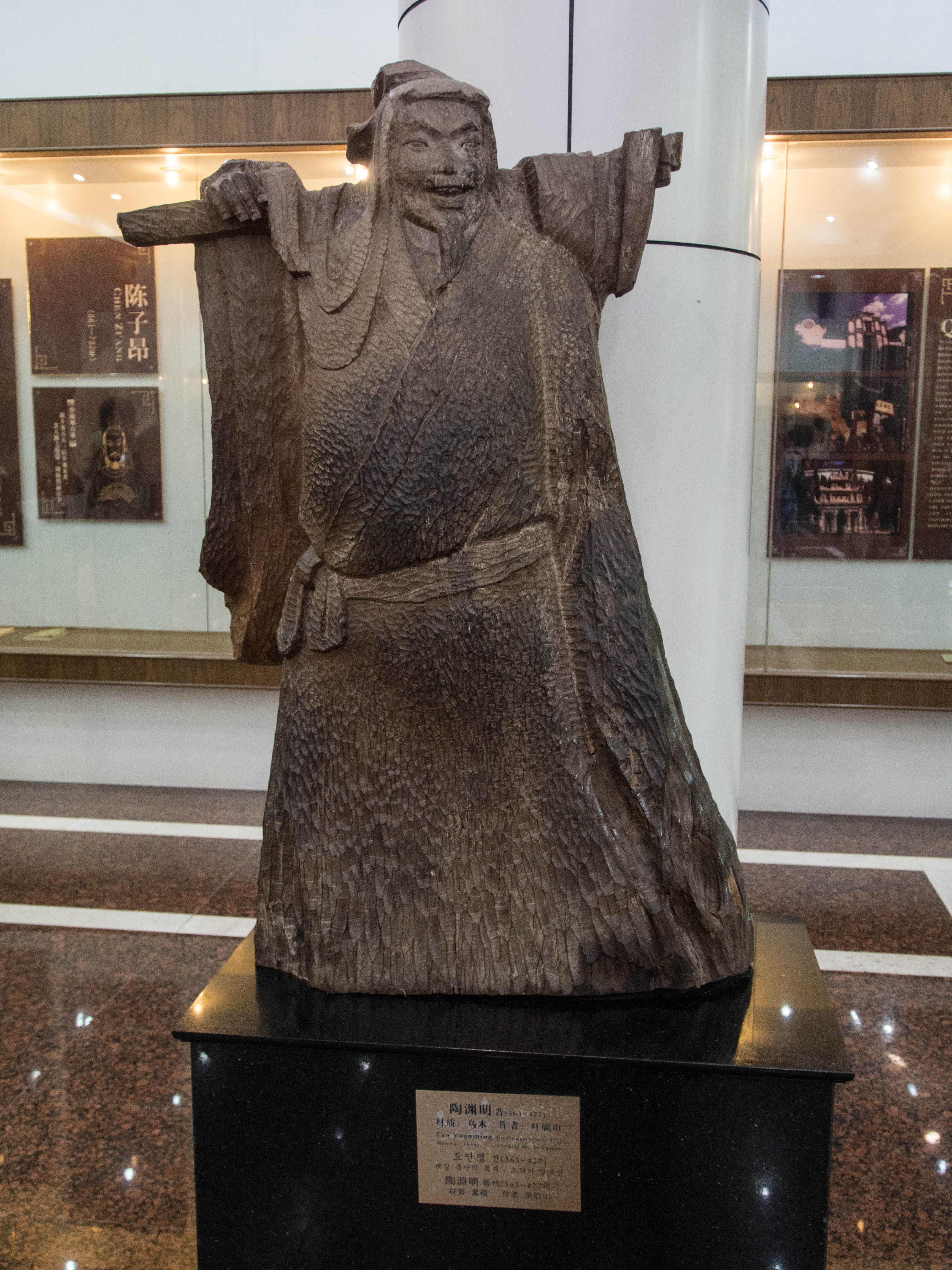
The complex also had several buildings with statues, paintings, calligraphy, and some excavation sites.

The Tang Dynasty Poet, Wang Wei, one of my personal favorites

The Tang Dynasty Poet, Wang Wei, one of my personal favorites

Tao Yuanming (365-427)

Tao Yuanming (365-427)

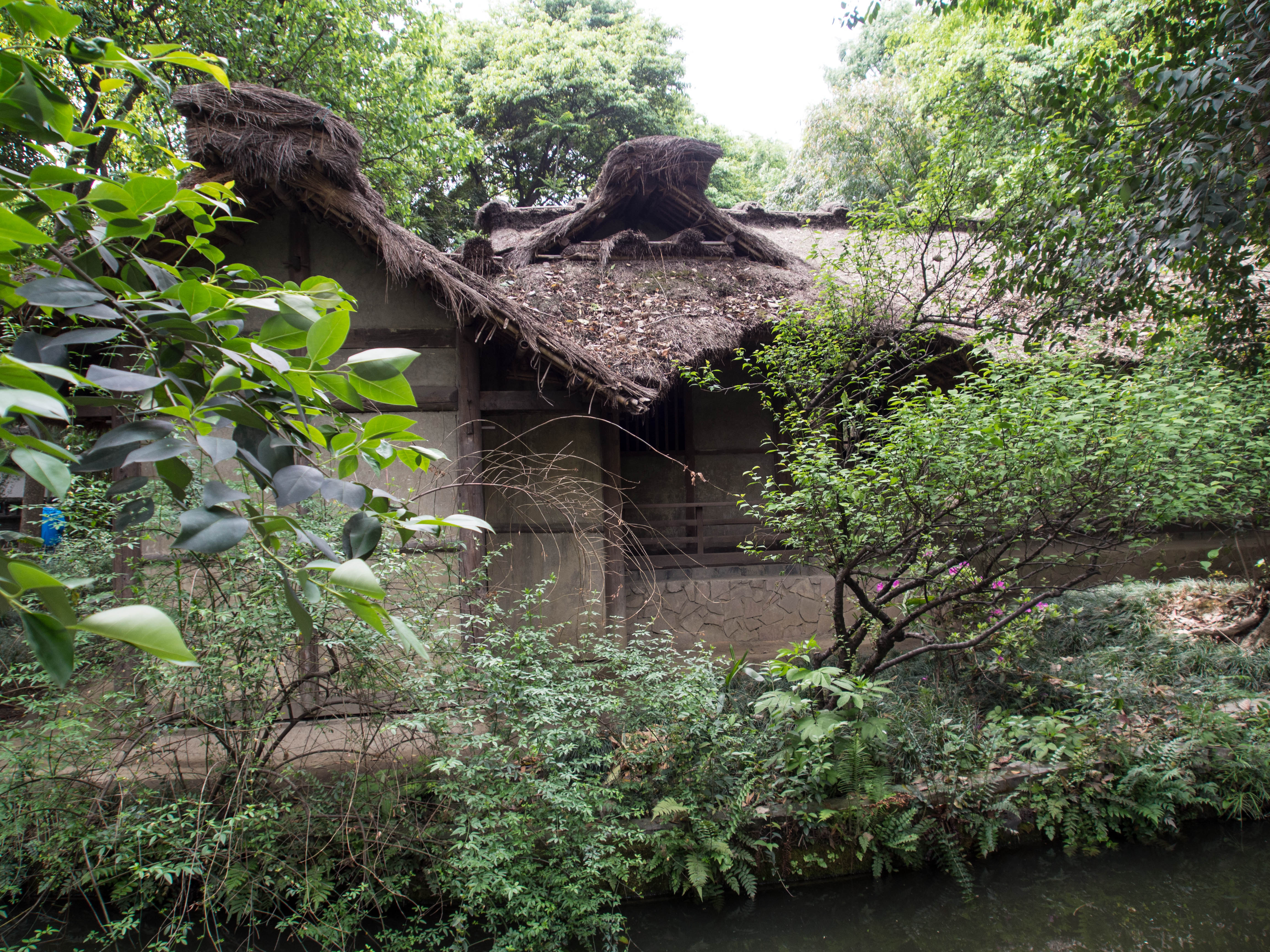
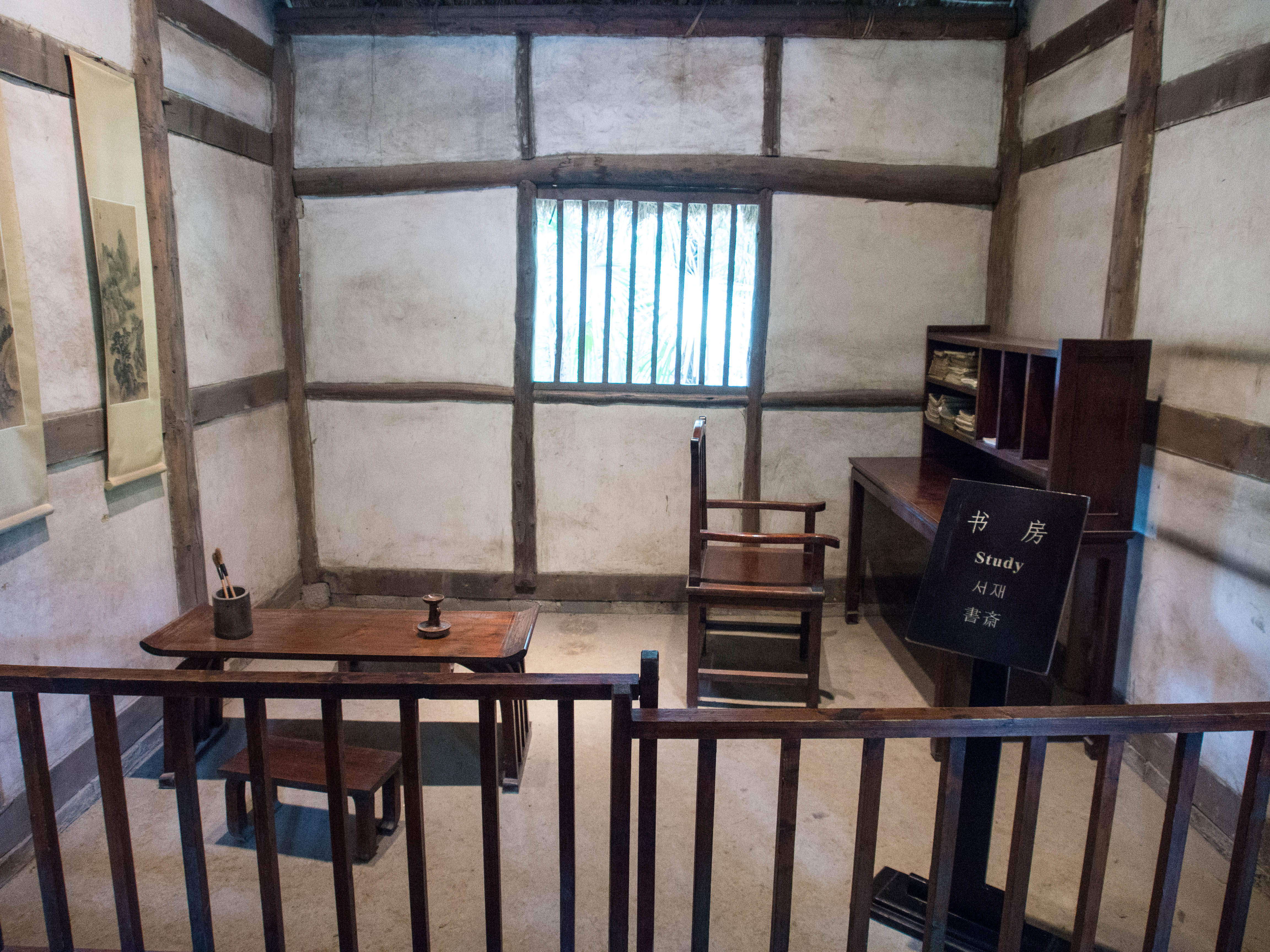
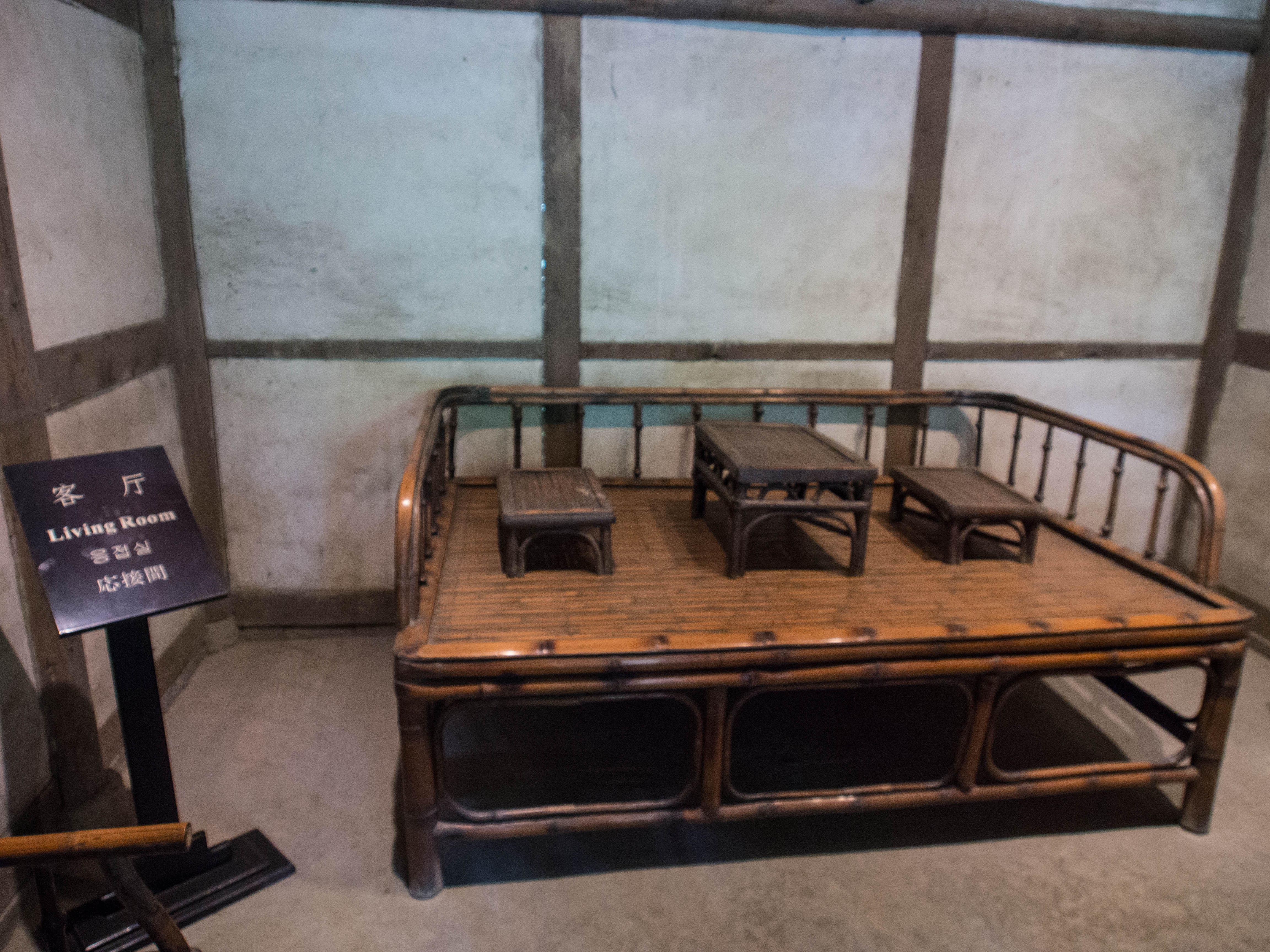
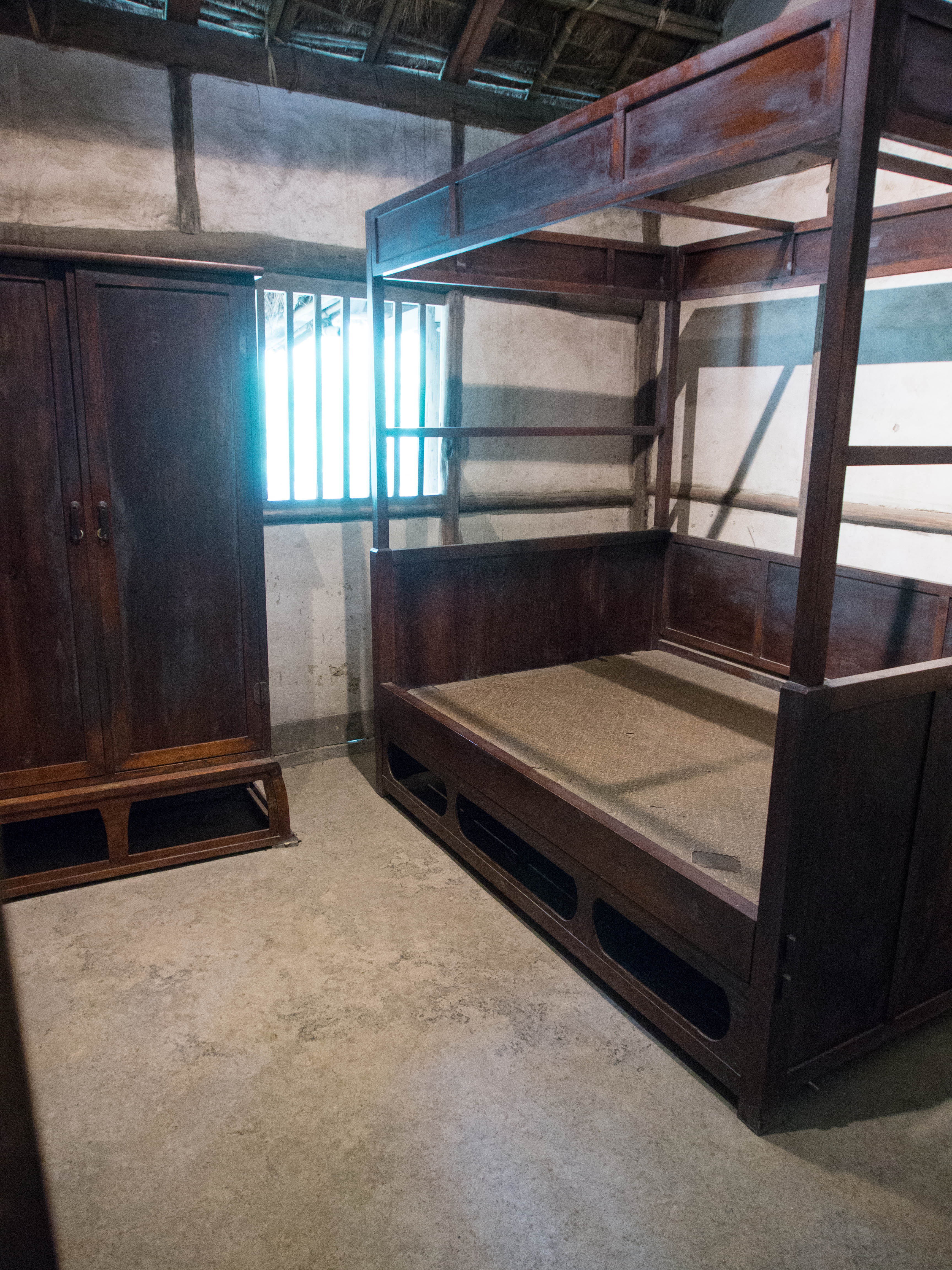
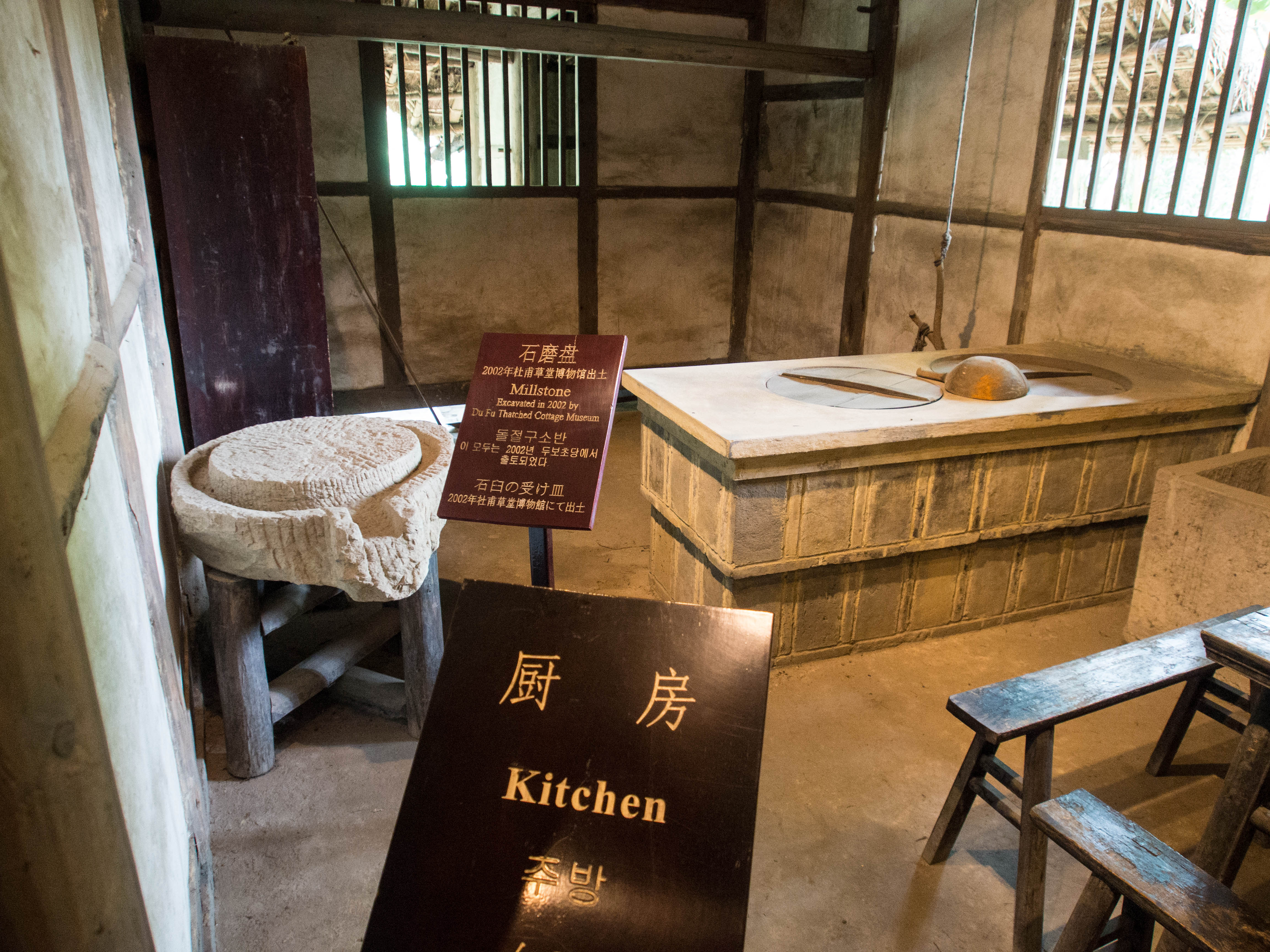
The actual Thatched Cottage was a replication of course. But it was interesting nonetheless.

Replication of Du Fu's Thatched Cottage

Replication of Du Fu’s Thatched Cottage

And a few shots of what it probably looked like on the inside.

OLYMPUS DIGITAL CAMERAOLYMPUS DIGITAL CAMERA OLYMPUS DIGITAL CAMERA OLYMPUS DIGITAL CAMERAIt was an enjoyable few hours we spent at this park. It was  refreshing that the Chinese still care about their heritage and that poetry is still an important part of their past, and hopefully their future.


What exactly is “Mandarin” Chinese?

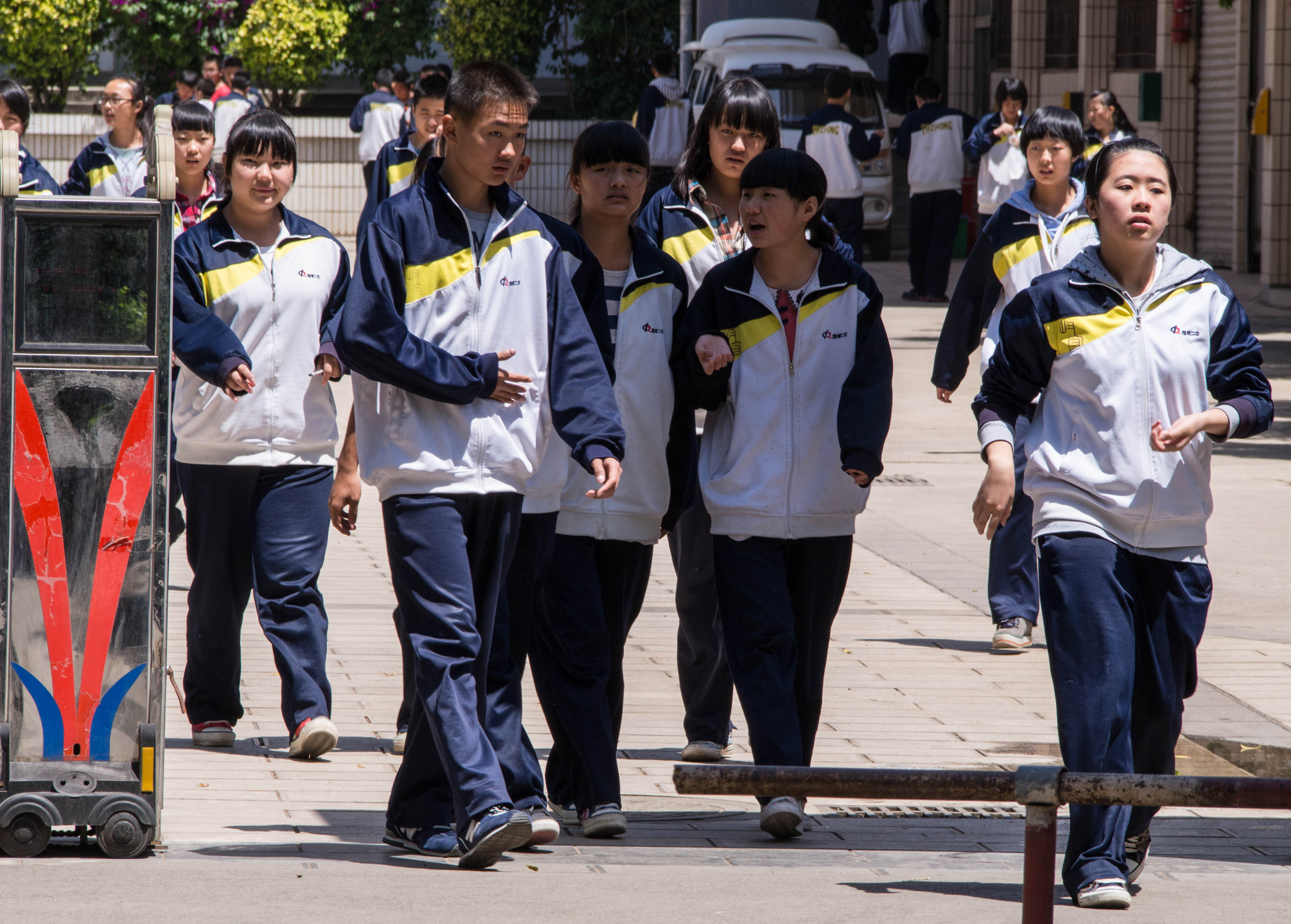
School kids in Kunming

School kids in Kunming

Mandarin Chinese actually can be defined in two ways. One, in a broad sense, it is the dialect of Chinese spoken in Northern China and is often referred to as 北方话 běifānghuà in Chinese, which literally means, “northern speech.” Two, Mandarin is used to refer to the National language that is taught and promoted by the governments of the People’s Republic of China and Taiwan. On the Mainland, this is referred to as 普通话 pǔtōnghuà (“common speech”), and in Taiwan is referred to as 国语 guóyǔ, (“national language”).
Would it then surprise you to know that technically there are no true native speakers of Mandarin Chinese, that is 普通话 pǔtōnghuà? From here on when I refer to “Mandarin” I will be speaking about the National language of China, and not the northern Chinese dialect. First, a little history.

The idea of a national language as the modern standard Chinese in China was promoted as early as 1906, based on Japanese models of a national language there. After the founding of the Republic of China in 1912, these efforts were intensified with the organization of an eighty member commission tasked to decide on a standard pronunciation and basic sounds of the standard language. They came up with a National Language 国语 guóyǔ but with all the political turmoil during those years, not a great deal was done to promote it. After the founding of the PRC in 1949 efforts were again intensified to come up with a standard national language and simplified script. In 1955 a resolution was passed and 普通话 pǔtōnghuà was defined as being based on Northern dialects (Mandarin from our first definition above), with the Beijing dialect as the standard pronunciation. It was further articulated as follows:

1. Phonology or pronunciation was based on the Beijing dialect

2. Vocabulary was based on northern dialects (Mandarin)

3. Grammar was based on modern written Chinese (literature)

So as you see then, there are no truly native speakers of this fabricated National language. What then is the role of Mandarin Chinese in China today?

• It is the language that everyone learns in school. In other words, when kids go to school and have their language arts class, they are taught standard Mandarin Chinese, or 普通话 pǔtōnghuà. For example, when they are learning to read, they learn to pronounce characters in Mandarin regardless of their dialect background. All those people in China that speak a non-Mandarin dialect growing up are essentially learning another language (or dialect if you prefer) in school. What this means then is that educated individuals in China can speak and understand Mandarin. It also means that many people in China are bilingual, knowing Mandarin and their home dialect. This does not mean that they all have wonderful pronunciation. Generally speaking, the farther you go from large urban areas   and get into rural areas, the less standard Mandarin people tend to have. Of course there are always exceptions to this.
• Mandarin is the language used in government. All meetings and official communication is conducted in Mandarin.
• Mandarin is the language of business. This is especially true when speakers from different areas of China are communicating with each other.
• Mandarin is the language of the media. The vast majority of television and radio broadcasts are in Mandarin. There is some programming in the local dialects (at the regional level), but most is in Mandarin. So everyone who watches TV can at least understand Mandarin pretty well. One thing you will notice when you watch Chinese TV is that there is almost always subtitles in Chinese characters on the screen, regardless of the type of program. Why? So those not as familiar with spoken Mandarin can still follow along.
• Mandarin is the prestige dialect in Mainland China. Using Mandarin is a way to show that you are educated, sophisticated, and in the know.
Mandarin is also the Chinese that is taught to foreigners, in China, and abroad. It is the most useful language for anyone traveling to China or Taiwan. I tell my students that with Mandarin language skills you can communicate with just about any educated person in China. I have found this to be true in my travels in China. Again, that doesn’t mean everyone will have great Mandarin language skills though. I remember a time in the far Northwestern corner of Yunnan Province talking with a small group of Tibetans and a Han Chinese guy. The Tibetans had much better Mandarin than he did. His Mandarin was heavily accented by his local dialect. As such, it was easier to communicate with the Tibetans than with him.
In addition to the terms discussed above, there are various other terms that are used to refer to the Chinese language. They are:
1. 普通话 pǔtōnghuà          “the common language”; this refers to the national language
                                            promoted by the government in the PRC; this term is only used
                                            in the PRC
2. 国语 guóyǔ                     the “National language”; this term used in Taiwan, and in Hong
                                           Kong when referring to Mandarin
3. 中国话 zhōngguóhuà     literally the “language of China;” this is a generic term used to
                                          refer to spoken Chinese
4. 汉语 hànyǔ                    “language of the Han’s;” this refers to spoken Chinese and is
                                           used in the PRC
5. 中文 zhōngwén              this is a general term that means simply “Chinese” and can
                                           refer to the spoken or the written language. It is used in China,
                                           the PRC, Hong Kong, and elsewhere

China’s Linguistic Diversity

OLYMPUS DIGITAL CAMERA

The linguistic situation in China is very complex. There are literally hundreds of different Chinese dialects spoken across China. Linguists have long debated what we call these linguistic variations, dialects or languages. In the West, we typically use this definition for dialects—

mutually intelligible varieties of the same language

This definition works nicely for most Western languages. For example, British English and American English are largely mutually intelligible. But this definition doesn’t work for China because many of the dialects are mutually unintelligible. And using the term languages as in different languages doesn’t work that well either because there is a standard written form, and there is cultural unity that usually does not exist across languages, such as Spanish and English in the United States. The Chinese term is 方言 fāngyán literally meaning “region language” or as one linguist called them “regionalects.” That English term didn’t really take. Those who argue for calling them different languages (i.e. Mandarin and Cantonese) use the intelligibility test. Those who argue for using the term dialect fall back on the cultural unity and literacy issue. We often use the term dialect simply because it is convenient, even if it doesn’t completely align with the Western definition of the term. I’ll use dialect in this post to refer to the different varieties of Chinese. In China there are 7 main dialect groups. They are:

Dialect                    % of speakers                    Region spoken

Mandarin                   71.5%                                  Northern & Southwestern China

Wu                             8.5%                                    Shanghai, central coastal areas

Gan                            2.4%                                    Jiangxi Province

Xiang                         4.8%                                    Hunan Province

Kejia (Hakka)           3.7%                                   Scattered throughout the South and Taiwan

Yue (Cantonese)      5.0%                                    Guangdong, Hong Kong, overseas

Min                           4.1%                                     Fujian, SE coastal areas, Taiwan

OLYMPUS DIGITAL CAMERA

Mandarin dialects are the most widely spoken by a large margin. But what makes the linguistic situation more complicated is that there are sub-dialects within these groups that are not mutually intelligible. When I was in graduate school taking a seminar in Chinese sociolinguistics, we listened to tapes of speakers of a Mandarin dialect just 150 km north of Beijing, and we could understand very little. There are Cantonese dialects that vary from village to village, some so much so that they are not comprehensible to each other. One more thing to keep in mind. Perhaps you’re thinking, “well only 5% of the population speak Cantonese.” Do the math. 5% of 1.3 billion is a staggering amount. In fact, there are as many Cantonese speakers in Southern China as French speakers in France. To help my students understand what I’m talking about I like to play them some audio samples of people speaking different Chinese dialects. In each of the audio files below, the speaker will say the following, at least how they would say the same thing in their dialect.

1. Shéi a? Wǒ shì Lǎo Sān

(Who is it? I’m Lao San)

2. Lǎo Sì ne? Tā Zhèng gēn yígè péngyǒu shuō zhe huà ne.

(What about Lao Si? He’s talking with a friend right now).

3. Tā hái méi shuō wán ma?

(Has he finished speaking?)

4. Hái méi ne. Dàyuè zài yǒu yì huǎr jiù shuō wán le.

(Not yet. (He’ll) probably be done talking in a moment).

1. Běijīng Dialect (Northern Mandarin)

2. Xī’ān Dialect (Central Mandarin Sub-group; Shaanxi Province)

3. Hángzhōu Dialect (Wu Group; Zhejiang Province)

4. Chángshā Dialect (Xiang Group; Hunan Province)

5. Méixiàn Dialect (Hakka Group; Guangdong Province)

6. Cantonese—guǎngdōnghuà (Yue Group; Guangdong Province)

A final note: In China there are 55 Nationally recognized minority groups that speak non-Chinese languages. These groups include, Tibetans, Mongolians, Uigurs, Kazaks, Miao (Hmong), Zhuang, Yi, Bai, Koreans, and many others. In most cases their languages are not even linguistically related to Chinese. These ethnic minority groups make about 7% of China’s population.

OLYMPUS DIGITAL CAMERA

Pig Ears, Really!

Chongqing pig ears

Chongqing pig ears

Be open minded. People in other cultures eat things we would deem inedible or at least not desirable. But sometimes you may be surprised.

I am currently doing research on Chinese culinary culture. In April my friend and colleague and I made a trip to areas of western China where Sichuan cuisine is dominant. We spent a couple days in the city/municipality of Chongqing. Whenever I go to a new city where there is a distinctive cuisine I spend a fair amount of time researching the unique food of that area, and that city particularly. This research includes reading books, (mostly in Chinese because there is so little available in English), reading blogs, both English language and Chinese, reading online Chinese foodie forums, and talking to people from those areas. I have a Chinese food notebook where I make lists of dishes that I want to try in those cities that I visit. Pig ears was not on my list of things to try in Chongqing.

We arrived in Chongqing by train from Chengdu around midday. We transferred to the excellent subway system and rode out to near our hotel. After checking in we were starving so went in search of a close, convenient meal. We found a promising looking place nearby and sat down. We chatted with the lady who owned the restaurant a bit about what we should order. We told her we wanted traditional Chongqing dishes. It was a surprisingly excellent meal. As we were eating the owner and a couple workers came out to talk to us. I think they were intrigued that I was photographing all the dishes and taking notes in my notebook. Indeed they were curious about these two middle-aged foreigners taking such an interest in their food. In the course of our conversation we asked them what we should eat while in Chongqing, and if there were any specialties that were not on our list (I showed them the list of dishes in my notebook). The became very animated and told us that we had to eat at this restaurant just up the street. They said they had a very special dish that was very famous, “pig ears”. We weren’t sure we heard them right, and thought maybe that was just the name of the restaurant and not the actual dish served.

The next day we looked for this restaurant and couldn’t find it. We asked some people on the street and they immediately knew the place and directed us to the restaurant. We had walked right by it. I guess we were looking for a big, fancy restaurant, not the small, nondescript place that is was.

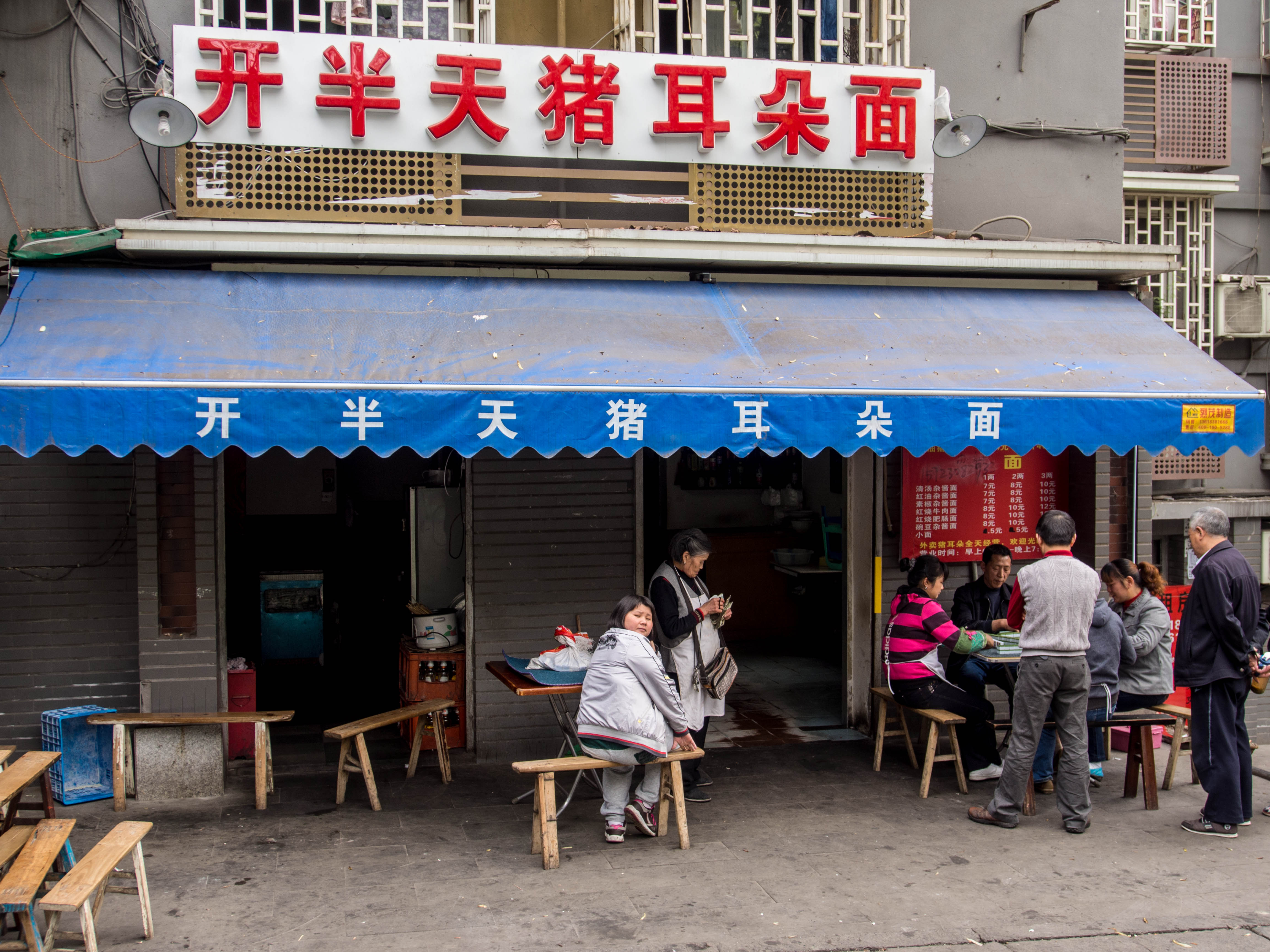
The name of the restaurant is: "Kai Ping Tian Pig Ear noodles."

The name of the restaurant is: “Kai Ban Tian Pig Ear Noodles.”

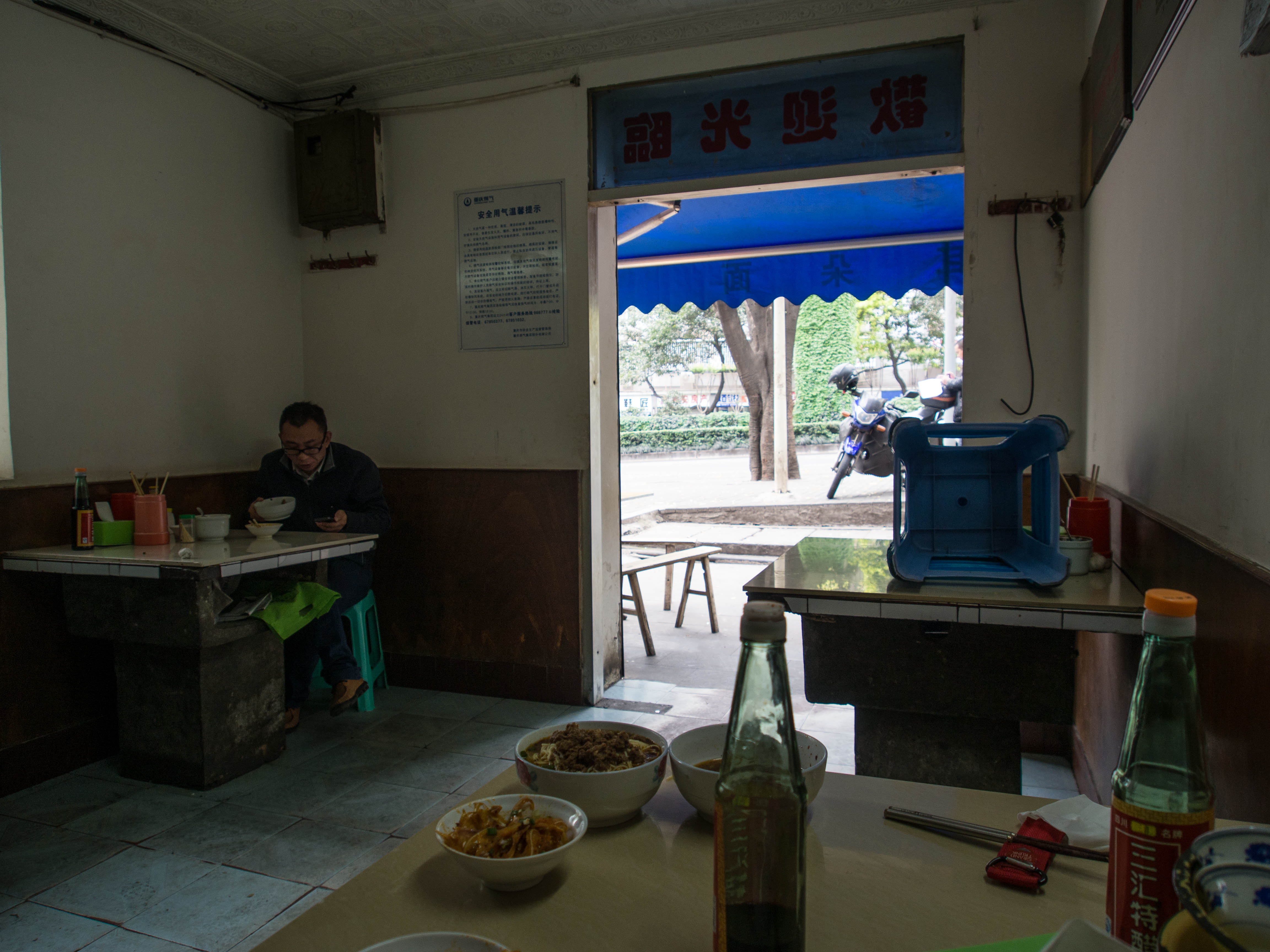
It was a bit past the lunch hour so most of the workers were out front playing Mahjong. Only two other tables were occupied in the restaurant. Inside there were only four tables, with that many outside as well.

Inside the restaurant

Inside the restaurant

After seeing the name of the restaurant, we presumed that maybe that the shape of the noodles were like a pig ear. There are dozens and dozens of different shapes of noodles in Chinese cuisine. In my research on Northern Chinese food (Lu Cuisine), I read that many chefs there know how to make at least two hundred different shapes of noodles, including “cat’s ear,” which are noodles shaped like a cat’s ear. So, it was not too ridiculous for us to think that maybe this pig ear noodle shop made noodles shaped like a pig’s ear, right?

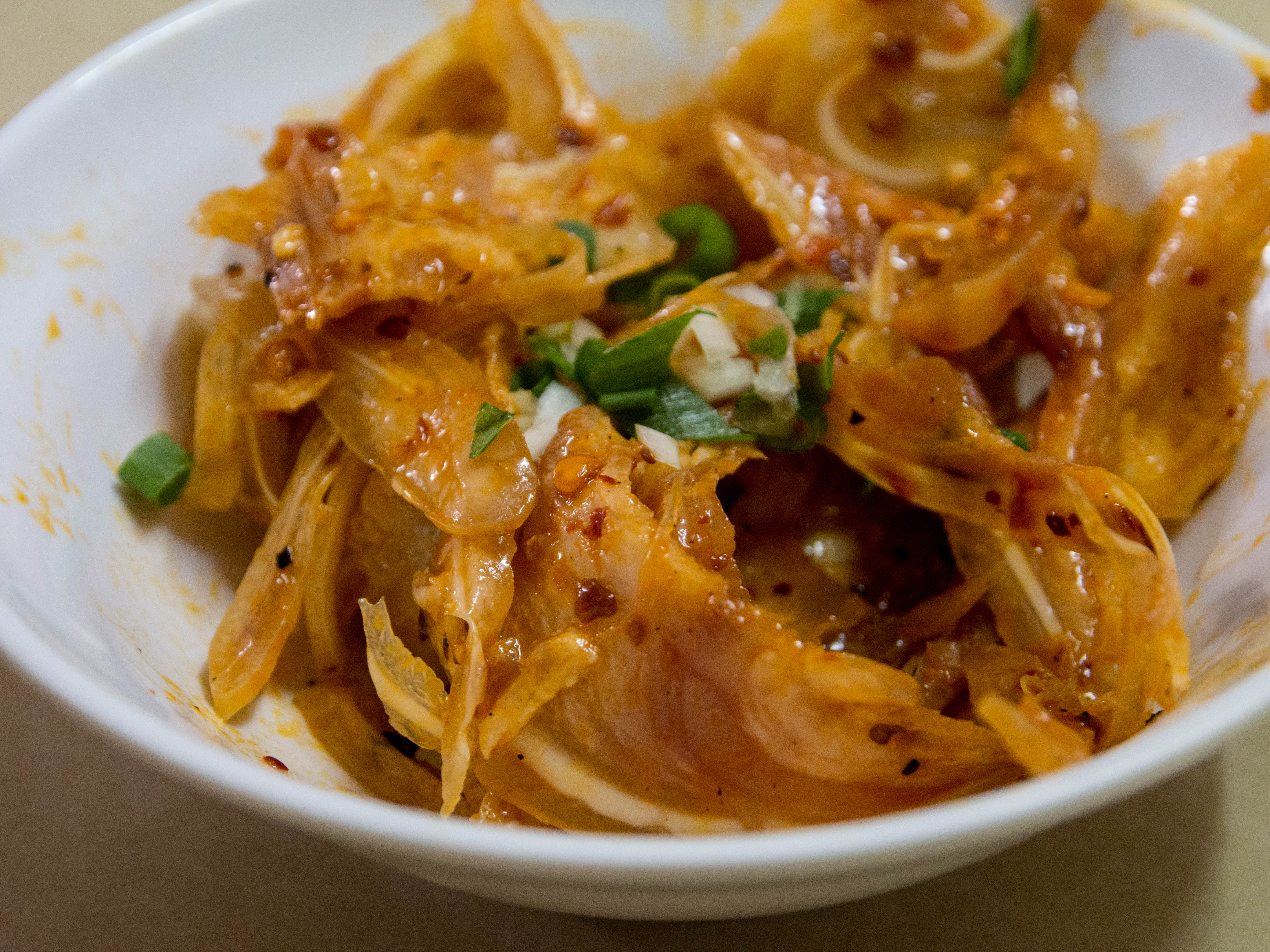
The bowls of noodles were ordered by weight. We weren’t too sure on how much to order so we played it conservatively and ordered the lesser amount (I think it was 4 liang). While we were waiting for our bowls of noodles, they brought us a bowl of some kind of appetizer. We asked them what it was, and they all laughed and said, as if we were complete idiots, “the pig ears.” And there they were.

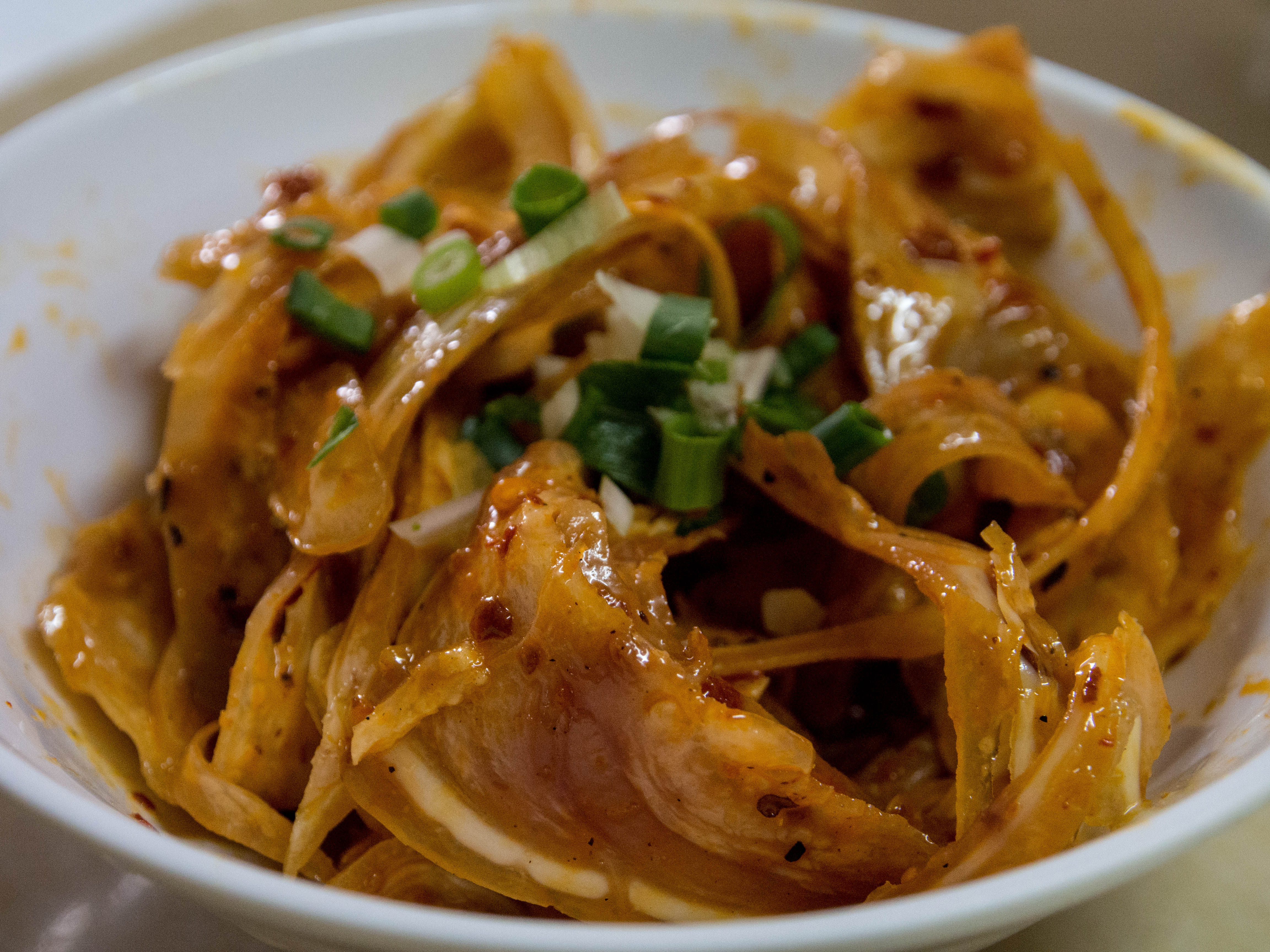
Sliced pig ears appetizer

Sliced pig ears appetizer

Of course, the pig ears. We felt a little foolish. So we dug in . . . and they were not bad at all. In fact, they were pretty good. They were a little crunchy, and a little soft, and the chili oil was a bit spicy and quite flavorful. I’ve convinced myself that eating strange things is all psychological. If you can get your mind past it, no problem, strange stuff is often pretty tasty. And this was the case with the sliced pig ears. The were marinated in a chili pepper-vinegar and probably some other seasonings. They were a little hesitant to divulge exactly how they made them. The owner explained to us that her pig ears were famous not only in Chongqing, but all over China. She explained that they also had a mail order business and shipped their famous pig ears all over China. She even brought out a very large binder full of shipping receipts to literally every part of China. She was rather proud of this.

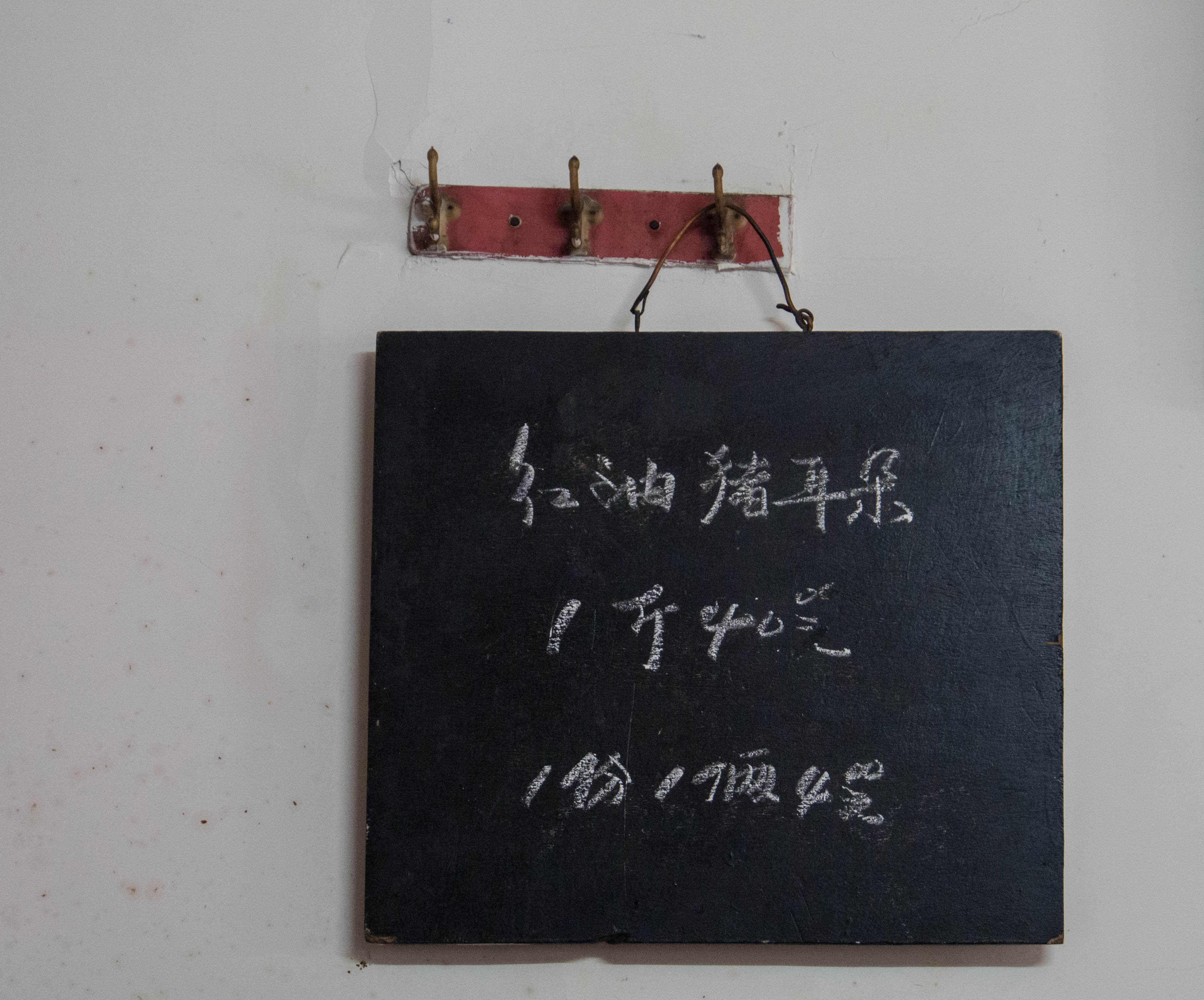
The sign reads: "Red oil pig ears, 1 jin, 40 yuan" 2 ears, 4 yuan

The sign reads: “Red oil pig ears, 1 jin, 40 yuan
2 ears, 4 yuan; (red oil refers to chili pepper oil)

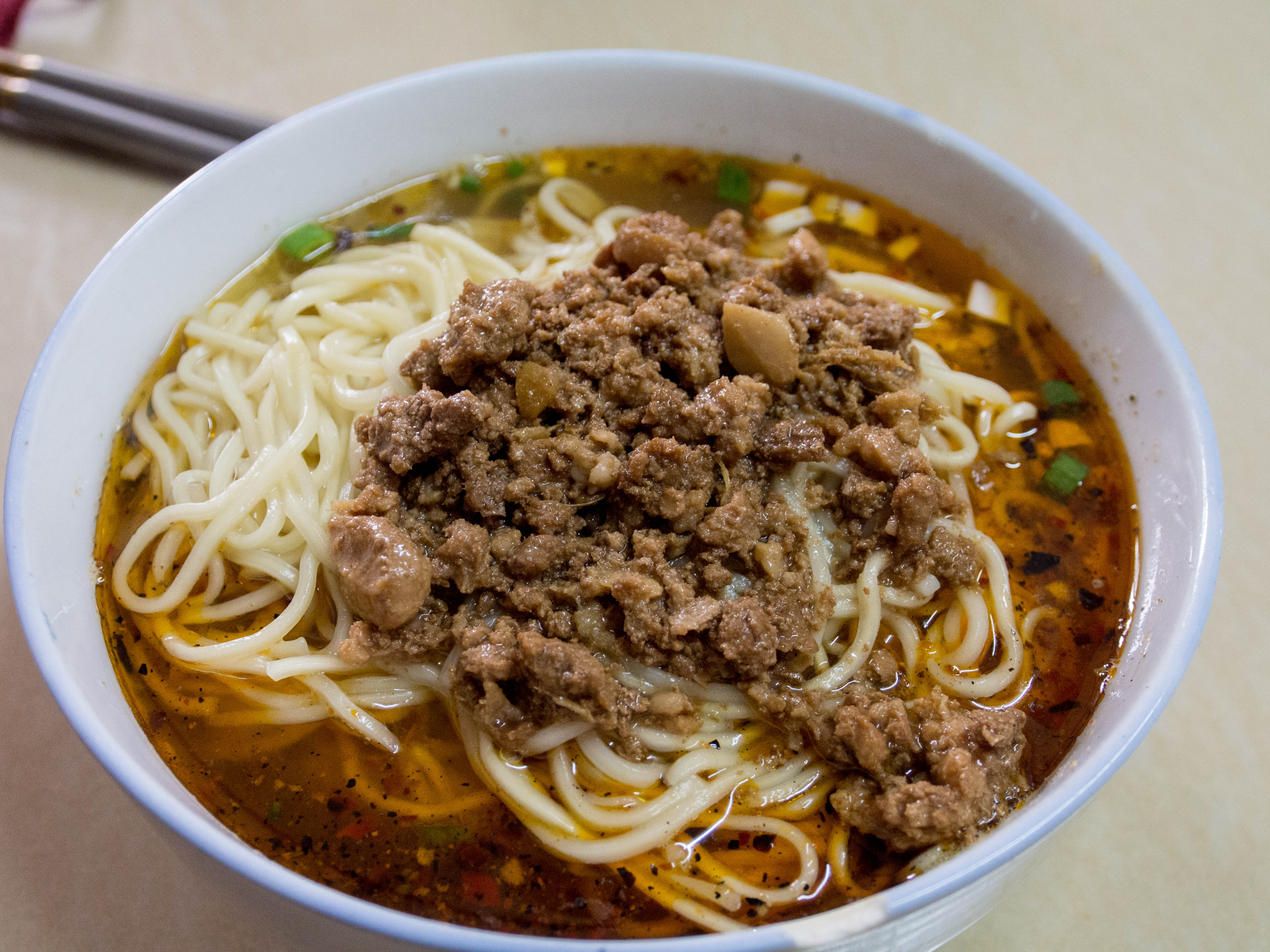
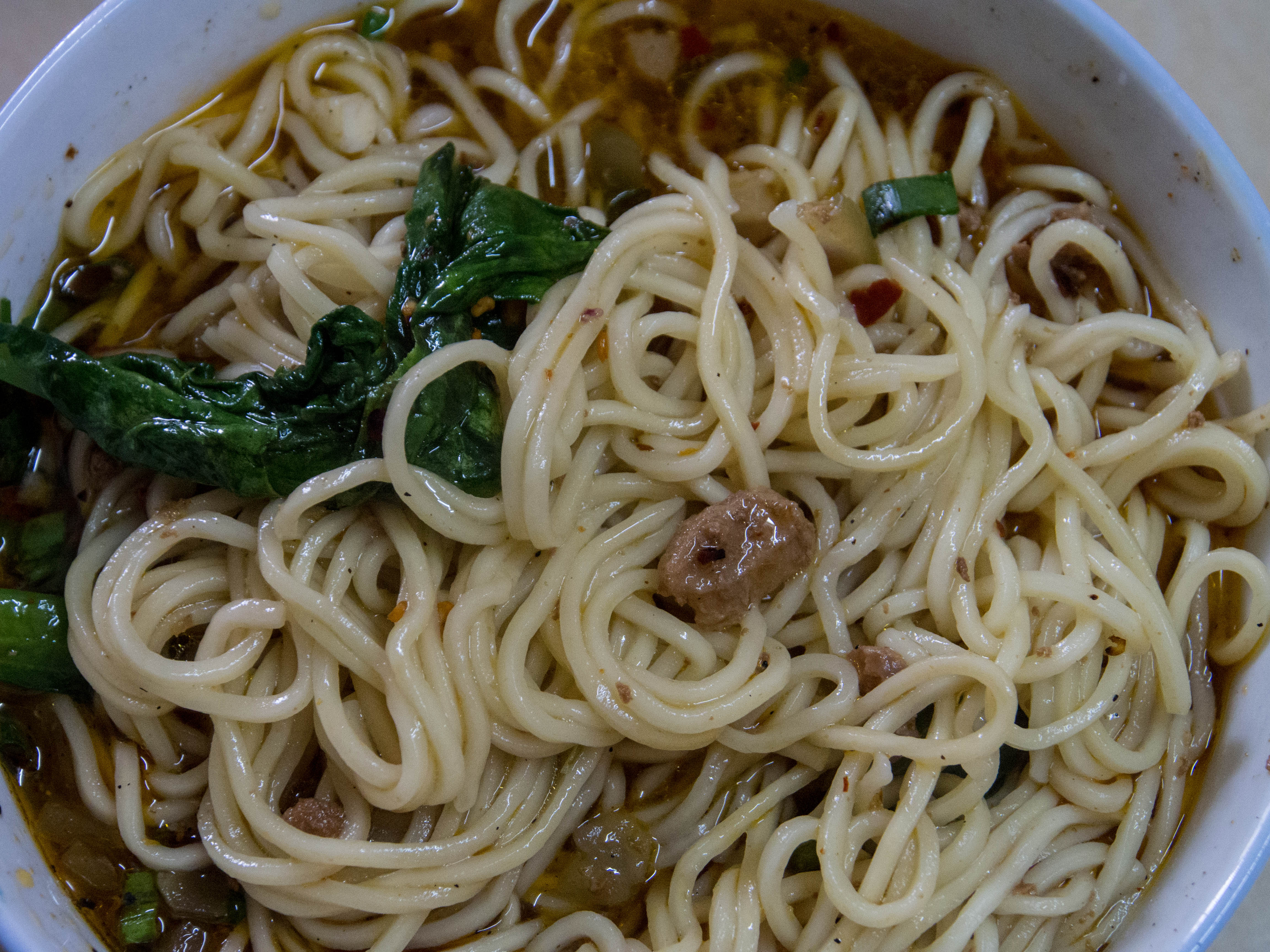
After a few minutes our noodles arrived. This was a really good bowl of noodles. They were fresh pulled chewy noodles cooked perfectly, with minced seasoned pork on top with some fresh fresh spinach.

Fresh noodles with minced pork

Fresh noodles with minced pork

A delicious bowl of noodles

A delicious bowl of noodles

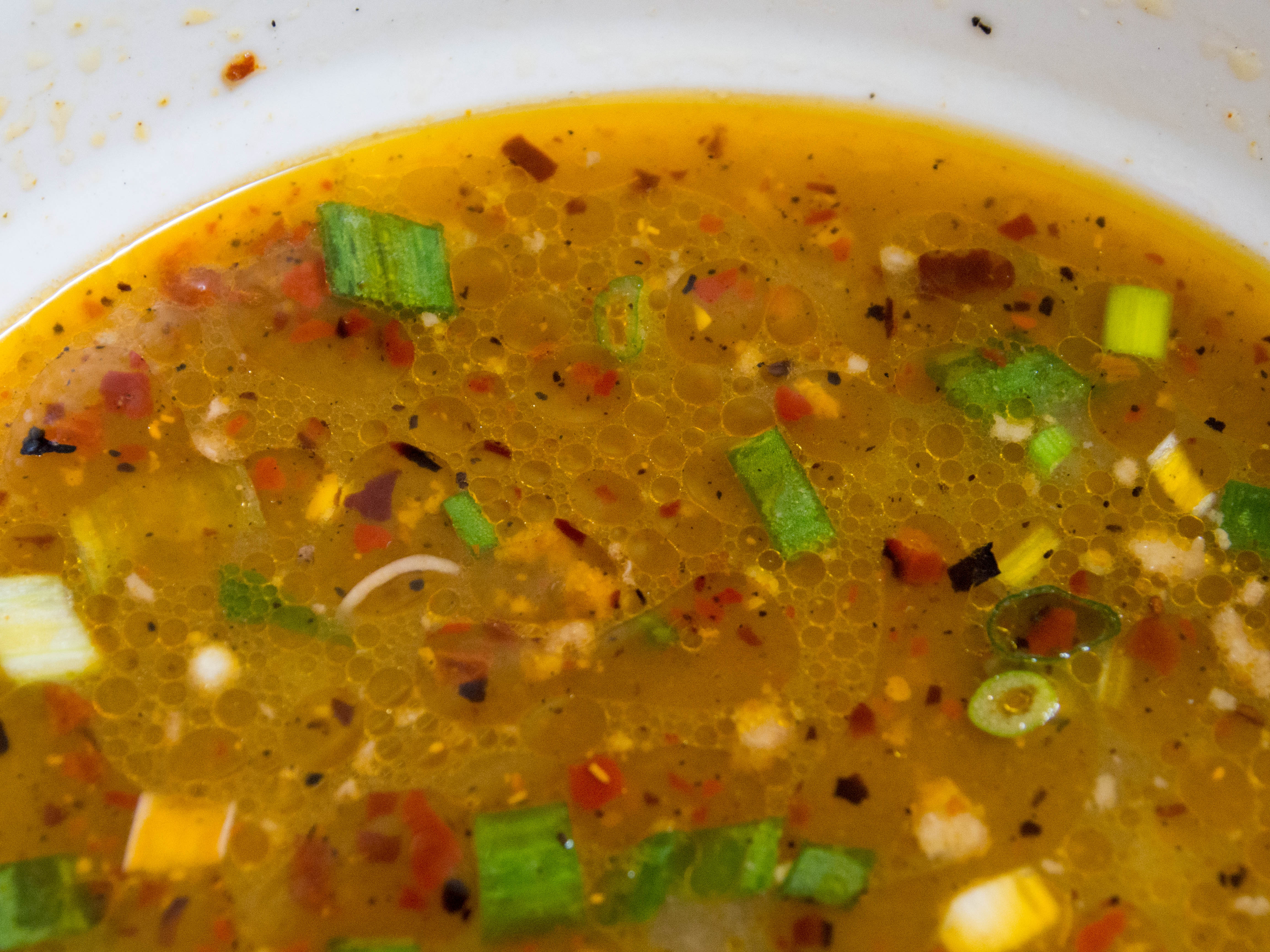
The broth was deep, spicy, rich, and flavorful. Most of the spice was from chili peppers, though there was just a hint of Sichuan pepper. It also contained chopped scallion, garlic, ginger, and oil. It was the kind of broth that you must drink down after you have finished the noodles; that is, if you could after eating the noodles.

The rich broth

The rich broth

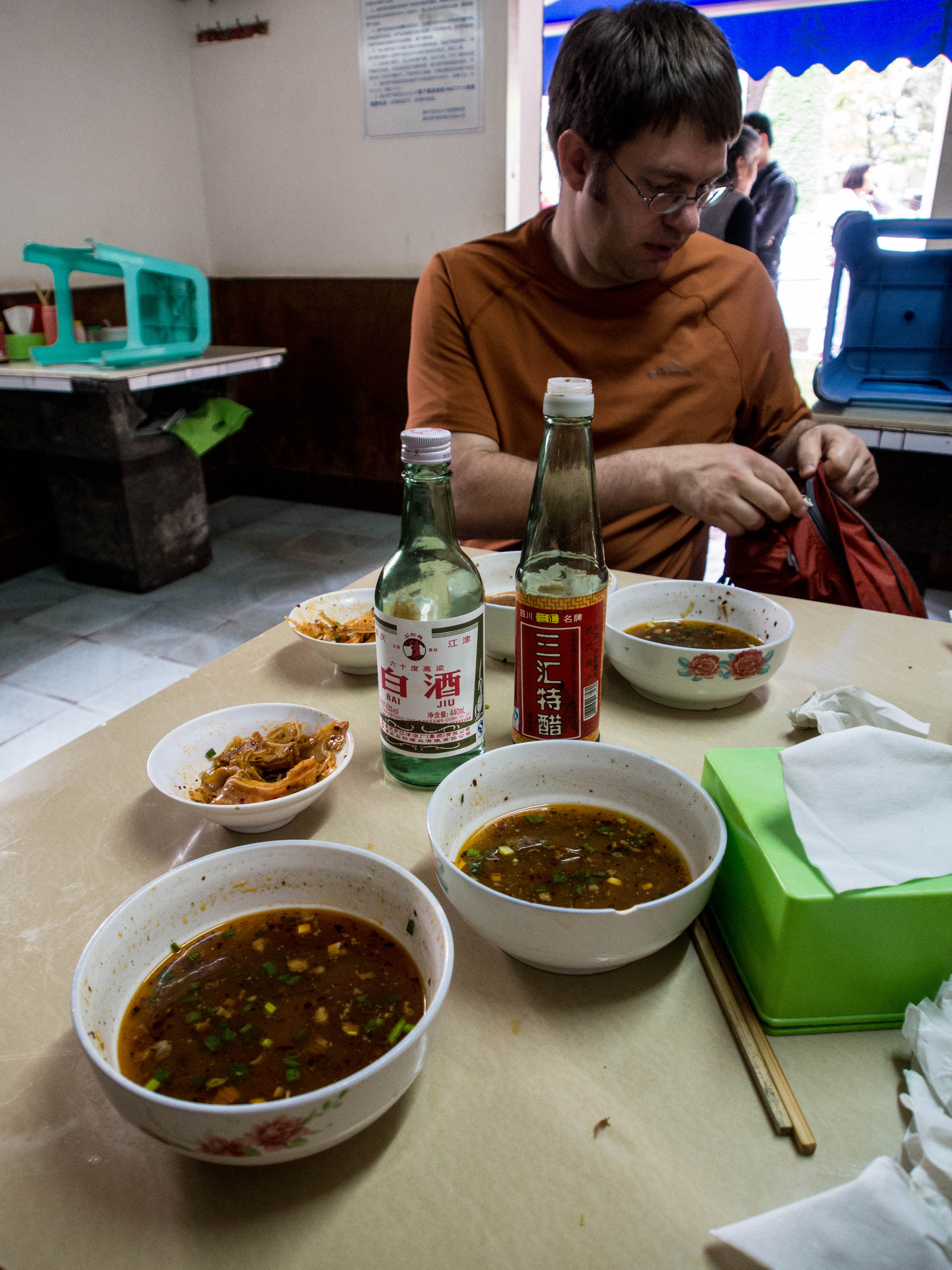
After we began eating the noodles, we realized we should have ordered bigger bowls. It was delicious and this was certainly not going to be enough, so we each ordered another bowl. We were good with the one dish (each) of the pig ears though.

Finishing up

Finishing up

The bottom line is that pig ears were not too bad, and the folks in Chongqing make an excellent bowl of noodles.

The Potala Palace, Lhasa, Tibet

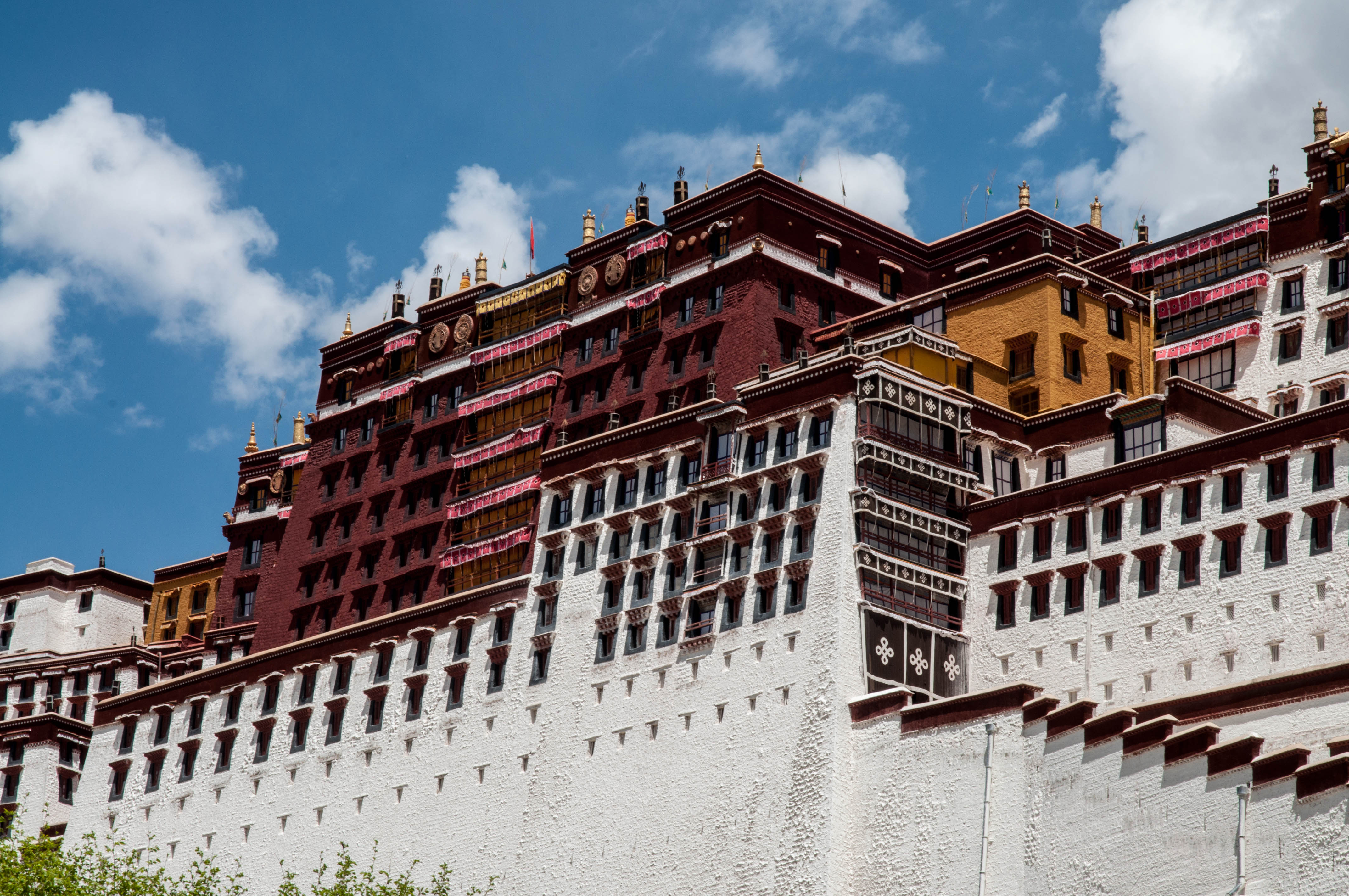
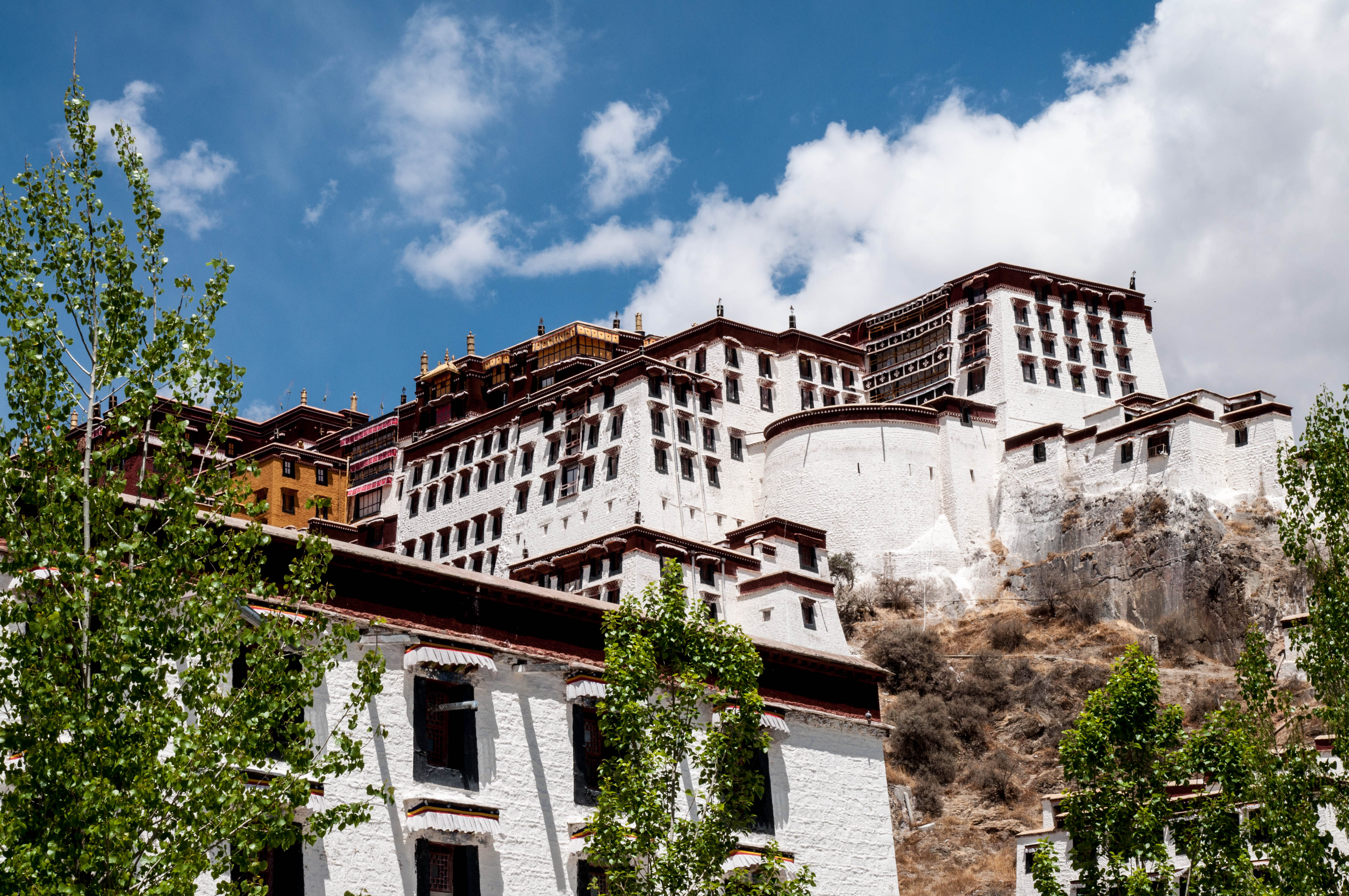
The Potala Palace

The Potala Palace

The Potala Palace was the political center of  Tibet and Tibetan Buddhism since it was constructed under the direction of the 5th Dalai Lama in 1645. It is built on a hill, called “Red Hill” in the center of the Lhasa valley midway between the Sera and Drepung Monasteries, and near the old city and Jokhang Temple, the spiritual center of Lhasa.

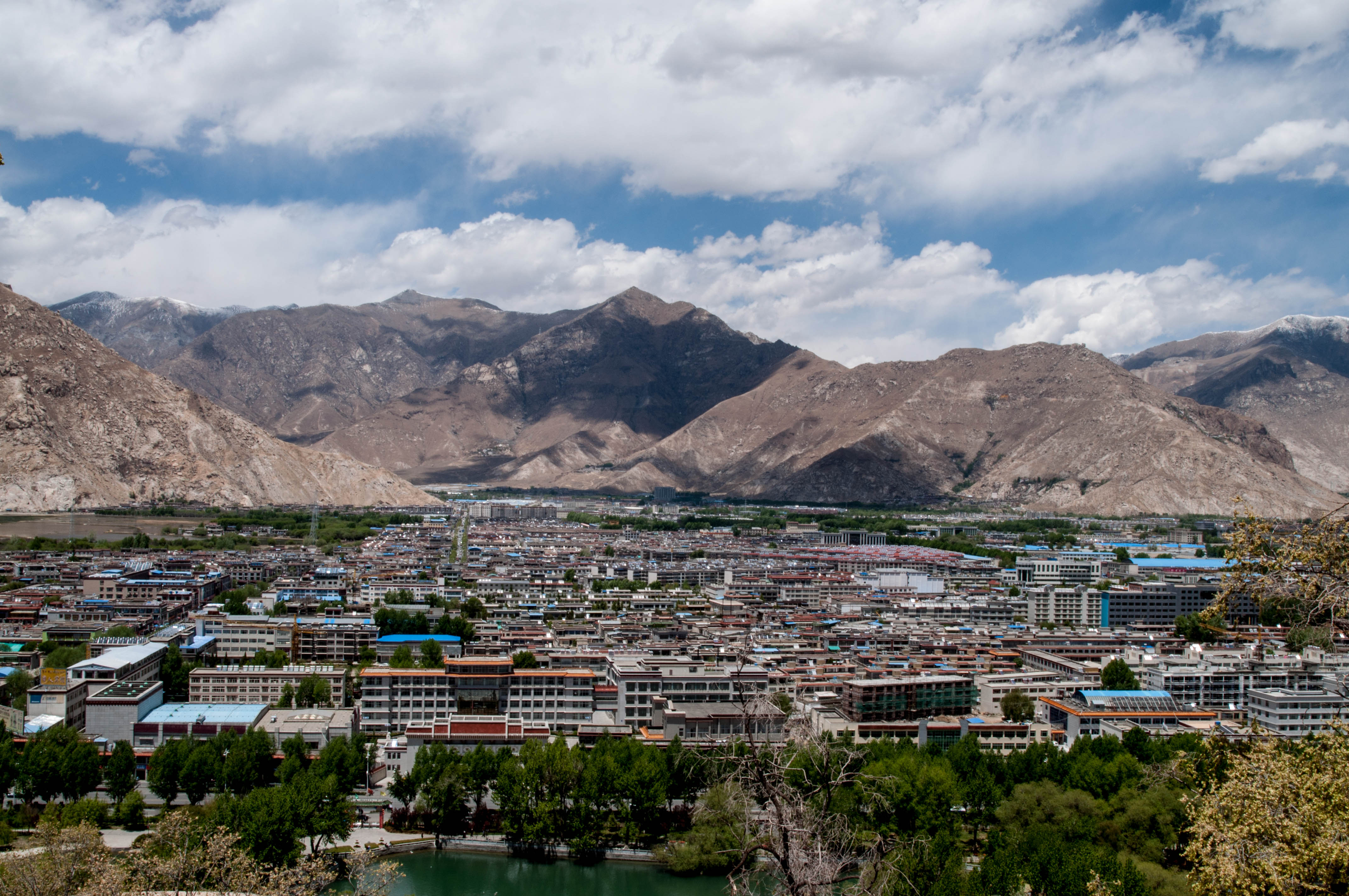
View of Lhasa from the Potala Palace

View of Lhasa from the Potala Palace

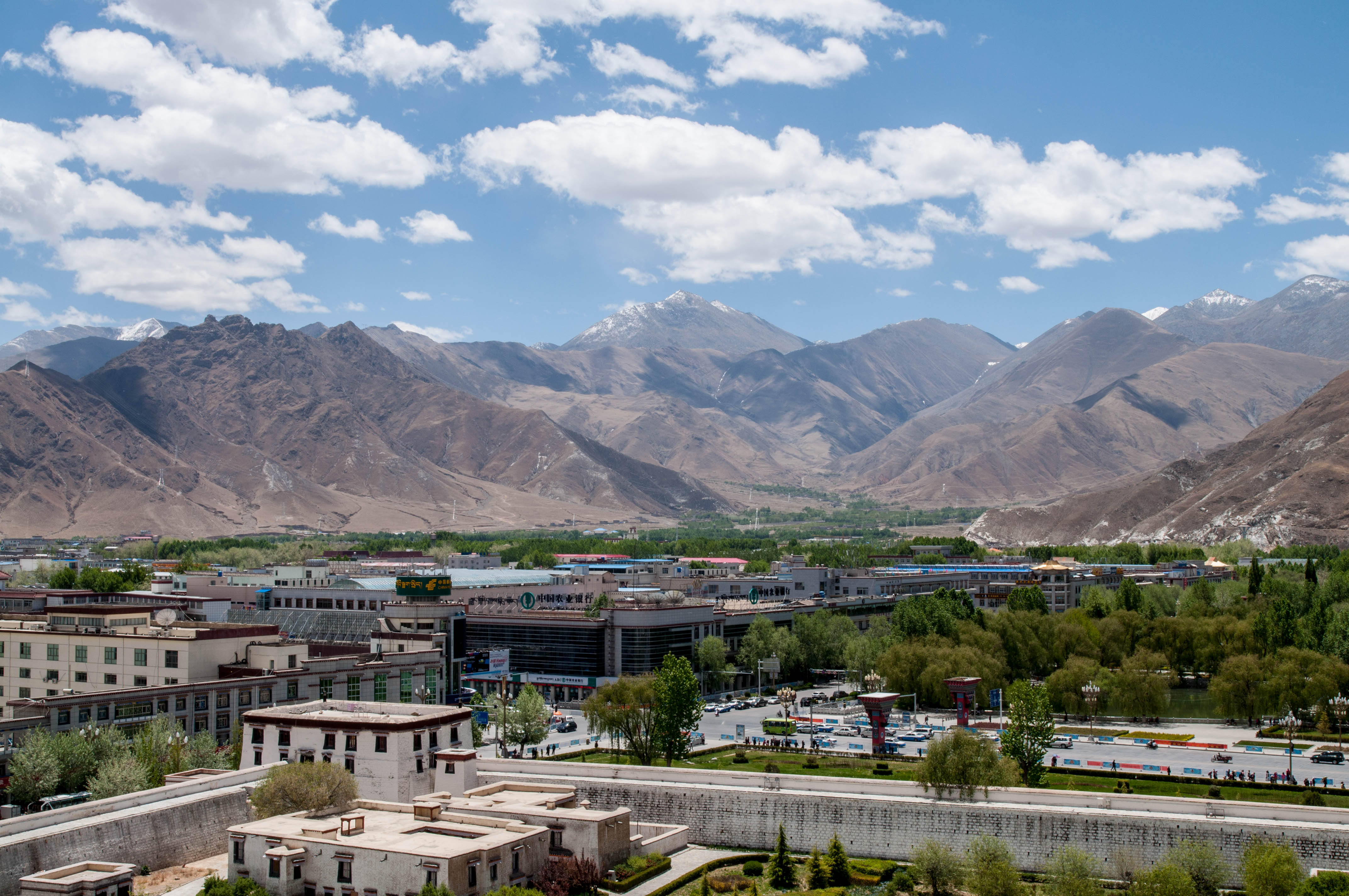
Looking the other direction at Lhasa

Looking the other direction at Lhasa

It is an immense building with walls 5 meters thick at the base and 3 meters thick at the top. It is 16 stories high and has over 1,000 rooms, 10,000 shrines, and about 200,000 statues. This was the home of the current Dalai Lama until he fled to India during an uprising in 1959. The palace is now a museum with only about 20 monks present to keep it up. In the past as many as 300-400 monks lived in the palace.

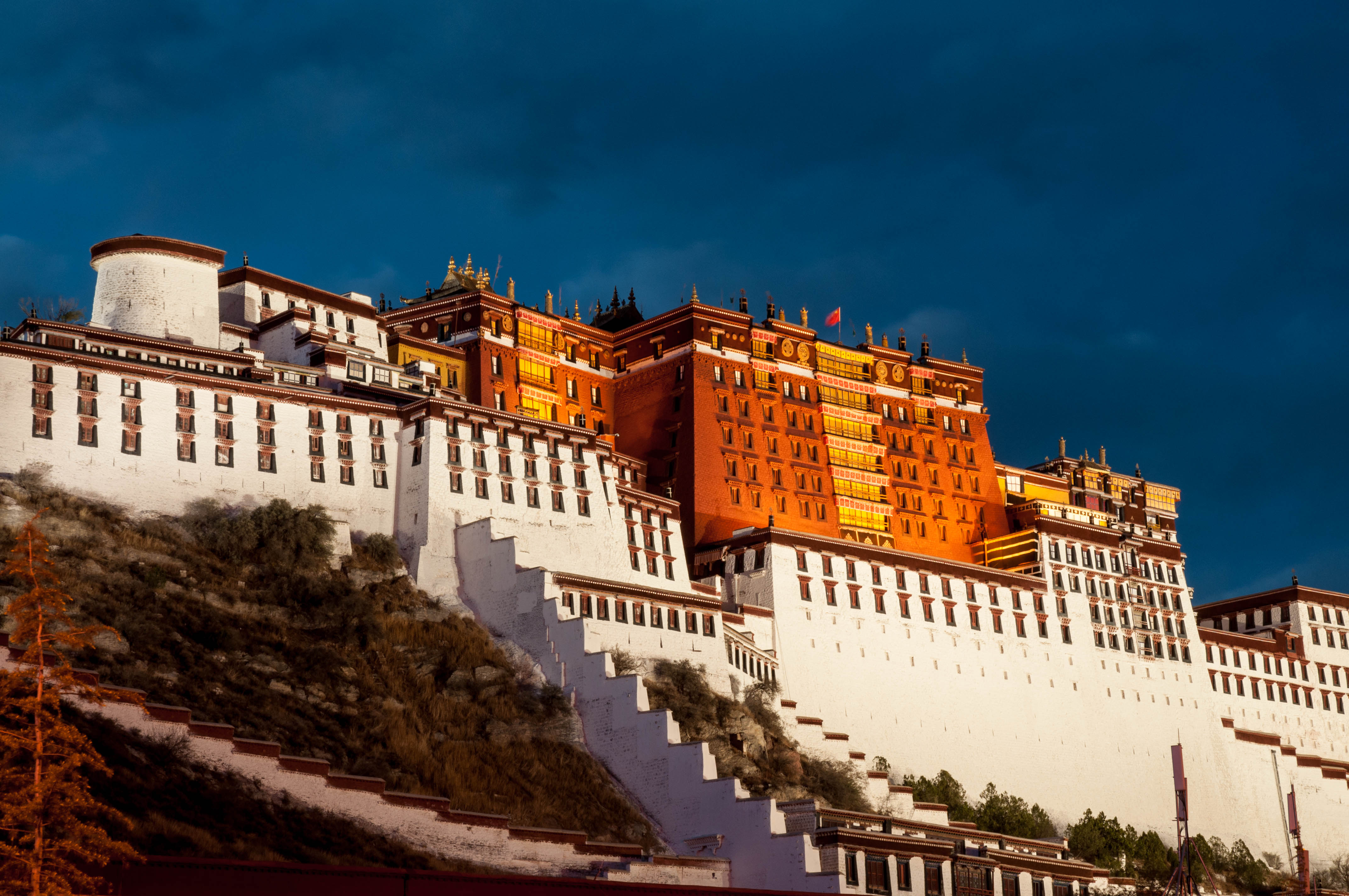
Potala Palace at dusk

Potala Palace at dusk

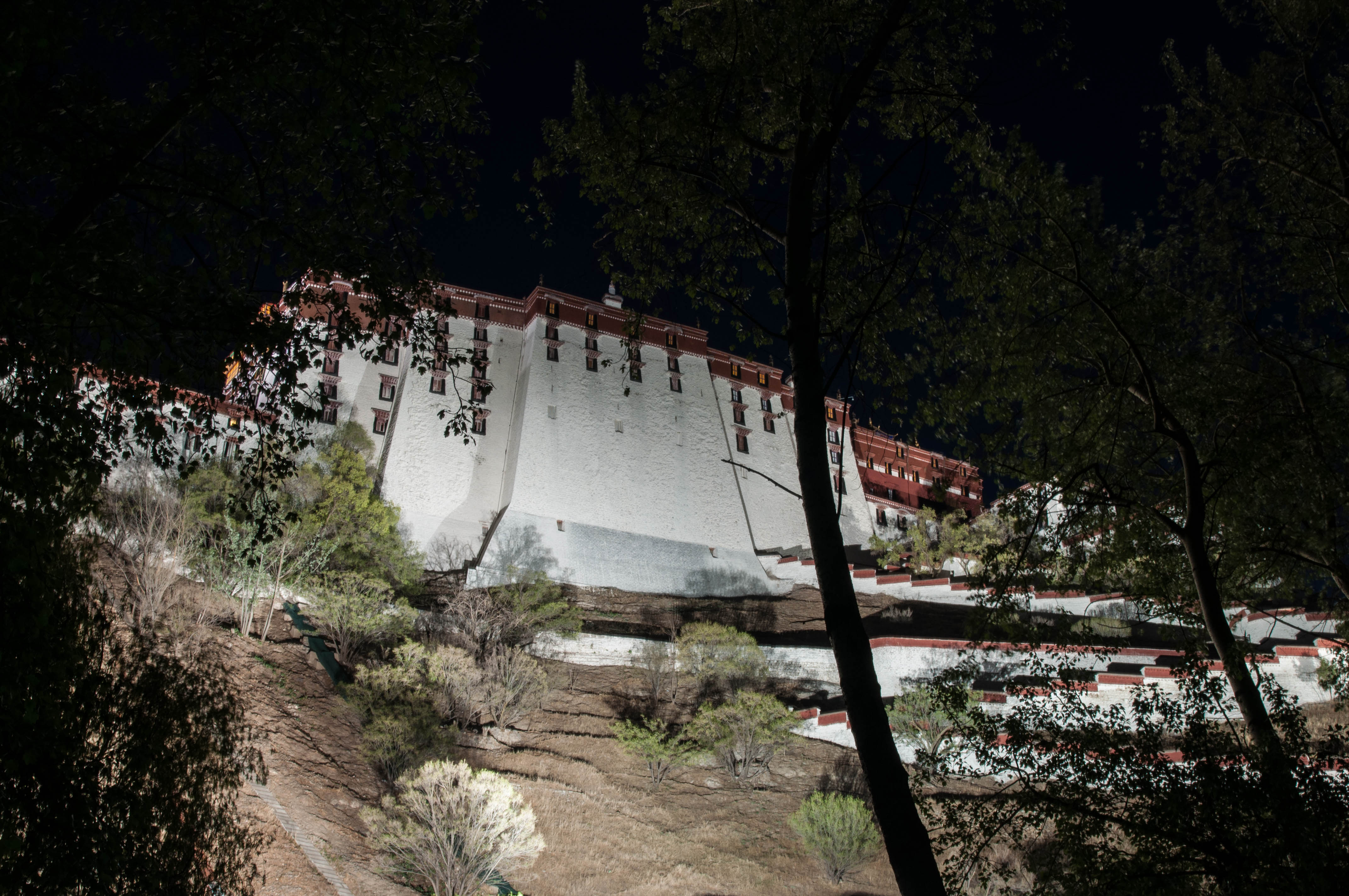
The Potala Palace at night

The Potala Palace at night

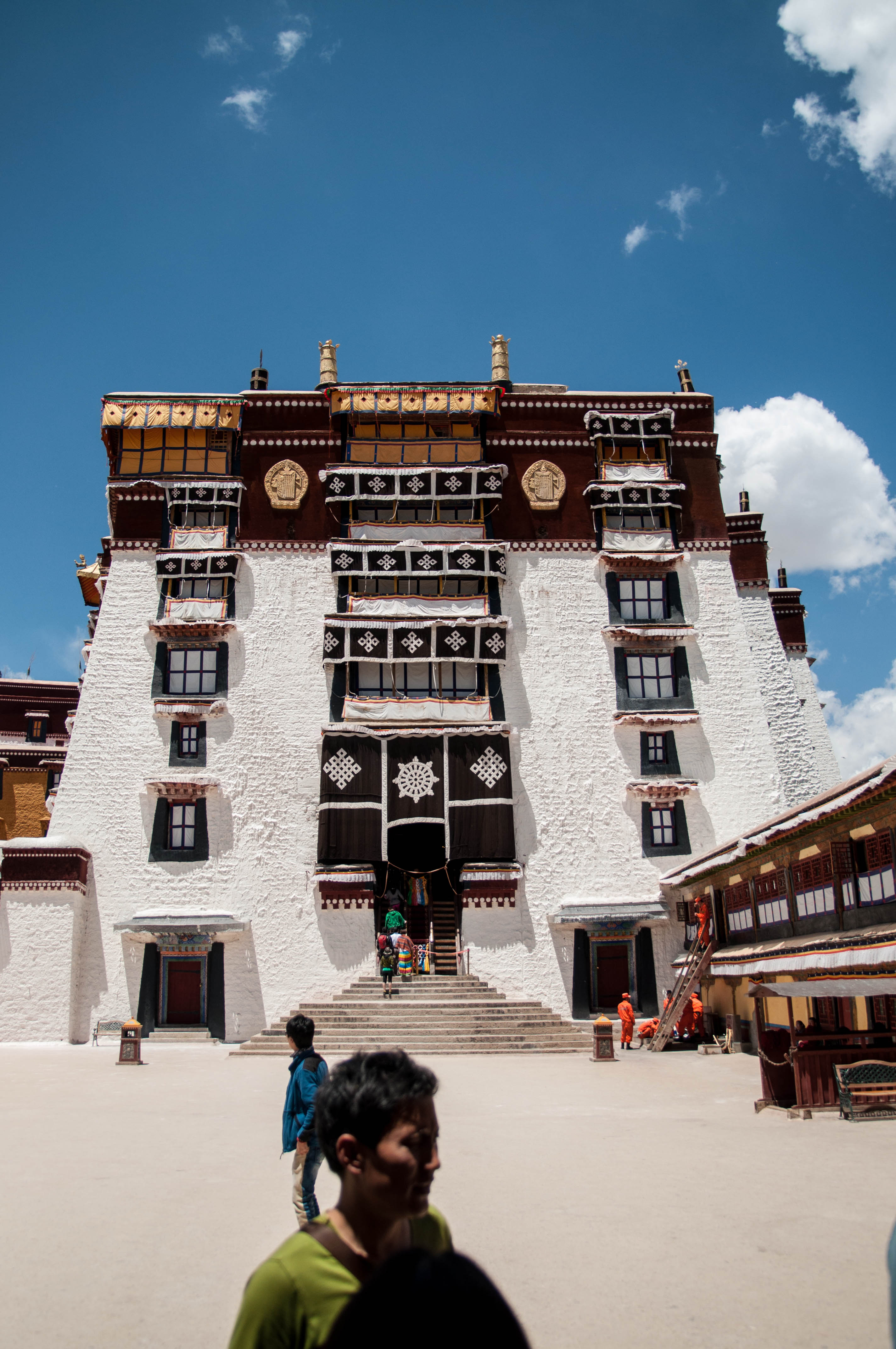
The palace is divided into two parts, the White Palace and the Red Palace. The White palace was devoted to secular things and was where the Dalai Lama had his quarters as well as offices, a seminary, and a printing house.

The White Palace

The White Palace

Courtyard in front of the White Palace

Courtyard in front of the White Palace

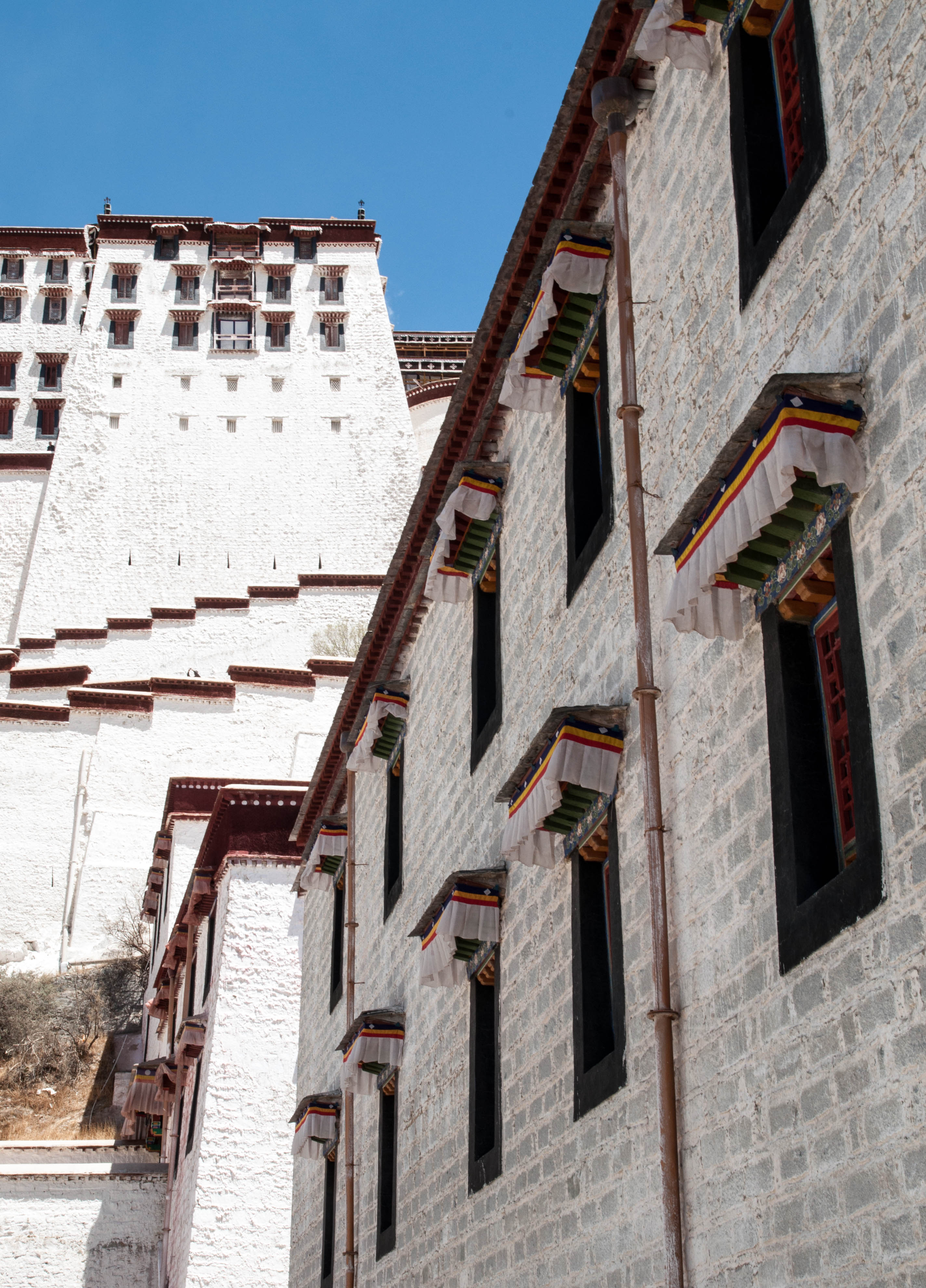
Side view of the palace

Side view of the palace

The white part of the palace

The white part of the palace

Potala Palace windows

Potala Palace windows

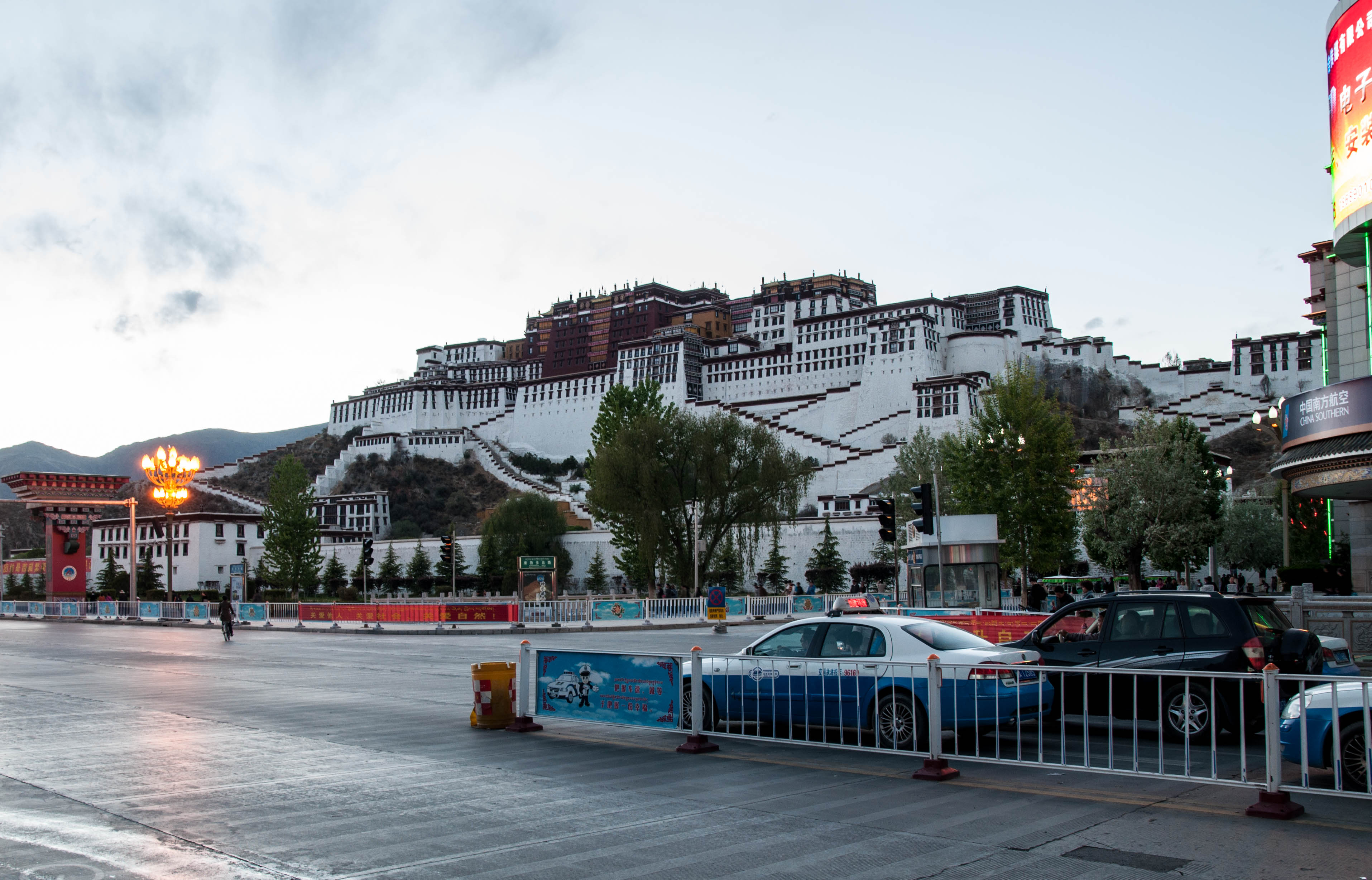
The Red Palace was devoted to all things spiritual and contains many different halls, chapels, libraries, and other places of worship. You can see the Red Palace in the center of the building above. I’m sure at one point in time the palace was on the outskirts of town, but now it sits right in the center of the city. There is a large boulevard that runs right in front of it and there is a large plaza-type park across the street. Most of the buildings all around in that area are Chinese and are not any different than any other Chinese city. Lhasa’s old town, the really interesting Tibetan part of the city, is about a 20-30 minute walk from the Potala Palace.

The street in front of the palace

The street in front of the palace

The number of visitors is restricted each day to prevent damage to the structure. I spent some time in Lhasa in May of 2012 and visited the Polala Palace. Visitors are only allowed in certain parts of the building. In fact, most of the halls are blocked to the public, including the former residence of the current Dalai Lama. The palace is a fascinating labyrinth of winding hallways, rooms, prayer halls, and so on. Tibetan pilgrims make up most of the visitors to the palace. They bring butter to add to the butter lamps as an offering; they also leave cash donations as well. Unfortunately, but understandably, photography was not allowed inside most areas of the palace. Of course, they wanted to sell you a very expensive book with photos of the interior.

Ladder in the Potala Palace

Ladder in the Potala Palace

Red door in the Potala Palace

Red door in the Potala Palace

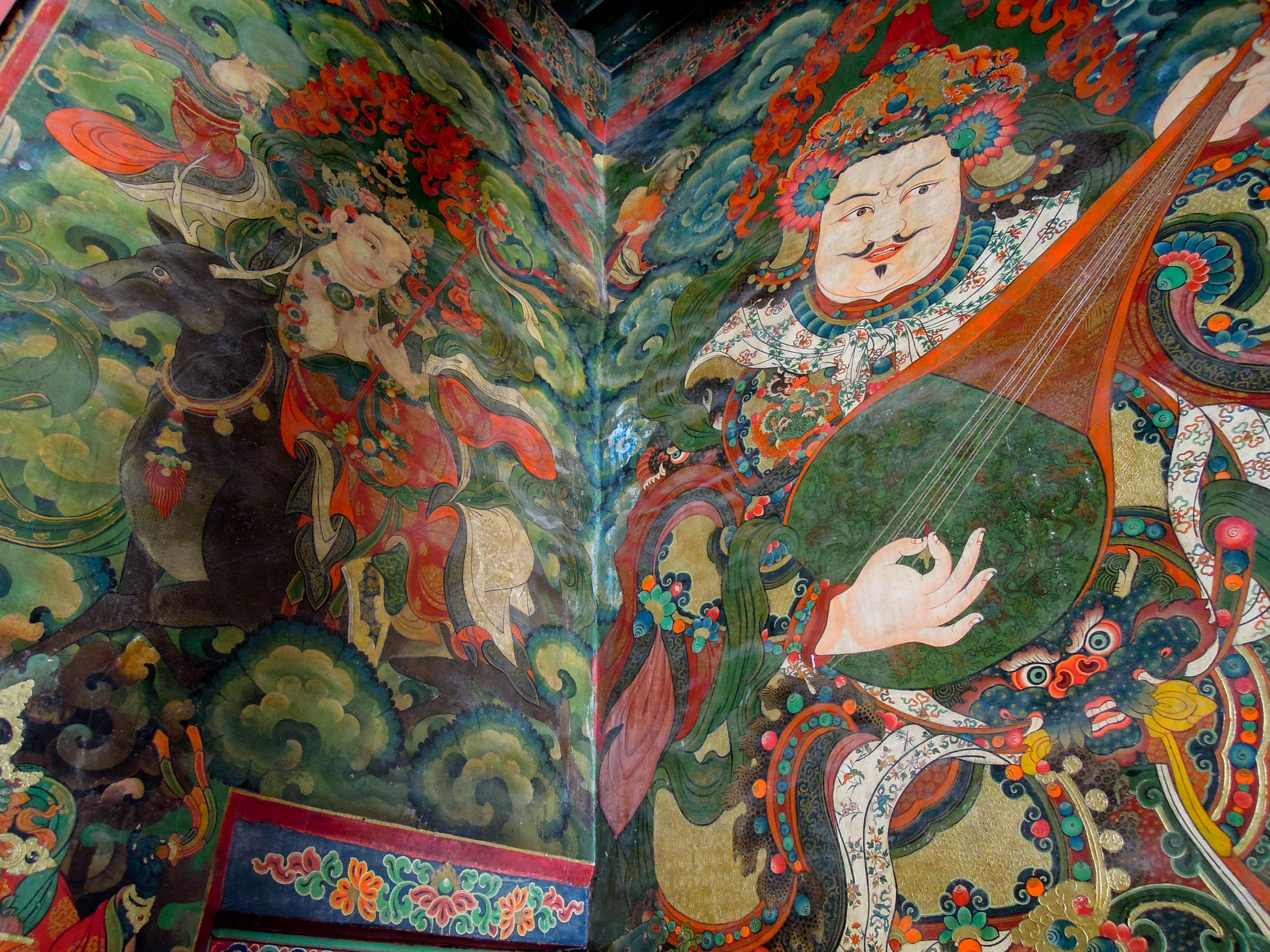
Potala Palace frescoes

Potala Palace frescoes

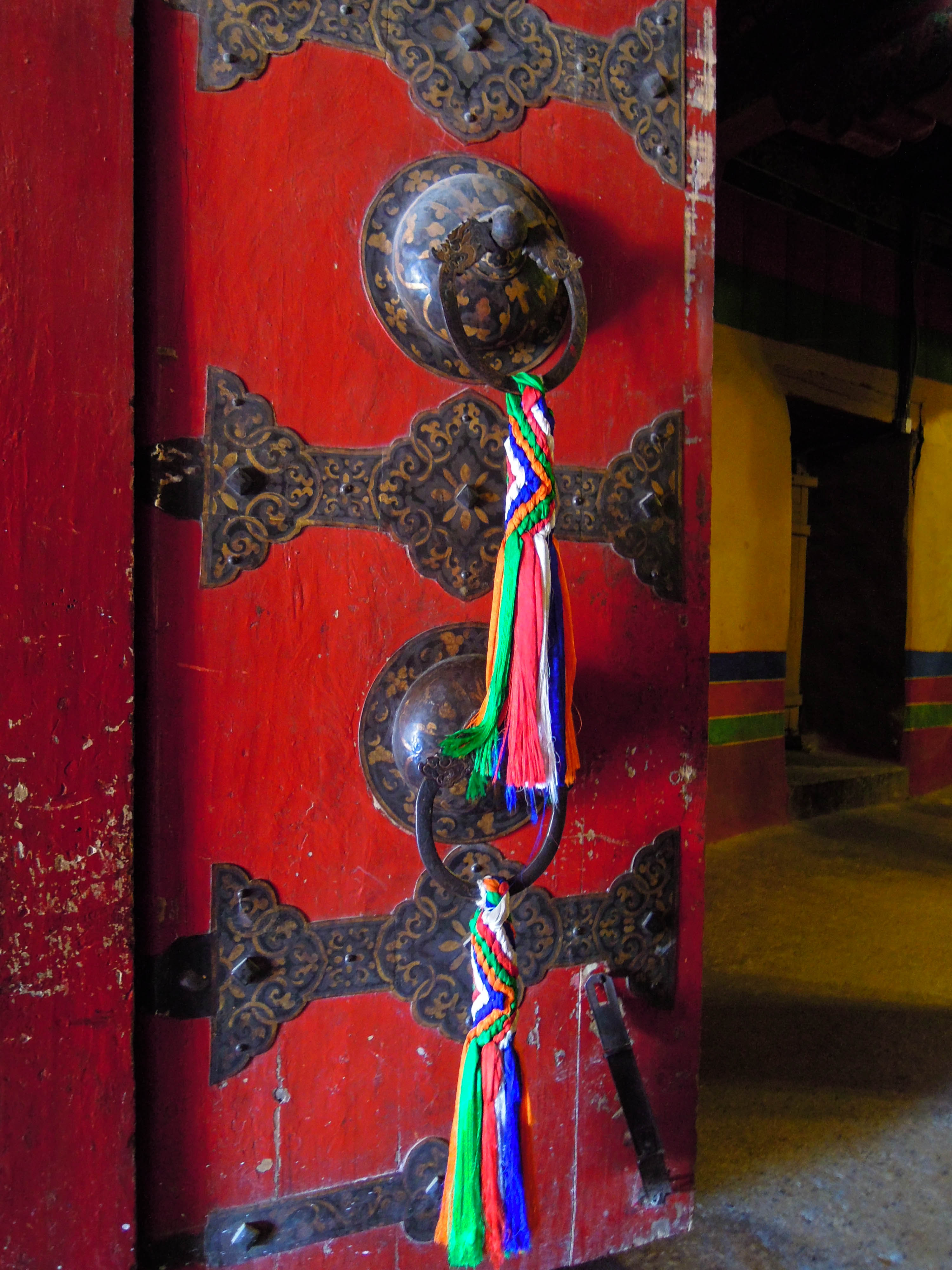
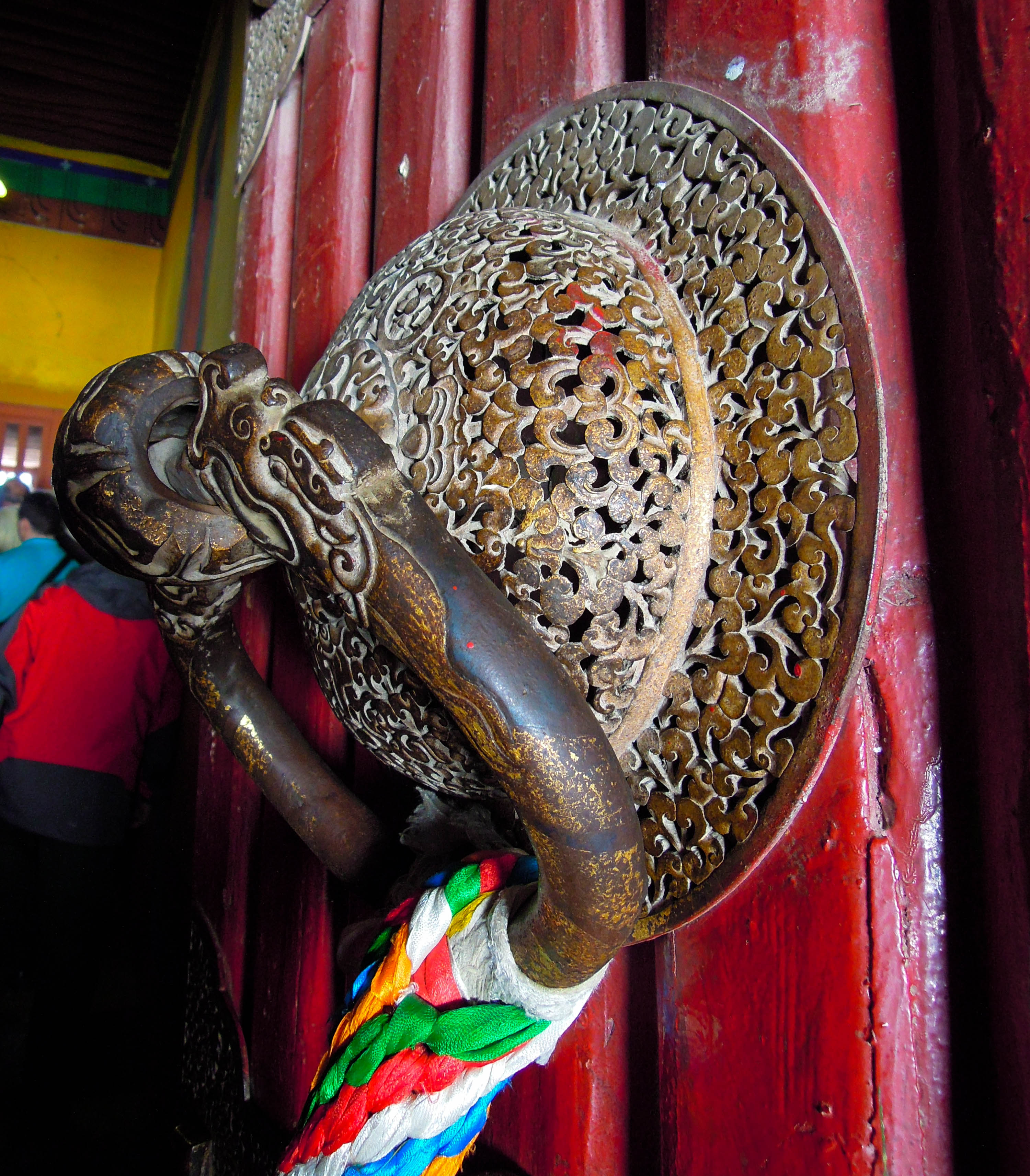
Door handle

Door handle

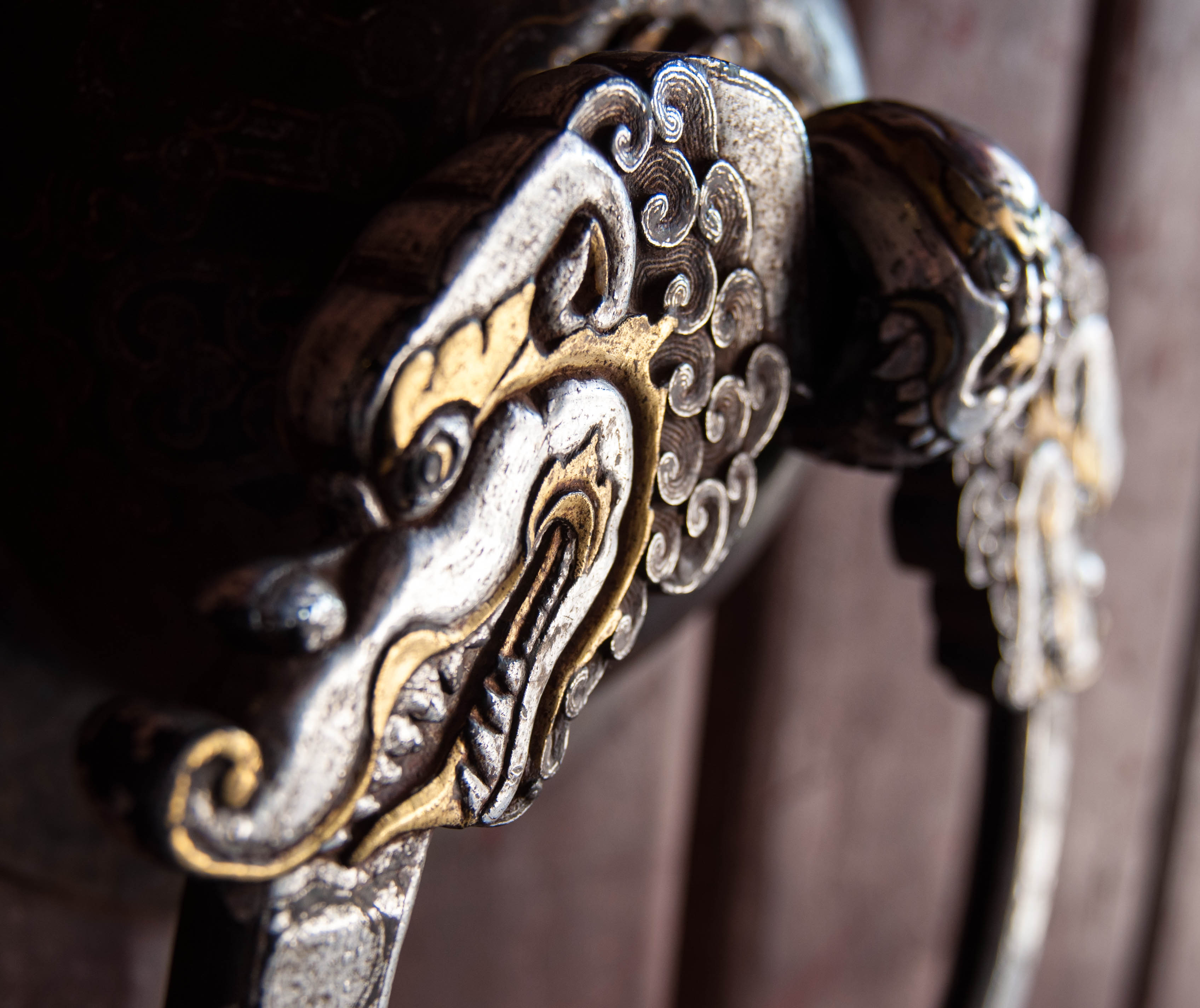
Detail of another door handle

Detail of another door handle

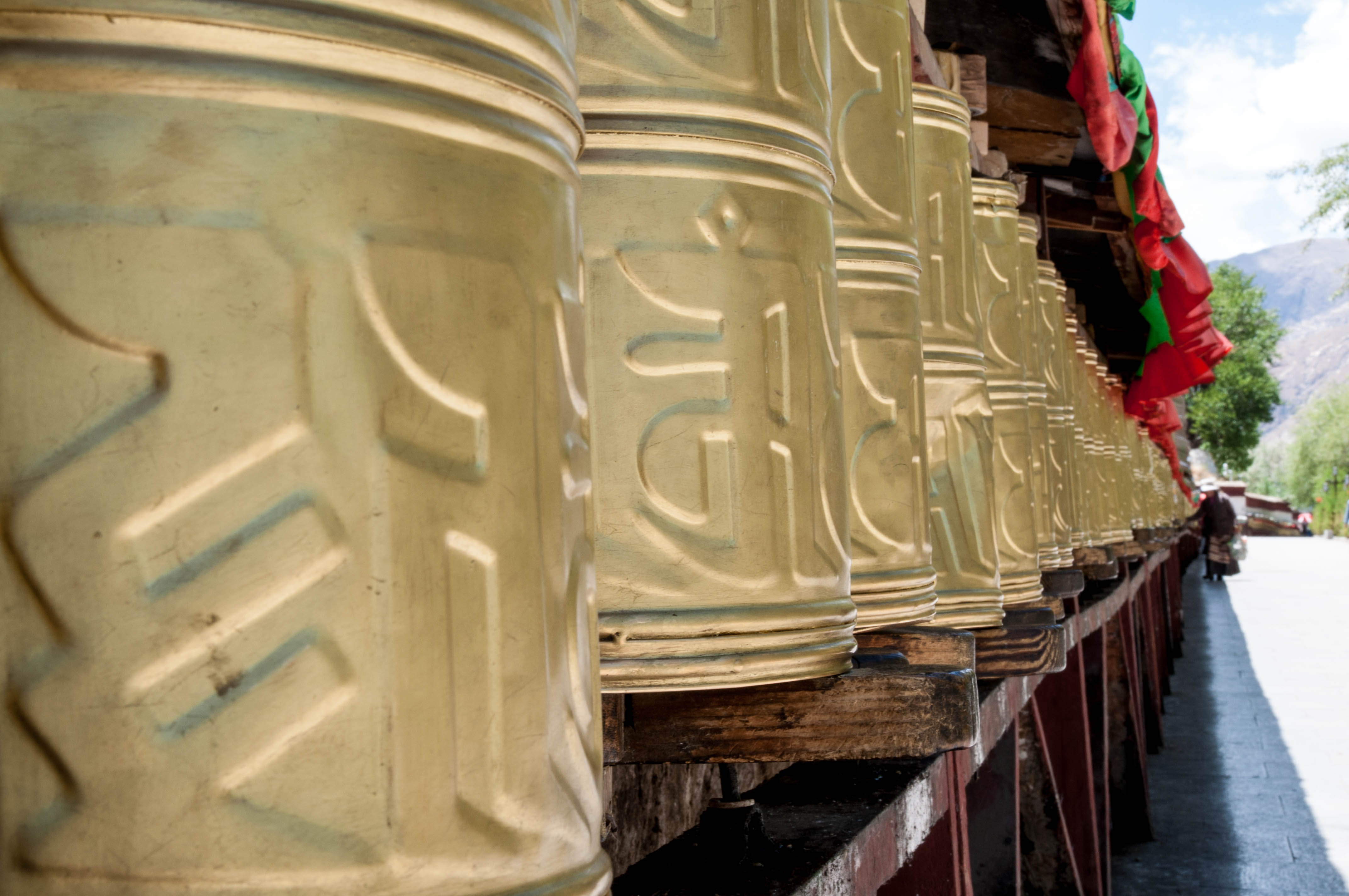
One evening I strolled all the way around the hill where the palace stands. There are prayer wheels around most of the way and pilgrims regularly circumambulate the palace. At night the Palace is illuminated with bright lights. Behind the palace is a large park with a stage for performances. The evening I was there a Tibetan opera was being staged.

Prayer wheels around the Potala Palace

Prayer wheels around the Potala Palace

Looking up at the back of the Potala Palace at night

Looking up at the back of the Potala Palace at night

The back, side of the Potala Palace

The back, side of the Potala Palace

The whole time I was in the palace I had a strong desire to wander off and really explore the place. There were so many closed doors, blocked hallways, and entire buildings that we were not allowed to enter. I have read that it really is a spectacular building full of relics, art, scriptures, and so on. Who knows what mysteries lie behind those closed doors.

DSCN2004-1

The Streets of Guangzhou (广州 guǎngzhōu)

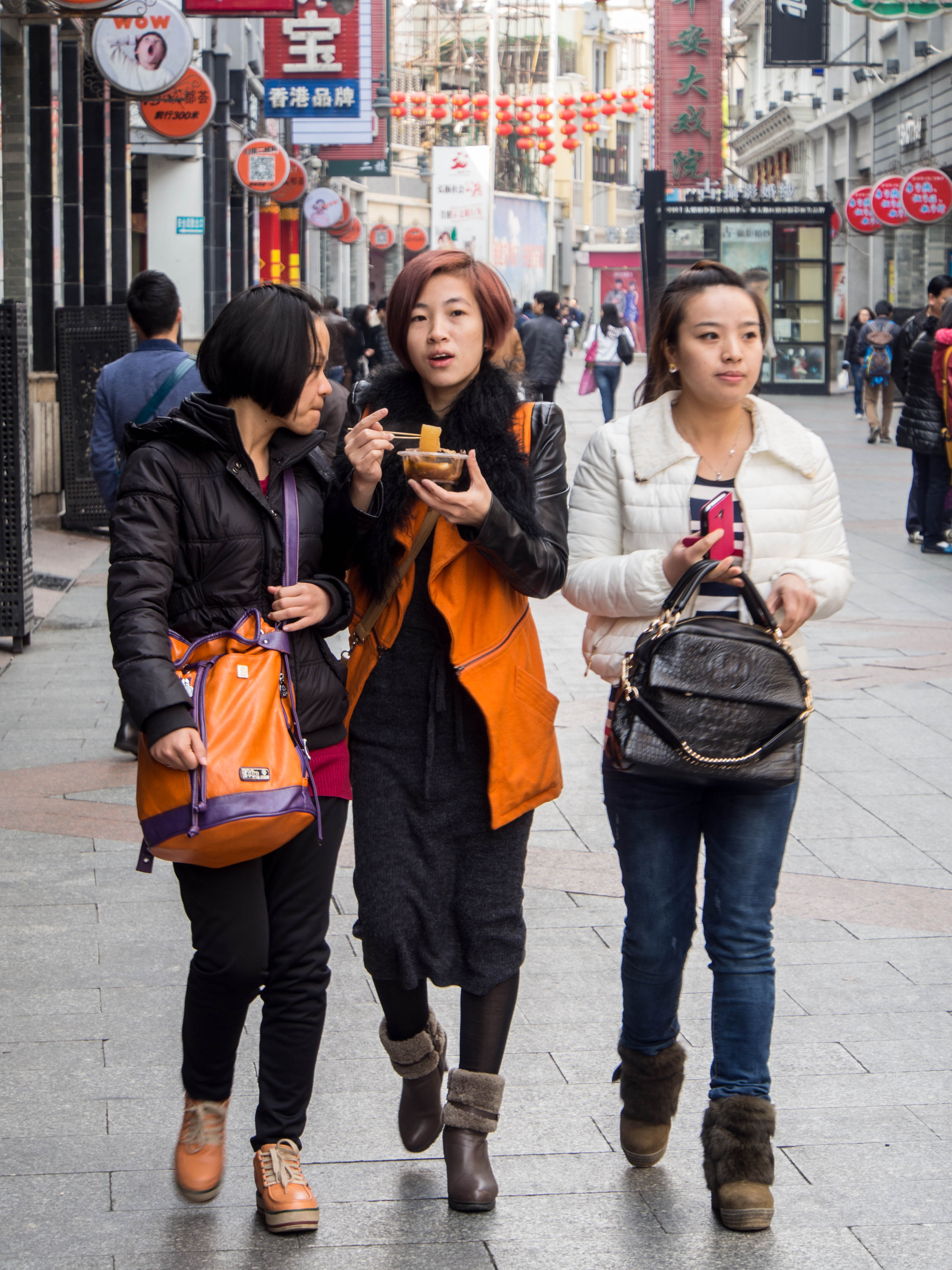
Shopping

Shopping & eating

Cantonese culture is close to my heart. Just out of high school I moved to Hong Kong and spent one and a half years there. Over the years I have traveled to Hong Kong and Guangzhou on several occasions. In fact, I learned Cantonese before I ever learned Mandarin. Students often ask me which language I like better. My response is, “It depends on where I am.” I much prefer Cantonese when I am in Hong Kong or the Cantonese speaking areas of Southern China. In fact, it seems that it is still a bit of a novelty for a foreigner to speak Cantonese. It reminded me of what it was like for a foreigner to speak Mandarin back in the 1980’s. Now it seems foreigners speaking Mandarin is not such a big deal.

Though I have been to Guangzhou on several occasions, before this year, my last trip there was in 1998. In late February of this year I spent a couple weeks in Guangzhou and the surrounding area on a research trip. Needless to say, much has changed and I hardly recognized the place. It took me a couple days to get into the swing of things with my Cantonese as I don’t have much opportunity to use it these days and I was definitely rusty. But after a few days I was feeling fairly comfortable. I was very fortunate in that one of my colleagues at BYU is from Guangzhou and I was able to meet her parents and spend some time with them. They showed me the city and introduced me to some excellent Cantonese restaurants. Guangzhou, along with Beijing and Shanghai, is one of China’s most important economic centers. It is also a major metropolitan city in China with major universities, a sophisticated subway system, and significant foreign investment.

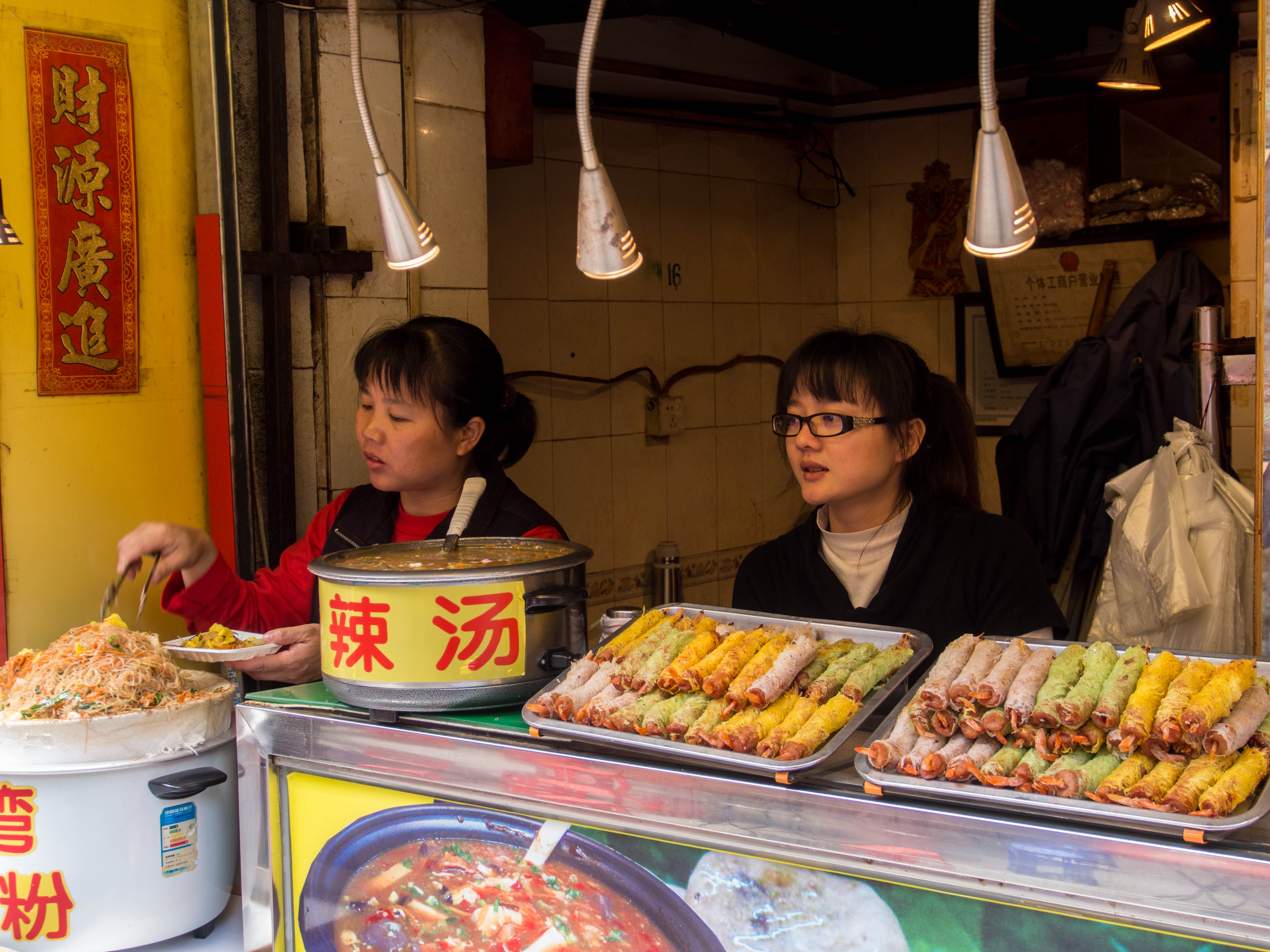
The Cantonese are passionate about two things—eating and shopping, and it is evident everywhere in Guangzhou. If they are not eating, they are talking about eating, at the market shopping for ingredients, or at the least thinking about food. Cantonese cuisine is one of the four major cuisines in China with a long and rich history. Restaurants, meat and produce markets, and street vendors are everywhere and it seems the Cantonese are eating at all times of the day and late into the night.

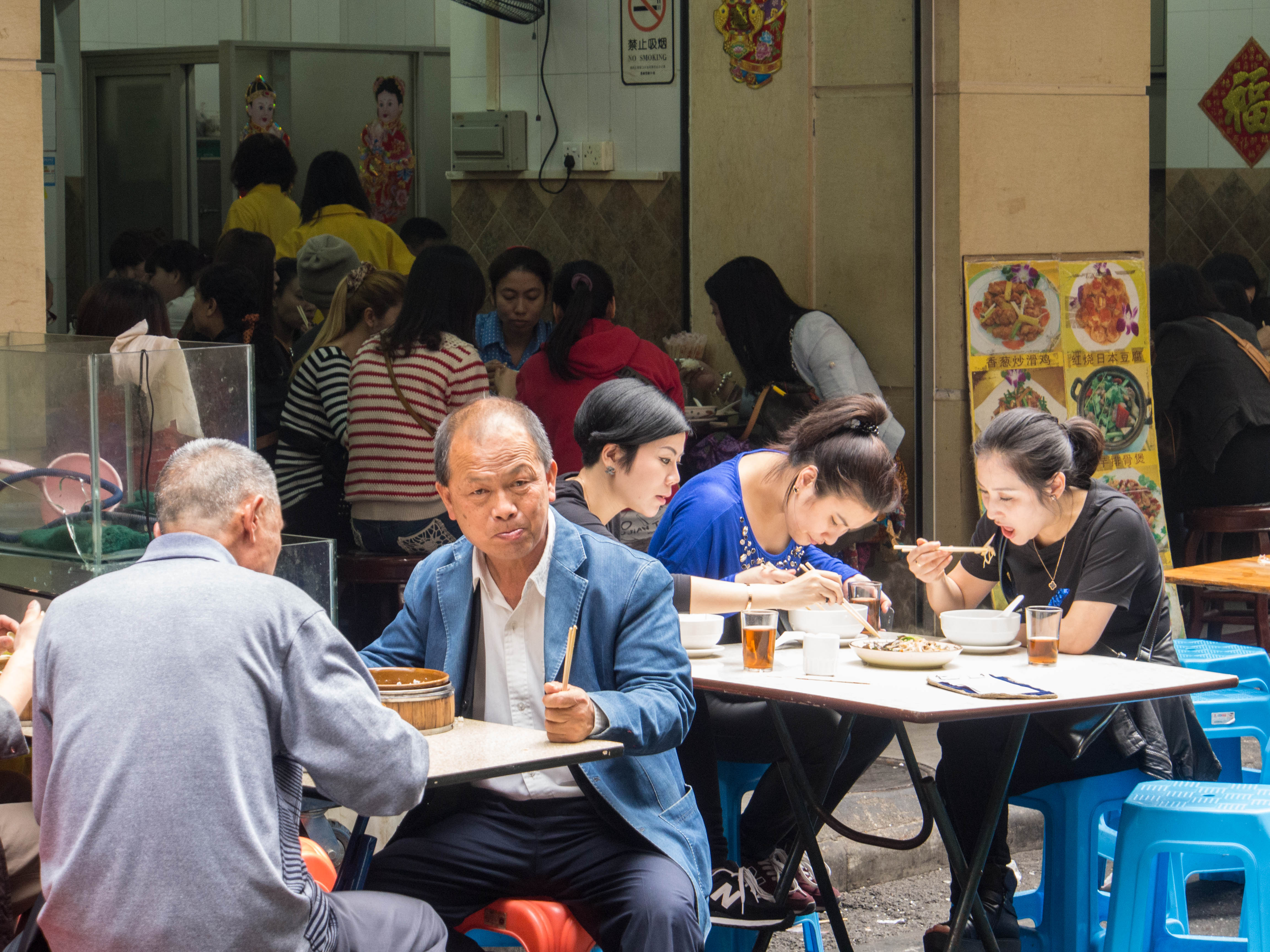
Streetside dimsum

Streetside dimsum

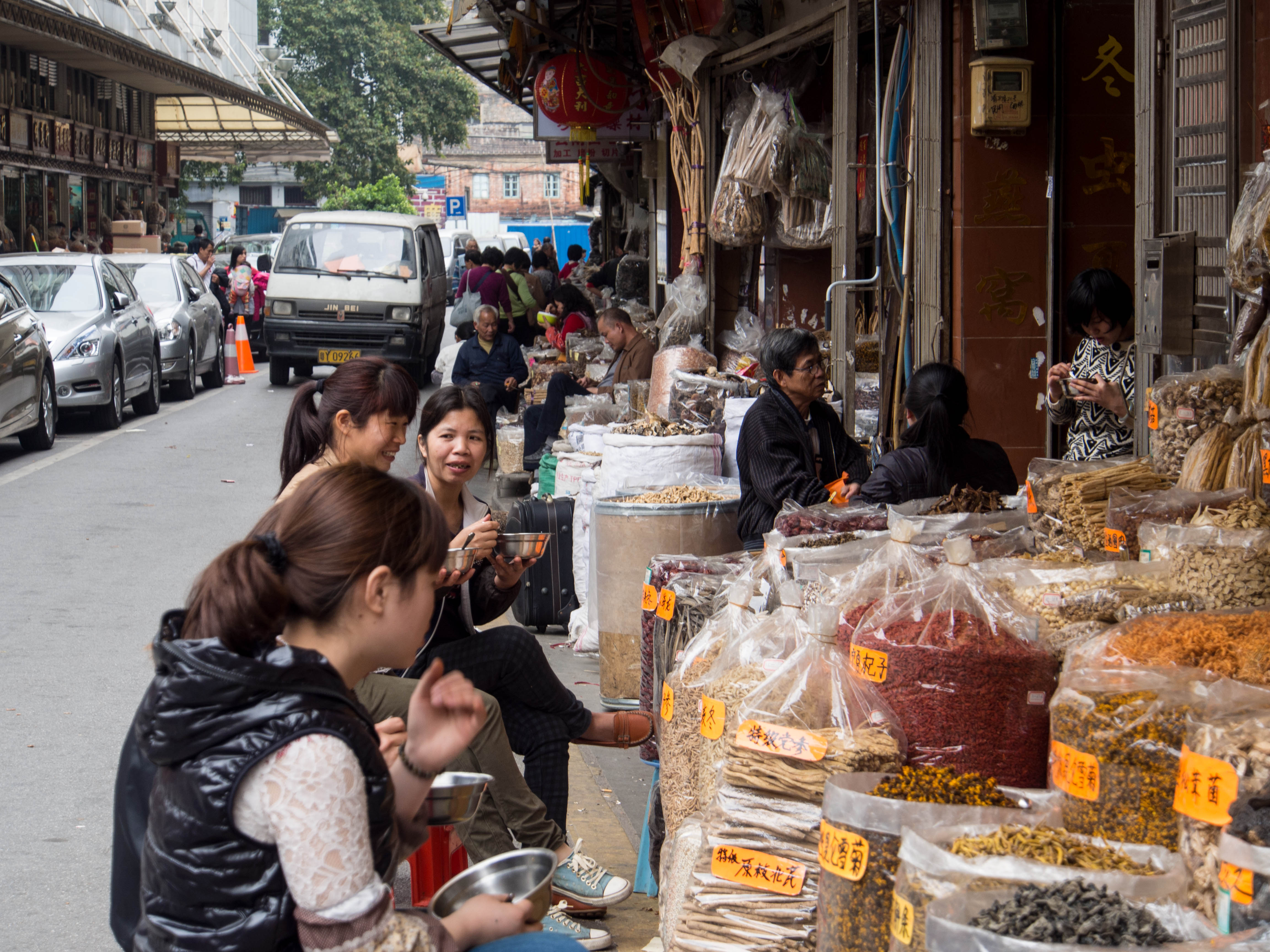
Shop workers taking a lunch break.

Shop workers taking a lunch break.

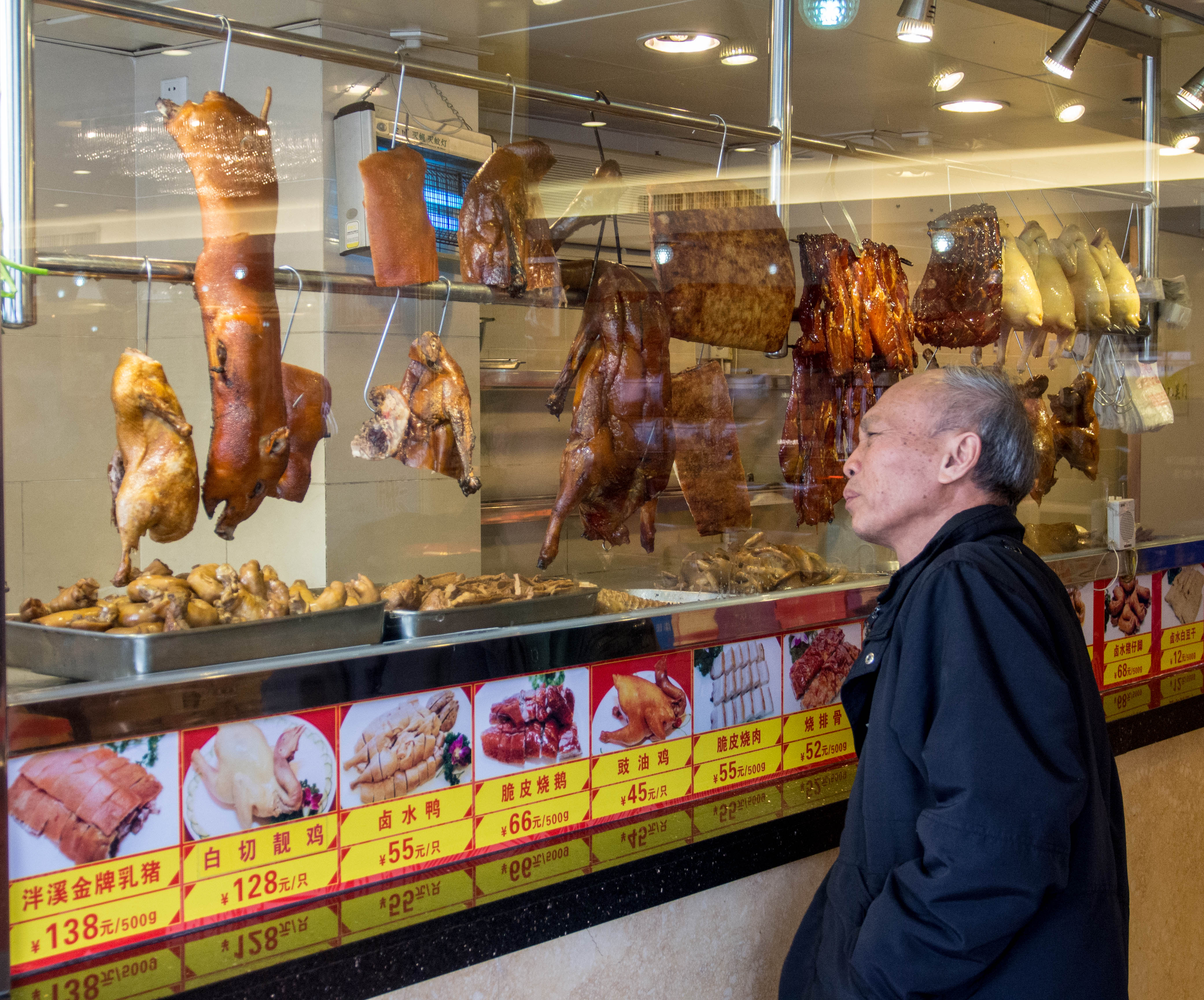
Roasted meats are an important part of Cantonese cuisine.

Roasted meats are an important part of Cantonese cuisine.

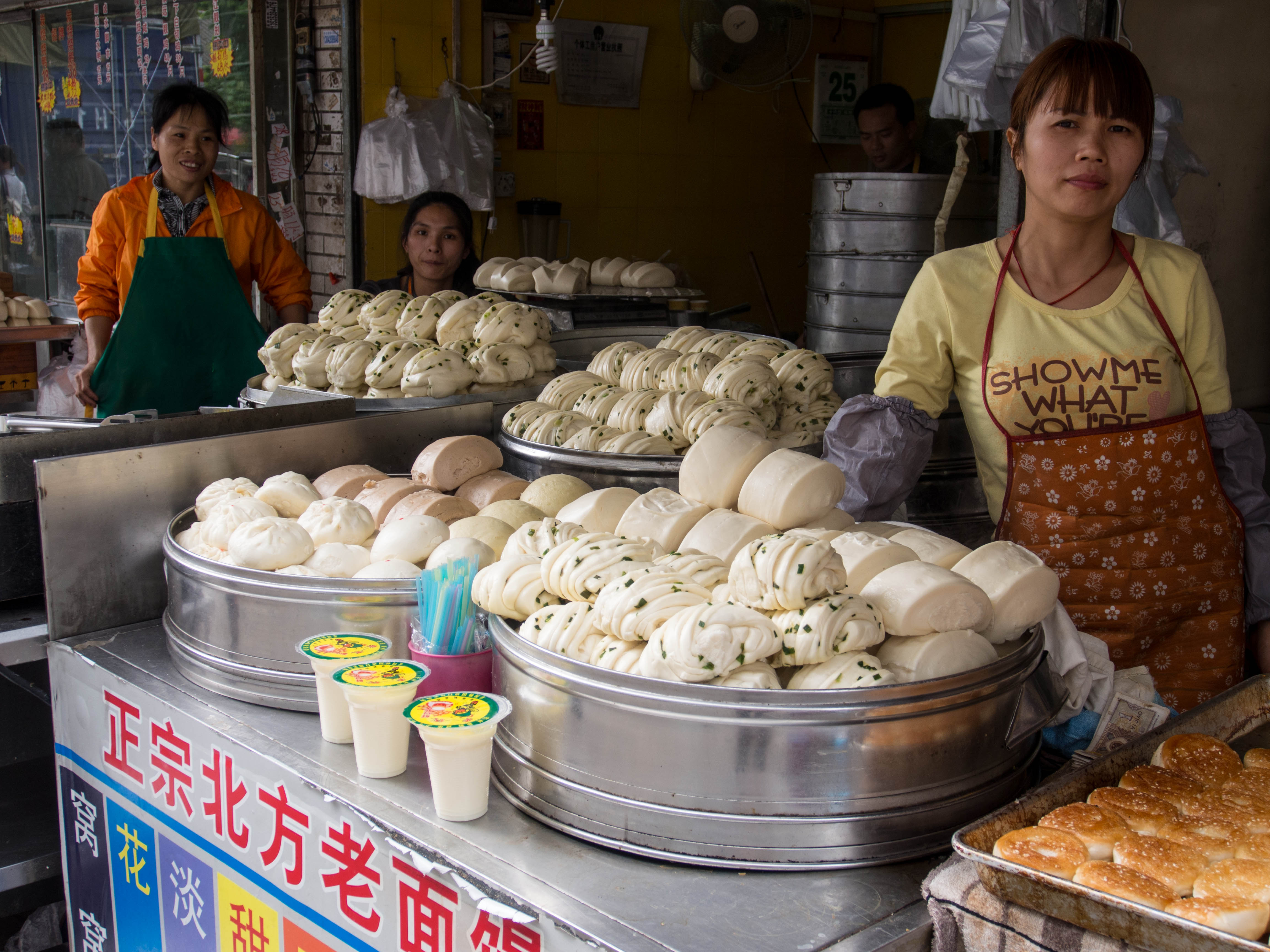
Steamed bread

Steamed bread

Spicy soup

Spicy soup

Sleeping sugar cane juice vendor.

Sleeping sugar cane juice vendor.

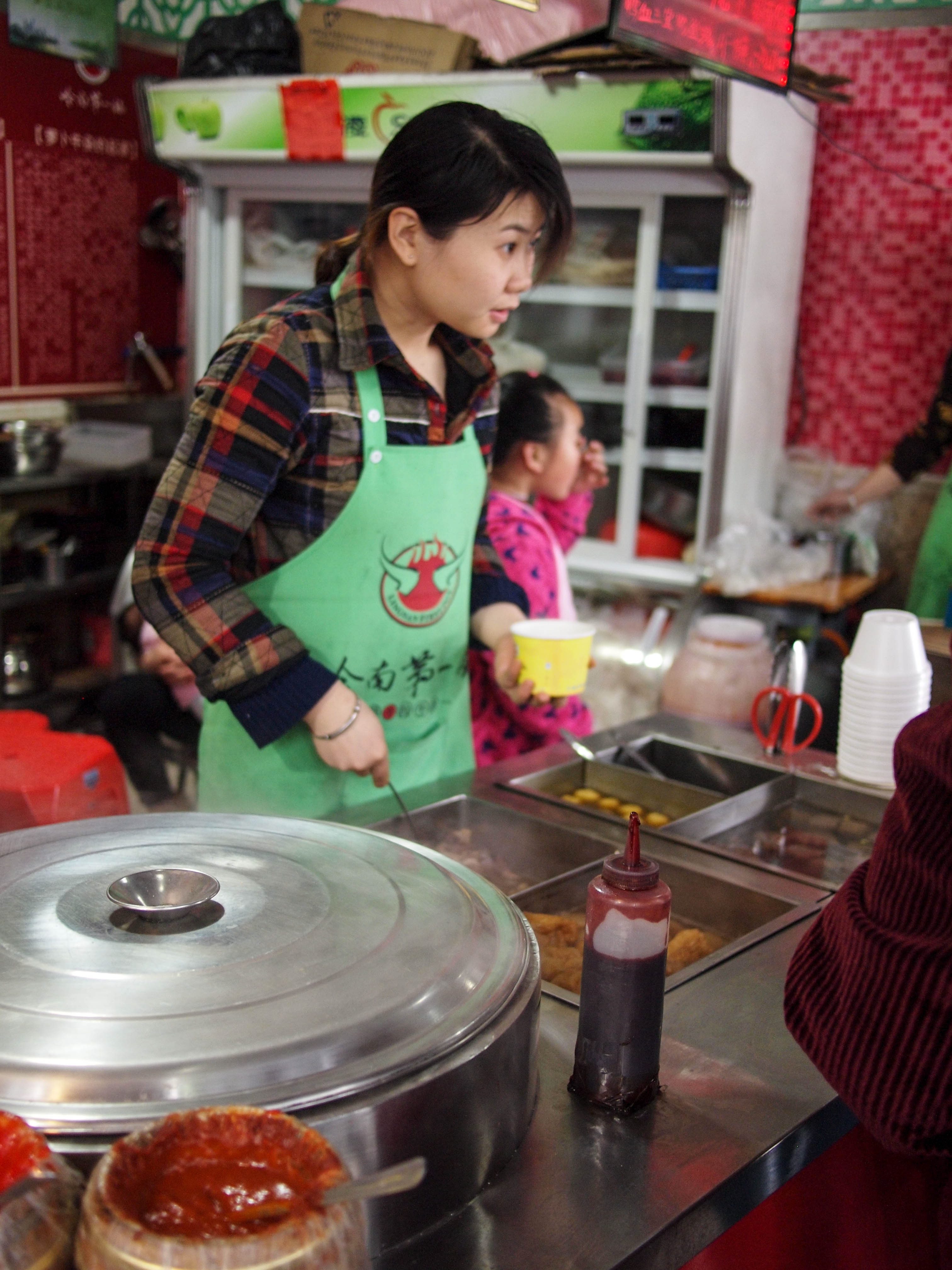
Street-side Chinese style fast food restaurant.

Street-side Chinese style fast food restaurant.

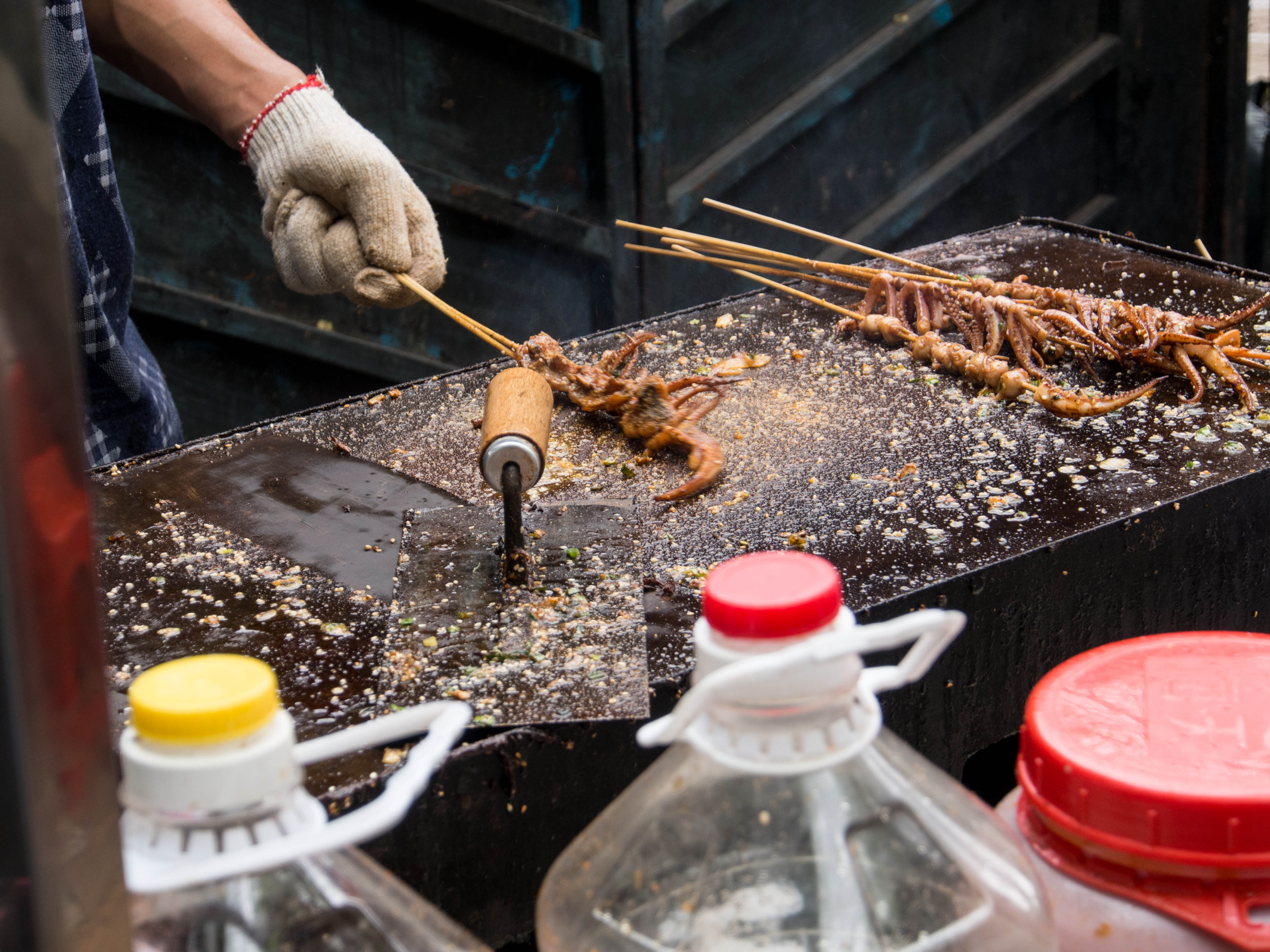
Street food.

Street food.

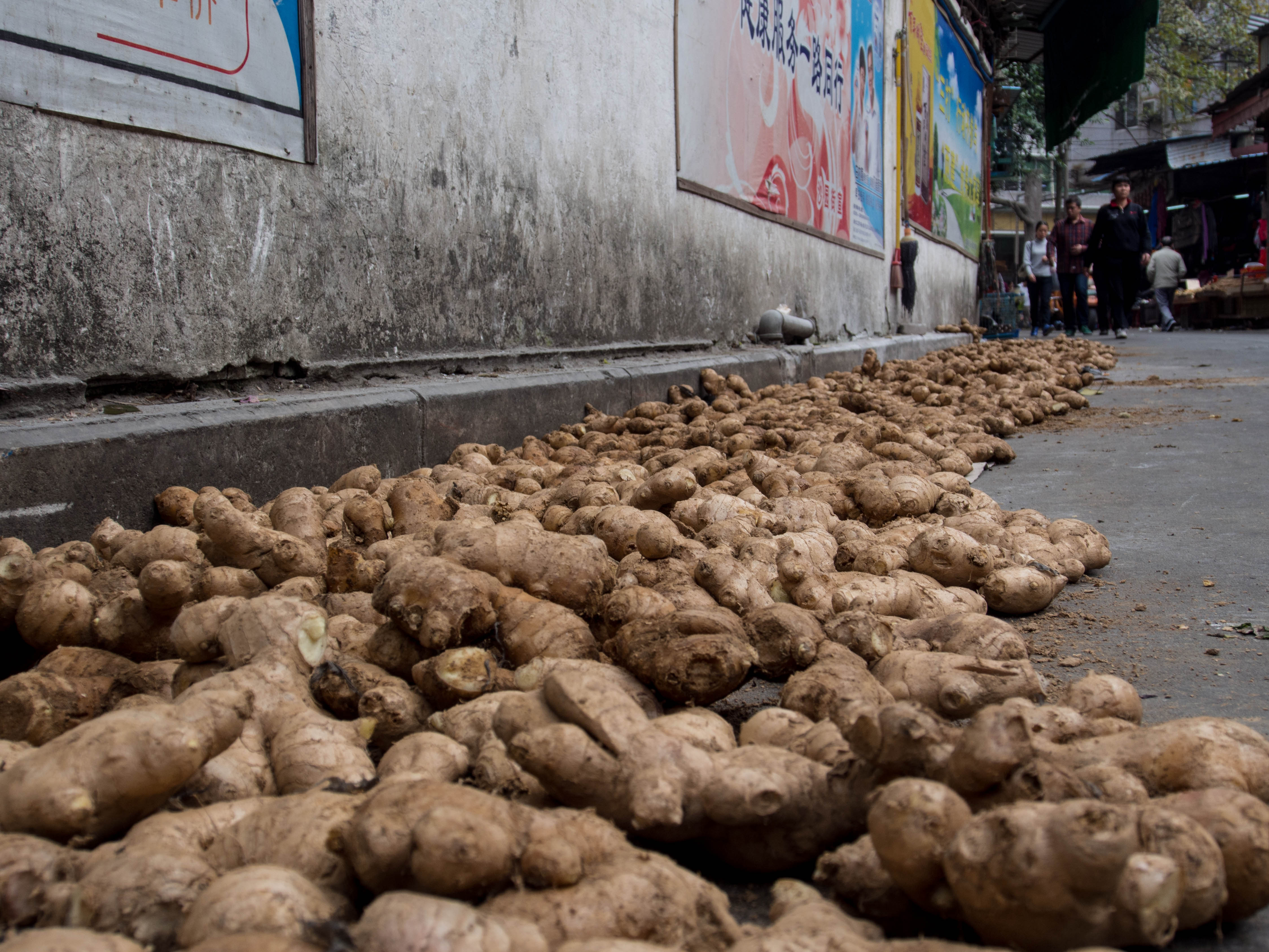
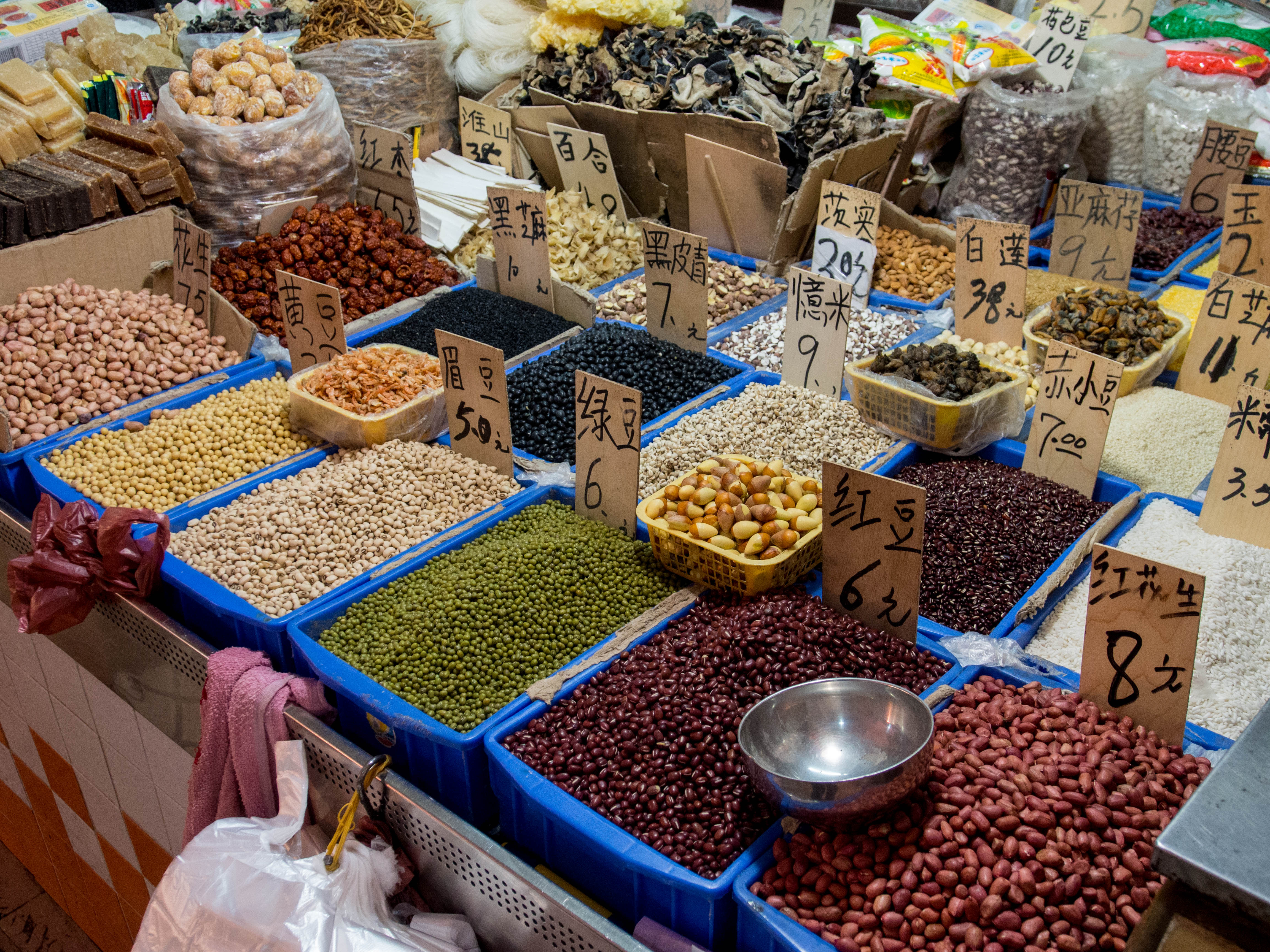
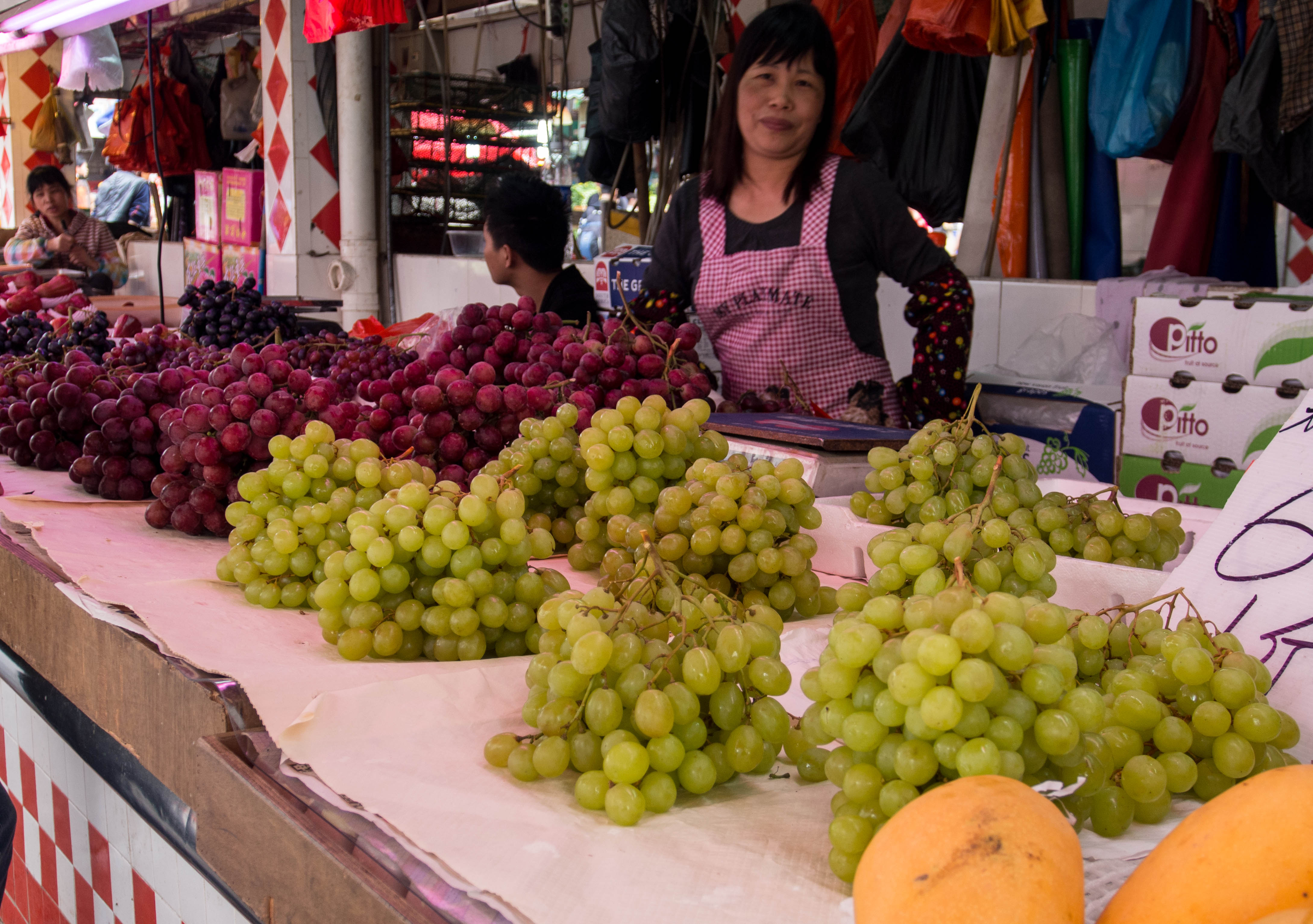
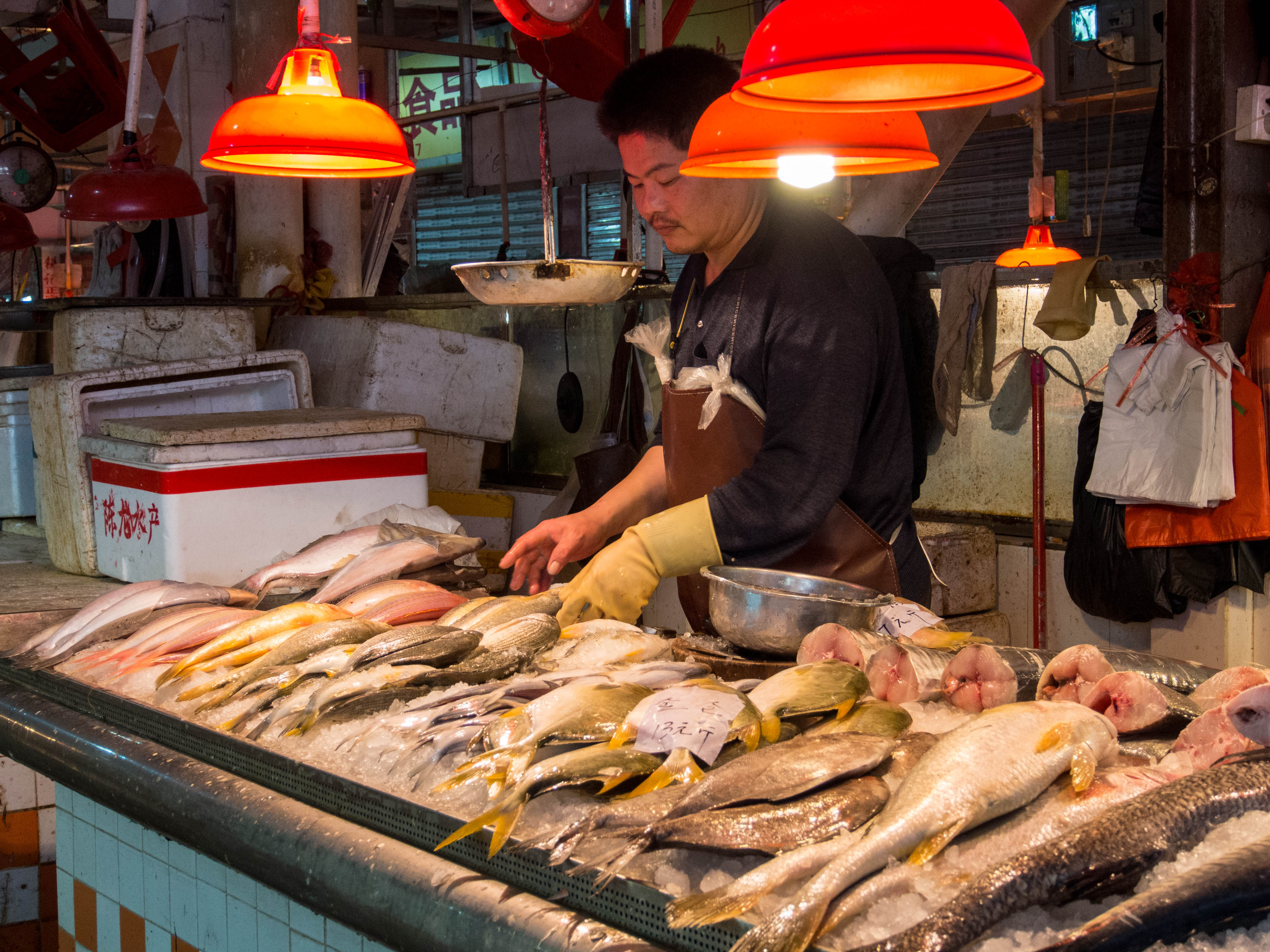
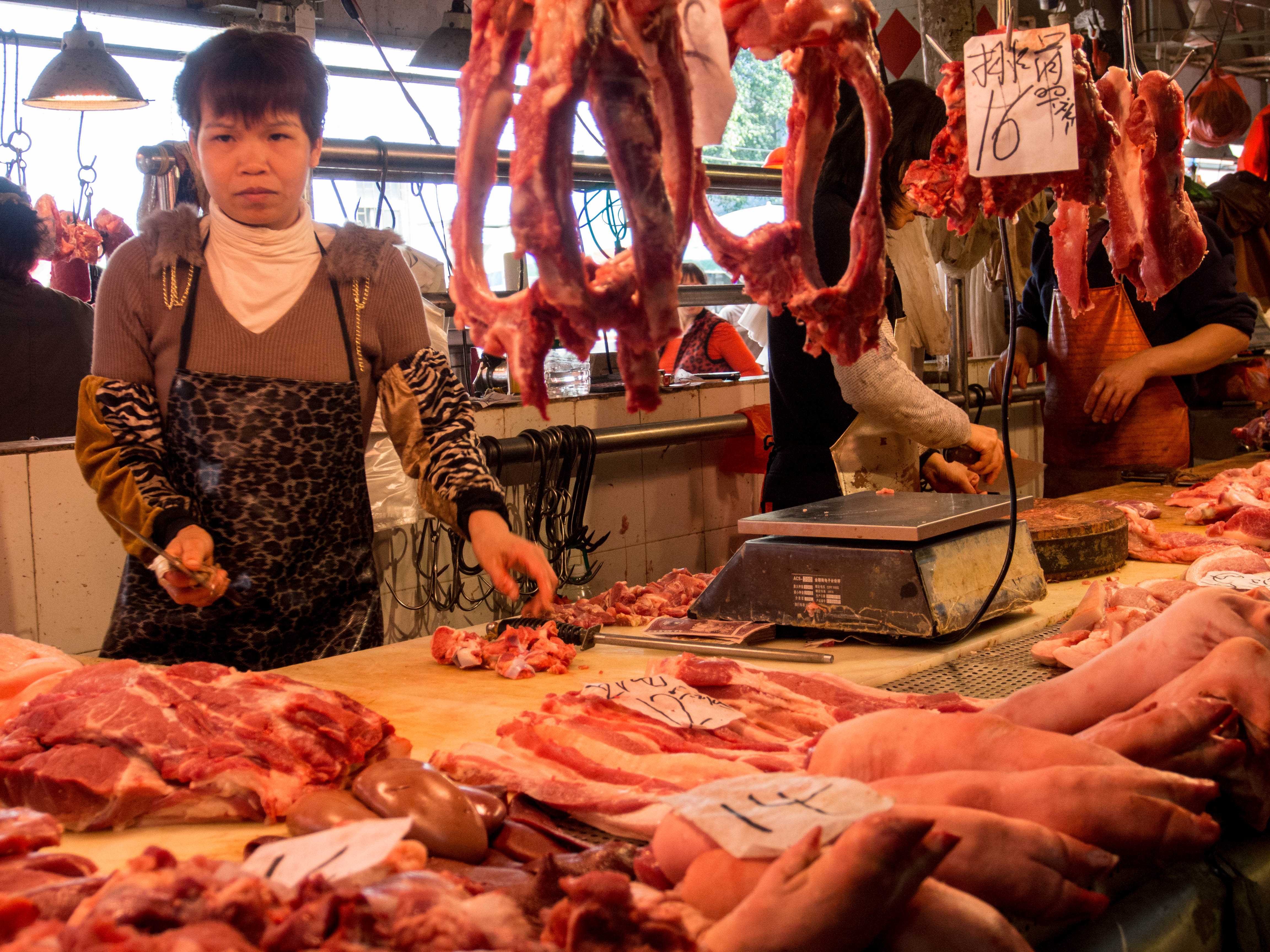
Though there are now large grocery stores all over China, the Cantonese still do a fair amount of shopping in outdoor meat, poultry, and produce markets. They are similar to farmer’s markets here in the U.S. Just a couple decades ago all Chinese shopped this way. At that time most Chinese did not own refrigerators and shopped every day for produce. This habit is still practiced by many Chinese who insist on the freshest ingredients. In the past, it was not uncommon for someone to buy a live chicken, take it home, and let it strut around in the kitchen until time to prepare the meal. Live fish are also bought and either taken home alive, or prepared by the vendor on the spot. These kinds of markets are still around in China though they are a bit harder to find and the Chinese are shopping more and more in grocery stores.

Ginger

Ginger

Grapes

Dry beans

OLYMPUS DIGITAL CAMERA

Grapes

Fishmonger

Fishmonger

Fresh chicken

Fresh chicken

Butcher

Butcher

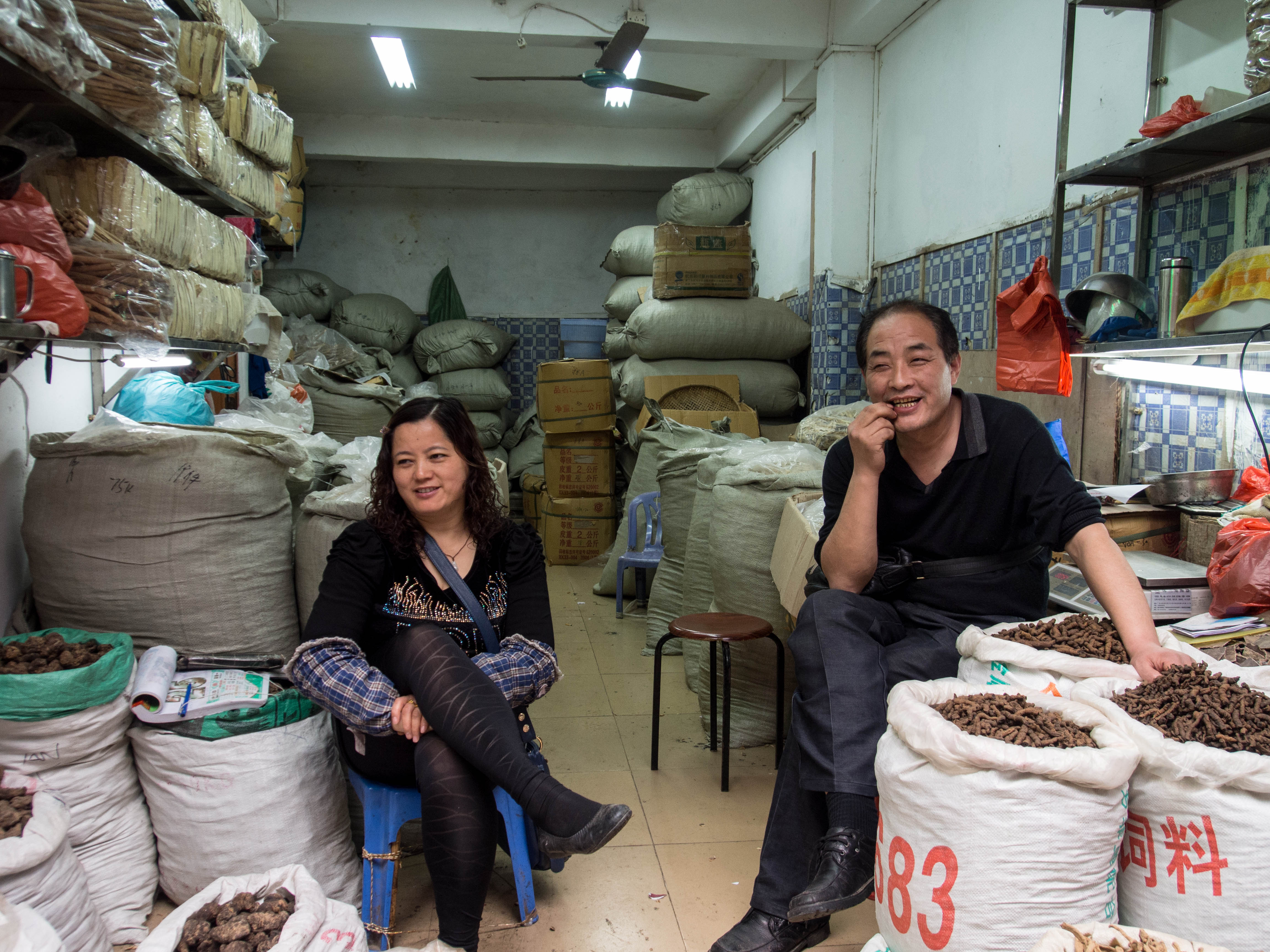
Dried mushroom shop

Dried mushroom shop

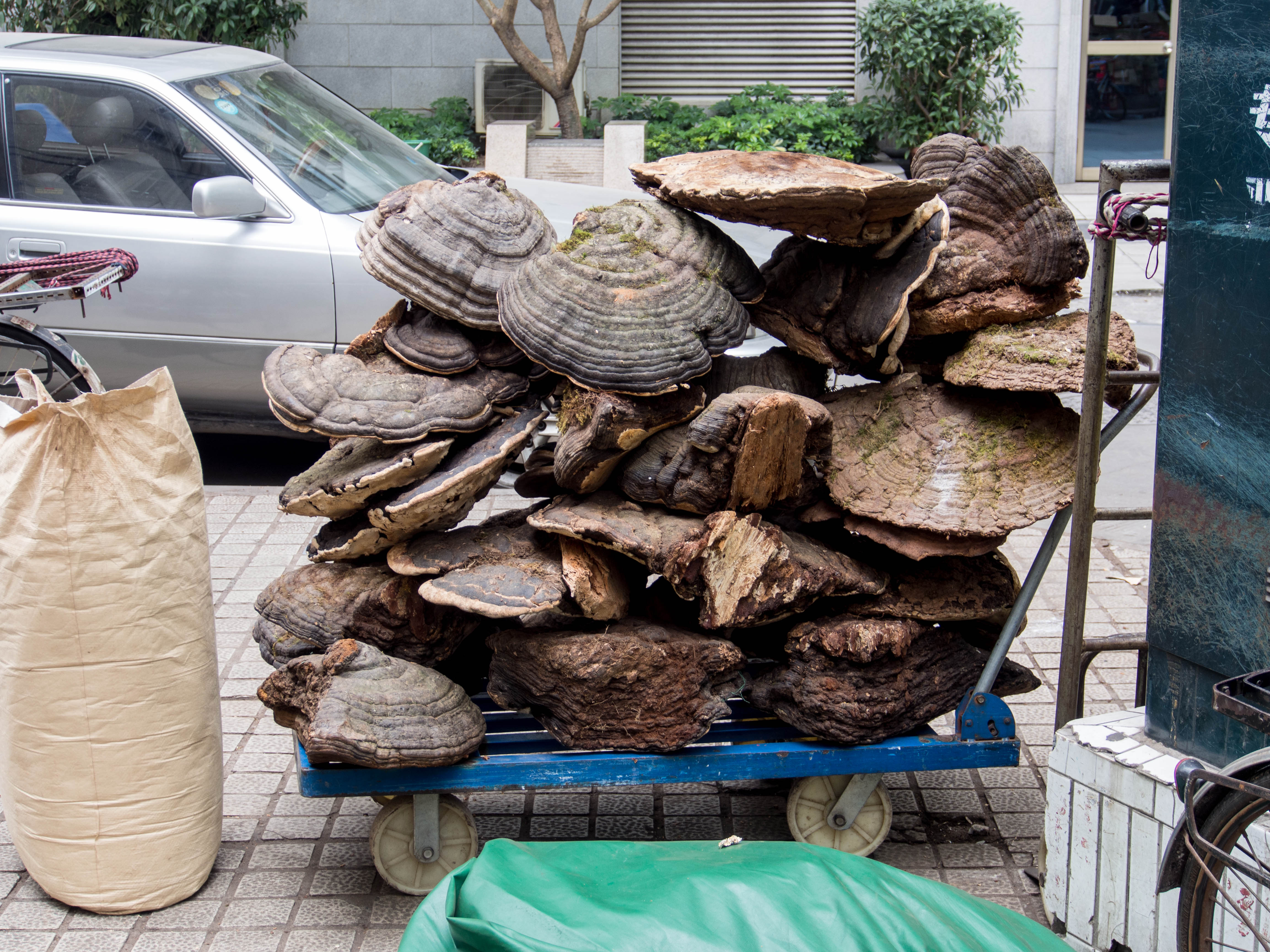
Huge dried mushrooms

Huge dried mushrooms

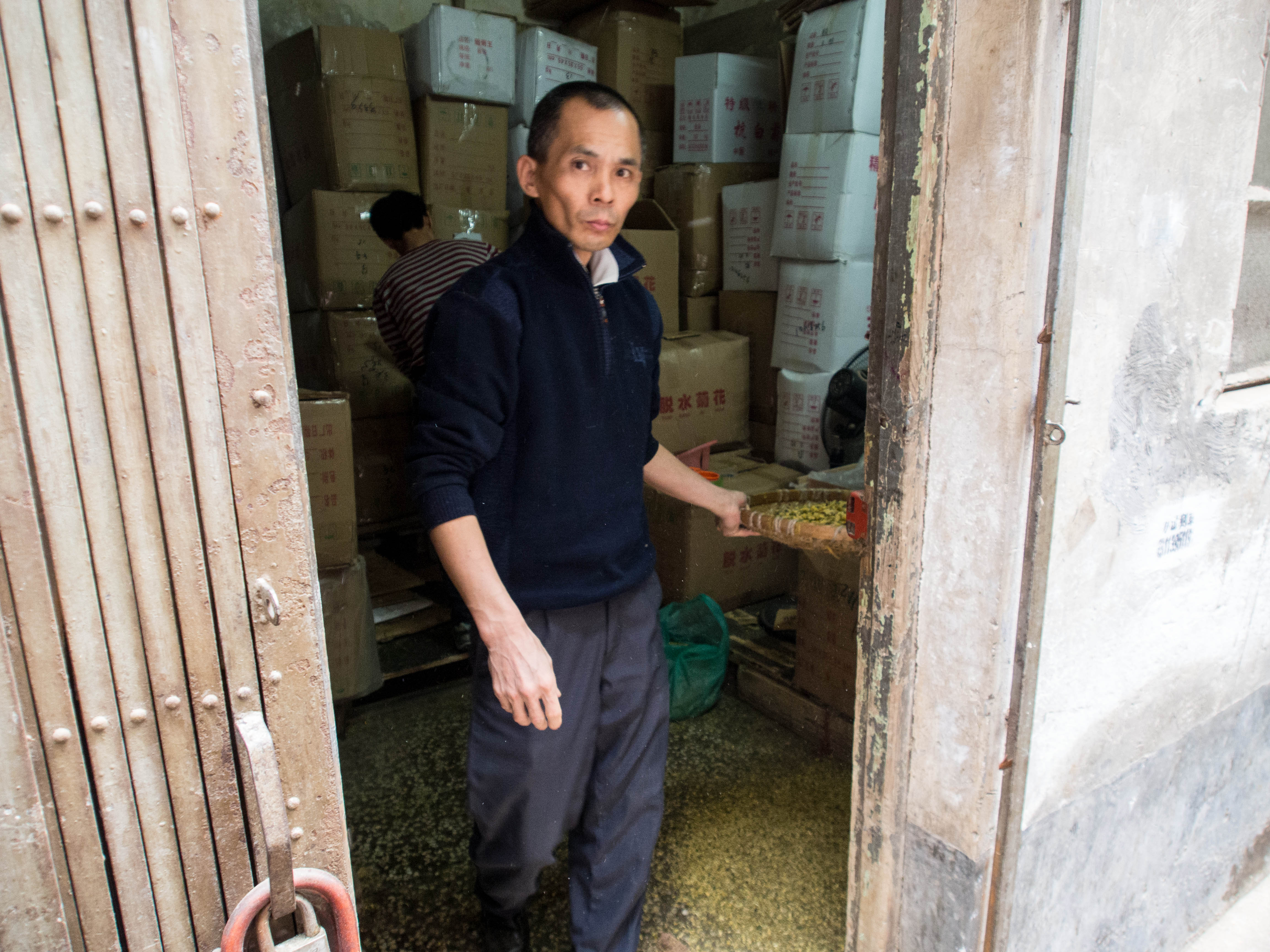
Preparing dried chrysanthemum flowers for tea

Preparing dried chrysanthemum flowers for tea

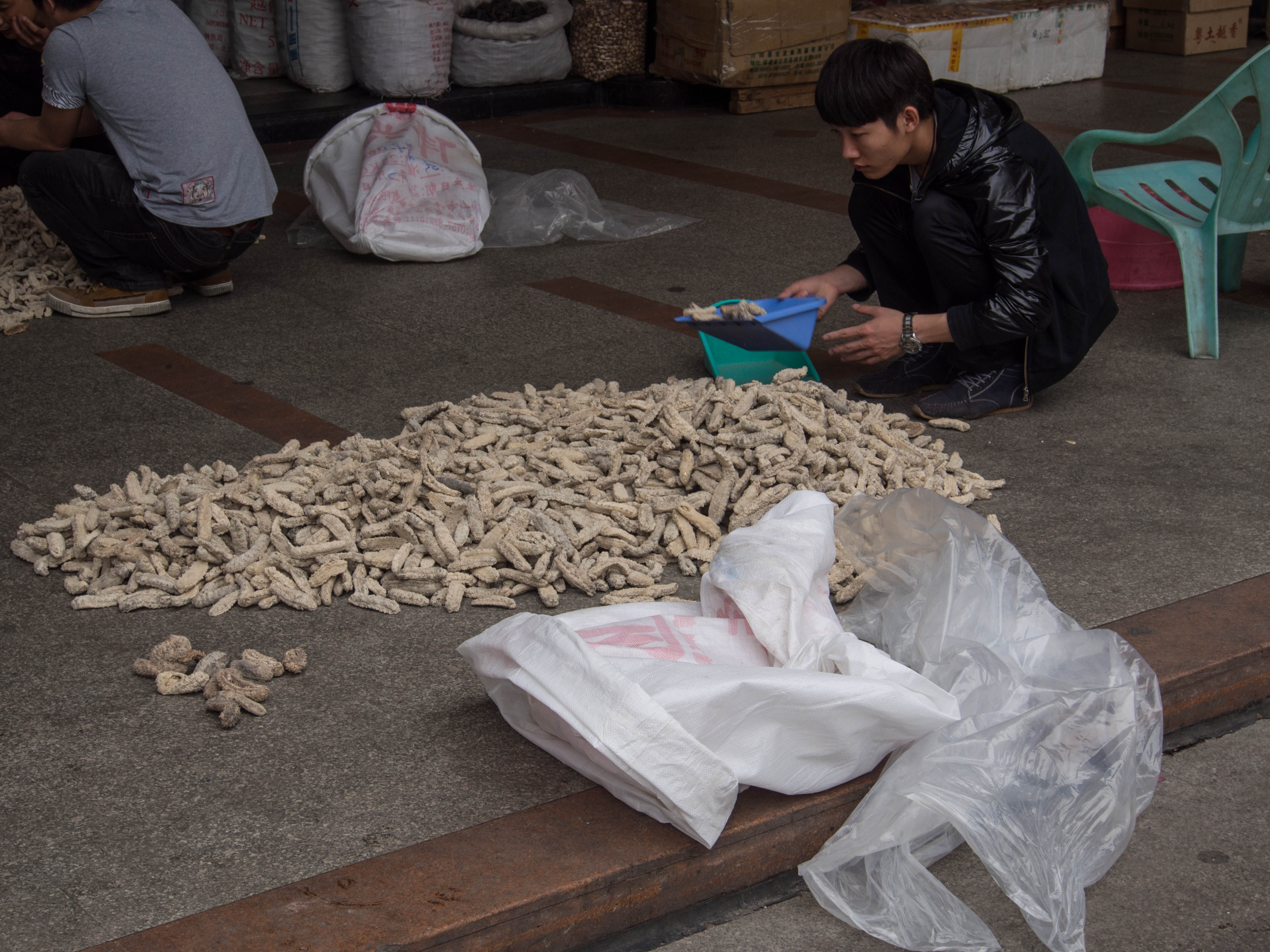
Selecting dried fungus

Selecting dried fungus

Tomato vender

Tomato vender

With Guangzhou’s proximity to Hong Kong, the Cantonese have been exposed to the West and Western goods for quite a bit longer than the rest of China. Even back in the eighties Guangzhou received some TV and radio stations from Hong Kong. Hong Kong’s fanatic attitude toward shopping rubbed off on Guangzhou. They is everything from European designer boutiques to tiny shops selling Chinese brands.

Shoppers

Shoppers

Adidas man

Adidas man

Maybelline girls

Maybelline girls

Night market

Night market

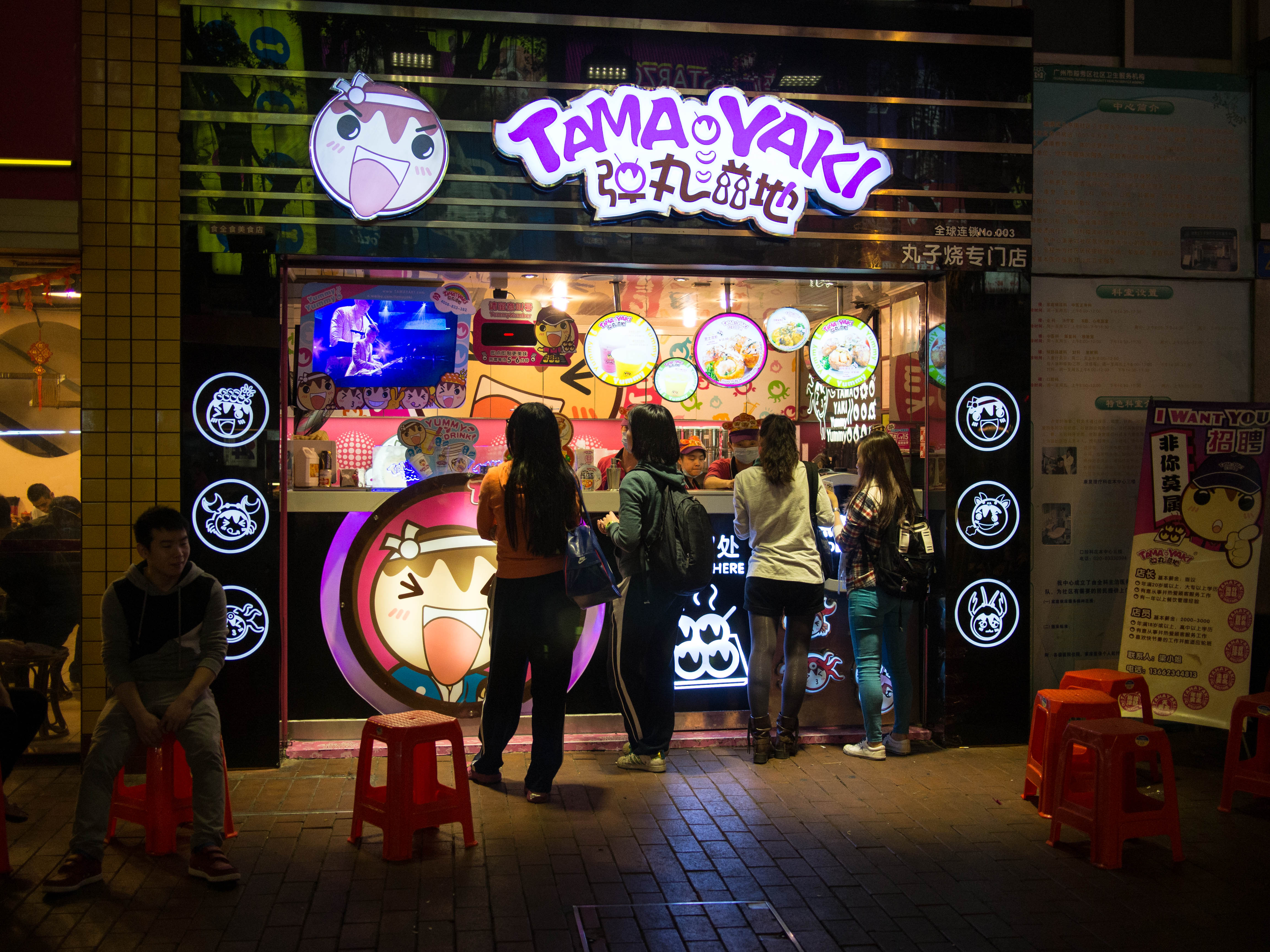
Tama Yaki

Tama Yaki

OLYMPUS DIGITAL CAMERA

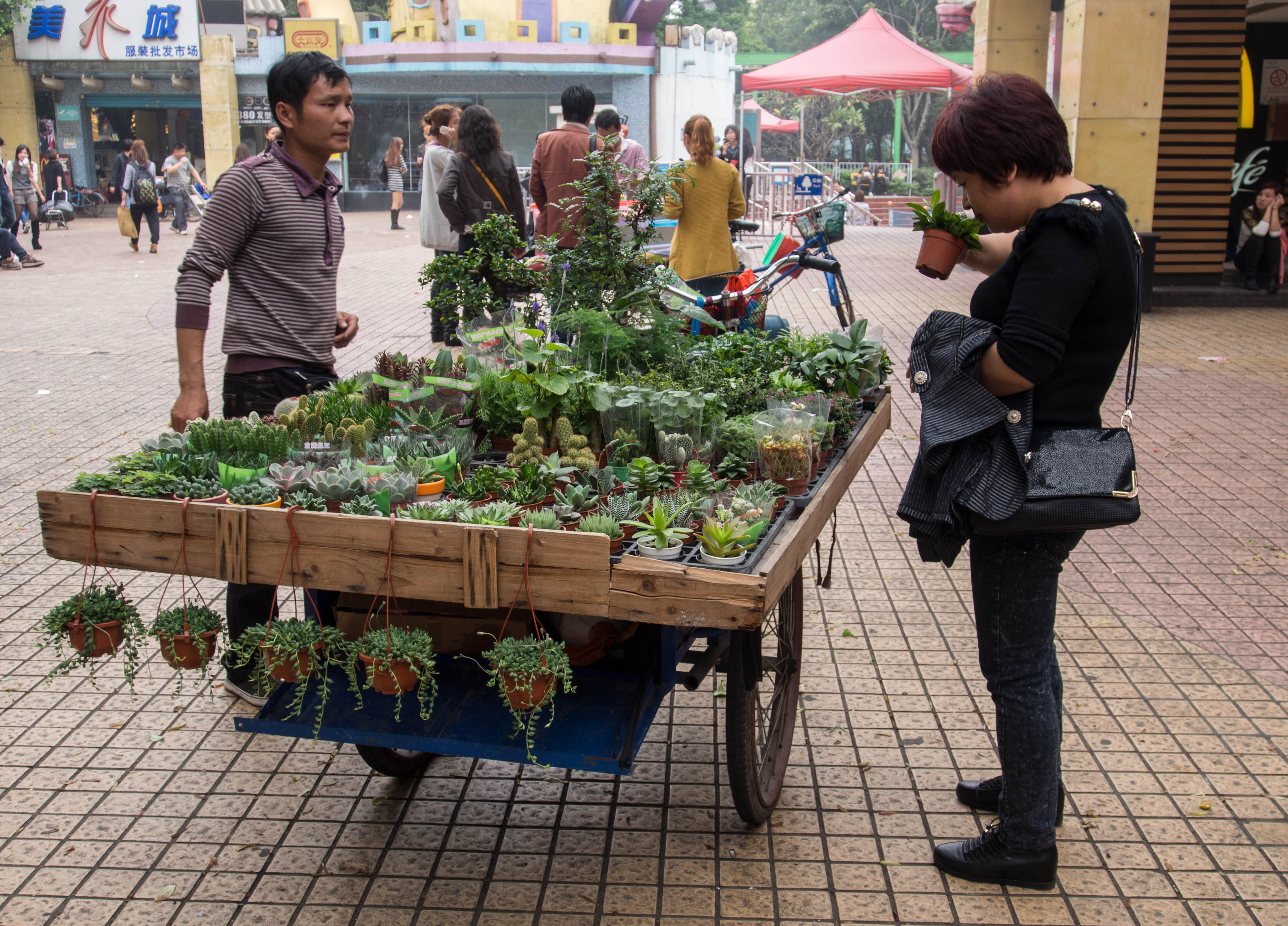
Ornamental plant street vendor

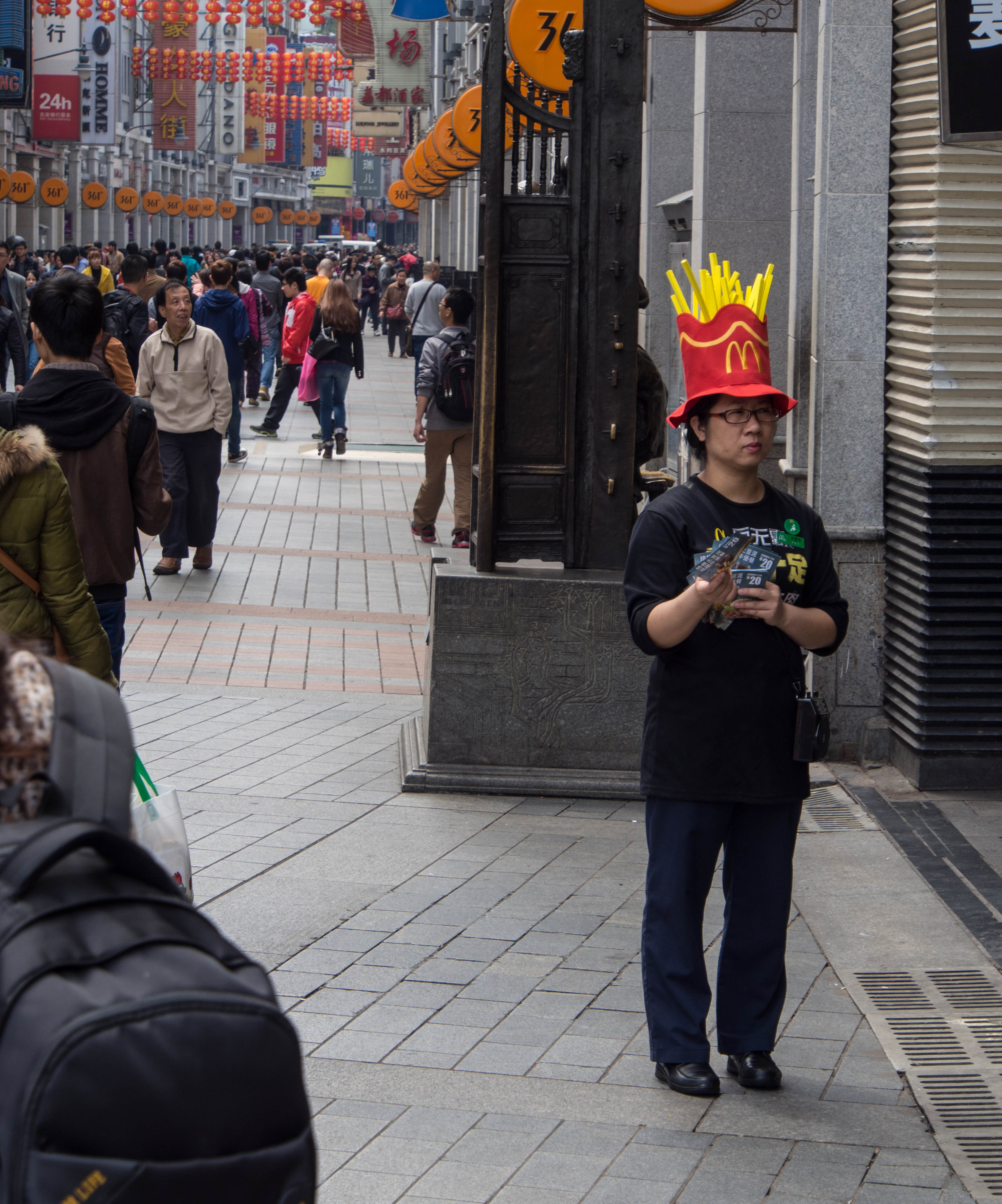
McDonald's coupons

McDonald’s coupons anyone

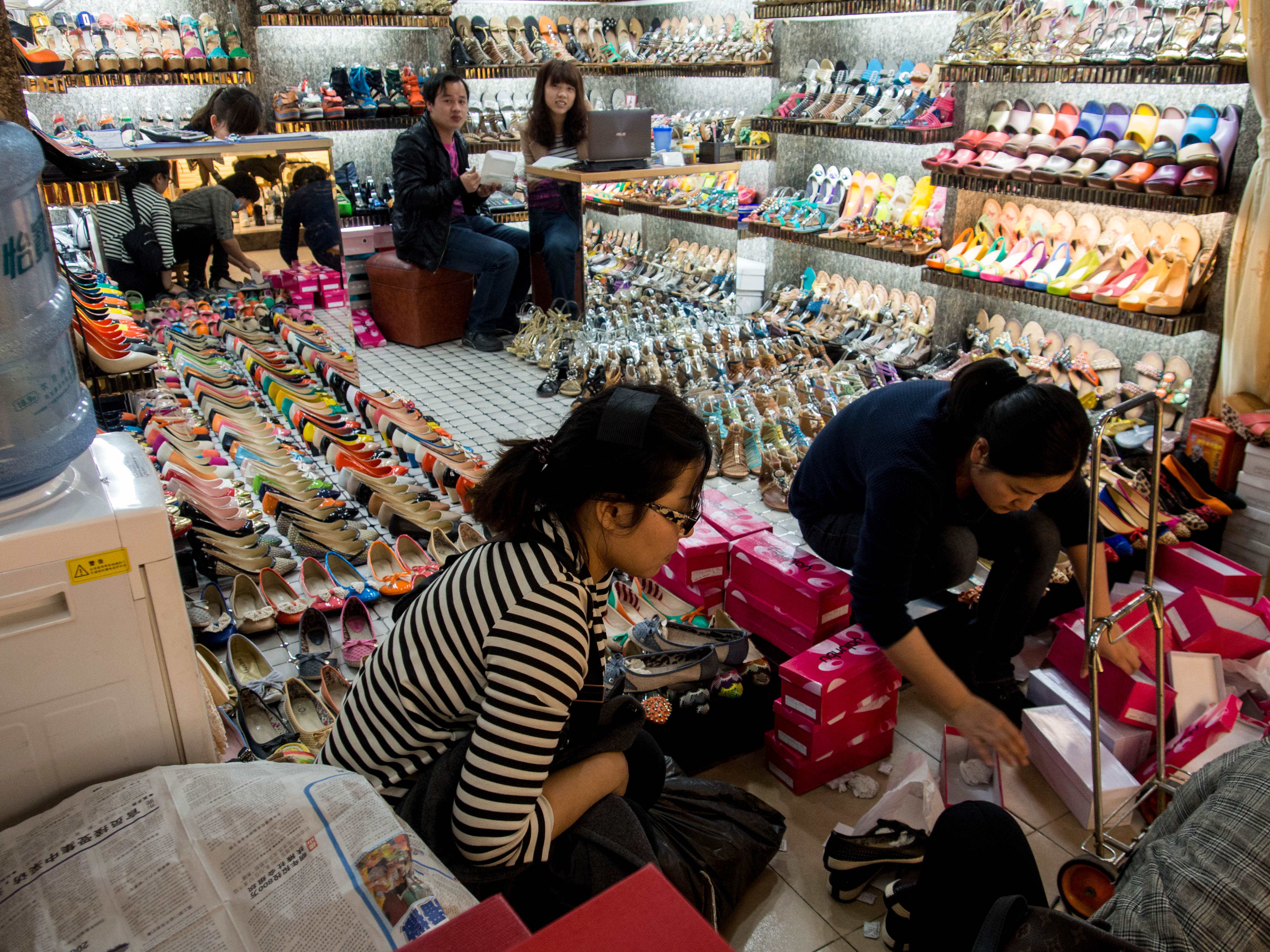
Women's shoe shop

Women’s shoe shop

Colorful shoes

Colorful shoes

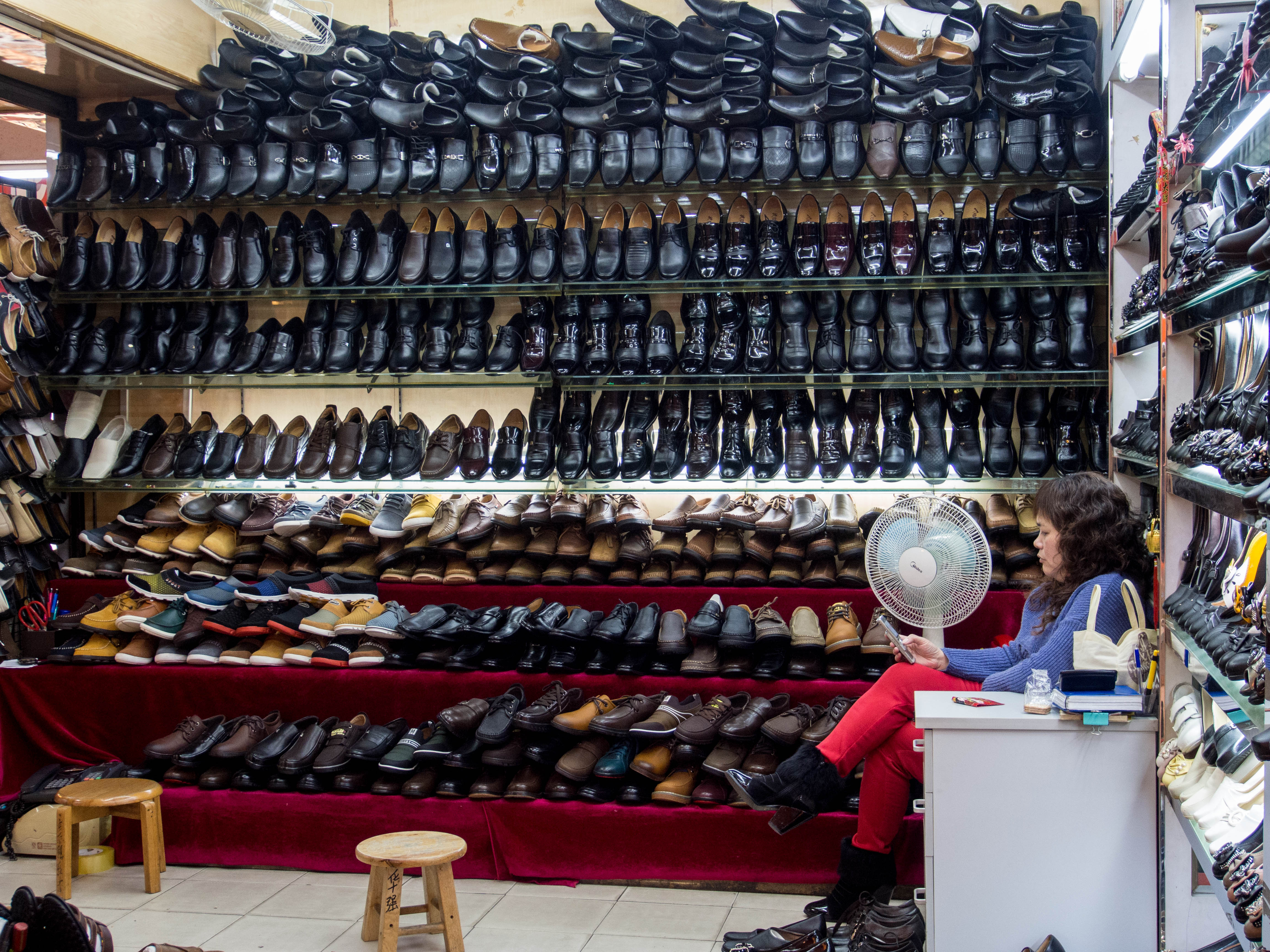
Boring men's shoes

Boring men’s shoes

Finally, here are a few random shots from Guangzhou.

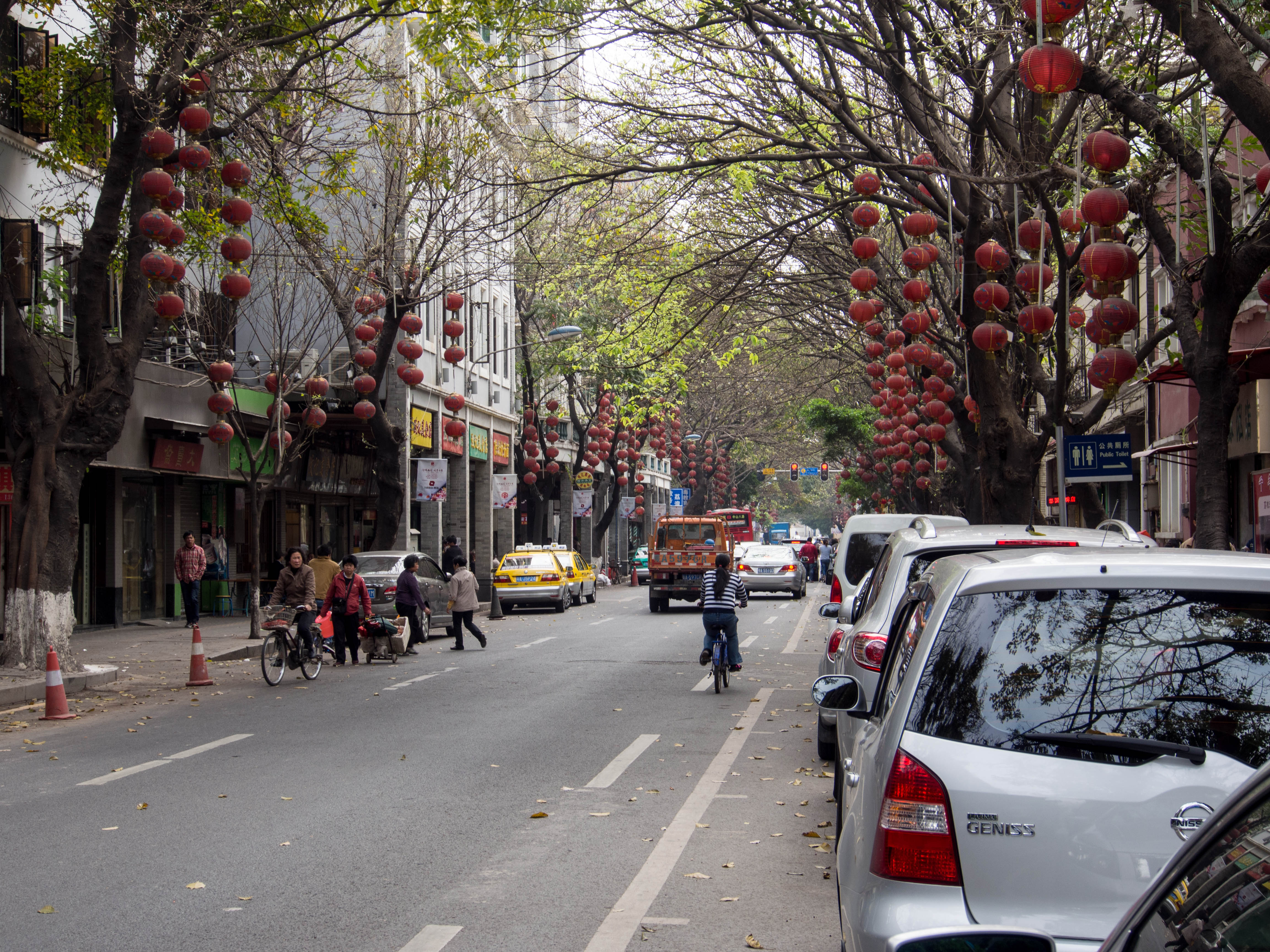
Guangzhou street just after Chinese New Year

Guangzhou street just after Chinese New Year

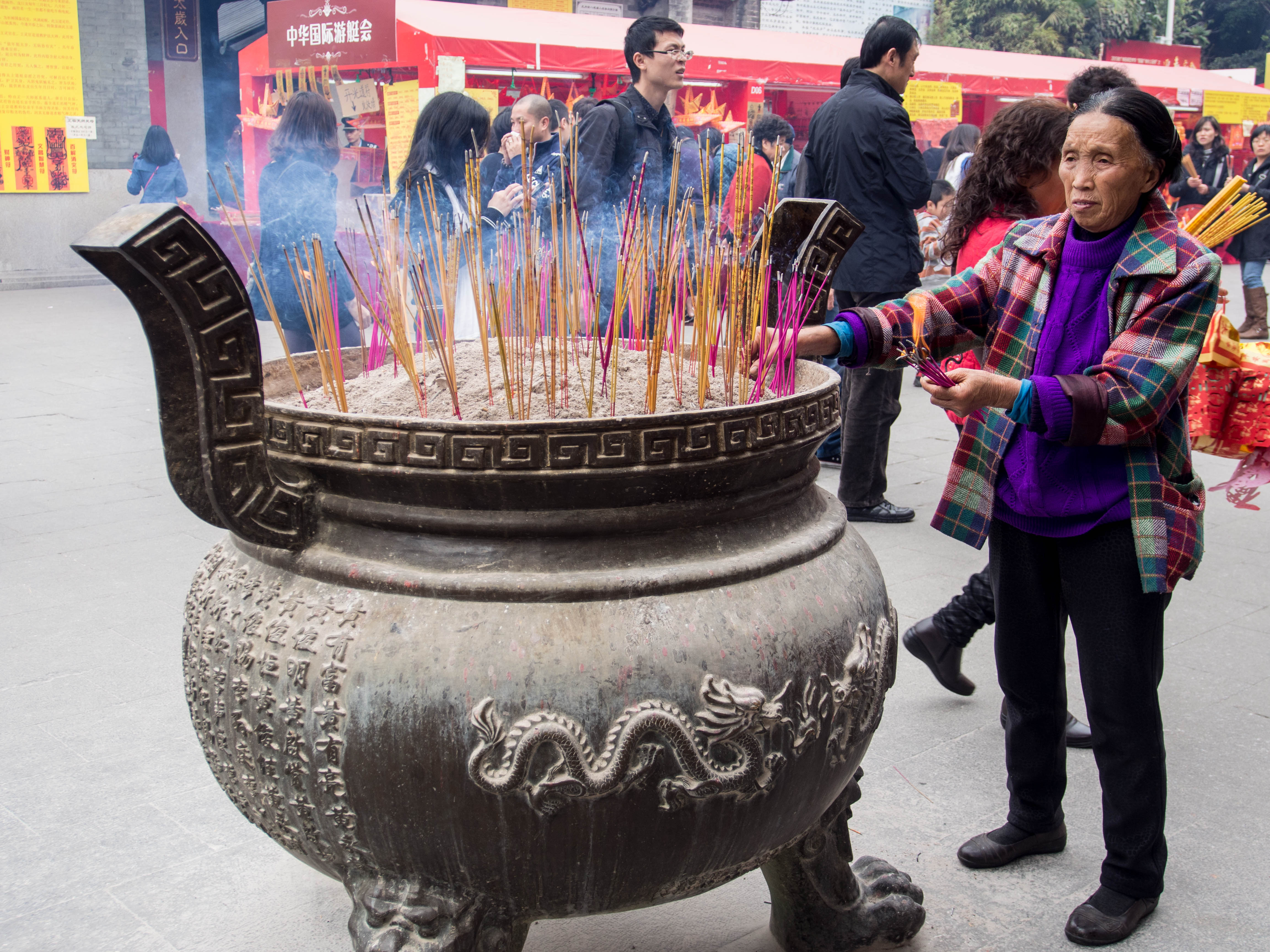
Incense

Incense

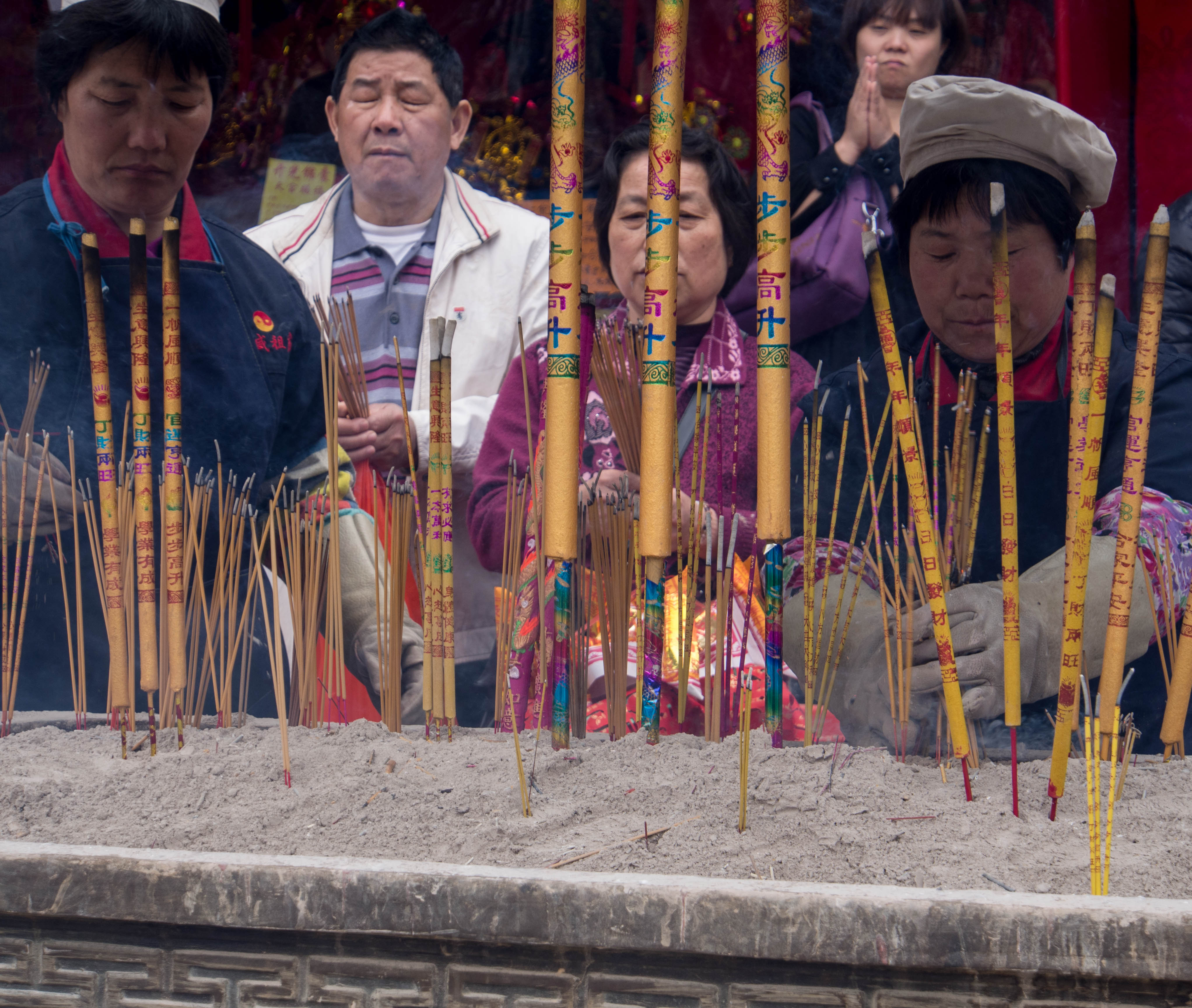
Worshippers

Worshippers

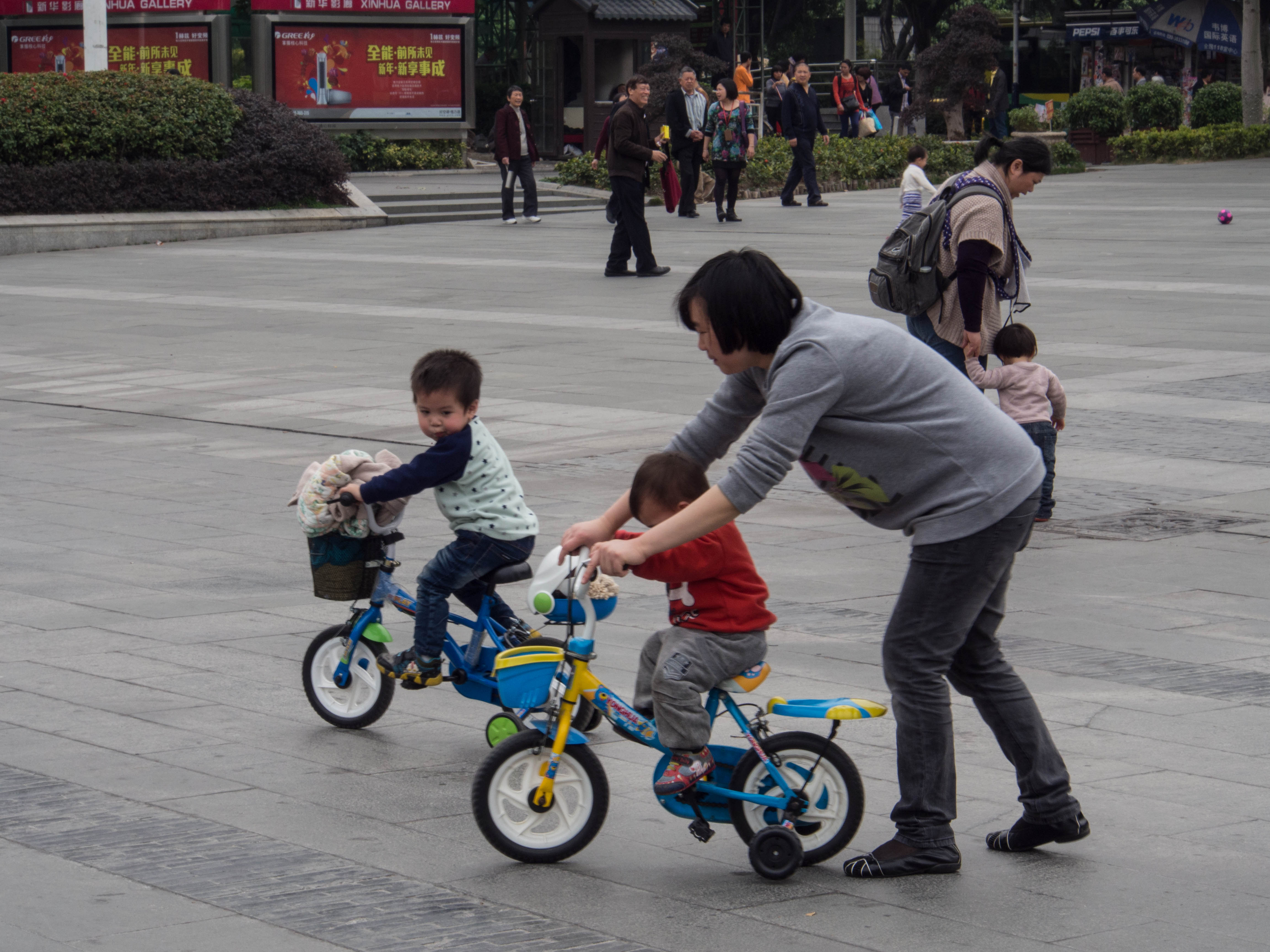
Learning to ride

Learning to ride

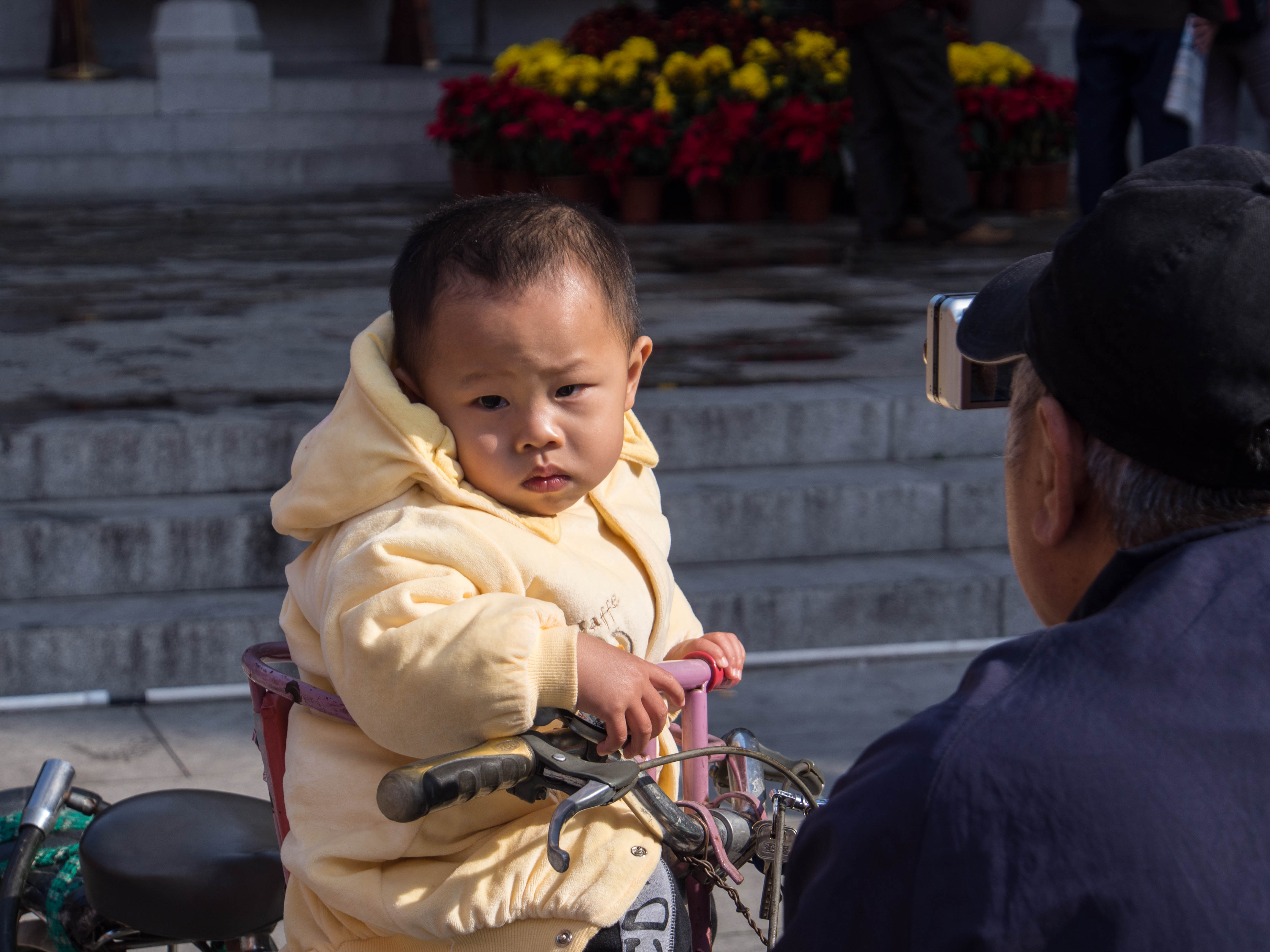
Smile for grandpa

Smile for grandpa