The Story Behind Tianjin’s 狗不理包 gǒubùlǐ bāo

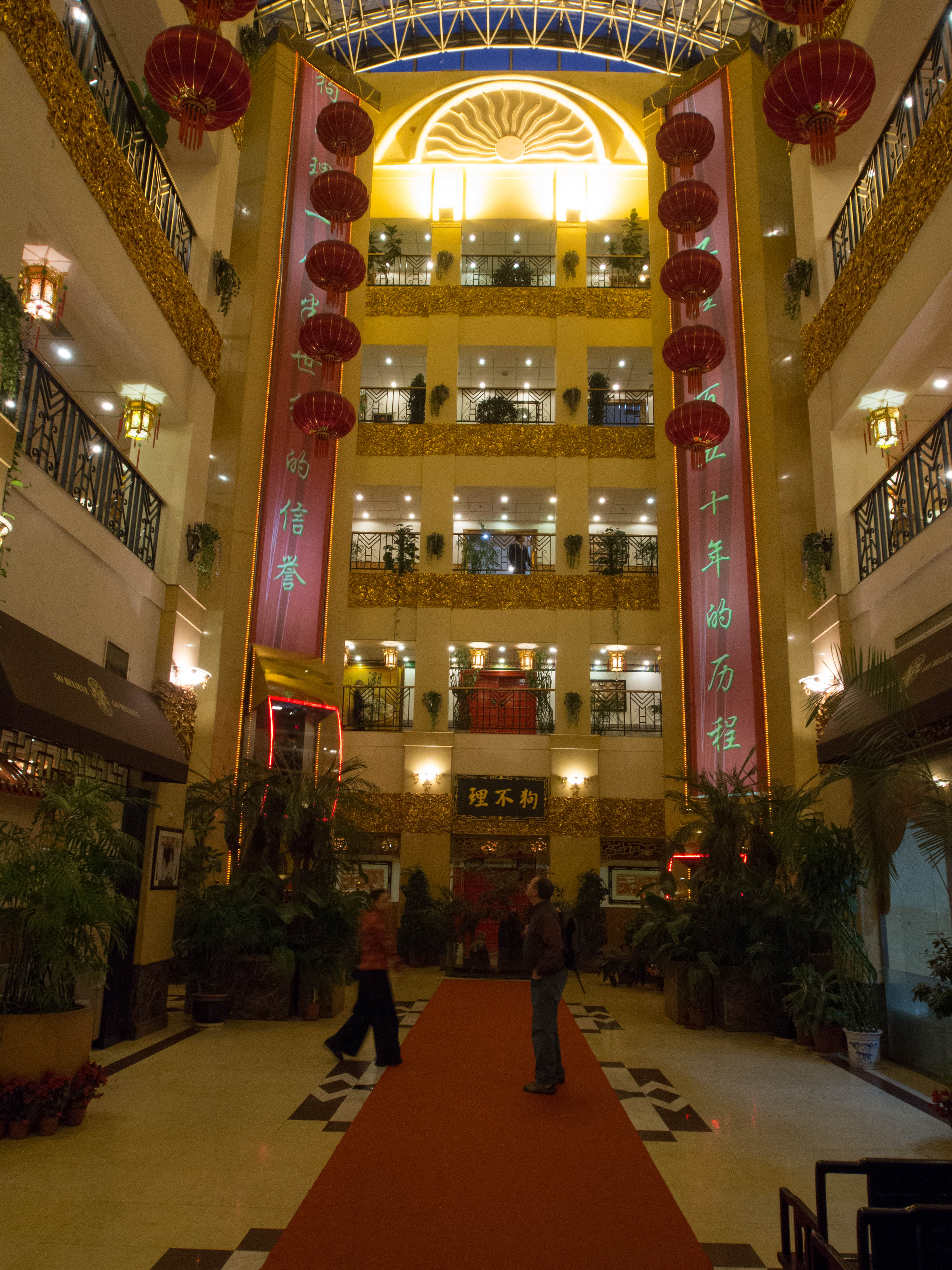
狗不理大酒店 in Tianjin

狗不理大酒店 in Tianjin

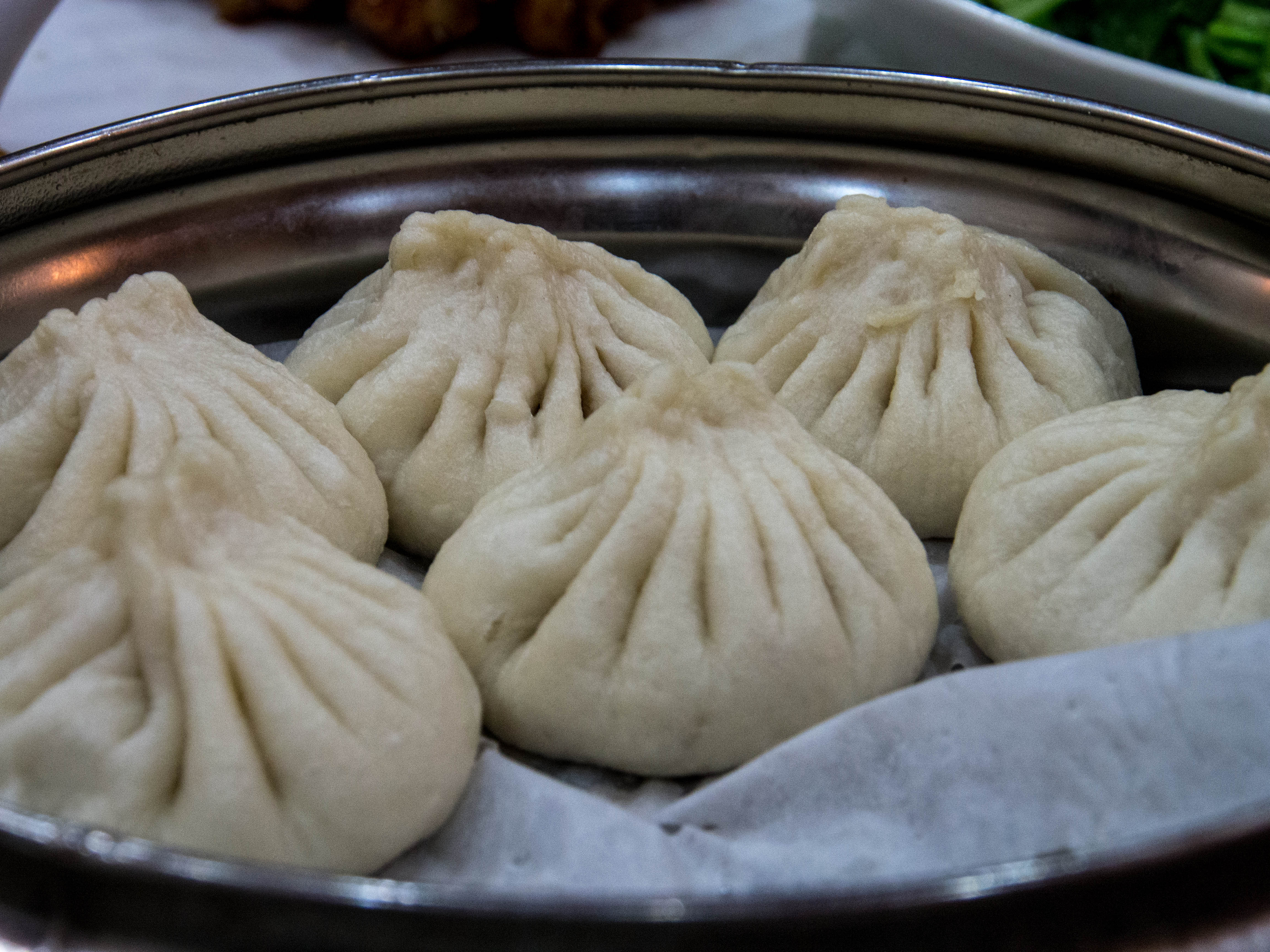
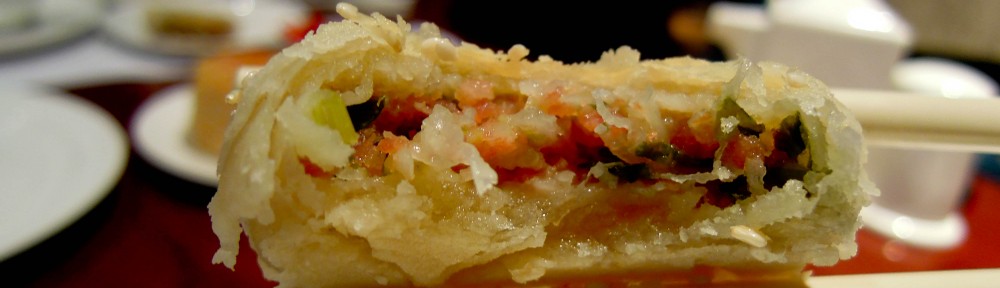
In my last post I posted a photo of Tianjin’s famous 狗不理包 gǒubùlǐ bāo. I then received a comment about this very unusual name for this steamed dumpling. As the commenter noted, it sounds like these 包子bāozi are not even fit for dogs. For the non-Chinese speaking readers, let me explain. 狗 gǒu simple means ‘dog’ and to 不理 bùlǐ means to ‘pay no attention to,’ so a literal translation would be something like ‘the dumpling that dogs won’t pay attention to.” This would imply that they are not too tasty.

狗不理包 gǒubùlǐ bāo

狗不理包 gǒubùlǐ bāo

Before going to Tianjin last Autumn I had never tasted them, though I had heard of them as they are considered a famous Tianjin snack. Here is the story about these very tasty dumplings. It comes from the book 旅游城市美食指南:便走便吃 edited by 周国宝. (Tourist City Guide to Gourmet Food: Eating While Traveling).

According to tradition, the story begins in 1858 when a 14 year old boy named Gao Guiyou arrived in Tianjin. His nickname was Gouzi (狗子 gǒuzi) or ‘dog.’ He had come to Tianjin to study to be a craftsman. He was very clever, good with his hands, and a quick learner. He apprenticed at a shop run by the Liu Family that made steamed dumplings (包子 bāozi). He learned very quickly how to make beautiful and delicious dumplings. After three years he had served out his apprenticeship and opened his own shop selling his own dumplings. He soon gained a reputation for making the best dumplings in town and people came from all over to eat them. He became so busy that he had no time to talk to his customers, thus the phrase, 狗子卖包子,不理人, gǒuzi mài bāozi, bùlǐ rén, ‘Gouzi sells dumplings and doesn’t pay attention to people (meaning his customers). After awhile people began calling him 狗不理 gǒubùlǐ, and his famous dumplings became known as 狗不理包 gǒubùlǐ bāo. Now it is said that if you travel to Tianjin and don’t try 狗不理包子 gǒubùlǐ bāozi, then you’ve never been to Tianjin.

Me and a couple friends/colleagues traveled to Tianjin to visit the parents of a former graduate student I worked with. It was also a good excuse to visit Tianjin. We took the new bullet train from Beijing and it only too 28 minutes to get to Tianjin. They took us out to eat at the famous 狗不理大酒店. Whether this was the original location of the shop in the story, I don’t know.

Inside the restaurant

Inside the restaurant

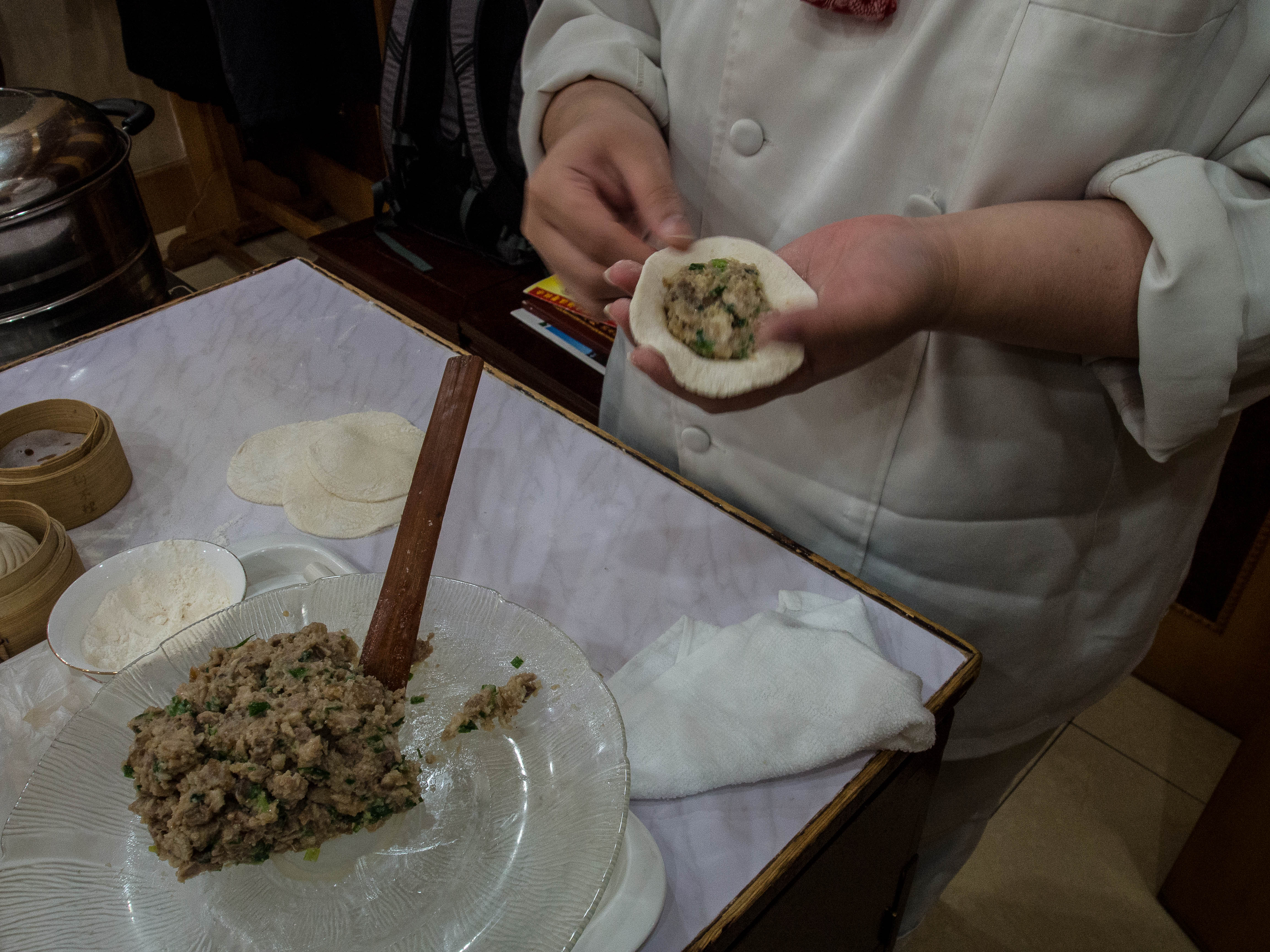
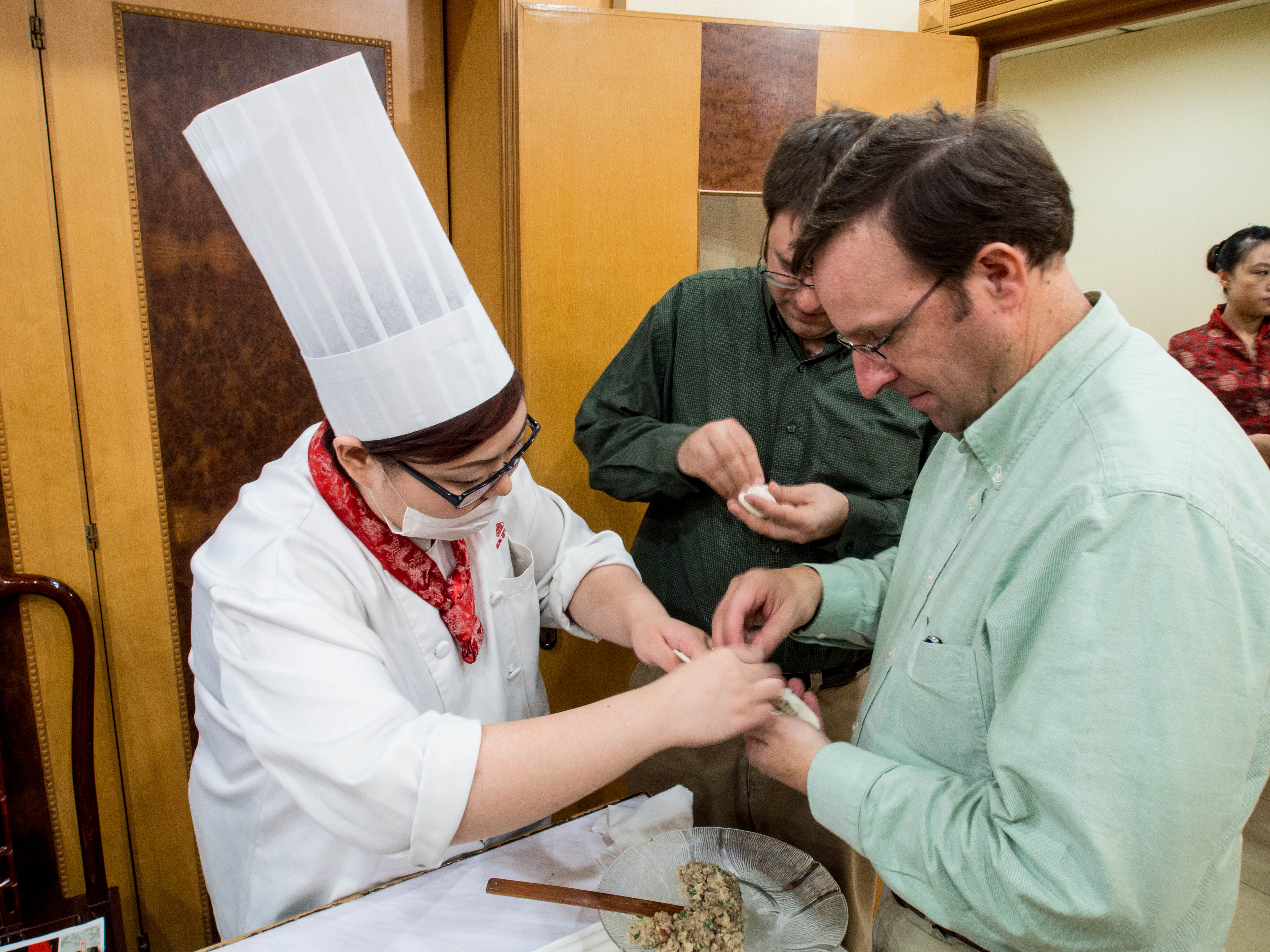
We had an excellent meal which of course included gǒubùlǐ bāo. I am happy to report that they are delicious. We had a chef come into our private room and demonstrate how to wrap them. She then taught us how to do it. Though it may look easy, it surely is not and takes a great deal of practice to wrap them properly.

Rolling out the dough

Rolling out the dough

Wrapping the bāozi

Wrapping the bāozi

Michael and I feebly trying to wrap our own

Michael and I feebly trying to wrap our own

Can you tell which one the lǎowài (foreigner) wrapped?

Can you tell which one the lǎowài (foreigner) wrapped?

Finally, here is a short video I shot of the chef wrapping a 狗不理包. She makes it look so easy and effortless, but I assure you it is not. As I said, they are truly delicious. Next time you are in Tianjin, make sure to eat some 狗不理包.

New Year’s Update

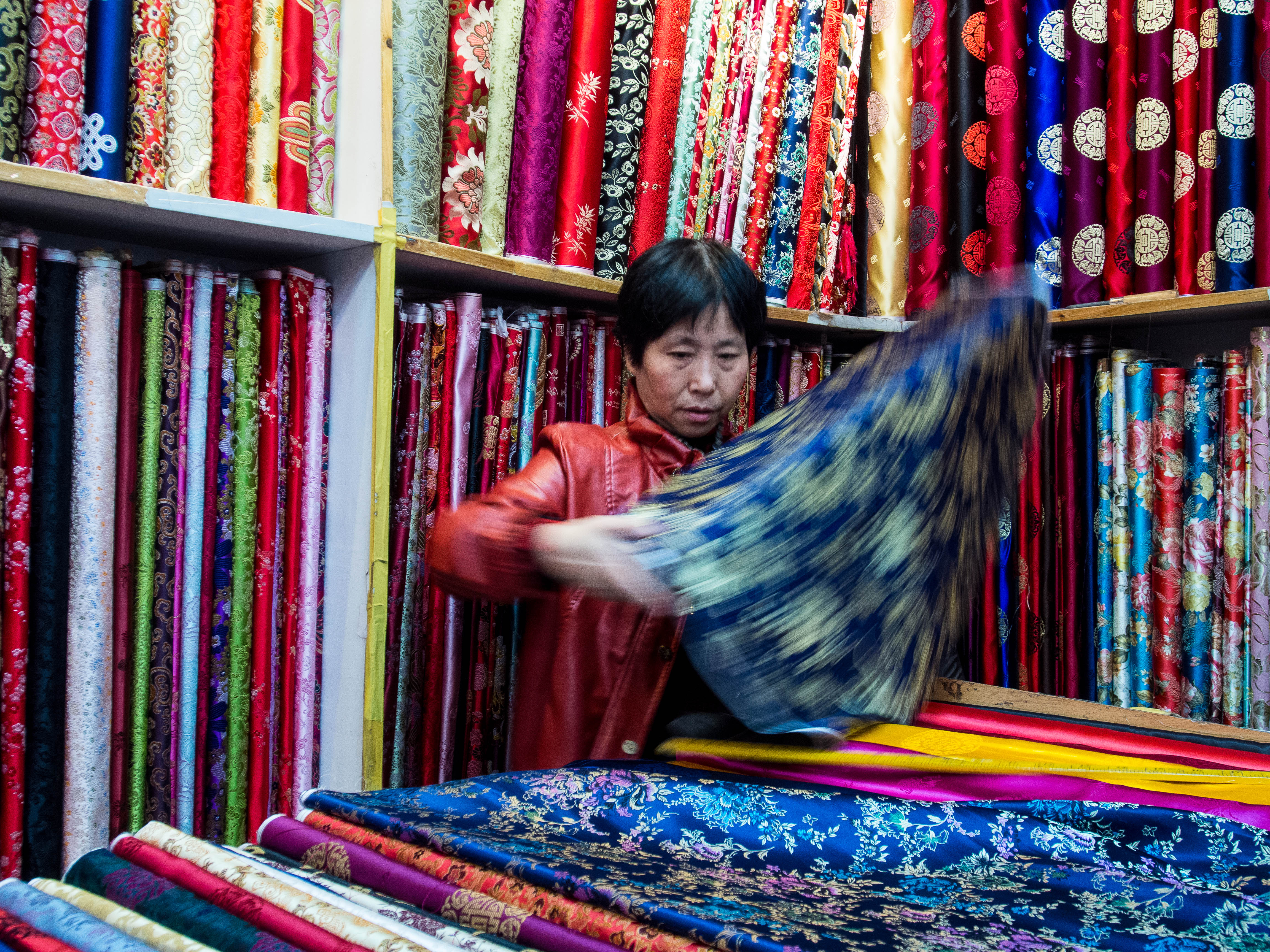
Fabric store in Nanjing

Fabric store in Nanjing

It has been quite some time since I posted anything. I had a very busy semester teaching and traveling, then was swamped with finals and the holidays. I am now on sabbatical so I intend to post regularly for the next few months.

For the past several years I have been working on a cultural guidebook to China. It is due to the hit the bookstores in April. The title is: Decoding China: A Handbook for Traveling, Studying, and Working in Today’s China. I will post more details of the book and how to get a copy soon.

I have two new projects I am working on this year. The first is a culinary guidebook to China. This will cover the various regional cuisines in China and some very practical information such as how to make sense of a Chinese menu, how to find a good restaurant, street food, and so on. My interest in food and eating is evident to those who read this blog. The second project is a book on Chinese popular culture and cultural literacy. My goal with this book is to cover those basic things about Chinese culture that everyone in China grows up knowing. I will be posting regularly on these two topics as I continue my research. I have at least two research trips to China planned this year for these projects.

I also have more photos and stories about my trip to Tibet last year that I plan to post about. And finally, I will continue to post on topics related to communication and Chinese culture.

Here are a few photos from my last trip to China, October/November 2012.

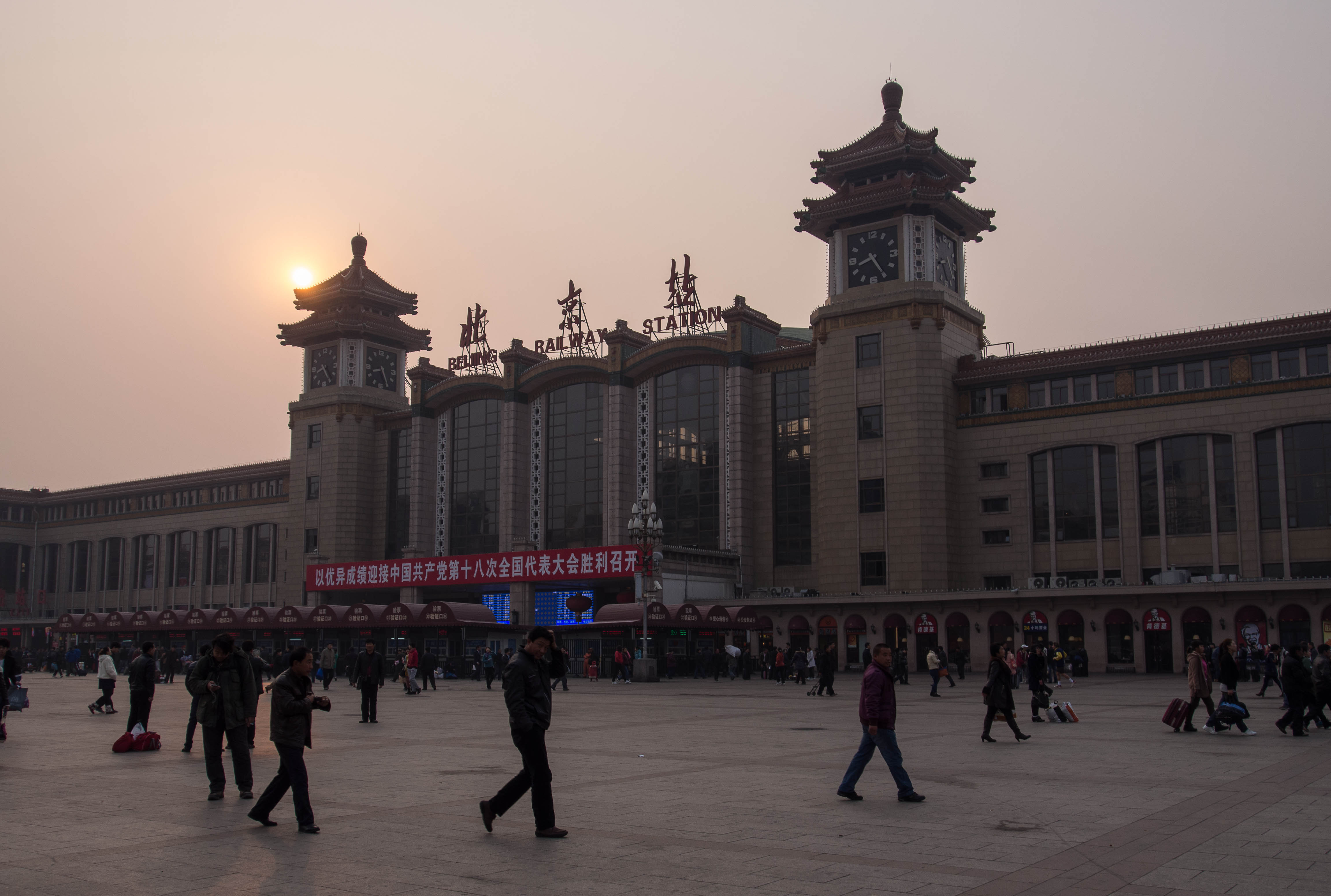
Beijing Train Station, early morning.

Beijing Train Station, early morning.

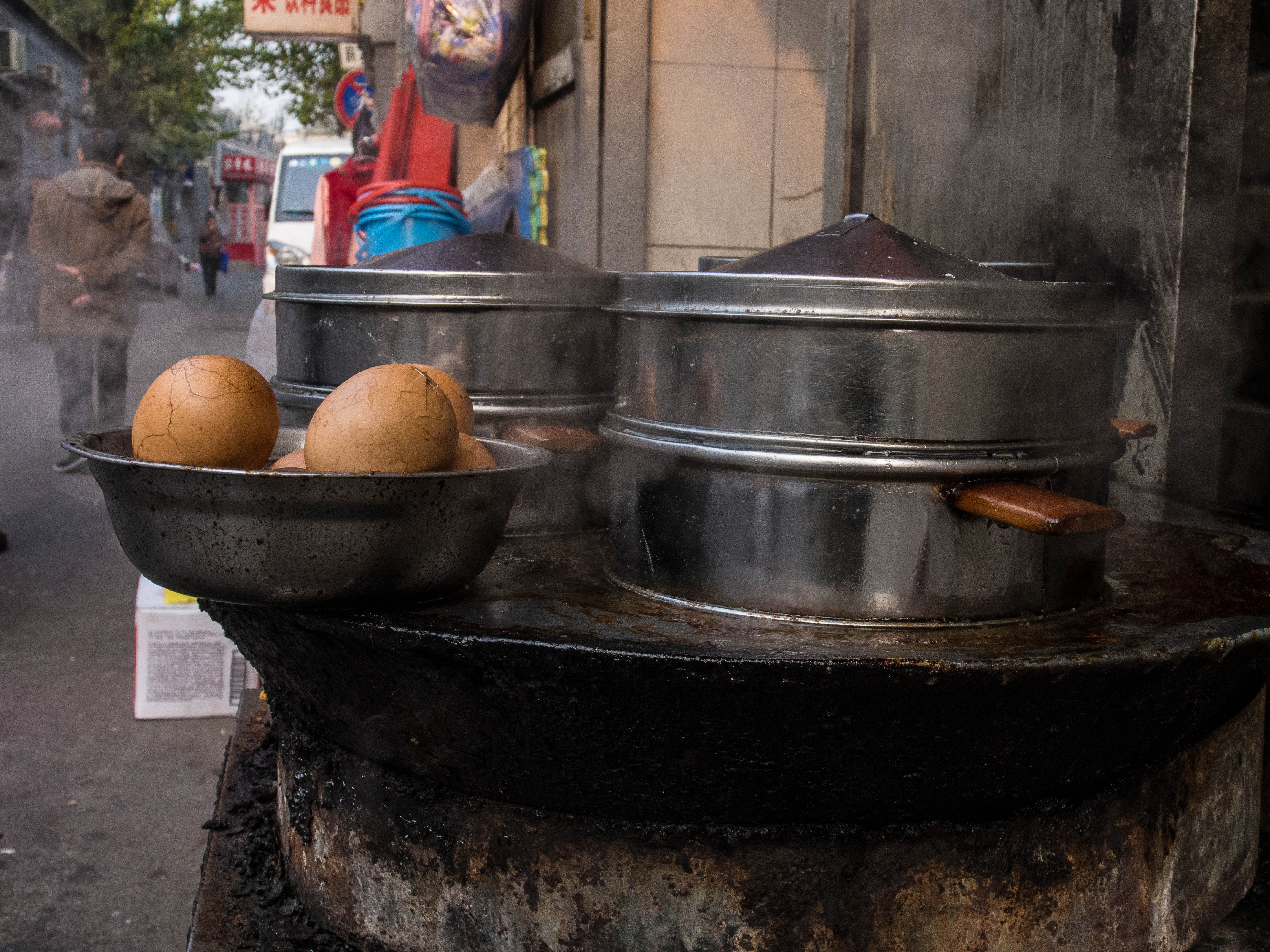
Breakfast in a hutong near the Beijing South Train Station.

Breakfast in a hutong near the Beijing South Train Station.

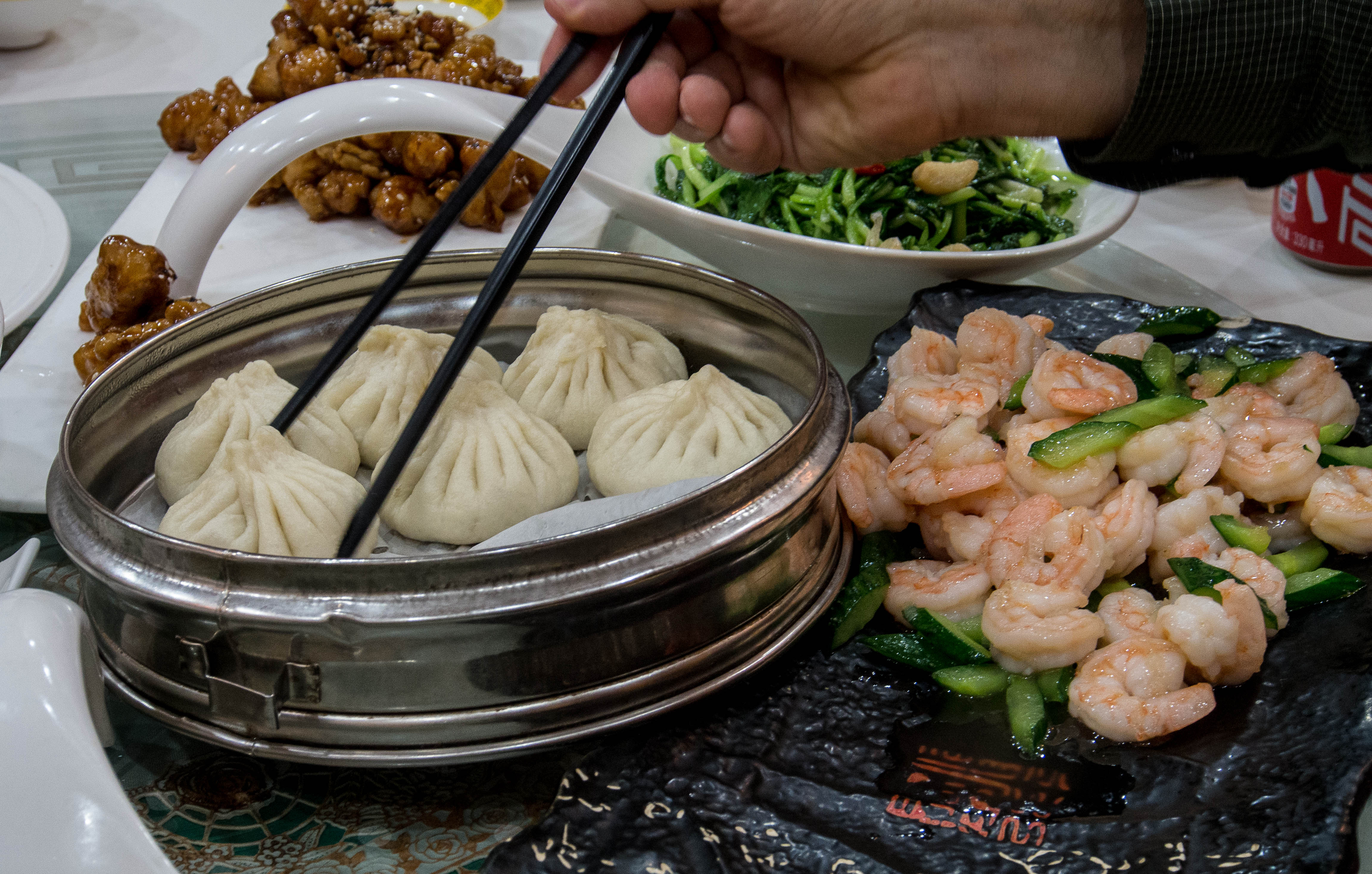
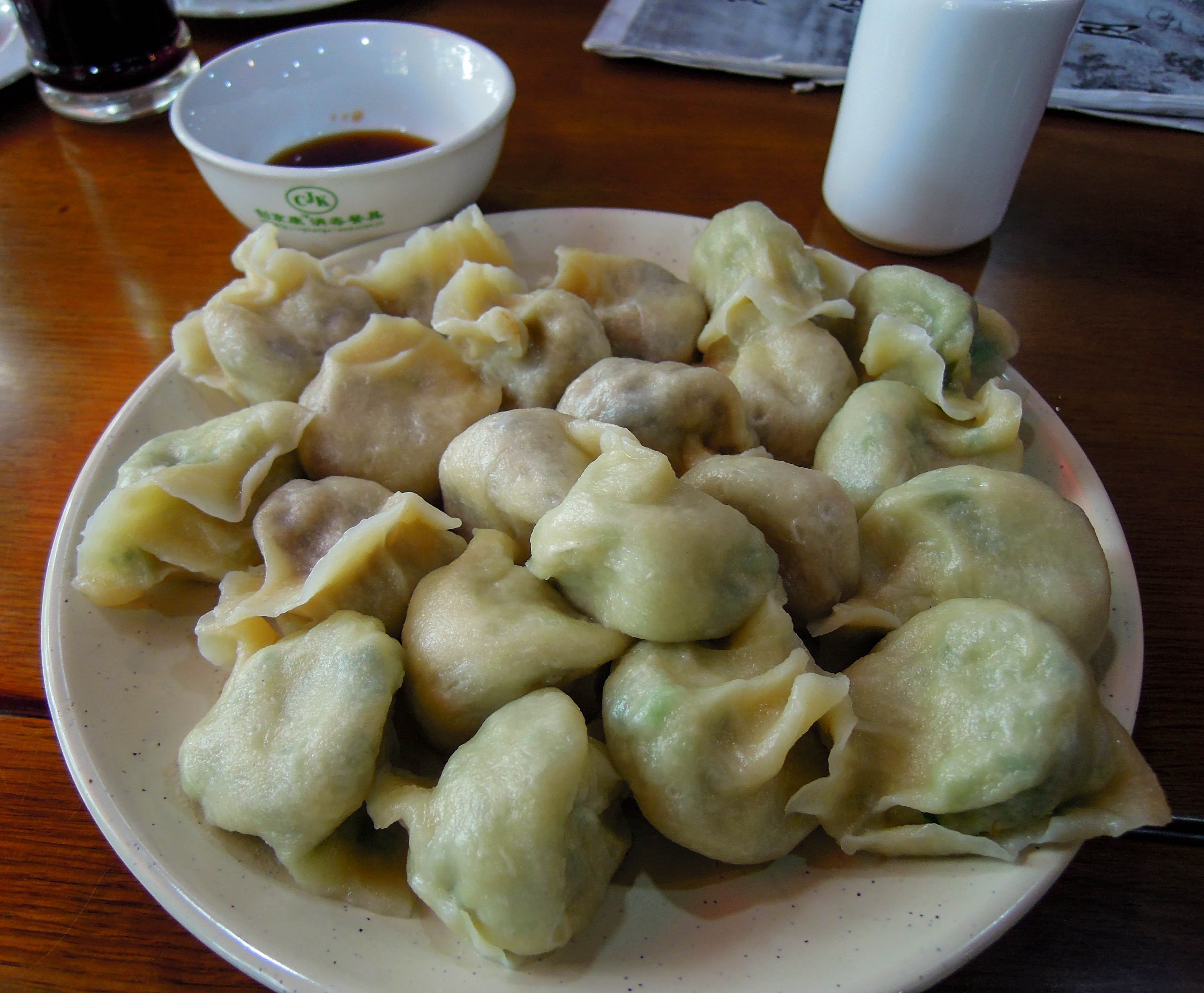
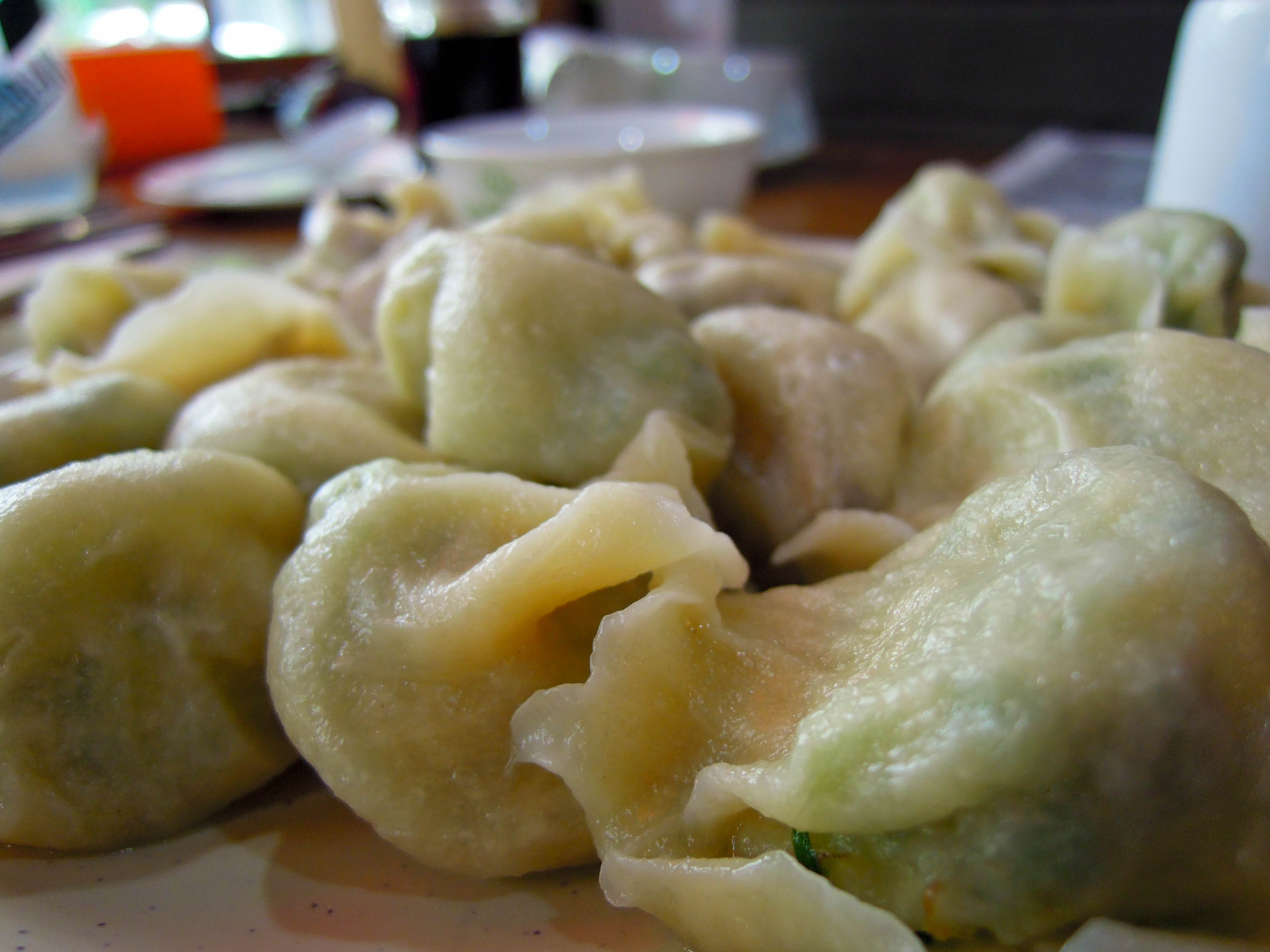
Tianjin's famous gǒubùlǐ bāo 狗不理包

Tianjin’s famous gǒubùlǐ bāo 狗不理包

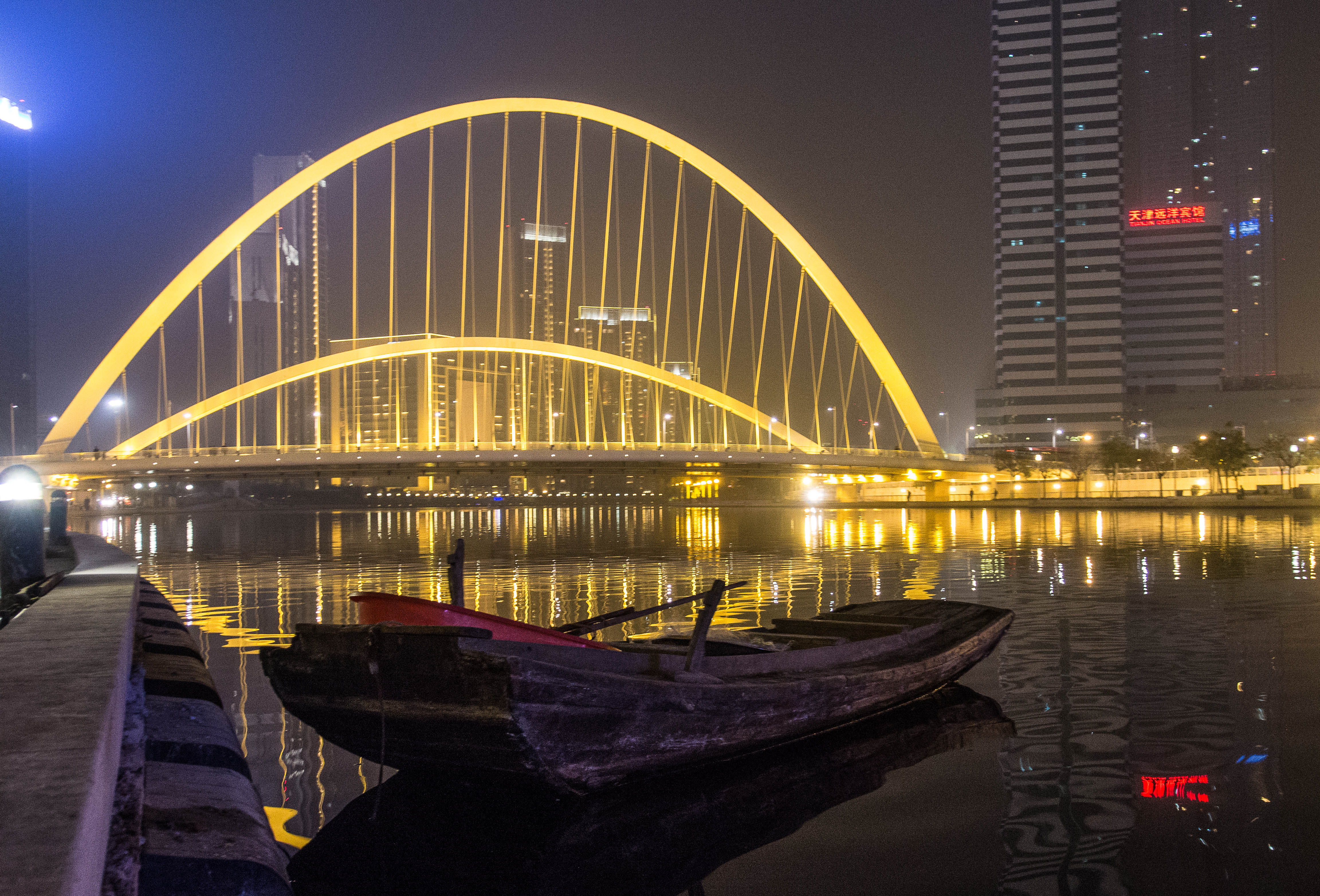
Tianjin, old and new

Tianjin, old and new

Dumplings: China’s Traditional Fast Food

Dumplings have been around for a long time in China. They are perhaps China’s original fast food. Dumplings come in a variety of different styles. 饺子 jiǎozi is generic name for dumplings. Traditionally they are eaten in the North of China, but really can be found all over as well. In fact, there are chain restaurants all over China that serve nothing but shuǐjiǎo, such as the popular Chain 大娘水饺 dàniǎng shuǐjiǎo (http://www.cnddr.com/eng/index.htm). They are also traditionally eaten during Chinese New Year. Boiled  jiǎozi, how they are typically eaten in the North and very popular in Beijing, are called 水饺 shuǐjiǎo. They are usually sold by weight, the 两 liǎng, which is 50 grams. The plate above has 2 liǎng.

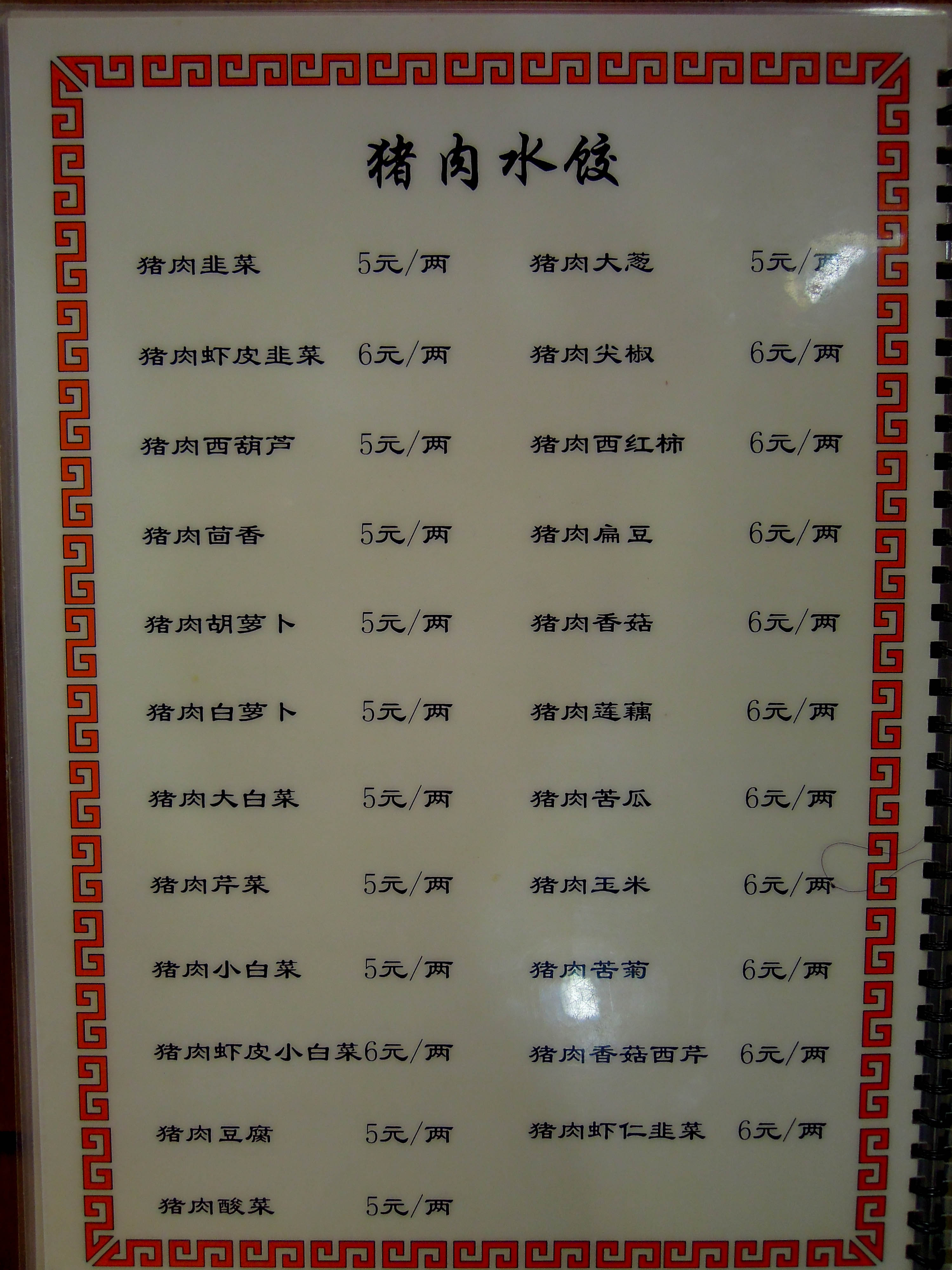
Earlier this year I was wondering around north of the Forbidden City in Beijing, near the old Drum Tower, and found a wonderful small restaurant that served dozens of varieties of shuǐjiǎo. At this particular restaurant they had pork, beef, lamb, and egg shuǐjiǎo with dozens of varieties of each. Below is a shot from the pork shuǐjiǎo page of the menu. You can choose from pork with chives, cabbage, fennel, carrots, turnips, mushrooms, onions, peppers, to name a few.

shuǐjiǎo menu in Beijing

The skins are homemade (of course) are sometimes thick and chewy, and sometimes thin and almost transparent. They are usually dipped in a dark, rich vinegar. In some parts of China, usually farther south, the vinegar is mixed with a little soy sauce. In some areas they add chili oil as well. Jiǎozi can be a meal all by themselves, and are also often served at the end of a banquet.

Pot stickers 锅贴 guōtiē

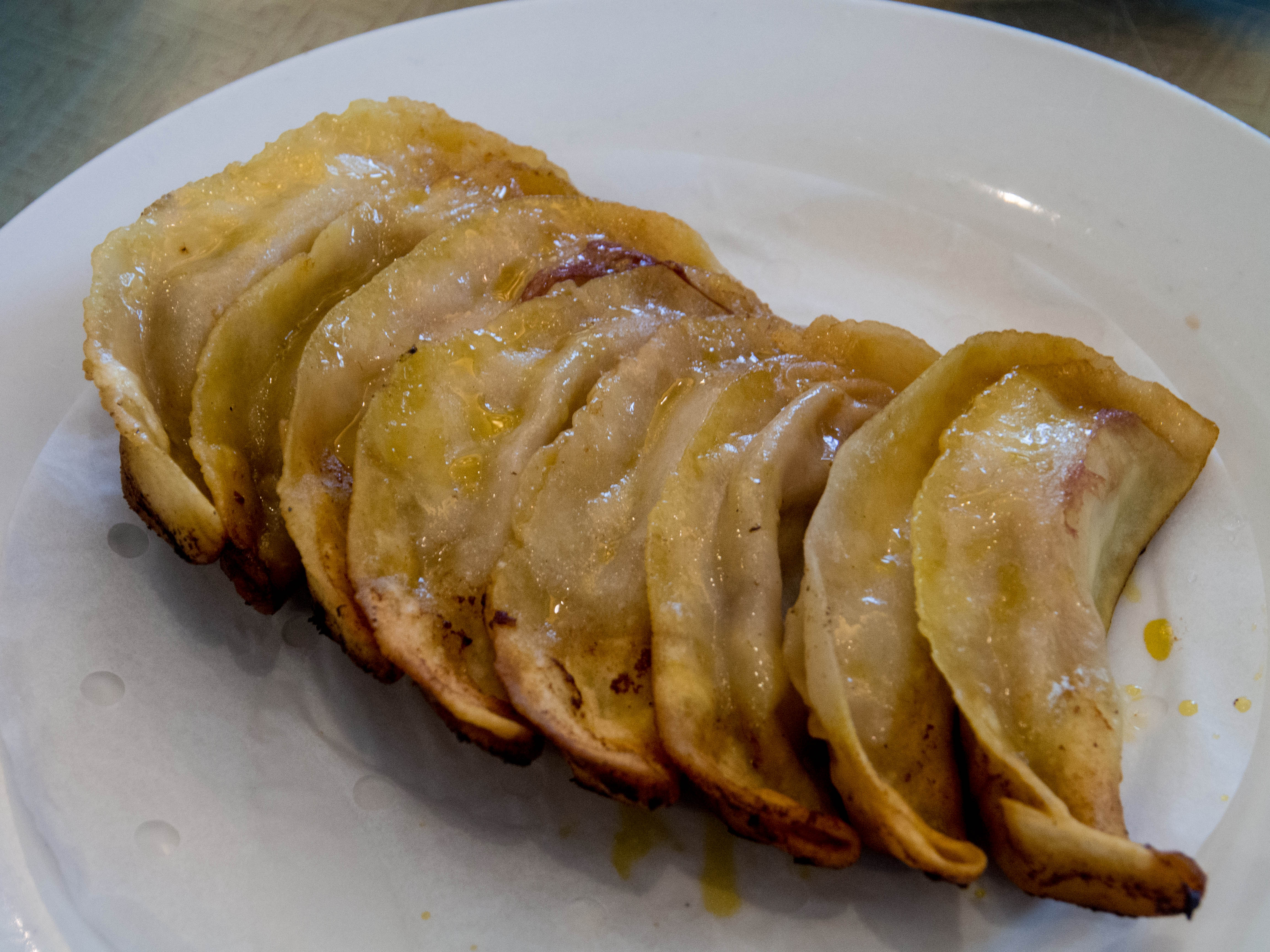
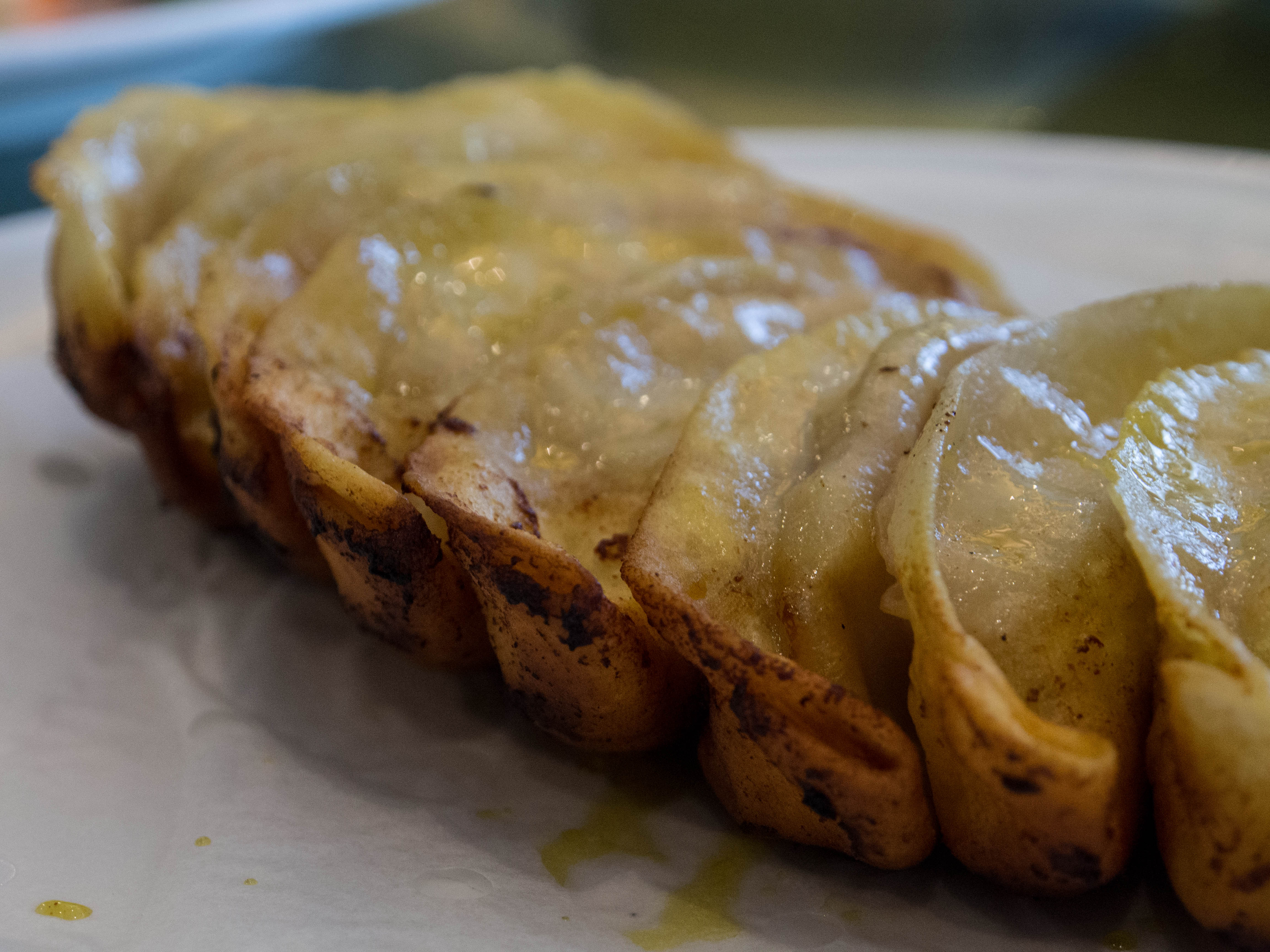
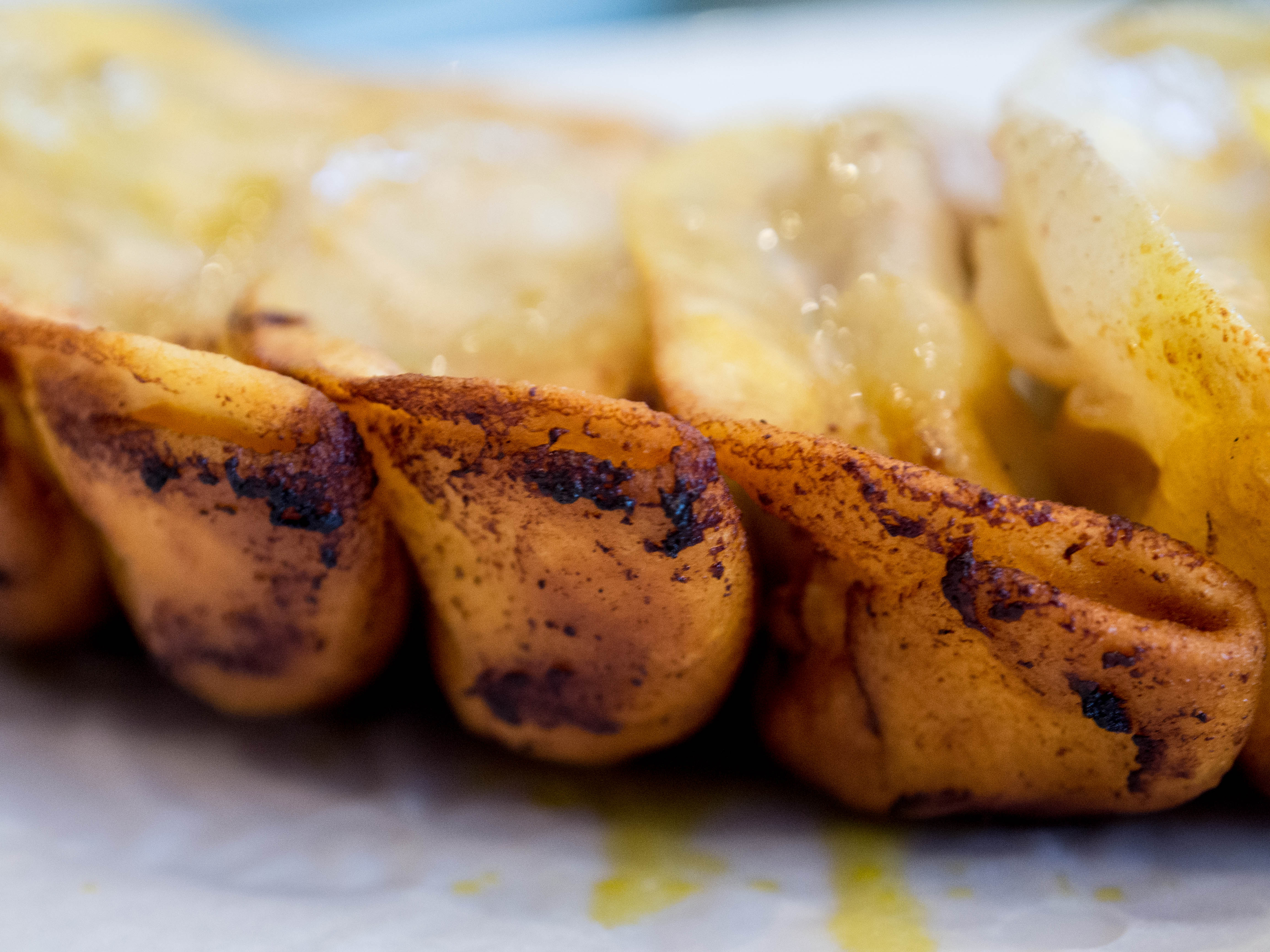
Another wonderful variety of jiǎozi are pot stickers 锅贴 guōtiē. These dumplings are fried in a flat wok with oil until they are crispy on the bottom, then water or broth is added and a lid put on and steamed until done. When I was in China for the first time as a student at Nanjing University in 1985, pot stickers were about the only food we could find outside of large state-run restaurants and the school cafeteria. I loved them back then and I still love them and eat them every time I go to China. The potstickers below were ordered at a Muslim restaurant last month in Nanjing as part of a larger lunch.

Delicious guōtiē

The bottoms are fried crispy in oil.

Any traveler to China must eat a good plate of dumplings. The good news is that you should be able to find them all over China. You can order them in fancy, expensive restaurants, small nondescript restaurants, chain restaurants that specialize in dumplings, and and even on the street.


Dining in Yangzhou

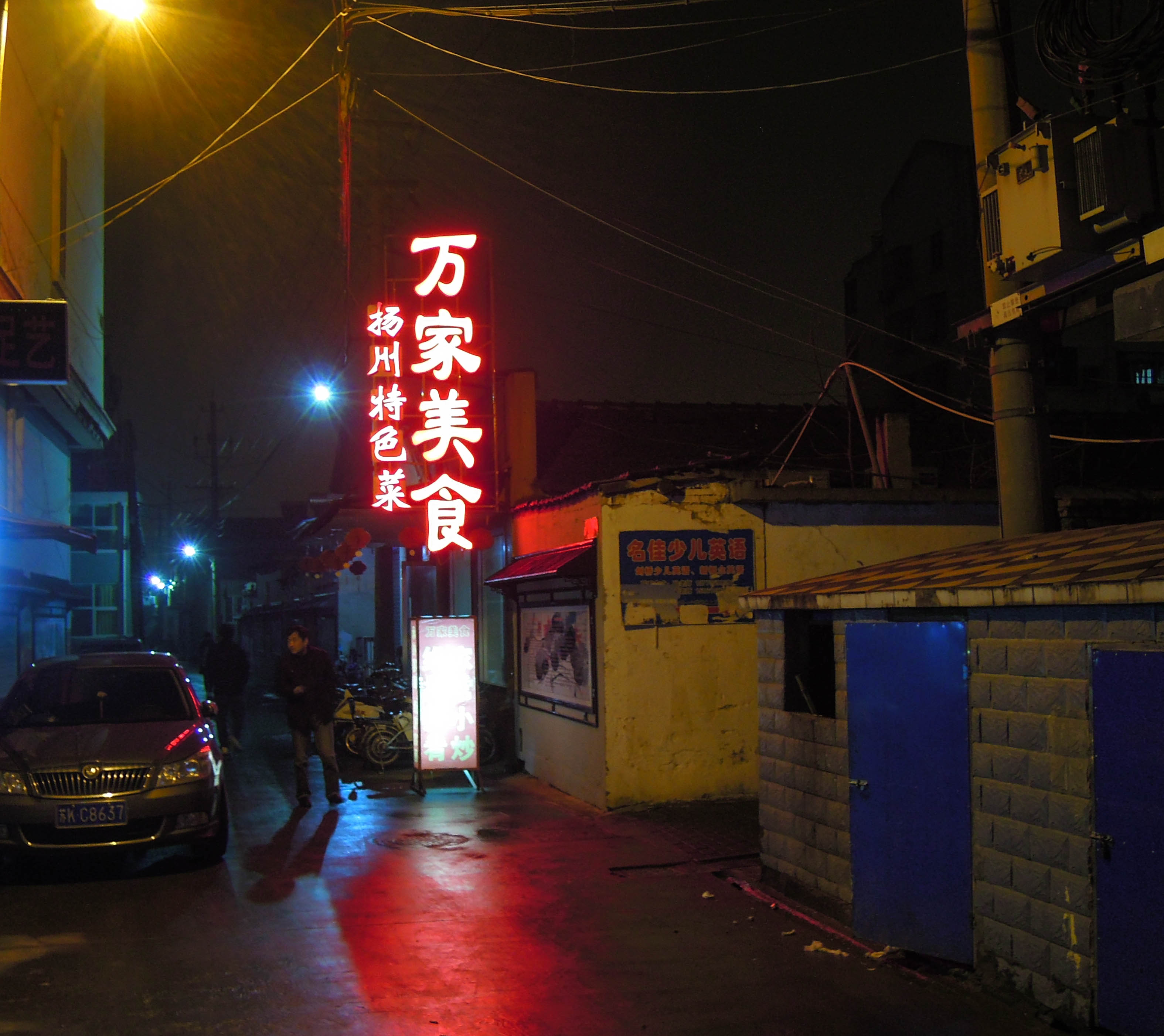
wànjiā měishí Restaurant in Yangzhou

The city of Yangzhou sits on the Northern banks of the Yangtze River (长江 chángjiāng) a short distance down river from Nanjing and a couple hours upriver from Shanghai. The city has approximately 4.5 million people and is often described as a quaint Chinese town or city. And guess what? It does feel smallish and quaint compared to China’s other massive, sprawling cities.

Yangzhou is a culinary hotspot. If you like to eat, you will love Yangzhou. It is a foodie’s paradise. In an earlier post I talked about Yangzhou’s famous and fabulous dimsum. (https://intothemiddlekingdom.com/2012/06/29/yangzhou-dimsum/). Yangzhou is one of the culinary centers of Huaiyang cuisine (淮扬菜 huáiyáng cài), one of the Eight major cuisines in China (八大菜系 bādàcàixī). The name comes from the Huai and Yangtze Rivers that cut through this fertile region. The Yangtze River is also called in Chinese the 扬子江 yángzi jiāng. Huaiyang Cuisine is characterized by super fresh ingredients with delicate seasoning. It is felt that you don’t want to overpower the freshness of the ingredients with heavy sauces or spices. Along with Cantonese (粤菜 yuècài), Sichuan (川菜 chuāncài), and Northern (鲁菜 lǔcài) cuisines, Huaiyang Cuisine is highly celebrated in China and for good reason.

As I have mentioned in previous posts, I was in Yangzhou for a couple days in February of this year and sampled some of the famous dishes of the city. It was truly a memorable culinary experience. Fortunately, I have my friend, and colleague from Nanjing University, and fellow foodie along with me. He knows the city well as he spent much time there as a child visting his grandmother.

One night we selected a small restaurant down an alley off a main street. It is pictured above and was called 万家美食 wànjiā měishí and specialized in Yangzhou’s specialties which is what the smaller characters on the sign say, 扬州特色菜 yángzhōu tèsè cài. It was a cold rainy night, and as many of you know, there is seldom central heat in buildings in this part of China so you get used to eating with your coat and hat on.

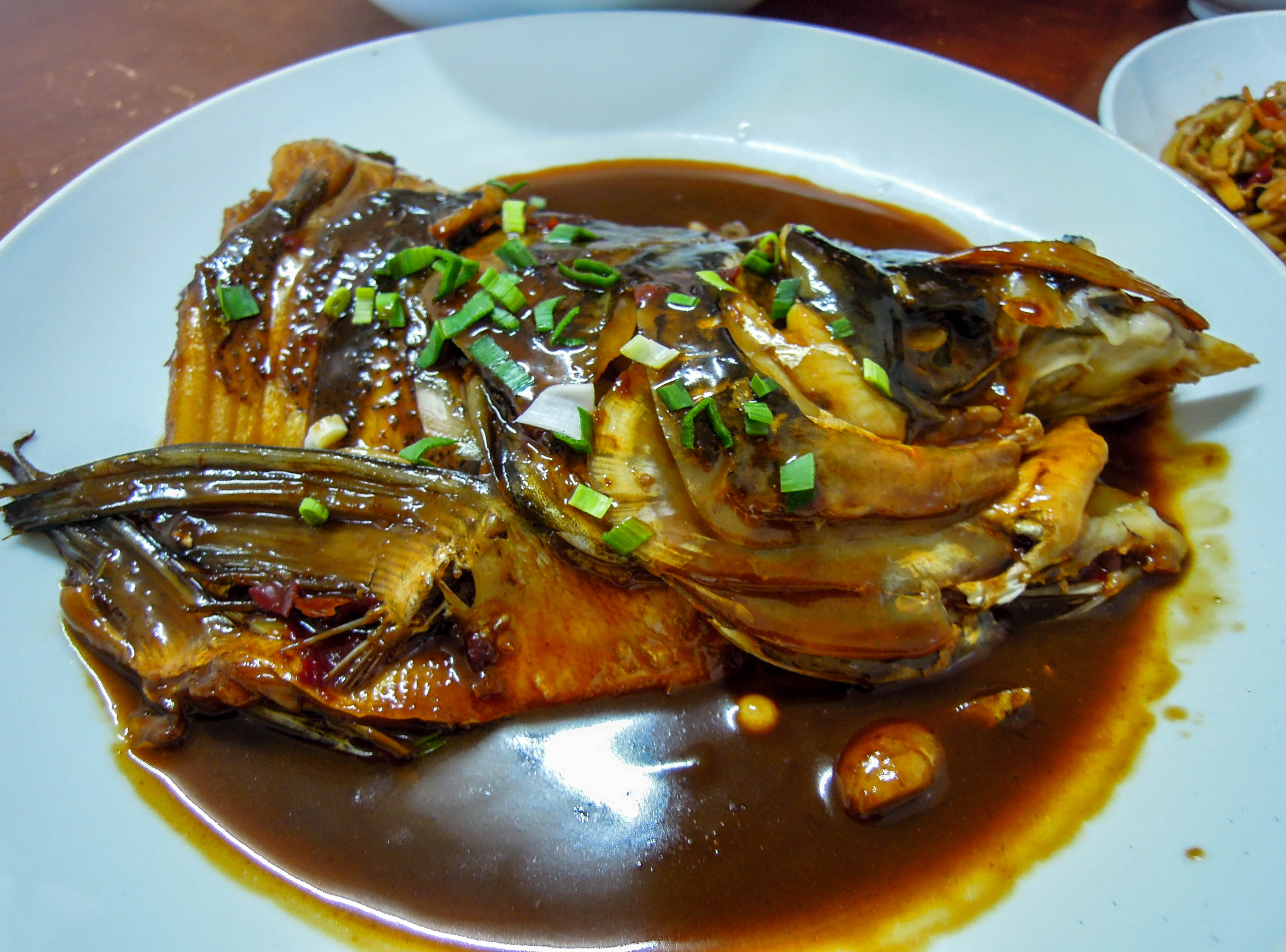
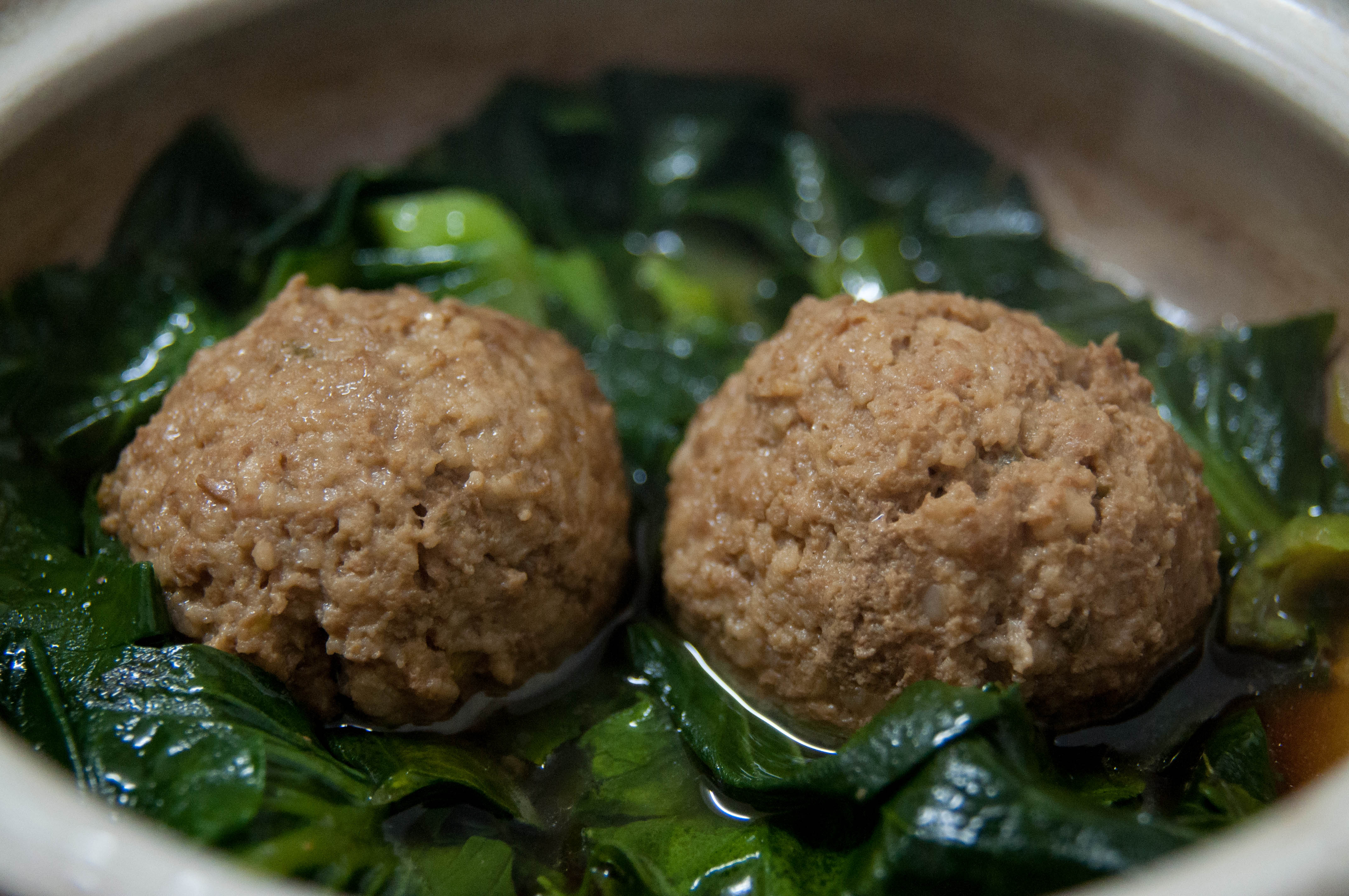
Yangzhou cuisine is famous for its “three heads” dishes. This includes fish head (鱼头 yǔtóu), lion’s head (狮子头 shīzitóu), and pig’s head (猪头 zhùtóu). I tried the first of the two, which were exceptional. The pig’s head is basically a braised pig face, which I decided to pass on.

Delicious fish head steamed with a slightly sweet sauce

I know what many of you are thinking, fish head??? Trust me, it is delicious. The most tender and delicious meat from a fish comes from the cheek area, and the area just below the gills. Have you ever had halibut cheeks? I ate them once at a seafood restaurant in Seattle and they were to die for. This fish dish was exceptionally fresh, with a delicate sweet and slightly sour sauce with a few chopped scallions sprinkled on top. It was really good.

清蒸狮子头 qīngzhēng shīzitóu “fresh steamed lion’s head”

This dish contains no part of any lion. The Chinese have many creative names for dishes that have nothing to do with the ingredients. This dish is actually made with beef. However, it is not cheap ground beef. Prime cuts of beef are actually chopped with two large cleavers until the meat is minced into teeny tiny pieces. It is then seasoned with ginger and some onion, then steamed to perfection. The meat is so tender and succulent it can only be described as velvet-like. It was fantastic. The flavors were delicate, subtle, perfect. I really enjoyed this dish. It was ever better than the similar beef balls you get on Cantonese dimsum menus. I am not a big beef eater, but this dish was outstanding and I would order it again, and again.

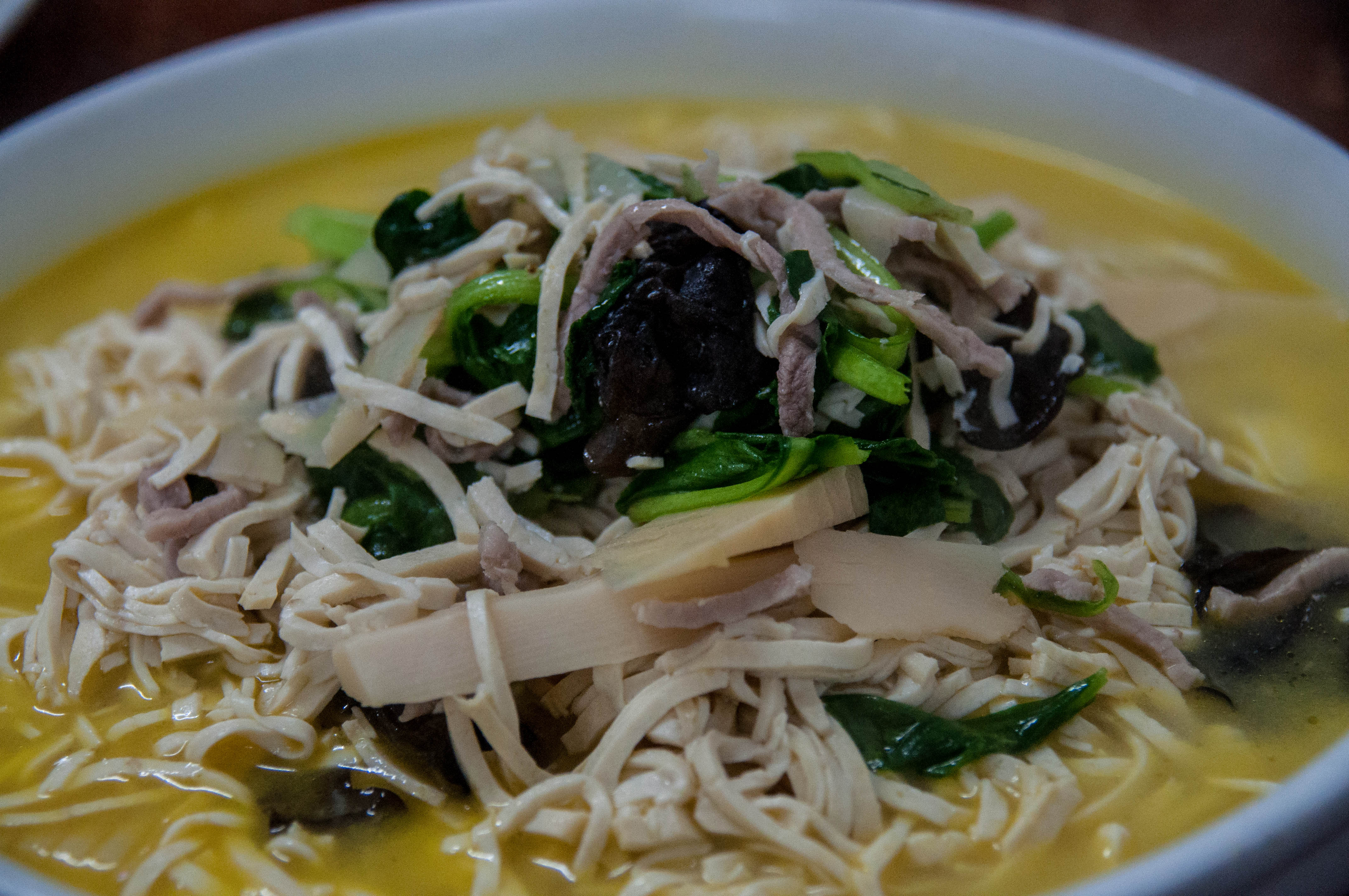
大煮干丝 dàzhǔ gānsī “boiled shredded tofu”

This is another famous Yangzhou dish. The noodle-looking things are actually a type of dried tofu called 豆腐干 dòufugān, which literally means “dry tofu.” It has a firm, chewy texture similar to noodles. Like all tofu dishes the tofu soaks up all the flavors it is mixed with. This dish contains some greens and bamboo shoots all cooked in a delicious, light chicken based stock. It is a wonderful dish and can be found all over Yangzhou.

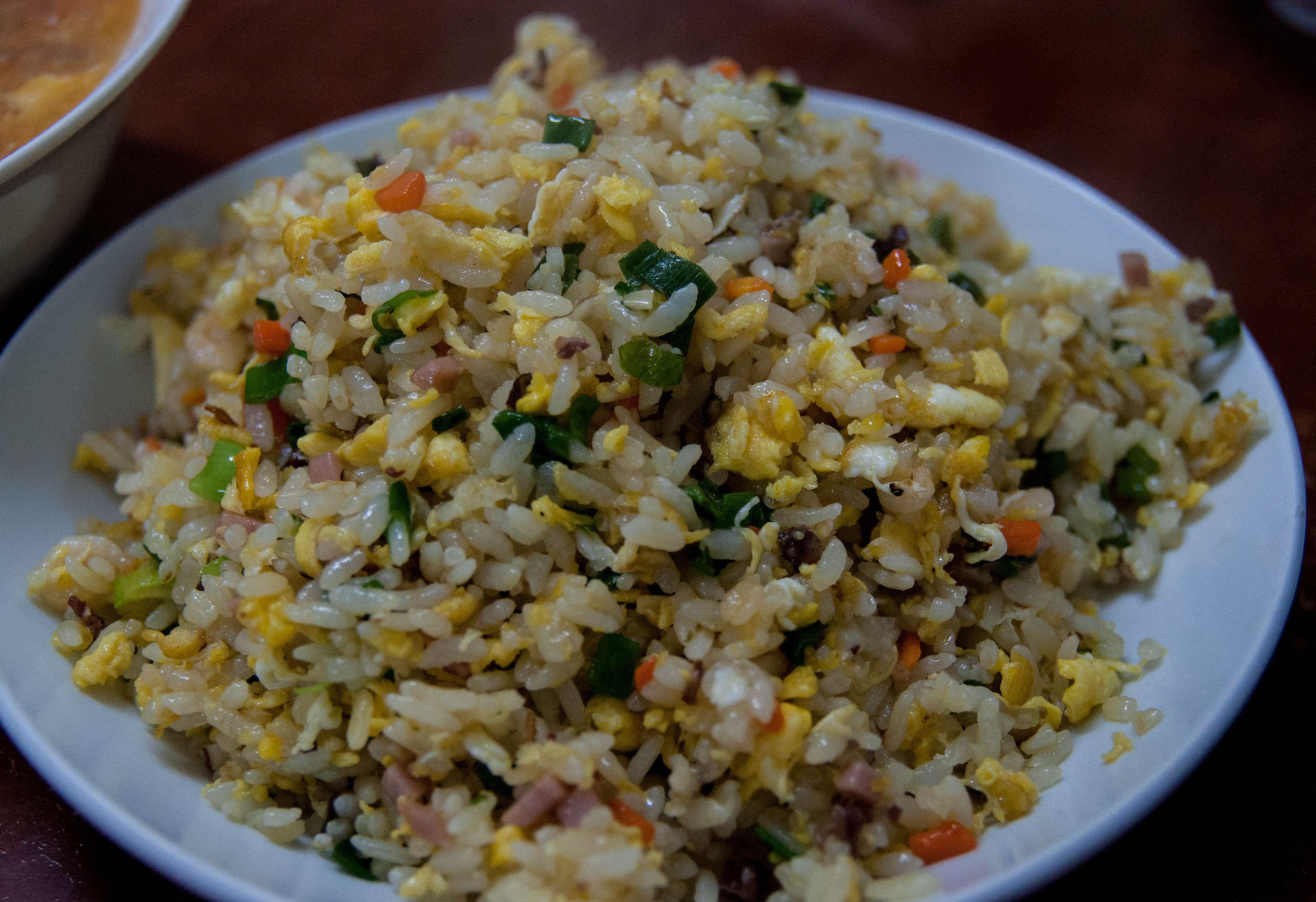
扬州炒饭 yángzhōu chǎofàn “Yangzhou fried rice”

This is not the greasy slop that you get at Chinese-American restaurants in the U.S. The first time I encountered Yangzhou style fried rice I had just arrived in Guangzhou after many hours on a plane. I finally got to my hotel around midnight and I was ravenous, but way too tired to go out and find a restaurant still open. So I ordered a plate of Yangzhou fried rice from room service. It was delicious!

Yangzhou fried rice is famous all over China. As with most Huaiyang cuisine it is lightly and delicately flavored, and is neither greasy nor smothered in salty soy sauce. It is seasoned with little bits of very fresh vegetables such as carrots, greens, maybe a bit of garlic. It almost always has freshly scrambled eggs and ham. I very seldom order fried rice; actually I never order fried rice, much preferring steamed rice. But Yangzhou style fried rice is the exception. It really is outstanding and the pinnacle of fried rice dishes in China.

After this wonderful meal I was feeling very sleeping, and very chubby. In fact, on this trip I had been eating way too much as I was doing research (i.e. eating) on Huaiyang cuisine. Several of my friends and colleagues knew this so they were very eager to take me to their favorite restaurants and order way more food than we could possibly eat.

Feeling a bit chubby after an excellent meal in Yangzhou

In the future I’ll be posting more about Huaiyang cuisine as well as China’s other cuisines as I continue my research on China’s famous regional cuisines. Let’s just say that authentic Chinese food is more varied, more delicious, and much more exciting than anything you can find here in the U.S.


The Art of Bartering 讲价 jiǎngjià

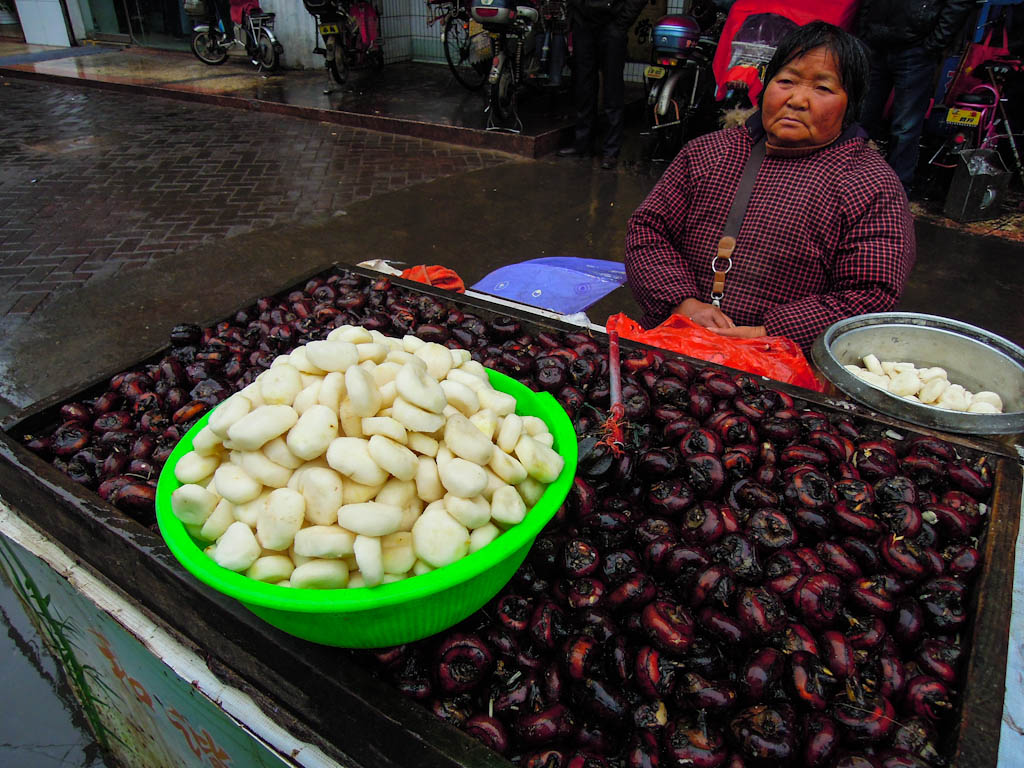
Chestnut vendor in the city of Huai’an in Jiangsu Province

China can be an exciting place to shop, especially if you are willing to barter for a good price. In many markets, especially outdoor markets, prices are often not marked and can be negotiated through bartering or haggling.  

The disadvantage of being a foreigner in China is that as soon as any vendor sees a you coming, yuan signs will light up their eyes. When you ask how much something cost, the vendor will probably jack up the price as much as ten-fold or more, knowing that foreigners are often eager to spend money and usually are clueless about how much things should cost.

Bartering is to be expected at most markets, outdoor shopping areas like at tourist sites, some produce and meat markets, and anywhere where prices are not marked. Sometimes even when the price is marked you may try to talk them down. Bartering is not acceptable in department stores, convenience stores, large discount stores, restaurants, and other such places. While you do not barter at hotels, you can ask for a discount. This is typical in the off-season and many hotels will give you a discount just for asking. You can ask for a discount by saying,

可以打折吗?kěyǐ dǎzhé ma?                                     Can you give a discount?

(给)便宜一点吗?kěyǐ (gěi) piányi yīdiǎn ma?         Can you give it for a bit cheaper?

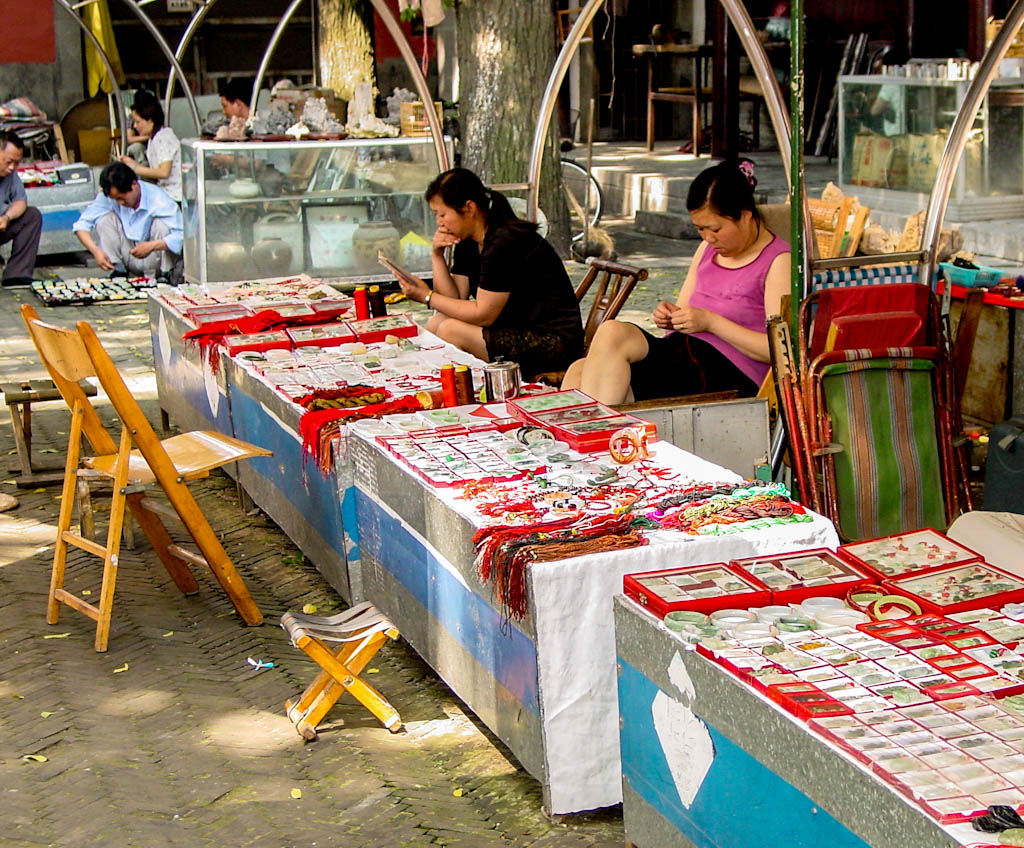
Jade dealers at the Chaotiangong Confucian temple in Nanjing

 Strategies for successful bartering 

1. Plan on using cash

It’s a good idea to have the exact amount you plan to pay in your pocket. It never looks good after a hot bartering session to pull out a thick wad of 100 yuan notes, especially when you have talked about how little money you have. It’s also a good idea to come equipped with your money in small denominations. Many vendors are unwilling to break large bills, nor are they eager to give you any change back.

2. Pretend that you are not that interested in the product

If the dealer knows you really want the item, she has the upper hand. So look at the item skeptically, notice and verbalize negative things about the item, walk around looking at other things, then casually go back to the item you would like. Next, offer a price well below what you are willing to pay. Remember that bartering is a two-way deal. Not only must you be satisfied with the price, but the seller must be satisfied as well. If you start low, then you are willing to go up in price, which the seller will expect. No vendor will sell something at a loss; they will always make sure to make a profit on all their deals.

 3. Offer a price well below what they are asking

The vendor will likely scoff, act disgusted, give you some line about how he or she has a family to support, and so on. Don’t take anything personally. This is just part of the script or game. They will probably say that they could never sell it for that low. They may even act offended at your offer.

 4. Walk away

The is an essential strategy. Simply start walking away. Remember, you have been pretending that you are not all that interested in the item anyway. The vendor will in most cases call you back, and offer a slightly higher price than what you originally offered. Now the real haggling begins. Continue to feign disinterest, that you could take it or leave it. Counter with another price lower than his. This may go on for awhile. The vendor at some point will refuse to go any lower. When this happens, tell the vendor to forget it (算了 suān le) and walk away again. Either the vendor will call you back again and offer a lower price, or he will let you go. At this point you need to be willing to walk on and find another vendor selling what you want. If you go back at this point, the vendor will know that he has you, that you really do want the item and probably won’t leave without it.

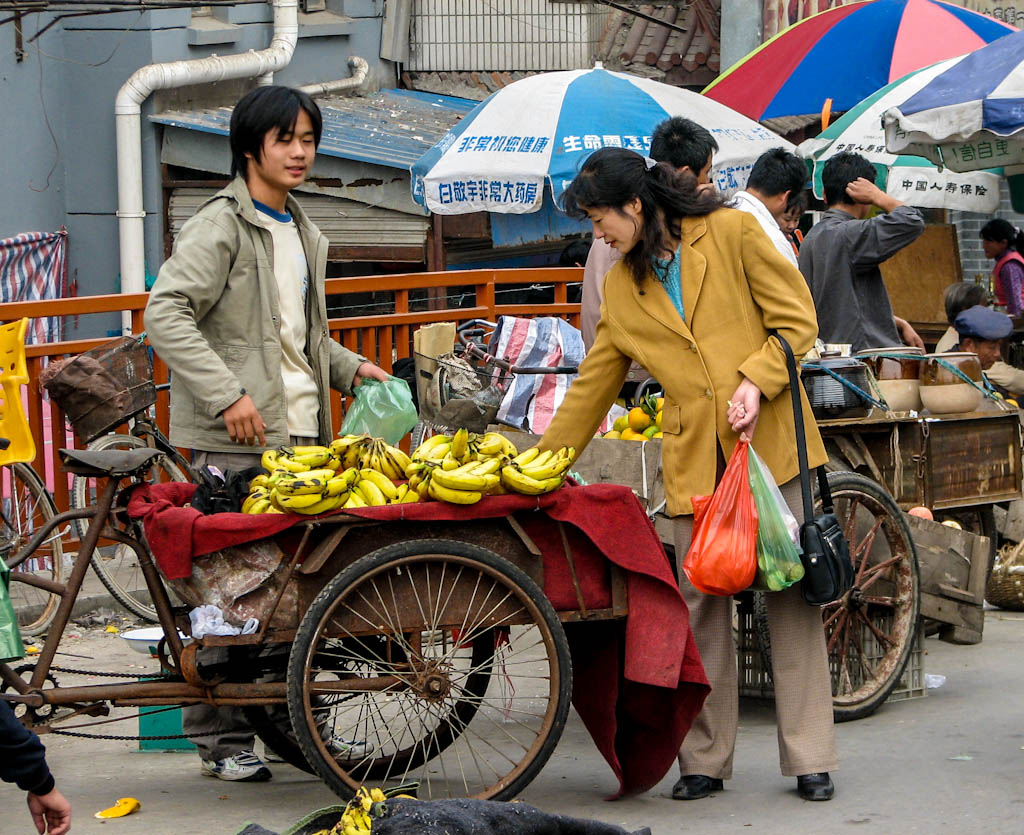
Selling bananas in Nanjing

Remember that this game is well known by everyone shopping in China and is expected behavior on both sides. Some people hate bartering and would rather just pay the asking price, and will get ripped off. Learn these basic bartering strategies and your dollars will go much further, and you’ll have a good time shopping.

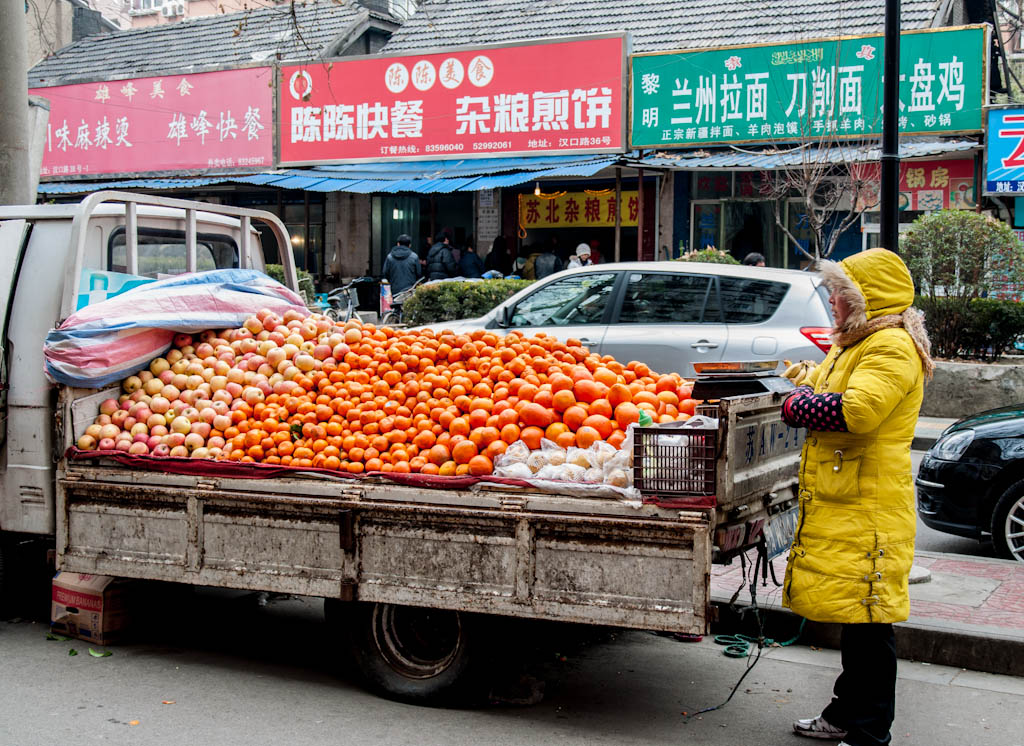
Selling fruit off the back of a truck

Tibet’s Libraries

Tibetan scriptures in the Sera Monastery, Lhasa

For most of Tibet’s history, monasteries have been the center of society. There were not only religious and political centers but were also schools. Anyone who was literate was educated in a monastery. It is no surprise then that the monasteries housed the libraries of Tibet. In fact, even today in Tibet and other Tibetan areas of China, those who who can read and write Tibetan were most likely educated in a monastery as written Tibetan is usually not taught in regular government schools.

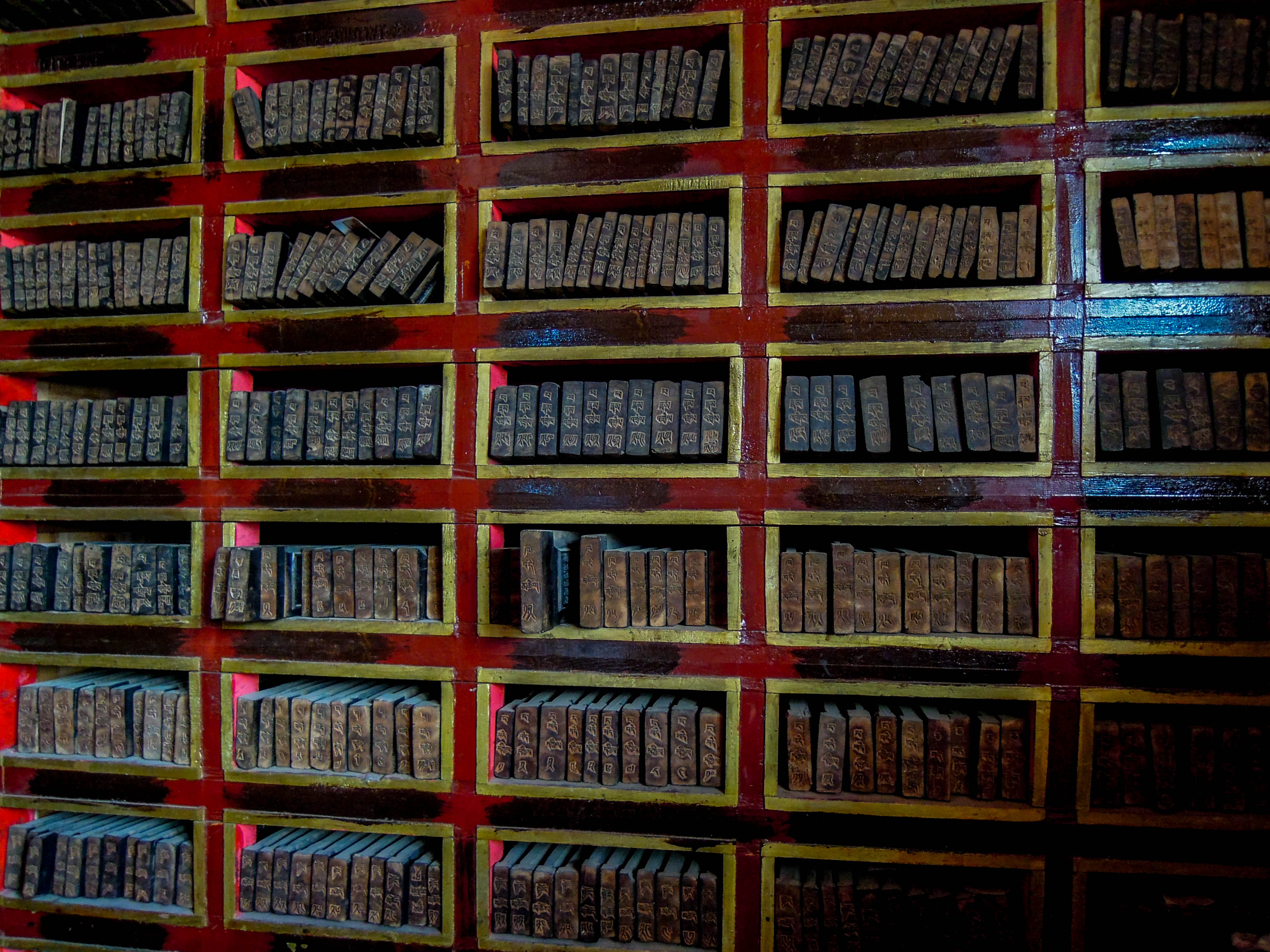
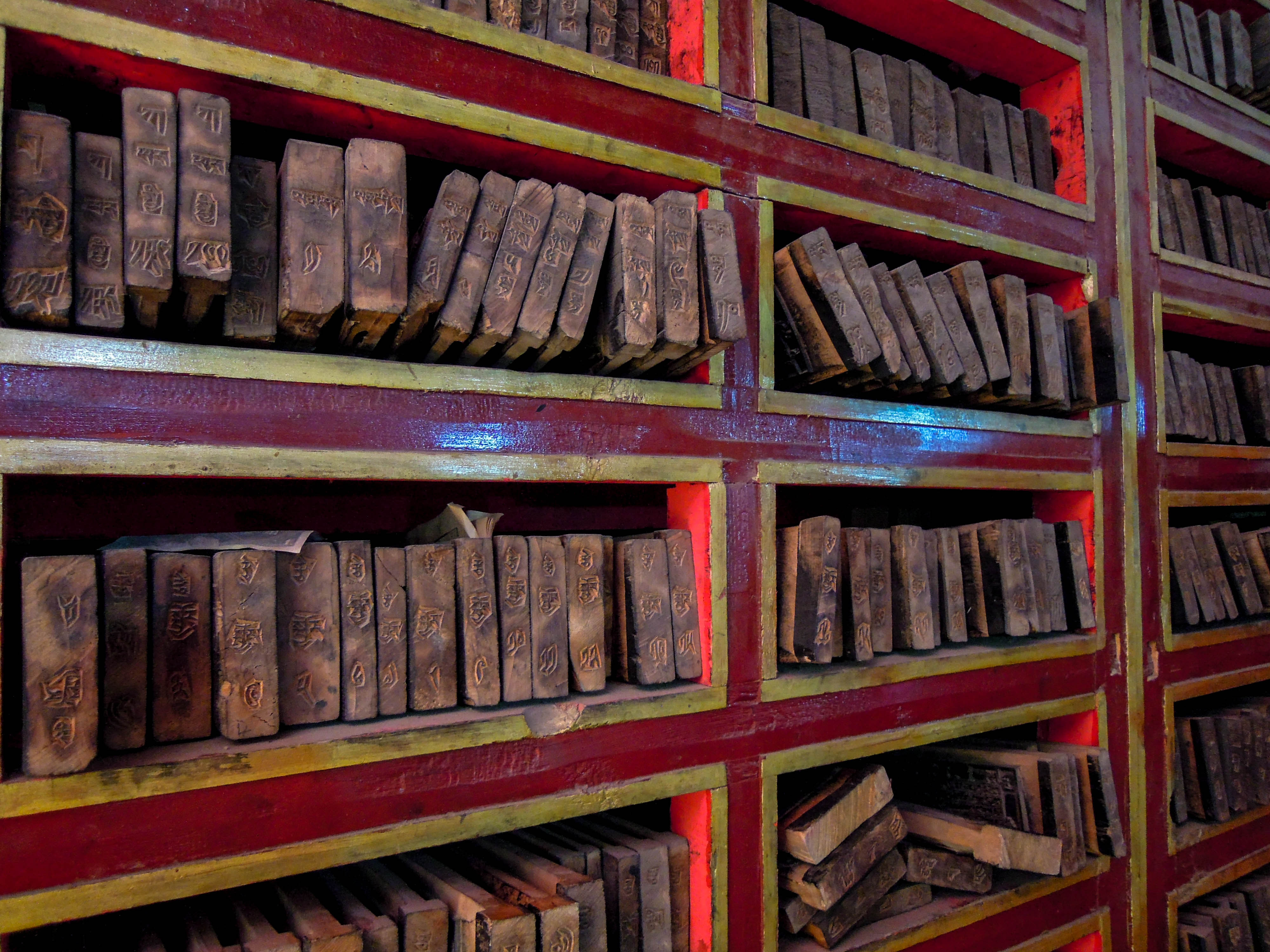
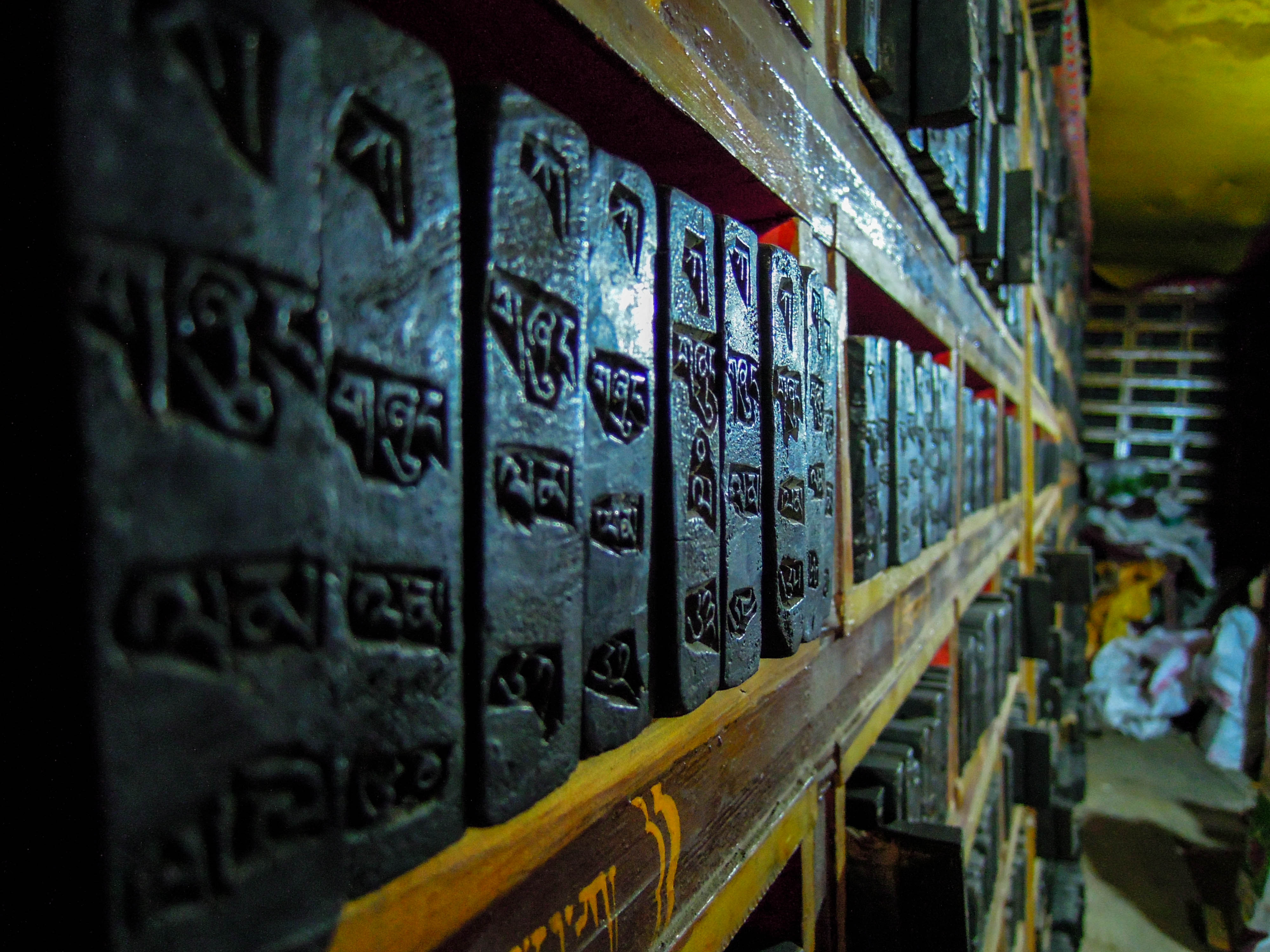
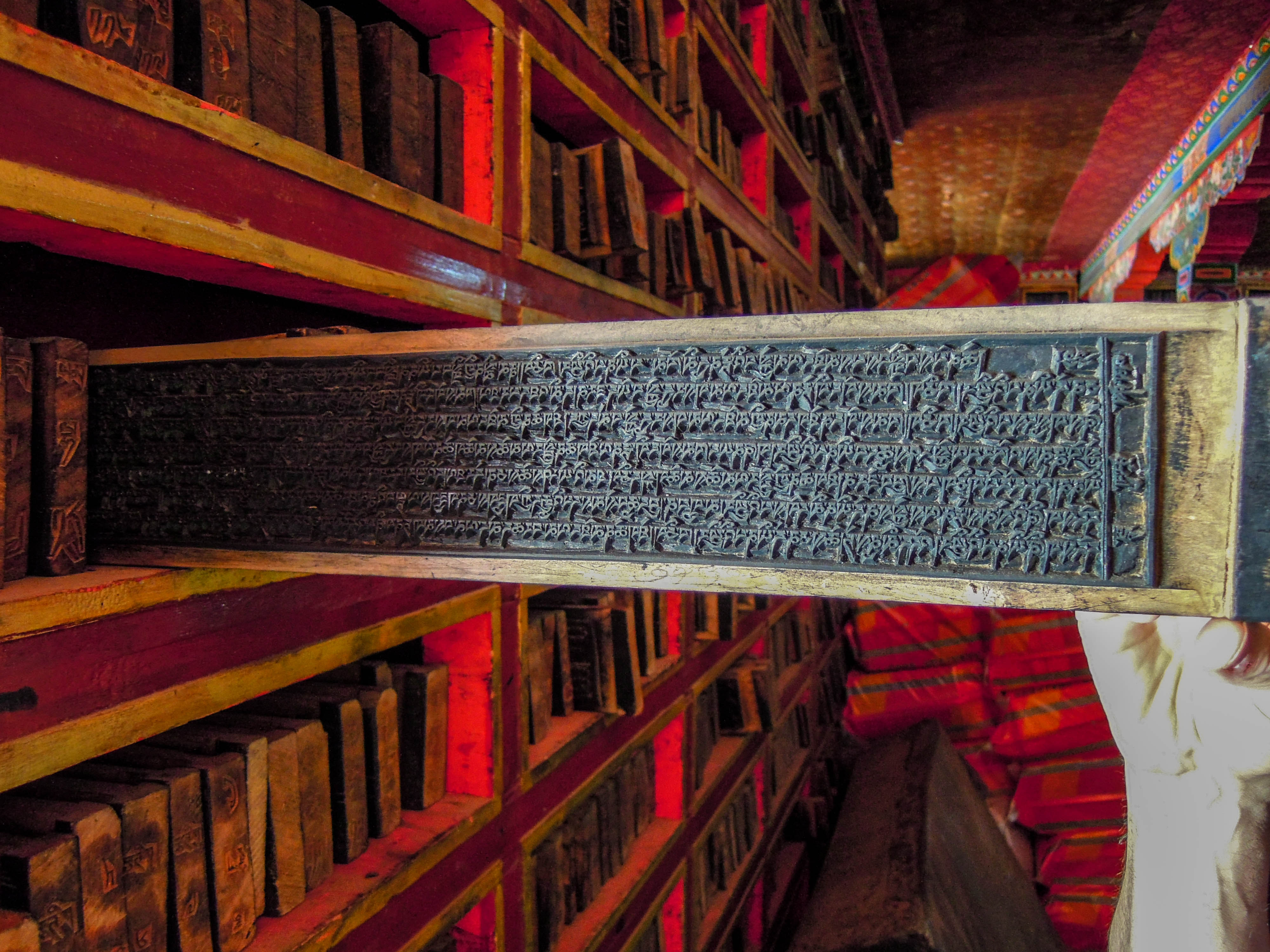
These libraries not only housed printed books, but also the metal plates, and woodblocks used to print books. The Sera Monastery outside Lhasa still uses these ancient plates to print the scriptures used in monasteries today.

Library of plates in the Sera Monastery

The metal plates are framed in wood

Rows and rows of plates, floor to ceiling

A typical plate

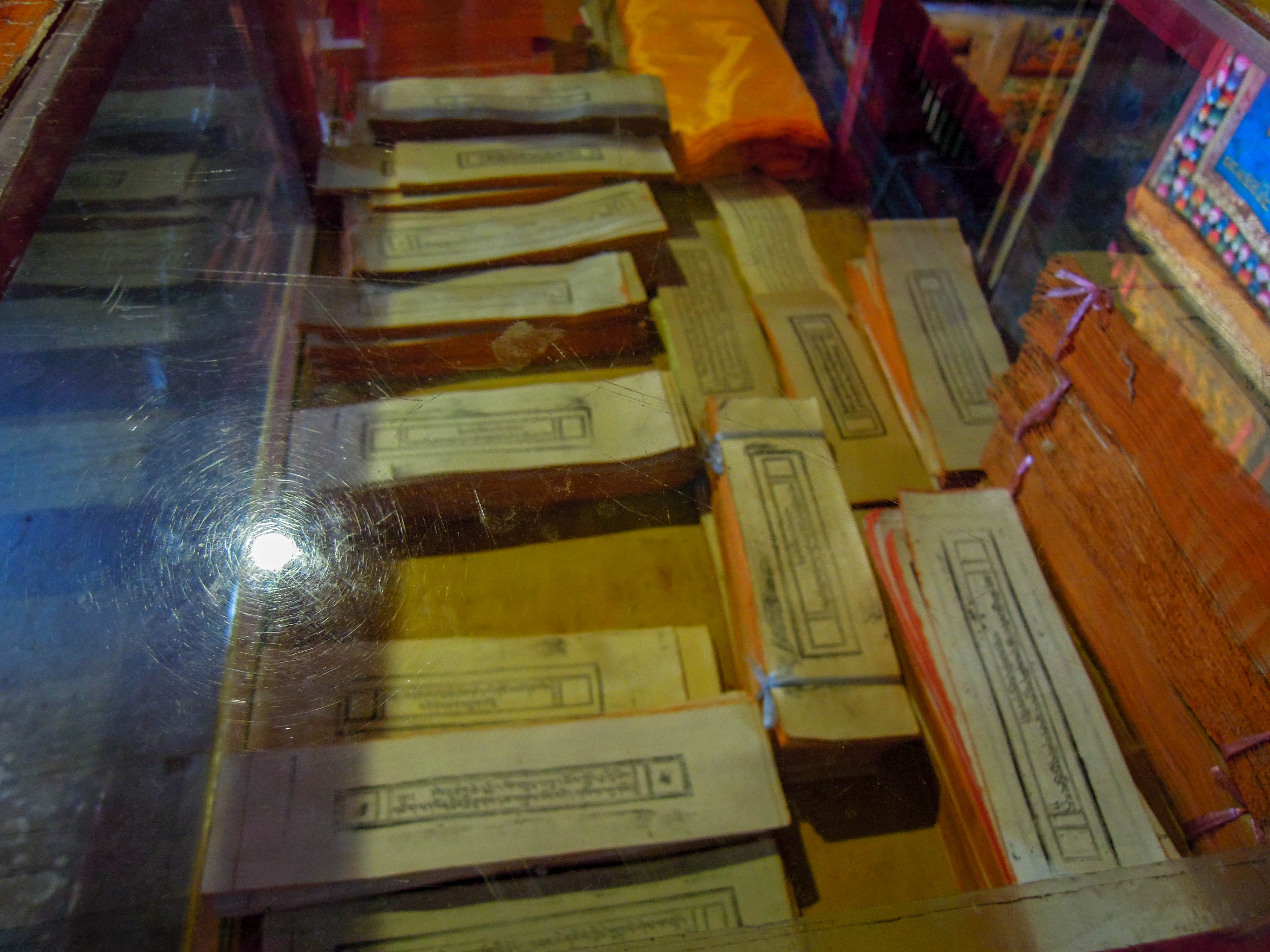
These particular plates are used to print loose-leaf scriptures that are commonly used in monasteries. They consist of long strips of paper with text written the long ways across the page. Below is a poor quality photo of these books for sale, under a glass case.

Completed scriptures ready for sale

Typically a senior monk will recite scriptures using these long loose-leaf texts, and young monks in training will chant them after him. The photos below are from the Pachu Monastery (built in 1418) in Gyantse. They are not that great as the room was very dark. The senior monk sat cross-legged on an elevated stand with the scriptures open in front of him. A group of six young monks, between the ages of 14 and 18 years old, would chant the lines after him. They did not have scriptures in front of them; they had to rely on listening and repeating what they heard. They were a lively bunch of boys. When they took a break, I had a nice time chatting with them.

Senior monk reciting scriptures

Young monks taking a break from chanting scriptures

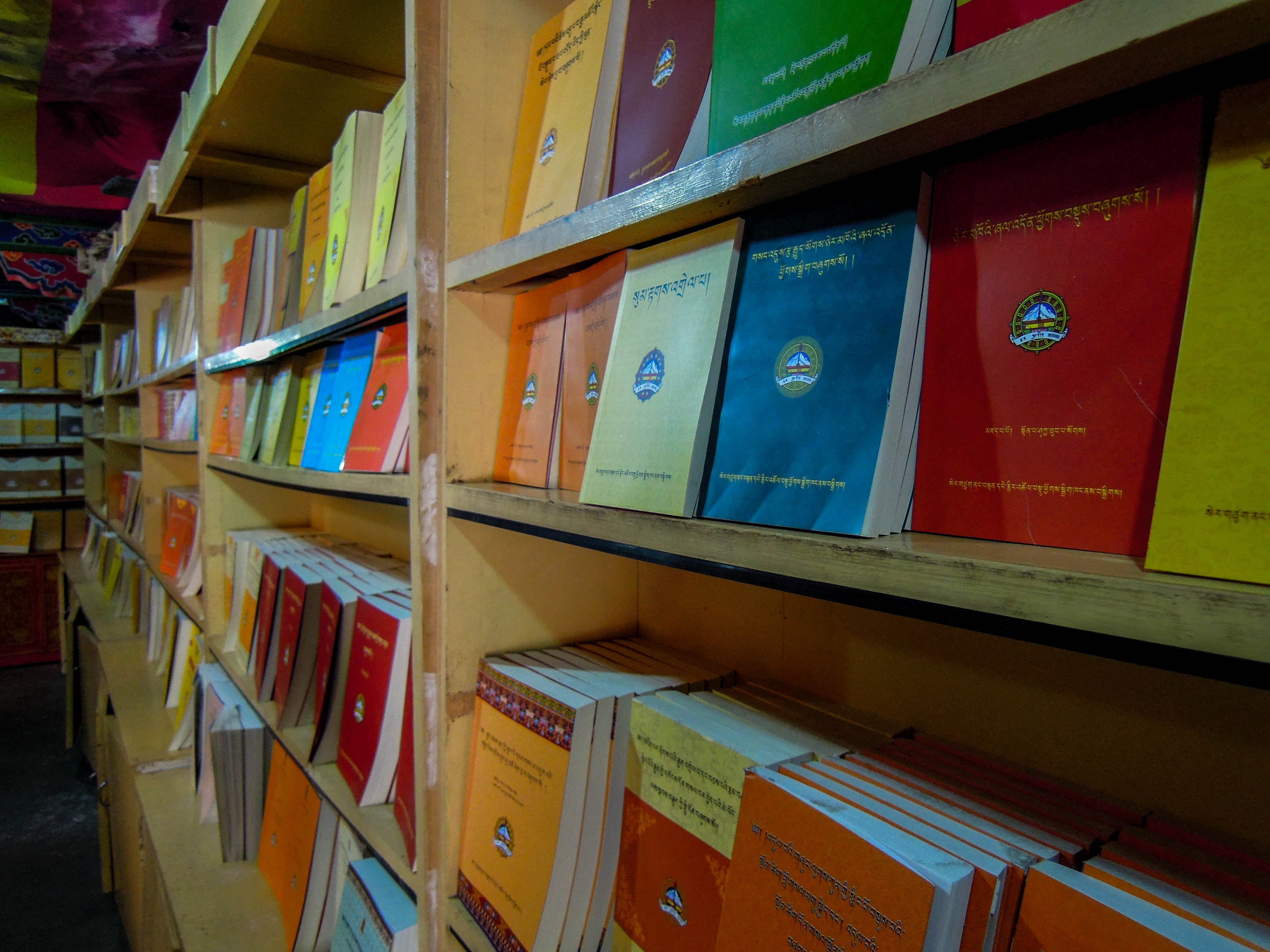
The printing room in the Sera Monastery also produced bound books of Tibetan scripture, history, science and other books. They were for sale right there in the printing room.

Tibetan books for sale at the Sera Monastery

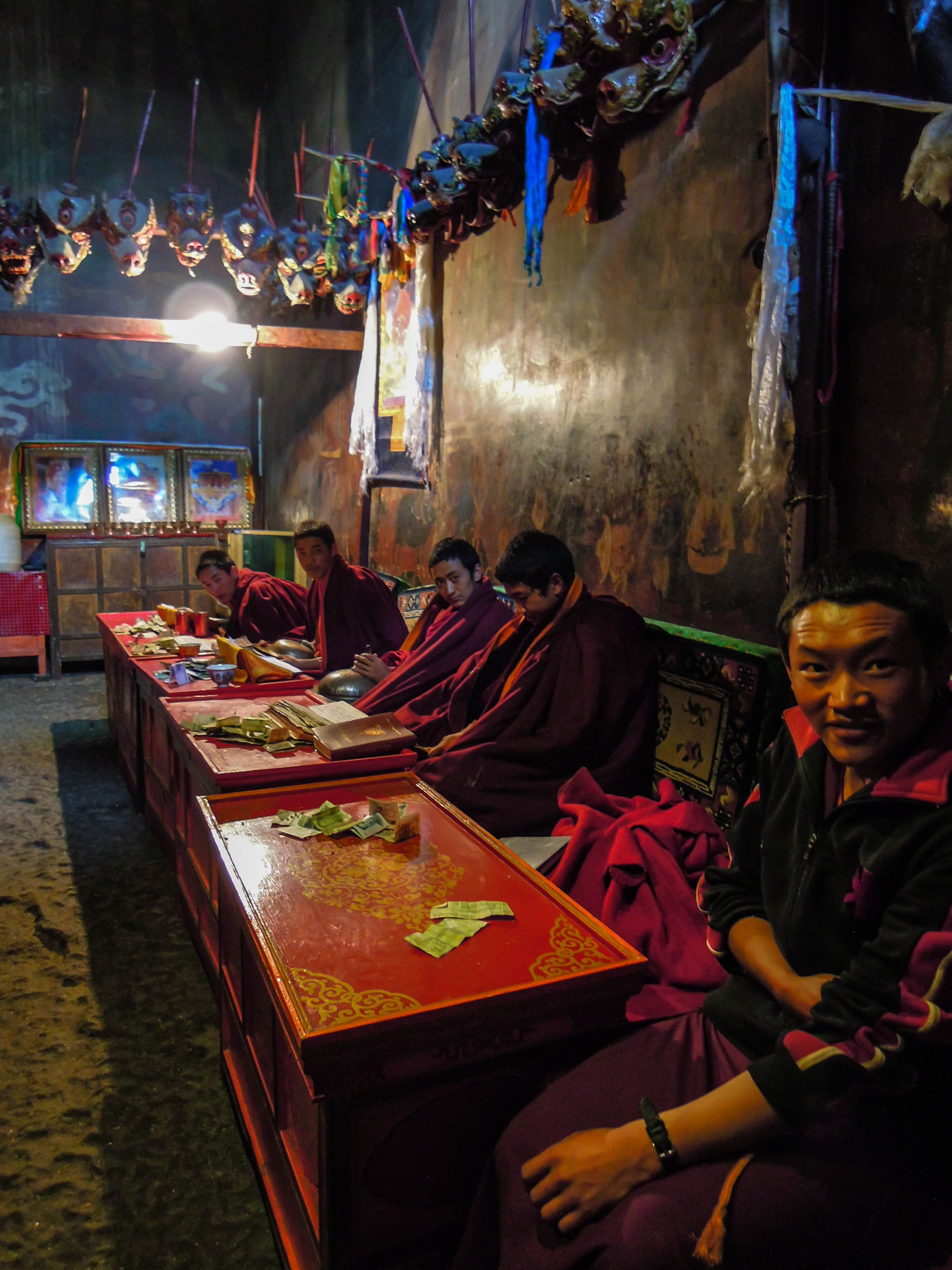
In nearly all the main prayer halls of the monasteries I visited, Tibetan scriptures in bound books were placed at each monk’s station. They were usually well worn.

Well worn book of scripture on top of monk’s robes

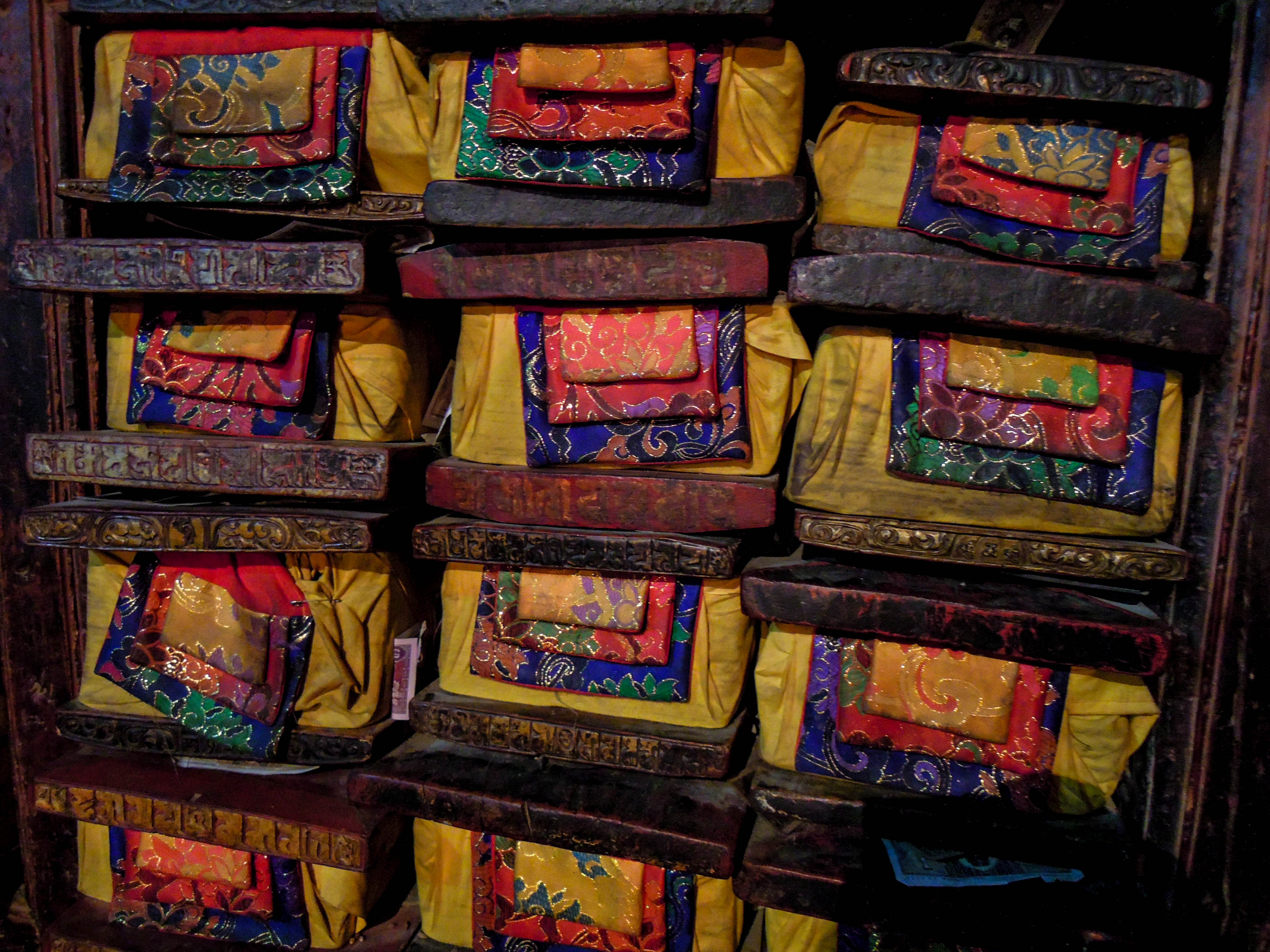
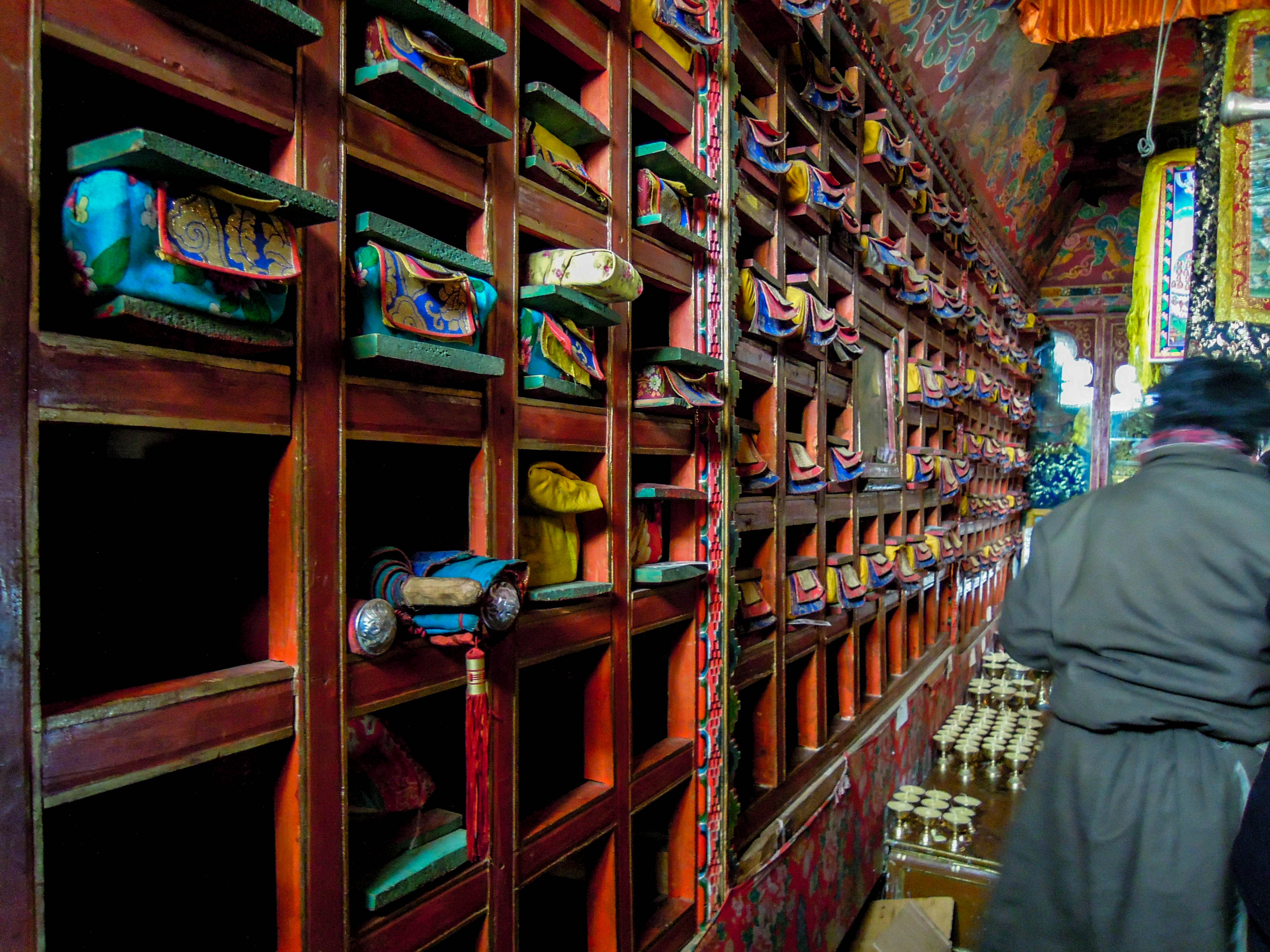
Most monasteries have libraries of printed books wrapped in silk fabric and stacked on wooden shelves. These books were usually not behind glass or anything and anyone could reach out and touch them.

A large collection of books in the Pachu Monastery

Close up of the books wrapped in silk

The library at the small Chiu Gompa Monastery in Western Tibet

As a bibliophile I was fascinated with these collections of books. Being so close to them was a great thrill, even though, out to respect, we did not handle them. Unfortunately I do not read Tibetan, but I still found myself wanting to acquire some of these beautiful books. At a street stall near Barkor Square in Lhasa I found a woman selling the long loose-leaf scriptures. I bought a volume from her wrapped and tied in a saffron cloth. I had no way of knowing what I was buying so I asked her to pick a popular volume for me. She said it dealt with health.

I cringe to think how many libraries and books were destroyed during the tumultuous Cultural Revolution. It is not like you can easily replace them. I know that many of the original plates were hidden during this time, so that books that were destroyed could be reprinted.

When I was doing some linguistic research in Yunnan Province (2010) and Tibet (2012), I learned that many Tibetans could not read or write Tibetan. In most government schools, Tibetan may be used as the medium of instruction, but they are not taught how to read and write Tibetan; they are taught how to read and write Chinese. Those who were literate in Tibetan were most likely trained in a monastery school. In the past, before the Chinese occupation of Tibet in 1953, it was the practice for families that had more than one son, to send one of them to the local monastery to be educated. Many of these boys stayed and became monks. The literary tradition in Tibet was closely tied to religion and monasteries. Today it is mostly monks and nuns that can read and write Tibetan, though in some areas others are attempting to learn written Tibetan as well. However, this can be dangerous as these kinds of schools are frowned upon by the Chinese.


Blending in

Group conciousness

What is it about Americans abroad. The seem to want to be heard, seen, acknowledged, liked, accommodated. The unflattering term “ugly American” refers to this perception that Americans are loud, arrogant, demeaning, and ethnocentric. Of course this is not true of all Americans, but unfortunately for some, it is true.

When traveling in China, I have found that it is better to do your best to blend in. Well, we can’t totally blend in because our physical features will always give us away. But there are several ways that you can better assimilate yourself into Chinese society. Remember China is a group oriented society, so blending in, and not standing out, is what the Chinese value.

Here are a few tips I have found to be valuable. These tips are not just valuable for Americans, but for any foreigner living or traveling in China.

• Avoid loud, flashy clothing.

Wear clothing that is similar to the clothes of those with whom you work or study. Err on the side of conservative dress. Women should avoid overly revealing clothing. Extreme clothing styles will only be a distraction and draw attention to you. This is especially true in professional settings. Shorts, sandals, a loud flowery shirt, and a baseball cap do not go over very well in China and will make you stand out like a sore thumb.

• Dress appropriately for the occasion.

If everyone at the office is wearing shirts and ties, or skirts and blouses, then you should also. Be aware that Chinese may dress up when you would not expect it, like for outdoor outings.

• Keep your voice down.

Americans can be very loud, even boisterous, especially in groups. When in public try to keep your voice down; avoid yelling, screaming, and loud laughter.

• Don’t assume everyone loves Americans.

You may feel like the world revolves around the United States and that everyone is enamored with American pop culture and lifestyle, but most Chinese are very proud of their heritage, ideals, and lifestyle. Be respectful of Chinese ways, even though they may be very different from what you are accustomed to.

• Avoid criticism and complaining.

You’re not going to win many friends if all you can do is complain about the pollution, the traffic, the humidity, the food, people spitting on the street, and so on. It is especially bad to compare everything to the United States and constantly mentioning how much better things are back home.

• Don’t insist on American style goods and services.

This is especially true in rural areas or smaller cities. Sometimes Western goods are not available or are at least hard to acquire. Potatoes are not common fare in most areas of China.

• Eat what is placed before you.

At least pretend that you appreciate the food and nibble on it. Shunning food given to you, especially at a banquet, can be very offensive to your hosts.

• Learn at least a few phrases in Chinese.

Learning a few phrases in Chinese and using them when you can will go a long way in China. The Chinese understand how hard their language is and appreciate when foreigners try to speak Chinese.

• Always remember that you are the guest.

The Chinese should not have to adapt their behavior to accommodate you. You should adapt your behavior to fit in with them.

• Make friends with the locals.

Sometimes Americans tend to hang out together in groups. Branch out and try to make friends with local Chinese. You will see and do things that most Americans will not have access to.

• Avoid common stereotypes.

Not all Chinese are good at math, are humble, and are martial arts experts.

• The Chinese are neither quaint nor cute.

With over a billion people, the Chinese can hardly be considered quaint. Some tourists make a big deal about the Chinese and Chinese things being “so cute.”

• Be inconspicuous with your camera.

Nothing screams tourist more than a large expensive camera around your neck, except maybe pushing into everyone’s faces and taking pictures. Keep your camera in an inconspicuous bag when not photographing. I will often leave my camera in my apartment or hotel, unless I am specifically going out to take pictures. Be respectful when taking photographs. It is best to chat with someone before asking to take their picture.

• Don’t always hang out at expat bars, hotels, and Western fast food restaurants.

Eat like the locals. Hang out with locals. Unfortunately many Americans spend a semester or two in Beijing or Shanghai, and spend the bulk of their time eating American food, and hanging out with other foreigners. That’s not why you are going to China.

• Smile.

Even if you are confused, frustrated, and don’t know what is going on, smile. It will ease the tension for both you and others.

• Take it easy.

Avoid public displays of anger or frustration. Keep your cool and be patient. Logic and reason do not always work. Trying to force your way seldom works. Try to understand the situation, be open to alternatives, and generally try to be pleasant no matter how ugly things get.

• Don’t flirt.

American style flirting is often misunderstood in China. While you may think it is all innocent and that not serious, Chinese usually interpret this behavior as serious affection.

• Pay attention to mannerisms.

This is especially true with non-Chinese minority groups. They have different behaviors and mannerisms. If you are traveling to the Western provinces, such as Gansu, Xinjiang, Tibet, Yunan, and Western Sichuan, pay close attention to how people interact with each other.

• Be Humble.

Look people in the eye when you talk to them and acknowledge their humanity. Treat people with respect and dignity.

• Go slower, but go deeper.

Become a regular by frequenting the same places repeatedly. Get to know local people, like your neighbors, the lady that sells breakfast items from a cart on the street, the bicycle repairman on the street corner, and so on.

• Have patience with yourself and those around you.

China can be a difficult place. Allow yourself some time to and adjust and adapt to the differences.

• Embrace the culture.

Remember that you have a unique experience that may be over before you know it.

• Don’t expect things to be the same all over China.

Each area of China has different food, cultural icons, and ways of doing things. This makes your experience rich, exciting, and varied.

And lastly, be positive and have fun.
Chiu Gompa Monastery in Western Tibet

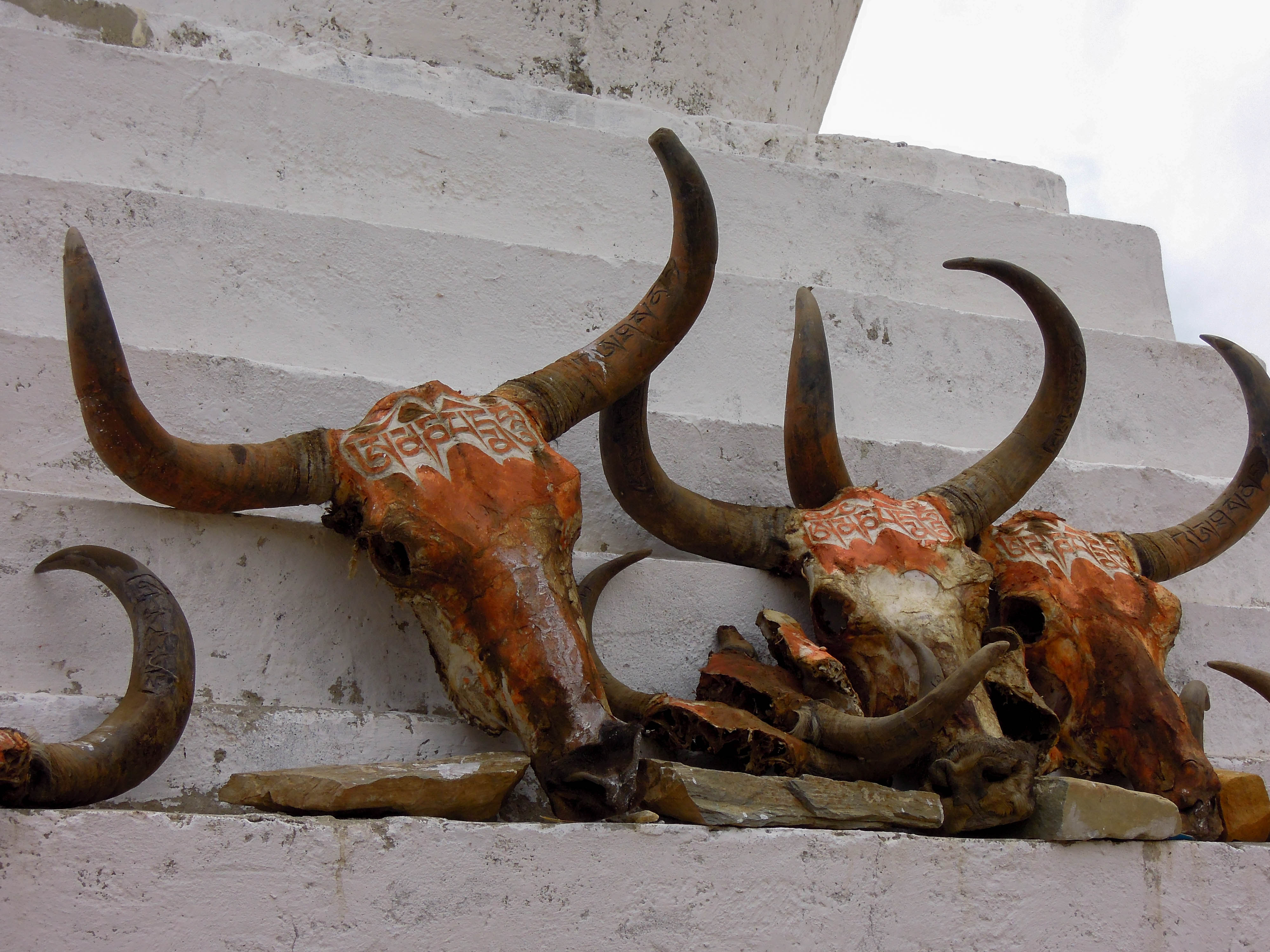
Yak skulls

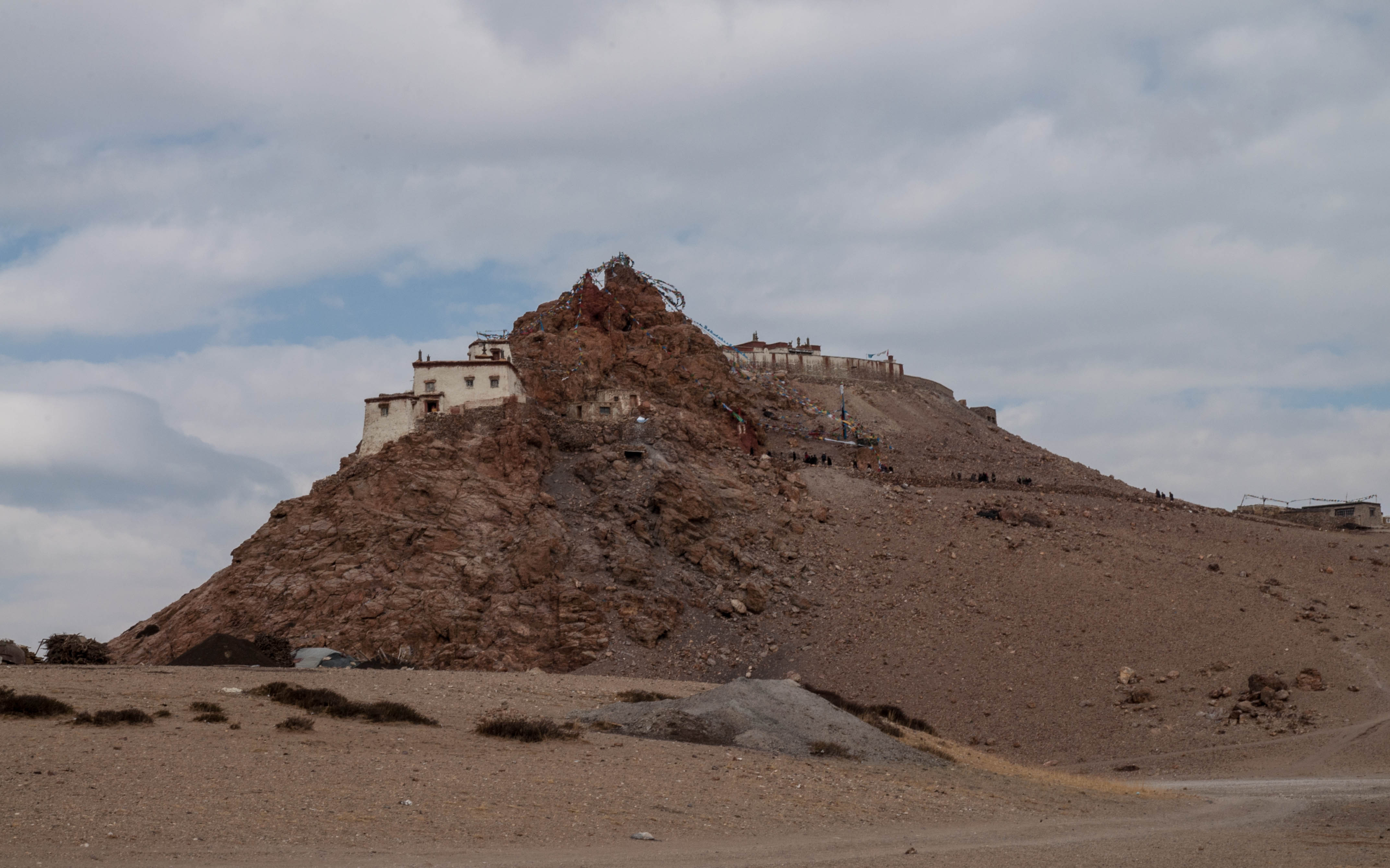
In May of this year (2012) I traveled to the small Chiu Gompa Monastery built into the cliffs on a hill on the shores of Lake Manasarovar in Western Tibet, (on the way to Mt. Kailash).  It is located a short distance from the small town of Darchen at the base of Mt. Kailash. It is about a 900 km drive from Lhasa and usually takes about four days.

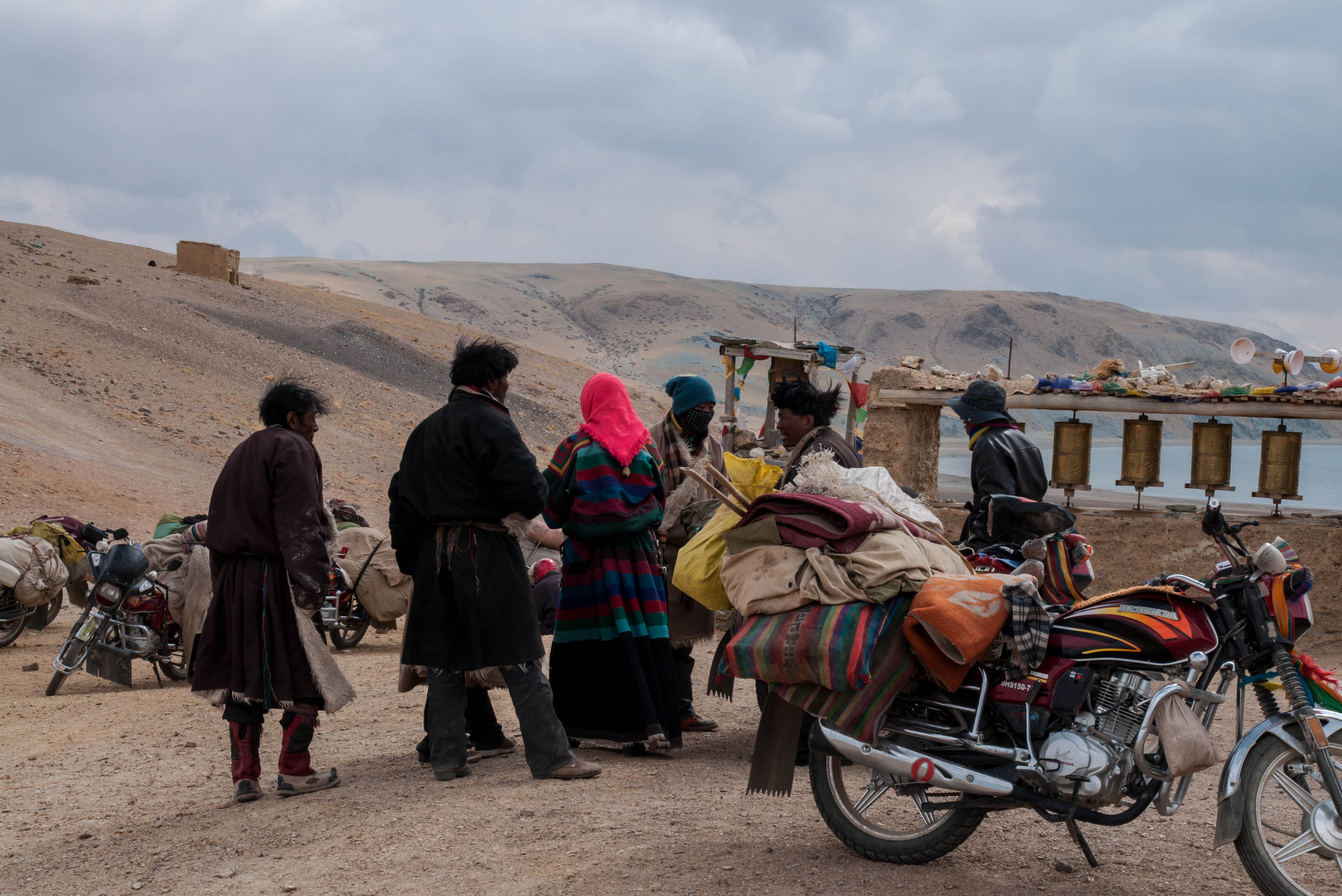
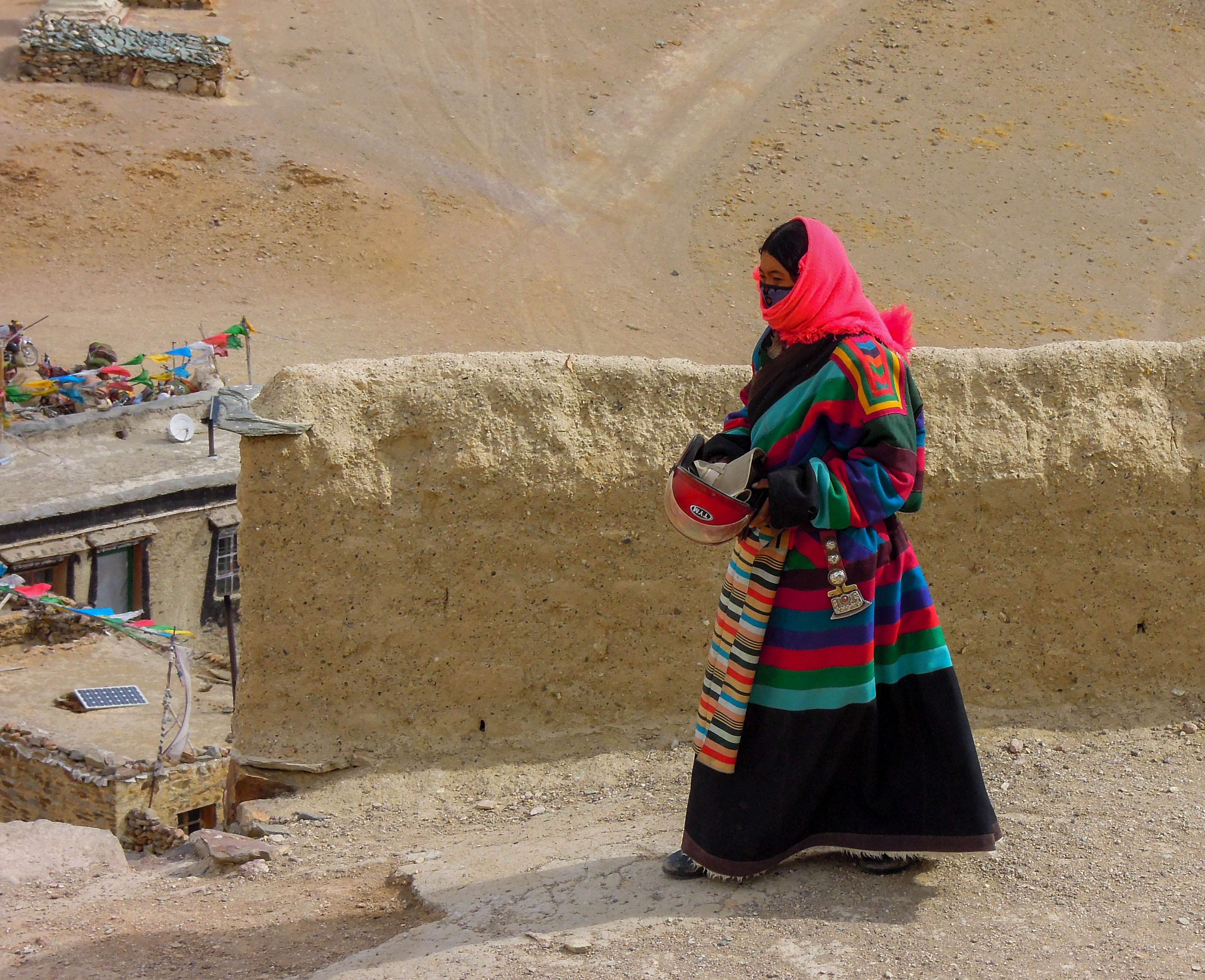
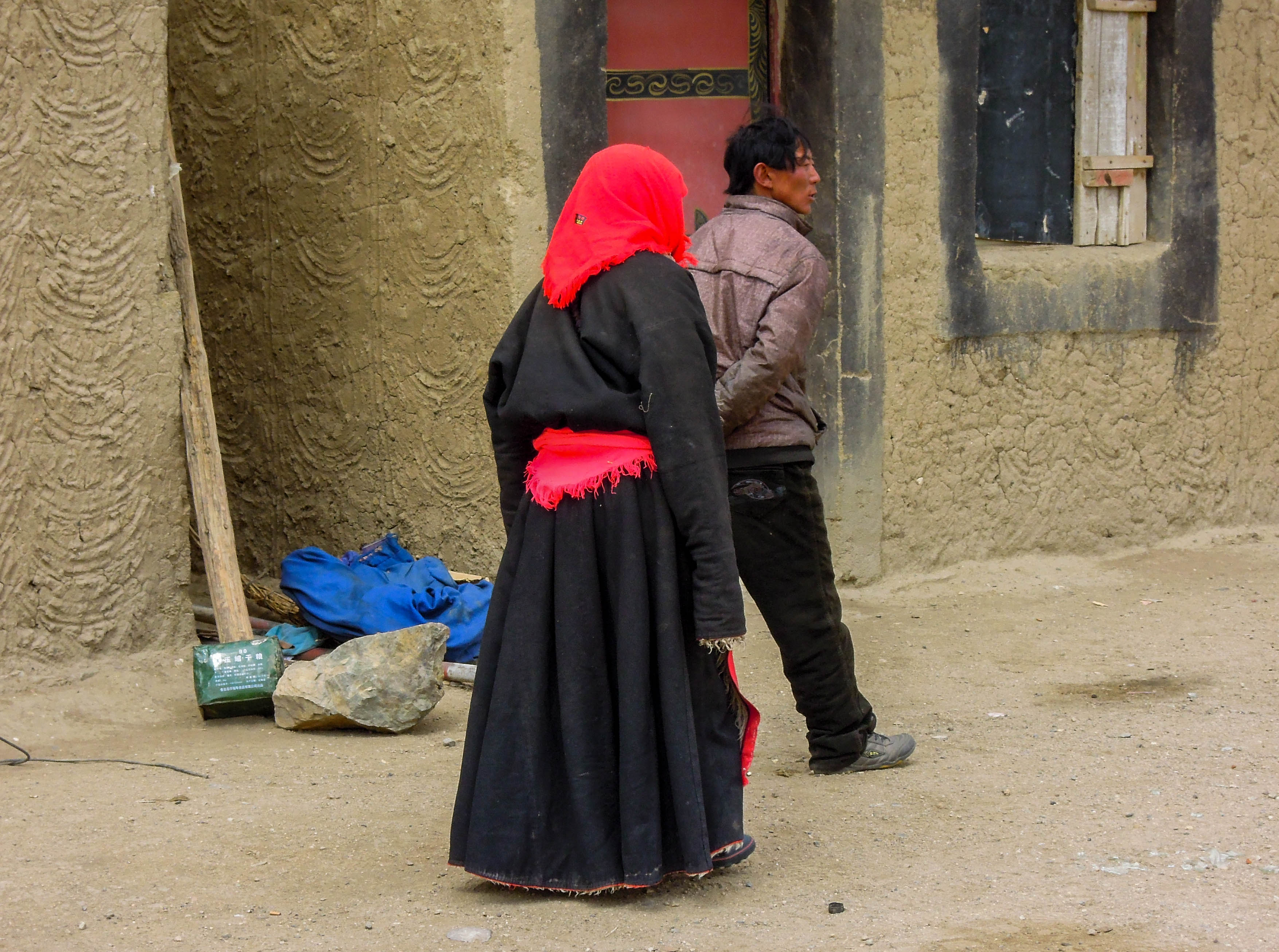
Western Tibet is remote, rugged, windy, and cold. It is much more rural than Central and Eastern Tibet. The people of this rugged area dress in long thick robes to protect themselves from the constant wind and cold. The woman all wear the distinctive fuchsia scarves around their heads.

Chiu Gompa Monastery on the shores of Lake Manasarovar

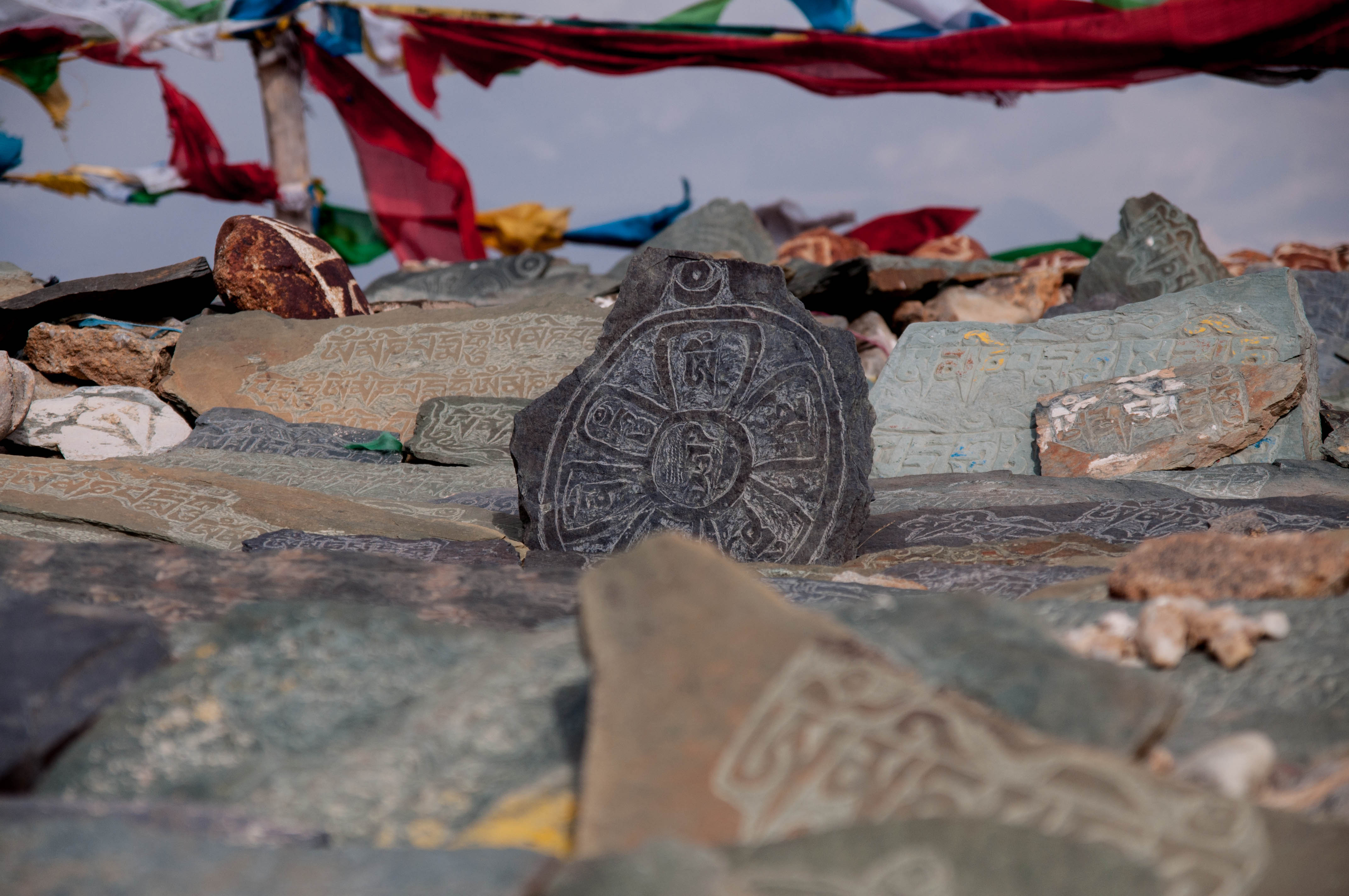
The monastery is built right into the cliffs. There is an ancient shrine in a cave here dating back to the 8th Century. It is a very interesting monastery and an important stop for many pilgrims. Most Tibetan Pilgrims will come to this area for two very important pilgrimages; 1) to circumnavigate Lake Manarsarovar and visit the several monasteries around the lake, and 2) to circumnavigate holy Mt. Kailash.

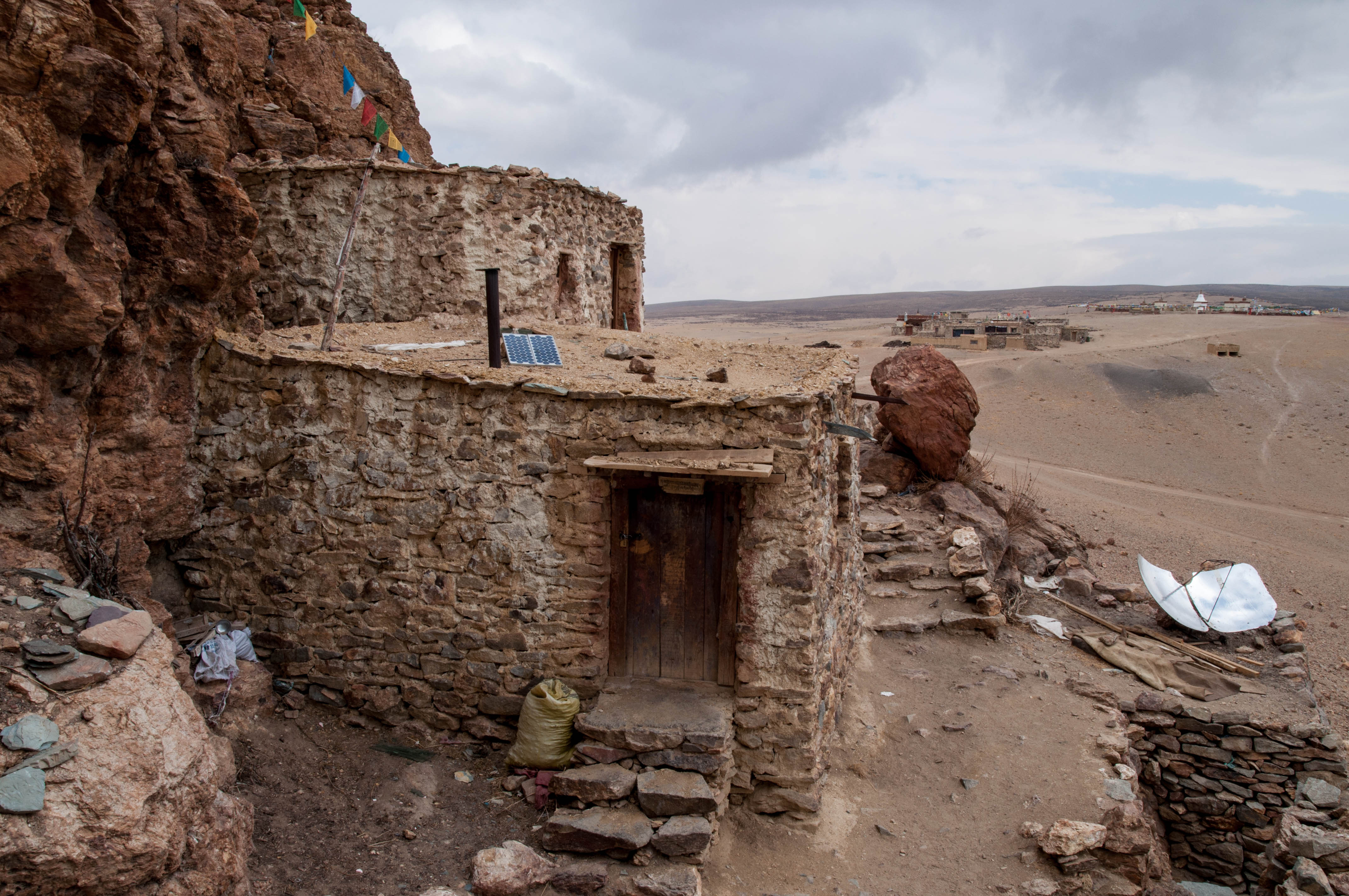
The several monastery buildings are built right into the rocky hill

The monastery library; Buddhist scriptures are stored on these shelves

Modest monks quarters

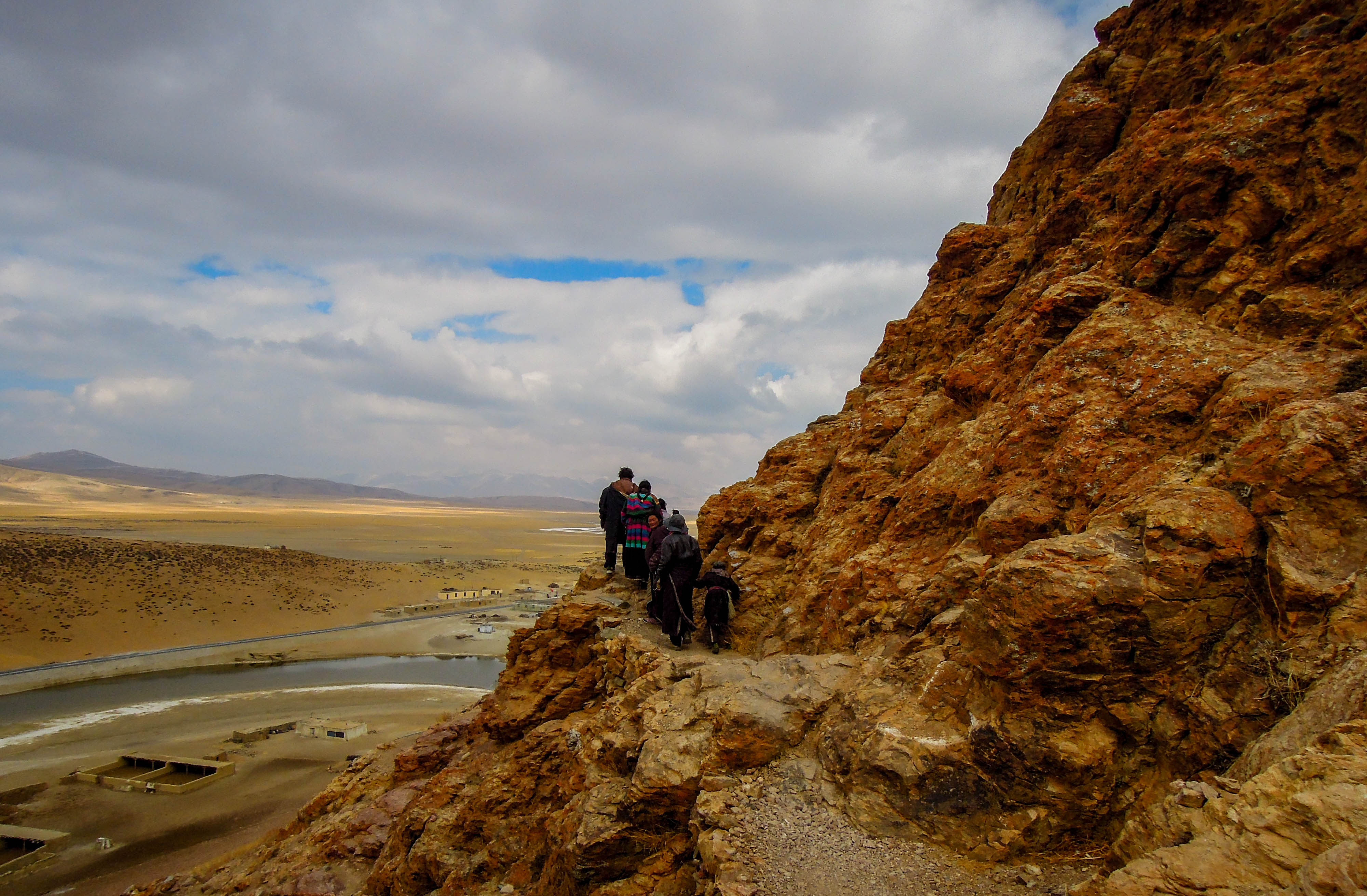
We spent about 2 hours wandering around the monastery complex. While most of the others in my group descended down to the Land Cruisers, I followed some pilgrims and did a circumnavigation of the entire monastery complex.

Pilgrims circumnavigating the Chiu Gompa Monastery

Lake Manasarovar from the hilltop Chiu Gompa Monastery

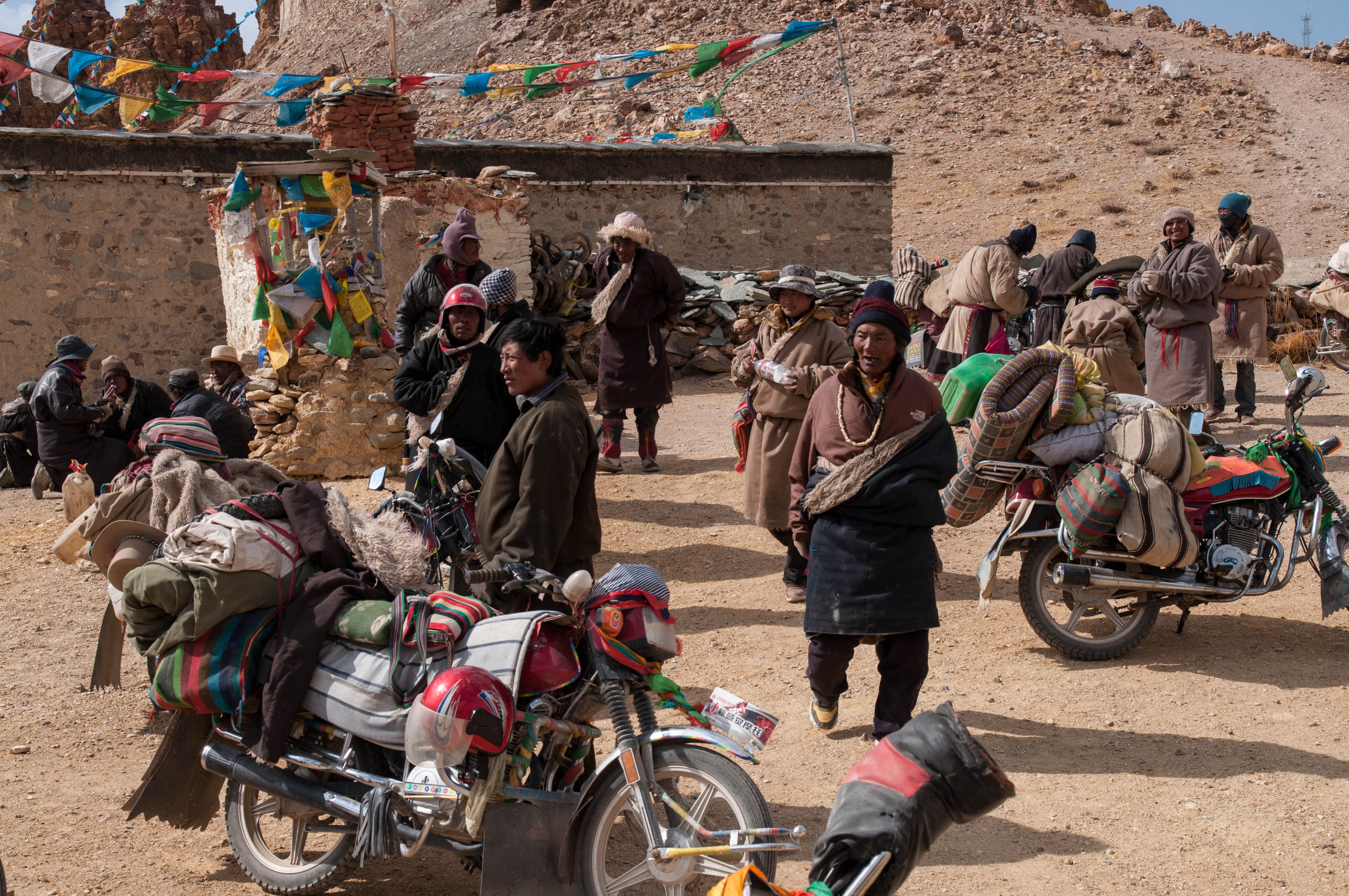
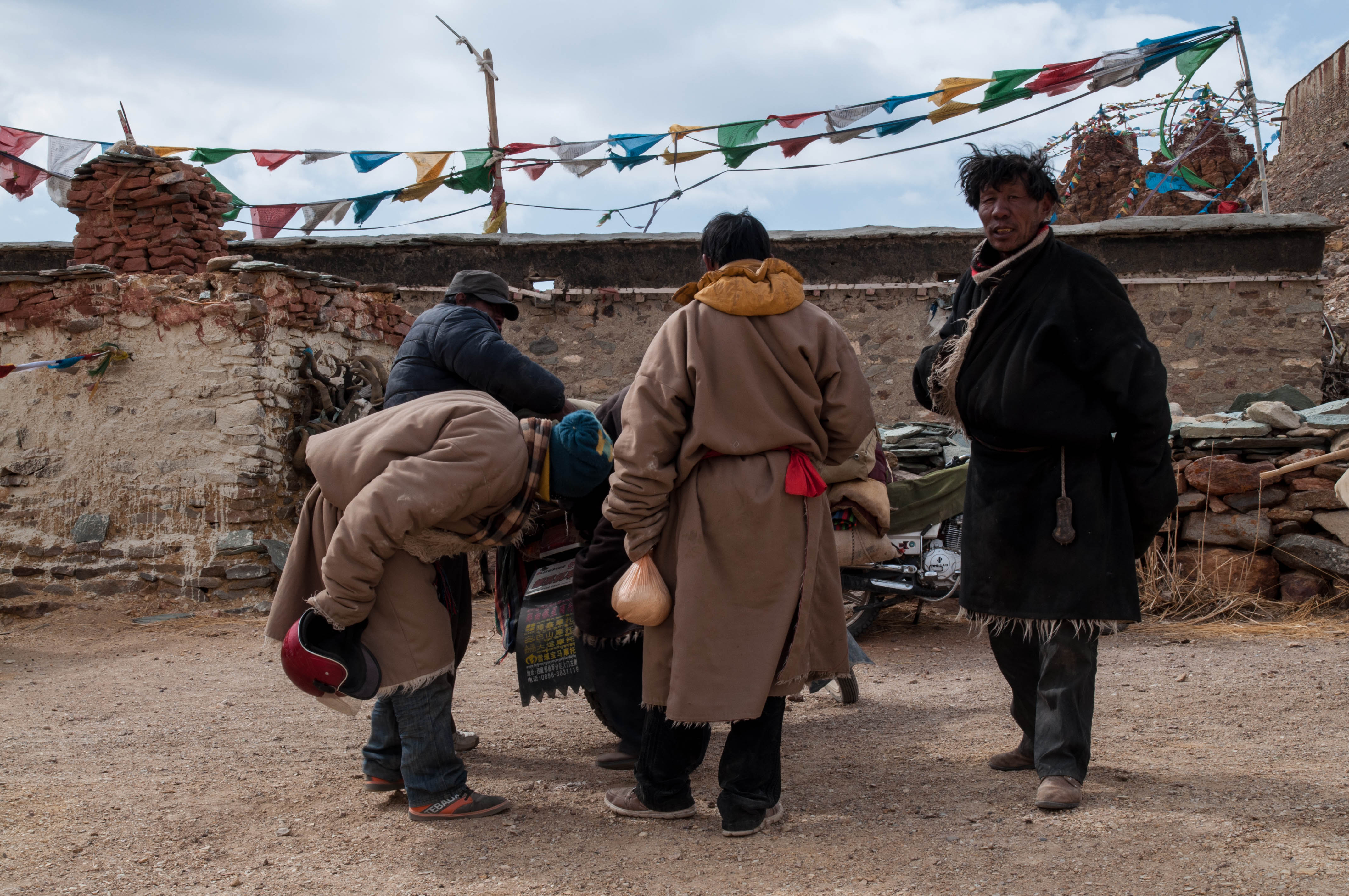
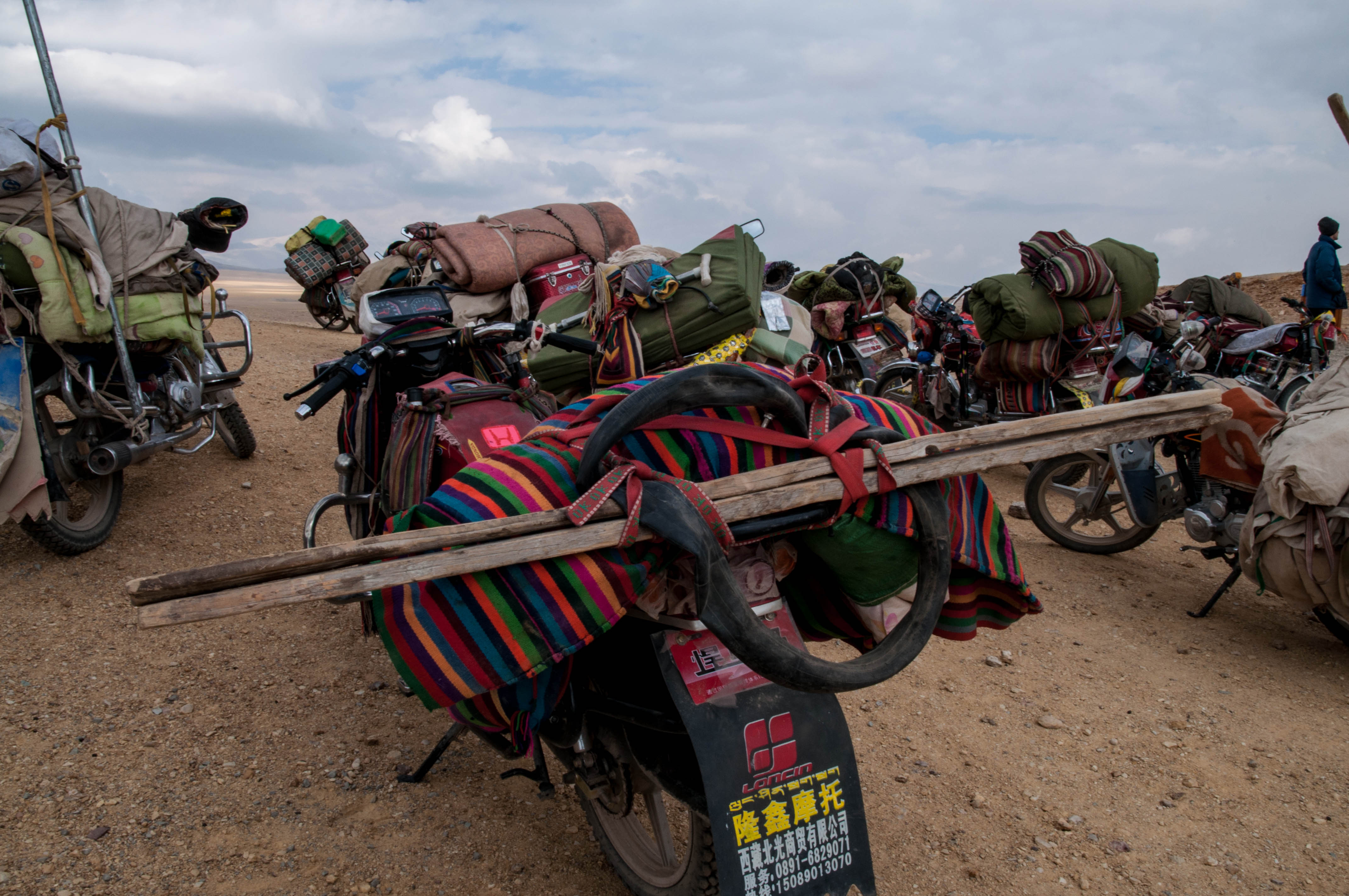
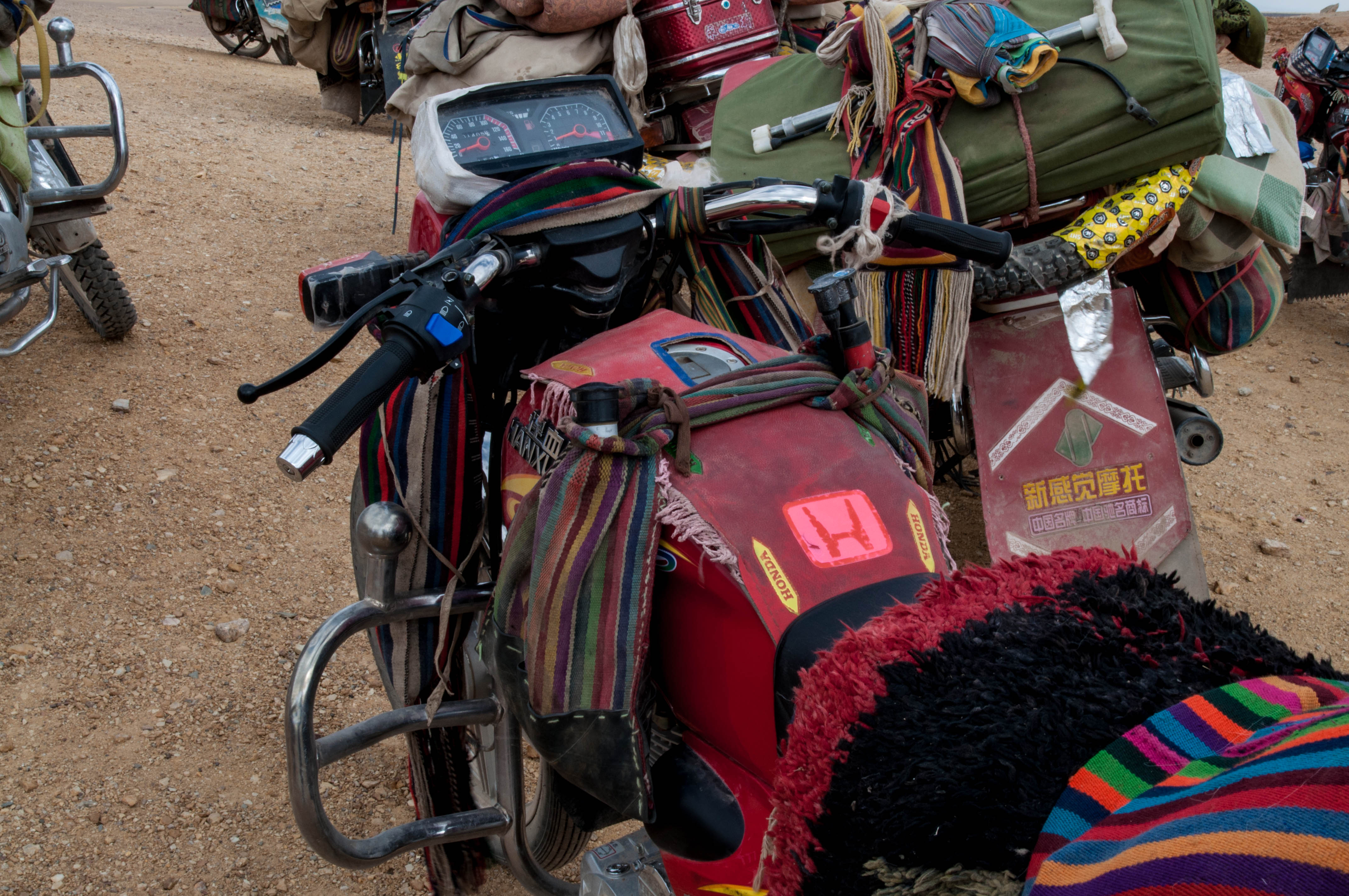
There were quite a few pilgrims at this monastery on the day we were visiting. The motorcycle has practically replaced the horse in most areas of Tibet. There was a big group of motorcycles there that pilgrims had ridden. They were packed with tents, clothing, food, and all sorts of things. Tibetans like to decorate their motorcycles and trucks with colorful decorations.
The next set of photos are of the many pilgrims and shrines at the monastery.

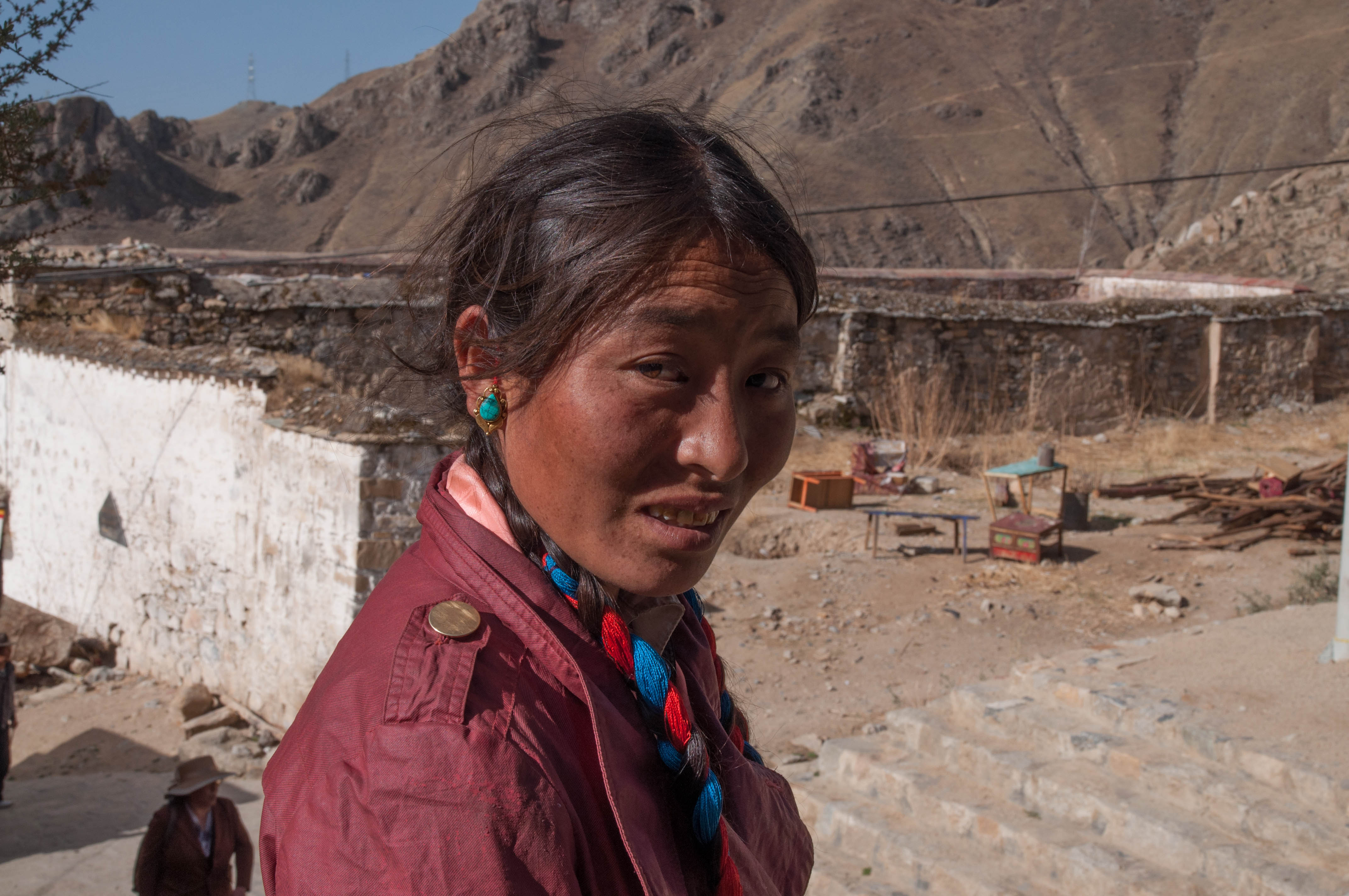
Typical dress of women in Western Tibet

She was taking photos with her cell phone

As I wandered around this monastery I was again struck by the religious devotion of the Tibetan people. They make great sacrifices to make these pilgrimages. It made me rethink my own devotion and commitment to my beliefs. I have always felt a sense of calm, peace, and a distance from the troubles of the world whenever I am at a Buddhist monastery. Even though I am not Buddhist, I feel the sacredness of these special places. It is a blessing for the Tibetans to have these holy places of worship.

The Pilgrims of Tibet

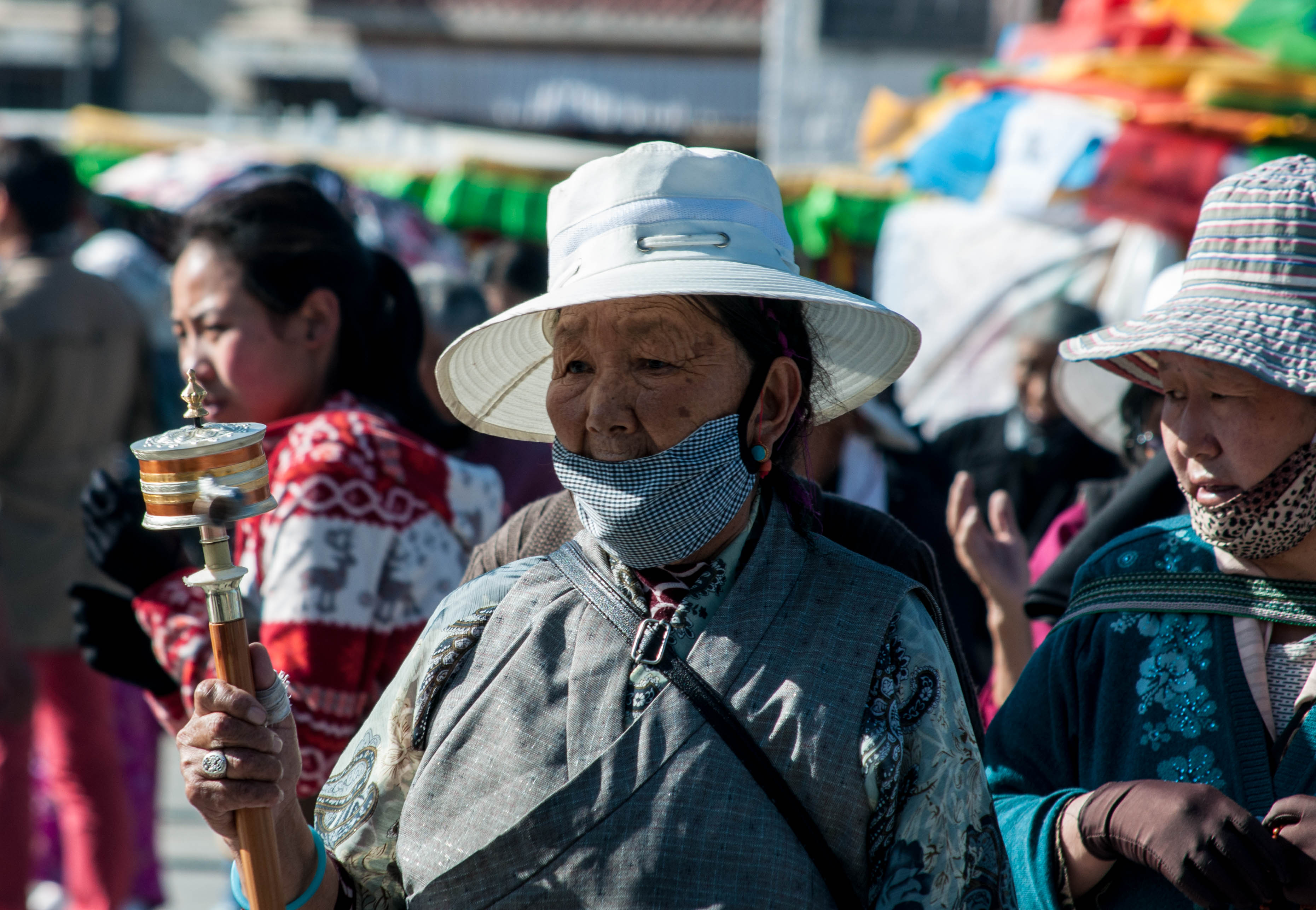
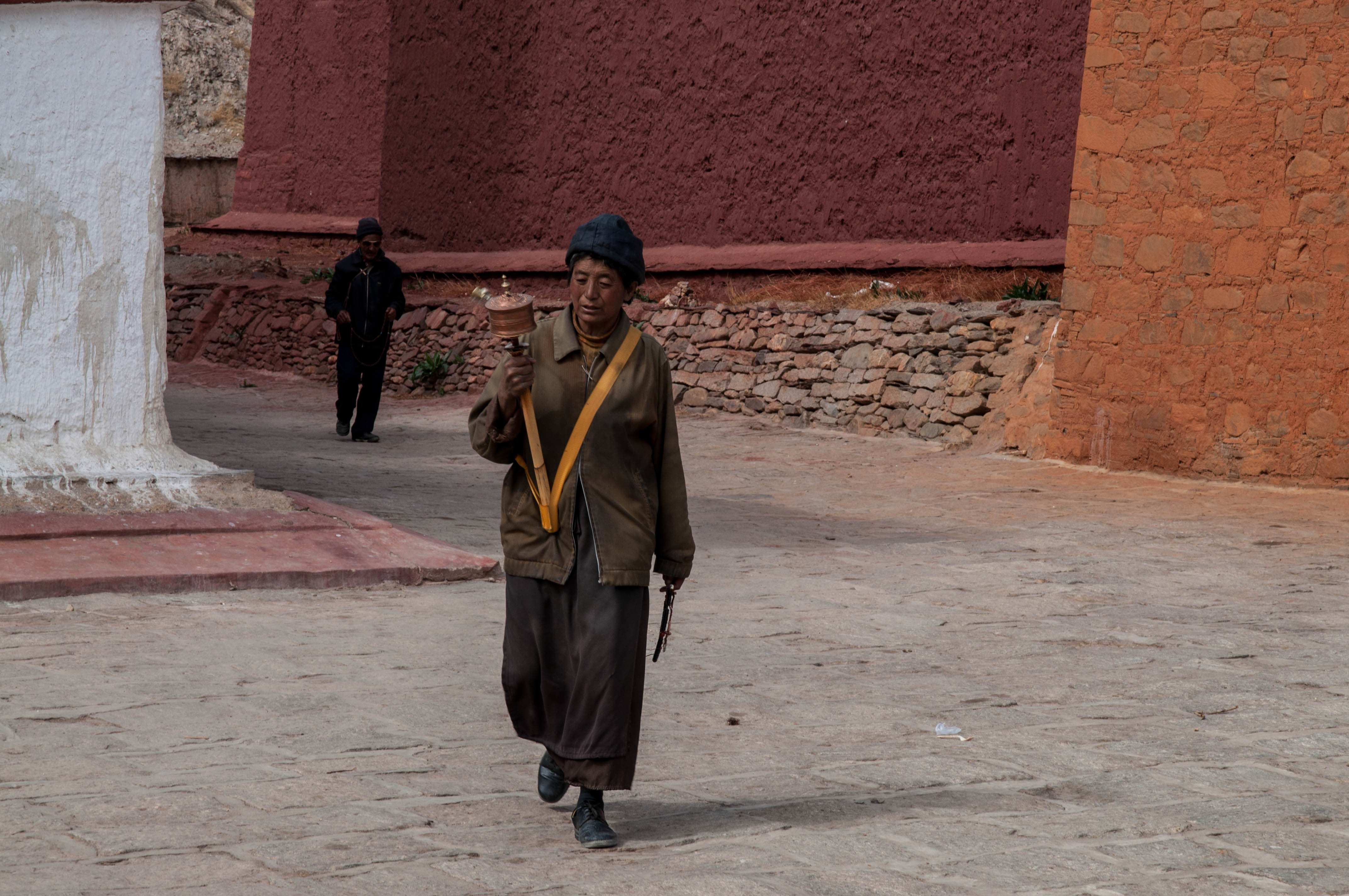
Typical pilgrims with prayer wheels

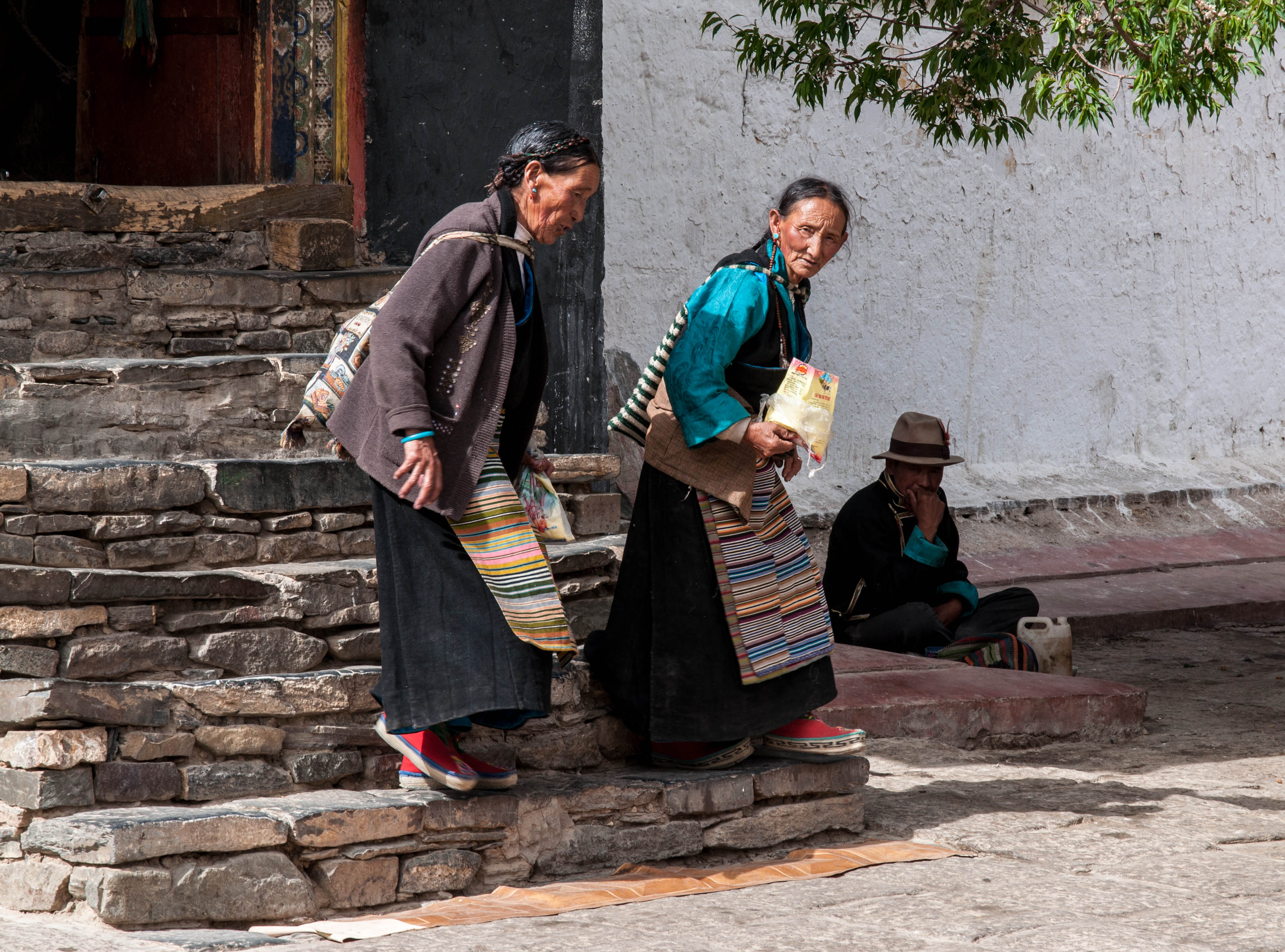
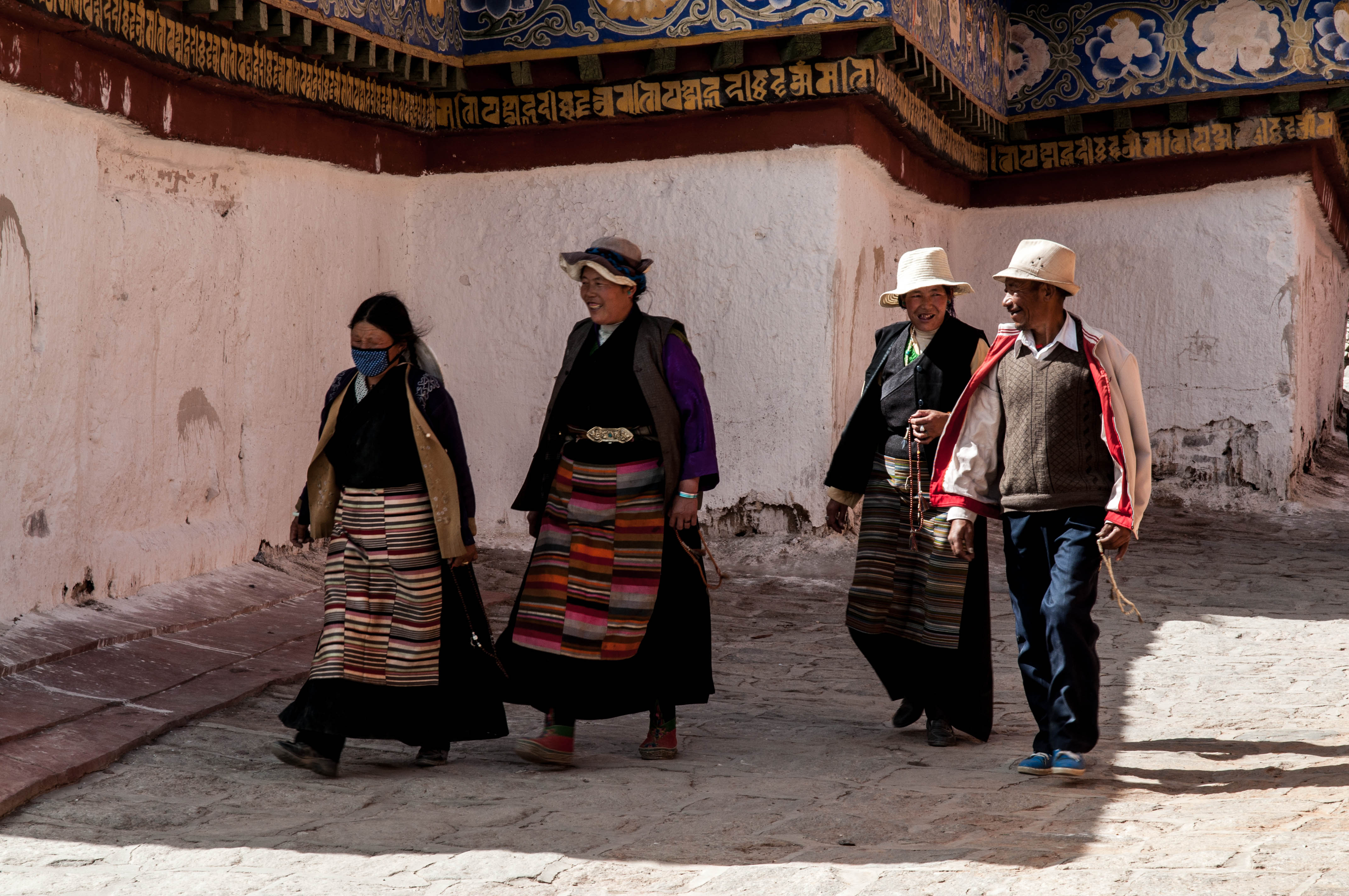
One of the striking things about Tibet is the religious devotion of many of the people. At every temple and monastery there are throngs of Tibetan pilgrims paying their respects, praying, prostrating, replenishing the butter lamps, and making cash donations. It seems that there are more women pilgrims than men, but you see all ages, but mostly adults.

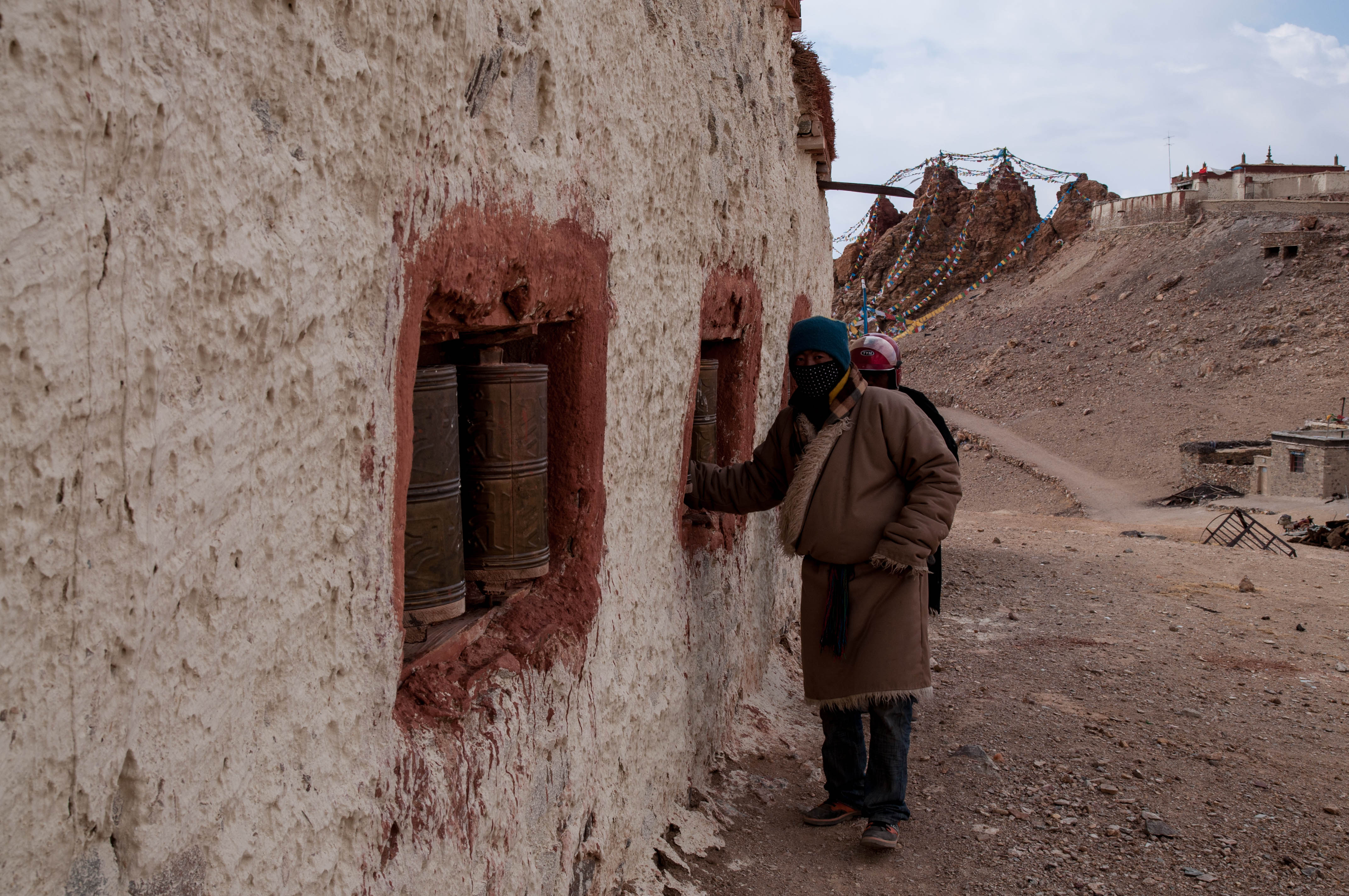
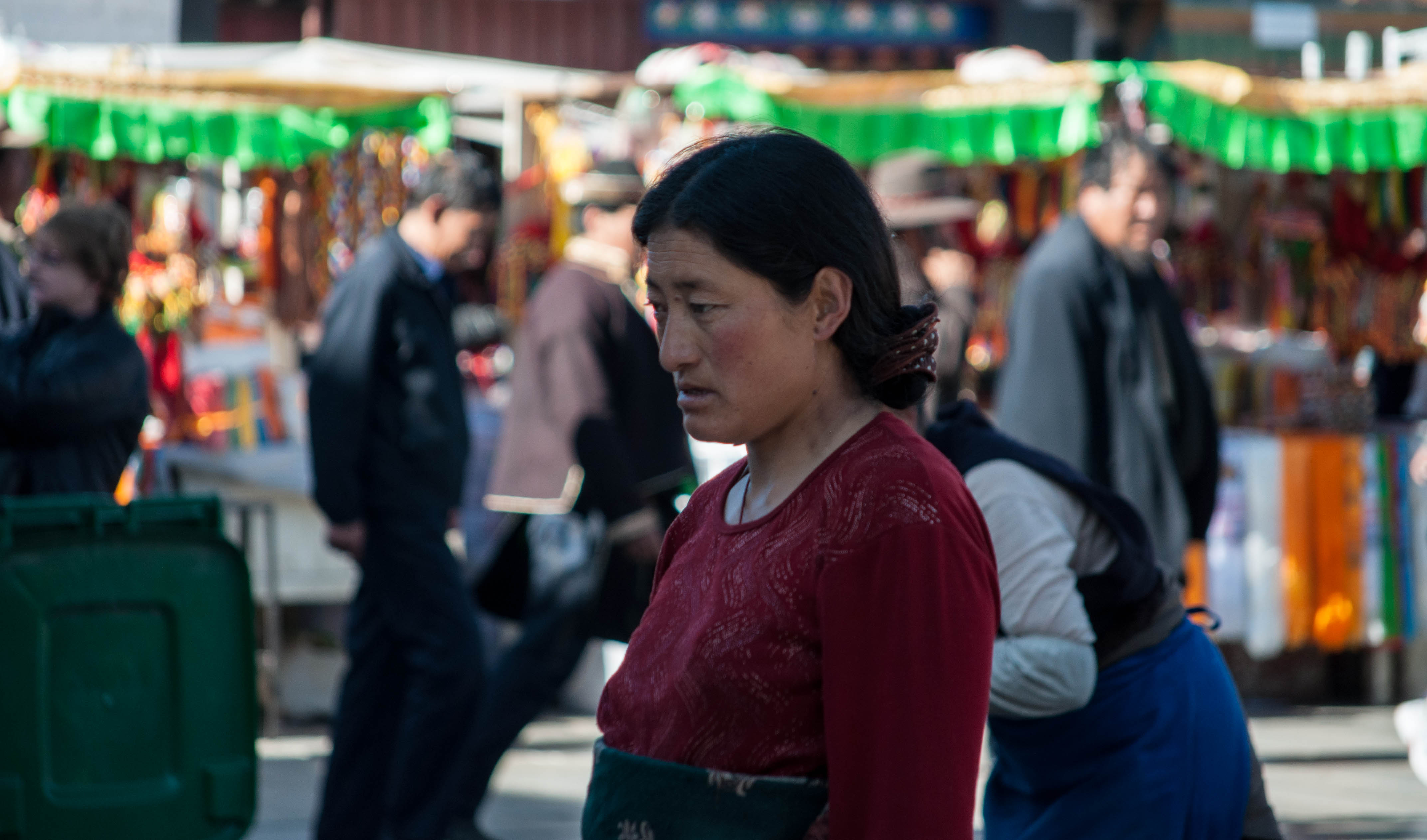
This first series of photos were taken at the various Buddhist temples and monasteries in Lhasa, Gyantze, and Sakya. Most of the women in this part of Tibet wear a colorful apron. It is common practice for pilgrims to circumnavigate the temple complexes, spinning their prayer wheels, and spinning the many large prayer wheels that are placed around the perimeter of these complexes. Pilgrims often travel long distances to various monasteries to pay their respects and gain merit for their devotion. I saw many groups of pilgrims eating picnic lunches on the grounds of these monasteries.

This woman was actually begging outside the Sera Monastery in Lhasa

Tofu Brains (豆腐脑 dòufu nǎo)

豆腐脑 dòufu nǎo (Tofu Brains)

It was a cold, rainy night in Yangzhou this past March. I was out walking in the old town section of Yangzhou looking for something quick, and hot to eat for dinner. When you are in an area that does not have central heating in its buildings, 40 degrees feels much, much colder. And after several days, the cold seems to wear you down a bit.

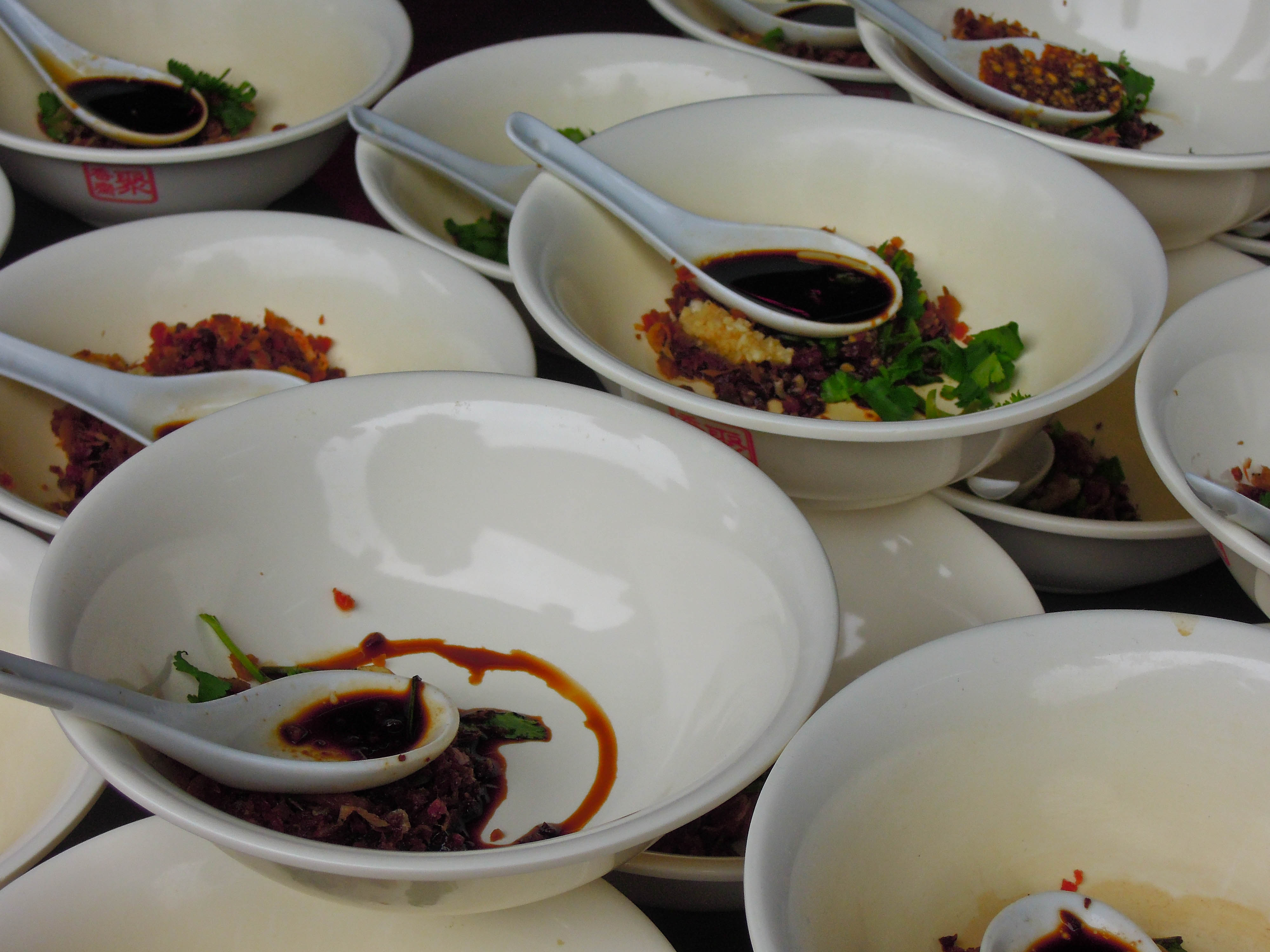
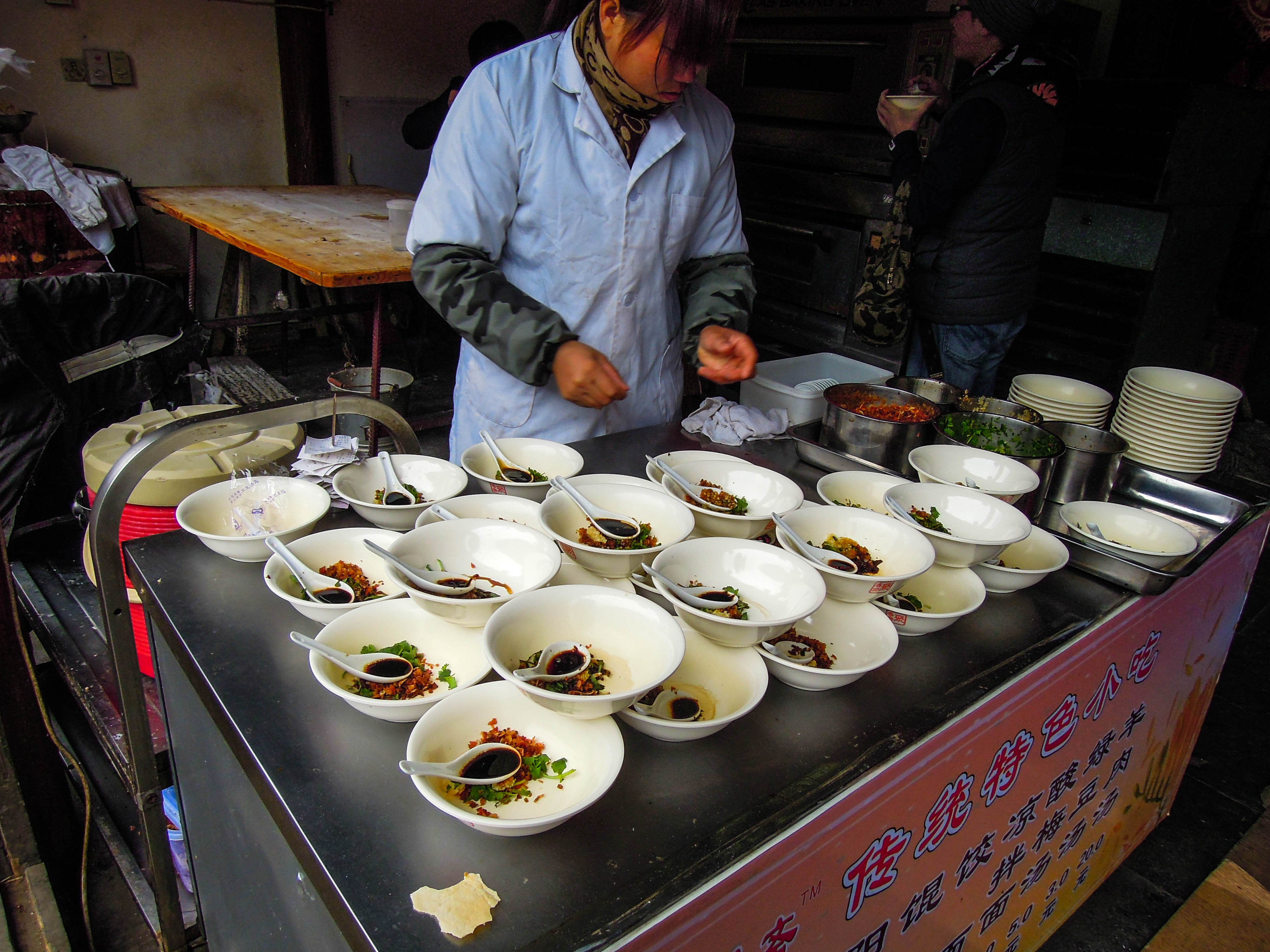
I passed a very small restaurant crowded with people. This is always a good sign that good, fresh food is being served. In fact, I would suggest that you avoid empty restaurants no matter how good the food looks. There’s a reason why restaurants are crowded. At the entrance to the restaurant, outside, was a table with dozens of white bowls arranged on it. In each bowl was a ceramic spoon with some broth in it, freshly chopped garlic, finely chopped chili pepper, cilantro, and a few other ingredients that I am not sure of.

Bowls waiting for tofu

I asked the woman working there what this dish was called. She looked at me like I was an idiot and replied, “dòufu nǎo (豆腐脑).” Her tone was like, “duh.” Well, I admit that as much as I love Chinese food, and have been eating it all over China for 25+ years, I had never seen or heard of this dish.

After diners paid for the bowl of Tofu Brains, the women would then take a large flat ladle and scoop out several thin layers of soft, hot tofu from a large crock and ladle it into the bowl. You then took your bowl, and found a place to sit down inside. You then gently stir the tofu up into the other ingredients to make a soup as seen in the first photograph.

Preparing the dish

Wow! It was amazing. The tofu was soft, silky, and hot, and the broth was deep and complex. The heat of the tofu gently cooked the freshly chopped vegetables, and it had just the right amount of salt. The wonderful thing about tofu is its ability to absorb the flavors of whatever it is cooked with. This dish was exceptional. It really hit the spot on this cold, wet night.

I admit the name of this dish, Tofu Brains, is a bit graphic, but who cares when it is so delicious (and the fact that there are no real brains in it). I was beginning to have recollections of a soft tofu dish sort of like this common in Southern China, called 豆腐花 dòufu huā or 豆花 dòuhuā for short. This dish uses the same kind of soft, silky tofu but it is sweet and eaten cold, particularly in the summer when it is hot. It is pretty refreshing. This can be translated as ‘jellied tofu’ even though it literally means ‘tofu flower.’

I wish I would have spent more time analyzing the dish to figure out exactly what was in it. I guess I could also have asked the woman working there what was in it. But I was cold, and hungry, and I gobbled down the bowl without giving it a whole lot of thought. I then scurried off in the rain back to my hotel.

If you don’t like tofu, you probably wouldn’t like this dish, but if you do, I highly recommend it. There are quite a few variations of this dish all around China. For example, in Sichuan Province, it will likely be spiked with lots of fresh chili peppers and be very spicy. The Yangzhou variety had a hint of spice, but like most Huaiyang Cuisine, tasted fresh with delicate flavors. This certainly won’t be my last bowl of Tofu Brains