On the Road in China: Two Book Reviews

Students frequently ask for recommendations on good books about China. Of course this is a wide open field which includes everything from books on Tang Dynasty poetry and history books, to reportage on current events in China, and everything in between. There is literally a landslide of books being published these days on all topics related to China.

Occasionally I will post book reviews of books I feel are worthwhile reads. I won’t waste anyone’s time reviewing books I don’t recommend. So if I post a review here, I think it is worth reading. If you have heard of a book and would like to know what I think, send me an email, or post a comment. If I haven’t read the book and it looks interesting I may read it and post a review.

I recently read two books both dealing, at least peripherally, with the rise of modern highways in China, travel on those highways, and the impact they are having on the lives of Chinese people. Both of the books were written by reporters and follow a familiar format. They tell compelling stories, mixed with history, statistics, and interesting facts about China. They are mostly positive but as most reportage-type writing also uncover some of the ugly sides of Chinese society. Books I have read in the past that fit this reporter-in-China telling stories about contemporary society include (from oldest to more recent):

China: Alive in the Bitter Sea by Fox Butterfield (1982, updated in 1990).

China Wakes: The Stuggle for the Soul of a Rising Power by Nicholas Kristoff and Sheryl Wudunn (1994).

Red China Blues by Jan Wong (1996).

The Chinese by Jasper Becker (2000).

Chinese Lessons: Five Classmates and the Story of the New China by John Pomfret (2006).

Now, the reviews.

Gifford, Rob. 2007. China Road: A Journey into the Future of a Rising Power. New York: Random House. 304 pages. $17.00.
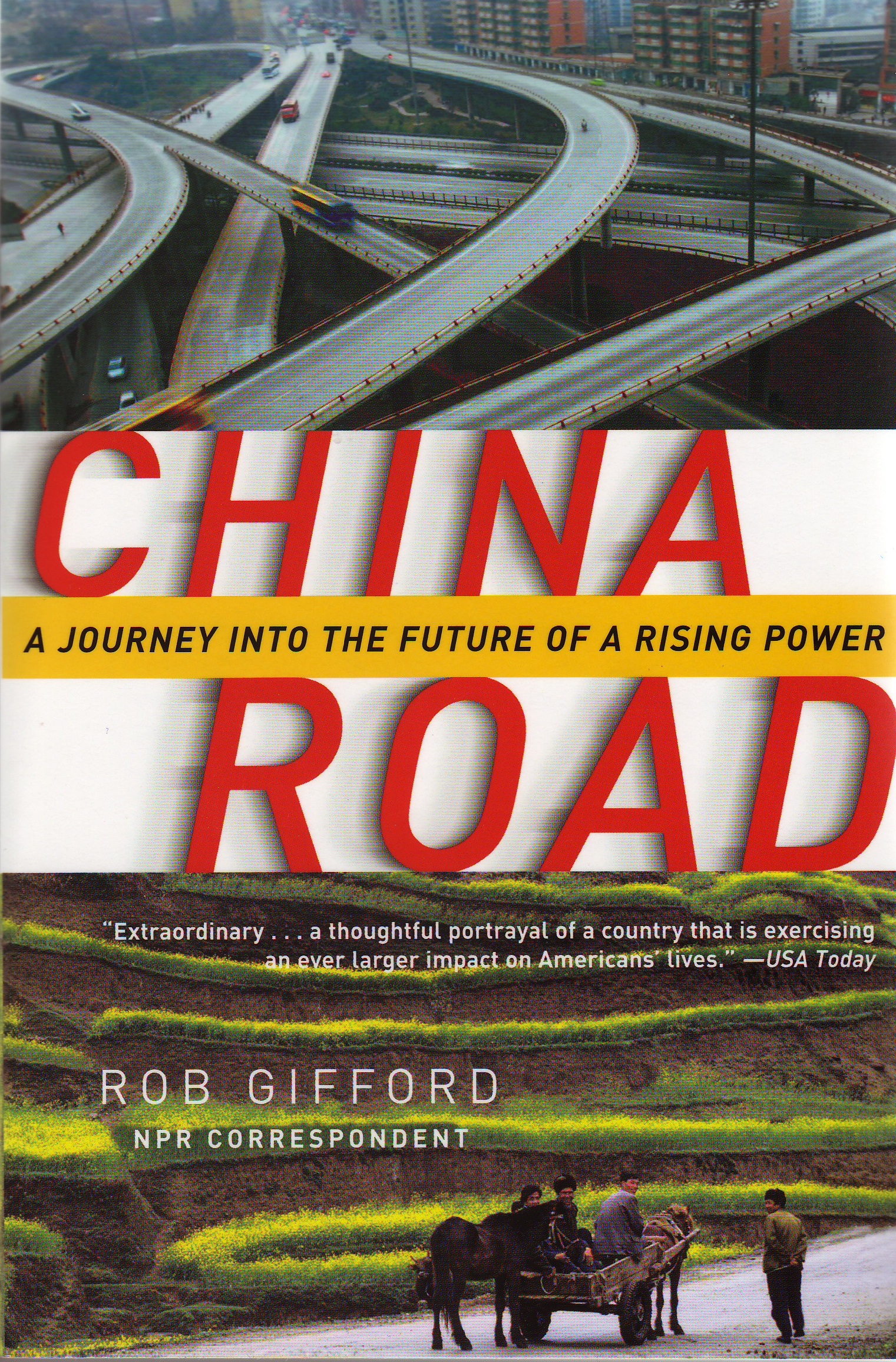
I was pulled into this book almost immediately and enjoyed the stories. Rob Gifford was the Beijing correspondent for NPR for six years. He knows China and speaks Chinese. I mention this because most of his stories would not be possible if he could not communicate with the people he encounters along his journey. The book chronicles his trip (actually a couple trips) along the entire length of State Route 312 from Shanghai to the border of Xinjiang and Kazakhstan. He travels by taxi, public bus, hitches rides with truckers, and occasionally rides in a private car.

His purpose is two-fold: one, to meet common people along the way, particularly those that live in out of the way places, and two, to explore the impact this modern highway has had on the development and modernization of the regions in which it passes. I especially liked his stories about meeting common everyday folks, like long haul truckers. It is always interesting to see how “normal” people live. His stories bring out the warmth and sometimes complexity of common Chinese people. He describes the people, the harsh landscape of Western China, and the small towns along the way. Some of the towns have prospered with the coming of the highway, and some towns not directly on the route have languished.

Overall, I highly recommend the book. Gifford is personable and knowledgeable without being pretentious.

Hessler, Peter. 2010. Country Driving: A Chinese Road Trip. New York: Harper Perennial. 424 pages. $15.99.

 I expected this book to be similar—an account of a Chinese road trip. This was only partially true. His approach in this book is to look closely at three different areas of China and how the increase in drivers and the mobility that it has afforded have influenced these areas.

The book is divided into three distinct, unrelated sections: “The Wall”, “The Village”, and “The Factory”. Each of these sections could be read independently. It is almost like three books or stories in one.

In “The Wall” he describes his adventures driving the entire length of the Great Wall, from the ocean in the East to deep into Xinjiang and Qinghai Provinces. This constitutes several individual trips in rented cars. Along the way he visits many small towns along the ancient Great Wall. Like Gifford, Hessler speaks Chinese having been a long-term resident of Beijing as a correspondent for The New Yorker. His ability to speak Chinese allows him to interact on a close personal level with many regular Chinese people who live off the beaten track. Many of the individuals and towns that he describes in this section of the book seem to have been left behind the rapid modernization and development in the more populated areas of China. In fact, in almost every small town he encounters he rarely finds young people. They have all left the small towns to find work in the cities. This work ranges from working in factories to beauty parlors. In these forgotten small towns he only finds the very old and the very young.

In the next section of the book, Hessler finds a small village on the Northern outskirts of Beijing and rents a farmers house. He befriends a family in the village and recounts his rather intimate interactions with them over the course of several years. He discusses the development and modernization efforts in this small village (less than 300 individuals) and how that impacts this family and their neighbors. Among other things, he discusses the Chinese education system, the world of small, private businesses in China, the health care system, Chinese tourism, real estate and development, and so on. Through Hessler’s eye for detail the reader really gets to know this peasant family, their joys, struggles, and triumphs.

The last section describes Hessler’s many trips to Zhejiang Province and the factory towns springing up along a new highway. He meets two enterprising men who open a factory that makes the tiny fabric covered metal rings used in brassieres. He describes in detail how these men start and run their business, from building and outfitting the factory to hiring employees. Along the way we meet a migrant family that work in the factory. There are huge numbers of migrant workers in the factory regions of China’s East. Hessler helps the reader understand how this huge migration of people is impacting China, on the larger scale as well as at the individual level.

I enjoyed this book for the intimate portrayals of individuals living on the edges of society—particularly peasants and migrant workers. It is not easy to have access to these classes of people in China. Undoubtedly, Hessler would never have been able to approach and get close to these people without a sound understanding of Chinese behavioral culture and good facility with the language. I admire him for being able to do that.

I think this book is much stronger that his previous book, Oracle Bones. I felt that book wandered and lacked focus. Though interesting in parts, I found it more difficult to follow the multitude of overlapping and sometimes unrelated stories.

Both of these books provide the reader with an intimate, personal look at regular people living all over China. This is where their strengths lie.
A World of Bicycles

The first time I went to China, in the mid 80’s there were very few cars on the road. Vehicular traffic consisted of busses, blue trucks, a few taxis, and even fewer cars, which belonged to government officials. And there were bikes. Lots of them. In fact, on most streets there were two skinny lanes down the center, one in each direction for cars, then wide bike lanes on each side. These bike lanes were sometimes twice the width of the regular traffic lanes. It seemed like everyone was riding bikes. As an avid cyclist, this suited me well. Rush hour consisted of being literally shoulder to shoulder and wheel to wheel with thousands of other cyclists.

Today there are still lots of bikes on the road, but fewer than there used to be. The bike lanes are narrower, but still substantial, and prominent compared to the US. Private cars are becoming quite common in the cities and there are taxis all over the place. There are now many motorcycles, scooters, and electric bikes as well. But bicycles still play an important transportation role for many Chinese. In fact, it can be argued that even in today’s modern China, cycling is still a very convenient and inexpensive way to get around. For many Chinese that is all they can afford. It can even be faster to get around in today’s very congested cities.

Every time I go to China and plan to stay awhile, I buy a bike. I love the freedom of zipping around the city at will. If you are fairly fit it is totally reasonable to ride all the way across a large city. In fact, in the city of Nanjing I would routinely ride from the Gulou area around Nanjing University campus to the markets in the southern part of the city. It would take around 45 minutes one way. (Nanjing is a city of around 8 million people). Of course it helps that I love cycling. In fact, I have been commuting year round by bicycle for 27 years.

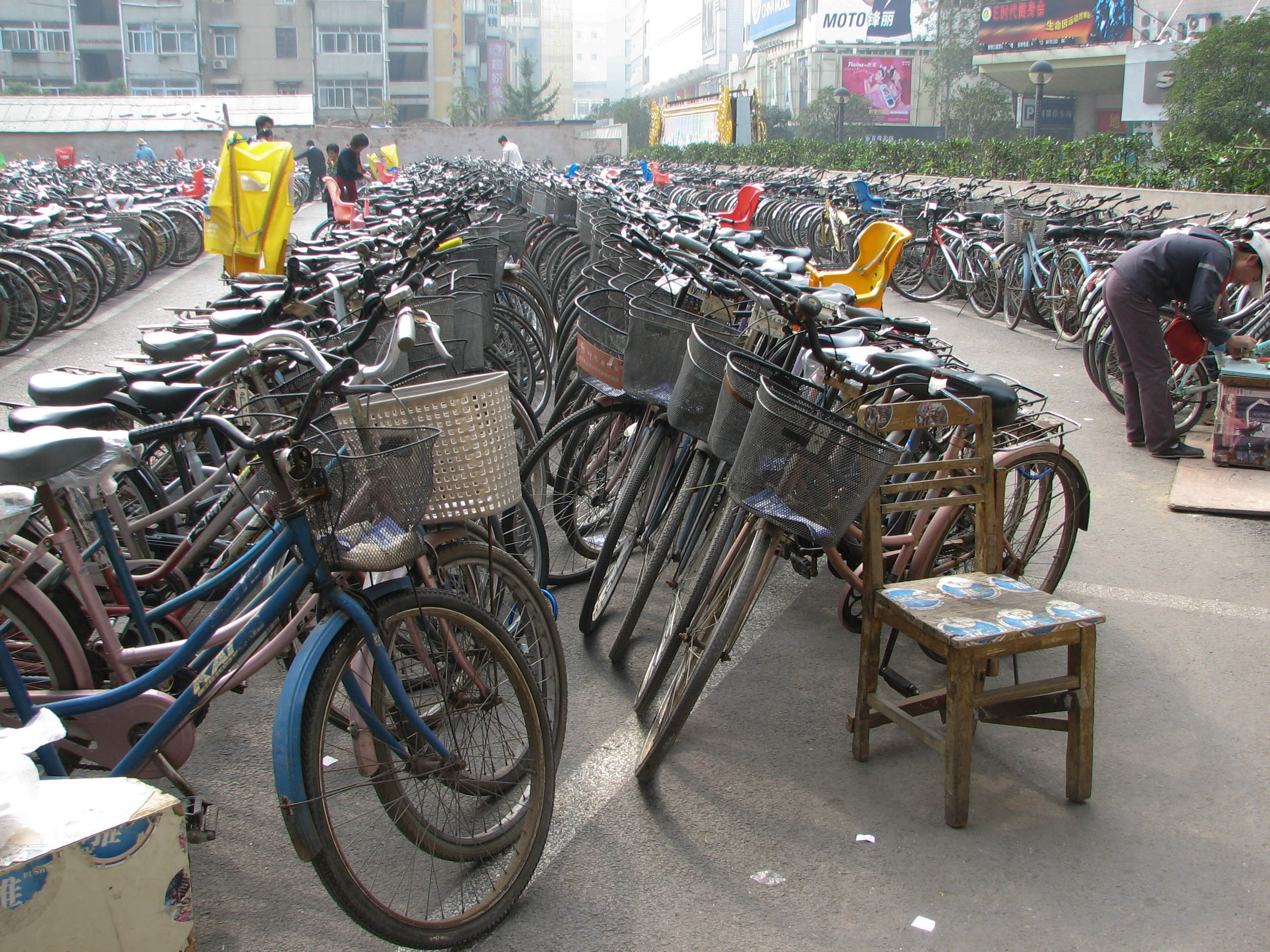
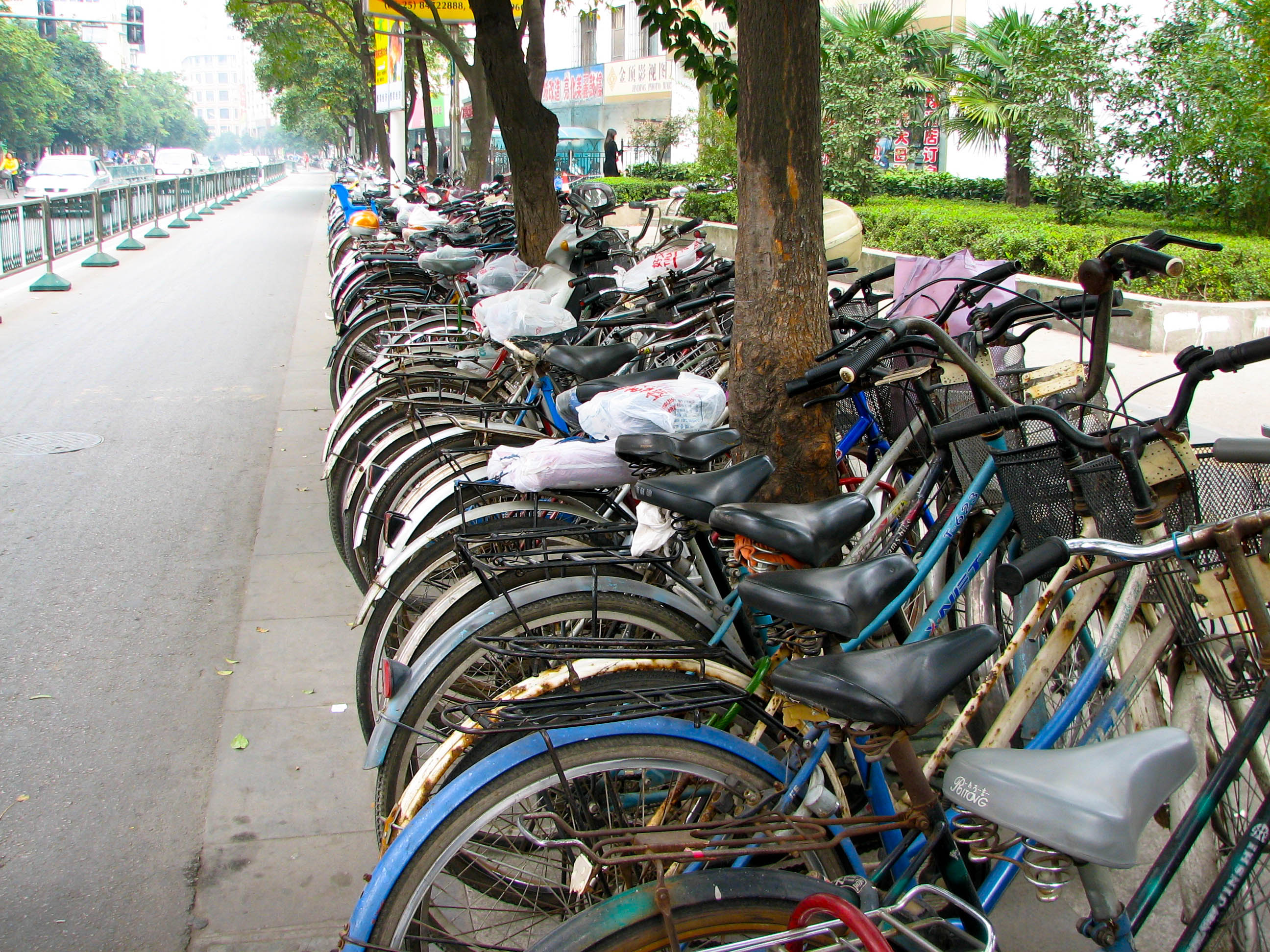
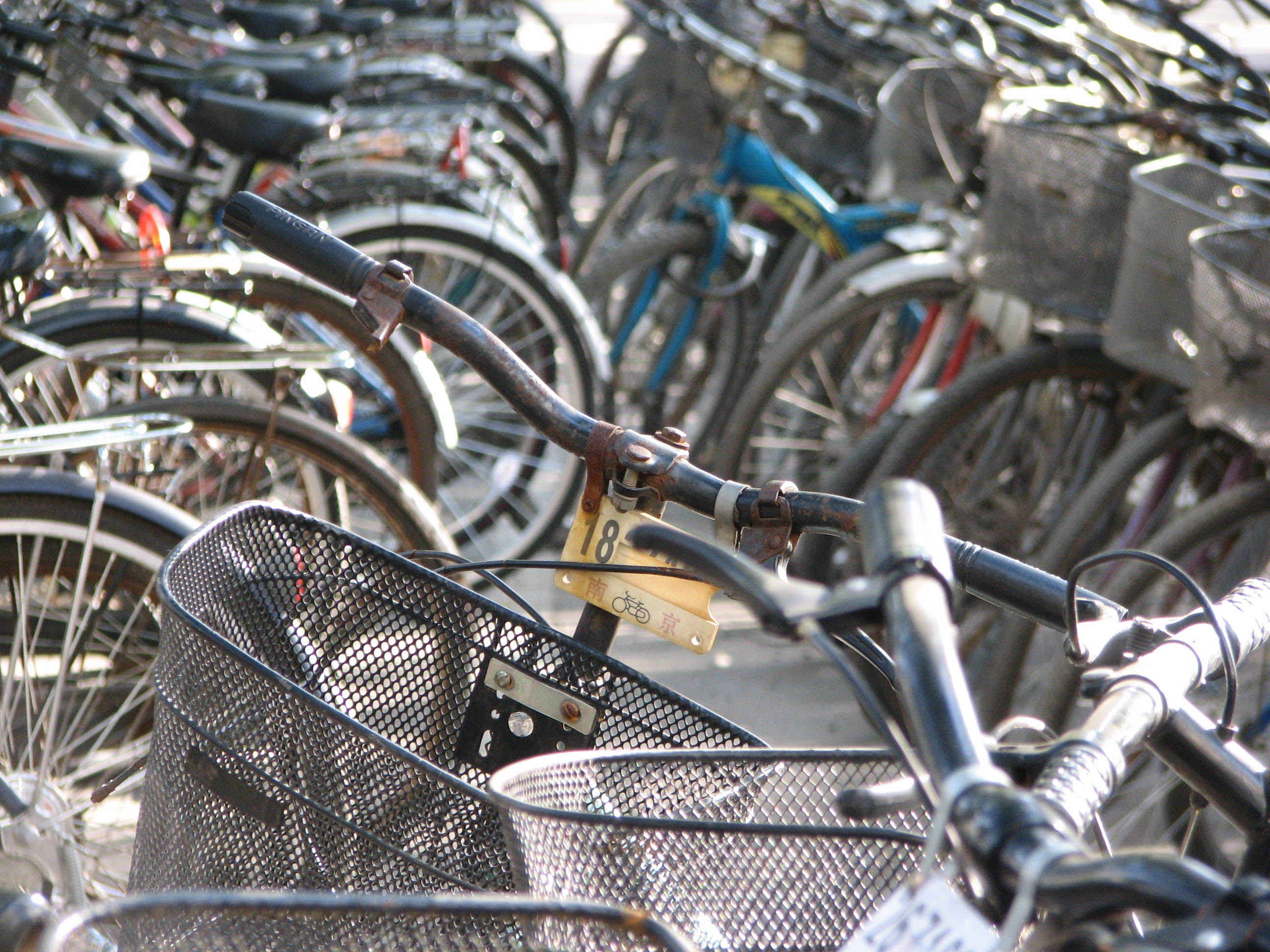
Major shopping areas have huge bicycle parking lots. You pay an attendant a small fee and recieve a little paper ticket. You put this on your bike and they watch it for you. When you return, provide the ticket and they let you retrieve your bike. Bikes are also parked along nearly every road in commercial areas.

typical bicycle parking lot

Compared to the US, bicycles are very inexpensive, especially if you buy a Chinese brand. Popular Chinese bicycle brands include 飞鸽 fēigē Flying Pigeon,邦德富士达 bāngdéfùshìdá Battle, 永久 yǒngjiǔ Yongjiu, 凤凰 fènghuáng Fenghuang, and 捷安特 jié āntè Giant (originally a Taiwan brand). You may be able to find some foreign brands in the bigger cities but you will pay quite a bit more for them. The problem with buying a shiny new bike, is that they are immediate targets for thieves, and bicycles do get stolen pretty regularly. Another option is to buy a used bike. There are used bike markets but the sellers at these markets are really good at ripping people off. The good news is that there are bicycle repair stands all over every city and repairing a bicycle is really cheap compared to the US. I once badly bent a back rim on my bike. It was so out of true that the wheel would not even turn and several spokes were broken. I took it to the repair stand pictured below and the guy had it fixed in about two hours. It cost the equivalent of $4.50 USD. 

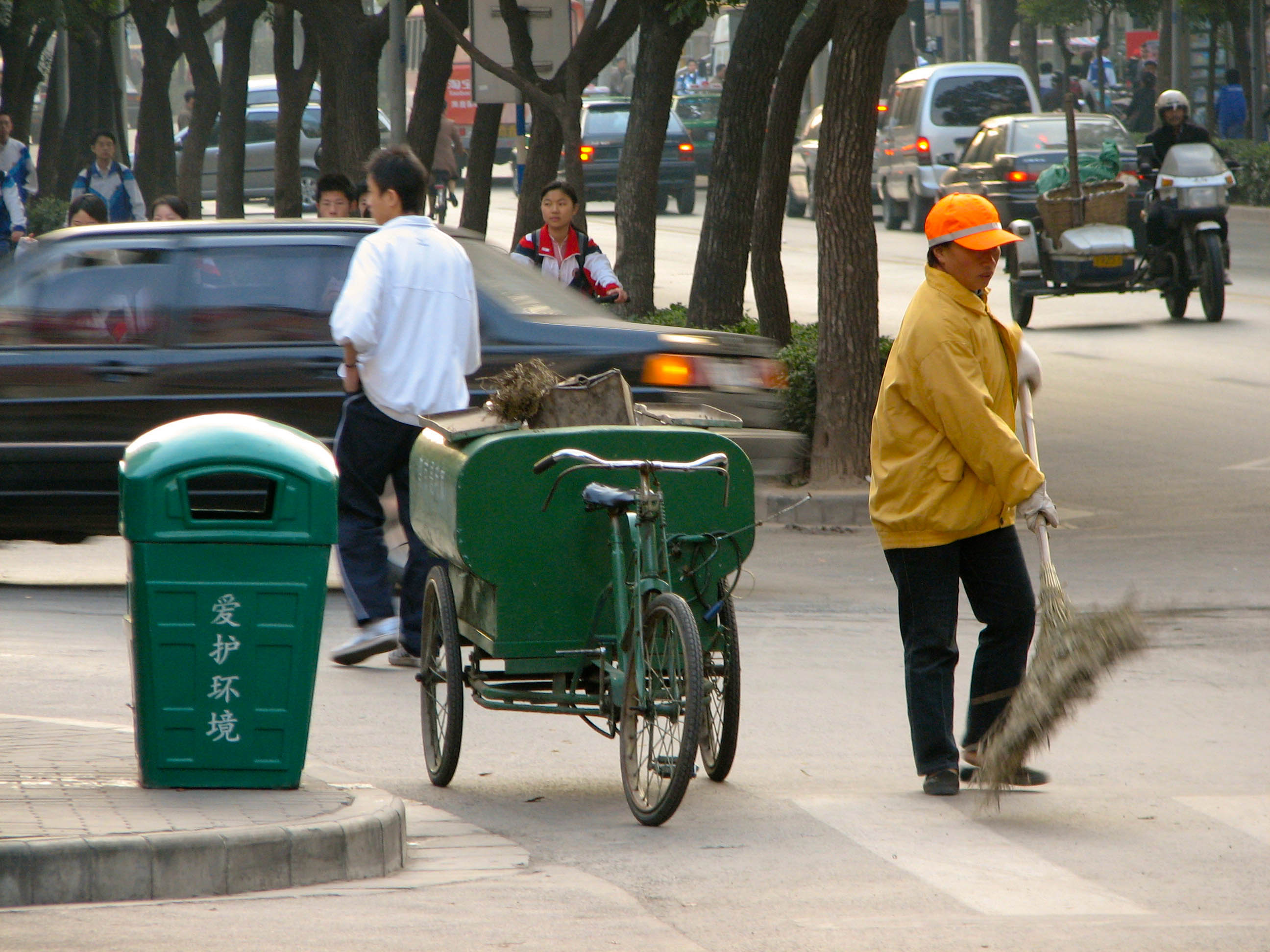
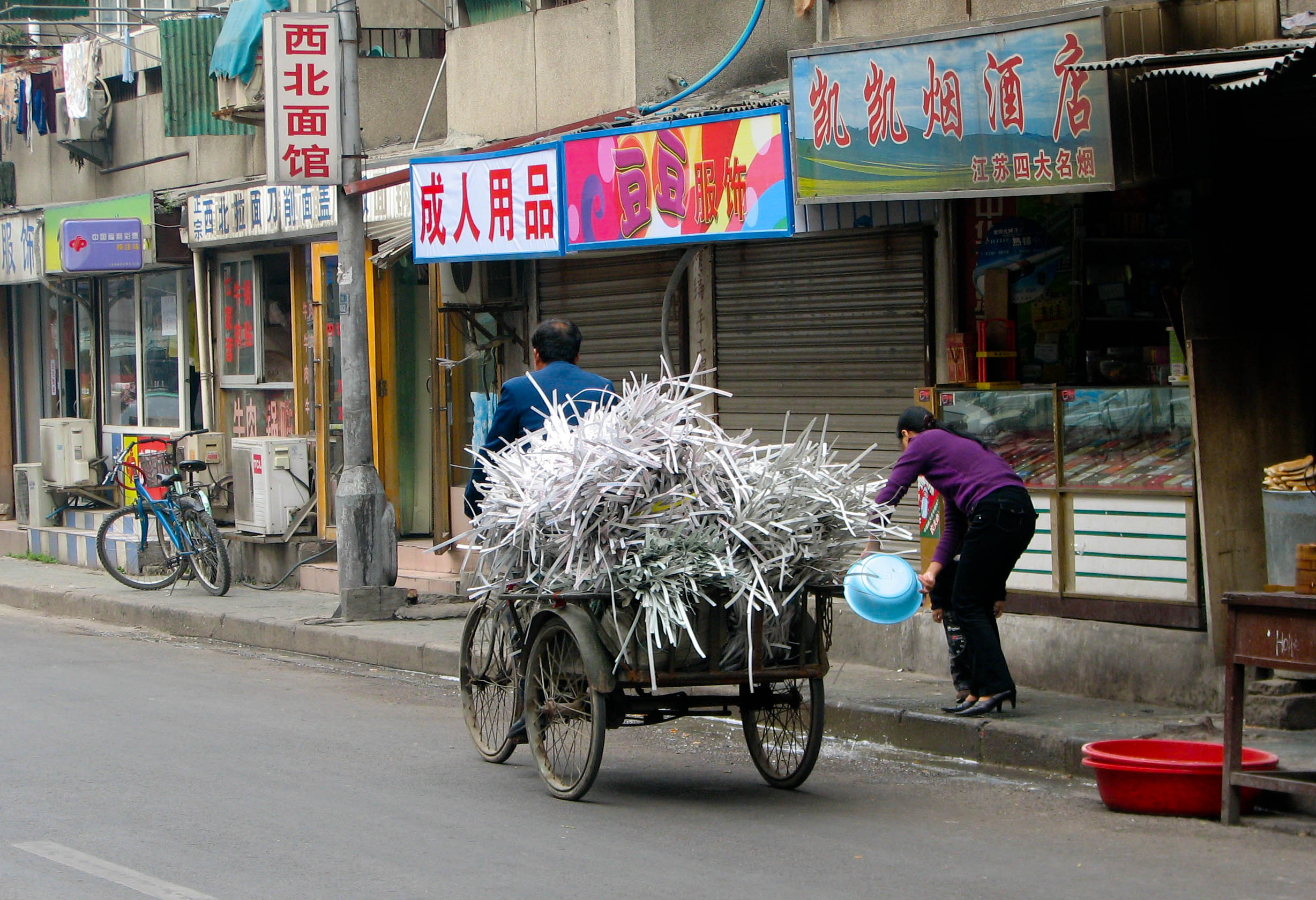
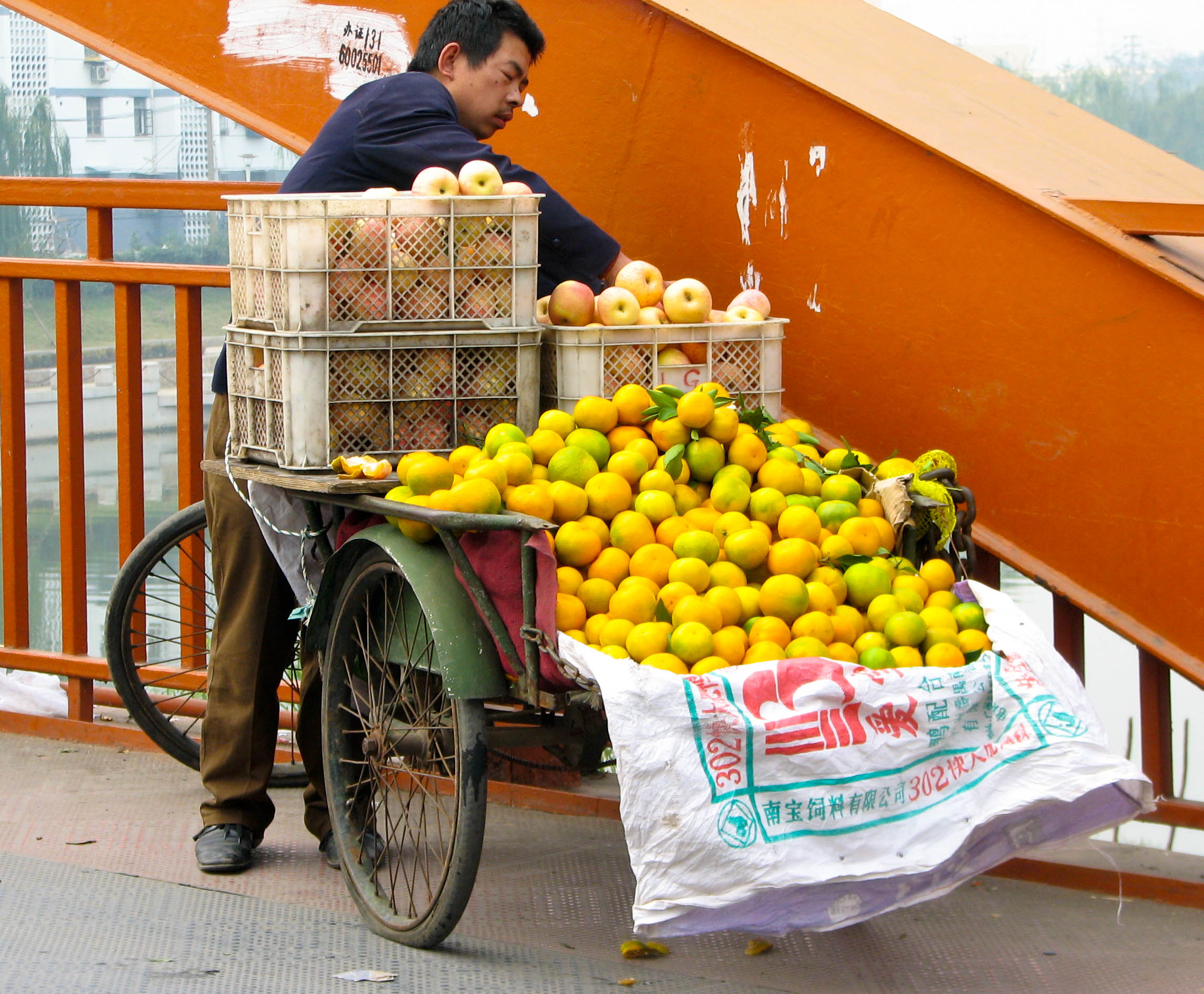
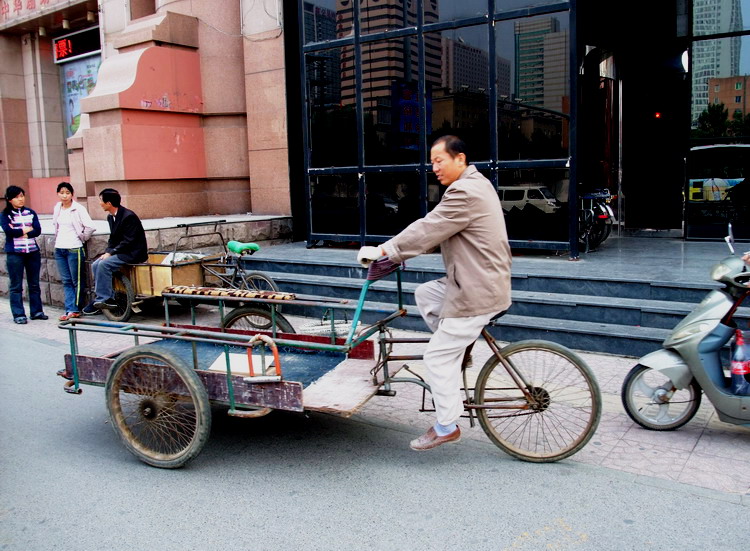
Bicycles are not only used for personal transportation, but also for transporting goods. Cargo bikes are a bit of a novelty here in the US, but in China they are everywhere. The heavier duty cargo bikes often are technically trikes with three wheels. I’ve seen some pretty amazing things on the back of a bicycle, including refrigerators, beds, large cabinets, five gallon water bottles, live chickens, large bags of rice, recycled goods, and so on. Below are a few photos of some cargo bikes. Check out the five gallon waterbottles—count them— 7 on one bike!


the trash collector

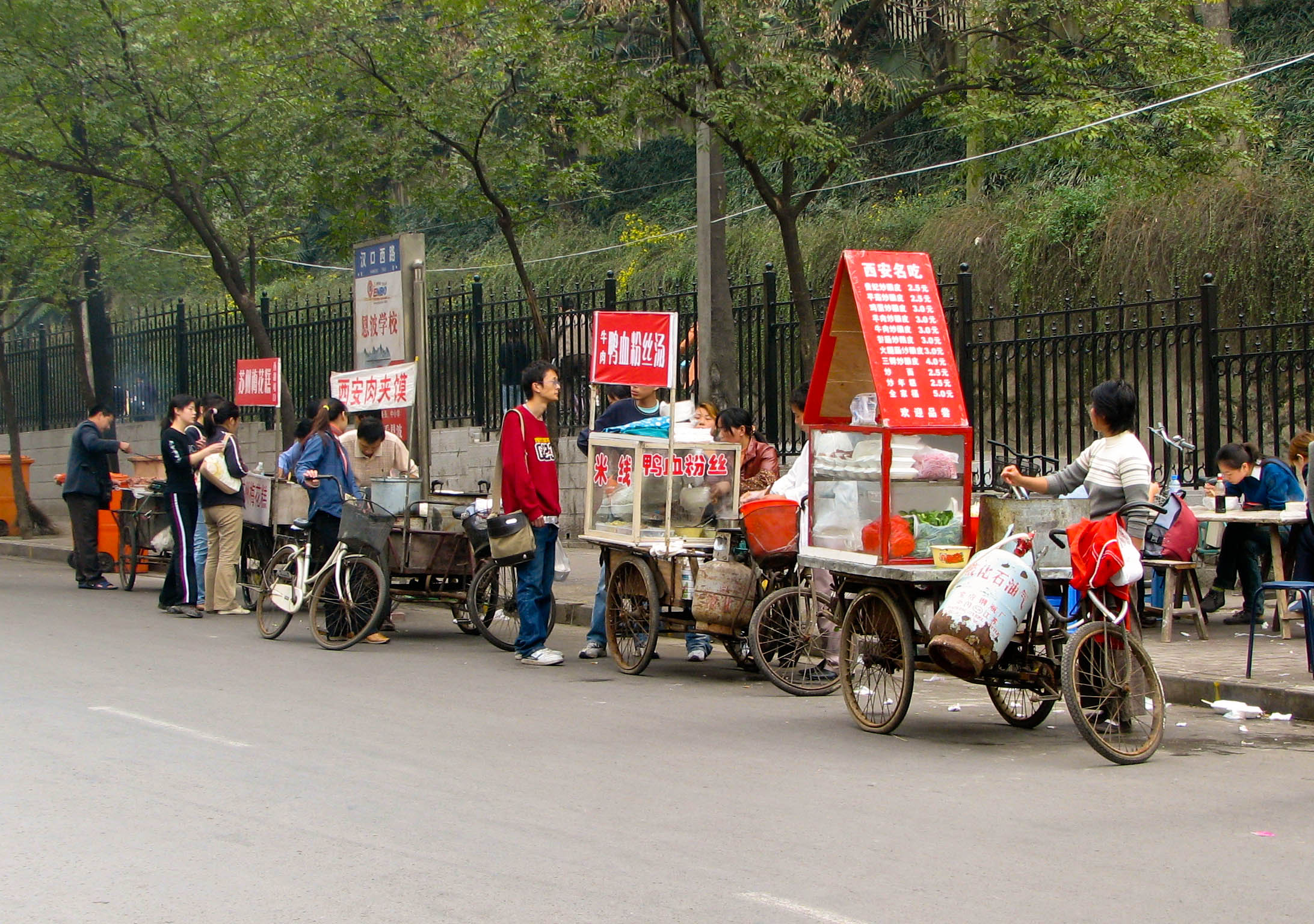
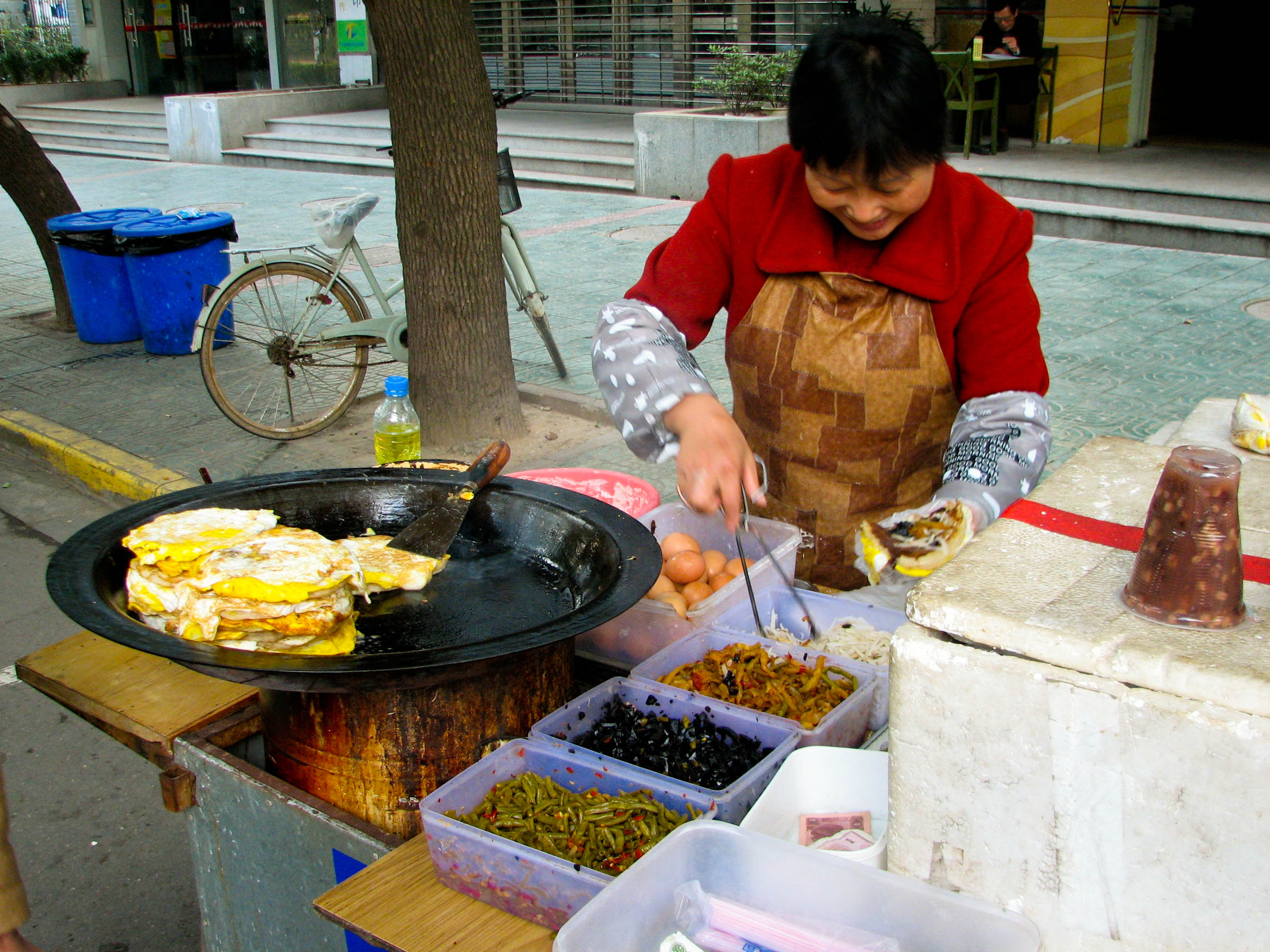
Street vendors will often use bikes to transport their goods and they sell their goods from the back of their bike.

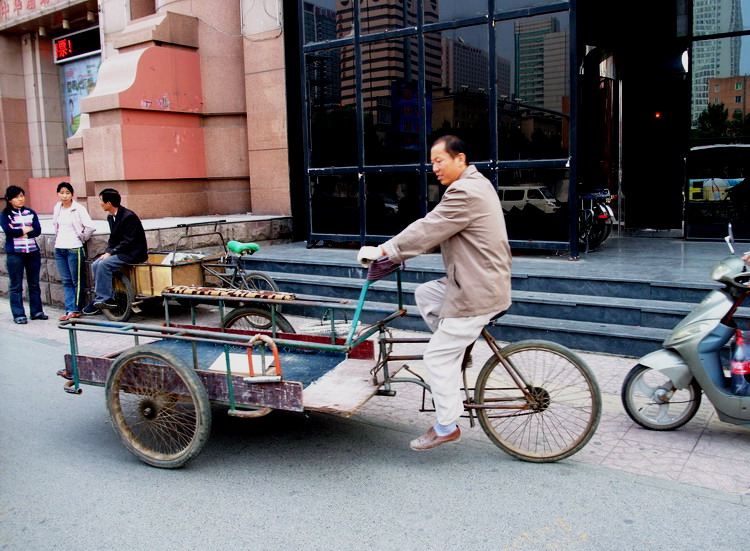
The photo below shows another kind of cargo bike used specifically in Northeastern China. It is called a 倒骑驴 dǎoqílǘ.

photo courtesy of baidu

The guy in the picture below is a mover. The sign says that he will move furniture, electronics, washing machines, bicycles, water heaters, and a few other things.

bike mover

I never attempted such a heroic bicycling feat. The closest I came was a few years ago when our family spent a semester in Nanjing. After renting an apartment we needed to get some household goods. My wife and I (she sitting on the back rack) rode down to a local department store and bought sheets, blankets, pillows, foams pads for the boys to sleep on, and a number of other things. I had seen guys pedaling around with huge loads on their bikes so I was determined to get all this stuff home without having to hail a taxi. I got some of the ubiquitous pink twine and we started lashing things down. My wife sat on the back rack holding the foam pads, along with several bags. I had large plastic bags hanging from each handlebar. We slowly and steadily made our way through the crowds back to our apartment, about two miles away. No one seemed to pay us much attention. I wish I had a picture of that.

So, when you get to China, buy a bike and start exploring. It really is the best way to see a city.

No thank you’s, please.

typical Nanjing breakfast

Politeness and courteous language is another area where beginning (and even advanced) learners of Chinese stumble. If you don’t know how to act in a given situation, then you have no choice but to fall back on how you would behave in a like situation in your own culture.

In the United States we are conditioned to be polite, and nice to everyone, from family members to complete strangers that we will likely never see again. This politeness includes using lots of please’s and thank you’s. When learners of Chinese fail to understand how and when to use this kind of polite language they fall back on practices ingrained in their own cultural upbringing. Americans in China notoriously overuse the expressions 请 qǐng and 谢谢 xièxie. They go around saying 谢谢 xièxie to everyone regardless of their relationship with the person. I have personally observed students making a transaction on the street with a peasant selling mangoes. The exchange went something like this:

请问,芒果多少钱? qǐngwèn, mángguǒ duōshǎo qián?

Please may I ask, now much are the mangoes?

The seller was visibly uncomfortable and probably perplexed, and maybe a bit amused. After the transaction was made, the student responded with:

谢谢,谢谢。 xièxie, xièxie

Thank you, thank you.

This kind of behavior is so natural to an American that it is hard to think it could possibly be inappropriate. But most Chinese would find this behavior odd, even strange. To make matters worse, practically every beginning level Chinese language textbook simply translates 谢谢 as “thank you” and 请 as “please” with no further discussion about how and when to use these expressions appropriately.

In China the use of polite language is different. Chinese society is governed to a large degree on hierarchy. That is, you act differently with people above and below your position or status in society. For example, it would be very unusual for a Chinese person to thank a store clerk with a 谢谢 after making a purchase. The same goes for the clerk—they would not use this expression with a customer. The Chinese would likewise not use these polite words with people they are close to, such as family members, friends, and colleagues. With people close to you formal language is not appropriate unless you are intentionally trying to sound sarcastic or distance yourself from the person. Polite language like this is reserved for formal occasions, often when dealing with someone in a social position higher than yours, such as your boss.

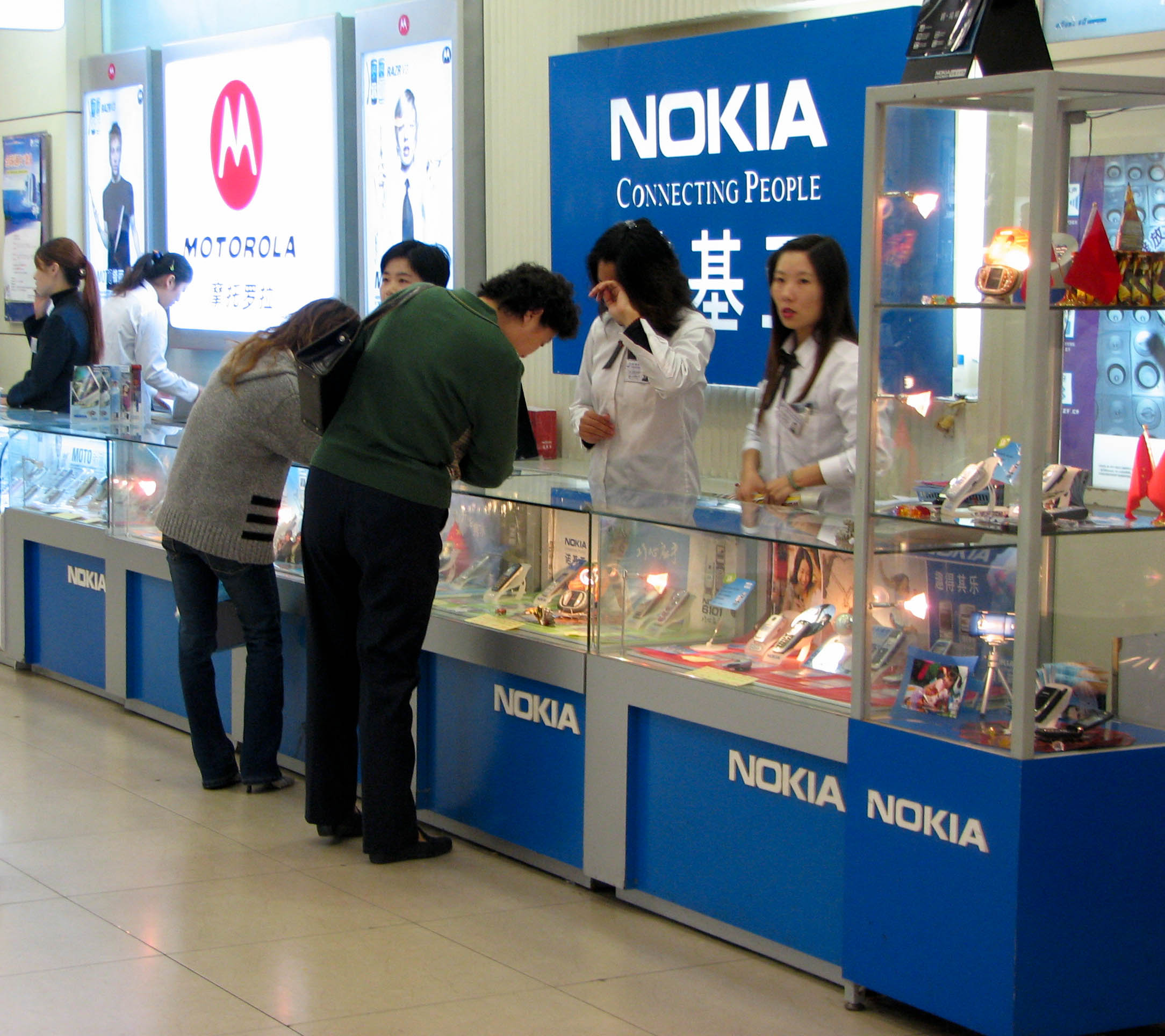
typical department store

In recent years there has been a campaign by the Chinese government to clean up their courteous language or improve their verbal hygiene. Erbaugh (2008) reports that as early as 1980 the Chinese Communist Party promoted the use of five courteous phrases, 五个礼貌的词 wǔge lǐmào de cí, based on the impersonal Western-derived phrases, “hello,” “please,” “sorry,” “thank you,” and “goodbye,” with the Chinese equivalents 你好 nǐ hǎo ,请 qǐng ,对不起 duìbuqǐ ,谢谢 xièxie ,and 再见 zàijiàn. The fact that the government would promote the use of these phrases in everyday encounters is pretty good evidence that they are not commonly used by Chinese with Chinese.

With increased exposure to the West and increasing numbers of foreigners traveling to China, these kinds of phrases are heard with increasing regularity. Many Chinese who have regular interactions with foreigners understand that these courtesy words are expected and so they use them. But you still seldom hear them used among Chinese. As learners of Chinese we should strive to behave the way Chinese expect people to behave, linguistically and behaviorally. The Chinese should not have to adapt or modify their behavior to communicate with us.

In conclusion, here are a couple reminders.

1.  Save your 谢谢’s for formal occasions. Resist the urge to thank people in informal contexts such as at restaurants, stores, street markets, etc. You’re not going to offend any Chinese but not saying it.

2. Likewise, save your 请问’s for more formal occasions. Just because you are asking a question does not mean you have to begin with 请问. For example, at a market, if you want to know the price of something, just ask directly.

Erbaugh, Mary. 2008. “China Expands Its Courtesy: Saying “Hello.” The Journal of Asian Studies. Volume 67, Number 2.

The best bowl of noodles in China!

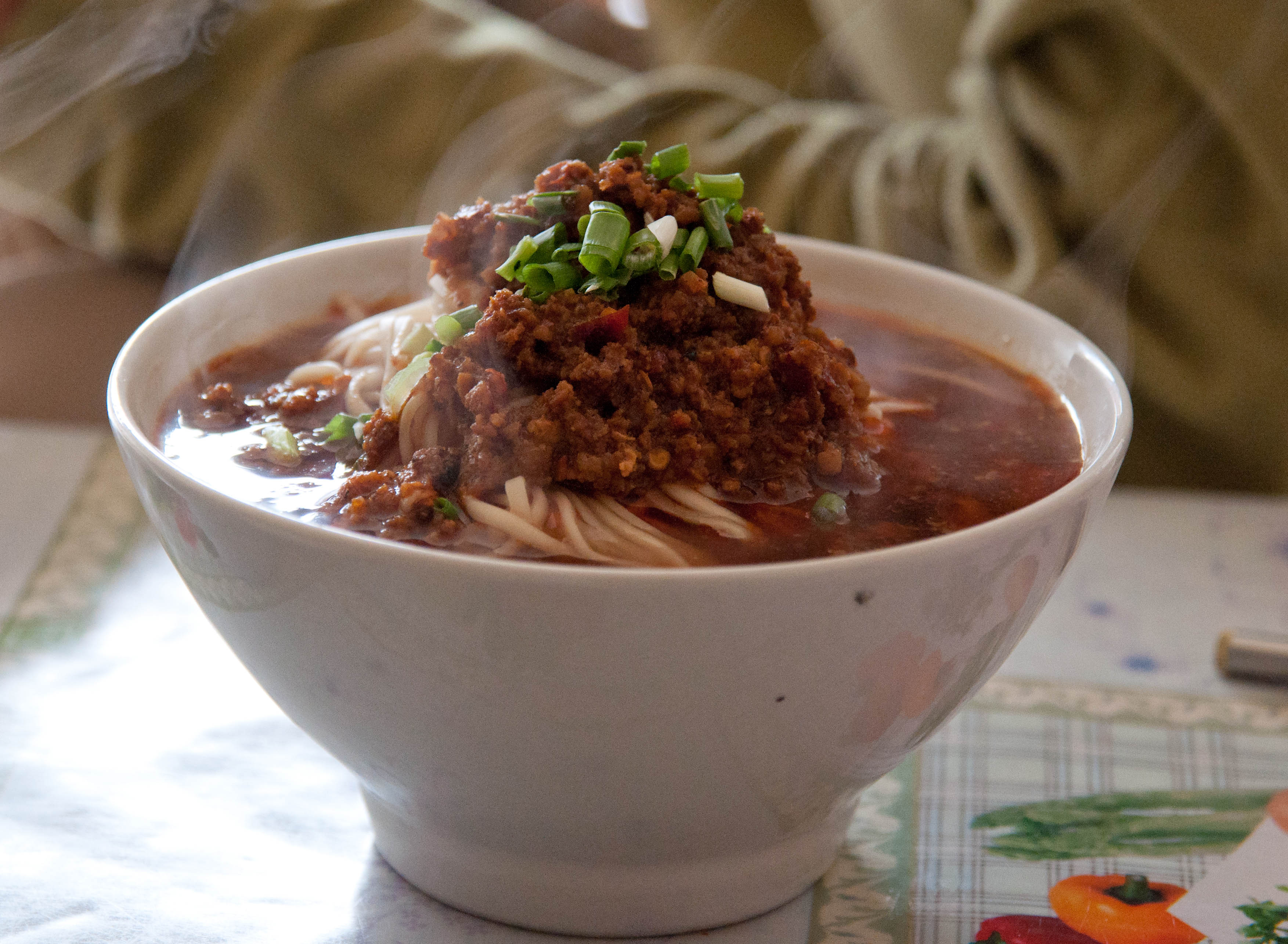
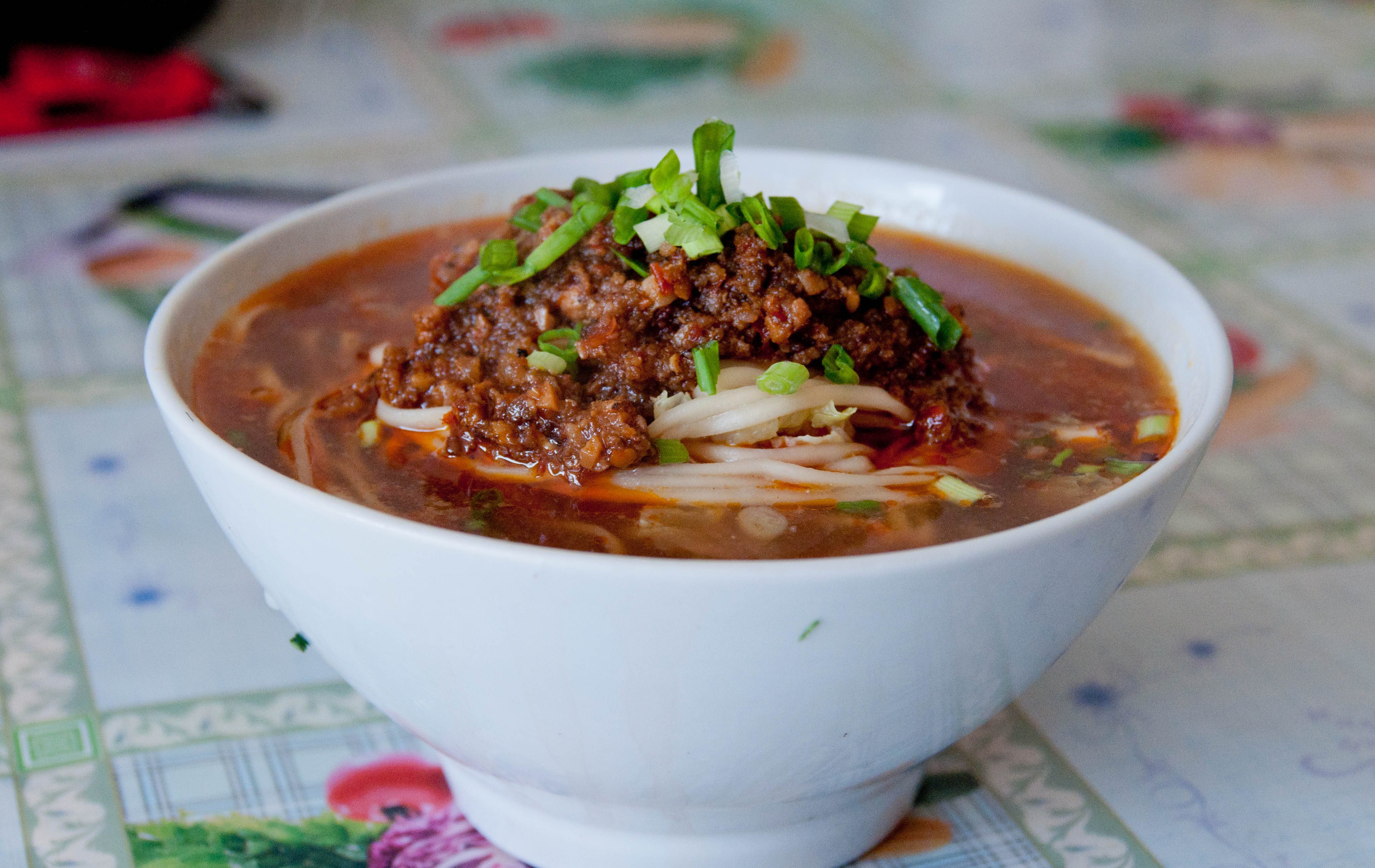
A version of 担担面dāndān miàn

It was an unlikely place to find such an exquisite bowl of noodles. Noodle shops are scattered liberally all over China, from big cities to small towns. I’m no expert on noodles, but I do know a good bowl of noodles when I eat one.

The problem with the vast majority of noodles that we eat here in the US, Chinese or otherwise, is that they start out dry. Nearly all the Chinese noodles available at Asian grocery stores are dried, though occasionally you can find “fresh” noodles in the refrigerated section. I put fresh in quotes because though they are certainly fresher than dried noodles, they are not quite like noodles made a few minutes before they are thrown into the pot of boiling water.

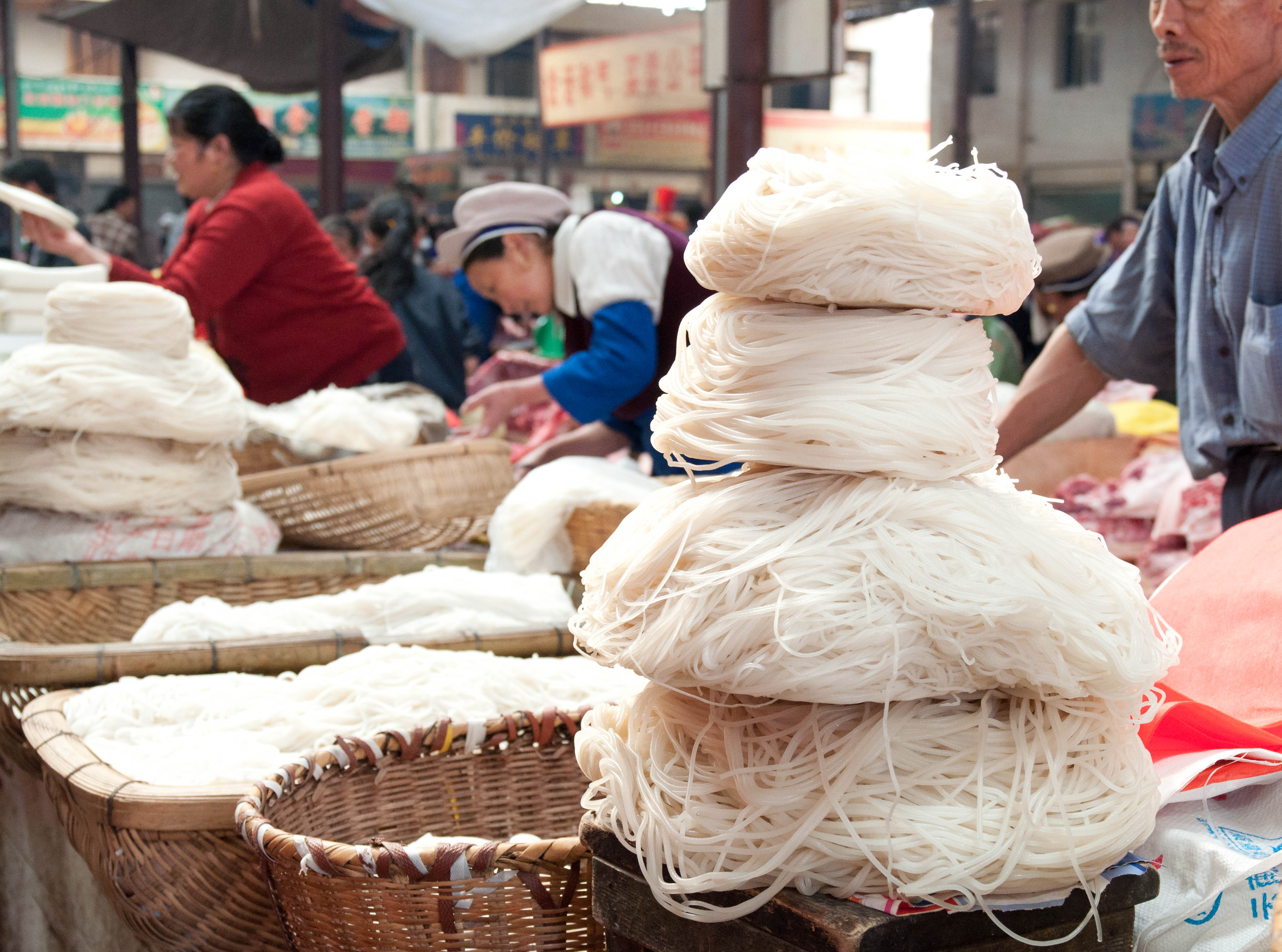
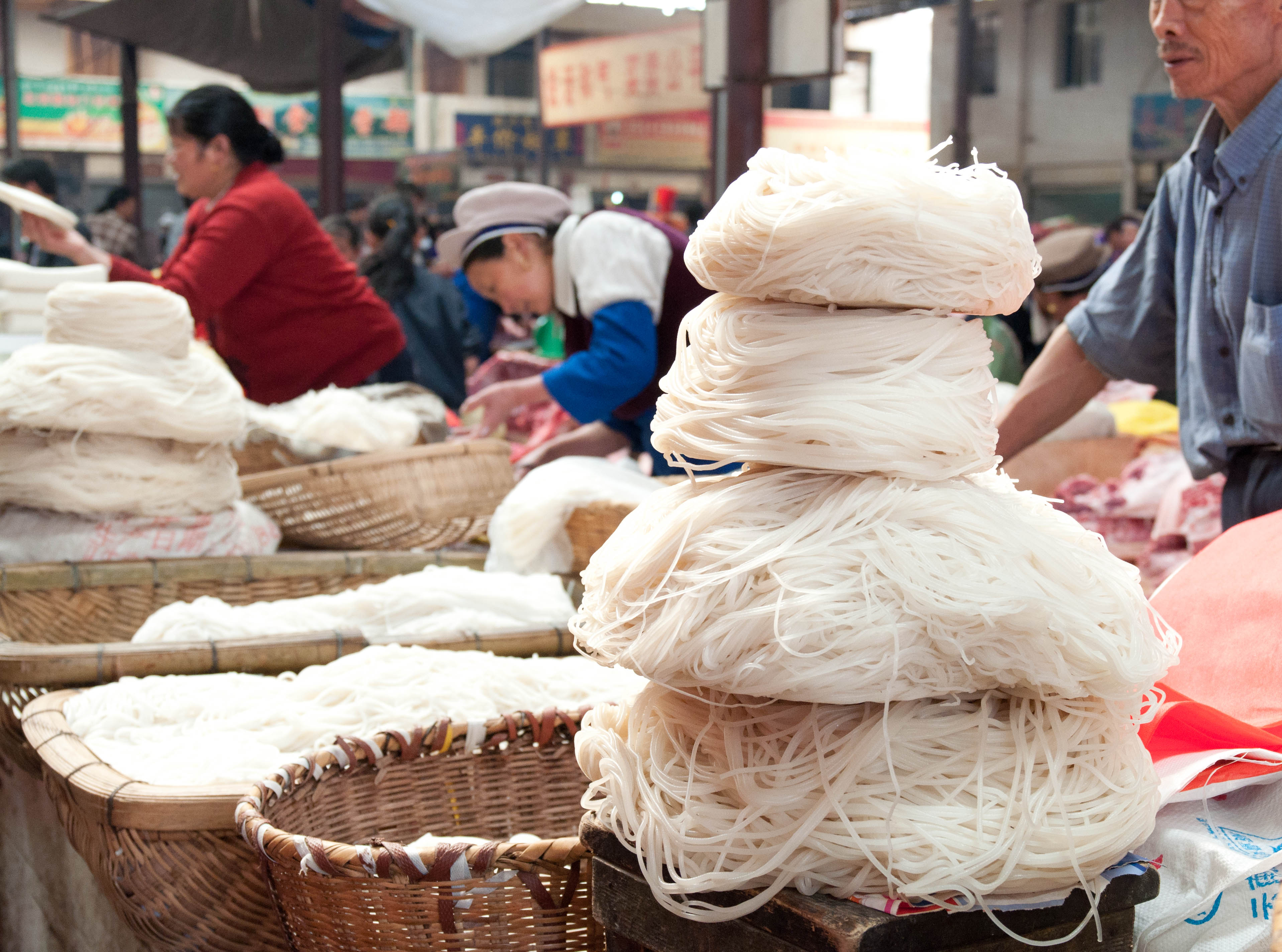
You can buy fresh noodles in markets in China, and they are certainly much better than dried, but still, they have been sitting around for awhile. The picture below was taken in a large open market in the center of a small town in Yunnan Province.

Open market noodle vendor


 There are a dizzying array of noodles available in China, from the venerable 牛肉面 niúròu miàn of Northern China to the Cantonese classic 干炒牛河 gānchǎo niúhé to the fabulously chewy刀削面 dāoxiāo miàn of Western China. Noodle dishes are generally stir-fried or served in soup. They are all wonderful in their own ways, and it would be impossible and fruitless to try to argue which kind of noodles or which noodle dishes are the best. I guess that depend on where you are in China. For example, if you were in Lanzhou, then the best noodles would probably be a good Muslim 拉面 lā miàn.

This bowl of noodles was totally unexpected. My friend and colleague and I were in the small border town of Shangri-la 香格里拉 xiānggélǐlā (formerly Zhongdian) in Northwestern Yunnan Province. After spending several days exploring a fairly remote river valley sprinkled with Tibetan villages, we went looking for breakfast. On the main drag in town there are numerous small restaurants, many of which cater to the growing Chinese tourists. We selected a small restaurant partially by the crowds of people inside. One of the first rules of finding a good place to eat, is the number of people inside eating. If it’s crowded, there’s a good chance that the food is good, and freshly prepared. An empty restaurant is not a good sign.

Inside there were about eight small, short tables, with tiny stools. The place was run by a Tibetan couple, probably in their mid to late fifties. The man was in the tiny back kitchen cooking, and his wife scurried back and forth between the kitchen and the dining area serving food and taking money. There was no menu, which is not too uncommon in small restaurants, so we looked around to see what other people were eating. The noodles looked pretty good so we ordered a couple bowls along with a couple rounds of the local flat bread.

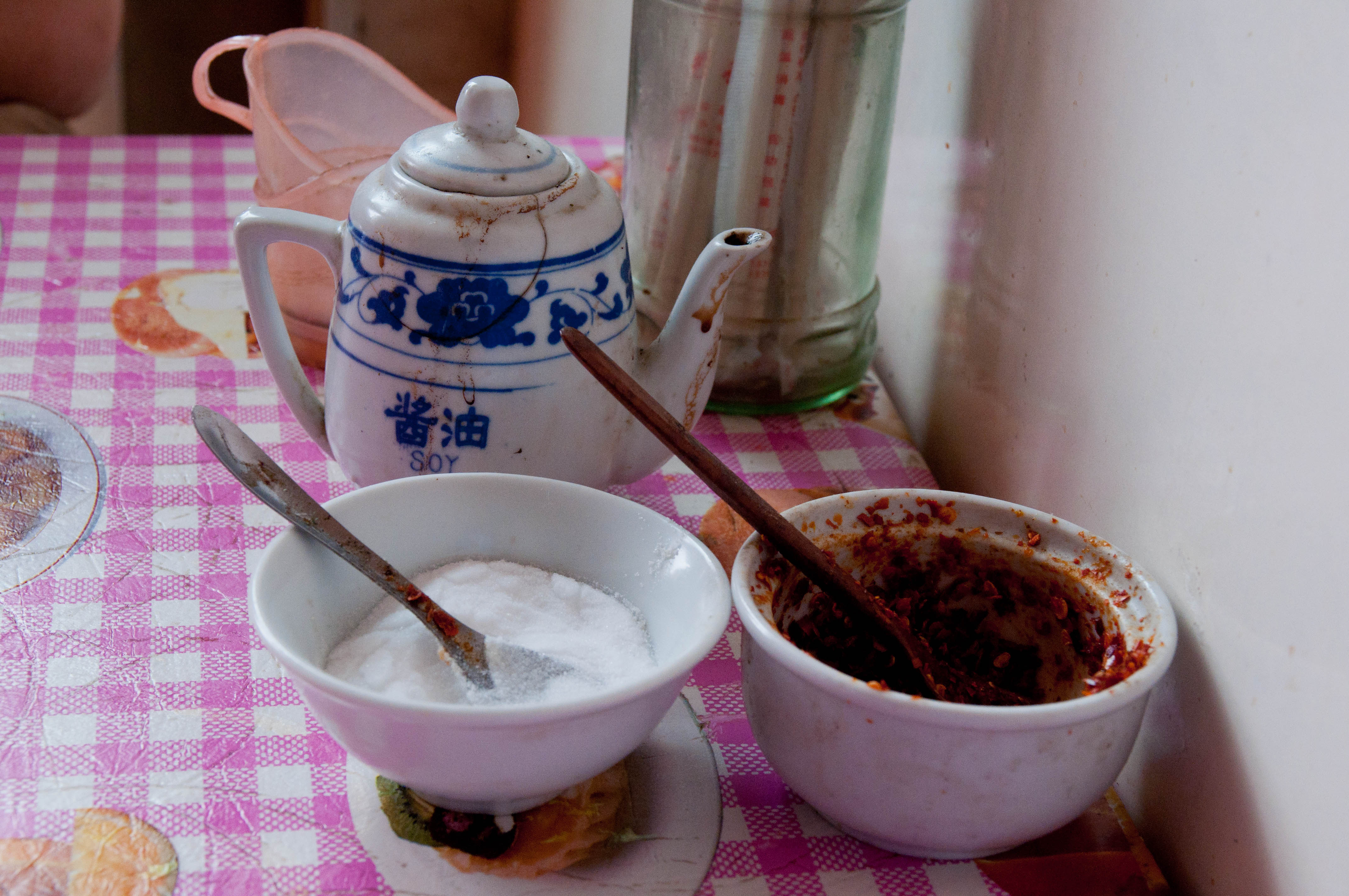
We weren’t sure quite what to expect. Though there are Chinese in Shangri-la, about 80% of the population are Tibetans with a few other smaller ethnic minorities. The Tibetans are not known for making and eating noodles, but this far west there could have been Muslim influences, and the Muslims know how to make noodles. We were also very close to Sichuan which is known for its spicy cuisine. The condiments on the table were pretty typical of many small Chinese restaurants.

When the noodles arrived it looked like 担担面dāndān miàn, or at least a variation of the popular Sichuan noodle dish.

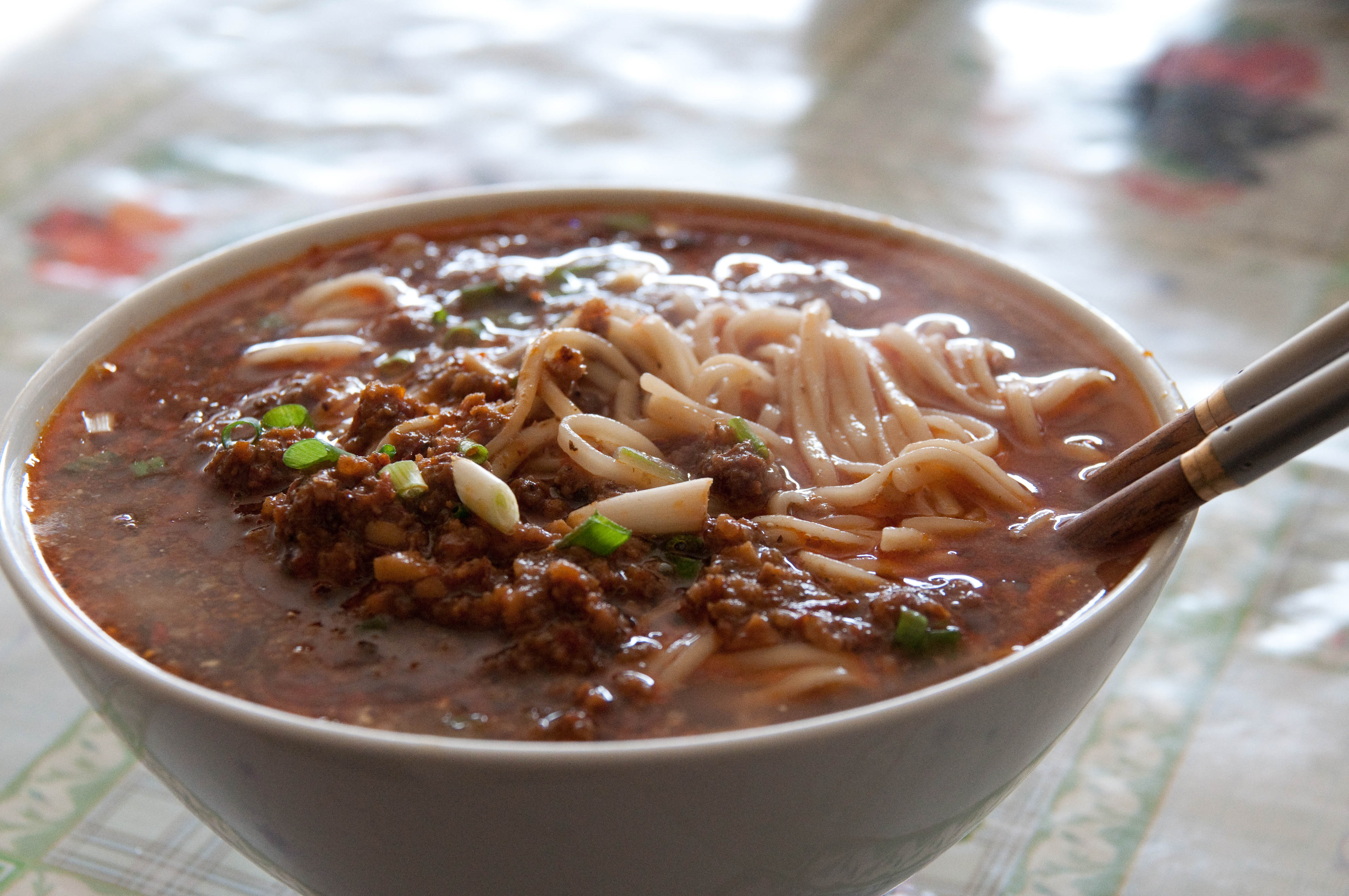
The best bowl of noodles in China

It looked good; it smelled good. The tender minced pork was laced with finely shredded chili pepper and the broth was deep, rich, spicy and and a bit oily. The noodles were wonderfully chewy, yet not overly heavy. The dish was spicy but not lethal like you would get in Chengdu. When we started eating, we were both astonished how good it was. We quickly cleaned our bowls, then returned the next day, and the next for more. Notice the delicious, oily, spicy broth.

There were a couple reasons why this bowl of noodles was so good. One, the noodles were made fresh minutes before they were served. We could hear the Tibetan guy slapping the dough against the table in the back kitchen. When I was paying the bill, I peeked into the kitchen and there he was cutting the dough into thin noodles with a cleaver. Second, the food was very fresh. To get really freshly prepared food, go to a busy place. Third, there was a perfect balance of seasonings. In this case, chili pepper, garlic, sesame, maybe some ginger. The soup stock was rich, and full flavored.

My friend and I talk often about that bowl of noodles and if we’re ever in Shangri-la again, we will be sure to find that small unassuming restaurant again. I guess they don’t call it Shangri-la for nothing.

The most dangerous person in China

No, this kid is not the most dangerous person in China. In fact, he was quite innocent and rather excited to have a conversation, in Chinese, with a foreigner.

The most dangerous person in China is the foreigner with excellent language skills but is clueless when it comes to culture, especially behavioral culture. The problem is that if you have really good Chinese, the Chinese will expect that you know how to play the game; they will expect you to behave like they do. Cultural coherence refers to speaking and acting like Chinese expect people to speak and act. If someone has good speaking skills but acts like a typical American, they will undoubtedly offend people. In fact, the Chinese will most likely believe that you intended to offend them. Again, to the Chinese good Chinese means that you should know how to behave yourself. For example, the American with good Chinese uses typical American sarcasm with his Chinese colleagues and they are offended because they simply don’t understand American sarcasm. Sometimes we call this speaking English in Chinese.

It is simply impossible to separate language from culture. All communicative situations are situated within a cultural context. For language learners it is essential to pay close attention to context. It’s not just about what to say, but also when to say it, with whom it is appropriate, and so on. You must understand why certain language is used in certain situations. Language and behavior in all communicative situations are governed by the following conditions:

  1. time
  2. place
  3. roles of the individuals involved
  4. script (which includes dialogue and actions)
  5. audience (those around not directly involved)

Our behavior certainly changes from the boardroom to the classroom to the street corner. Likewise the many roles we play in life will also determine our linguistic and social behavior—from student to employee to boss to friend, classmate, and so on. Even something as simple as a greeting must be contextualized. How you greet someone depends on where you are, when the greeting takes place, and your relationship with the person you are greeting. If you change one of these conditions, then the greeting will likely change as well. Greeting your teacher or your boss will be very different from greeting your roommate or your mother.

The Rules Change

Crossing international borders can be traumatic. This is especially true traveling to a country like China. Even with Chinese language skills in hand, it can be challenging knowing exactly what to expect. In China the rules are different.

I remember a few years ago sitting in a small restaurant on Qingdao Rd. near Nanjing University when three of my students walked in. We had only been in country for about two days. They did not see me so I decided to stay quiet and observe. They stood just inside the door waiting for someone to greet them and show them to a seat. As they waited I could see their frustration growing. At the same time I could hear the two servers saying,

“What are they doing?”

“I don’t know, maybe waiting for someone.”

The servers seemed just as perplexed as my students. These students had two years of formal Chinese study at my university, so I knew that linguistically that they could handle themselves. The problem was that they did not know what to expect in a Chinese restaurant. As such, they had no choice but to fall back on their American cultural experience with restaurants—you are usually greeted and shown to a table. In small restaurants in China that is not the case; you simply find an empty table yourself and the servers will bring you a menu.

Being successful in China requires that one learn a new set of rules or behaviors. It’s like learning how to play a new sport. You may be familiar with other sports and be pretty good at them, but if you don’t know the rules of the new game, you probably won’t be a very good player.

An analogy might help. Let’s say that American culture is like baseball and Chinese culture is like tennis. Both sports have a good share of similarities—playing fields, boundaries, a ball, an instrument to hit the ball, and so on. If you are only familiar with baseball and show up in China and find yourself on a tennis court, you’re in for trouble. The ball is served to you and your first inclination is to hit the ball as hard as you can, preferably over the fence. This is your frame of reference. And if you hit the ball over the fence, the Chinese will find this very strange. If you continue to do this, they will eventually take their ball and go home, and will probably not invite you to play again.

China can be a pretty rough place if you don’t know what to expect. These rules can be better understood as cultural and social behavior, and this goes beyond traditional language training. Even without Chinese language skills, knowing what to expect in typical situations you are likely to encounter will make a huge difference in your interactions with others and your ability to get around and understand what is going on around you.

This blog is an attempt to discuss various aspects of learning the Chinese language, explore Chinese culture, and analyze the intricacies of intercultural communication.